

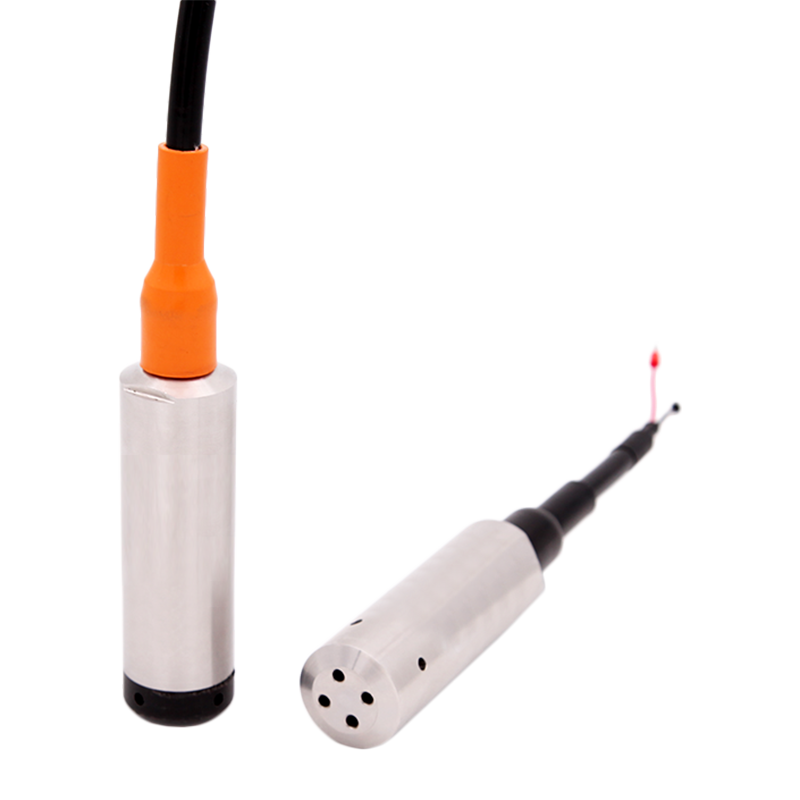
Accurate liquid level measurement is a foundation of safe, efficient, and intelligent industrial operation. In reservoirs, ships, municipal water systems, underground wells, chemical tanks, drainage networks, and power plant auxiliary systems, liquid level data is not merely a measurement value. It is a decision-making signal that affects pumping schedules, overflow prevention, equipment protection, process stability, regulatory compliance, and long-term asset management. The Intelligent Submersible Level Transmitter, model AI-LF, is designed for these demanding environments, combining rugged mechanical construction, high-performance sensing, digital communication, and precise temperature compensation in one compact underwater instrument.
The AI-LF Intelligent Submersible Level Transmitter uses a high-performance diffused silicon pressure sensor as its measuring element. By converting hydrostatic pressure into a stable digital level signal, it provides reliable measurement for water, wastewater, industrial liquids, and other fluids compatible with 316L stainless steel and fluororubber. Its complete 316L stainless steel probe structure, IP68 protection rating, RS485 Modbus RTU output, and full temperature correction make it especially suitable for long-term deployment in harsh sites where traditional analog level transmitters often suffer from drift, interference, or maintenance problems.
Compared with many conventional submersible level instruments, the AI-LF is developed not only as a sensor but as an intelligent digital field device. It addresses practical problems that operators encounter in real applications: sediment accumulation, mechanical damage from sharp objects, biological attachment in water environments, electromagnetic interference, long cable transmission, multi-point monitoring, and the need for accurate data integration into industrial control systems. These features make it a practical choice for users who want dependable liquid depth monitoring and easier integration into modern Industrial Internet of Things architectures.
Intelligent Submersible Level Transmitter
Product Overview
The AI-LF Intelligent Submersible Level Transmitter is a new generation level measurement product designed for submerged installation. It measures the pressure generated by the height of a liquid column and converts that pressure into a liquid level reading. Because hydrostatic pressure is directly related to liquid depth, the transmitter can provide accurate level data when installed at the bottom of a tank, river section, well, reservoir, or other monitored liquid body.
The transmitter outputs data through an RS485 Modbus RTU digital interface. This is an important advantage for industrial users because RS485 is widely used in factories, water systems, energy facilities, and remote monitoring networks. Modbus RTU is simple, stable, and compatible with many programmable logic controllers, data acquisition units, remote terminal units, and supervisory control systems. With RS485 bus capability, up to 99 transmitters can be connected on one communication line, making the AI-LF suitable for distributed level monitoring projects.
The instrument is designed for harsh environments with strong interference. Its electrical and structural design supports reliable operation in locations exposed to moisture, vibration, temperature variation, electromagnetic noise, and long cable distances. It is built according to rigorous standards and manufacturing practices, including product design references associated with marine products, explosion-proof considerations, environmental test standards, calibration specifications, and ISO 9001:2015 quality management requirements.
The AI-LF is especially valuable in applications where liquid level data must remain stable over time. In many field sites, level transmitters are installed and expected to operate continuously for years with minimal maintenance. A transmitter that drifts, leaks, corrodes, or produces noisy signals can create expensive operational problems. The AI-LF responds to these challenges with 316L stainless steel construction, IP68 ingress protection, precision correction across the temperature range, and a robust digital communication interface.
Core Technical Advantages
The primary advantage of the AI-LF is its combination of precise sensing and practical field durability. Many level transmitters may offer reasonable accuracy under laboratory conditions, but actual industrial sites are different. They contain electrical noise, temperature changes, sediment, corrosion risk, cable stress, and unpredictable maintenance intervals. The AI-LF is engineered to remain stable in those real operating conditions.
Its measuring range covers 0 to 1 meter of water column up to 200 meters of water column, allowing use in shallow tanks, deep wells, reservoirs, and industrial liquid storage systems. The overload capacity is two times full scale pressure, with five times overpressure capability for 5 meters of water column and below. This protects the instrument from sudden pressure events, accidental overfilling, and installation-related stress.
The output signal is RS485 Modbus protocol. Unlike purely analog 4 to 20 mA signals, digital communication can reduce signal interpretation errors, simplify multi-device networking, and support direct data transmission into modern control systems. Digital output is particularly useful when many level measurement points must be monitored across a facility or water network.
The transmitter is powered by 10 to 28 V DC, which supports flexible integration with common industrial power supplies, battery-powered remote stations, and solar monitoring systems when properly engineered. Its insulation resistance of 100 megaohms at 50 V DC contributes to electrical safety and reliability in wet environments.
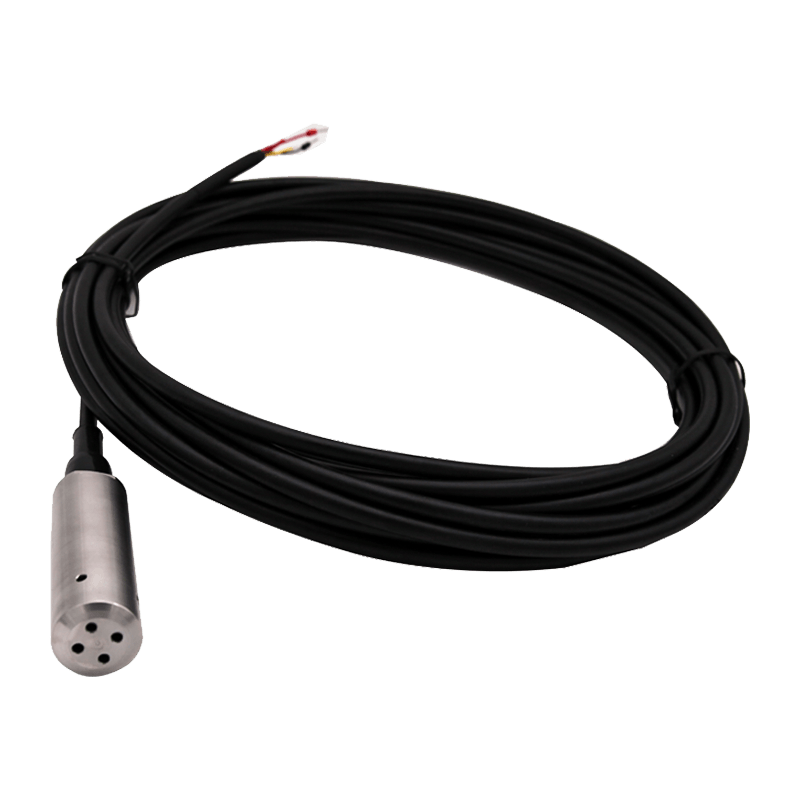
The structural design uses stainless steel for the enclosure and 316L stainless steel for the sensor wetted parts. 316L stainless steel is widely respected in industrial instrumentation because it offers strong resistance to many aqueous and mildly corrosive environments. The sealing ring uses fluororubber, and the cable is a special polyethylene cable with a diameter of 7.5 millimeters. Together, these materials support long-term underwater service.
Key Specifications
Parameter Category |
Specification |
Practical Value |
Measurement Range |
0 to 1 mH2O up to 200 mH2O |
Suitable for shallow tanks, wells, rivers, reservoirs, and deep liquid monitoring |
Overload Capacity |
2 times full scale pressure; 5 times overpressure for 5 mH2O and below |
Improves survivability during sudden pressure events |
Power Supply |
10 to 28 V DC |
Compatible with common industrial and remote monitoring power systems |
Output Signal |
RS485 Modbus RTU |
Enables digital networking and integration with PLC, RTU, and SCADA systems |
Bus Capacity |
Up to 99 transmitters on one RS485 bus |
Supports distributed multi-point level monitoring |
Insulation Resistance |
100 megaohms at 50 V DC |
Supports reliable electrical performance in humid and submerged environments |
Sensor Material |
316L stainless steel |
Provides corrosion resistance for many industrial and water applications |
Sealing Material |
Fluororubber |
Improves sealing reliability and chemical compatibility |
Protection Rating |
IP68 |
Designed for long-term submersible installation |
Compensation Temperature |
Minus 10 to 80 degrees Celsius |
Maintains measurement performance across common operating variations |
Operating Temperature |
Minus 20 to 85 degrees Celsius |
Suitable for outdoor, industrial, and seasonal environments |
Storage Temperature |
Minus 40 to 125 degrees Celsius |
Supports safe storage and transportation under broad conditions |
Accuracy |
Minimum design accuracy up to 0.1 percent full scale; maximum listed accuracy 0.5 percent full scale |
Provides reliable data for control, monitoring, and safety decisions |
Long-Term Stability |
Maximum 0.3 percent full scale per year |
Reduces recalibration pressure and supports long-term trend analysis |
Why Digital RS485 Modbus Output Matters
One of the strongest differentiators of the AI-LF is its RS485 Modbus RTU output. In traditional analog systems, the transmitter sends a current signal that must be interpreted by a receiving device. Analog signals are still useful, but they can be affected by voltage drops, noise, grounding issues, and conversion accuracy. In complex sites, especially those with long cables, motor drives, pumps, switching equipment, and lightning exposure, signal integrity becomes a major concern.
RS485 communication is designed for robust differential signaling over distance. It is suitable for industrial environments and supports multiple devices on one bus. When a project includes several wells, multiple tank compartments, stormwater monitoring points, or distributed river stations, RS485 can reduce wiring complexity and simplify system architecture. Instead of running separate analog input channels for every transmitter, the user can connect multiple instruments on a bus and assign each device a communication address.
Modbus RTU is also widely accepted. Maintenance engineers, system integrators, and automation teams are familiar with it. This reduces training time and avoids proprietary communication barriers. The AI-LF can be integrated with PLCs, RTUs, data loggers, industrial gateways, and supervisory platforms used in water conservancy, municipal utilities, industrial plants, and smart infrastructure.
Compared with competitor devices that provide only analog output, the AI-LF offers easier digital data collection. Compared with more complex proprietary digital transmitters, it remains straightforward and economical to integrate. This balance between intelligence and simplicity is valuable for users who need reliable measurement without unnecessary system complexity.
Rugged Mechanical Construction for Submerged Use
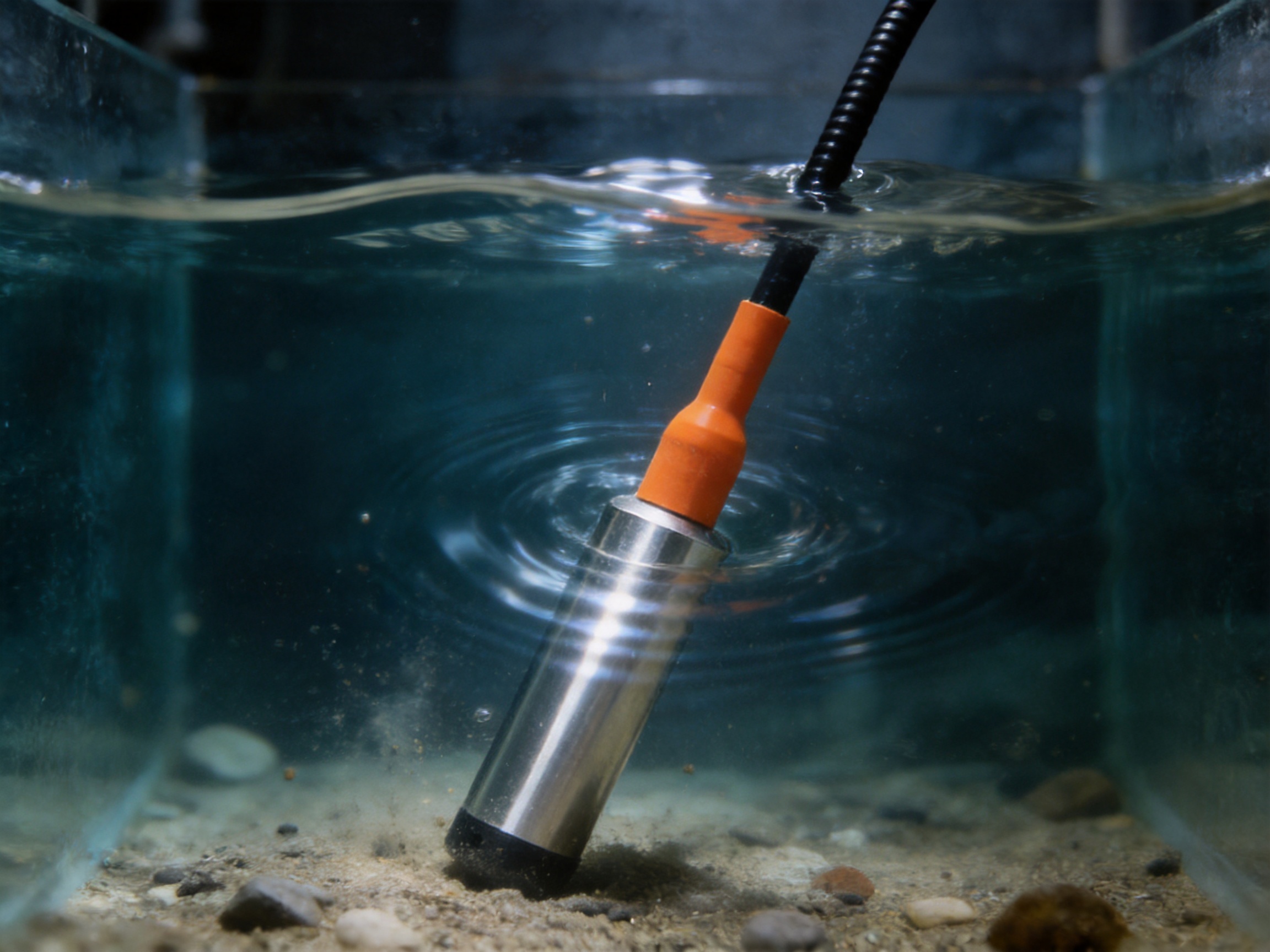
Submersible level transmitters operate in one of the most challenging environments for instrumentation. They are constantly exposed to liquid, pressure, sediment, impact risk, cable tension, and temperature variation. Any weakness in sealing, material selection, cable design, or probe shape can lead to failure. The AI-LF is built with these field realities in mind.
The complete probe is designed with 316L stainless steel. This material provides excellent structural strength and good resistance to many forms of corrosion. In water conservancy, sewage monitoring, tank level measurement, marine monitoring, and industrial liquid depth measurement, stainless steel construction helps extend product life and maintain measurement reliability.
The IP68 protection rating is essential for submerged service. IP68 indicates that the enclosure is designed to resist dust ingress and continuous immersion under specified conditions. For field users, this means the transmitter is intended for applications where it may remain underwater for long periods. In contrast, devices with lower protection ratings may be suitable only for splash exposure or temporary immersion, making them less appropriate for demanding level monitoring.
The probe has design features intended to reduce sedimentation, prevent damage from sharp objects, and discourage the growth of marine organisms. These practical details matter greatly. In rivers and reservoirs, sediment can build around sensors and distort measurement. In wastewater and drainage systems, debris can strike or scrape instruments. In marine environments, biological growth can form on submerged surfaces and compromise sensor response. The AI-LF addresses these problems through protective structural design rather than relying solely on maintenance intervention.
The cable is a special polyethylene cable with a 7.5 millimeter diameter. A submersible level transmitter depends on its cable not only for electrical connection but also for long-term sealing and mechanical support. Cable jacket quality, diameter, flexibility, and compatibility with water exposure directly affect installation reliability. The dedicated cable used with the AI-LF contributes to a more dependable field installation.
Precision Compensation Across Temperature Conditions
Pressure sensors are affected by temperature. Even high-quality sensing elements can experience zero shift and span change as temperature changes. In outdoor water monitoring, tanks exposed to sunlight, underground wells, and industrial facilities, the temperature surrounding the sensor can vary significantly. Without compensation, these variations can lead to level errors.
The AI-LF includes precision correction and compensation for the sensor's inherent pressure and temperature characteristics. Its compensation temperature range is minus 10 to 80 degrees Celsius, and its operating temperature range is minus 20 to 85 degrees Celsius. This gives the transmitter the ability to maintain practical measurement accuracy across a broad range of real-world conditions.
The product lists a zero-point temperature coefficient of plus or minus 0.05 percent full scale per degree Celsius for ranges of 5 mH2O and below, and plus or minus 0.02 percent full scale per degree Celsius for ranges above 5 mH2O. Its full-scale temperature coefficient is plus or minus 0.05 percent full scale per degree Celsius. These parameters help engineers understand expected performance under temperature variation.
The maximum design accuracy can reach 0.1 percent full scale, depending on configuration and conditions. This level of performance places the AI-LF above many basic submersible transmitters that are designed only for low-cost indication rather than dependable control and monitoring. In water management and industrial process optimization, better accuracy improves decisions. It allows operators to identify abnormal level trends, optimize pump start and stop points, reduce overflow risk, and calculate storage volume more confidently.
Resistance to Electromagnetic Interference
Modern industrial facilities contain many sources of electromagnetic interference. Variable frequency drives, large motors, switching power supplies, radio communication equipment, high-current cables, welding equipment, and lightning-induced transients can all disturb measurement signals. Level transmitters installed near pumps and electrical cabinets may be especially vulnerable.
The AI-LF is designed to meet EMC environmental requirements and has the ability to resist strong electromagnetic signal interference. This is a critical advantage over many low-end competitors. A level transmitter that performs well on a test bench but produces unstable values near pumps or motor starters can create operational risk. False level readings may cause incorrect pump operation, nuisance alarms, or missed high-level events.
RS485 digital communication also helps support reliable transmission in electrically noisy environments. The differential signaling method improves resistance to common-mode noise when wiring and grounding are properly designed. Combined with product-level EMC design, this makes the AI-LF suitable for industrial automation and remote monitoring sites where stable data is essential.
Application Areas
The AI-LF is suitable for a broad range of liquid depth and level monitoring applications. Its robust design and digital output allow it to serve both traditional industrial measurement systems and modern intelligent monitoring networks.
Shipping and Marine Monitoring
Marine and shipping environments place heavy demands on sensors. Instruments may be exposed to vibration, salt air, humidity, biological growth, and difficult maintenance conditions. The AI-LF uses 316L stainless steel construction, IP68 protection, and probe features intended to resist marine organism growth, making it suitable for marine monitoring and liquid level applications associated with ships and coastal facilities.
Water Conservancy and Hydrology
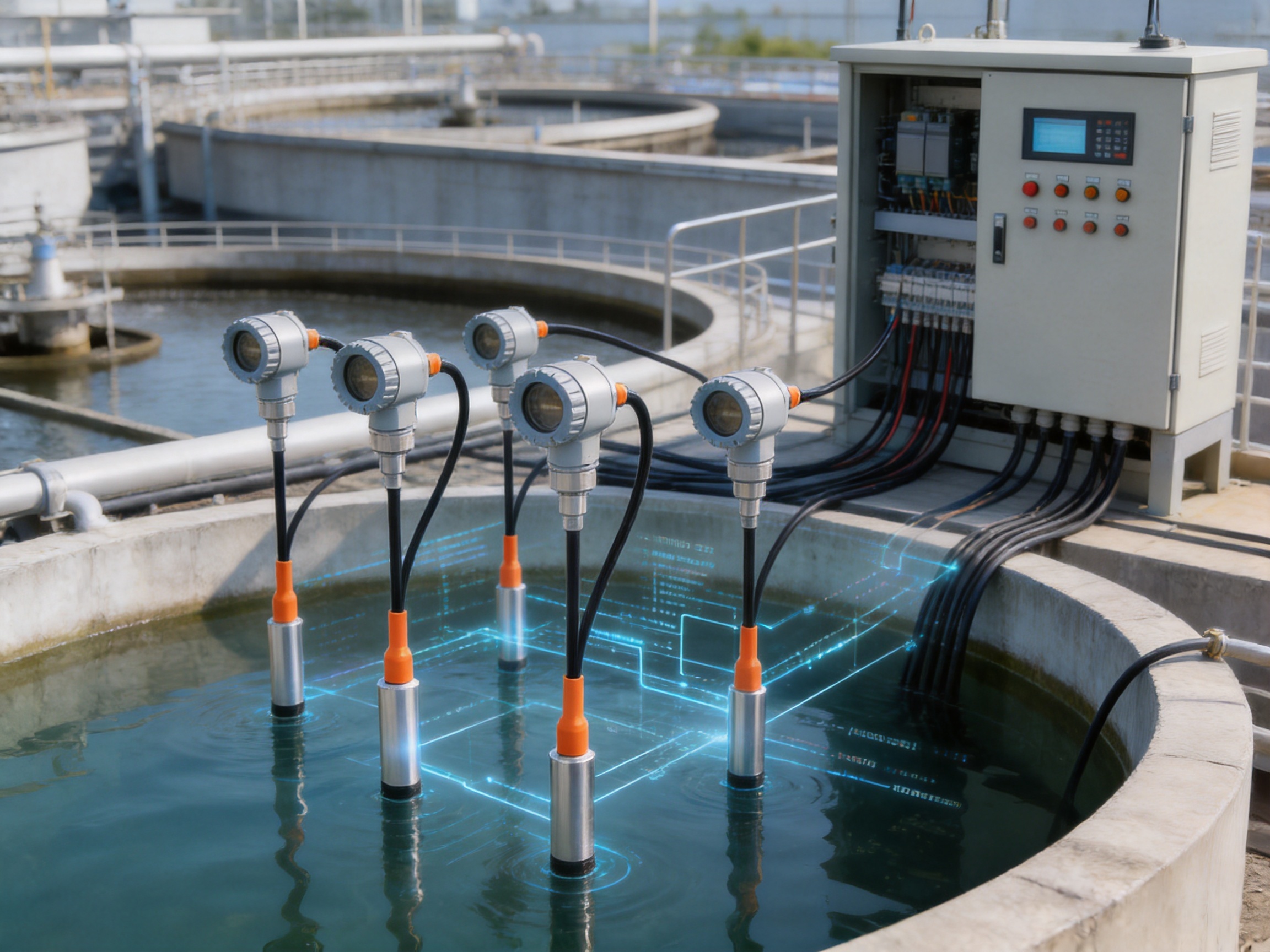
Reservoirs, rivers, channels, wells, and groundwater monitoring points require stable level data for flood prevention, water allocation, environmental observation, and infrastructure management. The AI-LF can be deployed in hydrological monitoring stations where digital data transmission to a remote terminal or data acquisition unit is required. Its wide measurement range allows use in shallow and deep water applications.
Water Tank Level Measurement
Industrial and municipal water tanks require continuous monitoring to prevent overflow, dry running of pumps, and supply interruptions. The AI-LF can be installed in tanks where reliable submersible measurement is preferred over ultrasonic or radar measurement, especially when foam, vapor, tank geometry, or obstructions make non-contact measurement difficult.
Urban Water Supply and Sewage Monitoring
Municipal water systems increasingly depend on sensor networks. Urban water supply facilities, drainage networks, and road sewage monitoring points need level data to manage pumps, detect blockages, and prevent overflow. The AI-LF's RS485 bus capability allows multiple monitoring points to be connected efficiently. Its robust construction helps it survive harsh municipal environments.
Petrochemical and Power Industry Liquid Depth Monitoring
Industrial plants often require level measurement in auxiliary systems, water treatment areas, cooling systems, wastewater treatment stations, and storage tanks. The AI-LF can monitor compatible fluids that do not corrode 316L stainless steel and fluororubber. Its resistance to electromagnetic interference is especially useful in power plants and petrochemical facilities where electrical noise is common.
Advantages Over Conventional Competitor Products
The AI-LF offers several advantages that help distinguish it from conventional submersible level transmitters. These advantages are not isolated features; they work together to improve reliability, reduce maintenance, and support intelligent operations.
Digital Communication Instead of Limited Signal Transmission
Many competitor products rely only on analog output. Analog transmission is simple but can be less convenient in multi-point networks. The AI-LF's RS485 Modbus RTU output enables multiple transmitters to connect on one bus. This makes it better suited for distributed monitoring systems, smart water networks, and industrial digital platforms.
Better Suitability for Harsh Environments
Low-cost level transmitters often fail because of poor sealing, weak cable design, or inadequate housing material. The AI-LF uses an IP68 structure, stainless steel enclosure, 316L stainless steel sensor, fluororubber sealing, and a dedicated polyethylene cable. These details improve suitability for long-term submerged installation.
Designed to Reduce Sedimentation and Biological Interference
Field maintenance is one of the largest hidden costs of level monitoring. If a sensor must be cleaned often because of sediment, debris, or biological growth, the total ownership cost rises. The AI-LF probe includes design functions for preventing sedimentation, preventing injury from sharp objects, and preventing the growth of marine organisms. This gives it a practical advantage in rivers, reservoirs, urban drainage, and marine sites.
Precision Temperature Correction
Competitor products that lack full temperature compensation may appear accurate at room temperature but drift during seasonal change or process temperature variation. The AI-LF performs precision correction and compensation across the temperature range, supporting reliable measurement in outdoor and industrial environments.
Strong Electromagnetic Compatibility
In industrial plants, electromagnetic interference can be a major reason for unstable sensor data. The AI-LF is designed to meet EMC environmental requirements and resist strong electromagnetic interference. This supports dependable operation near pumps, drives, motors, and industrial electrical systems.
High Device Density on One Bus
The ability to connect up to 99 transmitters through the RS485 bus is valuable for projects with many monitoring points. This reduces wiring complexity and can lower system cost. It also simplifies expansion when additional measurement points are required.
Advanced Manufacturing and Quality Strengths
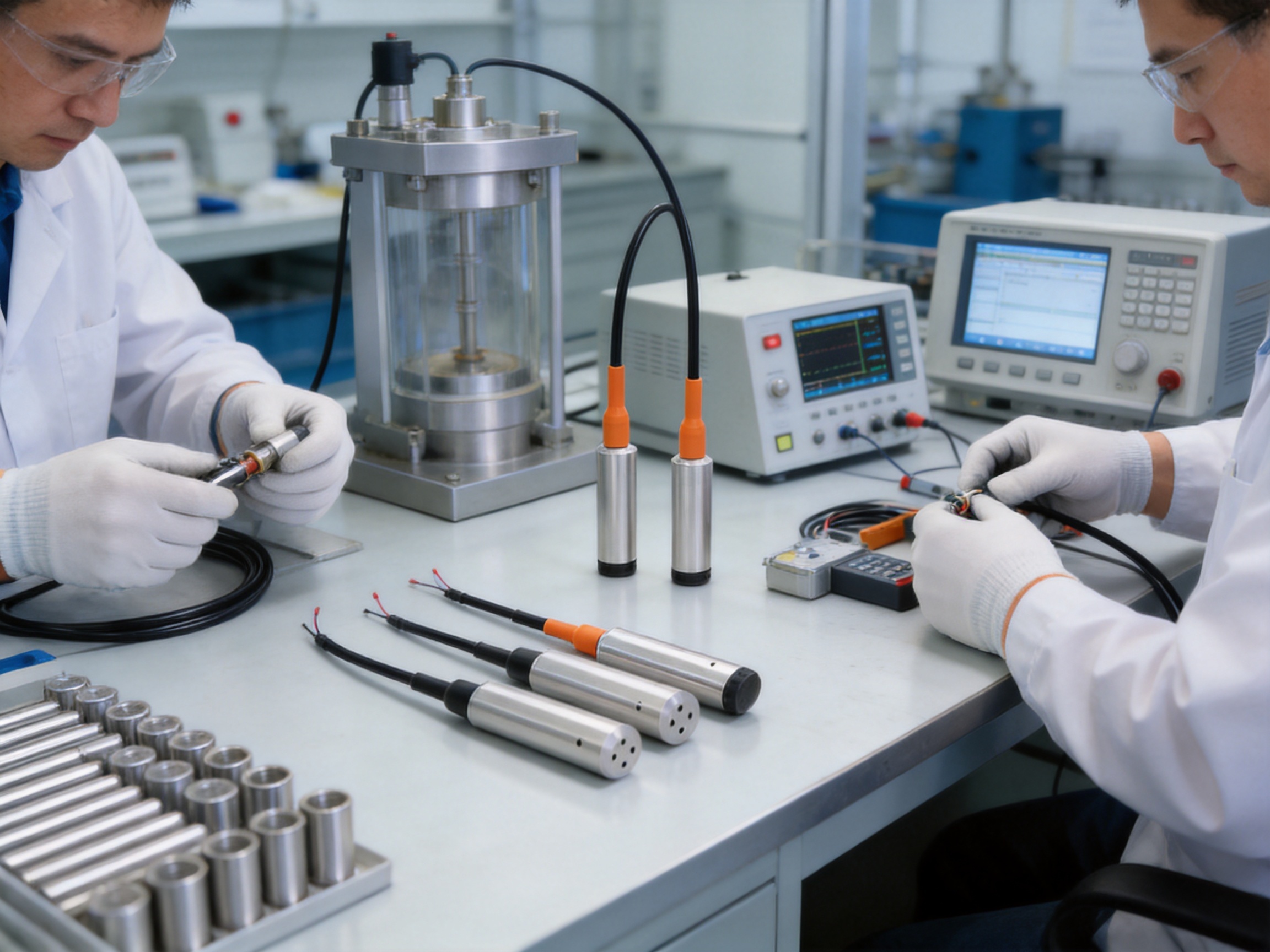
The performance of a submersible level transmitter depends not only on design but also on manufacturing discipline. Even a well-designed sensor can fail if welding, sealing, calibration, cable assembly, cleanliness, or inspection is inconsistent. ASY Electronics (JiaXing) Co.,Ltd. supports the AI-LF with manufacturing practices aligned with ISO 9001:2015 quality management system requirements and internal company standards.
The company's broader capabilities are rooted in data sensing and intelligent connectivity. Its product portfolio includes broadband power line carriers, wireless temperature monitoring systems, transmitters, flow meters, and automatic door controllers. This cross-disciplinary background is important because modern level transmitters are no longer simple mechanical devices. They require sensing technology, embedded electronics, digital communication, anti-interference design, and industrial data integration knowledge. The AI-LF benefits from this combination of sensor engineering and intelligent connectivity expertise.
Manufacturing a reliable submersible transmitter begins with material selection. Stainless steel components must meet mechanical and corrosion-resistance requirements. Sealing materials must be chosen according to fluid compatibility and long-term compression performance. Cable assemblies must support underwater service and maintain insulation performance. The AI-LF uses 316L stainless steel, fluororubber, and a special polyethylene cable to address these needs.
Precision assembly is equally important. The sensor must be mechanically protected while maintaining accurate pressure transfer. Sealing points must be controlled to prevent leakage. Electrical connections must be stable and protected against moisture ingress. The digital circuit must be assembled and tested for communication reliability. A high-quality manufacturing process controls each of these stages to reduce variation between units.
Calibration and compensation are central to product value. The AI-LF is corrected and compensated for pressure and temperature characteristics. This process requires controlled testing, accurate reference equipment, and repeatable procedures. By applying correction across the temperature range, the manufacturer improves the transmitter's real-world accuracy, not just its nominal specification.
Inspection and verification further support product reliability. The AI-LF is manufactured and inspected according to quality management requirements and company standards. Long-term verification has demonstrated stable and reliable data operation. For users, this means the product is not merely designed for reliability; it is validated through practical performance observation.
Role in Smart Factories and Industrial IoT
Industrial facilities are rapidly shifting from isolated instruments to connected data systems. Level data is increasingly used in energy management, predictive maintenance, process optimization, and environmental compliance. The AI-LF fits this transition because it provides digital output that can be integrated into industrial data platforms.
In a smart factory or intelligent utility network, a level transmitter may feed data to a PLC for immediate control, to an RTU for remote monitoring, to an edge gateway for local analysis, and to a management platform for long-term trend evaluation. The RS485 Modbus RTU interface supports this type of architecture. It allows the transmitter to become part of a larger data ecosystem rather than remaining a standalone measurement device.
For equipment condition monitoring, liquid level can reveal abnormal system behavior. A sump level rising faster than expected may indicate pump degradation or blockage. A tank level falling unexpectedly may indicate leakage or process imbalance. A river or groundwater level trend may support hydrological decision-making. Accurate and stable level data therefore contributes to operational intelligence.
For refined energy management, level measurement can optimize pump operation. Pumps consume significant energy in water supply, wastewater treatment, industrial circulation, and drainage systems. Better level data enables more efficient pump scheduling, reduces unnecessary starts, and supports demand-based operation. Over time, this can contribute to lower energy use and improved equipment life.
Installation and Integration Considerations
Correct installation is essential for any level transmitter. The AI-LF is designed for rugged use, but good engineering practice still determines final system performance. Before installation, users should confirm the measurement range, liquid compatibility, cable length, communication requirements, power supply voltage, and mounting method.
The transmitter should be installed at a position where it can sense representative liquid pressure. In tanks, the probe is typically placed near the bottom while avoiding areas where sludge, heavy turbulence, or direct pump suction may disturb measurement. In rivers or open water, the installation should protect the cable and probe from debris, strong flow impact, and unauthorized movement.
The cable should not be sharply bent, crushed, or used improperly as the only mechanical support in high-stress conditions. Strain relief should be provided where appropriate. Cable routing should avoid high-voltage lines, motor power cables, and strong interference sources when possible. Although RS485 is robust, proper wiring practice remains important.
For RS485 networks, device addresses must be assigned correctly. Communication parameters such as baud rate, parity, and stop bits must match the host system. Termination and biasing should be considered for long bus lengths or complex networks. Shielding and grounding should be implemented according to site conditions and system design requirements.
The pressure reference and venting arrangement should also be handled properly if the cable structure includes atmospheric reference features typical of gauge pressure submersible transmitters. Care should be taken to prevent moisture blockage or condensation from affecting reference performance. System designers should follow the manufacturer's installation guidance for the specific configuration supplied.
Maintenance Benefits
The AI-LF is designed to reduce maintenance pressure in demanding environments. Its corrosion-resistant materials, IP68 protection, anti-sedimentation probe design, and digital stability all contribute to lower field intervention requirements. However, periodic inspection remains valuable, especially in wastewater, sediment-heavy, or marine environments.
Maintenance teams should check whether the probe is physically damaged, whether the cable jacket is intact, whether sediment or debris has accumulated around the sensor, and whether communication values remain stable. In multi-device RS485 networks, communication diagnostics can help identify wiring or address issues quickly.
The long-term stability specification of up to 0.3 percent full scale per year supports reliable trend analysis and reduces frequent recalibration needs. This is important in remote monitoring points where site visits are expensive. Stable data also improves operator confidence. When measurements remain consistent, teams can make decisions based on trends instead of questioning sensor reliability.
Selection Guidance
Selecting the correct level transmitter requires matching the instrument to the application. Users should first define the required measuring range. A transmitter should have enough range for the maximum expected liquid depth while maintaining suitable resolution and accuracy for normal operating levels.
Next, users should confirm media compatibility. The AI-LF is suitable for various fluids that do not corrode 316L stainless steel and fluororubber. If the liquid contains aggressive chemicals, high chloride concentration, solvents, oils, or unusual contaminants, compatibility should be carefully reviewed.
Environmental conditions must be considered. The operating temperature range is minus 20 to 85 degrees Celsius, while the compensation temperature range is minus 10 to 80 degrees Celsius. If the site operates outside these ranges, engineering review is required. Storage and transportation conditions are also broad, with a storage range of minus 40 to 125 degrees Celsius.
Communication architecture should be planned before purchase. If the site already uses Modbus RTU, integration is straightforward. If analog input systems are used, a gateway or appropriate receiving device may be needed. For large monitoring networks, RS485 bus design should be planned carefully to ensure reliable communication.
Accuracy requirements should be based on operational purpose. For simple high-level alarms, moderate accuracy may be sufficient. For inventory calculation, hydrological analysis, or process optimization, higher accuracy is valuable. The AI-LF's maximum design accuracy of 0.1 percent full scale gives it strong potential for demanding applications.
Q&A Section
What is the AI-LF Intelligent Submersible Level Transmitter used for?
It is used for measuring liquid level or liquid depth by sensing hydrostatic pressure. Typical applications include water tanks, rivers, reservoirs, groundwater monitoring, marine monitoring, urban water supply, sewage systems, petrochemical auxiliary systems, and power industry liquid monitoring.
What makes this transmitter suitable for submerged installation?
The transmitter uses a stainless steel enclosure, 316L stainless steel sensor structure, fluororubber sealing, a special polyethylene cable, and an IP68 protection rating. These features help it operate reliably during long-term immersion.
How does RS485 Modbus RTU output benefit users?
RS485 Modbus RTU allows digital communication with PLCs, RTUs, data acquisition systems, gateways, and SCADA platforms. It supports multi-device networking, and up to 99 transmitters can be connected through the RS485 bus, reducing wiring complexity in distributed systems.
How accurate is the transmitter?
The transmitter can achieve a maximum design accuracy of 0.1 percent full scale depending on configuration and conditions. The listed accuracy range also includes up to 0.5 percent full scale. Its temperature compensation helps maintain stable measurement across practical operating conditions.
What liquids can it measure?
It is suitable for various fluids that do not corrode 316L stainless steel and fluororubber. Users should verify compatibility for aggressive chemicals, high-salinity liquids, or unusual industrial fluids before selection.
Can it be used in electrically noisy industrial environments?
Yes. The transmitter is designed to meet EMC environmental requirements and resist strong electromagnetic interference. Its RS485 differential communication also supports reliable data transmission when installed with proper wiring and grounding practice.
What is the operating temperature range?
The operating temperature range is minus 20 to 85 degrees Celsius. The compensation temperature range is minus 10 to 80 degrees Celsius, and the storage temperature range is minus 40 to 125 degrees Celsius.
How does it compare with ordinary analog submersible level transmitters?
Compared with many ordinary analog transmitters, the AI-LF provides digital RS485 Modbus communication, stronger multi-point networking capability, full temperature correction, robust IP68 construction, anti-sedimentation probe design, and enhanced electromagnetic interference resistance.
Is it suitable for smart factory or Industrial IoT systems?
Yes. Its digital output and Modbus compatibility make it suitable for industrial data integration, remote monitoring, equipment condition monitoring, energy management, and process optimization systems.
What manufacturing strengths support product reliability?
The product is manufactured and inspected under ISO 9001:2015 quality management system requirements and company standards. Its design references demanding industrial, environmental, marine, and calibration requirements. Precision material selection, assembly control, temperature compensation, calibration, and verification support stable long-term performance.
Conclusion
The AI-LF Intelligent Submersible Level Transmitter is a strong solution for users who require accurate, stable, and digitally connected liquid level measurement in demanding environments. Its high-performance diffused silicon pressure sensor, 316L stainless steel construction, IP68 protection, RS485 Modbus RTU communication, temperature compensation, and resistance to electromagnetic interference make it suitable for a wide range of industrial and municipal applications.
Its practical design details provide clear advantages over many competitor products. The probe is designed to reduce sedimentation, resist sharp-object damage, and help prevent marine organism growth. The digital bus output supports up to 99 transmitters, allowing scalable monitoring networks. The wide measuring range from 1 to 200 meters of water column supports both shallow and deep applications. The compensation and stability specifications help maintain dependable data over time.
Backed by ASY Electronics (JiaXing) Co.,Ltd.'s strengths in data sensing, intelligent connectivity, industrial hardware development, and quality-controlled manufacturing, the AI-LF is more than a conventional level sensor. It is a field-ready intelligent measurement device for modern water systems, industrial plants, marine facilities, and smart infrastructure. For organizations seeking reliable level data, lower maintenance pressure, and easier digital integration, it offers a balanced combination of ruggedness, accuracy, and intelligent communication.
References
1. International Organization for Standardization. ISO 9001:2015 Quality Management Systems: Requirements.
2. International Electrotechnical Commission. IEC 60529: Degrees of Protection Provided by Enclosures.
3. International Electrotechnical Commission. IEC 61000 Series: Electromagnetic Compatibility Standards.
4. Modbus Organization. Modbus Application Protocol Specification.
5. Liptak, Bela G. Instrument Engineers' Handbook: Process Measurement and Analysis.
6. Dunn, William C. Fundamentals of Industrial Instrumentation and Process Control.
7. American Water Works Association. Water Utility Instrumentation and Control Practices.