

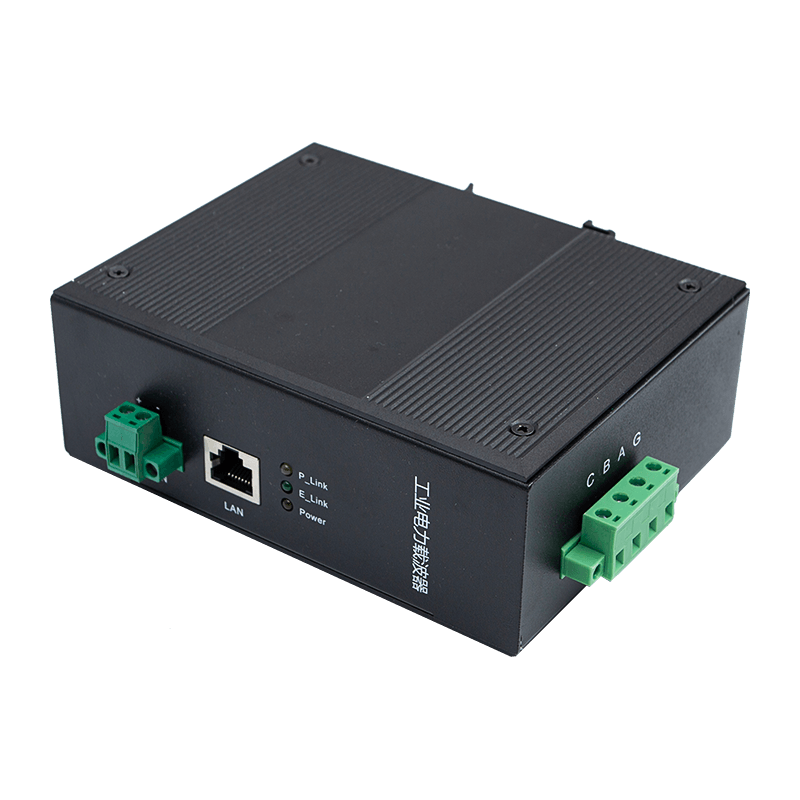
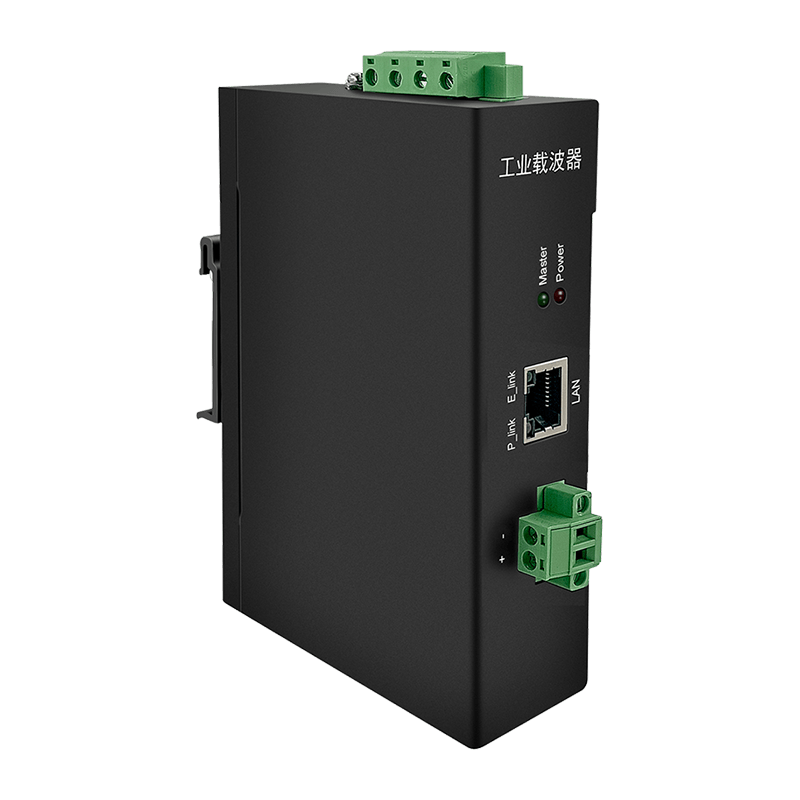
Modern industrial equipment increasingly depends on continuous data exchange. Robots, inspection systems, surveillance cameras, automated production lines, and mobile machines must share video, control commands, status information, and diagnostic data even when conventional network cabling is difficult or impossible to install. In many of these applications, the available infrastructure already includes a two-core DC power cable, a slip contact cord, a sliding rail, a twisted pair, or another conductive path. Using that existing conductor for both power and communication can significantly simplify system design.
The DC High-Speed Power Line Communication Module, model KS700Q, is designed for this exact requirement. It combines broadband power line communication, DC power input, online power supply, Power over Communication functions, Power over Ethernet support, and industrial-grade operation in one compact device. It can transmit network data through various two-core cables while drawing operating power from a DC line. This approach reduces additional wiring, supports long-distance industrial communication, and helps system integrators deploy reliable connectivity in locations where standard Ethernet cable is unsuitable.
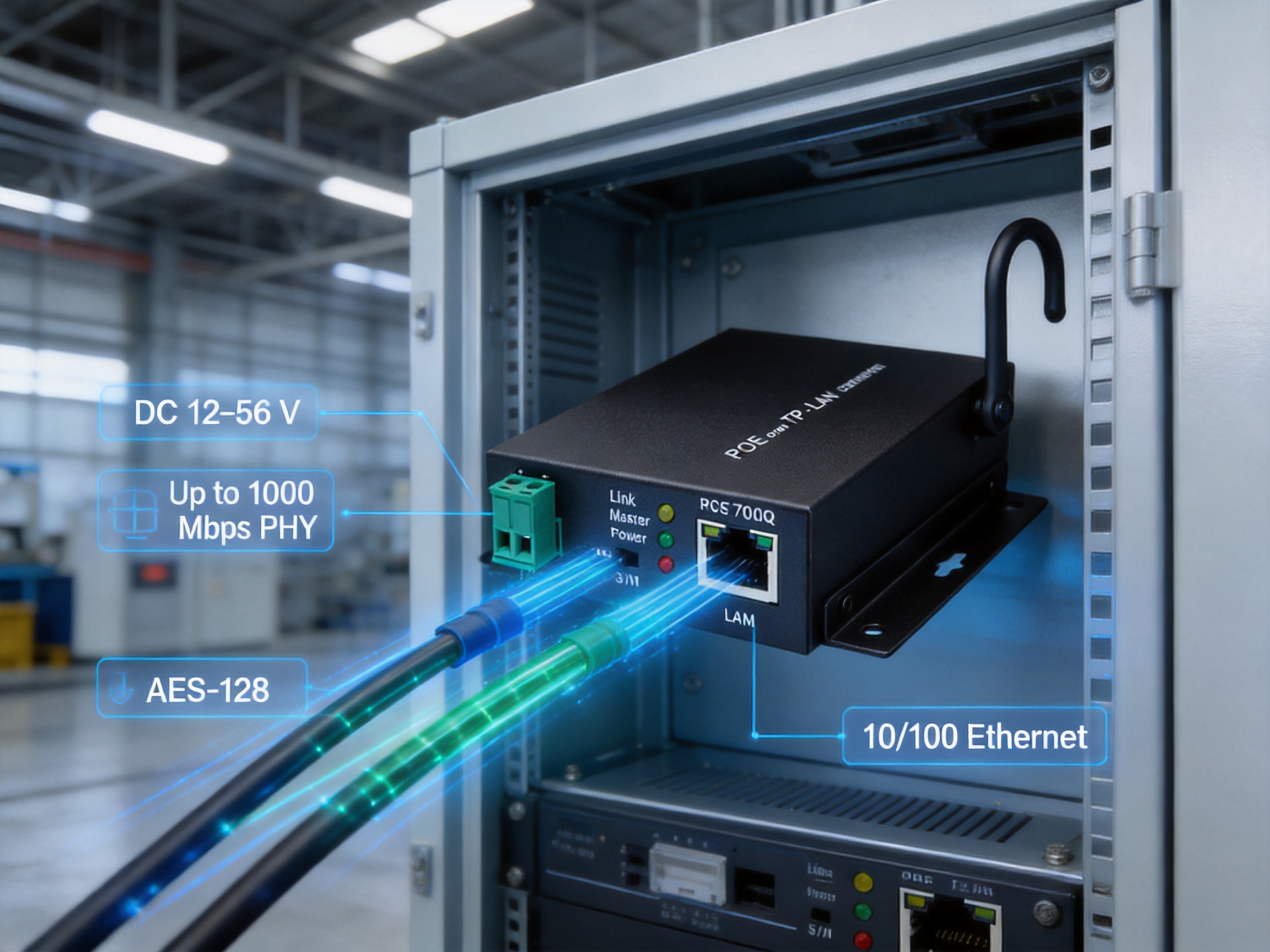
The module is intended for high-speed communication over DC power lines below 56 volts. It supports a physical-layer rate of up to 1,000 Mbps, Ethernet interfaces with 10/100 Mbps self-adaptation, automatic network formation, transparent data transmission, multiple network topologies, AES-128 encryption, and relay networking. Its design is particularly suitable for moving or rotating equipment, including slide-rail robots, inspection robots, pipeline robots, underwater robots, and high-definition video surveillance systems.
Why Power Line Communication Matters in Industrial Systems
Traditional industrial networks usually separate power delivery and data communication. A machine may require one cable for DC power, another cable for Ethernet, additional wiring for control signals, and specialized connectors for moving sections. This arrangement can increase cable volume, installation time, maintenance requirements, and failure points. It can also be difficult to implement when a device moves along a rail, passes through a rotating joint, or operates inside a narrow pipeline.
Power line communication addresses this challenge by transmitting high-frequency data over an existing power conductor. The DC supply continues to deliver energy, while a modulated communication signal travels through the same cable. At the receiving end, the module separates the communication signal from the power input and provides a standard network connection to the connected equipment.
This method is valuable where installing a dedicated Ethernet cable would be expensive, mechanically unreliable, or physically impractical. A sliding contact cord, for example, may already be required to provide power to a moving robot. Adding a separate data cable could introduce bending stress, drag, abrasion, or limitations on the machine’s travel range. With a power line communication module, the same conductors can support both functions.
The approach also simplifies equipment architecture. Engineers can use a compact communication node at each end of a power line rather than redesigning an entire machine around specialized cabling. Existing networked devices, such as cameras, industrial computers, programmable controllers, and embedded controllers, can connect through Ethernet while the underlying transmission path uses a DC cable.
Product Overview
The KS700Q is a broadband DC power carrier communication device intended for industrial and mobile applications. It can obtain operating power from a DC cable and transfer network data through almost any suitable two-core wire. Supported transmission media include slip contact cords, twisted pairs, coaxial cables, DC parallel lines, and other power conductors within the specified electrical range.
The module operates over a carrier frequency range of 2 to 28 MHz and uses OFDM modulation. Orthogonal Frequency Division Multiplexing divides the communication channel into multiple subcarriers, allowing the system to use available bandwidth efficiently and maintain communication in environments where individual frequency sections may experience interference. This is especially useful in factories and transportation systems where motors, switching devices, relays, variable-frequency drives, and other electrical equipment can create a complex noise environment.
With a maximum physical-layer rate of up to 1,000 Mbps, the platform provides substantial capacity for industrial traffic. The Ethernet interface supports 10 Mbps and 100 Mbps self-adaptation, allowing connection to common network equipment without manual speed configuration. The communication path is transparent to supported network protocols, which means system developers can use familiar IP-based applications and industrial communication methods.
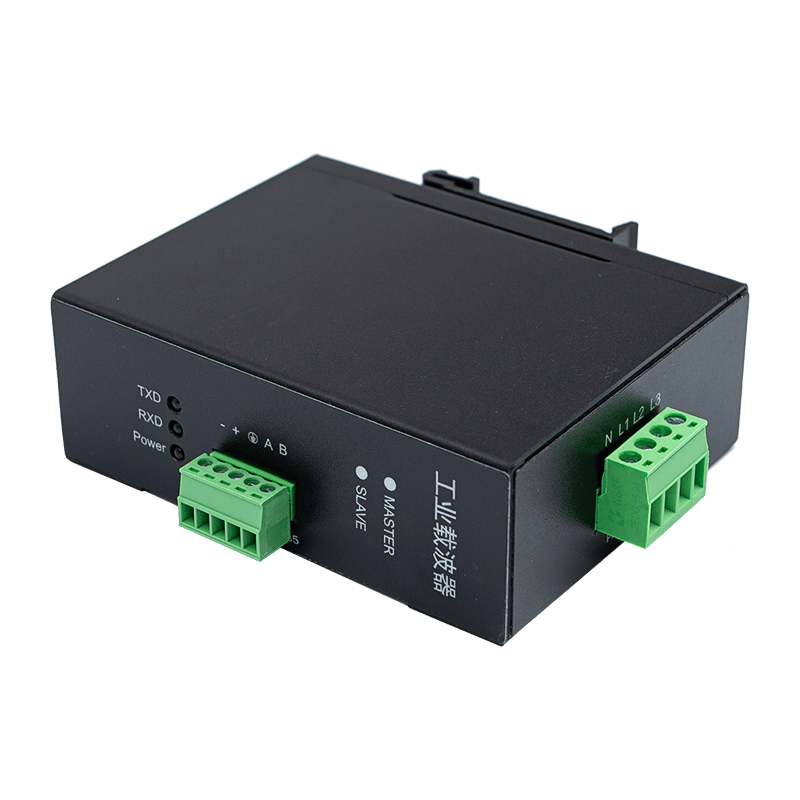
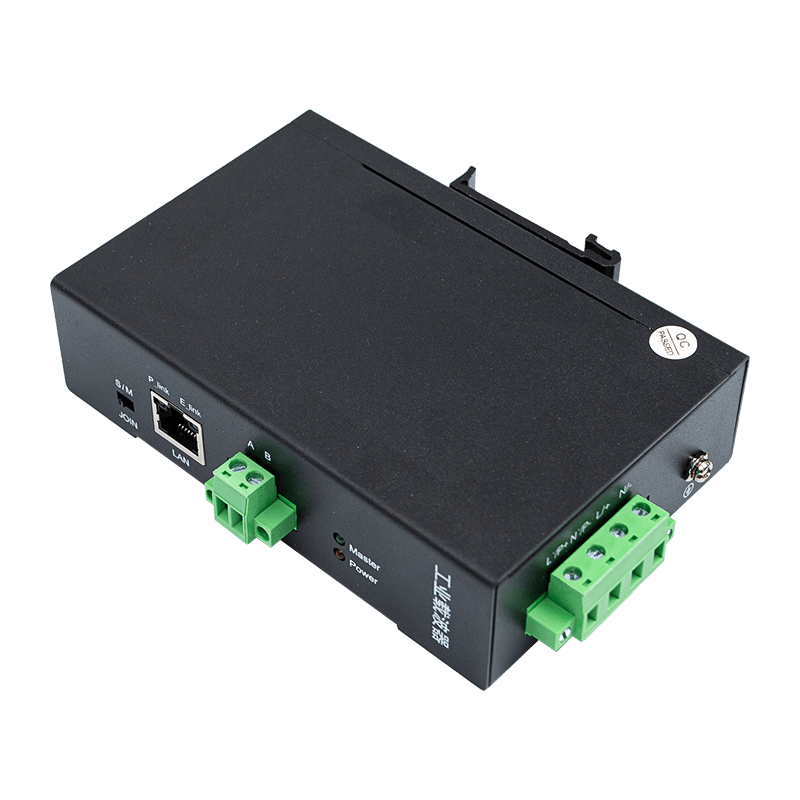
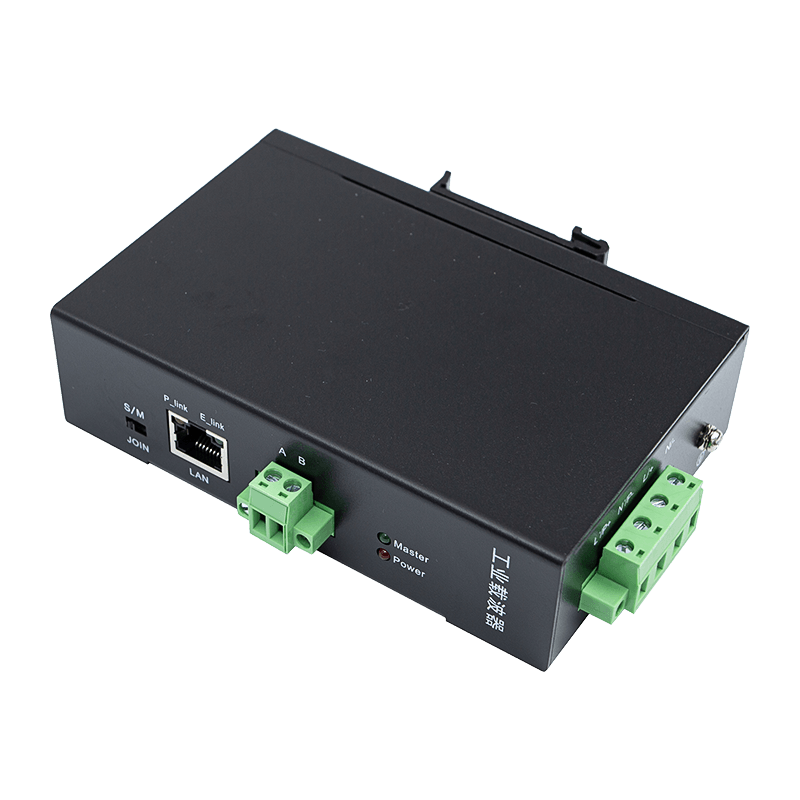
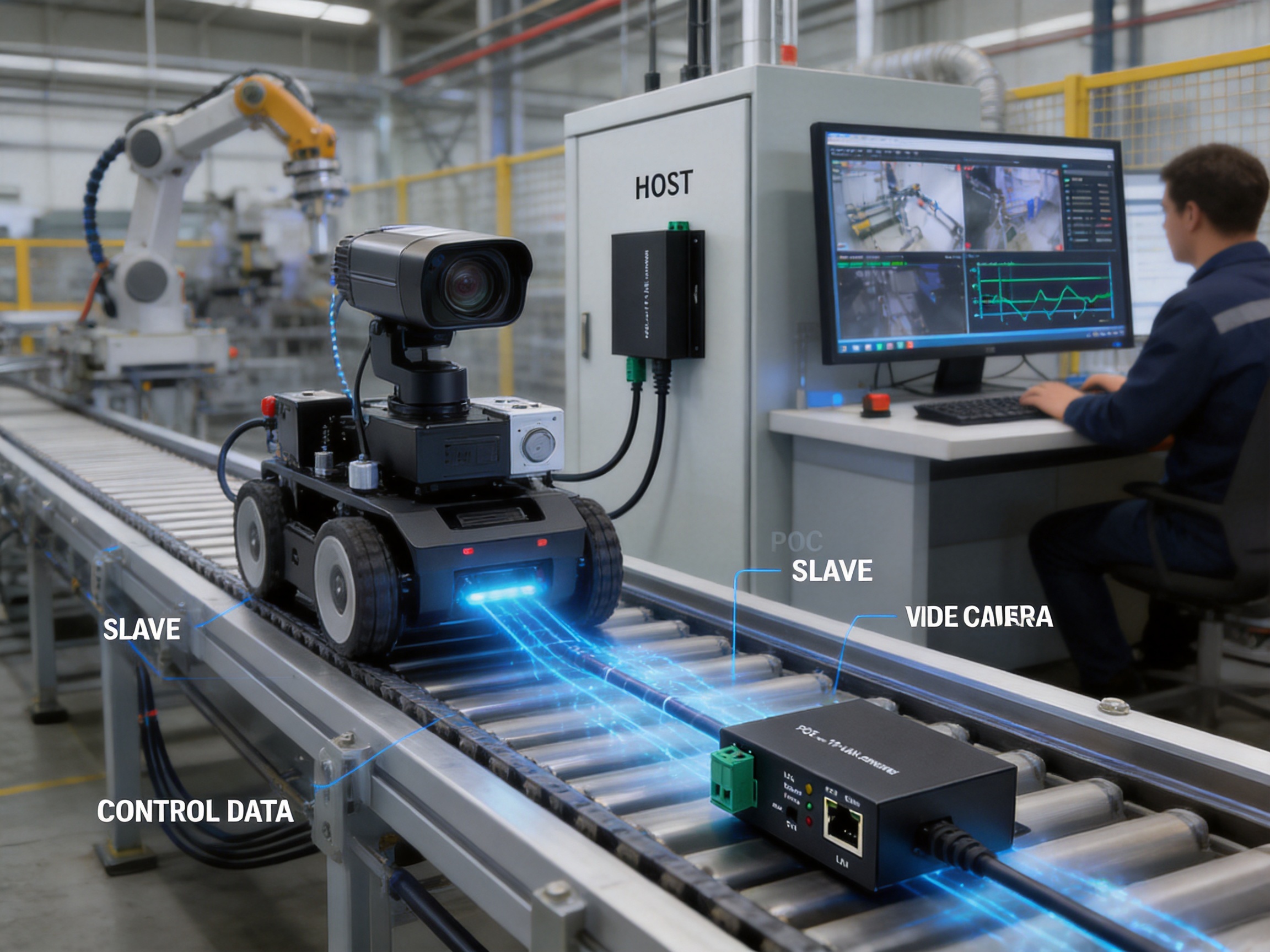
The module can be configured as a host or slave through an onboard master-slave DIP switch. The M-side operates as the host and the S-side operates as the slave. A basic installation can use one host and one slave for point-to-point communication. Larger systems can connect one host with multiple slaves, creating a network suitable for multiple cameras, sensors, controllers, or robot sections.
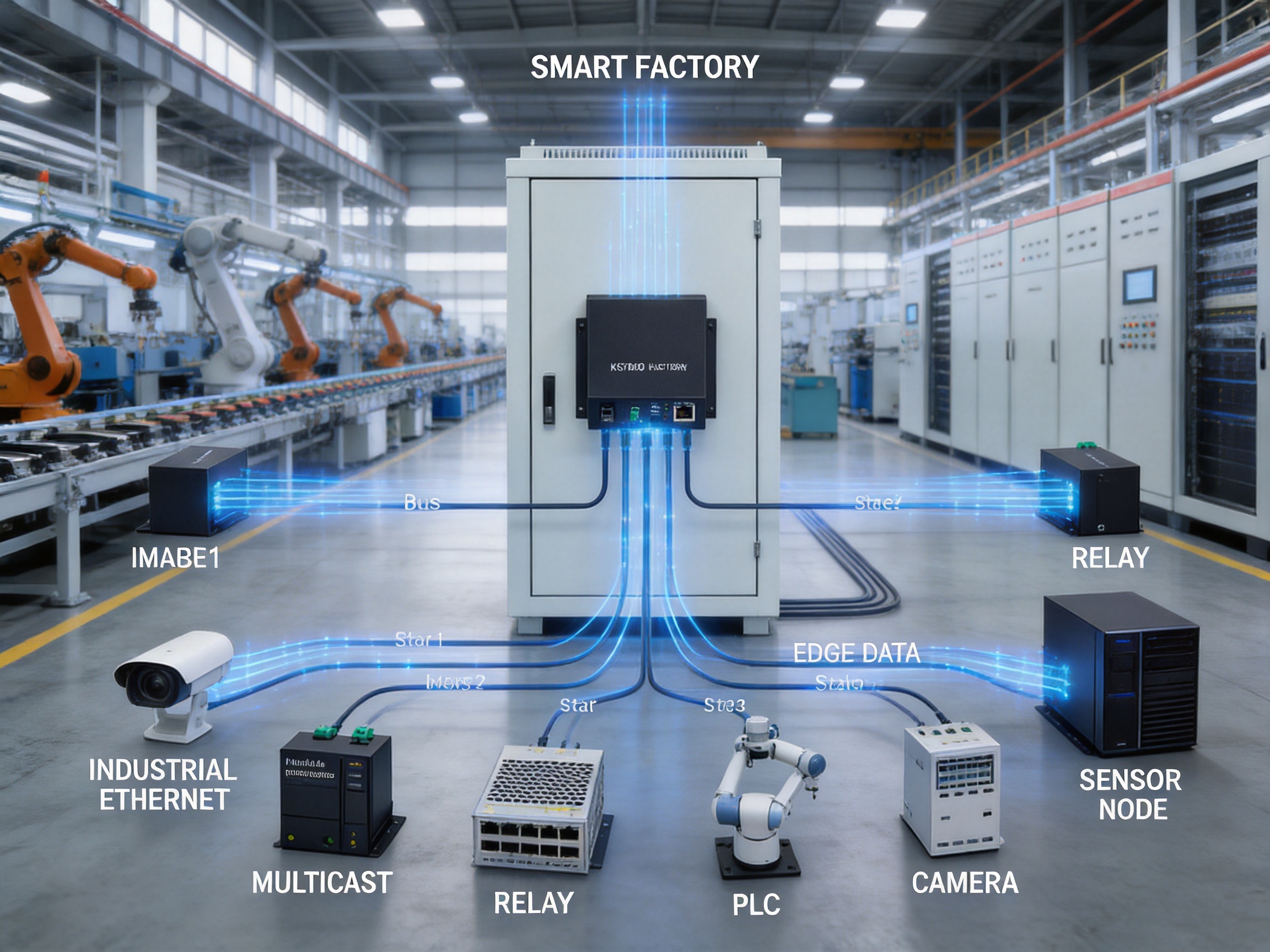
Automatic networking and an internal routing algorithm reduce the amount of configuration required during installation. The device supports bus, star, tree, and hybrid network structures, allowing designers to select a topology that matches the physical layout of the machine or facility.
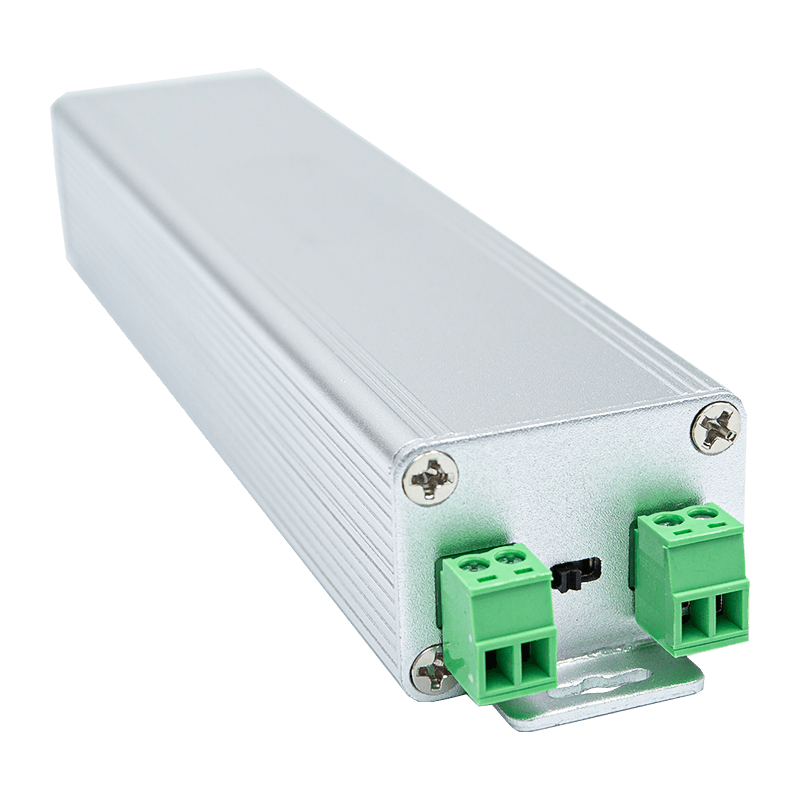
Its compact enclosure measures 94.5 by 71 by 26.5 millimeters and weighs approximately 260 grams. An ear-hook mounting method allows convenient installation inside electrical cabinets, on machine frames, or beside moving equipment. The operating temperature range is -40°C to 85°C, and the unit supports continuous industrial operation around the clock.
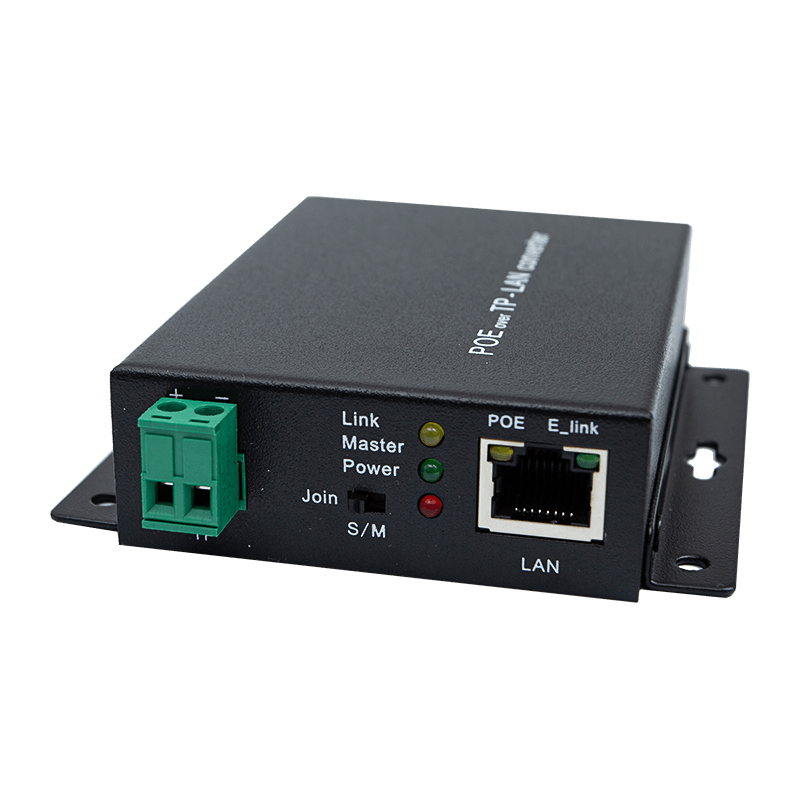
DC High-Speed Power Line Communication (PLC) Module
Core Technical Advantages
High-Speed Data Transmission
The module delivers a maximum physical-layer rate of up to 1,000 Mbps. In practical system design, the available application throughput depends on the cable type, distance, electrical environment, protocol overhead, and network structure. Nevertheless, the high physical-layer capacity provides useful headroom for demanding traffic such as high-definition video, machine images, inspection data, control information, and maintenance records.
Compared with low-speed serial communication solutions, the module is better suited to modern industrial applications that require network-based software, remote monitoring, video transmission, or cloud-connected equipment. Instead of limiting a machine to a small set of simple control messages, a broadband power line network can support multiple types of traffic over the same infrastructure.
Communication Through Existing DC Conductors
One of the most important advantages is the ability to use a DC power line as the communication medium. The device supports a DC supply range of 12 to 56 volts and is suitable for power line communication below DC 56 volts. This makes it compatible with many low-voltage industrial systems, mobile platforms, robotic assemblies, and distributed monitoring devices.
The communication interface is designed for any suitable two-core cable within the specified voltage conditions. The same principle can be applied to shielded twisted-pair cable, ordinary power line, slip contact cord, sliding rail wiring, and related conductors. This flexibility helps engineers select the cable according to mechanical requirements rather than being forced to install a particular Ethernet cable.
Online Power Supply and POC Capability
The module supports POC, or Power over Communication, functionality. It can draw power from the DC communication line without requiring a separate local power supply. This is especially beneficial for remote or moving endpoints where installing a separate adapter would be inconvenient.
By combining power delivery and data transmission, the system can reduce the number of connectors and simplify field wiring. A remote camera, sensor node, or communication terminal may receive its operating energy through the same path used for network traffic. This can improve installation efficiency and reduce the physical space required for cable routing.
POE Support for Network Devices
The module also supports POE functions and POE cameras. This capability allows compatible network equipment to receive power through the Ethernet connection. In an industrial surveillance installation, for example, the power line communication module can transfer data through the DC infrastructure while supplying a compatible camera through its network interface.
The combination of POC and POE creates a flexible power architecture. Power can enter the module from the DC line, pass through the communication system, and support a network endpoint. The exact power budget and compatibility conditions must be confirmed during system engineering, but the underlying architecture can simplify installations involving cameras and other Ethernet-powered devices.
Long Transmission Distance
Transmission distance depends on the cable type and the electrical conditions of the installation. The specified reference distances include up to 1,000 meters over shielded twisted-pair cable, up to 500 meters over ordinary power line, and up to 300 meters over slip contact cord.
These distances provide useful flexibility for distributed industrial systems. A long inspection line, extended conveyor, production building, or mobile rail installation can often be covered without installing active Ethernet switches at frequent intervals. When additional range is needed, the relay version can support up to ten relay levels, subject to network planning and the characteristics of the deployed cable.
Multiple Network Topologies
Industrial equipment rarely follows a single standardized layout. Some systems are arranged along one line, some use a central machine with several branches, and others combine fixed and moving sections. The KS700Q supports bus, star, tree, and hybrid network topologies.
A bus arrangement may be appropriate for a linear production line or a long sliding rail. A star structure can connect several endpoints to a central host. A tree network can extend communication from a primary cabinet to multiple machines or inspection zones. A hybrid structure can combine these methods where the physical environment requires different cable paths.
Automatic network formation and integrated routing reduce the need for complicated manual address planning at the communication-layer level. This can shorten commissioning time and make it easier to expand an installation with additional slave devices.
Transparent Data Transmission
The module is designed for complete transparent transmission. It carries network packets without requiring application software to be rewritten for a proprietary communication method. Supported protocols and standards include TCP/IP, UDP, Profinet, HomePlug, Modbus-TCP, IEEE 802.3, IEEE 802.3u, IEEE 802.3ab, IEEE 1905.1, IEEE 1900, and IEEE 1901.
Transparent transmission is important for integrators because it protects existing software investments. A controller that already communicates through Ethernet can often be connected through the module without changing its core application logic. Video monitoring software, industrial control platforms, data acquisition systems, and remote maintenance tools can continue to use familiar network interfaces.
Industrial Environmental Performance
Factory environments can expose communication equipment to temperature changes, electrical noise, vibration, dust, and continuous operating cycles. The KS700Q is specified for an operating temperature range from -40°C to 85°C, an operating humidity range of 20% to 95% without condensation, and a storage temperature range from -40°C to 85°C.
The industrial-grade design supports 7-day, 24-hour operation. Its stated power consumption is no more than 3 watts, helping reduce heat generation and energy demand in installations containing multiple communication nodes. The combination of low power consumption and a wide temperature range is useful for compact cabinets, mobile platforms, and remote enclosures where cooling capacity may be limited.
Data Protection and Multicast Capability
Data security is increasingly important in industrial networks. The module supports AES-128-bit encryption, providing protection for communication traffic moving over the power line. Encryption does not replace broader network security practices, but it adds a protection layer to the physical communication path.
The unit supports IGMP multicast protocols and up to 128 nodes. Multicast can be valuable in video surveillance and industrial control applications where the same data stream must be delivered to several authorized endpoints. For example, a camera stream may be required simultaneously by a monitoring station, a recording server, and an analytics computer.
Technical Specifications
| Item | Specification |
|---|---|
| Model | KS700Q |
| Power supply | DC 12–56 V |
| PLC signal port | 0–56 V through any suitable two-core cable |
| Supported media | Power line, slip contact cord, twisted pair, coaxial cable, DC parallel line, and related conductors |
| Modulation | OFDM |
| Carrier frequency | 2–28 MHz |
| Maximum physical-layer rate | Up to 1,000 Mbps |
| Ethernet interface bandwidth | 10/100 Mbps self-adaptive |
| Reference transmission distance | Up to 1,000 m on shielded twisted pair; 500 m on ordinary power line; 300 m on slip contact cord |
| Data delay | Within 10 ms |
| Packet loss probability | Less than 0.1‰ under specified conditions |
| Power consumption | Not more than 3 W |
| Encryption | AES-128-bit |
| Network structure | Bus, star, tree, and hybrid |
| Multicast | IGMP support; maximum 128 nodes |
| Dimensions | 94.5 × 71 × 26.5 mm |
| Weight | Approximately 260 g |
| Mounting | Ear-hook mounting |
| Operating temperature | -40°C to 85°C |
| Operating humidity | 20%–95%, non-condensing |
| Operating mode | Industrial-grade, continuous 7 × 24 operation |
Advantages Compared with Conventional Alternatives
Compared with Dedicated Ethernet Cabling
Dedicated Ethernet remains an effective choice where a stable cable route is available. However, it may be difficult to install in moving equipment, rotating assemblies, slip systems, and compact mechanical structures. A separate data cable may require drag chains, special bend protection, rotating joints, additional connectors, and more complex maintenance procedures.
The KS700Q uses the DC power conductor already required by the equipment. This can reduce cable duplication and simplify the mechanical interface. In a moving robot, fewer cables may mean less bending stress and a lower risk of interference with the machine’s travel path. In an inspection system, the existing power line can become the communication backbone without major structural modifications.
Compared with Wireless Communication
Wireless networks can be convenient, but industrial wireless performance may be affected by metal structures, electromagnetic reflections, shielding, interference, obstructions, roaming requirements, and the need for reliable coverage throughout a moving area. Some applications also impose security or latency requirements that make a wired physical path preferable.
Power line communication provides a guided transmission medium. It does not depend on radio coverage or antenna placement, and it can be integrated into equipment that already has a DC supply route. For enclosed machinery, underground equipment, underwater robots, or areas with heavy metal structures, using the power line may be more predictable than deploying wireless access points.
Compared with Low-Speed Serial Links
Serial interfaces are widely used in industrial automation, but they may not provide enough bandwidth for high-definition video, large diagnostic files, software updates, or multiple simultaneous services. They may also require application-specific gateways when different devices use different serial standards.
The KS700Q presents a standard Ethernet connection to connected devices and supports common IP-based and industrial protocols. This makes it more suitable for applications that need scalable data exchange, remote access, video monitoring, and integration with modern industrial software platforms.
Compared with Multiple Active Network Switches
Long conventional Ethernet networks often require switches, repeaters, or fiber converters. Each active device introduces a power requirement, an enclosure, additional connectors, and another potential maintenance point. Power line communication can reduce the number of active network components where the cable conditions and distance are suitable.
The relay version can extend the communication path through multiple relay levels. This provides an alternative to placing conventional network equipment at every section of a long or mechanically complicated installation. Proper engineering remains essential, but the architecture can be more compact and easier to integrate into low-voltage equipment.
Manufacturing and Product Development Strengths
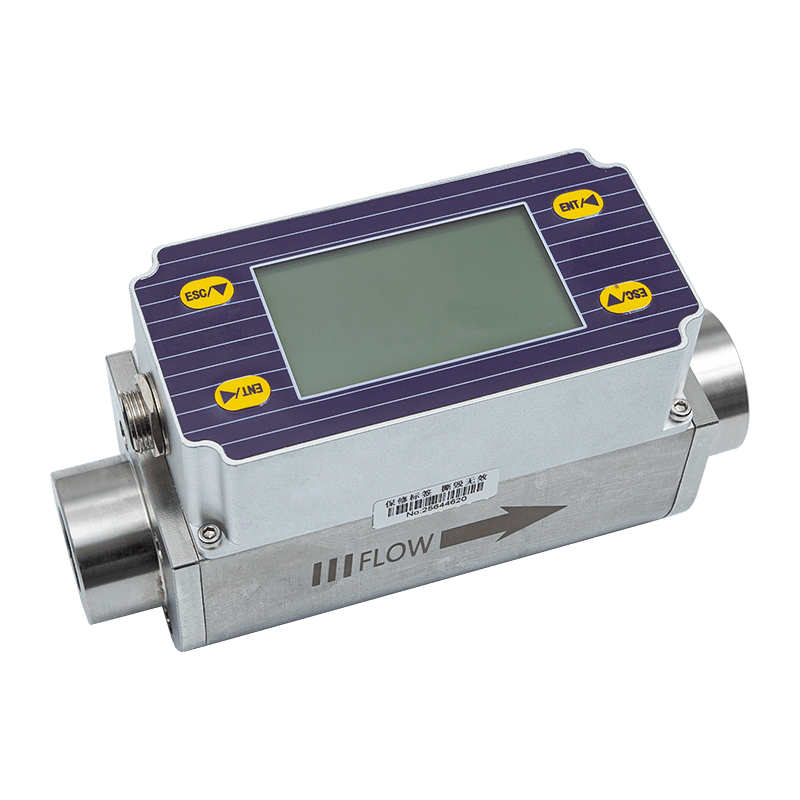
The product is developed and manufactured by ASY Electronics, a high-tech enterprise focused on smart factory technologies, data sensing, and intelligent connectivity. Its broader product portfolio includes broadband power line carriers, wireless temperature monitoring systems, industrial transmitters, thermal gas mass flow meters, and automatic door controllers.
This product range indicates a development focus that combines sensing, communication, measurement, and control. Such a combination is important for industrial communication hardware because the final product must operate as part of a complete equipment system rather than as an isolated network accessory.
Self-Developed Edge Hardware
The company emphasizes self-developed edge-layer hardware products. Edge hardware operates close to machines and sensors, where environmental conditions can be more demanding than those found in an office network. The communication module must therefore combine electrical interface design, signal processing, embedded software, mechanical packaging, and industrial application knowledge.
Self-developed hardware gives the manufacturer greater control over product optimization. Communication frequency, power input, network behavior, enclosure dimensions, mounting method, and application-specific functions can be coordinated within one design process. This can be advantageous for customers requiring custom cable interfaces, modified enclosures, specific network structures, or integration with other industrial products.
Integration of Communication and Power Functions
The KS700Q is not simply a conventional Ethernet adapter placed next to a power supply. Its design integrates power extraction, broadband signal transmission, network interfacing, encryption, routing, and optional power delivery. This requires careful coordination between the power circuit and the communication circuit.
A well-integrated design can help reduce the size of the overall system and minimize unnecessary external components. It also enables the manufacturer to test the interaction between power input, data transmission, POC functions, and POE output as part of a unified product platform.
Industrial-Oriented Engineering
The stated temperature range, humidity range, low power consumption, continuous operation capability, and high-interference resistance reflect an industrial design orientation. For machine builders, these features are more important than a simple laboratory data rate. A communication device must continue to perform during long operating cycles and under changing environmental conditions.
Industrial-oriented engineering also involves selecting appropriate components, designing stable power conversion, protecting communication interfaces, controlling heat, and ensuring reliable mechanical installation. The compact ear-hook enclosure helps integrators mount the device without occupying the space required by a larger cabinet appliance.
Manufacturing Consistency and Quality Focus
Reliable communication products depend on consistency from unit to unit. A professional manufacturing process should control printed circuit board assembly, component placement, soldering quality, connector installation, enclosure assembly, labeling, and final inspection. Communication devices also require functional testing of power input, Ethernet negotiation, master-slave operation, data transmission, and network behavior.
For industrial customers, production quality is not limited to whether a unit powers on. The product must maintain stable performance across batches and remain compatible with the intended cables and network equipment. A manufacturer with expertise in industrial electronics can establish testing procedures around the actual operating conditions of field applications.
Although specific factory certifications and production-line details should be confirmed directly for a particular project, the product’s industrial specifications demonstrate a focus on long-term deployment rather than short-term consumer networking. Customers can work with the manufacturer to define application tests based on cable length, load type, temperature, vibration, electromagnetic noise, and required network traffic.
Customization and Application Support
Industrial systems often require more than an off-the-shelf product. A customer may need a particular connector, cable arrangement, mounting method, power range, communication topology, or enclosure adaptation. A manufacturer involved in both hardware development and industrial data integration is better positioned to evaluate such requirements.
Application support may include cable selection, host-slave planning, relay placement, POE compatibility, multicast configuration, network topology design, and environmental assessment. These services can help reduce the risk that a technically suitable module is installed in an unsuitable electrical environment.
Application Scenarios
Slide-Rail Robots
Slide-rail robots often move along a fixed path while receiving DC power through a sliding contact cord or rail system. Transmitting camera images, motion status, control commands, and diagnostic information through the same power path can eliminate the need for a separate moving Ethernet cable.
A host module can be installed in the fixed control cabinet, while a slave module travels with the robot or is installed at the remote end. The communication link can support an onboard industrial computer, camera, controller, or sensor system. The reference distance of up to 300 meters over slip contact cord provides flexibility for extended rails, although the actual result must be verified using the selected contact system.
Inspection Robots
Inspection robots require reliable communication for live video, sensor readings, alarms, and remote commands. In industrial plants, these robots may travel through areas where wireless access is obstructed or where installing a separate communication cable is impractical.
Using the power supply line as the communication path can simplify the robot’s tether or rail interface. The high physical-layer rate supports high-definition video applications, while the low stated delay helps maintain responsive control and monitoring. Engineers should still perform application-level latency tests where motion control or safety-related operation depends on communication timing.
Pipeline Robots
Pipeline robots operate in confined spaces and may use specialized power conductors. Conventional wireless communication is often unsuitable in enclosed metal pipelines, while standard Ethernet cabling may be difficult to route. A DC power line communication system can provide a practical wired link through conductors already required for the robot.
Transparent transmission allows the robot to use IP-based monitoring, video, and diagnostic applications. The compact module can be integrated into the robot’s electronics compartment, provided that the enclosure, power input, temperature, and mechanical conditions are properly evaluated.
Underwater Robots
Underwater robotic systems frequently use tethered power and communication arrangements. A combined power and data path can reduce tether complexity and help preserve flexibility. The communication module itself should be installed in a protected enclosure appropriate for the underwater environment; the stated humidity and temperature specifications do not by themselves indicate water ingress protection.
When correctly integrated with a suitable waterproof cable and enclosure, the power line communication architecture can support video, navigation data, control messages, and equipment status over the tether. The system designer should evaluate cable impedance, attenuation, connector performance, shielding, and the effect of the underwater environment on the complete transmission path.
High-Definition Video Surveillance
Security and process-monitoring cameras often need both power and network connectivity. In locations where a DC power line already exists, the KS700Q can provide a communication bridge and support POE cameras. This is useful for production lines, warehouses, tunnels, remote machine areas, and mobile platforms.
Multicast support can help distribute selected video streams to multiple authorized systems. Network planners should consider camera bit rate, compression settings, recording requirements, node count, and the total capacity of the power line communication segment.
Smart Manufacturing and Energy Management
Smart factories depend on equipment data for condition monitoring, refined energy management, and production process optimization. Not every legacy machine has a modern Ethernet cable available. A power line communication module can help connect distributed equipment without replacing all existing low-voltage wiring.
The module can serve as an edge communication component between machines, controllers, sensors, and industrial computing platforms. It may support the movement of Modbus-TCP data, IP traffic, diagnostic information, and monitoring streams across a common physical infrastructure.
System Architecture and Deployment Guidance
Host and Slave Configuration
Before installation, each unit should be assigned its proper role using the master-slave DIP switch. The M-side is configured as the host, and the S-side is configured as the slave. A point-to-point system normally uses one host and one slave. A multi-endpoint system can use one host with multiple slaves, provided that the network design remains within the supported node and traffic limits.
Incorrect role configuration can prevent a link from forming or cause unexpected network behavior. The configuration should be documented during commissioning, especially when several modules are installed in a large cabinet or distributed machine.
Cable Evaluation
Cable selection is one of the most important factors in power line communication performance. The specified distance values are reference figures rather than universal guarantees. Actual results may vary according to conductor size, insulation, shielding, impedance, joints, contact resistance, electrical noise, and the presence of connected loads.
Slip contact cords deserve special attention because mechanical wear and changing contact resistance can influence signal quality. Engineers should inspect the contact arrangement, cable routing, current load, movement speed, and maintenance cycle. Shielded twisted pair may offer a longer reference distance and more predictable transmission characteristics when the mechanical application allows it.
Power Compatibility
The input supply must remain within the DC 12–56 V range. The equipment connected to the communication side must also be evaluated for voltage, current, and POE compatibility. POC and POE functions should be designed as part of the complete power budget rather than treated as unlimited power sources.
Power supply noise can affect communication quality. Industrial power systems should use appropriate protection, grounding, filtering, and surge-control practices. The module’s use in a particular electrical system should be verified through testing, especially where large motors or switching loads share the same power path.
Network Planning
The supported bus, star, tree, and hybrid structures allow flexible deployment, but network planning remains necessary. Designers should identify the host, slave devices, relay positions, expected traffic, multicast requirements, and maintenance access points. Video applications may consume considerably more bandwidth than simple sensor monitoring.
For large networks, traffic segmentation and appropriate industrial network management can help maintain predictable performance. The maximum supported node count for IGMP multicast is stated as 128 nodes, but the practical network capacity depends on application traffic and cable conditions.
Environmental Installation
The wide operating temperature range supports demanding environments, but the module should still be installed away from unnecessary heat sources, water spray, condensation, corrosive chemicals, and excessive mechanical shock. The humidity specification applies to non-condensing conditions. If condensation or liquid exposure is possible, the complete enclosure and installation method must provide suitable protection.
The ear-hook mounting method allows flexible placement, but the mounting surface should be mechanically stable. In moving equipment, the device should be secured against vibration and cable movement. Connectors should have adequate strain relief so that repeated movement does not transfer force to the circuit board.
Operational Reliability and Maintenance
A power line communication installation should be commissioned with baseline measurements. These can include supply voltage, current consumption, cable length, link establishment time, data throughput, latency, packet loss, temperature, and performance under expected machine loads.
Maintenance teams should monitor the condition of slip contacts, cable terminals, connectors, and DC supplies. A gradual increase in contact resistance or electrical noise may reduce communication performance before a complete failure occurs. Recording normal operating values makes it easier to identify deterioration.
The stated data delay is within 10 milliseconds and the packet loss probability is less than 0.1 per mille under specified conditions. These values are useful design references, but field performance should be validated under the actual traffic and electrical environment. A system carrying video and control traffic may require different acceptance criteria from a system carrying periodic sensor data.
Low power consumption of no more than 3 watts helps limit heat accumulation. Nevertheless, multiple modules installed in a sealed cabinet can produce combined heat. Cabinet thermal design should consider the number of devices, ambient temperature, airflow, and the heat produced by connected power equipment.
Business Value for System Integrators
The KS700Q can create value beyond the communication link itself. By reducing the need for separate data wiring, it can lower installation complexity and help shorten machine integration time. A smaller cable bundle may also improve mechanical flexibility and make future maintenance easier.
Its Ethernet-facing architecture allows integrators to use common software and network equipment. This reduces the need to create a proprietary application layer for every machine. The ability to support multiple topologies also allows one product family to serve different equipment layouts.
For original equipment manufacturers, the compact form factor can help preserve space inside a robot, control box, or machine enclosure. The same module can be applied to several product designs, allowing engineering teams to standardize their communication architecture while adapting the cable and topology to each machine.
For factory operators, the technology can provide a path for upgrading legacy equipment. Instead of replacing every power cable with a new Ethernet infrastructure, operators may be able to add communication nodes to existing DC systems. This can be particularly useful when production downtime must be minimized or when cable installation is disruptive.
How the Product Supports Smart Factory Development
Smart manufacturing depends on timely and trustworthy data from the production floor. Sensors measure temperature, pressure, flow, vibration, current, and other conditions. Controllers execute commands, cameras inspect products, and edge computers analyze machine status. Each function depends on a communication infrastructure that can operate close to the equipment.
The KS700Q contributes to this infrastructure by connecting data endpoints through existing low-voltage power paths. Its role can range from a simple point-to-point bridge to a component in a larger distributed network. Because it supports standard network protocols, it can connect with supervisory systems, industrial computers, programmable controllers, and data platforms.
When combined with wireless temperature monitoring systems, industrial transmitters, thermal gas mass flow meters, and other sensing products, power line communication can become part of a broader industrial data strategy. Measurements can be gathered at the edge, transferred through a reliable physical path, and used for condition monitoring, energy management, predictive maintenance, and production optimization.
This integrated approach reflects the company’s broader focus on data sensing and intelligent connectivity. The objective is not only to move packets but also to help factories convert machine data into practical operational improvements.
Recommended Selection and Evaluation Process
Customers considering the module should begin by documenting the application. Important information includes the DC voltage, cable type, cable length, moving or fixed installation, connected equipment, expected data rate, environmental temperature, humidity, network topology, and power requirements.
The next step is to identify whether the installation needs point-to-point communication, one host with multiple slaves, or a relay network. If the system includes high-definition cameras, the expected video bit rate and the number of simultaneous streams should be calculated. If the system uses multicast, the network behavior should be tested with the intended receivers.
A sample installation should then be evaluated using the actual cable and electrical loads. Testing should include startup, continuous operation, machine movement, motor switching, maximum data traffic, temperature variation, and recovery after power interruption. This process provides more reliable information than evaluating the module with a short laboratory cable alone.
Finally, the customer and manufacturer should confirm production requirements, connector options, mounting details, packaging, technical documentation, and after-sales support. For high-volume projects, manufacturing consistency and supply capability are as important as the initial technical specification.
Frequently Asked Questions
What is a DC power line communication module?
It is a device that transmits network data through a DC power conductor. The same cable can provide electrical power and carry a high-frequency communication signal. The module separates these functions and provides an Ethernet connection for the connected equipment.
What voltage does the KS700Q support?
The specified power supply range is DC 12–56 V. The PLC signal port is intended for suitable two-core cables carrying voltage from 0 to 56 V. The complete installation should be checked to ensure that the power source, cable, connected devices, and protection components are compatible.
Can it work with a slip contact cord?
Yes. The product is specifically designed for applications involving slip contact cords and can transmit through a slip contact cable. The reference transmission distance is up to 300 meters for slip contact cord. Actual performance depends on cable construction, contact quality, electrical noise, and mechanical conditions.
Does it require a separate power adapter at the remote end?
The product supports online power supply and POC functionality, allowing the communication port to draw power from the DC line. Whether a separate power supply is required depends on the endpoint power demand, system voltage, POE requirements, and the complete installation design.
Can it support POE cameras?
Yes. The product supports POE functions and POE cameras. Engineers should confirm the power requirements and compatibility of the selected camera before deployment.
What is the maximum communication speed?
The maximum physical-layer rate is up to 1,000 Mbps. The Ethernet interface is specified as 10/100 Mbps self-adaptive. Application throughput will vary according to cable conditions, network traffic, protocol overhead, and connected equipment.
What communication protocols are supported?
The module supports transparent transmission for TCP/IP, UDP, Profinet, HomePlug, Modbus-TCP, IEEE 802.3, IEEE 802.3u, IEEE 802.3ab, IEEE 1905.1, IEEE 1900, IEEE 1901, and related network traffic.
How are host and slave roles configured?
The roles are selected using the device master-slave DIP switches. The M-side is configured as the host, and the S-side is configured as the slave. A point-to-point system generally requires one host and one slave.
Can several slave devices connect to one host?
Yes. The product supports communication from one host to multiple slaves. The practical network size and performance depend on the topology, cable conditions, traffic volume, and application requirements.
Does the module support network relays?
The relay version supports up to ten relay levels. Relay planning should consider total distance, cable quality, node placement, power availability, and the required application throughput.
Is the product suitable for outdoor installation?
The product has a specified operating temperature range of -40°C to 85°C and a humidity range of 20%–95% without condensation. Outdoor use requires a suitable protective enclosure and environmental design. The module specifications alone do not establish resistance to rain, immersion, ultraviolet exposure, or corrosive conditions.
How does it compare with wireless communication?
It uses a guided physical medium rather than radio transmission. This can be advantageous in metal structures, enclosed machinery, pipelines, and areas where wireless coverage is difficult. Wireless communication may still be preferable where no suitable conductor exists or where mobility is unrestricted.
What industries can use this product?
Potential applications include industrial automation, smart manufacturing, slide-rail robots, inspection robots, pipeline robots, underwater robots, high-definition video surveillance, machine monitoring, and other low-voltage systems requiring combined power and data transmission.
Conclusion
The DC High-Speed Power Line Communication Module provides a practical way to add broadband networking to industrial systems that already use DC power lines. Its ability to transmit data through slip contact cords, twisted pairs, ordinary power lines, coaxial cables, and other two-core conductors gives system designers considerable flexibility.
High physical-layer speed, long reference transmission distances, OFDM modulation, automatic networking, multiple topologies, transparent protocol support, AES-128 encryption, multicast capability, POC, and POE support distinguish the module from simpler communication adapters. Its compact dimensions, low power consumption, wide operating temperature range, and continuous-duty design further support industrial deployment.
The product is particularly valuable where dedicated Ethernet cabling is mechanically difficult, wireless communication is unreliable, or low-speed serial links cannot support modern data requirements. By combining power and communication over an existing DC path, it can reduce wiring complexity and help connect mobile machinery, remote inspection equipment, surveillance cameras, and smart factory assets.
Backed by a manufacturer focused on self-developed edge hardware, intelligent connectivity, sensing, and industrial data integration, the module can also serve as part of a broader smart manufacturing solution. Proper cable evaluation, power planning, environmental protection, and application testing remain essential, but the KS700Q offers a strong foundation for reliable industrial power line networking.
References
1. Product technical information for the DC High-Speed Power Line Communication Module, model KS700Q.
2. Industrial Ethernet and power line communication design principles.
3. Orthogonal Frequency Division Multiplexing communication fundamentals.
4. IEEE 802.3 Ethernet standards and related physical-layer specifications.
5. IEEE 1901 broadband power line communication principles.
6. Industrial network planning practices for automation, video surveillance, and edge connectivity.
7. Smart factory architecture and industrial data integration guidelines.