

Introduction
Modern industrial facilities increasingly depend on communication systems that operate through existing electrical infrastructure. Power-line communication, including high-speed industrial PLC and HD-PLC networks, can reduce cabling requirements, simplify installation, and connect equipment across large production areas. However, the same power network that carries data may also contain frequency converters, servo drives, inverters, motors, switching equipment, and other sources of electrical interference.
Frequency converters are especially challenging. They use high-speed switching circuits to control motor speed and torque, producing harmonics, surges, common-mode noise, and conducted electromagnetic interference. When these disturbances travel through a shared power line, they may weaken communication signals, cause packet loss, create unstable connections, or interfere with other industrial devices. In severe cases, communication equipment may experience over-voltage, over-current, overheating, unexpected operation, or complete rejection of the converter system.
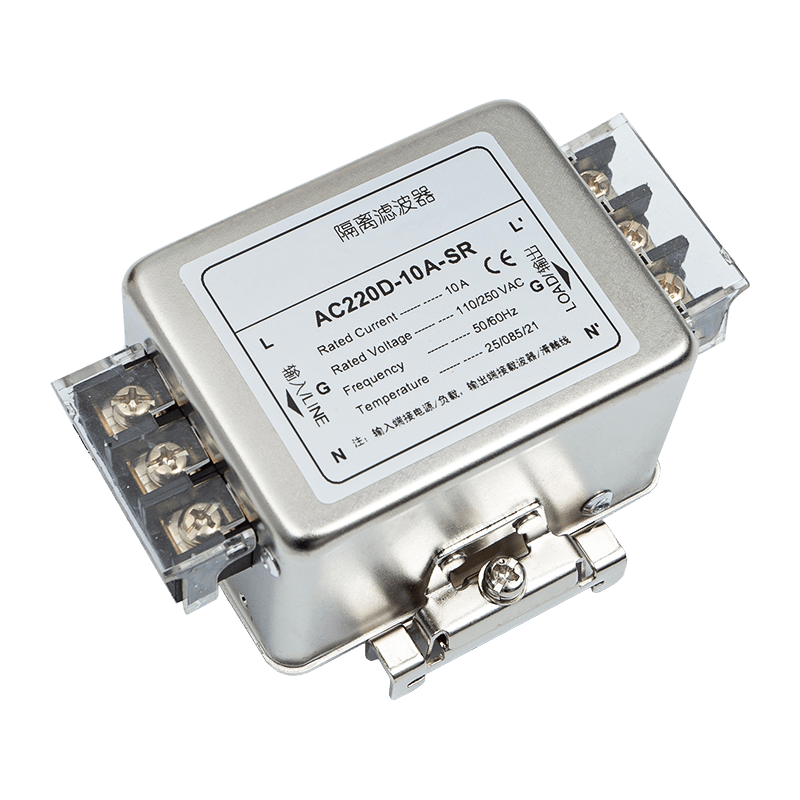
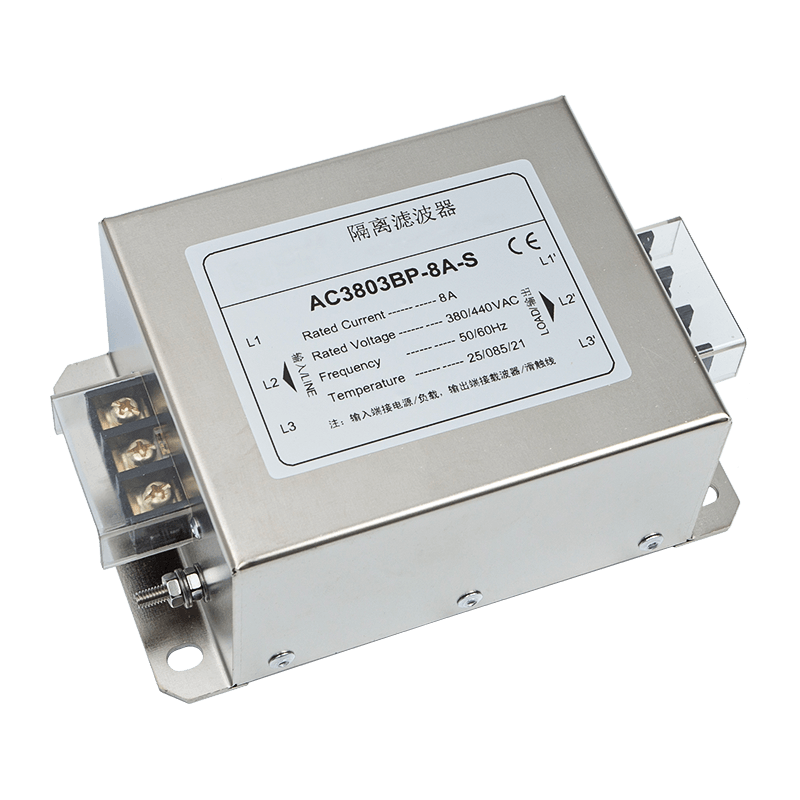
The AC3803BP dedicated isolation filter is designed to address these conditions. It is a three-phase power filter intended for frequency converters, servo systems, inverters, and large industrial drives. In addition to reducing interference, it helps isolate carrier signals and provides a secondary filtering effect for power-line communication applications. Its broad current range, high-voltage design, multiple wiring options, and suitability for demanding industrial environments make it a practical component for industrial IoT and smart-factory infrastructures.
This article explains the filter’s operating purpose, technical advantages, application value, installation considerations, manufacturing strengths, and role in reliable industrial communication. It also compares the product’s capabilities with common limitations found in general-purpose filters and explains how a specialized design can improve system performance.
Dedicated Isolation Filter for Frequency Converters
The Industrial Communication Challenge
Industrial communication networks operate in environments that are considerably more demanding than offices or residential buildings. Motors start and stop frequently, loads change rapidly, and equipment may be distributed across long cable runs. Large machines often share the same electrical distribution system, allowing disturbances generated by one device to propagate to another.
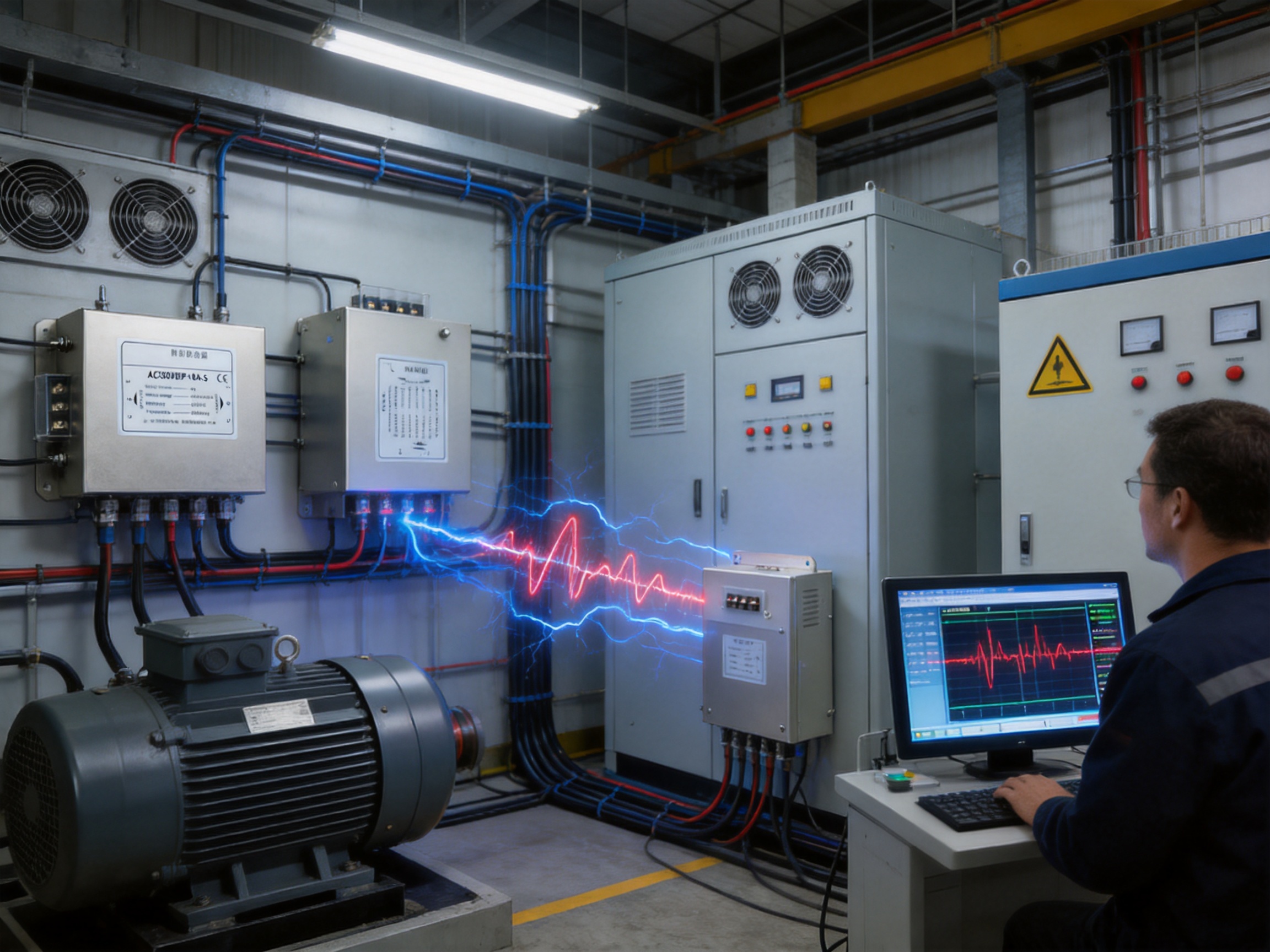
Frequency converters are a major source of this problem. Their power semiconductor switches rapidly turn electrical current on and off to create a variable-frequency output for motor control. This switching process improves energy efficiency and process control, but it also generates high-frequency components. These components can be coupled into power lines through conduction, radiation, parasitic capacitance, and grounding paths.
Industrial power-line communication equipment must therefore perform two tasks at the same time. It must transmit a useful communication carrier over the electrical network, and it must withstand the electrical noise produced by connected equipment. A communication system may function correctly in a laboratory or lightly loaded building but become unreliable when installed beside a high-power inverter or servo drive.
Typical symptoms of insufficient filtering include unstable data rates, intermittent communication, increased retransmissions, communication timeouts, unexpected device disconnections, and difficulty commissioning a network. In a control environment, these symptoms may affect production continuity, machine coordination, energy monitoring, and equipment diagnostics.
A dedicated isolation filter is installed in series with the relevant power circuit to reduce the impact of interference and to create a more controlled electrical environment for the communication carrier. The filter is not simply a general-purpose electromagnetic interference component. It is designed specifically for applications in which frequency converters, inverters, servos, or large drives coexist with power-line carrier systems.
Product Overview
The AC3803BP is a three-phase isolation filter designed for 380/440 VAC systems operating at 50 or 60 Hz. It supports rated currents from 5 A to 250 A, allowing the same product family to serve small industrial loads, medium-sized machinery, and high-current drive applications.
Its filtering range extends from 10 kHz to 30 MHz. This wide frequency range is important because industrial disturbances may occur across a broad spectrum. Low-frequency harmonics can affect power quality and equipment operation, while higher-frequency switching noise can directly interfere with power-line communication carriers and sensitive electronics.
The product is designed for applications with three-phase, three-wire power carriers. It may be installed outside a carrier system to cut off or isolate interference generated by inverters, servo drives, and large industrial drives. In systems where a load is present, the filter is connected in series to help address problems associated with harmonics and surges.
Its stated design corresponds to UL 1283, CSA 22.2 No. 8 1986, and IEC/EN 60939. These design references indicate that the product has been developed according to recognized requirements for power filters and related components. Actual approval, certification, and installation suitability should always be confirmed for the specific model, market, and project requirements.
Core Technical Data
| Parameter | Specification |
| Model | AC3803BP |
| Application | Frequency converters, inverters, servo systems, industrial drive systems, and power-line carriers |
| Rated voltage | 380/440 VAC |
| Operating frequency | 50/60 Hz |
| Rated current | 5–250 A |
| Filter range | 10 kHz–30 MHz |
| Climatic category | 25/085/21, approximately -25°C to +85°C |
| High-potential test, line to line | 2250 VDC for 2 seconds |
| High-potential test, line to ground | 2700 VDC for 2 seconds |
| Overload capability | Four times rated current at switch-on; 1.5 times rated current for one minute, once per hour |
| Design references | UL 1283, CSA 22.2 No. 8 1986, IEC/EN 60939 |
| Wiring options | Bolt, copper, and terminal-block configurations |
How the Isolation Filter Improves Power-Line Communication
A power-line communication system uses an electrical conductor for two functions: delivering power and carrying information. The communication signal is normally superimposed on the power waveform. If the line contains excessive noise, the communication receiver may have difficulty distinguishing the intended signal from unwanted energy.
The AC3803BP helps by reducing the transfer of unwanted interference between the drive side and the carrier side of the electrical system. This filtering and isolation action can improve the signal-to-noise environment experienced by communication equipment. The result may include more stable links, fewer communication errors, improved network availability, and more predictable commissioning performance.
Isolation is particularly valuable when several types of equipment share a distribution system. A large inverter can generate noise that travels upstream toward the building distribution panel or downstream toward connected machinery. A servo drive can introduce high-frequency disturbances during acceleration and deceleration. A power-line carrier can also be affected by noise from switching power supplies, contactors, and motor cables.
By placing the filter strategically, the system designer can limit the electrical interaction between the communication segment and the disturbance source. The filter can also provide a secondary filtering effect in conjunction with filters already built into the converter or communication equipment.
It is important to understand that a filter does not replace correct grounding, cable routing, shielding, surge protection, or equipment configuration. Instead, it forms one part of a complete electromagnetic compatibility strategy. Its value is greatest when it is selected according to the drive rating, installed correctly, and coordinated with the overall system design.
Protection Against Harmonics and Surges
Harmonics are frequency components that differ from the fundamental power frequency. Nonlinear loads, including converters and rectifier systems, can create harmonic currents that distort the electrical waveform. While the filter is primarily intended for interference reduction and isolation, its series installation can also help address the effects of harmonic energy and transient disturbances in the application circuit.
Surges can result from switching operations, motor contactors, lightning-related events, or sudden changes in load. Excessive transient energy may stress the insulation and power components of connected equipment. A properly selected filter can reduce the propagation of certain conducted disturbances, although it should not be treated as a complete substitute for dedicated surge protective devices where those are required.
Advantages Over General-Purpose Filter Solutions
The principal advantage of the AC3803BP is its specialization. Many general-purpose filters are designed for low-power electronic equipment, office devices, or a limited frequency range. They may not be suitable for large three-phase industrial drives or for applications in which a power-line carrier must coexist with severe switching noise.
Broad Current Coverage
The 5–250 A rated-current range gives system designers considerable flexibility. A supplier or integrator can select a suitable current class without changing to an unrelated filter platform for every machine size. The high-current capability is especially important for industrial drives, where an undersized filter may overheat, create excessive voltage drop, or suffer reduced service life.
The 250 A upper rating places the product family in a class suitable for demanding industrial installations. This differentiates it from many compact filters intended only for control cabinets, small motors, or low-power electronic loads.
Wide Filtering Frequency Range
The 10 kHz to 30 MHz filtering range addresses a broad spectrum of conducted interference. This is relevant to power-line communication because carrier systems may operate across frequency bands that are more sensitive to high-frequency switching noise than conventional power equipment.
A narrow-band filter may reduce one type of disturbance while leaving other interference components largely unaffected. A wide-range design provides a more comprehensive approach, particularly in facilities where the exact noise profile changes with motor speed, load level, switching frequency, and operating state.
Designed for Severe Interference
The product is specifically described as being designed for frequency inverters and severe interference conditions. This application focus is an important advantage over filters selected only by voltage and current. Industrial compatibility depends not only on electrical ratings but also on the nature of the disturbance, the installation topology, and the interaction between the drive and the communication system.
A dedicated filter is more likely to be evaluated in terms of real industrial problems such as communication isolation, converter noise, servo interference, and large-drive operation. This application orientation can simplify selection for engineers who need a practical solution rather than a generic component.
Compatibility with Multiple Drive Brands
The AC3803BP is intended to match various brands of frequency converters, inverters, servos, and industrial drive systems. This broad compatibility is valuable for factories that operate mixed equipment from different manufacturers. It can also support retrofit projects in which replacing the existing converter would be too expensive or disruptive.
Brand-independent compatibility gives machine builders and system integrators greater freedom. They can select the drive according to motor performance, control functions, availability, or customer preference while using a dedicated external filter to improve the electrical environment.
Flexible Wiring Options
Bolt, copper, and terminal-block wiring options are available. This flexibility helps accommodate different cabinet layouts, conductor sizes, maintenance practices, and installation standards. A compact control cabinet may benefit from a terminal-block configuration, while a high-current installation may require a mechanically robust bolt or copper connection.
Connection flexibility also reduces the need for field modifications. The most suitable wiring structure can be selected during project planning, improving installation efficiency and reducing the possibility of improvised connections.
High Electrical Withstand Capability
The specified high-potential tests of 2250 VDC line to line and 2700 VDC line to ground demonstrate a strong insulation-testing requirement. Such testing is important for industrial filters because the component may be installed in high-energy systems with strict insulation and safety expectations.
High-potential testing does not eliminate the need for proper protective grounding or safe maintenance procedures. It does, however, provide an important indication that insulation performance is considered during product design and quality control.
Engineering Design for Industrial Environments
Industrial equipment must continue operating across a wide range of ambient conditions. The AC3803BP has a climatic category of 25/085/21, corresponding to an operating range of approximately -25°C to +85°C under the stated data. This makes it suitable for many indoor industrial environments and selected protected outdoor or semi-outdoor applications, subject to enclosure, humidity, condensation, and installation requirements.
Temperature performance is particularly important in high-current filtering applications. Electrical components generate heat through conduction losses, and the surrounding cabinet may already contain converters, contactors, relays, and power supplies. If a filter is operated near its thermal limit, inadequate ventilation can cause temperature rise and reduce reliability.
The product’s overload capability also provides a useful margin for common operating events. It is specified to withstand four times the rated current at switch-on and 1.5 times the rated current for one minute, once per hour. These specifications should be interpreted within the stated operating conditions and should not be used to justify continuous operation above the rated current.
Industrial design requires attention to both continuous and transient conditions. A filter that performs well during steady operation may still fail if it cannot withstand inrush current, motor acceleration, or periodic overloads. The stated overload specifications show that these operating events have been considered in the product’s application design.
Mechanical and Electrical Integration
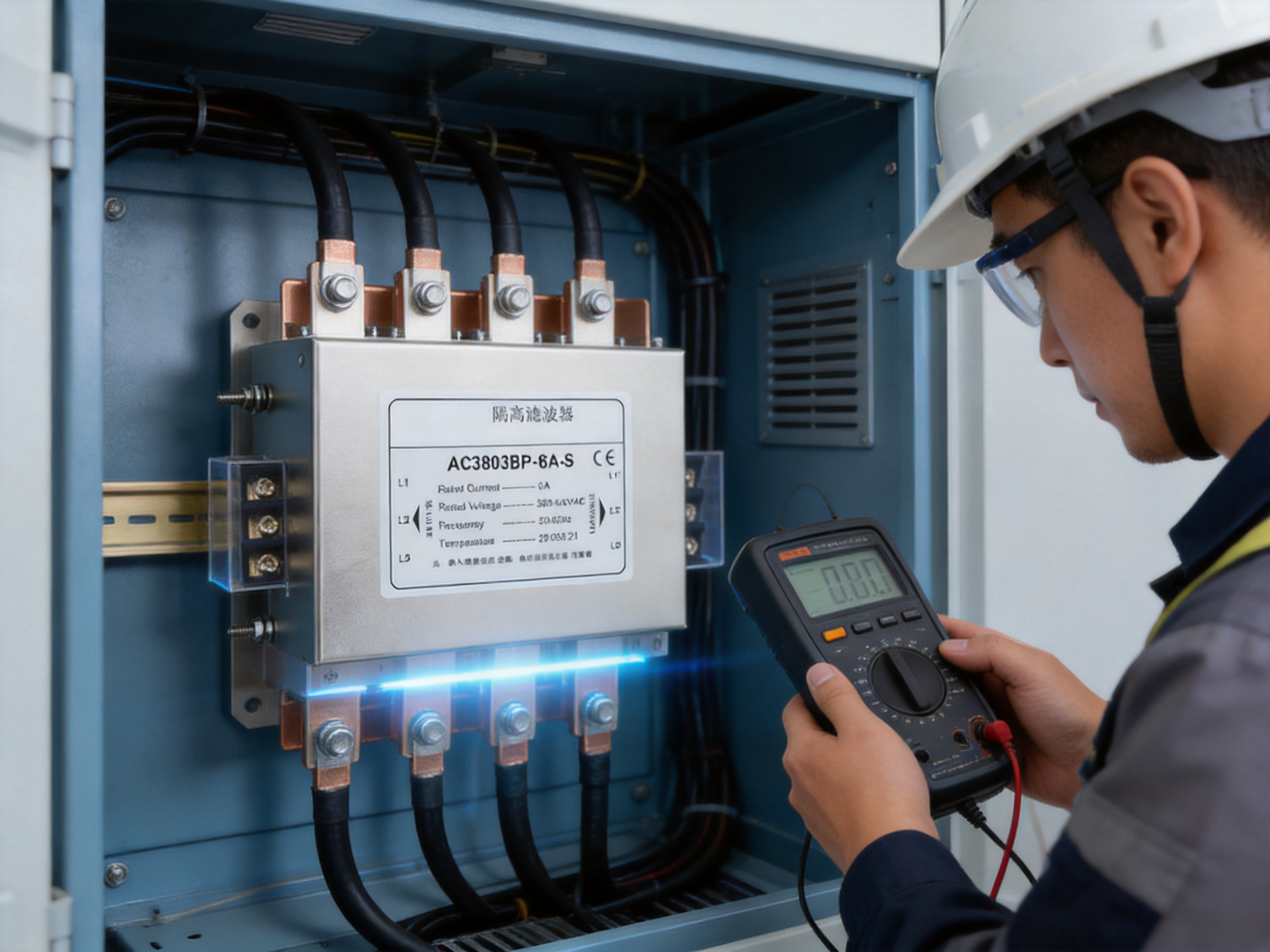
A filter should be treated as a power component rather than as a passive accessory. Its enclosure, terminals, conductor clearances, mounting arrangement, and heat dissipation all affect system performance. The selected model must be compatible with the cabinet dimensions, current rating, cable diameter, short-circuit protection, and local electrical regulations.
For high-current installations, short and mechanically secure connections are essential. Excessive lead length can increase parasitic inductance and reduce filtering performance at higher frequencies. Poorly tightened terminals can create hot spots, voltage drop, and intermittent operation. Proper torque, conductor preparation, and inspection are therefore important during installation and maintenance.
Grounding is equally significant. The filter must be grounded according to the applicable electrical standard and the manufacturer’s installation instructions. A low-impedance protective-earth path helps control common-mode interference and provides a safer fault-current route.
Application Areas
Power-Line Carrier Networks
The primary application is the protection and stabilization of power-line carrier systems operating near frequency converters or other major drive equipment. In smart factories, power-line communication can connect sensors, meters, controllers, gateways, and industrial devices without installing a separate communication cable to every location.
When a carrier signal must pass through an electrically noisy area, a dedicated isolation filter can help separate the communication segment from the disturbance source. This is useful in production lines, machine cells, energy-monitoring systems, and distributed equipment networks.
Frequency Converter Installations
Frequency converters are widely used for pumps, fans, conveyors, compressors, machine tools, mixers, and material-handling systems. They provide energy savings and precise motor control, but they can also create a challenging electromagnetic environment.
The AC3803BP can be installed as an external filter supporting the converter and the associated carrier system. External installation allows the filter to be selected according to the actual current requirement and project conditions. It also makes the filtering function visible and serviceable rather than embedding all filtering responsibility inside the converter.
Servo Systems
Servo drives often operate with rapid acceleration, deceleration, positioning, and load changes. These dynamic conditions can produce varying interference patterns. A filter designed for severe interference can help reduce the electrical impact of servo systems on nearby communication equipment.
In machine-building applications, stable communication is essential for coordination between motion controllers, sensors, safety devices, and production-management systems. Improving the power environment can support more reliable data exchange without requiring a complete redesign of the machine network.
Large Industrial Drives
Large drives may draw substantial current and generate significant switching noise. They may also be located far from the main control cabinet, making cable routing and grounding more complex. The availability of ratings up to 250 A allows the filter family to address higher-power circuits than many small control filters.
Large-drive applications require careful system engineering. The filter rating should be based on actual continuous current, overload conditions, motor starting behavior, ambient temperature, and installation method. Coordination with upstream protection and downstream equipment is also necessary.
Energy Management and Smart Factories
Industrial IoT systems increasingly rely on accurate energy data. Power meters, sensors, transmitters, and controllers may communicate through wired or wireless networks, including power-line carrier systems. If communication is unstable near production machinery, energy data may be delayed, incomplete, or unreliable.
A cleaner and more predictable electrical communication environment supports energy monitoring, equipment condition analysis, and process optimization. The filter therefore contributes not only to communication reliability but also to the broader objectives of smart-factory operation.
Manufacturing and Quality Strengths
The performance of an isolation filter depends on more than its schematic design. Manufacturing consistency, component selection, assembly accuracy, insulation control, testing, and documentation all affect the final result. For a product used in high-current industrial systems, quality cannot be judged only by nominal filtering specifications.
ASY Electronics is described as a high-tech enterprise focused on smart factories, data sensing, intelligent connectivity, edge-layer hardware, and industrial data integration. This background is relevant to the AC3803BP because the product is intended to support communication between industrial systems and the electrical infrastructure on which those systems depend.
Application-Oriented Product Development
A company working across power-line carriers, wireless temperature monitoring, transmitters, flow meters, and automatic door controllers can view industrial connectivity from multiple perspectives. This broader product experience helps connect the requirements of power quality, sensing, data acquisition, and equipment control.
The AC3803BP reflects an application-oriented approach. It is not presented merely as a generic filter. Its stated purpose is to solve specific problems caused by converters, servos, inverters, and large drives in power-line communication systems. This focus can improve product selection and technical support for system integrators.
Self-Developed Edge-Layer Capabilities
The company’s stated capabilities include self-developed edge-layer hardware products and industrial data integration solutions. Edge-layer equipment operates close to machines and sensors, where electrical noise, temperature changes, and installation constraints are common. Experience in this area supports a practical understanding of how field devices interact with industrial networks.
For customers, this capability may provide value beyond the filter itself. A supplier familiar with sensing, connectivity, and industrial data can better understand the complete application, including the power network, communication carrier, drive system, and monitoring platform.
Testing and Process Control
The listed high-potential test values and overload specifications indicate that electrical safety and abnormal operating conditions are included in the product requirements. A robust production process should include incoming-material control, assembly inspection, connection verification, insulation testing, and final performance checks.
Although detailed factory process records are not provided in the product information, the stated design references establish a framework for quality expectations. Customers should request the applicable inspection reports, certification documents, model-specific test data, and installation instructions for their project.
Support for Customized Industrial Requirements
Industrial projects often vary in current rating, wiring method, cabinet structure, network topology, and environmental conditions. The availability of several wiring options and a wide current range helps accommodate these differences. A supplier with experience in industrial IoT solutions can also support system-level discussions rather than treating the filter as an isolated catalog item.
Customization should be managed carefully. Any change to terminals, enclosure, internal components, rated current, or filtering characteristics may affect thermal behavior, insulation, certification, and electromagnetic performance. Engineering validation is essential before a customized version enters production.
Installation and Application Guidelines
Correct installation is necessary to obtain the expected benefit from an isolation filter. The following principles should be considered by engineers and qualified electricians during system design.
Select the Correct Current Rating
The filter should be selected according to the actual load current and the operating profile of the connected drive. Continuous current, acceleration current, overload duration, ambient temperature, and enclosure ventilation must all be considered. Selecting a filter solely from the motor nameplate may be insufficient if the converter has a demanding duty cycle.
Confirm Voltage and Phase Configuration
The AC3803BP is specified for 380/440 VAC and three-phase, three-wire applications. The system voltage, frequency, neutral arrangement, grounding method, and phase configuration must be checked before installation. The filter should not be used in an incompatible topology without written engineering confirmation.
Install the Filter in Series
The product information specifies series connection where there is a load. The input and output sides must be identified correctly, and the filter should be placed at the intended boundary between the disturbance source and the communication or protected equipment.
Incorrect connection can reduce effectiveness or create a hazardous condition. Installation work should follow the product drawings, wiring instructions, local codes, and the requirements of the complete drive system.
Minimize High-Frequency Coupling
Input and output conductors should be routed to avoid unnecessary parallel runs. If the filtered and unfiltered conductors are placed close together over long distances, interference may couple around the filter and reduce its effectiveness. Physical separation, appropriate cable routing, and proper cabinet layout are important parts of the installation.
Provide Reliable Grounding
Protective grounding must be low impedance and mechanically secure. Ground conductors should be appropriately sized and connected to a verified grounding system. Paint, corrosion, loose fasteners, or poorly prepared mounting surfaces can compromise electrical continuity.
Control Temperature and Ventilation
The filter should be installed where the surrounding temperature remains within the stated climatic range. The cabinet must allow adequate heat dissipation, especially when the filter carries high current or operates near its maximum rating.
Verify the Complete System
After installation, the system should be tested under representative operating conditions. Testing may include communication stability, drive acceleration and deceleration, full-load operation, overload events, temperature rise, insulation verification, and inspection for abnormal noise or heating.
System-Level Benefits
The value of the AC3803BP is best measured at the system level. A filter can reduce troubleshooting time, improve communication availability, and protect the investment in industrial connectivity. These benefits are especially important when a facility uses power-line communication to connect equipment across existing electrical circuits.
Stable communication helps control systems exchange data consistently. This supports machine coordination, alarm reporting, remote diagnostics, production tracking, and energy analysis. When communication failures are reduced, maintenance teams spend less time investigating intermittent faults that may otherwise be difficult to reproduce.
A dedicated external filter may also reduce the need to replace existing drives or install entirely new communication cables. For retrofit projects, this can lower disruption and preserve the installed control architecture. The result is a more practical upgrade path toward industrial IoT capability.
In a smart factory, reliability is cumulative. A sensor, transmitter, or controller may be highly accurate, but its value decreases if the network frequently loses data. By improving the electrical environment around the communication carrier, the filter supports the data path between field equipment and higher-level applications.
Comparison with Alternative Approaches
Using No Additional Filter
The lowest-cost approach is to connect the carrier system directly to a circuit containing a converter or servo drive. This may work in a low-noise installation, but it provides no dedicated barrier against drive-generated interference. If communication problems occur later, identifying the source may require extensive testing and unplanned modifications.
Using a Small General-Purpose EMI Filter
A compact general-purpose filter may have an attractive price and small footprint, but it may not support the required current, frequency range, overload conditions, or three-phase industrial topology. An underspecified component can become a thermal or reliability limitation.
Relying Only on the Converter’s Internal Filter
Many converters include internal filtering, but the built-in filter may be optimized for the converter’s own electromagnetic compatibility rather than for protecting a separate power-line communication carrier. An external dedicated filter can provide additional isolation at the point where it is most needed.
Installing New Dedicated Communication Cables
Shielded Ethernet, fiber, or industrial fieldbus cable may offer strong communication performance, but installing new cable routes can be expensive or impractical in an existing factory. Power-line communication can be useful where the power network already reaches the required equipment. A dedicated isolation filter can make this approach more reliable in difficult electrical environments.
Maintenance and Long-Term Reliability
Filters should be included in preventive-maintenance programs. Maintenance personnel should inspect terminals for looseness, discoloration, corrosion, and heat damage. High-current connections deserve particular attention because small increases in contact resistance can generate substantial heat.
Ventilation paths should remain clear, and the surrounding cabinet should be kept free of conductive dust, excessive moisture, and contaminants. The filter should not be exposed to conditions beyond its environmental rating without suitable enclosure protection.
Communication performance should be monitored over time. A gradual increase in communication errors may indicate a changing load, deteriorating connection, newly installed equipment, or increased electrical noise. Comparing network performance with drive operating states can help identify whether the filter and surrounding installation remain effective.
Any insulation or high-potential testing must be performed by qualified personnel using procedures appropriate for the complete system. Connected electronic devices may need to be disconnected before testing to prevent damage. Safety procedures and local regulations always take priority.
Why the Product Fits Industrial IoT Projects
Industrial IoT projects depend on dependable connections between physical equipment and digital systems. The AC3803BP addresses a foundational issue: the quality of the electrical environment used for communication. By filtering and isolating interference from frequency converters and large drives, it can help create a more stable base for sensing and data exchange.
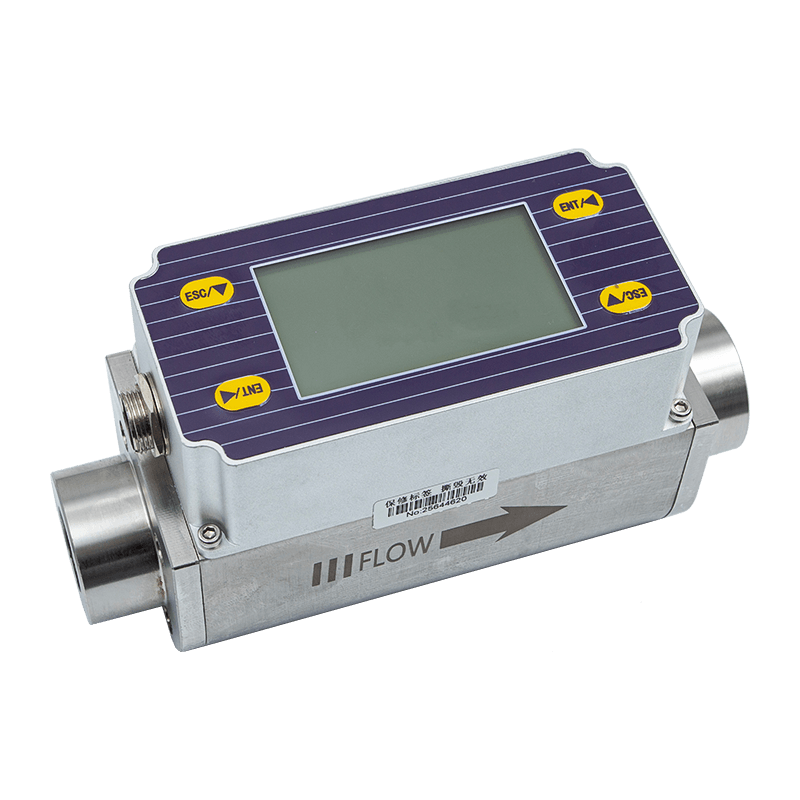
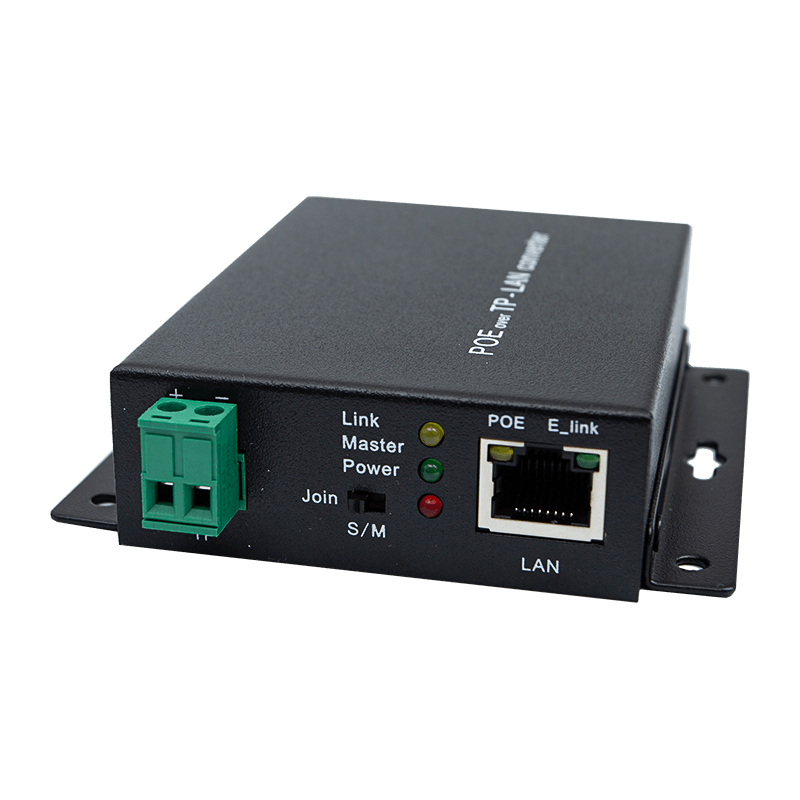
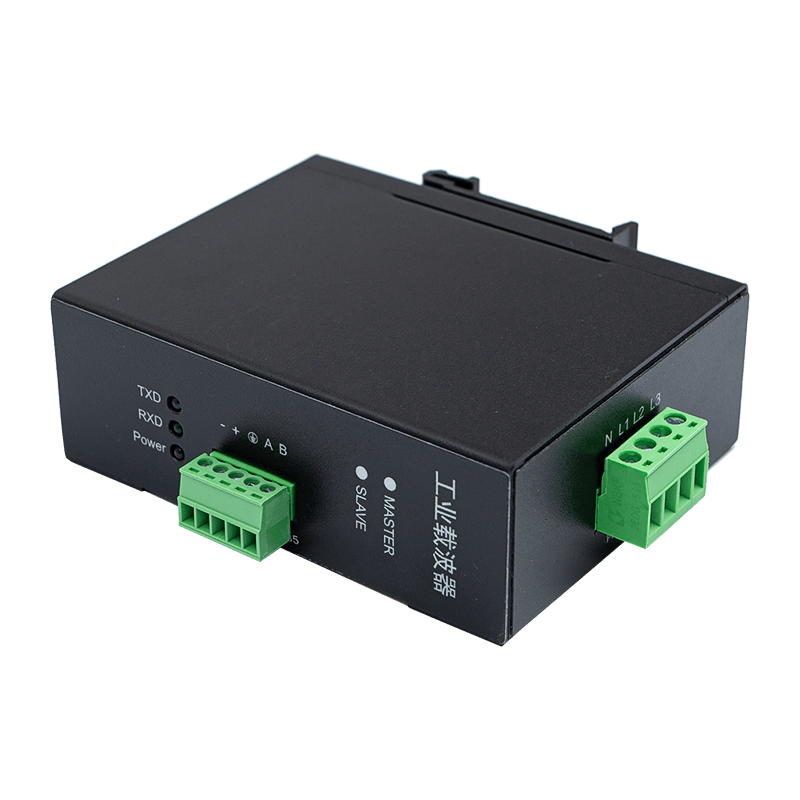
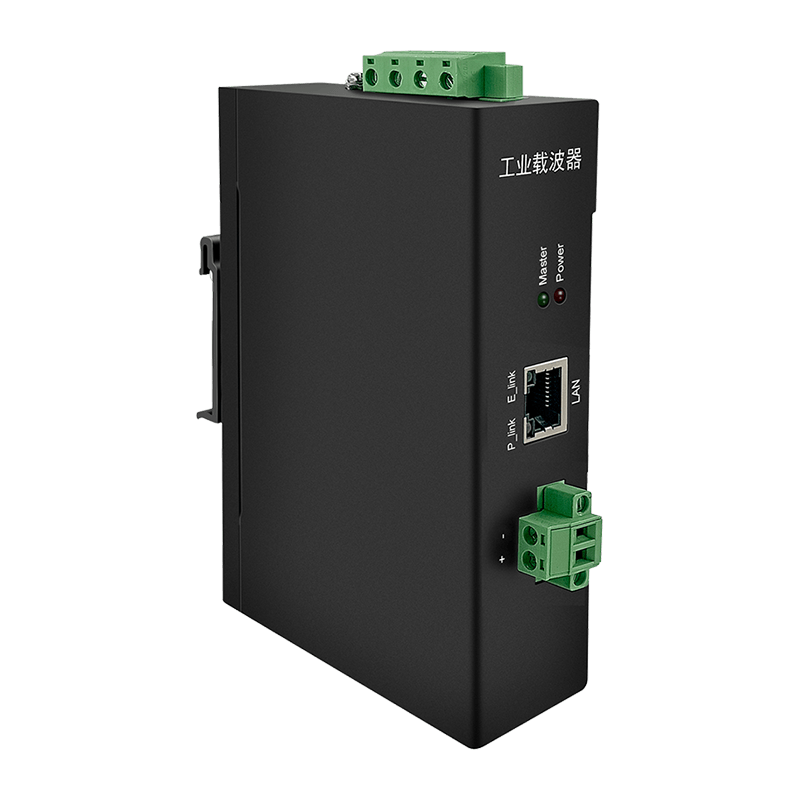
This is consistent with the broader industrial focus of ASY Electronics. The company’s product portfolio includes broadband power-line carriers, wireless temperature monitoring systems, industrial transmitters, thermal gas mass flow meters, and automatic door controllers. These products address data sensing, equipment monitoring, measurement, and control across industrial environments.
Such a portfolio can be valuable to customers seeking a coordinated industrial solution. Instead of treating communication, sensing, and measurement as separate activities, a project can be designed around an integrated data path. The isolation filter contributes by improving the conditions under which power-line communication equipment operates.
Q&A
What is the main purpose of the AC3803BP?
The main purpose is to filter and isolate interference generated by frequency converters, inverters, servo drives, and large industrial drives. It is especially intended to protect or stabilize three-phase, three-wire power-line carrier communication systems.
What voltage does the filter support?
The stated rated voltage is 380/440 VAC. The system voltage and wiring configuration must be confirmed before installation.
What current ratings are available?
The product family supports rated currents from 5 A to 250 A. The correct model should be selected according to continuous current, overload behavior, ambient temperature, and the complete application design.
What frequency range does it filter?
The stated filter range is 10 kHz to 30 MHz. This broad range is intended to address both lower-frequency interference components and higher-frequency switching noise relevant to power-line communication.
Can it be used with different inverter brands?
Yes. The product is designed to directly match various brands of frequency converters, inverters, servos, and industrial drive systems. Compatibility should still be verified for the exact drive, voltage, current, and installation topology.
What wiring options are available?
Bolt, copper, and terminal-block wiring options are available. The best choice depends on current level, cabinet layout, conductor size, maintenance requirements, and project standards.
Does the filter replace surge protection?
No. The filter can reduce the propagation of certain conducted disturbances, but it should not automatically be considered a substitute for dedicated surge protective devices, grounding systems, or other power-quality equipment.
Can it be used for continuous operation above the rated current?
No. The rated current defines the normal operating limit. The stated overload capability applies only to specified temporary conditions and should not be interpreted as permission for continuous overcurrent operation.
Where should the filter be installed?
It is installed externally and connected in series with the relevant power circuit. The exact location depends on the drive, carrier equipment, load, cabinet arrangement, and system grounding design. Installation should follow the product documentation and applicable electrical regulations.
What environmental conditions are specified?
The stated climatic category is 25/085/21, corresponding to approximately -25°C to +85°C. Enclosure protection, humidity, condensation, dust, vibration, and other site conditions must also be evaluated.
What testing is specified for insulation?
The specified high-potential tests are 2250 VDC for two seconds line to line and 2700 VDC for two seconds line to ground. Testing of a complete installed system should be performed only by qualified personnel using suitable procedures.
How does the product help smart-factory applications?
It helps create a more stable electrical environment for power-line communication. More reliable communication can support equipment monitoring, energy management, remote diagnostics, data collection, and production-process optimization.
Selection Checklist
Before ordering or installing the filter, the project team should confirm the system voltage, operating frequency, phase configuration, rated and peak current, converter type, motor duty cycle, expected overload, ambient temperature, cabinet dimensions, wiring method, grounding arrangement, communication carrier frequency, and applicable certification requirements.
Engineers should also identify the likely interference sources. These may include variable-frequency drives, servo amplifiers, switching power supplies, contactors, welding equipment, large motors, and long parallel cable runs. A site survey or power-quality measurement can help determine whether one filter is sufficient or whether additional measures are necessary.
The filter should be considered as part of a coordinated design involving cable separation, grounding, shielding, surge protection, converter settings, and communication-network architecture. This approach produces better results than relying on a single component to solve every electromagnetic compatibility problem.
Conclusion
The AC3803BP dedicated isolation filter is designed for one of the most persistent challenges in industrial communication: maintaining reliable power-line carrier performance in the presence of frequency converters, inverters, servo systems, and large drives.
Its advantages include a 5–250 A current range, 380/440 VAC operation, a 10 kHz–30 MHz filtering range, suitability for severe interference, compatibility with multiple drive brands, flexible wiring options, high-potential testing, and overload capability for specified transient conditions. These characteristics distinguish it from many general-purpose filters that may not be suitable for high-current, three-phase industrial applications.
The product also fits the broader needs of smart factories. By improving the electrical environment for communication, it can support equipment condition monitoring, refined energy management, industrial data collection, and production optimization. Its value increases when it is combined with correct grounding, careful cable routing, suitable protection, and systematic commissioning.
ASY Electronics brings a wider industrial IoT perspective through its work in power-line carriers, wireless temperature monitoring, transmitters, flow meters, automatic door controllers, edge-layer hardware, and industrial data integration. This combination of communication, sensing, and industrial application knowledge provides a strong foundation for projects that require both component-level performance and system-level understanding.
For factories and machine builders seeking a practical way to reduce drive-related interference without replacing existing equipment or installing entirely new communication infrastructure, a dedicated isolation filter can be an effective engineering solution. Properly selected and installed, the AC3803BP can help make industrial power-line communication more stable, more maintainable, and better suited to the demands of connected manufacturing.
References
1. Product technical information for the AC3803BP dedicated isolation filter, including rated voltage, current range, filtering range, overload capability, environmental category, and high-potential test specifications.
2. IEC/EN 60939, passive filter units for electromagnetic interference suppression.
3. UL 1283, electromagnetic interference filters.
4. CSA 22.2 No. 8 1986, electromagnetic interference filters.
5. General engineering principles for electromagnetic compatibility in industrial drive and power-line communication systems.
6. Industrial power-quality and variable-frequency-drive application practices, including grounding, cable routing, insulation coordination, and conducted-interference control.