


Industrial environments require continuous visibility into temperature, humidity, equipment conditions, and operating spaces. A small change in environmental conditions can influence product quality, machinery reliability, energy consumption, worker safety, and maintenance costs. For this reason, wireless temperature and humidity sensors have become important components in modern industrial Internet of Things systems.
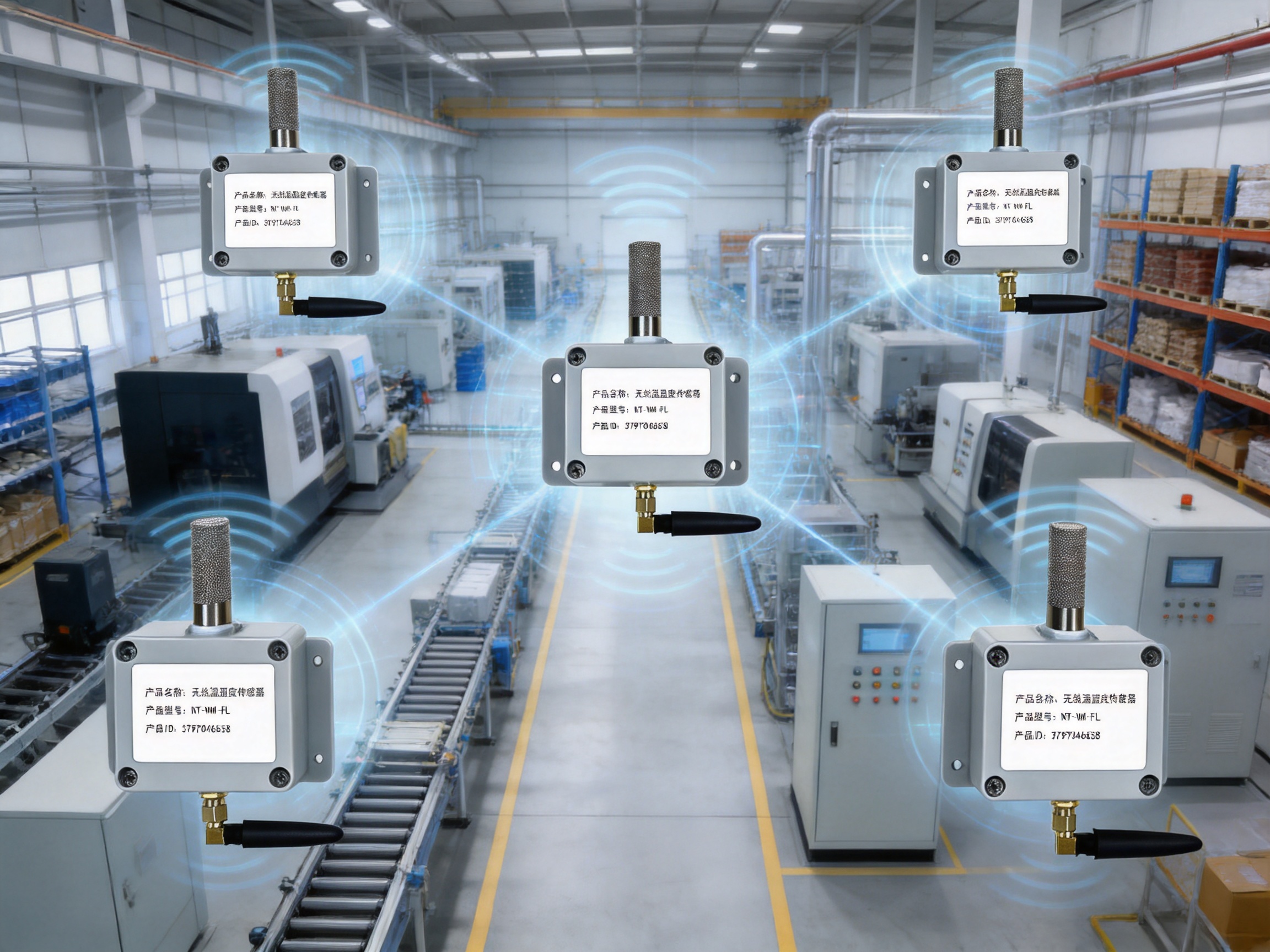
The KL-WS34GK wireless temperature and humidity sensor is designed to provide dependable environmental monitoring without the installation complexity of extensive wired cabling. It measures temperature and relative humidity, performs battery-voltage self-testing, and transmits collected data to a wireless temperature measurement host through a 433 MHz wireless network. With a measurement range from -40°C to +120°C, an operating voltage of 2.5 to 3.6 V, a standby current of only 1 μA, and a wireless transmission distance of up to 300 meters in open areas, the sensor is suitable for a broad range of industrial, commercial, and facility-monitoring applications.
Manufactured by ASY Electronics (JiaXing) Co., Ltd., the sensor reflects the company’s broader expertise in industrial data sensing, intelligent connectivity, power line communication, industrial transmitters, flow measurement, and automatic door control. The product is not simply a temperature and humidity detector. It is an important edge-layer device that helps transform physical environmental conditions into usable digital information for industrial decision-making.
Why Wireless Environmental Monitoring Matters
Temperature and humidity affect almost every industrial process. Excess humidity can cause condensation, corrosion, mold growth, packaging deterioration, and electrical insulation problems. Excessive heat can reduce the service life of batteries, motors, electronic assemblies, and precision instruments. Low temperatures can alter material properties, affect fluid viscosity, and create storage risks. In controlled environments, even moderate changes may lead to product defects or process instability.
Traditional monitoring methods often depend on manual inspection or isolated wired sensors. Manual inspection may provide only occasional information, leaving long periods in which abnormal conditions remain unnoticed. Wired sensors can provide continuous data, but installation may require conduit, cable trays, wall penetration, shutdowns, or modifications to existing equipment and buildings.
A wireless sensor offers a more flexible alternative. It can be installed where measurement is needed without requiring a dedicated signal cable back to a monitoring cabinet. This is especially useful in warehouses, production lines, equipment rooms, cold-chain areas, utility spaces, laboratories, agricultural facilities, and locations where cabling is costly or impractical.
The KL-WS34GK is designed for periodic data transmission rather than energy-intensive continuous radio operation. It transmits data once every five minutes, allowing the system to balance monitoring frequency, battery life, and communication reliability. This approach is appropriate for many applications in which environmental conditions change gradually rather than several times per second.
Product Overview
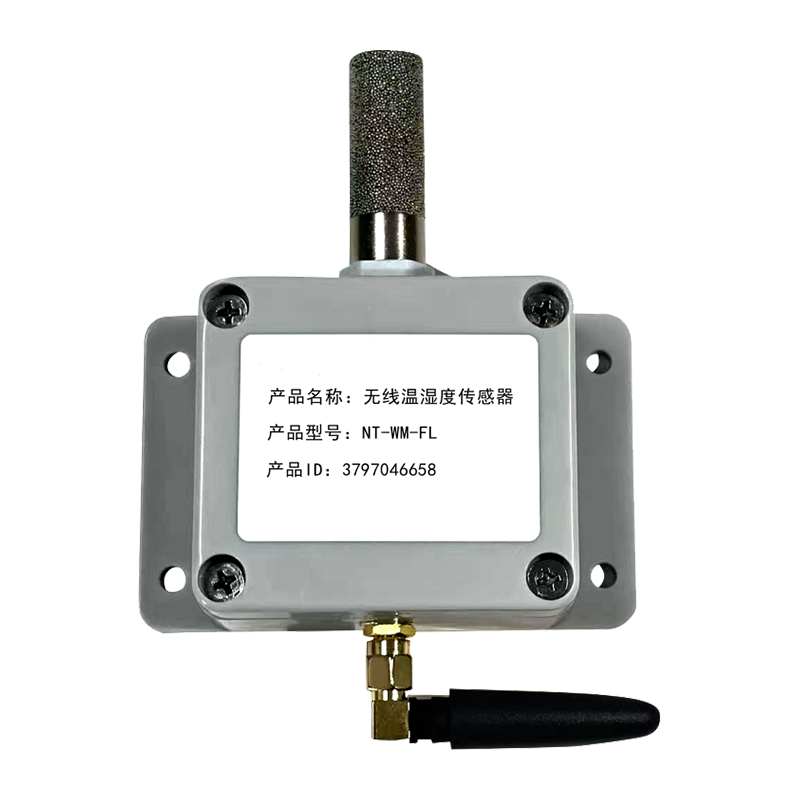
The KL-WS34GK is a wireless temperature and humidity sensor capable of simultaneously detecting ambient temperature and relative humidity. It uses a high-precision digital sensing element and a dedicated protective cover intended to support stable measurement performance in practical industrial environments.
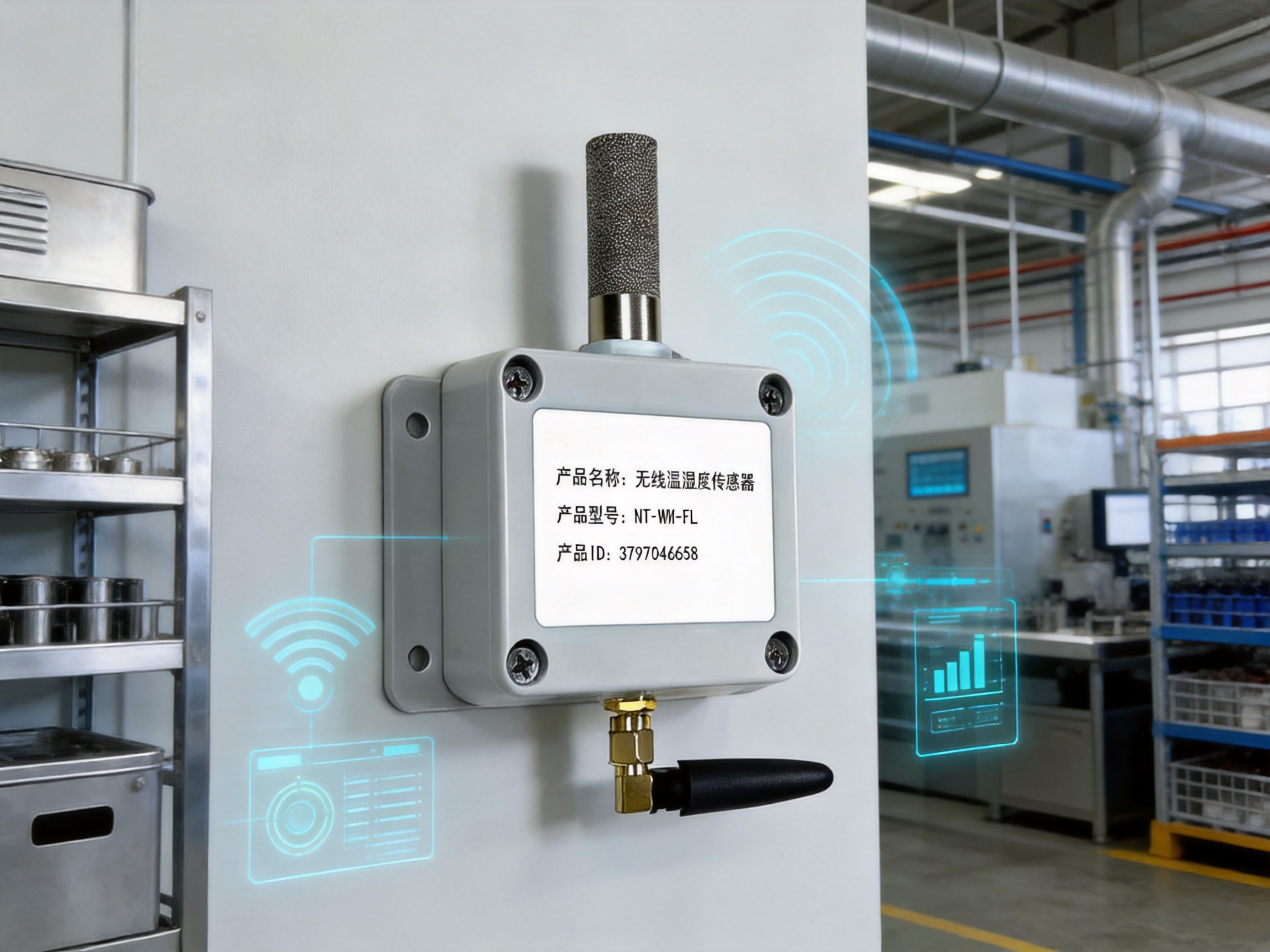
After measuring the surrounding conditions, the sensor processes the readings and sends the temperature, humidity, and internal battery-voltage information to a wireless temperature measurement host. The host can then display, store, analyze, or forward the data to a larger monitoring or industrial management system, depending on the system architecture.
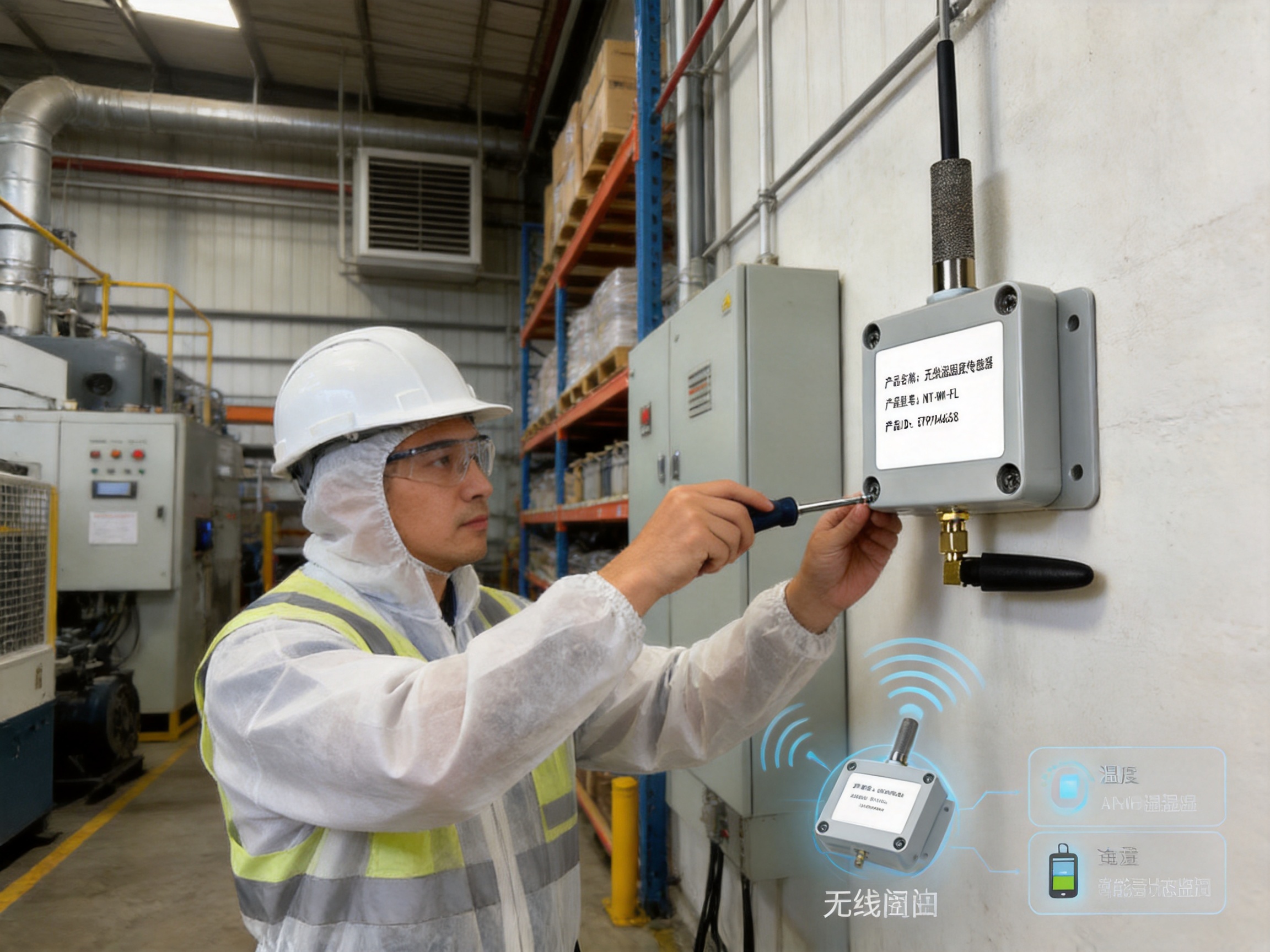
The sensor is designed for straightforward installation. It supports adhesive fixing and screw fixing, enabling users to select a mounting method according to the surface, vibration level, maintenance requirements, and expected service period. Its compact dimensions of 57.7 mm by 89.5 mm by 35.5 mm make it practical for walls, enclosures, storage areas, equipment zones, and other locations where available space is limited.
With an IP65 waterproof rating, the enclosure is protected against dust ingress and water jets from any direction under the applicable testing conditions. This makes the product more suitable for demanding industrial and facility environments than unprotected consumer-grade sensors. However, IP65 protection does not mean that the device should be submerged or exposed to conditions beyond its specified operating environment.
Wireless and Wi-Fi Humidity Sensors
Key Technical Specifications
Parameter | Specification |
Product model | KL-WS34GK |
Temperature measurement range | -40°C to +120°C |
Temperature measurement accuracy | ±0.3°C and ±0.7°C specification points as applicable to the product configuration or measurement range |
Humidity measurement range | 0 to 100% RH |
Humidity measurement accuracy | ±3.0% RH and ±4.5% RH specification points as applicable to the product configuration or measurement range |
Operating voltage | 2.5 to 3.6 V |
Standby current | 1 μA |
Carrier frequency | 433 MHz |
RF modulation mode | GFSK |
Wireless transmission distance | Up to 300 meters in open, visible areas |
Transmission interval | One transmission every five minutes |
Dimensions | 57.7 mm × 89.5 mm × 35.5 mm |
Operating environment | -20°C to +85°C; humidity up to 90% RH |
Storage environment | -45°C to +90°C; humidity up to 95% RH |
Waterproof rating | IP65 |
Installation | Adhesive fixing or screw fixing |
The specification set illustrates the product’s focus on low-power operation, practical wireless range, broad sensing capability, and durable installation. The temperature measurement range extends well beyond ordinary indoor comfort monitoring, while the humidity range covers the full relative-humidity scale specified for the sensing function.
Measurement Performance and Sensing Capability
Broad Temperature Measurement Range
The temperature measurement range of -40°C to +120°C enables the sensor to support applications that exceed the requirements of ordinary office or residential monitoring. It can be considered for cold storage, industrial rooms, electrical cabinets, process support areas, equipment monitoring, and other locations where temperature may vary substantially.
The specified working environment is -20°C to +85°C, which is the environmental range in which the complete sensor assembly is intended to operate. The wider temperature measurement range indicates the capability of the sensing function, while users should always distinguish between the measurement range and the complete product operating range when planning an installation.
The stated temperature accuracy points of ±0.3°C and ±0.7°C provide useful precision for industrial environmental monitoring. The exact accuracy available may depend on the specific temperature range, sensor configuration, calibration conditions, and application requirements. For critical processes, users should confirm the applicable accuracy curve and calibration documentation before deployment.
Full-Scale Relative Humidity Detection
The sensor supports humidity detection from 0 to 100% RH. This broad range allows the product to observe dry environments, normal production areas, high-humidity spaces, and changing conditions near saturation. Humidity accuracy specifications of ±3.0% RH and ±4.5% RH are provided for applicable operating conditions or product configurations.
Relative humidity is influenced by temperature, airflow, sensor placement, enclosure design, and condensation. Correct installation is therefore important. The sensor should be mounted where air can circulate around the sensing area and should not be placed directly beside a heat source, cooling outlet, steam outlet, water spray, or strong electromagnetic interference source unless the application has been evaluated for those conditions.
Digital Sensing and Data Reliability
The use of a high-precision digital sensor offers several practical benefits. Digital sensing can simplify signal processing, reduce sensitivity to analog interference over internal signal paths, and support consistent data acquisition. The dedicated protective cover helps protect the sensing element from accidental contact, dust, and environmental exposure while allowing the sensor to interact with ambient air.
Reliable measurement is not determined by the sensing element alone. Enclosure design, airflow, firmware, power management, radio performance, assembly quality, and installation practice all influence the final result. A professionally engineered sensor must therefore be evaluated as a complete system rather than by accuracy figures in isolation.
Low-Power Wireless Architecture
One of the strongest advantages of the KL-WS34GK is its low-power operating concept. The specified standby current is only 1 μA. Low standby consumption is important because a battery-powered sensor spends much of its life waiting between measurements and transmissions. Reducing idle current helps limit unnecessary battery drain and can reduce maintenance frequency.
The device operates from 2.5 to 3.6 V, a voltage range commonly associated with compact battery-powered electronics. The sensor wakes according to its measurement and transmission schedule, collects temperature and humidity data, checks its battery voltage, sends the information wirelessly, and returns to a low-power state.
Transmission occurs once every five minutes. This interval is a practical compromise for many environmental monitoring applications. It provides regular updates while avoiding the energy consumption associated with continuous transmission. In a warehouse, equipment room, building, or storage area, a five-minute interval is often sufficient to identify gradual temperature or humidity changes and to support timely intervention.
Applications requiring faster response should evaluate whether the standard transmission interval is appropriate. The product is best suited to monitoring conditions that develop over minutes rather than milliseconds. For these applications, the combination of periodic measurement and low standby current can be more valuable than a higher-frequency device that requires frequent battery replacement.
433 MHz Communication and GFSK Modulation
The sensor uses a 433 MHz carrier frequency and GFSK radio modulation. Sub-gigahertz wireless communication is widely used in industrial and building-monitoring applications because it can offer useful propagation characteristics through common indoor obstacles compared with some higher-frequency short-range systems.
At 433 MHz, the signal may be suitable for communication across rooms, facility zones, and open industrial spaces, although the actual range depends on walls, metal structures, machinery, shelving, interference, antenna orientation, installation height, and the design of the receiving host. The stated transmission distance is up to 300 meters in visible open areas. This figure should be regarded as an open-area reference rather than a guaranteed indoor distance.
GFSK, or Gaussian Frequency Shift Keying, is a frequency-shift modulation method commonly selected for efficient and reliable low-power radio communication. It can support a balanced combination of bandwidth control, receiver performance, and power efficiency. In an industrial wireless system, radio design must also account for packet reliability, antenna placement, network capacity, coexistence with other devices, and the location of the host.
Users should complete a site survey before large-scale installation. A pilot deployment can identify areas affected by reinforced concrete, metal cabinets, elevators, motors, radio interference, or other obstructions. When necessary, the wireless host can be positioned to improve coverage, and multiple hosts or repeaters may be considered as part of a larger system architecture, subject to compatibility with the monitoring platform.
Battery Voltage Self-Test Function
Battery condition is a fundamental factor in wireless sensor reliability. A sensor that measures accurately but stops transmitting without warning cannot support dependable monitoring. The KL-WS34GK includes a battery voltage self-test function that detects the internal battery voltage and uploads this information to the wireless temperature measurement host.
This capability allows maintenance personnel to review more than environmental values. They can also identify devices whose battery voltage is declining and plan replacement before communication is lost. In a large facility with dozens or hundreds of sensors, battery-voltage visibility can reduce unnecessary inspection rounds and improve maintenance scheduling.
Battery voltage is an indicator rather than a complete prediction of remaining battery life. Actual service life depends on battery chemistry, capacity, temperature, transmission conditions, radio retries, measurement frequency, and the age of the battery. Nevertheless, voltage reporting gives the monitoring system a valuable diagnostic parameter and supports a more proactive maintenance strategy.
Protective Design for Industrial Environments
Industrial environments are often exposed to dust, moisture, temperature fluctuations, vibration, mechanical contact, and installation constraints. The KL-WS34GK addresses these conditions with a dedicated protective cover and an IP65-rated enclosure.
IP65 indicates protection against dust and water jets. This is a meaningful advantage over open-board sensor modules or basic indoor wireless devices that have no stated ingress protection. The enclosure can help preserve the internal electronics in locations where dust and occasional water exposure are possible.
The operating environment is specified as -20°C to +85°C with humidity up to 90% RH. The storage environment is specified as -45°C to +90°C with humidity up to 95% RH. These ratings provide useful guidance for logistics, warehousing, seasonal shutdowns, and equipment installation planning.
Although the enclosure is robust, installation should still avoid direct exposure to corrosive chemicals, continuous condensation, immersion, high-pressure cleaning, and environments that exceed the declared limits. The sensor should also be positioned so that the protective cover does not become blocked by packaging material, dust accumulation, insulation, or other obstructions that could delay the response of the sensing element.
Installation Flexibility
The sensor supports adhesive and screw fixing. Adhesive installation is useful when drilling is undesirable or when the device must be installed on a clean, smooth surface with minimal disruption. Screw fixing is generally preferred where long-term mechanical retention, vibration resistance, or repeated service access is important.
Before installation, the mounting surface should be clean, dry, and structurally suitable. The sensor should be mounted at a representative measurement point rather than directly against a surface with a temperature substantially different from the surrounding air. For example, a sensor mounted on a cold metal wall may measure the wall’s thermal influence rather than the average room temperature.
For humidity monitoring, airflow is equally important. The sensing area should have access to ambient air, while the enclosure should remain protected from direct splashes and concentrated airflow. In storage environments, the sensor should be placed where it represents the conditions experienced by the stored materials, not only the conditions near a doorway or ventilation outlet.
Mounting height and orientation should be standardized across a project whenever possible. Consistent installation improves comparability between sensor points and makes unusual readings easier to investigate.
Advantages Over Conventional and Competing Approaches
Lower Installation Complexity Than Wired Sensors
Compared with conventional wired temperature and humidity sensors, the wireless design can reduce cable routing, conduit work, drilling, and installation labor. This is particularly valuable in existing buildings, rented facilities, high-ceiling warehouses, temporary production areas, and locations where production cannot be interrupted for extensive wiring work.
Wireless installation also makes later expansion easier. Additional sensors can be placed in new storage zones, equipment rooms, or process areas without redesigning the entire cable infrastructure. This scalability helps organizations start with a focused monitoring project and expand as operational requirements develop.
More Industrially Focused Than Basic Consumer Sensors
Consumer smart-home sensors often prioritize mobile-app convenience and indoor comfort monitoring. Industrial applications require additional characteristics, including a broad measurement range, low-power performance, enclosure protection, battery diagnostics, predictable transmission, and integration with a dedicated host.
The KL-WS34GK is designed around these industrial requirements. Its IP65 rating, 433 MHz communication, battery self-test, periodic data upload, installation flexibility, and broad temperature range make it more appropriate for industrial and facility-management projects than an unprotected consumer device.
Balanced Performance Rather Than Excessive Energy Consumption
Some monitoring systems attempt to maximize transmission frequency, but frequent radio communication can increase energy consumption and maintenance requirements. The five-minute transmission interval provides a balanced operating model for many applications. It supports regular visibility while retaining the benefits of low-power operation.
The product is therefore well suited to users who value sustainable deployment costs, predictable maintenance, and practical environmental awareness rather than unnecessary high-frequency transmissions.
Useful Coverage for Distributed Monitoring
The stated open-area range of up to 300 meters allows one wireless monitoring architecture to cover a substantial area when the receiving host is positioned correctly. In large plants, multiple sensor points can be distributed across production zones, warehouses, utility spaces, and equipment areas.
Compared with short-range systems intended only for a single room, the 433 MHz design can support more flexible placement. Actual performance must still be confirmed at the installation site, especially where reinforced concrete, steel structures, or dense equipment are present.
Integrated Battery Condition Awareness
Battery-voltage reporting differentiates the sensor from devices that transmit only environmental readings. Maintenance teams can use this information to create replacement schedules, prioritize service visits, and investigate missing data more efficiently.
Advanced Manufacturing and Engineering Strengths
ASY Electronics is a high-tech enterprise focused on smart-factory development, data sensing, intelligent connectivity, and industrial data integration. Its product portfolio includes broadband power line carriers, wireless temperature monitoring systems, industrial transmitters, thermal gas mass flow meters, and automatic door controllers.
This combination of technologies creates an engineering environment in which the KL-WS34GK can be developed as part of a wider industrial communication ecosystem. The company’s experience is relevant not only to the sensing element but also to edge-device design, wireless communication, industrial interfaces, system integration, and field deployment.
Integration of Sensing and Connectivity
A modern sensor is valuable because it connects physical conditions to an information system. ASY’s focus on both data sensing and intelligent connectivity supports the development of products that are intended to operate as part of a complete monitoring solution.
For the KL-WS34GK, this means the measurement process, battery monitoring, radio communication, enclosure, and installation method are considered together. This integrated approach can reduce the risk of selecting a sensor that has good laboratory accuracy but is difficult to deploy or maintain in a real industrial environment.
Smart-Factory Application Experience
The company’s stated mission is to help manufacturing enterprises improve equipment condition monitoring, energy management, and production-process optimization. Wireless environmental sensors support these goals by supplying data from locations that may otherwise remain difficult to monitor.
Temperature and humidity information can be correlated with machine operation, energy consumption, product quality, storage conditions, and maintenance records. Over time, this data can help organizations identify recurring environmental patterns, establish operating baselines, and detect deviations before they become serious problems.
Product Portfolio Synergy
ASY’s broader products include high-speed power line communication, wireless temperature monitoring, thermal gas mass flow meters, industrial transmitters, and automatic door controllers. These product areas share common requirements: dependable sensing, robust communications, industrial enclosure design, signal integrity, and practical system integration.
A customer implementing an industrial IoT project may benefit from working with a supplier that understands several layers of the system rather than only one type of sensor. Environmental monitoring can be combined with flow measurement, industrial transmission, equipment data collection, and facility control to create a more coherent automation architecture.
Manufacturing Quality Priorities
Reliable wireless sensing depends on disciplined manufacturing. Relevant quality priorities include consistent component sourcing, controlled printed circuit board assembly, accurate sensor placement, enclosure sealing, firmware verification, radio testing, battery-current testing, and final functional inspection.
Low standby current is particularly sensitive to hardware leakage, firmware behavior, component selection, and assembly quality. A nominally low-power circuit can consume excessive energy if the sleep state is not correctly implemented or if production variation is not controlled. For this reason, low-power products require electrical testing and firmware validation at the finished-device level.
Radio performance also benefits from production control. Antenna layout, component placement, enclosure materials, solder quality, and firmware configuration can affect communication range. A professional manufacturing process should therefore verify wireless operation rather than assuming that a correctly assembled circuit will automatically achieve the intended performance.
Traceability and Continuous Improvement
Industrial customers often require consistency across batches and replacement units. Manufacturing traceability can support troubleshooting, warranty analysis, component management, and process improvement. When measurement, wireless, or battery behavior differs from expectations, traceability helps identify whether the cause relates to a component lot, firmware revision, assembly process, or field condition.
Continuous improvement is especially important for connected industrial products. Feedback from installations can lead to improvements in enclosure design, mounting accessories, radio configuration, battery management, documentation, and host-system integration. A supplier that combines product development with manufacturing experience is better positioned to apply these lessons across future production.
Industrial Application Scenarios
Warehouses and Storage Facilities
Warehouses may store food, pharmaceuticals, chemicals, electronics, packaging, textiles, or other materials sensitive to temperature and humidity. Wireless sensors can be positioned throughout storage zones to reveal differences between aisles, rack levels, loading areas, and climate-control boundaries.
The five-minute transmission interval can help identify gradual environmental drift caused by HVAC failure, door openings, seasonal changes, or overloaded cooling systems. Battery-voltage reporting can simplify maintenance when sensors are distributed across a large facility.
Cold-Chain and Temperature-Sensitive Logistics
Temperature monitoring is central to cold-chain operations. Sensors can provide supplementary environmental information in cold rooms, staging areas, refrigerated storage, and transfer zones. The product’s broad measurement capability may support applications involving significant temperature variation, subject to verification of the complete operating environment and required regulatory documentation.
Users should determine whether the product’s standard transmission interval, accuracy, calibration, and data-retention architecture satisfy the specific compliance requirements of their industry.
Electrical and Control Rooms
Electrical rooms and control cabinets can develop hot spots due to overloaded circuits, blocked ventilation, aging components, or cooling-system faults. Humidity can also contribute to corrosion and insulation concerns. Wireless sensors provide a way to monitor these spaces without extensive new cabling.
The IP65 enclosure and low-power design can support long-term deployment in suitable rooms, while the wireless host can centralize information from several monitoring points.
Manufacturing Workshops
Production workshops may experience changes in temperature and humidity caused by machinery, ventilation, process heat, compressed air, water use, and shift schedules. Monitoring these variables can help manufacturers understand process conditions and investigate product-quality variation.
Because the sensor can be installed with adhesive or screws, it can be deployed on walls, columns, equipment-adjacent structures, or other suitable surfaces with limited production disruption.
Equipment Condition Monitoring
Temperature and humidity are not replacements for vibration, current, pressure, or other specialized measurements, but they provide useful contextual information. An increase in ambient temperature around an equipment group may help explain accelerated degradation or unexpected alarms. High humidity may indicate ventilation or building-envelope issues that affect machinery reliability.
When combined with ASY’s industrial transmitters, flow meters, or other edge devices, environmental data can become part of a broader condition-monitoring program.
Data Centers and Technical Spaces
Technical rooms, communications spaces, and equipment areas require stable environmental conditions. Wireless sensors can supplement existing building-management systems or provide additional measurement points in areas where installing new cable is difficult.
Network and server environments may have strict requirements for alarm speed, redundancy, and calibration. The KL-WS34GK should be evaluated against those requirements before being selected for mission-critical protection.
Agricultural and Controlled-Environment Facilities
Greenhouses, storage rooms, hatcheries, and agricultural processing spaces depend on temperature and humidity management. Wireless monitoring can reduce the need for signal wiring across wet or frequently modified areas. The IP65 enclosure may be useful in suitable locations, although direct water exposure, chemical exposure, condensation, and cleaning methods must be assessed carefully.
Deployment and System Planning
A successful deployment begins with a monitoring plan. Users should identify the variables to be measured, the required measurement accuracy, the acceptable transmission interval, the number of monitoring points, the physical environment, the location of the wireless host, and the maintenance strategy.
The wireless host should be positioned to maximize coverage. Open placement, suitable mounting height, and reduced obstruction can improve communication. Metal cabinets, thick concrete walls, underground rooms, and large machinery may reduce the effective range. A site survey and pilot installation are recommended before full-scale deployment.
Sensor locations should be selected according to the purpose of measurement. For room-level monitoring, the sensor should represent the occupied or stored zone. For equipment-related monitoring, it should be near the relevant thermal or humidity source without being exposed to direct heat, water, vibration, or airflow that would distort the result.
Data-management procedures should also be defined. Operators need to know how readings are displayed, how abnormal values are handled, how battery alerts are generated, how missing transmissions are identified, and how calibration or replacement records are maintained.
Maintenance and Operational Best Practices
Routine maintenance should include visual inspection, battery-voltage review, enclosure inspection, confirmation that the sensing area is unobstructed, and verification that the sensor remains securely mounted. If the surrounding environment changes, the installation location should be reassessed.
Users should establish an inspection schedule based on the application risk, battery type, transmission conditions, temperature profile, and required availability. The low standby current supports energy efficiency, but actual battery life should be confirmed under field conditions rather than estimated from standby current alone.
Periodic comparison against a calibrated reference instrument may be appropriate for important applications. If readings appear abnormal, possible causes include sensor contamination, poor airflow, mounting near a heat source, condensation, battery depletion, radio interference, or changes in the host system.
Cleaning should follow the supplier’s recommendations. Abrasive cleaning, solvents, high-pressure water, and unauthorized enclosure opening may damage the product or compromise its protective rating.
Purchasing Considerations
When comparing wireless temperature and humidity sensors, buyers should consider the complete operating value rather than focusing on a single accuracy figure. Important factors include the temperature and humidity ranges, accuracy over the intended range, enclosure protection, wireless frequency, communication distance, battery consumption, transmission interval, installation method, battery diagnostics, host compatibility, documentation, and supplier support.
The KL-WS34GK offers a combination of capabilities that is difficult to evaluate through a single specification. Its value comes from the relationship between broad measurement capability, low-power operation, wireless range, IP65 protection, battery self-testing, and practical mounting options.
Buyers should also clarify the meaning of multiple accuracy values shown in technical documentation. The listed ±0.3°C and ±0.7°C temperature accuracy points, as well as ±3.0% RH and ±4.5% RH humidity accuracy points, may correspond to different measurement conditions, ranges, or product configurations. Confirming the applicable performance curve before purchase helps ensure that the product is correctly matched to the project.
Frequently Asked Questions
What does the KL-WS34GK measure?
It measures ambient temperature and relative humidity. It also performs a self-test of its internal battery voltage and transmits the collected data to a wireless temperature measurement host.
What is the temperature measurement range?
The stated temperature measurement range is -40°C to +120°C. The complete sensor operating environment is specified as -20°C to +85°C, so users should distinguish sensing capability from the environmental limits of the assembled product.
What humidity range does the sensor support?
The humidity measurement range is 0 to 100% RH. The stated humidity accuracy values are ±3.0% RH and ±4.5% RH for applicable conditions or configurations.
How often does the sensor transmit data?
The standard transmission frequency is one transmission every five minutes. This interval is designed to provide regular monitoring while supporting low-power operation.
What wireless technology does it use?
The sensor uses a 433 MHz carrier frequency and GFSK RF modulation. The stated wireless transmission distance is up to 300 meters in visible open areas.
Can the sensor be used indoors?
Yes. It is suitable for many indoor industrial, commercial, warehouse, equipment-room, and facility-monitoring applications. Indoor range will depend on walls, metal structures, equipment, interference, host placement, and other site conditions.
Is the sensor waterproof?
The product has an IP65 waterproof and dust-protection rating. It is designed to resist dust and water jets under the applicable conditions, but it should not be submerged or exposed to conditions outside its specifications.
How is the sensor installed?
It can be installed using adhesive fixing or screw fixing. The choice should depend on the mounting surface, vibration, service access, and expected installation duration.
Why is battery-voltage reporting useful?
Battery-voltage reporting allows the wireless host to receive information about the sensor’s internal battery condition. Maintenance teams can use this information to identify sensors that may require service before communication is interrupted.
Is this sensor suitable for fast-changing processes?
The standard five-minute transmission interval is intended for environmental monitoring in applications where conditions change over minutes rather than seconds. Users requiring faster response should confirm whether the standard interval meets their process and alarm requirements.
What should be considered when choosing a mounting location?
The sensor should be placed where it represents the conditions of interest, with adequate airflow and without direct exposure to heat sources, cooling outlets, steam, water spray, strong vibration, or obstructive materials. The surrounding temperature and humidity should remain within the specified operating environment.
Can the sensor be integrated into a larger industrial IoT system?
The sensor sends its data to a compatible wireless temperature measurement host. The host can serve as the connection point to a larger monitoring or industrial data system, subject to system compatibility and integration requirements.
What makes the product appropriate for industrial users?
Its industrially relevant features include a broad temperature measurement range, full-scale humidity detection, low standby current, 433 MHz wireless communication, GFSK modulation, battery-voltage self-testing, IP65 protection, periodic transmission, and flexible installation. It is also supported by a company whose product portfolio covers sensing, communication, transmitters, flow meters, and industrial control devices.
Conclusion
The KL-WS34GK wireless temperature and humidity sensor provides a practical way to extend environmental visibility across industrial and commercial facilities. It combines temperature and humidity measurement, battery-voltage self-testing, low-power operation, 433 MHz wireless communication, GFSK modulation, IP65 protection, and flexible mounting in a compact device.
Its advantages over basic consumer sensors and conventional wired approaches come from the complete design. The sensor is built for distributed monitoring, reduced installation complexity, practical maintenance, and integration with a wireless temperature measurement host. The five-minute transmission schedule and 1 μA standby current support an energy-conscious operating model, while the stated 300-meter open-area communication distance can help cover broad facilities when the system is properly planned.
Behind the product is ASY Electronics’ experience in industrial data sensing, intelligent connectivity, smart-factory development, power line communication, wireless monitoring, industrial transmitters, thermal gas mass flow meters, and automatic door controllers. This broader capability supports a solution-oriented approach in which environmental sensing can become part of a larger industrial IoT architecture.
For warehouses, workshops, equipment rooms, storage facilities, technical spaces, agricultural environments, and other locations that require regular temperature and humidity information, the KL-WS34GK offers a balanced combination of measurement capability, wireless flexibility, enclosure protection, and maintenance awareness.
References
1. Product technical information for KL-WS34GK wireless temperature and humidity sensor, including measurement ranges, electrical specifications, radio parameters, environmental ratings, and installation methods.
2. ASY Electronics company information concerning industrial data sensing, intelligent connectivity, smart-factory solutions, power line communication, wireless temperature monitoring, industrial transmitters, flow meters, and automatic door controllers.
3. General engineering principles for temperature and relative-humidity measurement in industrial environments.
4. General reference material on low-power wireless sensor design, battery-voltage monitoring, GFSK modulation, and sub-gigahertz industrial communication.
5. General reference material on enclosure ingress-protection classifications and the practical interpretation of IP65-rated equipment.