

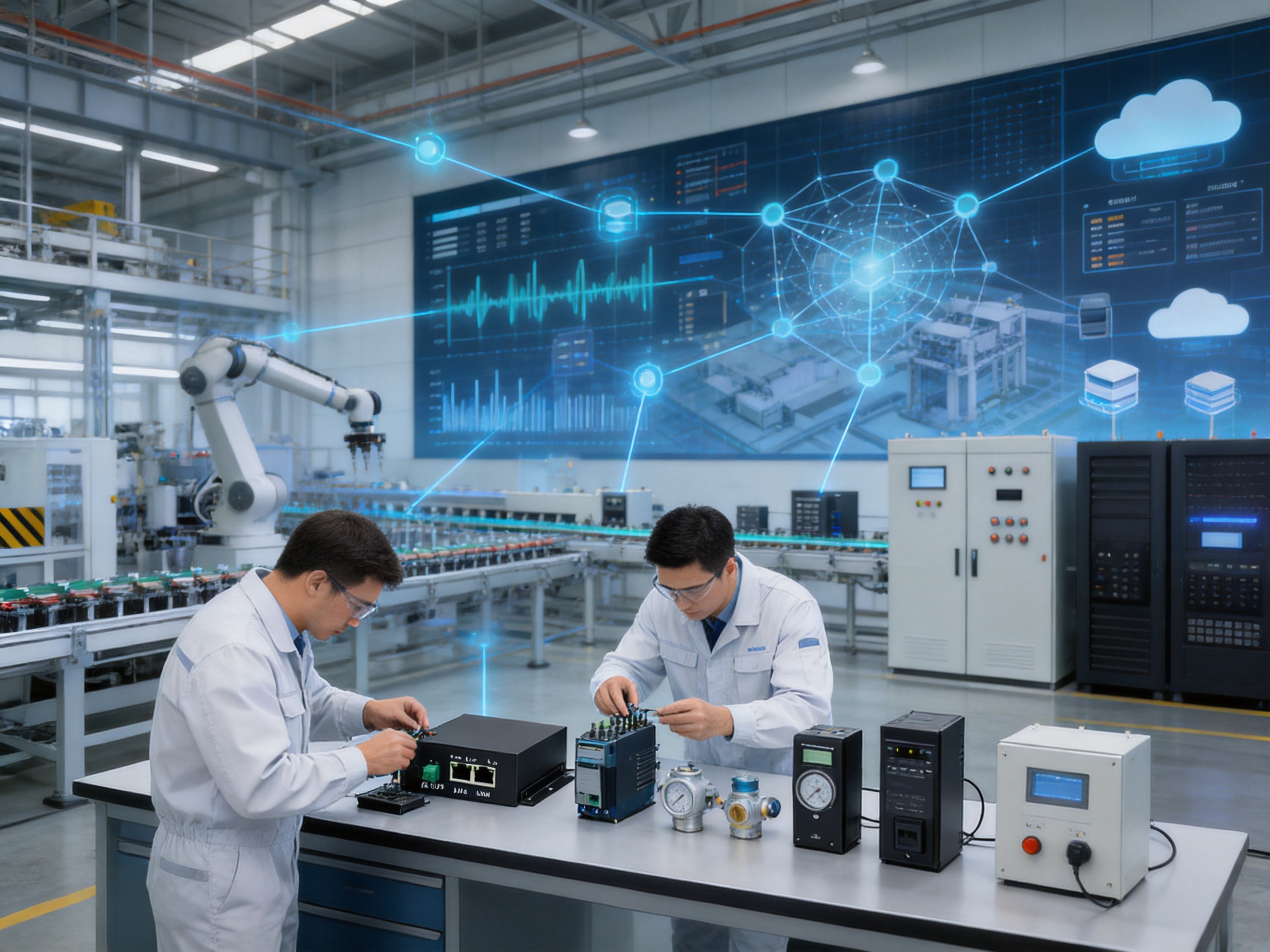
Industrial facilities increasingly depend on connected cameras, sensors, controllers, gateways, and automation equipment. As these devices multiply, the communication network must provide more than basic data transfer. It must remain stable in electrically noisy environments, operate continuously across wide temperature ranges, simplify installation, and support the practical requirements of industrial maintenance teams.
The single-phase dual-port broadband powerline transceiver is designed for precisely this type of environment. Operating over existing AC power lines, slip-contact cords, slip-ring cables, or related conductors, the device combines power supply, broadband powerline communication, Ethernet access, and local DC power output in one industrial-grade unit. Its design addresses a common challenge in industrial networking: how to connect several networked devices across difficult locations without installing a completely new communication cable infrastructure.
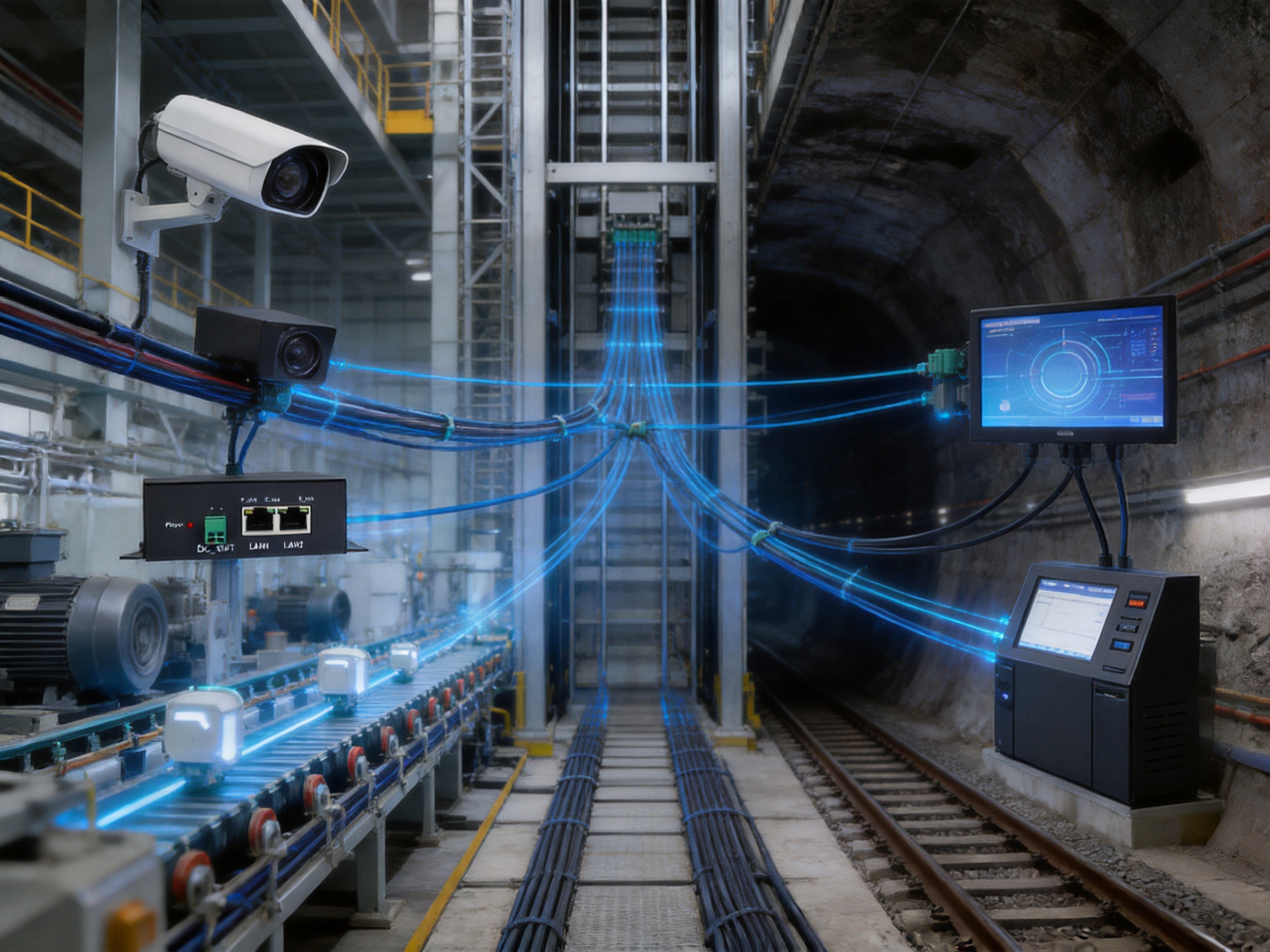
With dual RJ45 Ethernet ports, support for AC 100–220V power lines, OFDM modulation, AES-128 encryption, automatic networking, route optimization, and a stated point-to-point transmission distance of up to 500 meters over power lines, the device provides a flexible foundation for industrial IoT communication. It is suitable for applications such as elevator video surveillance, railway monitoring, mine safety systems, factory security, process monitoring, and equipment connectivity.
The product is also supported by the engineering capabilities of ASY Electronics (JiaXing) Co., Ltd., a high-tech enterprise focused on data sensing, intelligent connectivity, smart factory development, and industrial data integration. Its product portfolio includes broadband powerline carriers, wireless temperature monitoring systems, industrial transmitters, thermal gas mass flow meters, and automatic door controllers. This combination of communication hardware and industrial sensing products gives the company a practical understanding of how industrial devices must operate in real production environments.
1. The Industrial Connectivity Challenge
Industrial networking is often more complicated than office networking. A factory may contain motors, variable-frequency drives, elevators, cranes, welding equipment, switching power supplies, relays, and long cable runs. These systems can generate electrical noise and irregular operating conditions. Network equipment may also be installed in locations where conventional Ethernet cabling is expensive, difficult, or impossible to route.
Some industrial sites require communication along moving equipment. Others need data transfer through rotating mechanisms, slip rings, mobile platforms, railway systems, or vertical structures. In these cases, installing separate data cables can introduce mechanical complexity, additional maintenance points, and higher deployment costs.
Traditional wireless networks may solve part of the problem, but they can be affected by metal structures, electromagnetic obstruction, signal shadowing, spectrum congestion, or security requirements. Fiber optic networks provide excellent immunity to electromagnetic interference, but fiber installation and termination can require specialized labor and infrastructure. Conventional copper Ethernet offers simplicity in suitable areas, yet its practical distance and cabling requirements can limit deployment flexibility.
Broadband powerline communication offers another approach. Instead of relying exclusively on new data cables or radio signals, it uses conductors that are already present in the site. Power and communication signals share the same physical infrastructure through a suitable coupling and isolation design. This can reduce installation effort while allowing networked equipment to be added at locations where power is already available.
The challenge is to make this approach reliable enough for industrial use. A commercial residential powerline adapter may not be appropriate for a factory, mine, railway installation, or elevator system. Industrial equipment must support wider environmental conditions, continuous operation, electrical protection, stable data forwarding, and practical integration with existing control and communication protocols. The KS710LD is designed around these industrial requirements.
2. Product Overview
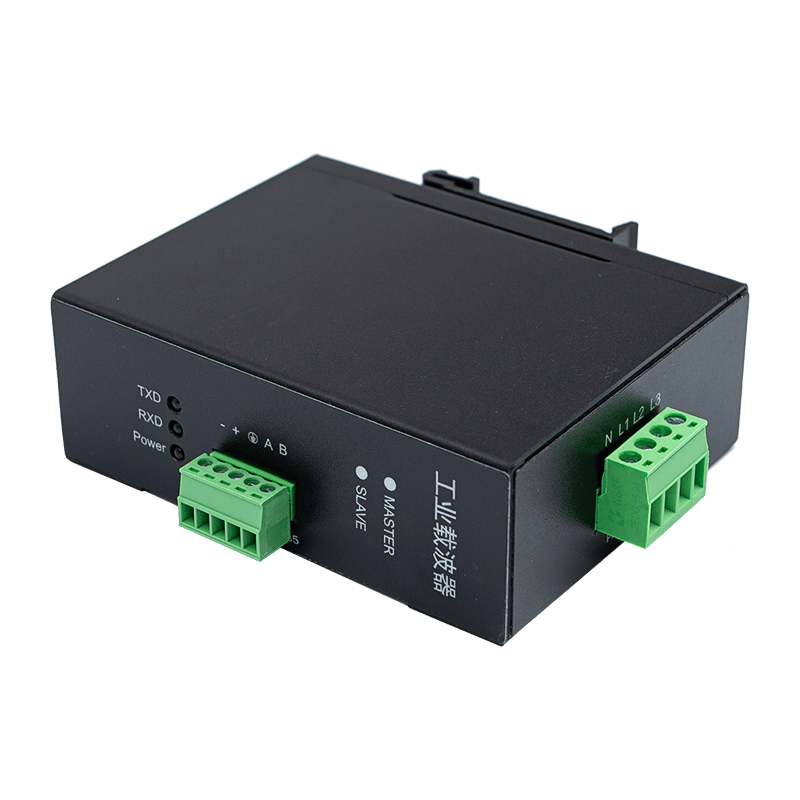
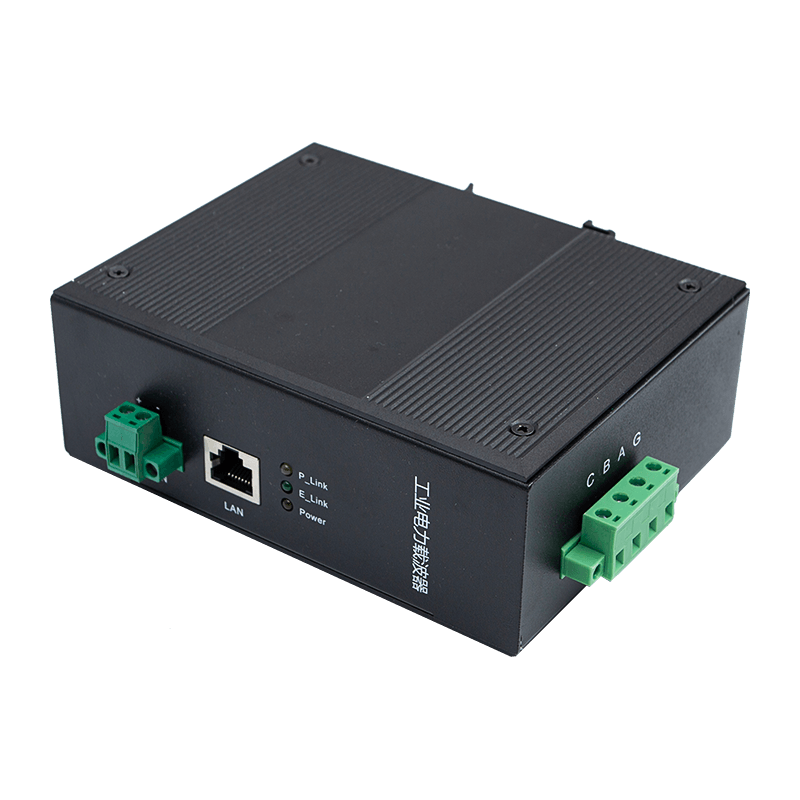
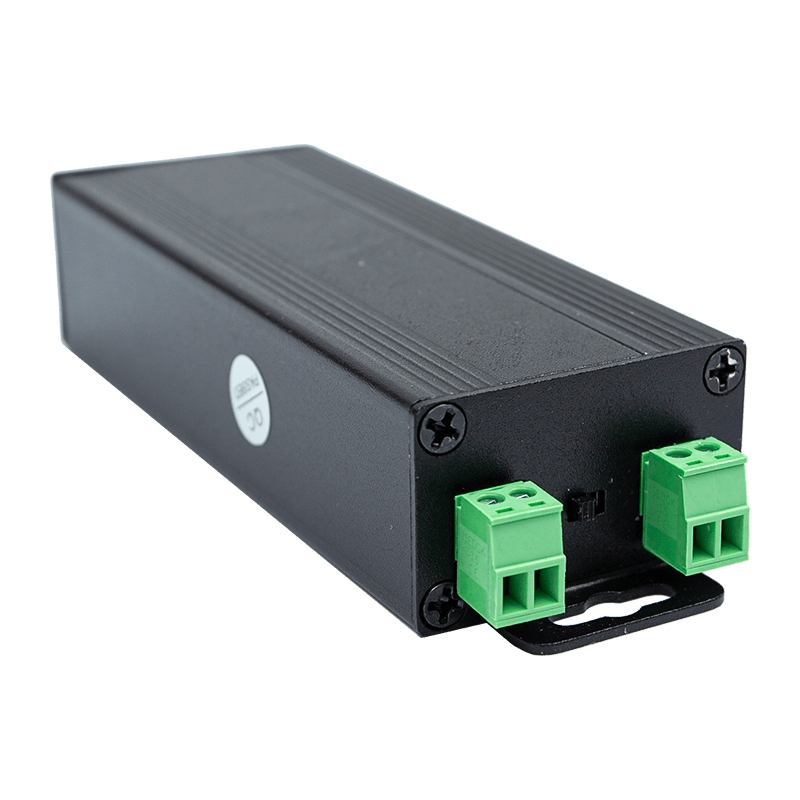
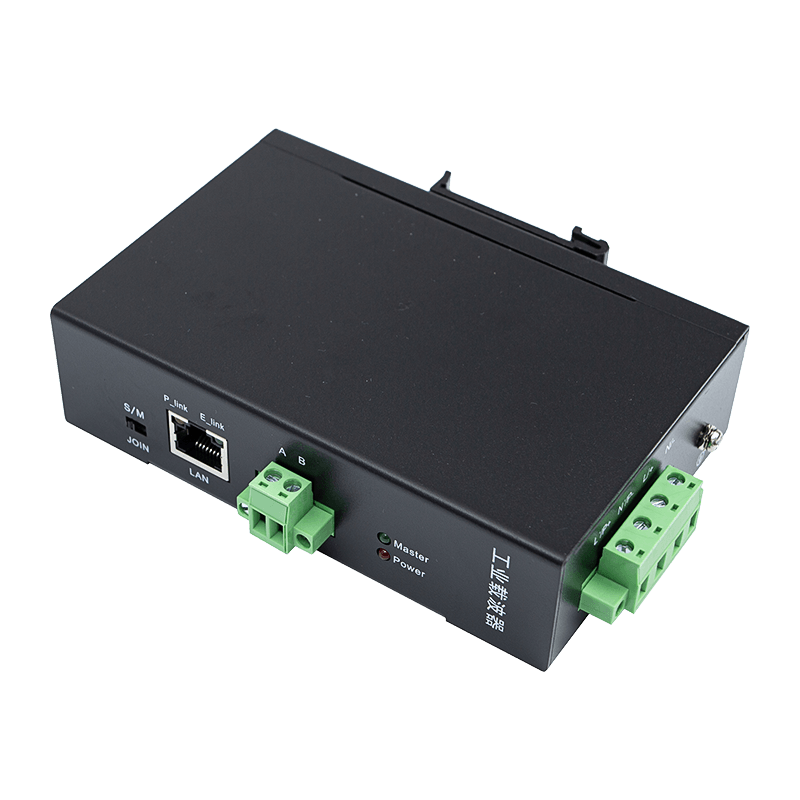
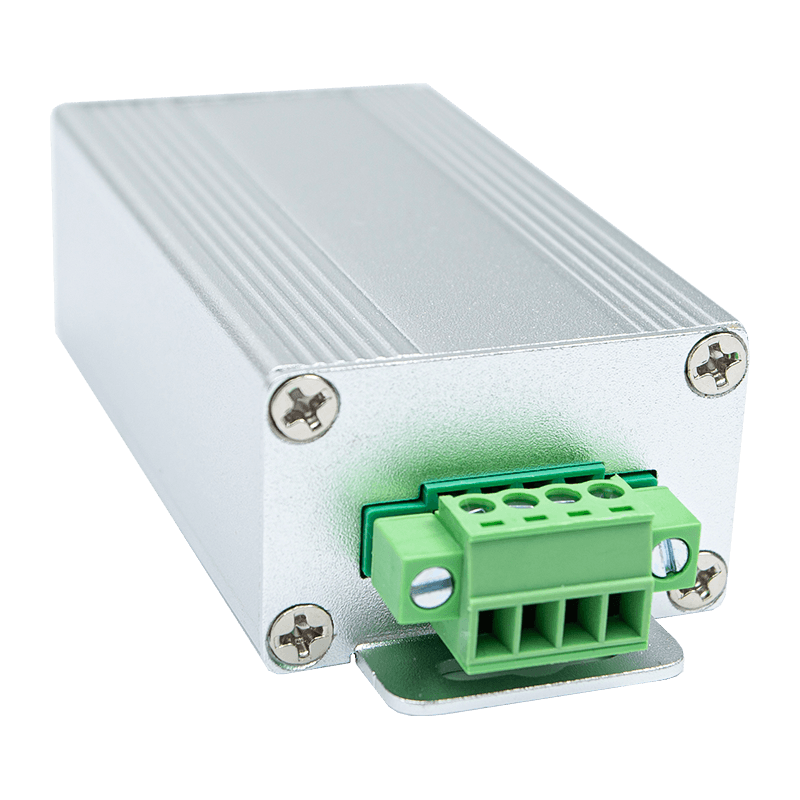
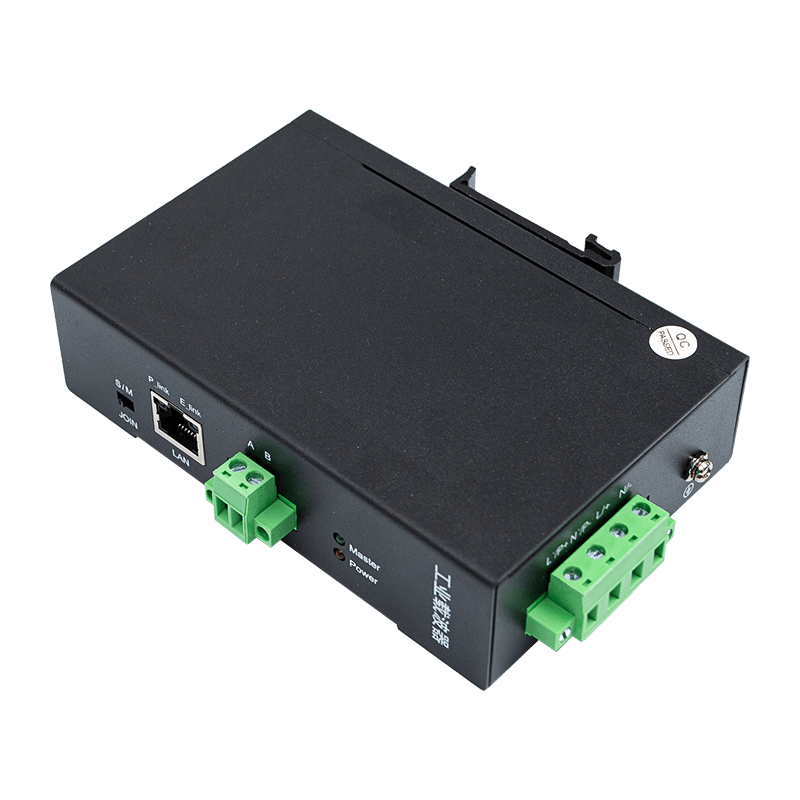
The KS710LD is a single-phase dual-port broadband powerline transceiver for industrial communication. It draws power from an AC 100–220V power line and communicates through the same power-line infrastructure. The unit includes two standard RJ45 Ethernet ports, enabling two network devices to be connected at the same point without requiring an additional external Ethernet switch in many installations.
The device also provides a DC 12V/24W output. This feature allows it to supply power to a compatible connected network device, helping reduce the number of separate power adapters and simplifying field installation. The product specification identifies AC 220V single-phase operation, dual LAN connectivity, DC 12V output, bracket mounting, and an industrial-grade construction concept.
Its communication architecture is based on IEEE P1901 technology and uses OFDM modulation and demodulation. The carrier frequency range is specified as 2–28 MHz. Ethernet communication supports 10M/100Mbps auto-adaptation, while the device supports a broad group of network and industrial communication standards, including TCP/IP, UDP, Profinet, HomePlug, Modbus-TCP, IEEE 802.3, IEEE 802.3u, IEEE 802.3ab, IEEE 1905.1, IEEE 1900, and IEEE 1901.
In practical terms, the device acts as a bridge between ordinary Ethernet equipment and an existing power-line communication path. A camera, sensor gateway, controller, or industrial computer connects to one of the RJ45 ports. The transceiver converts the Ethernet data into a broadband carrier signal for transmission across the power line. Another compatible transceiver receives the signal and restores the data for the remote network equipment.
Because the communication is designed for transparent bidirectional transmission, the device can support network architectures in which different types of industrial equipment share the same communication infrastructure. Its automatic networking and route optimization features are intended to simplify the construction of bus, star, tree, and hybrid topologies.
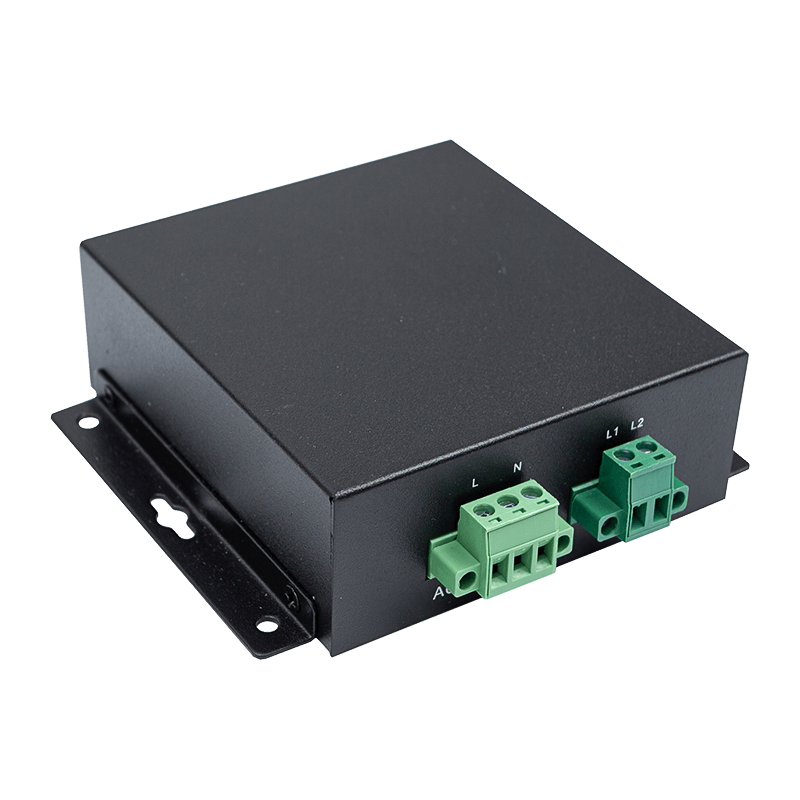
Single-Phase Dual-Port Broadband Powerline Transceiver
3. How Broadband Powerline Communication Works
Powerline communication uses an existing electrical conductor as a medium for data transmission. The device does not replace the normal power function of the conductor. Instead, it introduces a high-frequency communication signal through a controlled coupling circuit. At the receiving end, a compatible device separates and processes the carrier signal before delivering the data through Ethernet.
The KS710LD uses OFDM, or orthogonal frequency-division multiplexing. OFDM divides the available communication spectrum into multiple closely spaced subcarriers. These subcarriers can carry data simultaneously while remaining mathematically orthogonal. This technique is valuable in industrial environments because individual portions of the frequency spectrum can be managed according to channel conditions.
Power lines are not purpose-built data cables. Their impedance can vary with connected equipment, cable length, switching conditions, and network topology. Some frequency bands may experience stronger interference than others. OFDM technology helps the communication system use the available spectrum more efficiently and maintain communication performance under changing channel conditions.
The product specifies a carrier frequency range of 2–28 MHz. This broadband range supports high-speed data transmission for applications that require more than simple low-rate control signals. Video surveillance, equipment monitoring, sensor aggregation, and industrial Ethernet traffic can all benefit from a broadband connection.
A powerline network may use multiple compatible nodes. Automatic networking allows devices to identify and join the communication system without requiring a complex manual configuration for every physical path. Route optimization can help select an effective communication route in a network with more than two nodes. This is especially useful in hybrid deployments where equipment is distributed across different sections of a plant, building, elevator shaft, railway system, or production line.
The product also supports IGMP multicast protocols, with a maximum stated node number of 128. Multicast support is relevant to video and industrial applications in which one data stream may need to be delivered to multiple receiving devices. Proper multicast handling can prevent unnecessary duplication of traffic and improve the efficiency of shared network resources.
4. Key Technical Specifications
The following table summarizes the main technical data provided for the transceiver.
| Item | Specification |
|---|---|
| Power supply | AC 100–220V single-phase |
| PLC signal medium | AC 100–220V power line, slip-contact cord, slip-ring cable, and similar conductors |
| DC output | DC 12V/24W |
| Modulation | OFDM |
| Carrier frequency | 2–28 MHz |
| Ethernet interface | Two standard RJ45 ports |
| Ethernet speed | 10M/100Mbps auto-adaptation |
| Transmission distance | Up to 500 meters point-to-point over power line; approximately 2–3 kilometers over coaxial cable as specified |
| Data delay | Within 10 ms |
| Packet loss probability | Less than 0.1‰ as specified |
| Overall power consumption | 3W or less |
| Security | AES-128 encryption |
| Multicast | IGMP multicast support; maximum stated node number of 128 |
| Dimensions | 114 × 98 × 35.2 mm |
| Weight | 330 g |
| Mounting | Bracket mounting |
| Operating temperature | -40°C to 85°C |
| Operating humidity | 20%–95%, non-condensing |
| Storage temperature | -40°C to 85°C |
| Operating schedule | Industrial-grade, designed for 7×24-hour operation |
Actual performance depends on the electrical condition of the installation, conductor type, interference level, topology, connected loads, and compliance with the installation requirements. A site survey and application-specific validation remain important before deployment.
5. Dual Ethernet Ports for Flexible Access
One of the most practical advantages of the transceiver is its dual LAN design. Many industrial communication points need to connect more than one device. For example, an elevator installation may include a camera and a controller. A production station may include a sensor gateway and an industrial HMI. A mine monitoring point may require both a video unit and a data acquisition device.
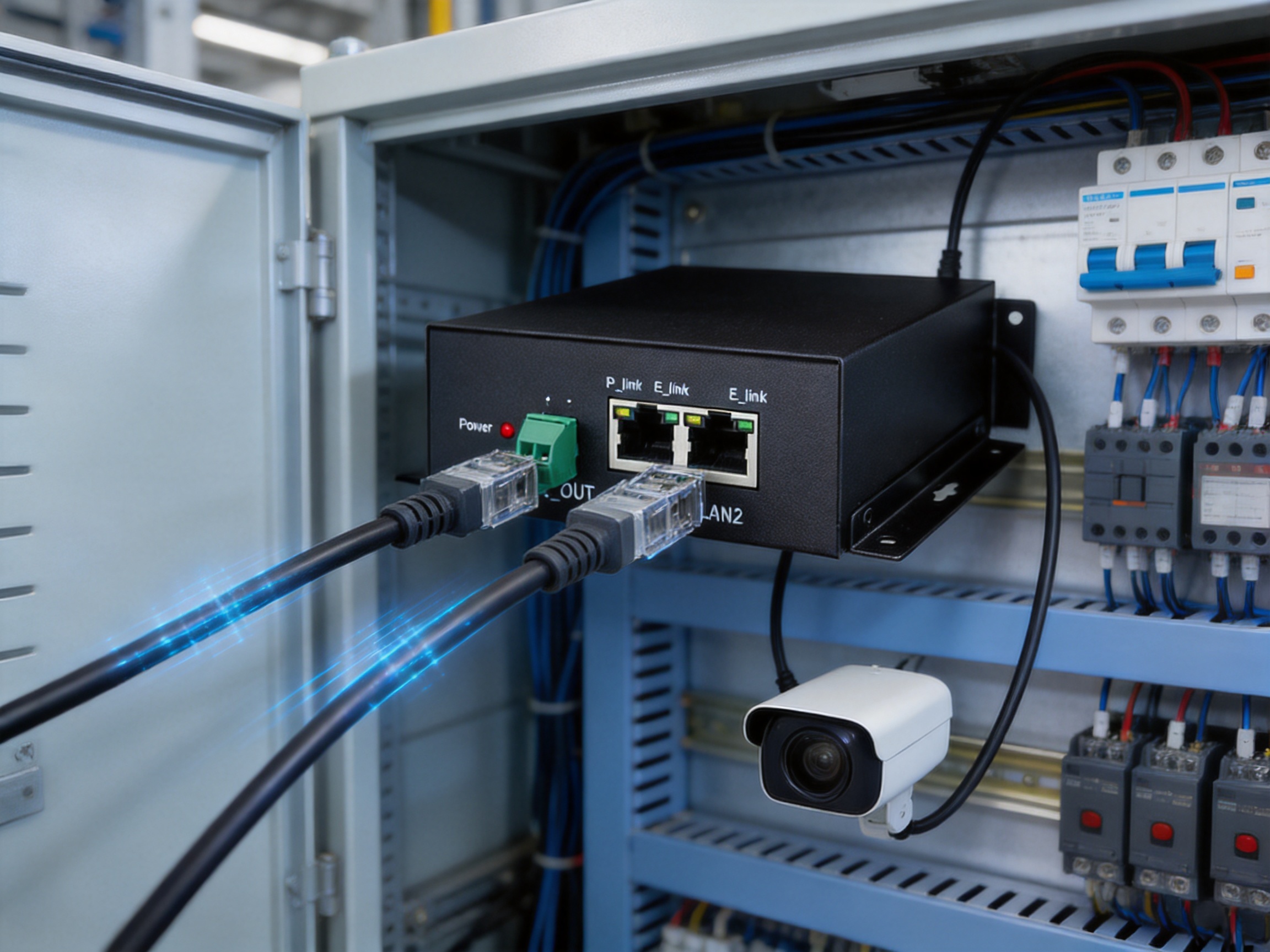
With two RJ45 interfaces integrated into the same unit, the installer can connect two Ethernet devices directly. This can reduce the need for an external switch, additional power supplies, and extra mounting space. It also helps simplify the network layout at locations where cabinet space is limited.
The dual-port arrangement can support staged expansion. A first port may be used for the primary device, while the second remains available for a future sensor, controller, or diagnostic tool. This gives system designers more flexibility than a single-port transceiver and can reduce the need to replace the communication device when a site adds equipment.
Dual LAN access is also useful for equipment cascades. Depending on the network architecture and configuration, one port may connect to an endpoint while the other provides access for another network segment or device. The exact topology should be assessed according to the requirements of the Ethernet equipment and the overall control network.
Compared with a single-port powerline adapter, the dual-port design can provide greater access capacity at the same physical communication point. Compared with installing a separate unmanaged switch, it can reduce component count and simplify the power arrangement. These benefits are particularly valuable in distributed installations, where every additional device increases cabinet requirements, wiring work, and maintenance effort.
6. Integrated DC Power Output
The integrated DC 12V/24W output is another feature that differentiates the product from basic powerline communication adapters. Industrial network equipment often requires a local low-voltage supply. If the communication unit can provide that supply directly, the installer may not need to mount a separate converter or adapter.
This arrangement can improve deployment efficiency for compatible cameras, gateways, sensors, and communication terminals. It can also make the installation easier to inspect because power and communication functions are concentrated in one industrial device. Fewer separate modules may mean fewer cable connections and fewer potential failure points.
The 24W output rating should be matched carefully to the connected equipment. The installer must verify voltage, current, polarity, startup requirements, and environmental suitability before connecting a load. Devices with higher power requirements or special power quality requirements should use an appropriate dedicated supply.
Integrated power delivery also helps support compact installations. In an elevator shaft, railway enclosure, or factory machine area, space may be limited and access may be inconvenient. A combined powerline transceiver and DC output can reduce the physical footprint of the communication node while keeping the installation organized.
7. Industrial-Grade Operating Capability
The product is specified for an operating temperature range from -40°C to 85°C and storage temperatures from -40°C to 85°C. Its operating humidity range is 20%–95% non-condensing. These specifications are intended for demanding environments where temperature changes and extended operation are normal parts of the application.
Industrial-grade capability is not limited to temperature specifications. It also involves electrical design, mechanical construction, component selection, protection strategy, thermal management, and production consistency. The product incorporates an integrated coupling circuit described as providing high-voltage isolation and surge protection. These functions are important when communication electronics are connected to power-line infrastructure that may experience switching transients or electrical disturbances.
The bracket-mounting structure supports installation inside control cabinets, equipment enclosures, communication boxes, and other fixed industrial locations. The stated dimensions of 114 × 98 × 35.2 mm provide a relatively compact form factor for a device combining power input, powerline communication, dual Ethernet, and DC output functions.
Continuous operation is another important consideration. The transceiver is designed to support 7×24-hour, all-weather industrial operation. This makes it appropriate for systems that cannot be routinely switched off, such as security surveillance, railway monitoring, mine safety networks, and automated production equipment.
Compared with consumer-oriented powerline devices, an industrial transceiver must be selected according to the real environmental conditions of the application. The broad temperature range, bracket mounting, electrical isolation approach, low power consumption, and industrial communication support make this device more suitable for infrastructure and automation applications than a typical home networking adapter.
8. Advantages Compared with Conventional Networking Methods
8.1 Reduced Cabling Requirements
The most direct advantage of powerline communication is the reuse of existing conductors. If suitable power wiring, slip-contact cords, or slip-ring cables are already present, a separate data cable may not be required along the entire route. This can shorten the deployment cycle and reduce the cost of installing new communication infrastructure.
This advantage is particularly important in large factories, vertical shafts, remote equipment areas, railway systems, and moving machinery. Drilling, cable tray installation, conduit routing, and additional cable protection can be labor-intensive. Reusing the existing power path can make network expansion more practical.
8.2 Greater Flexibility than Fixed Point-to-Point Ethernet
Conventional Ethernet typically requires a dedicated cable from the network switch to each endpoint. That arrangement is reliable when cable routes are straightforward, but it can become difficult when endpoints are spread across complex structures. Powerline communication can follow the existing electrical distribution path, allowing communication nodes to be placed where power is already available.
The automatic networking and route optimization capabilities further support flexible bus, star, tree, and hybrid network structures. This gives system integrators more options when adapting the network to an existing industrial layout.
8.3 Less Dependence on Radio Conditions
Wireless networks can be highly effective, but industrial metalwork, moving machinery, reinforced concrete, electromagnetic obstructions, and radio congestion may affect coverage. Powerline communication does not depend on a radio path between the nodes. In locations where wireless signal planning is difficult, the powerline route can offer an alternative communication channel.
This does not mean powerline communication is universally superior to wireless or fiber. Each medium has application-specific benefits. However, the availability of a wired electrical path gives industrial planners another option, especially in places where wireless coverage is inconsistent and new Ethernet or fiber cabling is expensive.
8.4 Broader Function Integration
A basic network adapter may provide only one Ethernet port. The KS710LD combines two Ethernet ports, powerline communication, AC power input, DC power output, encryption, multicast support, and industrial environmental capability. Integrating these functions can reduce the number of components required at each node.
Fewer components can simplify procurement, installation, troubleshooting, and replacement. It can also make the solution easier to standardize across a large project with many similar network points.
9. Advantages Compared with Basic Powerline Adapters
Not all powerline communication equipment is intended for industrial use. Residential adapters commonly focus on ease of use in stable indoor environments. Industrial sites impose different requirements, including continuous operation, wider temperature conditions, electrical transients, multiple network devices, and integration with automation protocols.
The KS710LD addresses these requirements through several features. Its industrial-grade design supports a -40°C to 85°C operating range. The dual LAN configuration supports two connected devices. The DC output can power a compatible endpoint. The integrated coupling circuit provides a high-voltage isolation and surge protection approach. Bracket mounting supports fixed equipment installation. These characteristics make the product more appropriate for control cabinets and industrial enclosures than a consumer plug-in adapter.
The product also supports protocols and standards used in industrial and Ethernet environments. Profinet and Modbus-TCP support can be relevant to automation and data acquisition systems, while TCP/IP and UDP support general network communication. IEEE Ethernet compatibility helps the device connect with common network hardware.
Security is addressed through AES-128 encryption. Powerline networks can extend beyond a single enclosure or room, so protecting transmitted data is important. Encryption does not replace good network segmentation, access control, or industrial cybersecurity practices, but it provides an additional protection layer for communication across the powerline medium.
The stated data delay of within 10 ms and packet loss probability of less than 0.1‰ indicate a design intended for responsive and stable communication. Actual results depend on the site, but these specifications are relevant when evaluating video, monitoring, and control applications that require consistent data delivery.
10. Application Scenarios
10.1 Elevator Video Surveillance
Elevators are a representative application for powerline communication. The elevator car moves through a shaft, and conventional network cabling may need to accommodate movement. Slip-contact cords or related conductors may already be part of the elevator system. A compatible powerline transceiver can use the existing electrical path to transmit video or control data between the moving car and fixed equipment.
The dual LAN ports can support an elevator camera and an additional controller or communication device. The compact bracket-mounted enclosure can be installed in a suitable control or equipment area. The final installation must account for elevator safety regulations, electrical isolation, mechanical movement, and compatibility with the existing elevator system.
10.2 Railway Communication Monitoring
Railway and transit systems may contain long distances, moving vehicles, distributed monitoring points, and challenging cable routes. Powerline communication can be considered where suitable conductors or slip-ring structures are available. It may support video, status information, equipment diagnostics, and network connectivity for distributed subsystems.
Railway applications require careful validation of electromagnetic compatibility, grounding, surge conditions, mechanical vibration, and relevant transportation standards. The transceiver's industrial temperature range and low power consumption can be useful design characteristics, but the complete system must be evaluated against the requirements of the railway installation.
10.3 Mine Monitoring
Mines often contain remote areas, long tunnels, distributed sensors, and difficult cabling conditions. Existing power distribution paths may provide a practical route for communication. A powerline network can connect cameras, environmental monitoring equipment, controllers, and data gateways without requiring a separate communication cable for every endpoint.
Mining applications require strict attention to hazardous-area classification, equipment approval, installation method, grounding, and protection. The transceiver should only be used where its specifications and certifications meet the requirements of the specific mine environment. In suitable non-hazardous or properly approved installations, its industrial communication functions may assist with monitoring and data collection.
10.4 Factory Video Surveillance
Factories often need cameras in areas where network cables are difficult to route. A powerline communication system can provide a connection along existing electrical infrastructure. The broadband carrier capability and Ethernet ports support the transmission of network traffic from cameras and other devices.
Video applications should be designed according to camera resolution, frame rate, compression, multicast behavior, and network loading. The 10M/100Mbps auto-adaptive Ethernet interfaces are suitable for many standard industrial surveillance requirements, but the total bandwidth of the complete network should be calculated before deployment.
10.5 Industrial Sensor Networks
Industrial plants may install sensors for temperature, energy, equipment condition, pressure, flow, and process status. Some sensors connect through gateways rather than directly through Ethernet. The transceiver can provide a communication bridge for these gateways, using existing power lines to reach a central control or monitoring network.
This application aligns with the wider product capabilities of the manufacturer, which include wireless temperature monitoring systems, industrial transmitters, and thermal gas mass flow meters. A company that develops both sensing products and connectivity hardware can better understand the practical relationship between field data, communication infrastructure, and industrial information systems.
10.6 Security and Access Control
Security systems may include cameras, access controllers, intercoms, alarm devices, and local data gateways. In existing buildings or industrial compounds, installing new communication cables may require extensive construction work. Powerline communication can support network expansion where an appropriate power path is available.
The dual-port design may connect a camera and an access controller at the same location. The integrated DC output may simplify power delivery to a compatible low-voltage device. AES-128 encryption can provide additional protection for data crossing the powerline network.
11. Manufacturing and Engineering Strengths
The performance of an industrial communication product depends not only on its circuit design but also on the consistency of its manufacturing process. A device intended for continuous operation must be produced with attention to component quality, assembly accuracy, thermal behavior, electrical safety, firmware stability, and inspection procedures.
ASY Electronics describes itself as a high-tech enterprise dedicated to smart factory development, data sensing, and intelligent connectivity. Its product range covers several related industrial fields rather than a single isolated device category. This provides a foundation for developing products that address complete industrial use cases, including sensing, transmission, communication, and equipment control.
The company's strengths can be understood through several engineering and manufacturing priorities:
11.1 Product-Oriented Industrial Design
The transceiver is designed around actual field requirements rather than purely laboratory networking performance. Bracket mounting, dual Ethernet access, integrated DC output, wide temperature operation, low power consumption, and 7×24-hour operation all reflect practical installation and maintenance concerns.
A product-oriented design process considers how technicians install, inspect, replace, and expand equipment. Integrating several functions into one unit can simplify the bill of materials for a project and reduce the number of separate modules that must be managed in the field.
11.2 Integration of Hardware and Industrial Data Applications
The company's focus on edge-layer hardware and industrial data integration supports a broader view of connectivity. Industrial communication equipment is most valuable when it reliably connects field data to control, monitoring, and management systems. The transceiver's compatibility with Ethernet and industrial communication protocols supports this role.
Experience with wireless temperature monitoring, transmitters, flow meters, and automatic door controllers also contributes to application knowledge. These products operate in different industrial contexts, but all depend on reliable measurement, communication, and control. This cross-category experience can help guide product development toward practical interoperability.
11.3 Attention to Electrical Protection
Connecting communication electronics to power lines requires careful electrical engineering. The coupling circuit must enable high-frequency data transfer while maintaining appropriate isolation between the power system and low-voltage electronics. Surge protection is also important because industrial power networks can experience switching events and transient disturbances.
The product information identifies an integrated coupling circuit with high-voltage isolation and surge protection functions. These design elements demonstrate that the communication path is treated as an industrial electrical interface rather than as a simple consumer networking connection.
11.4 Support for Application Customization
Industrial projects frequently differ in voltage, mechanical structure, network topology, environmental conditions, protocol requirements, and installation method. A supplier with experience in industrial IoT solutions can support project-level evaluation and adaptation more effectively than a general-purpose networking vendor.
Customization may involve communication topology, enclosure arrangement, mounting method, connector selection, firmware behavior, output power requirements, or integration with other industrial devices. Any customization should be confirmed through a formal technical specification and validation process.
11.5 Smart Factory Development Experience
A company focused on smart factories operates in the same general technology environment as its customers. Manufacturing processes require equipment monitoring, energy management, production optimization, and reliable data flows. This practical orientation can encourage the development of products that are easier to deploy and maintain in production facilities.
Smart factory experience also encourages attention to the complete data chain: sensing at the edge, communication through industrial networks, aggregation by gateways, and analysis by supervisory or management systems. A broadband powerline transceiver can serve as one important part of that chain.
12. Network Design Considerations
A successful deployment begins with an assessment of the electrical and communication environment. The installer should identify the power-line route, cable length, distribution structure, connected loads, expected noise sources, grounding conditions, and locations of all communication nodes.
Although the product specifies a point-to-point powerline distance of up to 500 meters, the actual distance depends on the conductor, signal attenuation, electrical noise, branch circuits, phase arrangement, and connected equipment. The rated distance should therefore be treated as a design reference rather than a guarantee for every site.
Network planners should also determine whether the equipment is connected through a single-phase circuit and whether the communication path remains electrically suitable across the full route. Where the signal must cross different distribution sections, additional testing may be required.
For video surveillance, bandwidth calculations are essential. The network should account for camera bit rates, concurrent streams, multicast behavior, recording traffic, and uplink capacity. For control systems, latency, redundancy, and protocol behavior should be evaluated. For sensor networks, the number of devices, polling intervals, and gateway traffic should be considered.
Powerline communication devices should be installed in a way that maintains appropriate separation from high-energy switching components where practical. Surge protection, grounding, enclosure ventilation, and access for maintenance should follow the requirements of the electrical system and local regulations.
13. Security and Reliability
Industrial networks must protect both data and operational continuity. The transceiver supports AES-128 encryption for communication over the powerline network. This helps protect transmitted information from unauthorized access by devices that are not part of the intended network.
Encryption should be combined with broader cybersecurity practices. Industrial networks should use appropriate segmentation, account management, password policies, firewall rules, controlled maintenance access, and secure configuration procedures. Network administrators should also document which devices are authorized to join the powerline network.
Reliability depends on both the device and the installation. The specified data delay of within 10 ms and packet loss probability of less than 0.1‰ provide useful reference points for system evaluation. However, actual results can vary with cable conditions, electromagnetic interference, distance, topology, and traffic patterns.
For high-availability applications, system designers may consider redundant communication paths, backup equipment, independent power arrangements, or local control logic. The transceiver can be an important component in a reliable network, but no single communication device should be treated as a substitute for complete system-level reliability planning.
14. Energy Efficiency and Deployment Economy
The product's overall power consumption is specified as 3W or less, excluding the power delivered to an external load through the DC output. Low operating consumption is beneficial for installations with many communication nodes. It can reduce heat generation inside enclosures and contribute to lower long-term operating costs.
Economic value also comes from reducing installation complexity. Reusing existing power lines can limit the need for new cable routes, supports, conduits, and construction labor. Dual Ethernet ports can reduce the need for a separate switch at certain access points. Integrated DC output can reduce the number of local power modules.
Maintenance teams may benefit from a standardized communication unit that performs several functions. Fewer device types can simplify spare-parts planning and technician training. A compact industrial enclosure can also make replacement faster in locations where access is restricted.
The total project cost should include engineering validation, electrical installation, commissioning, network configuration, environmental protection, and future maintenance. Powerline communication is especially attractive when the existing electrical infrastructure is accessible and suitable for data transmission.
15. Installation and Commissioning Guidance
15.1 Confirm Electrical Compatibility
Verify that the power supply is within the AC 100–220V range and that the installation is compatible with the single-phase operating requirement. Confirm that the powerline path is suitable for communication and that all applicable electrical safety procedures are followed.
15.2 Confirm the DC Load
Before using the DC output, check the voltage and current requirements of the connected equipment. The total load must remain within the 12V/24W specification. Confirm polarity and connector requirements to prevent damage to the transceiver or the connected device.
15.3 Check Network Topology
Define whether the system will use a point-to-point, bus, star, tree, or hybrid arrangement. Identify the central network connection, remote endpoints, possible routes, and any locations where a compatible transceiver may be required.
15.4 Test the Powerline Channel
Measure or validate communication performance under normal operating conditions. Tests should include expected equipment loads, motor operation, switching events, video traffic, and the maximum intended number of nodes. Testing during actual production conditions is preferable to testing only when machinery is idle.
15.5 Configure Security and Protocols
Apply appropriate encryption and network settings. Confirm compatibility with TCP/IP, UDP, Profinet, Modbus-TCP, or other protocols used by the application. For multicast traffic, verify IGMP behavior and ensure that the network does not create unnecessary traffic storms.
15.6 Document the Installation
Record the location, serial information, connected devices, power source, network address, topology, test results, and maintenance requirements of each transceiver. Accurate documentation reduces troubleshooting time and supports future expansion.
16. Why the Product Is Suitable for Industrial IoT Projects
Industrial IoT projects require a dependable link between field equipment and higher-level information systems. Sensors and controllers generate useful data only when the communication infrastructure can transport that data consistently. The KS710LD provides a practical edge connectivity option where existing power conductors are more accessible than new communication cables.
Its dual Ethernet ports allow multiple devices to share a local communication point. Its DC output can support compatible endpoints. Its broadband OFDM technology enables higher-speed communication than narrowband approaches. Its protocol support allows integration with common Ethernet and industrial networks. Its temperature range and continuous-operation design support demanding field environments.
The product also has value in phased modernization. A factory does not always need to replace its entire network at once. New cameras, sensors, or controllers can be added to existing areas through powerline communication while the broader infrastructure is upgraded gradually. This supports a more controlled transition toward smart manufacturing.
For solution providers, the product can be included in larger industrial IoT packages involving equipment condition monitoring, refined energy management, production optimization, and intelligent connectivity. Its ability to operate over existing infrastructure may help overcome the physical limitations that often delay digital transformation projects.
17. Frequently Asked Questions
What is the main purpose of the single-phase dual-port broadband powerline transceiver?
It provides Ethernet communication over existing AC power lines or compatible conductors such as slip-contact cords and slip-ring cables. It is intended for industrial applications that need network connectivity without installing a separate data cable along the entire route.
How many Ethernet devices can be connected directly?
The device includes two standard RJ45 Ethernet ports, allowing two network devices to be connected directly at the transceiver location. The overall number of devices in a complete network depends on the topology and the stated maximum node capacity for the application.
What power input does it use?
The transceiver supports AC 100–220V power input and is specified for single-phase operation. The exact installation must comply with local electrical requirements and the technical conditions of the site.
Does it provide power to connected equipment?
Yes. It provides a DC 12V/24W output for compatible equipment. The connected load must be checked carefully to ensure that its voltage, current, polarity, and startup requirements match the output specification.
What modulation technology does it use?
It uses OFDM modulation and demodulation across a specified carrier frequency range of 2–28 MHz. OFDM is suitable for broadband communication over channels with changing attenuation and interference conditions.
What transmission distance can be expected?
The stated point-to-point transmission distance over a power line is up to 500 meters. The actual distance depends on the cable, electrical topology, interference, connected loads, and installation conditions. The specification also lists approximately 2–3 kilometers over coaxial cable.
Can it be used for video surveillance?
Yes. Typical applications include elevator video surveillance, factory video surveillance, railway monitoring, and security systems. The network designer should calculate the required bandwidth and test video traffic under actual operating conditions.
Does it support industrial protocols?
The listed standards and protocols include Profinet, Modbus-TCP, TCP/IP, UDP, HomePlug, and several IEEE Ethernet and powerline communication standards. Compatibility should be confirmed with the specific equipment and application configuration.
Is encryption supported?
Yes. The product specification identifies AES-128-bit encryption. This provides an additional security layer for data transmitted across the powerline network, but it should be combined with wider industrial cybersecurity measures.
What environmental conditions can it support?
The specified operating temperature range is -40°C to 85°C, with operating humidity of 20%–95% non-condensing. It is designed for industrial-grade 7×24-hour operation. The enclosure and installation environment must still be selected appropriately for dust, water, vibration, corrosive substances, and other site-specific conditions.
How is the unit mounted?
The device uses bracket mounting. It can be installed in a suitable industrial cabinet, enclosure, equipment compartment, or fixed mounting location according to the application requirements.
Is a separate Ethernet switch always required?
No. The two integrated Ethernet ports may eliminate the need for a separate local switch when only two devices need to be connected. A switch may still be appropriate for larger groups of devices or more complex network architectures.
What should be checked before ordering?
Users should confirm the AC voltage, single-phase condition, powerline route, conductor type, required distance, number of devices, Ethernet bandwidth, DC output requirements, environmental conditions, network protocols, mounting space, and any industry-specific approvals or certifications required by the project.
18. Conclusion
The single-phase dual-port broadband powerline transceiver provides an efficient method for extending industrial Ethernet communication through existing power-line infrastructure. By combining broadband OFDM communication, dual LAN access, DC 12V/24W output, AES-128 encryption, automatic networking, route optimization, and industrial-grade environmental performance, it addresses several common limitations of conventional networking deployments.
Its strongest advantages are practical. It can reduce new cabling requirements, support multiple devices at one location, simplify local power arrangements, and operate in demanding temperature conditions. These features make it a strong candidate for elevator monitoring, railway communication, mine monitoring, factory surveillance, security systems, industrial sensing, and smart factory connectivity.
The device also reflects the broader strengths of ASY Electronics: a focus on industrial IoT, self-developed edge-layer hardware, data sensing, intelligent connectivity, and integrated solutions for manufacturing enterprises. Its experience across powerline carriers, wireless temperature monitoring systems, transmitters, flow meters, and automatic door controllers supports a product development approach centered on real industrial applications.
For organizations modernizing existing facilities, the transceiver offers a way to add communication capability without always rebuilding the physical network from the ground up. When supported by appropriate site testing, electrical design, cybersecurity practices, and system integration, it can become a reliable part of an industrial communication architecture.
References
IEEE P1901, Broadband Powerline Networks: Technical Concepts and Communication Frameworks.
EN 50561, Powerline Communication Apparatus for Use in Low-Voltage Installations.
IEEE 802.3, Ethernet Standards for Local and Metropolitan Area Networks.
IEEE 802.3u, Fast Ethernet Specification.
IEEE 1905.1, Convergent Digital Home Network Architecture.
Industrial Ethernet and TCP/IP Network Integration Principles.
OFDM Communication Technology for Broadband Wired Networks.
Industrial IoT Deployment and Smart Factory Connectivity Practices.