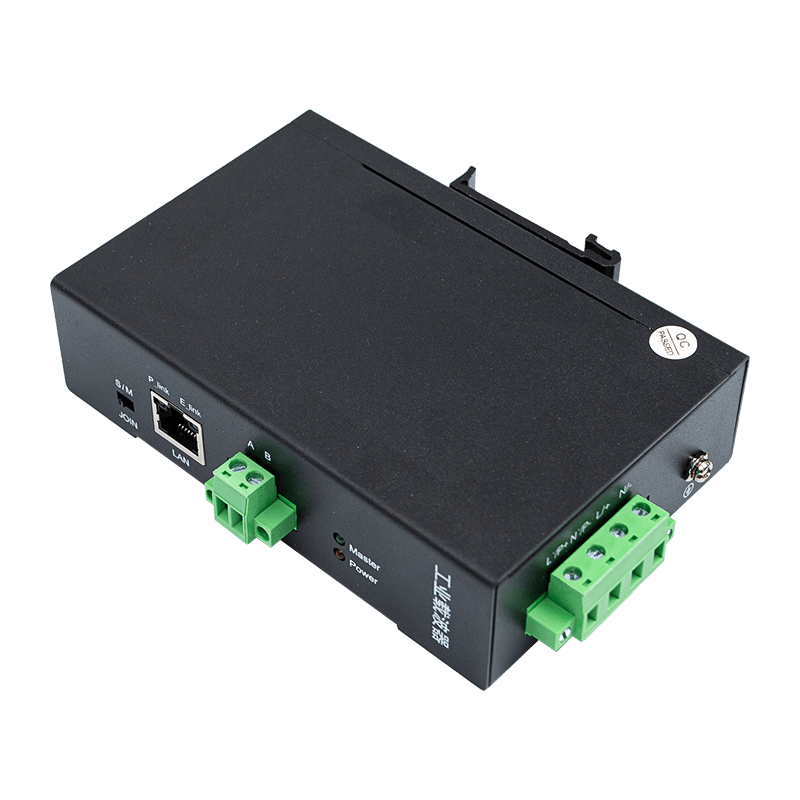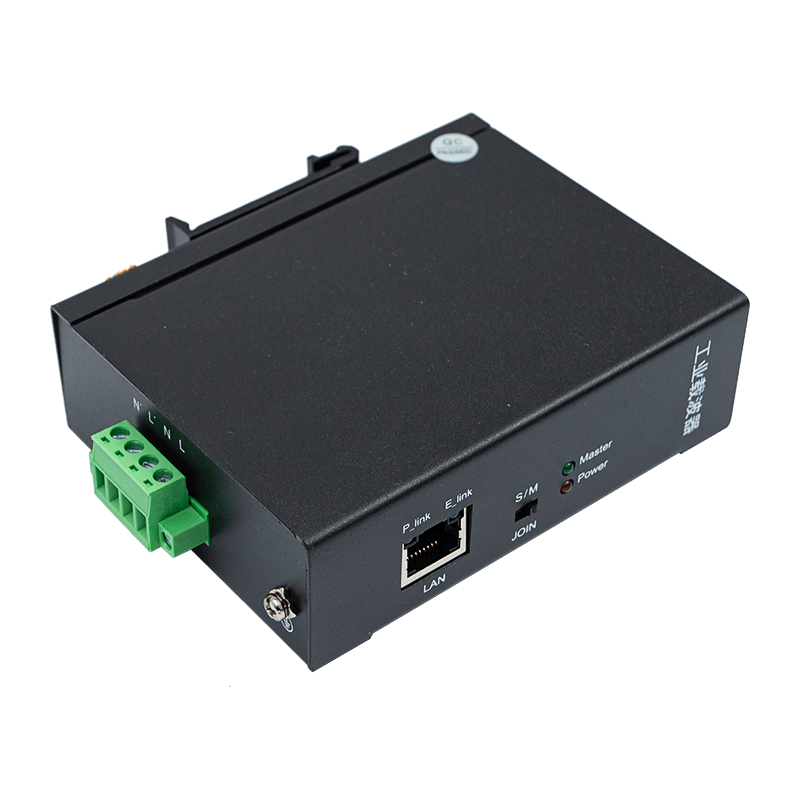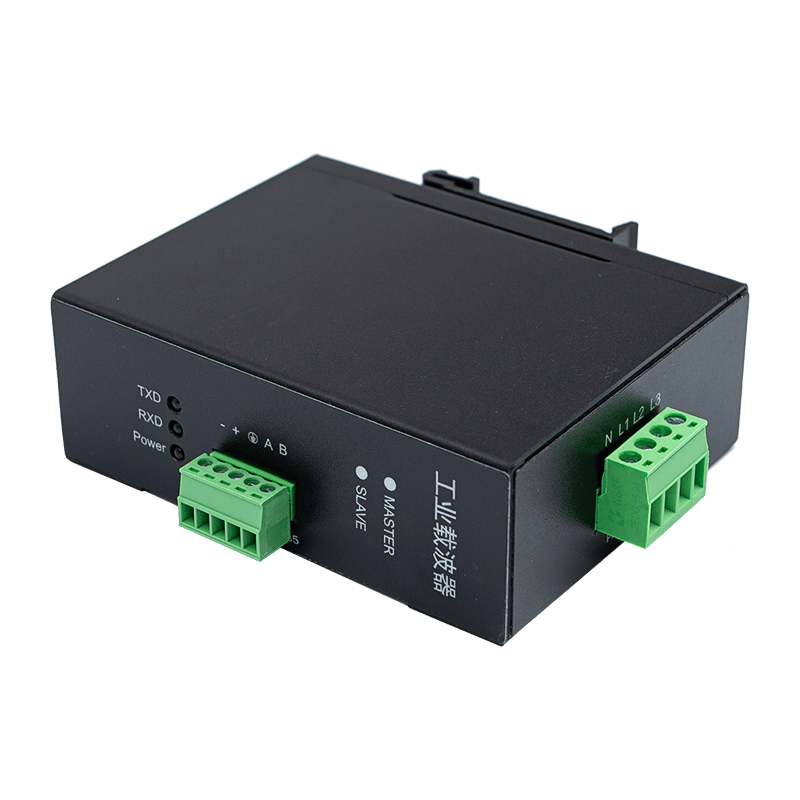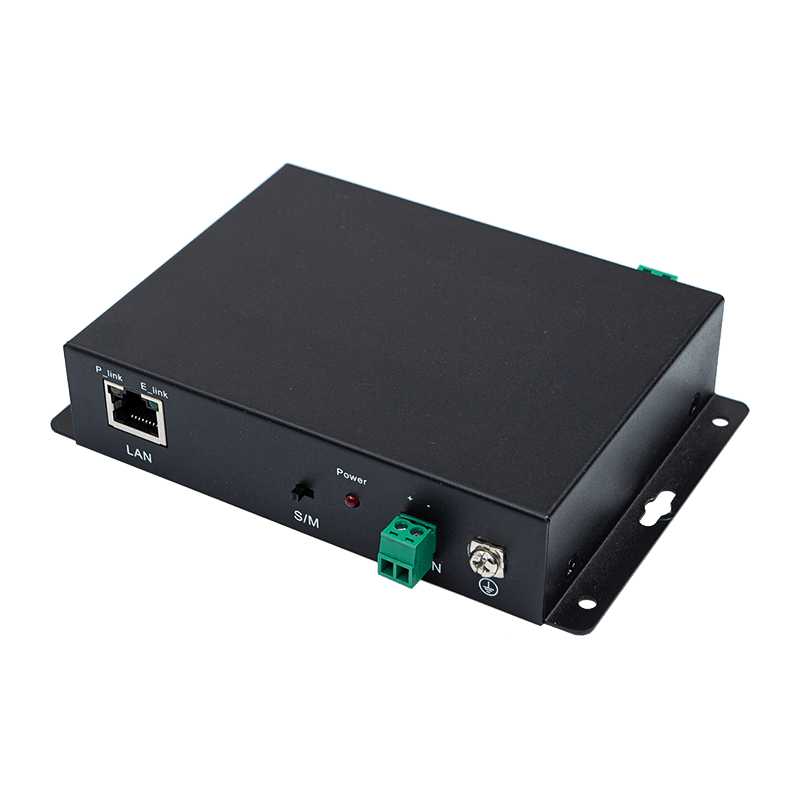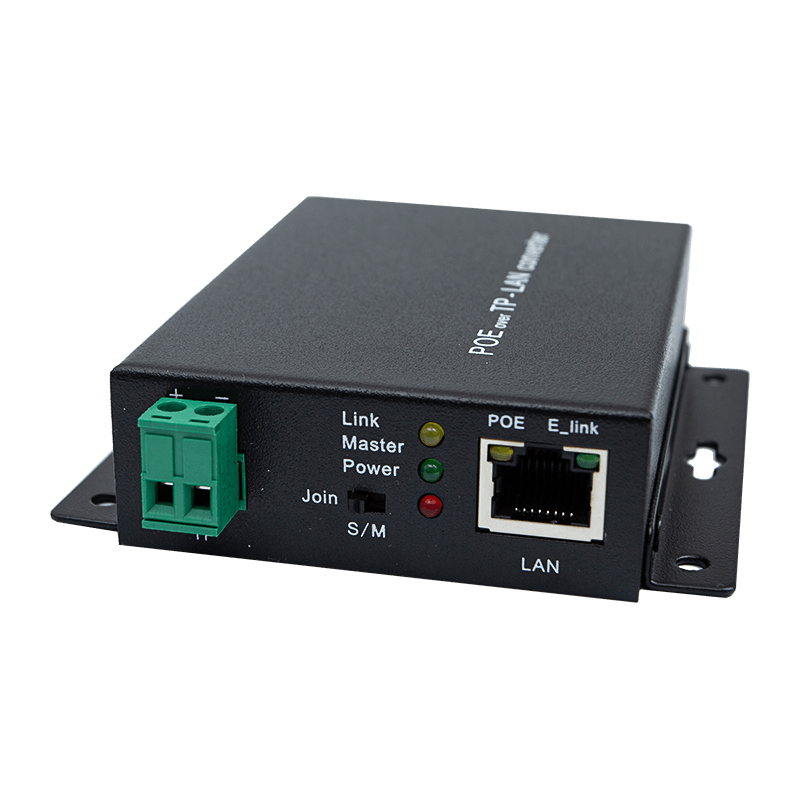


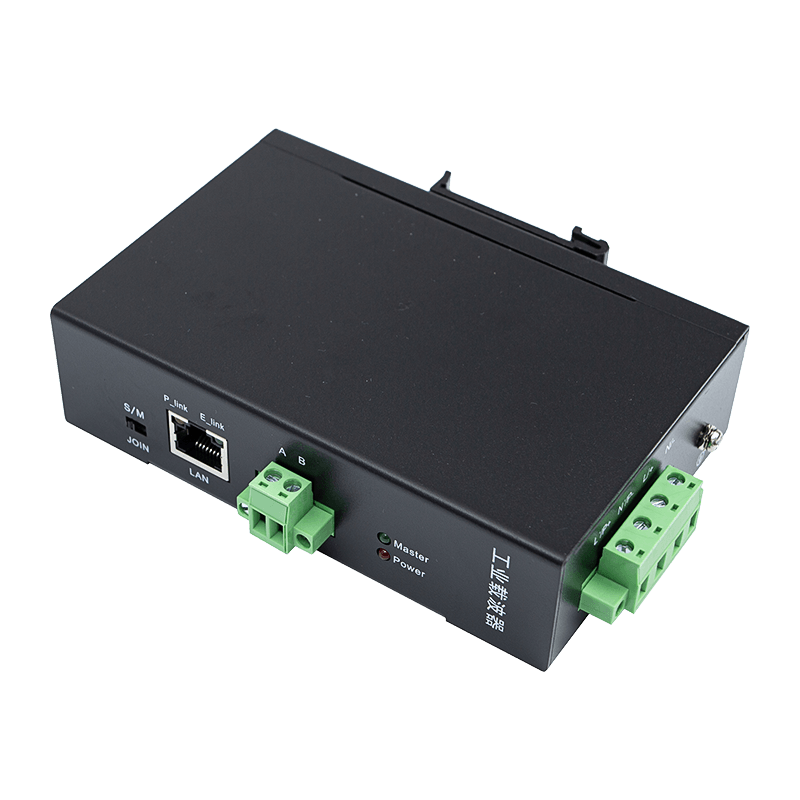
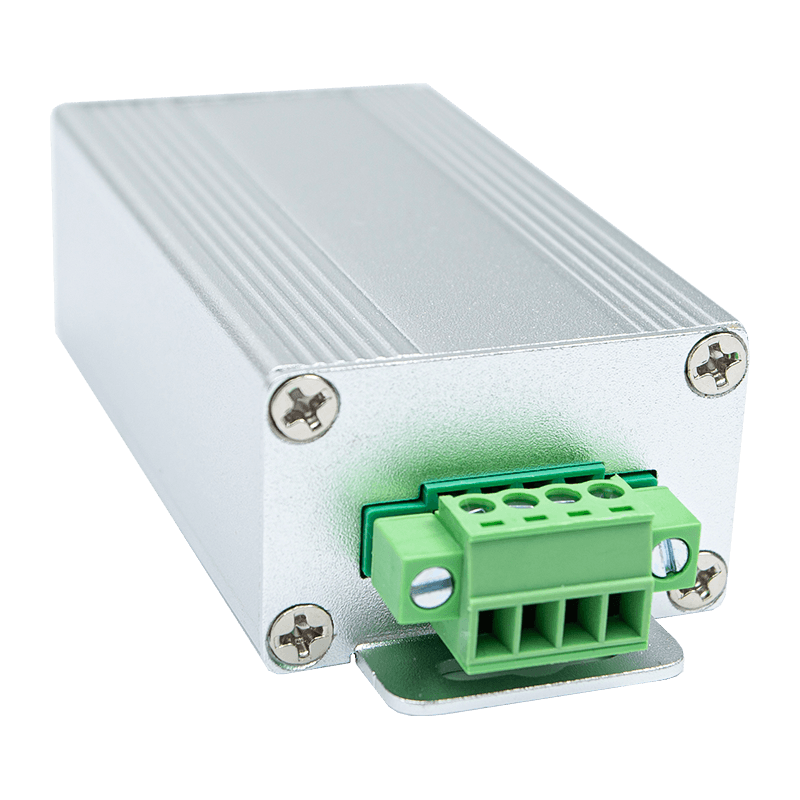
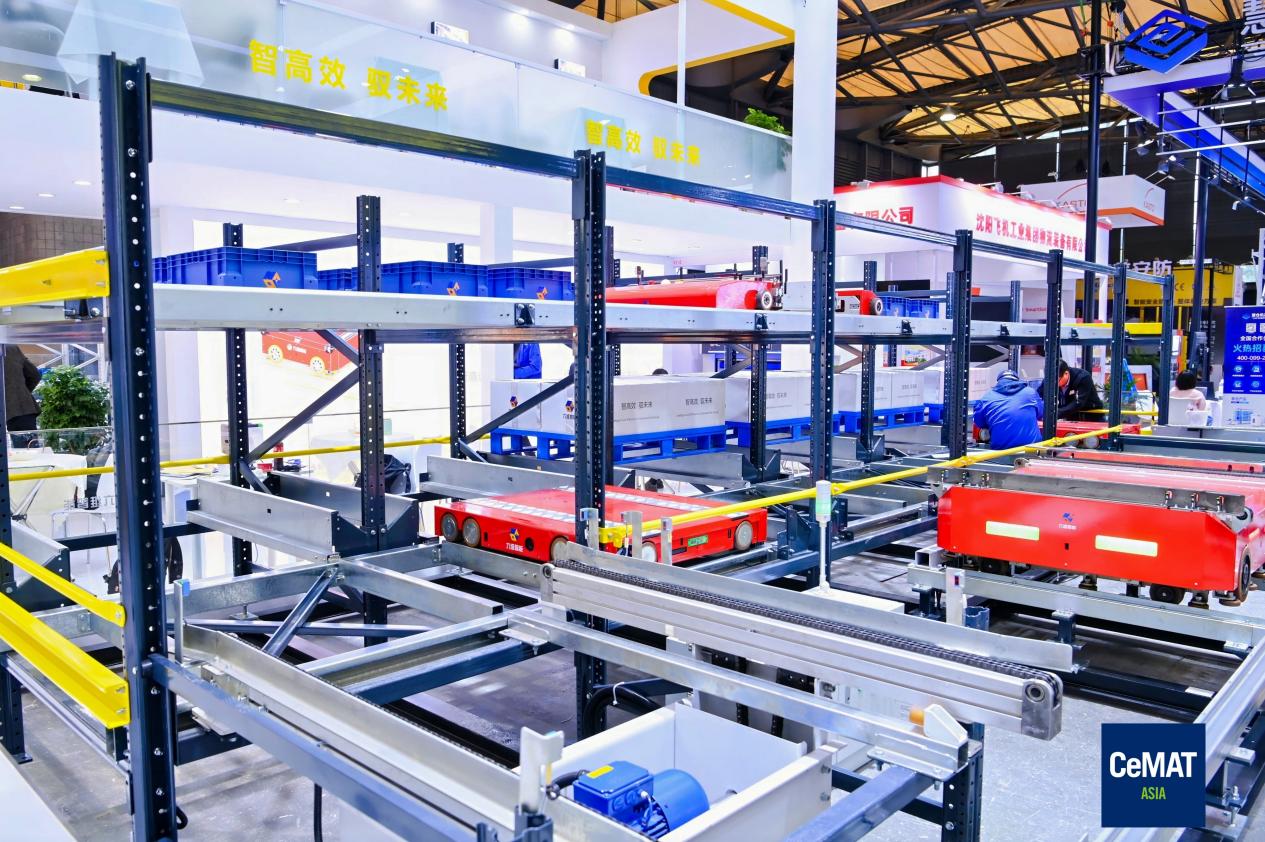
Industrial facilities increasingly depend on reliable communication between machines, sensors, controllers, gateways, and supervisory platforms. However, establishing a dependable data network in heavy industrial environments is rarely as simple as installing conventional Ethernet cable. Mines, oilfields, substations, photovoltaic installations, production lines, elevators, and mobile industrial equipment often contain long cable routes, high electromagnetic interference, moving conductors, restricted installation spaces, and high-voltage electrical systems. These conditions create serious challenges for traditional communication solutions.
The KS700M4P high-voltage broadband power line transceiver is designed to address those challenges by using existing two-core wiring as a high-speed communication medium. It can transmit digital information through power lines, twisted pairs, coaxial cables, DC wires, AC wires, parallel lines, elevator cables, and slip-ring or slip-contact cables. This approach reduces the need for new communication cabling while helping industrial users connect equipment across difficult environments.
With support for high-voltage power-line communication up to 1200 V, industrial operation from -40°C to 85°C, surge resistance of ±4 kV, Ethernet connectivity, RS485 communication, automatic networking, and optional relay functions, the transceiver is intended for demanding applications where ordinary consumer-grade power-line adapters cannot provide sufficient protection, stability, or flexibility.
High-Voltage Broadband Powerline Transceiver
Why Industrial Communication Requires a Different Approach
Industrial communication networks operate under conditions that are significantly more severe than those found in offices or homes. A factory may contain motors, variable-frequency drives, welding equipment, transformers, relays, and high-current switching devices. These sources can generate electrical noise, voltage fluctuations, transient surges, and signal distortion. In mining and oilfield applications, equipment may be distributed across long distances and connected through existing power infrastructure rather than dedicated data cabling.
Mobile equipment creates an additional challenge. Elevators, cranes, automated guided vehicles, rotating machinery, and other moving systems may use slip rings, sliding contacts, or flexible cables. A standard wireless network may suffer from obstruction, interference, roaming delays, or limited coverage. A standard Ethernet installation may be difficult because cables must accommodate movement, vibration, or high-voltage isolation requirements.
The communication method must therefore satisfy several requirements simultaneously. It must tolerate industrial temperatures, operate reliably near electrical equipment, provide adequate bandwidth for modern monitoring systems, protect connected devices from surges, support multiple communication protocols, and remain simple enough to deploy without extensive network engineering.
The KS700M4P responds to these requirements by integrating broadband power-line communication, industrial protection, routing intelligence, and multiple data interfaces in one device. Instead of treating the power cable only as an energy conductor, it uses the available cable infrastructure as a data channel.
Product Overview
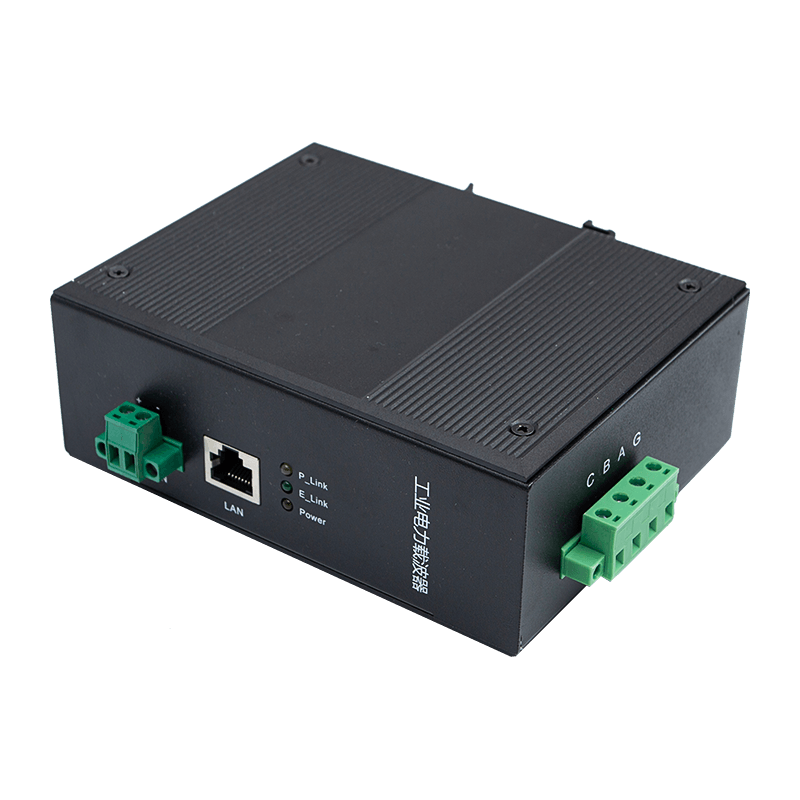
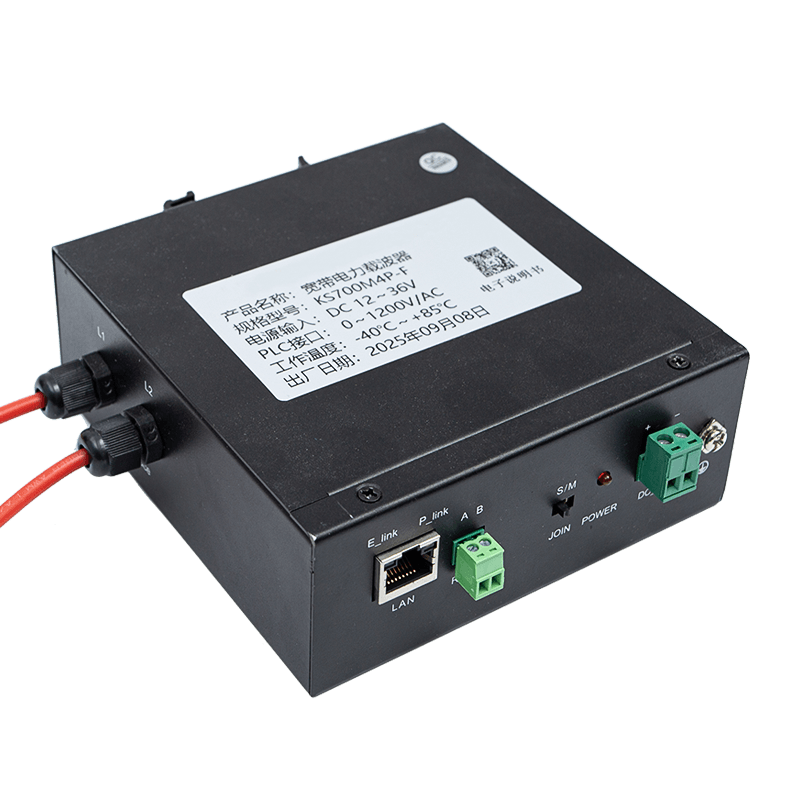
The KS700M4P is an industrial-grade high-voltage broadband power line transceiver. Its main power supply is DC 12–36 V, while its PLC signal port can communicate over any suitable two-core cable carrying up to 1200 V. This separation between low-voltage device power and high-voltage communication capability allows the unit to be installed in systems where the data path is exposed to a much higher voltage than the transceiver’s own operating supply.
The device supports Ethernet communication with automatic 10/100 Mbps adaptation. It also includes an RS485 interface compatible with Modbus RTU and adjustable baud rates from 1200 to 115200 bps. This combination allows the transceiver to connect modern IP devices and legacy industrial instruments within the same communication architecture.
Communication is based on OFDM modulation across a carrier-frequency range of 2–28 MHz. The product is designed for transparent data transmission, meaning that the communication link can carry data from connected applications without requiring the PLC device to interpret or modify the application data. TCP/IP, UDP, Modbus-TCP, Profinet, and other listed protocols can therefore be integrated into a broader industrial network.
The transceiver includes a self-contained routing algorithm and automatic networking functions. These features reduce the amount of manual configuration needed during installation. A master device and one or more slave devices can be assigned through master-slave DIP switches, allowing users to establish point-to-point or multipoint communication with a practical and structured setup method.
| Item | Specification |
| Product model | KS700M4P |
| Device type | Industrial high-voltage broadband power line transceiver |
| Power supply | DC 12–36 V |
| PLC signal medium | Any suitable two-core cable, including AC or DC power lines, twisted pair, coaxial cable, elevator cable, and slip-contact cable |
| Supported signal voltage | Up to 1200 V on the PLC signal line |
| Modulation | OFDM |
| Carrier frequency | 2–28 MHz |
| Ethernet interface | 10/100 Mbps auto-adaptive |
| RS485 interface | Modbus RTU support, 1200–115200 bps adjustable |
| Typical data delay | Within 10 ms |
| Packet loss probability | Less than 0.1‰ under specified operating conditions |
| Relay capability | Up to 10 relay levels in the relay version |
| Power consumption | Not more than 3 W |
| Operating temperature | -40°C to 85°C |
| Operating humidity | 20%–95%, non-condensing |
| Installation | TS35 or TS35 rail |
| Dimensions | 129 × 126 × 50 mm |
| Weight | Approximately 610 g |
| Encryption | AES-128-bit |
| Maximum multicast nodes | Up to 128 using IGMP multicast support |
High-Voltage Communication Capability
One of the most important advantages of the KS700M4P is its ability to communicate through a high-voltage power line or slip-contact cable. The PLC signal port is designed for applications involving voltage levels up to 1200 V, making the product suitable for industrial electrical systems that are beyond the operating range of ordinary low-voltage power-line adapters.
This capability is valuable in facilities where replacing or adding cables is expensive, disruptive, or technically difficult. A high-voltage motor system, mine conveyor, photovoltaic electrical installation, or substation may already have a power cable reaching the required equipment. If the cable characteristics and installation conditions are suitable, the same two-core path can support communication without the construction of a separate data network.
Using existing conductors can reduce installation time and simplify system architecture. It can also help maintain communication with equipment that moves along a fixed route. In an elevator or mobile machinery application, for example, a slip-contact cable may already be necessary for power delivery. A transceiver designed for this type of medium can use that infrastructure to carry Ethernet or serial data as well.
High-voltage communication requires careful system engineering. The transceiver should be installed according to the relevant electrical safety procedures, insulation requirements, grounding practices, and application-specific regulations. The high-voltage rating refers to the supported PLC signal environment and does not eliminate the need for proper isolation, enclosure design, protective devices, and qualified installation.
Broadband Performance Through OFDM
Orthogonal frequency-division multiplexing, commonly known as OFDM, divides a data stream across multiple closely spaced subcarriers. This approach is widely used in communication systems that must operate in frequency-selective or noisy channels. In an industrial power-line environment, signal quality can vary according to cable length, connected loads, switching activity, impedance changes, and electromagnetic interference.
The 2–28 MHz carrier range gives the KS700M4P a broad operating spectrum for data transmission. OFDM helps the device use the available channel more efficiently and maintain communication when some frequency components are affected by interference. The result is a communication platform suitable for transmitting control data, monitoring information, configuration commands, sensor measurements, and industrial Ethernet traffic.
The specified Ethernet interface supports 10/100 Mbps auto-adaptation. This allows connected devices to negotiate an appropriate Ethernet link speed without requiring complicated manual selection. In practical industrial systems, the required bandwidth depends on the application. A basic Modbus monitoring network may use only a small portion of the available capacity, while an industrial camera, engineering workstation, or distributed automation system may require substantially more.
The product documentation also identifies a maximum communication speed of up to 1000 Mbps in the broader product description, while the listed Ethernet interface is specified as 10/100 Mbps auto-adaptive. Users should confirm the exact hardware and software version, interface configuration, and application-specific performance before system deployment. This is particularly important when selecting a standard, high-bandwidth, long-distance, broadcast, or relay version.
Long-Distance and Relay Networking
Direct point-to-point communication can reach substantial distances over suitable cable conditions. The technical information identifies a point-to-point transmission distance of up to approximately 500 meters in the listed configuration, while the product introduction describes versions capable of reaching up to 1000 meters under appropriate conditions. Cable quality, impedance, electrical noise, connected loads, installation topology, and required data rate all influence the actual distance.
For larger industrial sites, the relay version supports as many as 10 relay levels. A relay network can extend the effective communication distance over several kilometers, with the stated maximum transmission range reaching approximately 3–5 kilometers in suitable applications. This is useful for long production lines, tunnel systems, mine infrastructure, distributed oilfield equipment, solar installations, and large factory campuses.
Relay networking also provides design flexibility. Instead of routing one long dedicated cable to every endpoint, users can create a structured network with intermediate transceivers. This can help adapt the communication system to the physical layout of the facility and may reduce the amount of new wiring required.
Before finalizing a long-distance design, engineers should test the actual cable route. A theoretical distance rating cannot account for every field condition. High-power equipment, cable joints, branch circuits, transformers, filters, and changes in cable construction can affect communication performance. A site survey and pilot installation are recommended for critical systems.
Flexible Network Topologies
The KS700M4P supports bus, star, tree, and hybrid network topologies. This is an important advantage over communication products designed only for simple point-to-point operation. Industrial facilities rarely have a single uniform layout. A production line may have a bus structure, a control room may use a star arrangement, and a mine or photovoltaic installation may require a tree-like distribution pattern.
In a bus topology, multiple devices can share a common route. This can be useful for machines installed along a production line or a group of instruments placed along a cable corridor. In a star topology, several remote devices communicate with a central node, which may be appropriate for a local control cabinet. A tree topology can connect several branches to a main route, while a hybrid topology combines these methods to match the site’s physical arrangement.
Master-slave configuration is supported through one-touch setup using DIP switches. The M-side functions as the host and the S-side as the slave. One host can communicate with one slave or multiple slaves, depending on the selected version and network design. This makes the device practical for integrators who need repeatable configuration across multiple cabinets.
Automatic networking and transparent transmission reduce the need for specialized PLC communication programming. The transceiver is intended to function as an industrial communication bridge, allowing the application layer to remain based on familiar Ethernet and serial protocols.
Ethernet and RS485 Integration
Industrial sites commonly contain a mixture of new and legacy equipment. A programmable logic controller, industrial computer, or machine vision system may use Ethernet, while temperature controllers, meters, variable-frequency drives, and older automation devices may use RS485. Replacing every existing instrument is often impractical and expensive.
The KS700M4P supports both Ethernet and RS485 communication. Its RS485 port supports Modbus RTU, with adjustable baud rates from 1200 to 115200 bps. This range accommodates many common industrial devices and gives system designers flexibility when integrating meters, transmitters, controllers, and sensors.
Ethernet support enables connection to industrial switches, programmable controllers, edge computers, supervisory control and data acquisition systems, and cloud gateways. The listed protocol support includes TCP/IP, UDP, Profinet, Modbus-TCP, IEEE802.3, IEEE802.3u, IEEE802.3ab, IEEE1905.1, IEEE1900, and IEEE1901. Compatibility should always be confirmed for the specific network architecture, but the broad protocol foundation supports integration into diverse industrial IoT systems.
Transparent data transmission is especially useful when a communication link must carry existing application traffic without extensive changes to software. Engineers can maintain established Modbus addressing, Ethernet services, and control logic while using the power line as the physical communication path.
Industrial Protection and Reliability
Reliability is a primary differentiator between an industrial transceiver and a general-purpose home or office power-line adapter. The KS700M4P is specified for operation from -40°C to 85°C, covering cold outdoor installations, unheated industrial buildings, high-temperature equipment rooms, and many process environments.
The device supports industrial-grade continuous operation for seven days and twenty-four hours per week, indicating its intended use in systems that operate around the clock. Its overall power consumption is no more than 3 W, helping limit heat generation and reducing the energy burden of installations containing multiple communication nodes.
Surge resistance of ±4 kV provides protection against specified transient interference events. The product also integrates a coupled circuit and surge-protection design intended for high-voltage power-line communication. The documentation states that the product meets a 1140 V safety certification specification and is suitable for power-line carrier communication up to AC 1200 V.
These characteristics are especially relevant in substations, photovoltaic systems, mine installations, and industrial plants where lightning-related surges, switching transients, and load changes may affect communication equipment. Surge protection does not replace external protective coordination, grounding, shielding, or local electrical code compliance, but it provides an important layer within the overall system design.
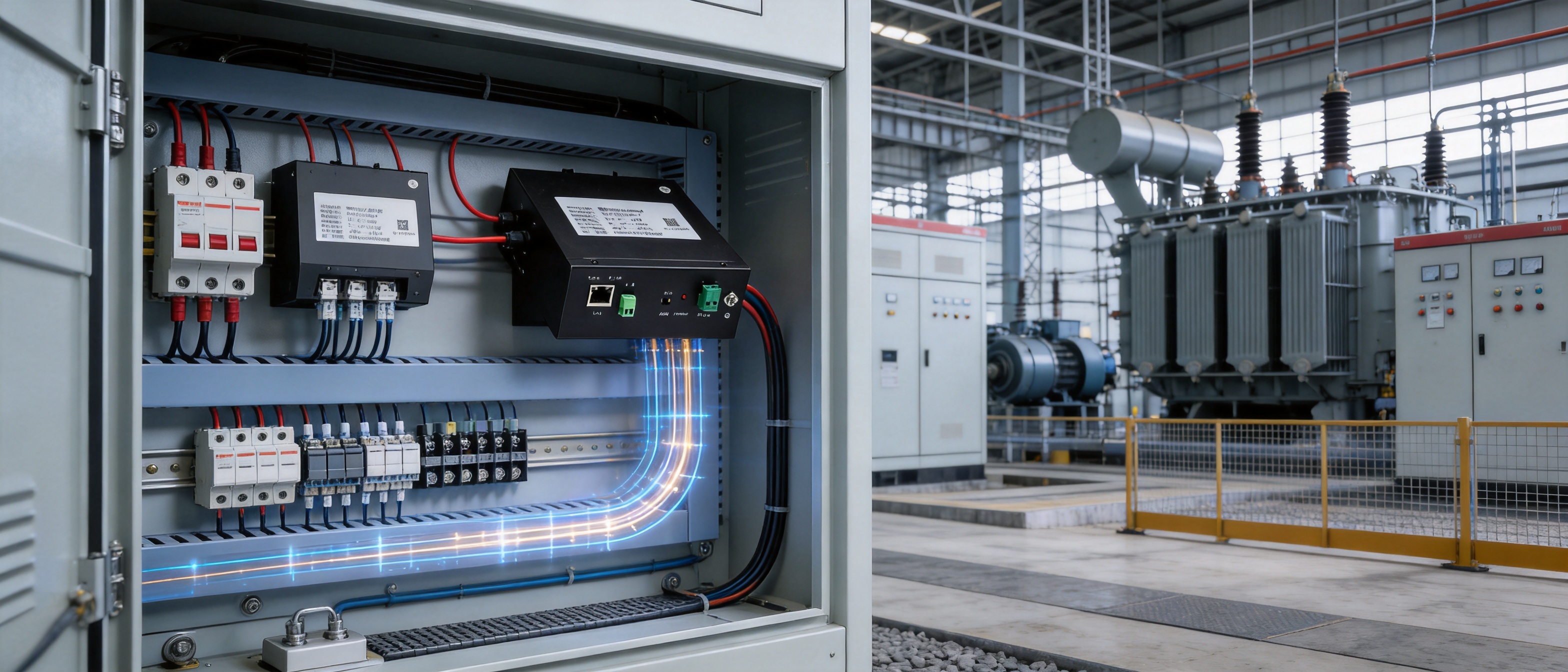
The enclosure is suitable for TS35 rail installation. Rail mounting allows the transceiver to be installed inside control cabinets and electrical distribution panels alongside switches, PLCs, relays, terminal blocks, and other industrial components. A compact 129 × 126 × 50 mm form factor helps conserve cabinet space while maintaining a rugged industrial configuration.
Advantages Compared with Conventional Alternatives
Compared with New Dedicated Ethernet Cabling
Dedicated Ethernet cable offers excellent performance when installation conditions are favorable. However, new cable routes may require drilling, conduits, trays, shutdowns, or extensive labor. In hazardous, elevated, underground, mobile, or high-voltage locations, cable installation can become particularly difficult.
The KS700M4P can use existing two-core conductors as the communication medium. This can shorten deployment time, reduce construction requirements, and help connect areas where installing new Ethernet cable is inconvenient. It does not eliminate the need to evaluate cable quality and safety, but it can provide a more adaptable alternative for retrofit projects.
Compared with Wireless Communication
Wireless networks are useful for mobile assets and locations where cabling is impossible. However, industrial wireless performance can be affected by metal structures, electromagnetic interference, multipath propagation, dead zones, network congestion, and security policies. Some facilities also restrict wireless transmissions in sensitive or safety-critical areas.
Power-line communication uses a physical conductor already connected to the equipment. It can therefore offer a more predictable route than radio communication in enclosed or heavily obstructed environments. The best choice depends on the application, but the KS700M4P provides an alternative when wireless coverage or reliability is insufficient.
Compared with Consumer Power-Line Adapters
Consumer power-line adapters are generally designed for residential low-voltage electrical systems and moderate environmental conditions. They are not normally intended for high-voltage industrial cables, severe temperature ranges, surge-prone equipment, rail-mounted cabinets, or continuous process operation.
The KS700M4P differs through its industrial temperature range, high-voltage PLC signal capability, surge protection, RS485 support, relay networking, industrial mounting, protocol flexibility, and continuous-operation design. These features make it more suitable for professional automation and infrastructure projects.
Compared with Serial-Only Communication Devices
Serial communication remains widely used, but serial-only devices may not provide enough bandwidth or network flexibility for modern industrial IoT systems. The KS700M4P combines RS485 support with Ethernet communication, allowing users to connect both traditional instruments and IP-based equipment through one communication platform.
Manufacturing and Engineering Strengths
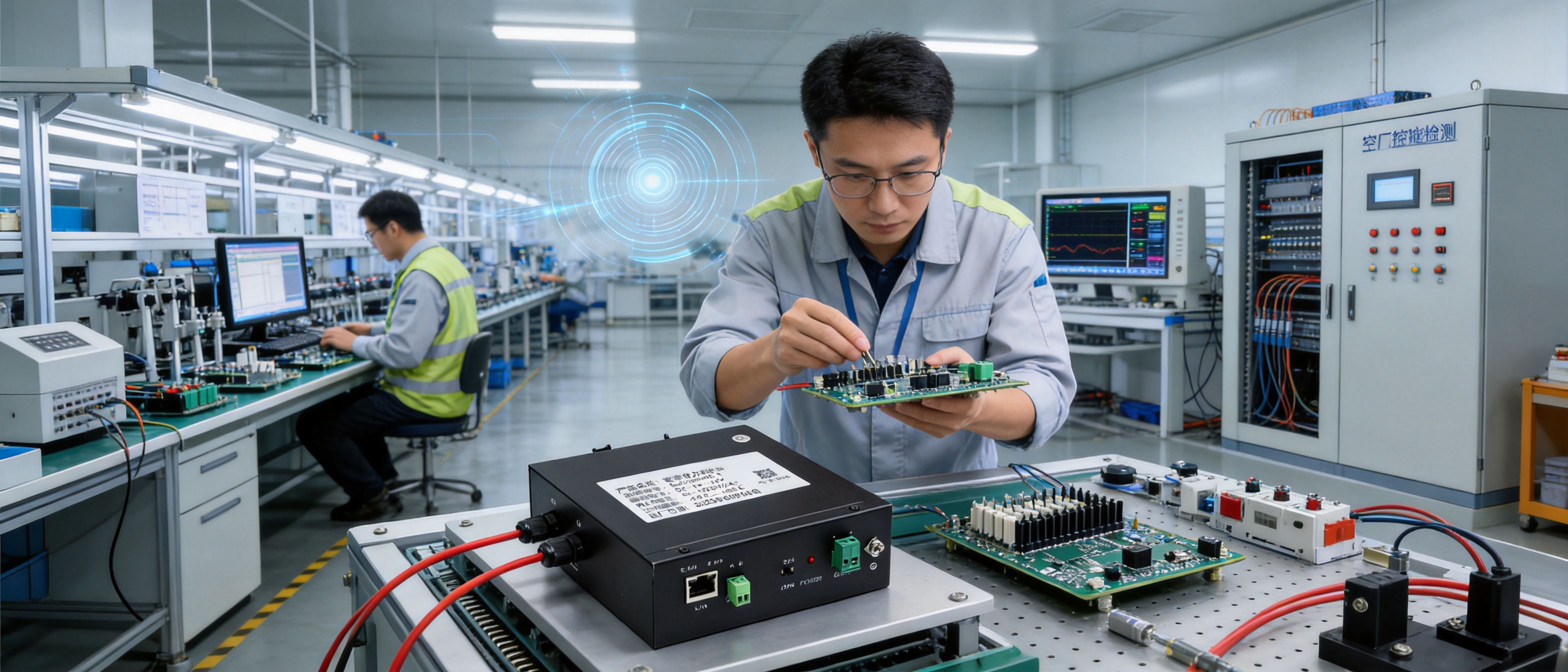
The value of an industrial communication product depends not only on its published specifications but also on how consistently it is engineered, assembled, tested, and supported. The manufacturer behind the KS700M4P focuses on industrial IoT communication, data sensing, and intelligent connectivity. Its product portfolio includes broadband power line carriers, wireless temperature monitoring systems, industrial transmitters, thermal gas mass flow meters, and automatic door controllers.
This product range reflects an emphasis on industrial measurement and communication rather than consumer electronics. Experience across sensing, transmission, and control applications can help the manufacturer understand how communication products are used in real industrial systems. A transceiver is rarely deployed alone; it normally forms part of a larger network containing sensors, transmitters, controllers, gateways, and management software.
The KS700M4P incorporates several functions that require coordinated hardware and software development. These include a coupling circuit for power-line communication, surge protection, OFDM signal processing, automatic routing, master-slave configuration, protocol handling, RS485 communication, Ethernet adaptation, encryption, and multicast management. Integrating these functions into a compact industrial product requires careful circuit design and validation.
Advanced manufacturing in this context includes controlled electronic assembly, component selection for the specified temperature range, mechanical enclosure production, interface inspection, firmware loading, and functional testing. Each stage affects long-term field reliability. Industrial customers benefit when the manufacturer treats product consistency and traceability as essential parts of the production process.
The device’s industrial-grade design also suggests attention to thermal management. A product rated for -40°C to 85°C and continuous operation must be designed to manage heat, maintain stable signal processing, and avoid unnecessary power dissipation. The power-consumption limit of 3 W helps support this objective, especially when multiple units are installed within a confined cabinet.
Manufacturing strength is also reflected in product variants. The KS700M4P platform is available in standard, high-bandwidth, long-distance, and broadcast hardware versions, as well as high-performance, relay, and slip-contact-cable software versions. Offering these variations allows the manufacturer to adapt the same core communication concept to different industrial requirements instead of forcing every customer into one fixed configuration.
Quality Control Considerations
For high-voltage communication equipment, quality control should cover both electrical and communication performance. Electrical testing may include power-input verification, insulation checks, surge-protection evaluation, connector inspection, and high-voltage signal-path validation. Communication testing may include Ethernet negotiation, RS485 transmission, Modbus RTU operation, routing behavior, multicast performance, packet-loss measurement, delay testing, and long-duration stability testing.
Environmental validation is also important. Temperature cycling can identify weaknesses in solder joints, connectors, enclosures, and power components. High-temperature operation can reveal thermal problems, while low-temperature testing can expose material contraction, startup issues, or oscillator instability. Humidity testing helps evaluate the effect of moisture in non-condensing industrial environments.
Long-duration burn-in testing is valuable for devices intended to operate continuously. Running units under network traffic and elevated environmental stress can help identify early-life failures before shipment. For critical applications, customers may also request batch records, inspection reports, conformity documentation, and application-specific test results.
Because actual PLC performance depends on the cable route, factory acceptance testing and site acceptance testing should be considered part of the implementation process. A professional supplier can help customers select the correct hardware and software version, determine suitable relay placement, verify topology, and evaluate communication quality under real operating conditions.
Cybersecurity and Network Management
Industrial networks increasingly connect field equipment to supervisory systems, enterprise platforms, and remote service environments. Protecting data and controlling access are therefore important design considerations. The KS700M4P supports AES-128-bit encryption, providing a layer of protection for transmitted information.
The device also supports IGMP multicast protocols, with a maximum of 128 nodes specified in the product information. Multicast can be useful when the same data must be distributed to multiple receivers, such as monitoring stations, control applications, or synchronized industrial devices. Network engineers should configure multicast traffic carefully to prevent unnecessary bandwidth use and to maintain predictable behavior.
Encryption is only one part of industrial cybersecurity. A complete design should also include network segmentation, controlled physical access, secure configuration procedures, password management, firmware governance, firewall policies, and monitoring of unusual traffic. The transceiver can serve as a communication component within such an architecture, but cybersecurity responsibility remains shared across the entire system.
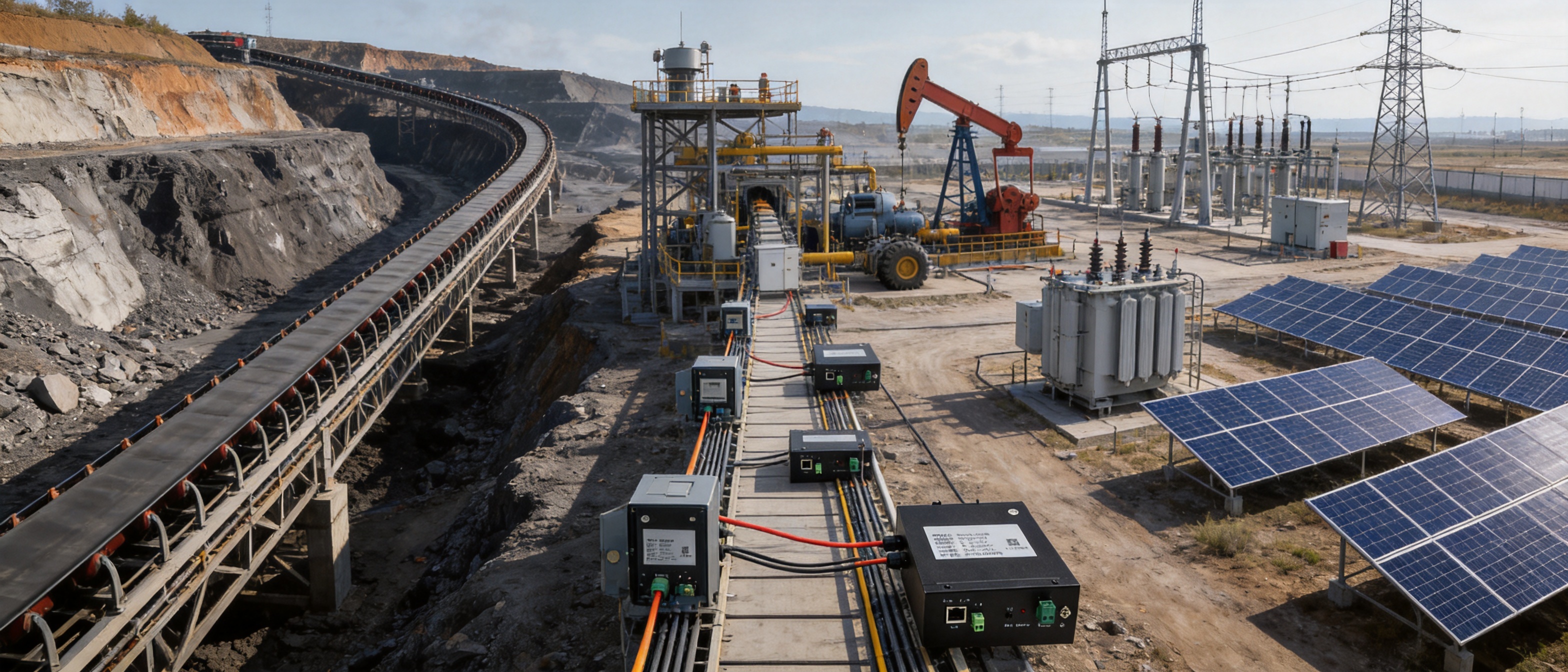
Application in Mining Communication Systems
Mines often have long cable routes, harsh temperatures, dust, vibration, and distributed equipment. Communication may be required between underground machinery, conveyor systems, pumps, monitoring instruments, control rooms, and surface facilities. Installing new data cable throughout a mine can be difficult and costly.
Where existing power conductors or suitable two-core cables are available, the KS700M4P can help create a communication link without relying exclusively on new Ethernet infrastructure. Its high-voltage PLC capability, wide temperature range, surge protection, and relay networking are relevant to mine communication systems.
Possible data applications include equipment status, motor control information, energy measurements, environmental sensors, maintenance alarms, and remote diagnostics. The RS485 interface can connect traditional Modbus instruments, while Ethernet can connect higher-level control and monitoring systems.
Mining operators must evaluate all applicable hazardous-area, explosion-protection, electrical-safety, and communication regulations before deploying any equipment. The transceiver should be used only within an approved system design and installation method.
Application in Oilfield Collection Platforms
Oilfield collection platforms may contain pumps, meters, valves, transmitters, control panels, and remote monitoring devices spread across large or exposed areas. Communication reliability is important because field data supports production optimization, maintenance planning, energy management, and safety operations.
Power-line communication can be attractive when existing electrical cables already reach remote equipment. The KS700M4P can provide Ethernet and RS485 connectivity over suitable two-core lines, allowing operators to integrate Modbus instruments and networked devices into a broader monitoring platform.
The wide operating temperature range supports outdoor and semi-outdoor installations, while the low power consumption helps simplify cabinet power planning. The relay version can extend communication through distributed field sections, subject to cable testing and network planning.
Application in Substations and Smart Grid Systems
Substations contain high-voltage equipment, transformers, protection systems, meters, control devices, and monitoring instruments. These environments require careful attention to electrical isolation, electromagnetic compatibility, surge protection, and communication availability.
The KS700M4P is designed for high-voltage power-line communication scenarios and can support data transmission through suitable electrical conductors. Its communication capabilities may be applied to equipment monitoring, auxiliary control networks, energy data collection, and integration of industrial instruments.
In smart grid projects, communication solutions must be selected according to the voltage environment, protection architecture, required latency, data criticality, and applicable grid standards. The device’s low stated data delay and packet-loss characteristics can support monitoring applications, but protection and safety-critical control functions require detailed engineering validation.
Application in Photovoltaic New Energy Installations
Photovoltaic installations often cover large areas and include string equipment, combiner boxes, inverters, energy meters, environmental sensors, and supervisory systems. Long cable distances and outdoor conditions can make conventional communication wiring expensive or difficult.
Using existing power conductors for communication may reduce the need for separate data cables in selected parts of a solar installation. The KS700M4P can support communication between distributed devices and control systems through suitable two-core power lines or other compatible cable types.
Solar installations may experience lightning exposure, switching transients, temperature extremes, and fluctuating operating conditions. The device’s surge-protection design and -40°C to 85°C operating range are relevant advantages, although the complete installation still requires coordinated surge protection, grounding, cable routing, and environmental protection.
Application in Elevators and Slip-Contact Systems
Elevators and other moving systems frequently use traveling cables or slip-contact arrangements. Communication lines must tolerate movement, vibration, space limitations, and electrical interference. Running a conventional network cable through a moving mechanism may increase mechanical complexity and maintenance demands.
The KS700M4P includes a dedicated slip-contact-cable software version among its available configurations. This indicates that the product platform can be adapted for communication through elevator cables, slip rings, and similar moving electrical interfaces.
Potential applications include elevator status monitoring, video or service data transmission, equipment diagnostics, controller communication, and remote maintenance. The appropriate version should be selected based on the cable type, movement pattern, data rate, voltage level, and network topology.
Deployment and Configuration Guidance
Step One: Evaluate the Cable Route
Before installation, identify the cable type, length, conductor arrangement, connected loads, voltage level, branch points, and expected interference sources. Determine whether the same cable is shared by high-power equipment, switching devices, or variable-frequency drives. These factors affect signal quality and should be documented.
Step Two: Select the Correct Product Version
Choose the appropriate hardware and software version according to the required bandwidth, transmission distance, relay count, broadcast behavior, and slip-contact requirements. A standard point-to-point application may not need the same configuration as a multi-kilometer relay network.
Step Three: Plan the Network Topology
Decide whether the installation will use a bus, star, tree, or hybrid structure. Identify the host device, slave devices, and any relay nodes. Ensure that the proposed arrangement matches the selected version and the expected number of endpoints.
Step Four: Connect Ethernet and RS485 Equipment
Use the Ethernet interface for compatible IP equipment and the RS485 interface for Modbus RTU devices. Set the serial baud rate and communication parameters according to the connected instruments. Proper polarity, grounding, termination, and shielding practices should be applied to the RS485 segment.
Step Five: Verify Communication Before Full Commissioning
Test point-to-point communication first, then add additional nodes or relay levels gradually. Monitor packet loss, delay, link stability, and data integrity. A staged commissioning process makes it easier to identify problems related to cable sections, branches, or industrial loads.
Step Six: Document the Installation
Record device addresses, master-slave settings, cable routes, relay locations, interface assignments, firmware versions, environmental conditions, and test results. Good documentation simplifies future troubleshooting, maintenance, expansion, and replacement.
Maintenance and Lifecycle Benefits
Industrial communication equipment should be selected with the entire lifecycle in mind. A product that is simple to configure, rail-mounted, low-power, and compatible with existing interfaces can reduce maintenance effort over time. Automatic networking and transparent transmission help minimize software changes when equipment is replaced or expanded.
The use of Ethernet and RS485 in the same device also supports gradual modernization. An organization can retain existing Modbus instruments while adding Ethernet-based gateways, edge computers, or cloud-connected monitoring systems. This protects previous investments and allows digital transformation to proceed in stages.
Routine maintenance should include inspection of terminal connections, enclosure condition, cable integrity, surge-protection devices, operating temperature, and communication logs. If a network becomes unstable, engineers should review new electrical loads, cable modifications, grounding changes, or added branches that may have altered the PLC channel.
For critical installations, maintaining spare units and configuration records can shorten recovery time. The compact rail-mounted structure makes it practical to standardize replacement units across multiple cabinets, provided that the same hardware and software versions are used.
Customization and Industrial Solution Support
Industrial projects rarely have identical requirements. One customer may need a high-bandwidth point-to-point link, another may require a relay network across several kilometers, and a third may need communication through a moving slip-contact cable. Product variants allow the communication platform to be matched to these different conditions.
A capable industrial supplier should support more than product shipment. It should help evaluate cable conditions, select the appropriate version, define the network topology, confirm protocol compatibility, and conduct application testing. This solution-oriented approach is particularly valuable when power-line communication is being introduced into a new industrial environment.
The manufacturer’s wider focus on sensing and intelligent connectivity supports the development of complete industrial IoT solutions. Broadband power-line carriers can connect field devices, while wireless temperature monitoring systems, transmitters, flow meters, and automatic door controllers can provide the data and control functions required by factories and infrastructure projects.
By combining communication hardware with industrial data integration experience, the supplier can help customers address equipment condition monitoring, refined energy management, and production process optimization. These capabilities support the transition from isolated machines to connected, measurable, and more efficiently managed operations.
Frequently Asked Questions
What is the KS700M4P used for?
The KS700M4P is used to transmit Ethernet and RS485 data through suitable two-core cables, including AC or DC power lines, twisted pairs, coaxial cables, elevator cables, and slip-contact cables. It is intended for industrial communication and industrial IoT applications.
Can it communicate over a 1200 V power line?
The PLC signal port is designed for communication over a signal line with voltage up to 1200 V, and the product is described as suitable for power-line carrier communication up to AC 1200 V. Qualified personnel must complete the installation using appropriate insulation, protection, grounding, and safety procedures.
What is the device power supply?
The transceiver operates from a DC 12–36 V power supply. This is separate from the high-voltage PLC signal path.
Does it support RS485 devices?
Yes. The device supports RS485 and Modbus RTU, with an adjustable baud-rate range from 1200 to 115200 bps.
Does it support Ethernet?
Yes. The listed Ethernet interface supports 10/100 Mbps auto-adaptation. Users should confirm the exact hardware version when a project requires high-bandwidth or specialized Ethernet performance.
How far can the communication signal travel?
The stated transmission distance depends on the product version and cable conditions. The technical data lists a point-to-point distance of up to approximately 500 meters, while the product introduction identifies versions capable of longer distances. Relay versions can support up to 10 relay levels and a total transmission distance of approximately 3–5 kilometers under suitable conditions.
What network topologies are supported?
The device supports bus, star, tree, and hybrid network structures. The best topology depends on the cable layout, number of nodes, distance, and selected product version.
Can it be used in an elevator?
The product platform includes a software version intended for slip-contact cables and similar applications. Elevator deployment must be evaluated according to the traveling cable or slip-contact system, voltage level, movement conditions, required bandwidth, and applicable safety standards.
What environmental conditions can it tolerate?
The operating temperature range is -40°C to 85°C. The specified operating humidity is 20%–95% without condensation. The device is intended for industrial-grade continuous operation.
Does the transceiver provide surge protection?
Yes. The product is specified with ±4 kV surge or shock interference resistance and includes an integrated coupling and surge-protection design. External protection and proper system grounding remain necessary for complete installation safety.
Does it support encryption?
Yes. AES-128-bit encryption is listed among the product’s communication-security features.
How many multicast nodes are supported?
The device supports IGMP multicast protocols, with a stated maximum of 128 nodes.
How is the device installed?
The transceiver is designed for TS35 or TS35 rail installation, making it suitable for industrial control cabinets and electrical panels.
What should be checked before ordering?
Customers should confirm the cable type, voltage, distance, topology, required bandwidth, number of nodes, relay requirements, Ethernet protocol, RS485 parameters, environmental conditions, and whether a standard, high-bandwidth, long-distance, broadcast, or slip-contact version is required.
Conclusion
The KS700M4P high-voltage broadband power line transceiver provides a practical communication option for industrial environments where conventional networking methods are difficult, expensive, or unreliable. By transmitting data through suitable existing two-core conductors, it can reduce the need for new cabling while supporting industrial Ethernet, RS485, Modbus RTU, automatic networking, and flexible network topologies.
Its key advantages include high-voltage PLC communication up to 1200 V, OFDM broadband transmission, industrial operation from -40°C to 85°C, ±4 kV surge resistance, low power consumption, TS35 rail mounting, AES-128-bit encryption, multicast support, and relay networking over extended distances. These characteristics distinguish it from consumer power-line adapters and narrowly focused communication devices.
The product is particularly relevant to mining communication systems, oilfield collection platforms, substations, photovoltaic installations, elevators, slip-contact systems, and industrial automation networks. Its combination of Ethernet and RS485 support also enables organizations to modernize gradually while retaining existing field instruments.
Behind the product is an industrial IoT manufacturer focused on data sensing, intelligent connectivity, power-line carriers, transmitters, flow meters, wireless temperature monitoring, and industrial control products. This broader engineering and manufacturing focus supports the development of customized communication solutions rather than isolated hardware sales.
For every project, final performance depends on cable characteristics, electrical conditions, network topology, product version, installation quality, and compliance with applicable safety requirements. When these factors are properly evaluated, the KS700M4P can serve as a robust foundation for reliable industrial data connectivity and smarter, more efficient production systems.
References
1. KS700M4P Product Technical Data and Product Introduction, manufacturer-supplied product materials.
2. Industrial Ethernet and Ethernet Physical Layer Specifications, IEEE 802.3 family of standards.
3. Modbus Application Protocol and Modbus Serial Line Implementation Guidance.
4. IEEE 1901 Broadband Power Line Communication Concepts and Network Interoperability Information.
5. Industrial Automation Network Design Principles for Ethernet and RS485 Systems.
6. General Engineering Practices for Surge Protection, Grounding, Insulation, and High-Voltage Industrial Installations.