

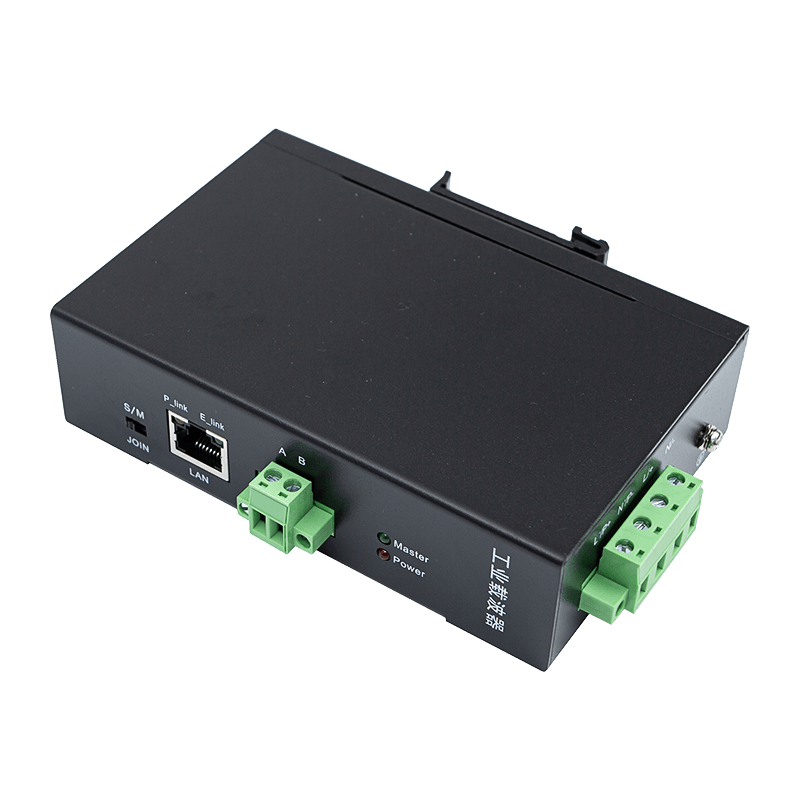
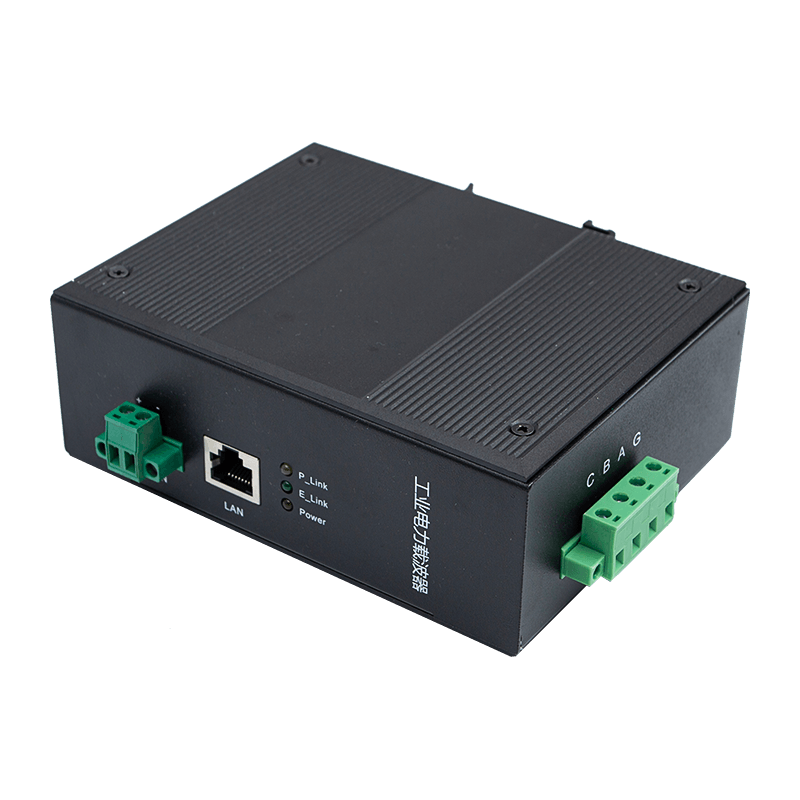
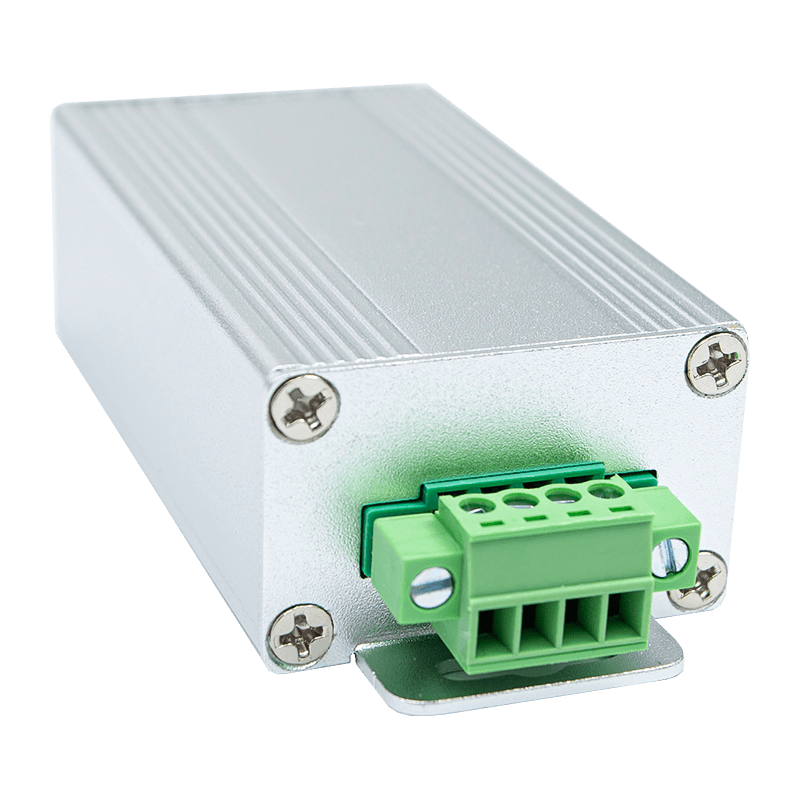
Industrial communication systems must remain dependable in environments where ordinary office telephones, consumer networking devices, and standard public-address equipment cannot operate safely. Mines, chemical plants, energy facilities, processing workshops, utility installations, and other high-risk sites often need voice communication, broadcasting, and emergency alarm functions in the same system. They also require equipment that can withstand dust, moisture, corrosive atmospheres, wide temperature changes, mechanical exposure, and complicated electrical conditions.
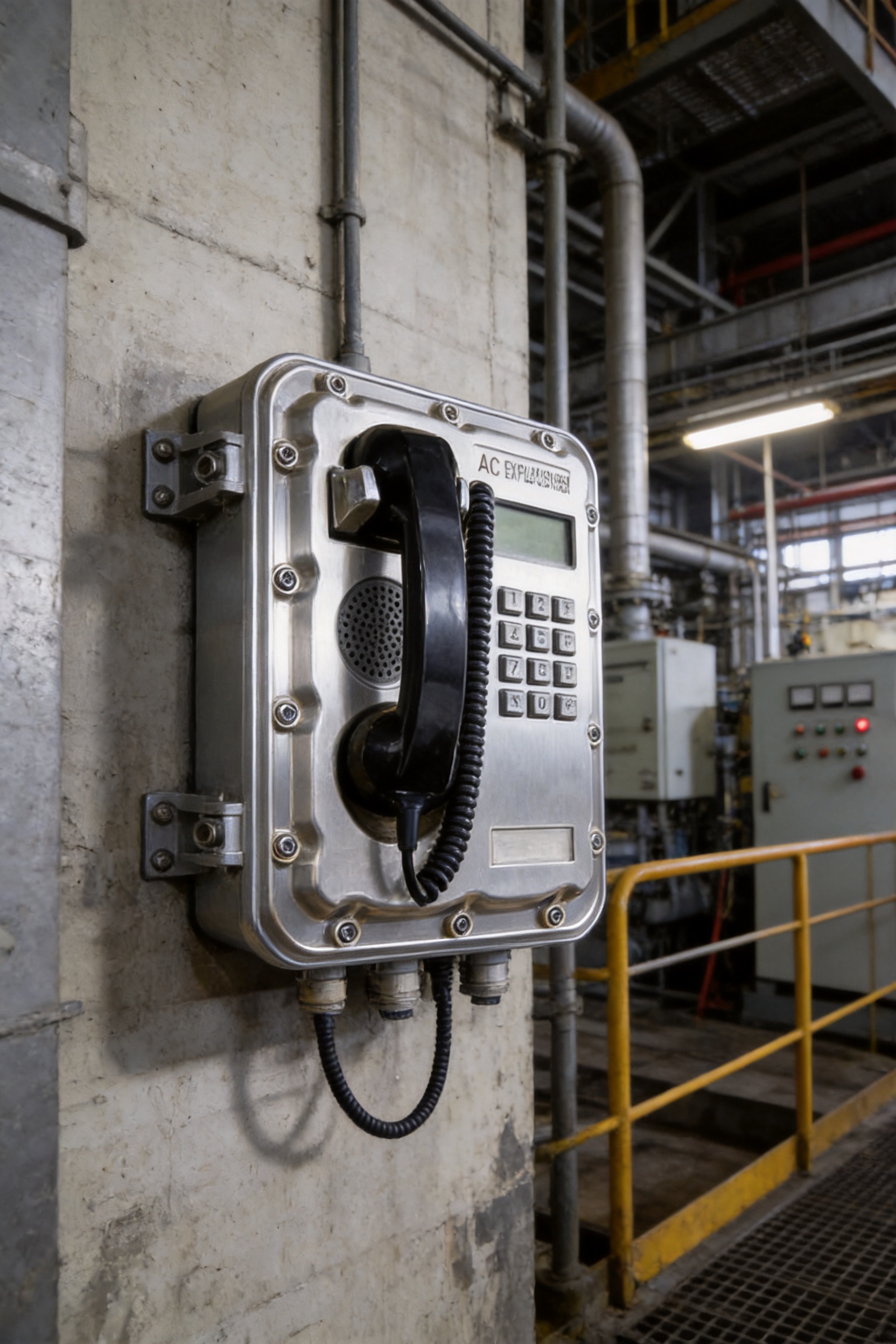
The AC Explosion-Proof Digital Telephone, model CS618L-FB220, is designed for this demanding category of industrial communication. It combines digital telephone functions, multi-party intercom, broadcast capability, and alarm communication in one enclosure. Instead of depending on a newly installed communication cable network, it uses wideband power carrier communication over an existing AC signal line. This approach can simplify deployment in facilities where AC power lines are already available but new communication wiring would be costly, disruptive, or technically difficult.
The unit is intended for high-risk industrial areas that use AC power lines for signaling. It connects in parallel to an AC 0–220 V signal line while operating from an independent DC 24 V supply. Through automatic IP allocation and self-organizing networking, multiple units can form a communication system without complicated manual addressing or extensive commissioning. The result is a practical industrial communication terminal for sites that need rapid installation, long-distance communication, and centralized or distributed voice coverage.
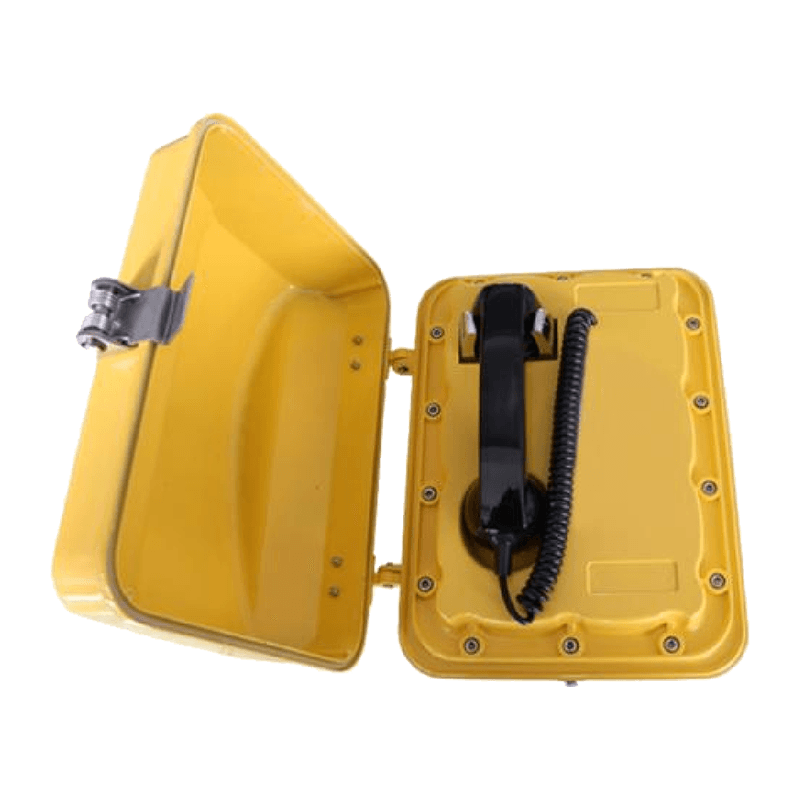
AC Explosion-Proof Digital Telephone
Product Overview
The CS618L-FB220 is an AC explosion-proof digital telephone and power-line communication terminal. Its core purpose is to provide reliable voice and signaling functions in industrial environments where conventional network infrastructure may be unavailable or unsuitable. The device supports multi-party intercom, industrial broadcasting, and alarm communication as an integrated solution rather than requiring separate telephones, amplifiers, and alarm terminals.
The product uses wideband power carrier technology as its communication method. In practical terms, communication data can travel through the designated AC signal-line infrastructure. This is particularly useful for existing industrial sites, where power lines may already extend through workshops, corridors, production areas, tunnels, storage zones, and outdoor operating locations. Reusing available infrastructure can reduce the amount of new cabling and shorten installation time.
The terminal is supplied by DC 24 V and connects in parallel to an AC 0–220 V signal line. Separating the operating supply from the AC signal-line connection provides a defined electrical arrangement for the equipment. It also reflects the product’s industrial design: the communication channel and the equipment power input are specified independently for system planning and installation.
The enclosure is made from aluminum alloy and is rated explosion-proof IP68. It also carries a WF1 corrosion-proof grade. These characteristics make the telephone suitable for industrial locations where water, dust, humidity, corrosive gases, and harsh environmental conditions may affect ordinary communication equipment. The wall-mounted construction supports fixed installation at communication points, emergency stations, production zones, access routes, or other locations requiring a durable voice terminal.
The product supports a communication distance of up to 1,000 meters, depending on site conditions, signal-line configuration, system design, and installation quality. This range is valuable in large industrial areas where communication points may be separated by long corridors, workshops, process sections, or outdoor equipment zones.
Integrated Intercom, Broadcasting, and Alarm Communication
Many industrial facilities use separate equipment for telephone communication, public address, and emergency notification. Although separate systems can perform their individual functions, they may increase installation complexity, require multiple control interfaces, and make emergency operation more difficult. The CS618L-FB220 brings these functions together in one industrial terminal.
Multi-Party Intercom
Multi-party intercom allows personnel at different locations to communicate through the industrial communication network. This function can support coordination between control rooms, production lines, maintenance areas, loading zones, workshops, and field locations. In facilities where mobile phone coverage is unreliable or personal devices are not permitted, a fixed industrial intercom network can provide a more controlled communication method.
Because the system is designed around automatic IP allocation and self-organizing networking, additional units can be integrated without requiring every terminal to be manually configured in the same way as a conventional computer network. This can be especially beneficial for large installations with numerous communication points. The network architecture reduces the burden on installers and helps standardize deployment across the site.
Industrial Broadcasting
Industrial broadcasting is used to distribute instructions, operating information, shift announcements, evacuation messages, and other voice content across defined areas. The CS618L-FB220 provides a high-output speaker interface with an 8-ohm, 50 W spread rating. This output capability is intended for audible communication in industrial surroundings where machinery, ventilation systems, vehicles, and other background noise may make low-power audio difficult to hear.
The product also lists an 8-ohm, 5 W output specification under the “Rise upward” parameter. This may correspond to a lower-power auxiliary or voice-output function within the system configuration. The final use of each audio channel should be confirmed during system design and commissioning according to the installation drawing and application requirements.
Alarm Communication
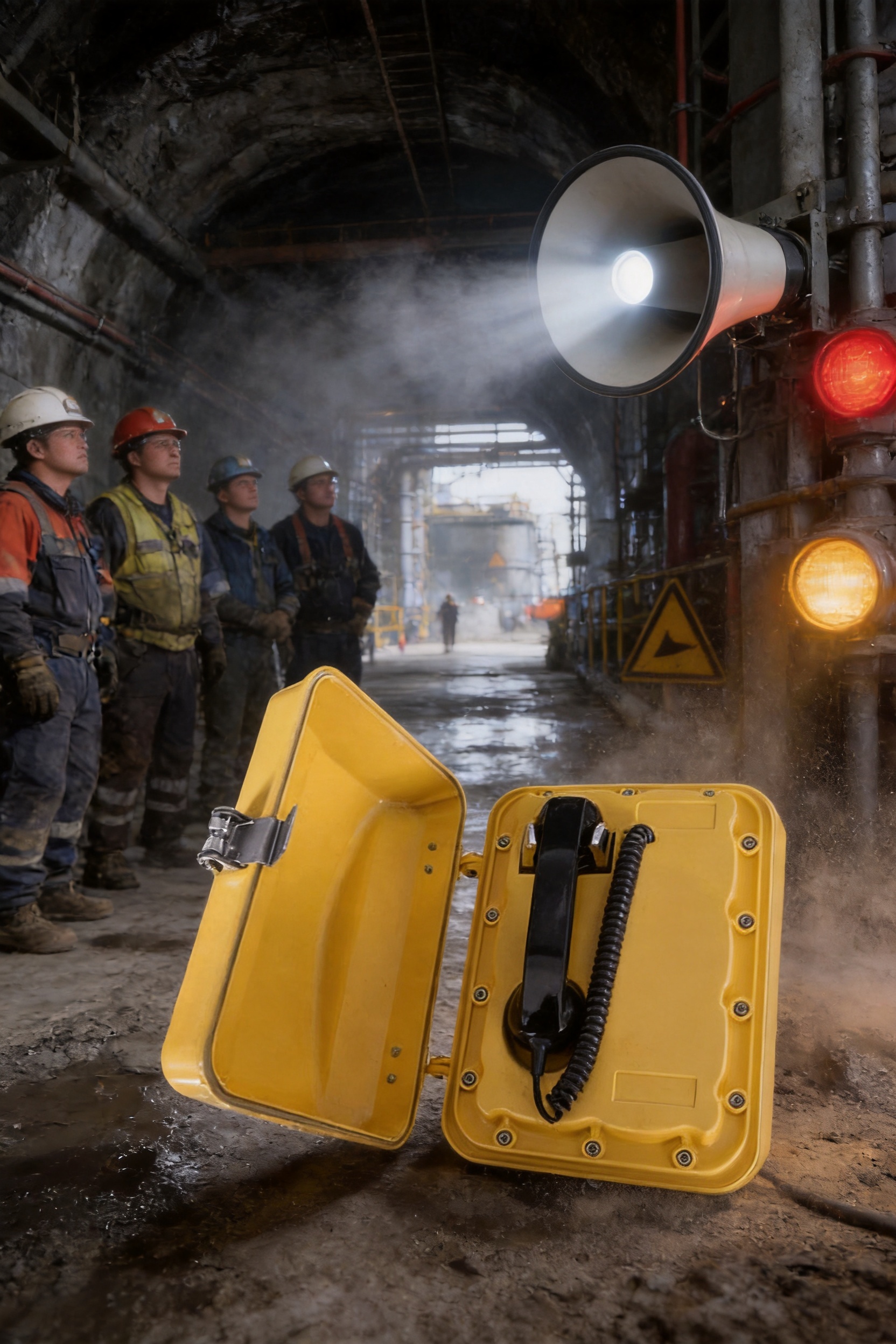
In an emergency, an industrial terminal should do more than provide ordinary person-to-person calling. It should help deliver instructions quickly and clearly to personnel distributed across the facility. The integrated alarm communication function allows the same communication infrastructure to support urgent notifications. This can simplify emergency architecture by reducing the number of independent devices that operators must manage.
The combination of intercom, broadcasting, and alarm capability is a major advantage over a basic telephone or isolated speaker. A single network can serve routine coordination and urgent communication, while the robust enclosure and industrial temperature range support operation in areas that are unsuitable for conventional office equipment.
Wideband Power Carrier Communication
The most distinctive technical feature of the CS618L-FB220 is its use of wideband power carrier communication. Traditional industrial telephone systems often require dedicated twisted-pair cables, Ethernet cables, fiber-optic links, or wireless access points. Each method has advantages, but each may also require additional infrastructure, route planning, equipment rooms, or environmental protection.
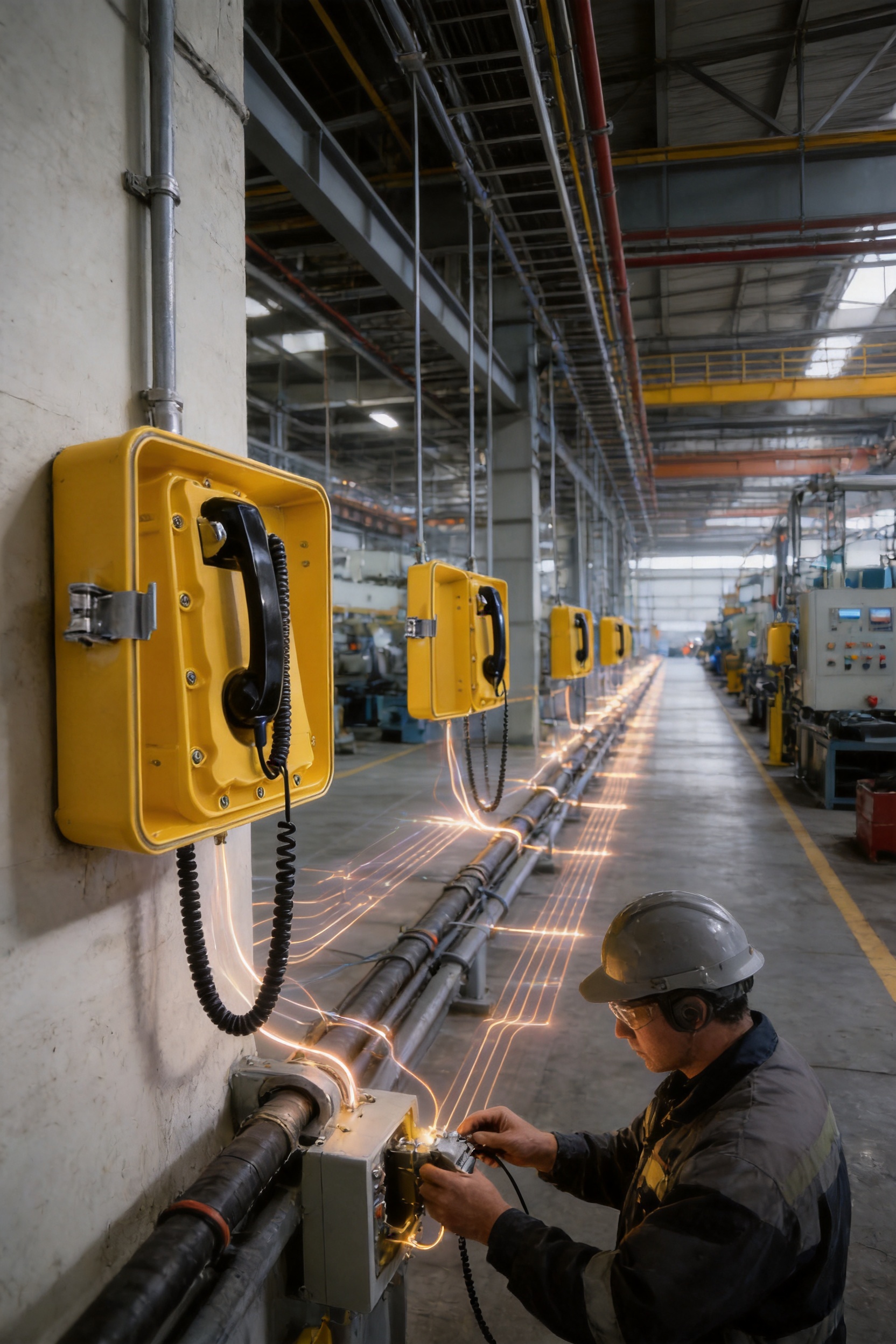
Power-line communication uses an existing electrical pathway to carry communication signals. Where a suitable AC signaling line is already installed, the telephone can be connected in parallel to that line. This can reduce the need to open walls, install long cable trays, drill through industrial structures, or interrupt production areas during construction.
The product is especially relevant to retrofit projects. Existing factories and energy facilities may have communication requirements that were not included in the original construction plan. Installing a new communication network years after commissioning can involve substantial engineering work. The ability to communicate through an existing AC signal-line arrangement can make modernization more practical.
Power-line communication does not eliminate the need for engineering evaluation. Signal quality, line topology, electrical noise, distance, circuit segmentation, grounding, isolation, and site safety must be considered. However, when the electrical environment is compatible, the technology can deliver a useful balance between installation simplicity and industrial communication performance.
Automatic IP Allocation
Manual IP addressing can be time-consuming when a network contains many terminals. It also creates opportunities for duplicated addresses, configuration errors, and inconsistent records. The CS618L-FB220 supports automatic IP assignment, allowing the network to allocate addresses without requiring every unit to be configured individually.
Automatic addressing is particularly useful during the initial installation stage. Technicians can focus on correct physical connection, terminal placement, and functional testing rather than spending unnecessary time on repetitive address entry. For large facilities, this can improve installation efficiency and reduce the possibility of human error.
Self-Organizing Network
The self-organizing network function allows communication terminals to establish a network structure without extensive manual debugging. A self-organizing design can help the system adapt to the number and location of connected units within the planned communication environment. It is well suited to industrial projects where terminals may be distributed across multiple zones and where installation conditions are not identical at every point.
Compared with a system that requires complex programming for each field device, automatic organization can lower the technical threshold for deployment. It also supports a more repeatable manufacturing and installation process: terminals are produced with consistent communication functions, while site technicians can deploy them using standardized procedures.
Explosion-Proof and Environmental Protection
Industrial communication products are often installed in places where ordinary consumer equipment would be vulnerable or unsafe. Dust, moisture, chemicals, temperature variation, and potentially hazardous atmospheres can affect electrical performance and reduce service life. The CS618L-FB220 addresses these challenges through its explosion-proof enclosure, IP68 protection rating, aluminum-alloy construction, and WF1 corrosion-proof grade.
Explosion-Proof IP68 Enclosure
The stated explosion-proof IP68 protection rating indicates that the enclosure is designed for demanding industrial protection requirements. The IP68 designation is associated with high protection against dust ingress and water exposure under specified test conditions. The explosion-proof construction is intended for use in designated hazardous industrial environments, subject to the applicable certification, installation rules, area classification, and project requirements.
Protection ratings should always be interpreted together with the product certificate, hazardous-area classification, installation method, cable-entry requirements, grounding provisions, and local regulations. The rating is not a substitute for correct system engineering. Nevertheless, it is a significant differentiator when comparing the product with standard indoor telephones and commercial network terminals.
Aluminum-Alloy Housing
The aluminum-alloy enclosure provides a combination of structural strength, relatively low weight, and resistance to industrial handling conditions. The unit has an overall weight of approximately 7 kg, which is substantial enough for a stable industrial terminal while remaining practical for wall mounting by a qualified installation team.
Aluminum alloy also supports effective enclosure manufacturing. It can be shaped and finished to provide a consistent external structure, protected mounting points, and a housing suitable for sealing and corrosion-resistant treatment. Consistency in enclosure dimensions is important because uneven joints, poor surface finishing, or inaccurate mounting interfaces can compromise installation quality.
WF1 Corrosion Protection
The WF1 corrosion-proof grade is relevant to industrial areas where corrosive gases, humidity, and chemical exposure may affect metal surfaces and electrical connections. Corrosion can damage housings, fasteners, terminals, and speaker components over time. A corrosion-resistant product design can help preserve mechanical integrity and reduce maintenance pressure in harsh applications.
Actual service life depends on the local atmosphere, chemical concentration, cleaning practices, exposure duration, mounting position, and maintenance procedures. Even a corrosion-resistant product should be installed in accordance with the specified environmental limits and inspected regularly in demanding facilities.
Wide Operating Temperature Range
The CS618L-FB220 is specified for operation from -40°C to 85°C. This unusually broad industrial temperature range is one of the product’s most important advantages over ordinary office telephones, indoor public-address terminals, and consumer communication devices.
Cold environments may be found in outdoor installations, unheated warehouses, cold-region utilities, transport areas, and winter operating sites. High temperatures may occur near furnaces, process machinery, rooftops, boiler rooms, electrical equipment, or enclosed industrial structures. A terminal that is designed only for standard indoor temperatures may suffer performance instability, display or component failure, audio degradation, or shortened service life in such areas.
The -40°C to 85°C specification provides a broader design margin for industrial deployment. It allows system planners to consider locations that would normally require a protected communication cabinet or climate-controlled enclosure. The actual installation should still account for direct solar radiation, heat generated by nearby equipment, ventilation, condensation, and temperature changes during startup and shutdown.
The specified relative humidity range is 10% to 95% non-condensing. This supports use in humid industrial environments while recognizing that condensation must be avoided. Correct enclosure orientation, cable entry, drainage, sealing, and installation practice remain essential for maintaining protection performance.
Audio Output for Industrial Conditions
Voice communication is only useful when it can be understood. Industrial sites frequently contain machinery and process noise that can make low-output communication equipment ineffective. The CS618L-FB220 provides an 8-ohm, 50 W speaker spread rating and a 50 W full-load power rating, giving it the output capacity required for stronger industrial audio coverage.
The 50 W full-load rating is particularly relevant to broadcast applications. It supports louder and more distinct announcements over a larger area than many compact office-style terminals. A high-output industrial speaker can help improve audibility in workshops, production halls, equipment rooms, and other areas with elevated background noise.
Audio performance also depends on speaker positioning, enclosure acoustics, distance, reverberation, background noise, and the number of terminals operating simultaneously. During system design, the terminal locations should be selected to avoid acoustic dead zones and excessive feedback. A practical industrial communication plan may use multiple units at strategic points rather than relying on one device to cover an entire facility.
The product’s integrated approach enables the audio function to work alongside intercom and alarm communication. Operators do not need to switch between unrelated telephone, public-address, and emergency devices for every message. This can support faster response and reduce training complexity.
Installation and Deployment Advantages
The CS618L-FB220 is designed for wall mounting. Wall-mounted installation keeps the terminal visible and accessible while preserving floor space. It can be positioned along production routes, beside access points, near control stations, or at designated emergency communication locations.
The plug-and-play concept is another key advantage. The product description emphasizes installation without extensive wiring and network debugging. In a suitable existing AC signal-line environment, installers can connect the unit, provide the independent DC 24 V supply, and allow the communication network to perform automatic IP allocation and self-organization.
Compared with a newly wired communication system, this approach can reduce construction activity. Fewer new cables may mean fewer cable trays, wall penetrations, conduits, junction boxes, and installation interruptions. The benefit is especially valuable in operating factories where production cannot easily stop for a large-scale communication upgrade.
Shorter installation cycles can also improve project economics. Labor, access equipment, cable materials, and commissioning time are all important parts of the total cost of ownership. Reusing an existing signaling path may reduce some of these costs, although a detailed site survey is always necessary before confirming the final project budget.
Suitable Applications
The product can be considered for mines, chemical processing plants, oil and gas support facilities, power generation sites, substations, manufacturing plants, warehouses, tunnels, transportation infrastructure, water treatment facilities, and other industrial areas requiring protected communication.
In a manufacturing plant, terminals may be placed near production lines and maintenance areas for coordination between operators and supervisors. In an energy facility, they may connect control rooms with field equipment zones. In a warehouse or logistics area, they may support announcements and emergency instructions. In a tunnel or underground application, the long communication distance and robust enclosure may be valuable where ordinary wireless signals are difficult to maintain.
Suitability depends on the site’s hazardous-area classification, signal-line design, power availability, ambient environment, audio coverage requirements, and applicable safety regulations. The device should be included as part of a complete communication system rather than treated as an isolated replacement for every type of industrial network.
Manufacturing Strengths and Quality-Oriented Production
A reliable industrial communication terminal depends not only on its circuit design but also on the consistency of its manufacturing process. The product combines a sealed metal enclosure, power-line communication electronics, automatic networking functions, audio amplification, speaker output, power interfaces, and industrial protection requirements. Each element must be produced and assembled with attention to repeatability.
Industrial Product Engineering
The design reflects an industrial product engineering approach rather than a consumer-electronics approach. The terminal is built around a defined operating voltage, a specified AC signal-line range, a controlled communication method, a fixed installation form, and measurable environmental limits. This helps system integrators select the device according to project requirements instead of relying on general-purpose equipment.
Product engineering also involves balancing performance with maintainability. The aluminum-alloy enclosure, wall-mounted structure, defined dimensions, and standardized electrical parameters support predictable integration. A product with consistent mechanical and electrical characteristics is easier to document, install, inspect, and replace.
Enclosure Manufacturing
Enclosure production is central to an explosion-proof industrial product. The housing must maintain dimensional consistency, provide secure component support, protect internal electronics, and support the required sealing and protection performance. Aluminum-alloy processing allows the manufacturer to create a durable body while keeping the weight manageable for wall installation.
Quality-focused enclosure manufacturing should include control of material selection, casting or machining accuracy, surface finishing, threaded interfaces, joint flatness, fastener fit, and sealing surfaces. These details influence both appearance and functional reliability. A well-produced enclosure helps protect the communication electronics against dust, moisture, impact, and corrosion-related deterioration.
Electronic Assembly and Integration
The internal electronics must coordinate several functions: AC signal-line coupling, DC 24 V operation, wideband carrier communication, automatic IP allocation, self-organizing networking, audio processing, and speaker amplification. Integration of these functions into a single terminal requires controlled assembly and systematic testing.
Manufacturing controls may include component verification, printed circuit board inspection, solder-joint inspection, firmware or software loading, electrical safety checks, communication tests, audio tests, and final enclosure inspection. The exact production process depends on the manufacturer’s internal procedures, but the goal is consistent performance from unit to unit.
Functional Testing
A complete quality process should verify that the terminal powers on correctly at DC 24 V, communicates through the specified AC signal-line environment, receives or assigns network information as intended, and supports intercom and broadcast functions. Audio output should be checked at the appropriate load, including the specified 8-ohm configuration and full-load condition.
Environmental and protection-related checks are equally important. The product’s enclosure, cable entries, mounting points, corrosion-resistant finish, and seals should be inspected before shipment. Industrial customers benefit from a manufacturing process that treats mechanical protection and communication performance as equally important parts of product quality.
Advantages Compared with Conventional Alternatives
The CS618L-FB220 offers several advantages when compared with ordinary telephones, separate public-address systems, and newly wired communication networks.
Compared with Standard Office Telephones
Standard office telephones are generally designed for clean, controlled indoor environments. They may not provide explosion-proof construction, IP68 protection, corrosion resistance, or an operating range of -40°C to 85°C. They may also lack high-power industrial broadcasting and alarm integration.
The CS618L-FB220 is designed specifically around industrial conditions. Its robust enclosure, environmental specifications, and integrated audio functions make it more appropriate for high-risk and physically demanding locations.
Compared with Wireless-Only Systems
Wireless systems can be convenient, but industrial structures may create signal attenuation, interference, dead zones, and coverage difficulties. Metal equipment, reinforced walls, underground spaces, and process machinery can all complicate wireless deployment. A power-line communication system can provide an alternative path through existing electrical signaling infrastructure.
The product does not necessarily replace wireless communication in every application. Instead, it offers a wired-carrier option that can be more predictable in facilities where suitable AC lines already exist. It can also reduce dependence on wireless access-point placement and radio-frequency planning.
Compared with Newly Installed Dedicated Cabling
Dedicated cabling can provide excellent performance, but it may require significant construction effort. New cable routes, conduit, supports, penetration seals, and junction points increase project complexity. In an operating facility, this work may interfere with production, create access challenges, and require additional safety coordination.
By using the existing AC signal-line arrangement, the CS618L-FB220 can simplify retrofit projects. Its automatic network functions further reduce the time required for individual terminal configuration and system debugging.
Compared with Separate Intercom and Public-Address Equipment
Separate systems may require independent wiring, control panels, amplifiers, maintenance procedures, and operator training. The integrated design of the CS618L-FB220 reduces equipment duplication and supports a more unified communication architecture. Intercom, broadcast, and alarm functions can be planned around one family of industrial terminals.
Technical Specifications
Product type | AC explosion-proof digital telephone |
Model | CS618L-FB220 |
Enclosure | AC explosion-proof type |
Operating supply | DC 24 V |
Signal-line voltage | AC 0–220 V |
Communication method | Wideband power carrier |
Networking mode | Automatic IP assignment and self-organizing network |
Protection grade | Explosion-proof IP68 |
Housing material | Aluminum alloy |
Audio output specification | 8 ohm, 5 W auxiliary specification |
Speaker spread rating | 8 ohm, 50 W |
Power consumption | 5 W standby; 50 W full load |
Communication distance | Up to 1,000 m, subject to site conditions |
Working temperature | -40°C to 85°C |
Relative humidity | 10%–95%, non-condensing |
Barometric pressure | 80–110 kPa |
Corrosion-proof grade | WF1 |
Overall dimensions | 343 × 294 × 206 mm |
Overall weight | Approximately 7 kg |
Installation method | Wall mounting |
System Design and Commissioning Considerations
Although the product is designed for convenient deployment, professional system design remains important. Before installation, engineers should confirm the AC signal-line voltage, line continuity, distance between terminals, electrical noise environment, available DC 24 V supply, mounting surface, hazardous-area classification, and expected sound coverage.
The signal-line topology should be reviewed to ensure that all communication points are connected within the intended network. Industrial electrical systems may contain transformers, switching devices, variable-frequency drives, motors, and other sources of interference. A site survey can identify conditions that may affect power-line communication performance.
The DC 24 V supply should be stable and appropriately protected. Power capacity must account for standby consumption and the maximum number of units that may operate at full load. Since the stated full-load consumption is 50 W per terminal, system designers should calculate the total supply requirement with suitable engineering margin.
Installation teams should also confirm that the wall or support structure can safely carry a 7 kg device and withstand vibration or mechanical movement. Cable entries and connection points must be installed according to the applicable explosion-proof and IP protection requirements. Unauthorized modifications to the enclosure can compromise safety and should not be permitted.
After installation, commissioning should include power-up testing, communication testing, intercom tests, broadcast tests, alarm tests, audio intelligibility checks, and verification of network formation. Each terminal should be identified in the site documentation so that operators and maintenance personnel can locate it quickly.
Maintenance and Long-Term Operation
Industrial communication equipment should be included in the facility’s preventive-maintenance program. Routine inspection can identify loose mounting hardware, damaged cable entries, corrosion, contamination, unusual audio behavior, or changes in communication quality before they become serious failures.
The enclosure should be cleaned using procedures compatible with the aluminum-alloy finish and the hazardous-area requirements. Abrasive tools and unsuitable chemicals may damage protective surfaces. Any evidence of corrosion, cracking, deformation, or compromised sealing should be evaluated by qualified personnel.
Functional tests should be scheduled at intervals appropriate to the facility’s risk level. These tests may include calling between selected terminals, broadcasting a test message, checking alarm notification, verifying speaker clarity, and confirming that the network recognizes all required communication points.
Because the product supports automatic IP assignment and self-organizing networking, maintenance personnel should also maintain an updated record of terminal locations and network roles. Automatic network functions simplify operation, but clear documentation remains important for troubleshooting, expansion, and emergency response.
Role in Smart Industrial Communication
Modern factories increasingly rely on connected equipment, real-time data, distributed control, and intelligent maintenance. A reliable voice communication layer remains essential even as industrial networks become more digital. Operators still need to speak with field personnel, issue instructions, coordinate maintenance, and respond to abnormal conditions.
The CS618L-FB220 fits into this broader industrial connectivity strategy by providing a communication endpoint that combines voice, broadcast, alarm, and power-line networking. It can complement industrial transmitters, sensing systems, energy-management platforms, and other connected equipment by giving personnel a direct human communication channel.
For smart-factory development, the value of a communication device is not limited to its individual specifications. Its importance also comes from how easily it can be deployed across the facility, how reliably it operates in difficult areas, and how effectively it supports coordinated action. Automatic network formation and high environmental protection help make the terminal suitable for distributed industrial architectures.
Frequently Asked Questions
What is the CS618L-FB220?
The CS618L-FB220 is an AC explosion-proof digital telephone designed for industrial power-line communication. It combines multi-party intercom, broadcasting, and alarm communication in one wall-mounted terminal.
Does the unit operate directly from the AC signal line?
The product connects in parallel to an AC 0–220 V signal line for communication signaling, but it requires an independent DC 24 V power supply for operation.
What communication technology does it use?
It uses wideband power carrier communication. The communication signal is carried through the designated AC signal-line infrastructure rather than requiring a completely separate communication cable network.
Does it require manual IP configuration?
The product supports automatic IP assignment and a self-organizing network. These functions reduce the need for manual terminal addressing and extensive network debugging during installation.
What is the maximum communication distance?
The stated communication distance is up to 1,000 meters. Actual performance depends on line conditions, electrical noise, network structure, distance, and the installation environment.
Is the unit suitable for hazardous industrial areas?
The enclosure is specified as explosion-proof IP68. Use in a particular hazardous area must still be confirmed against the product’s certification, local regulations, area classification, installation requirements, and project safety documentation.
What material is used for the enclosure?
The enclosure is made from aluminum alloy. The product also carries a WF1 corrosion-proof grade for demanding industrial environments.
What temperature range can it withstand?
The specified working temperature is -40°C to 85°C. Installation conditions such as direct sunlight, condensation, nearby heat sources, and ventilation should also be evaluated.
How powerful is the speaker output?
The product provides an 8-ohm, 50 W speaker spread rating and a 50 W full-load rating. It also lists an 8-ohm, 5 W auxiliary output specification. Final audio configuration should be confirmed during system design.
How is the telephone installed?
It is designed for wall mounting. The support surface, mounting hardware, cable entries, grounding, and enclosure protection must be prepared according to the project’s industrial and safety requirements.
Can it replace every industrial communication system?
No single terminal replaces every possible communication technology. The CS618L-FB220 is especially suited to facilities with compatible AC signal-line infrastructure that need integrated voice, broadcast, and alarm functions in a protected industrial enclosure.
What should be checked before ordering?
Customers should confirm the AC signal-line voltage, DC 24 V power availability, required communication distance, hazardous-area classification, environmental conditions, speaker coverage, mounting location, network size, and applicable certification requirements.
Conclusion
The AC Explosion-Proof Digital Telephone provides a practical communication solution for industrial environments where safety, durability, audibility, and installation efficiency are essential. Its integrated intercom, broadcast, and alarm functions reduce the need for separate communication devices. Its wideband power carrier method allows communication over a suitable existing AC signal-line infrastructure, helping simplify retrofit projects and reduce additional wiring.
Automatic IP allocation and self-organizing networking support plug-and-play deployment, while the up-to-1,000-meter communication distance is suitable for many distributed industrial sites. The aluminum-alloy housing, explosion-proof IP68 protection, WF1 corrosion-proof grade, -40°C to 85°C operating range, and 50 W speaker capability distinguish the product from ordinary office telephones and general-purpose communication terminals.
Its value also depends on the manufacturing discipline behind the product. Consistent enclosure production, controlled electronic assembly, functional testing, protection inspection, and industrial-oriented engineering are essential to producing reliable equipment for demanding facilities. When matched with correct site planning, qualified installation, and scheduled maintenance, the CS618L-FB220 can form a robust voice communication layer within a modern industrial communication system.
References
1. Product technical information for the CS618L-FB220 AC Explosion-Proof Digital Telephone.
2. Industrial communication system design principles for power-line carrier networks.
3. General guidance for ingress protection classifications and enclosure selection.
4. Industrial hazardous-area equipment installation and maintenance practices.
5. Industrial audio, public-address, and emergency communication system engineering references.
6. Aluminum-alloy enclosure manufacturing and corrosion-control practices for industrial electronics.
7. Preventive maintenance principles for fixed industrial communication terminals.