


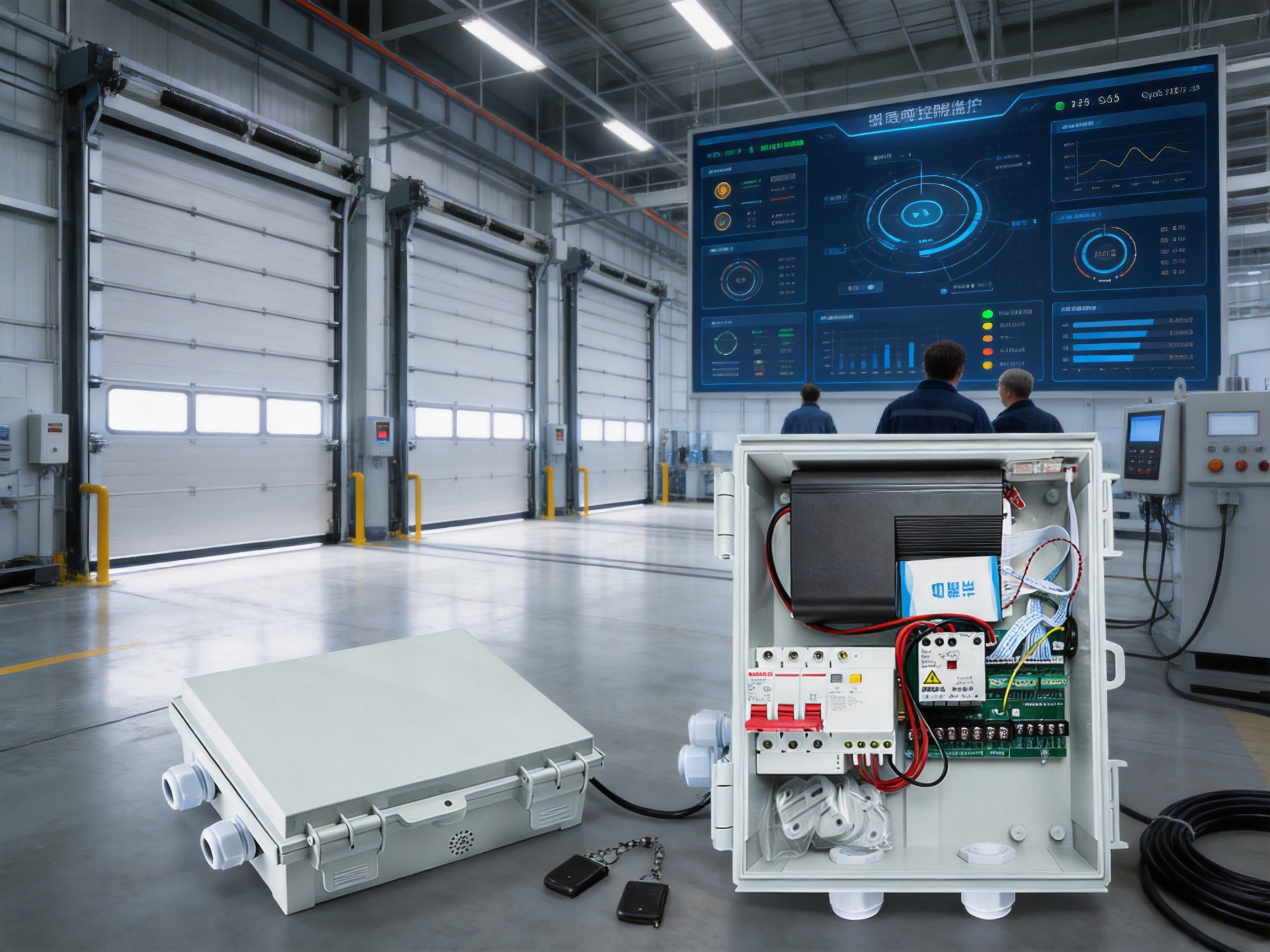
Medical facilities, cold-storage rooms, laboratories, industrial plants, and other controlled environments depend on doors that are more than simple barriers. A heavy sliding door must move substantial weight, close consistently, protect people from entrapment, support environmental separation, and continue operating under demanding conditions. The controller at the center of this system therefore has a direct influence on safety, productivity, energy use, and maintenance requirements.
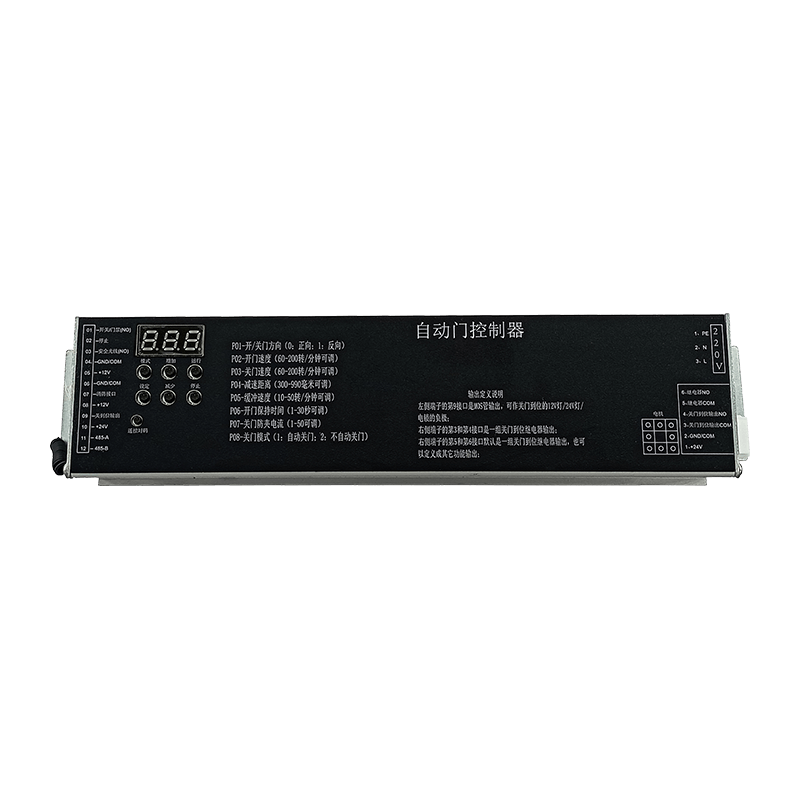
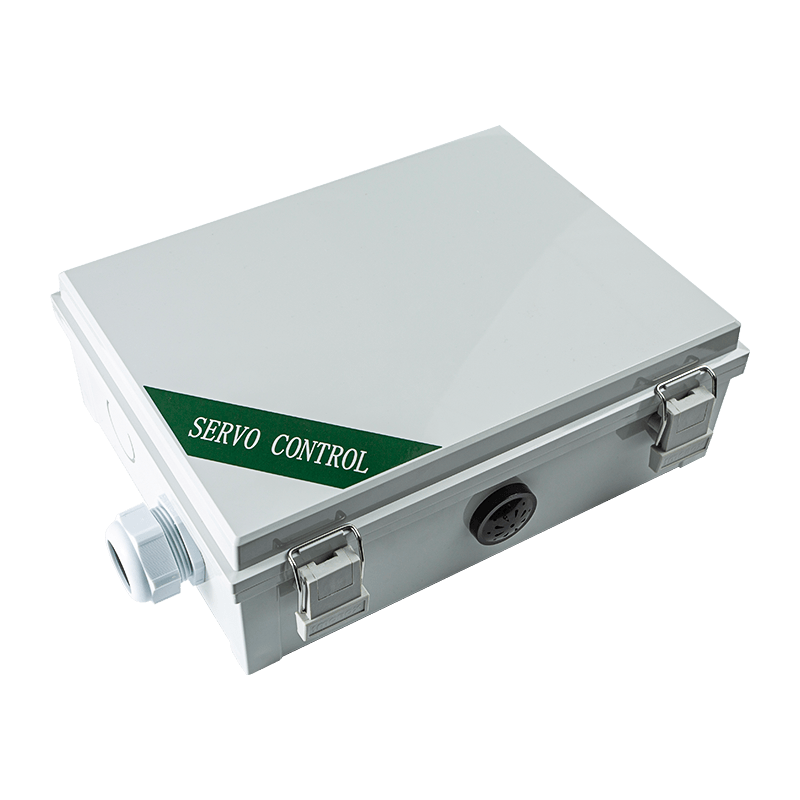
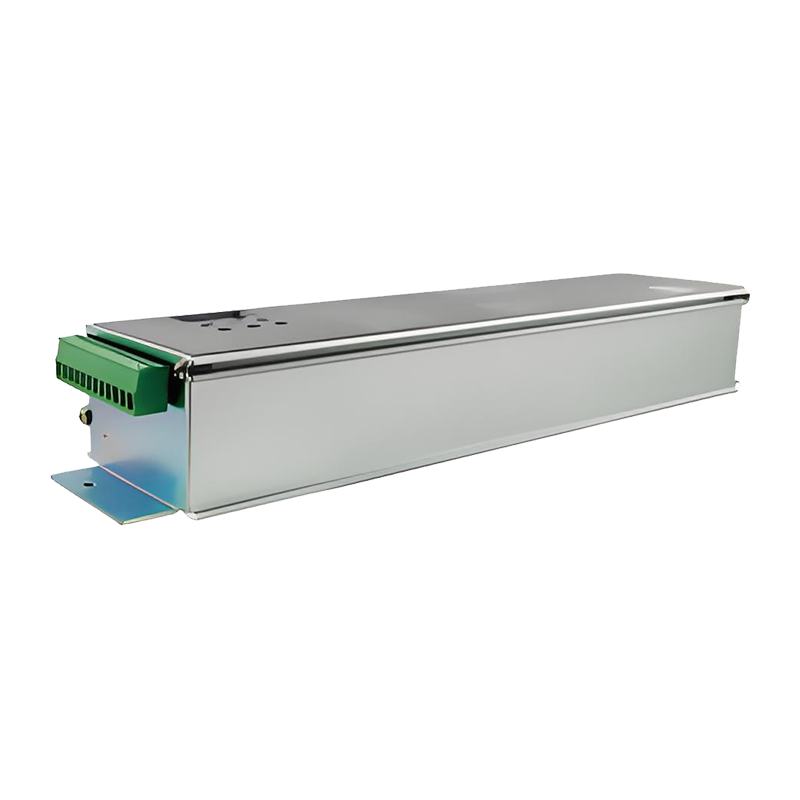
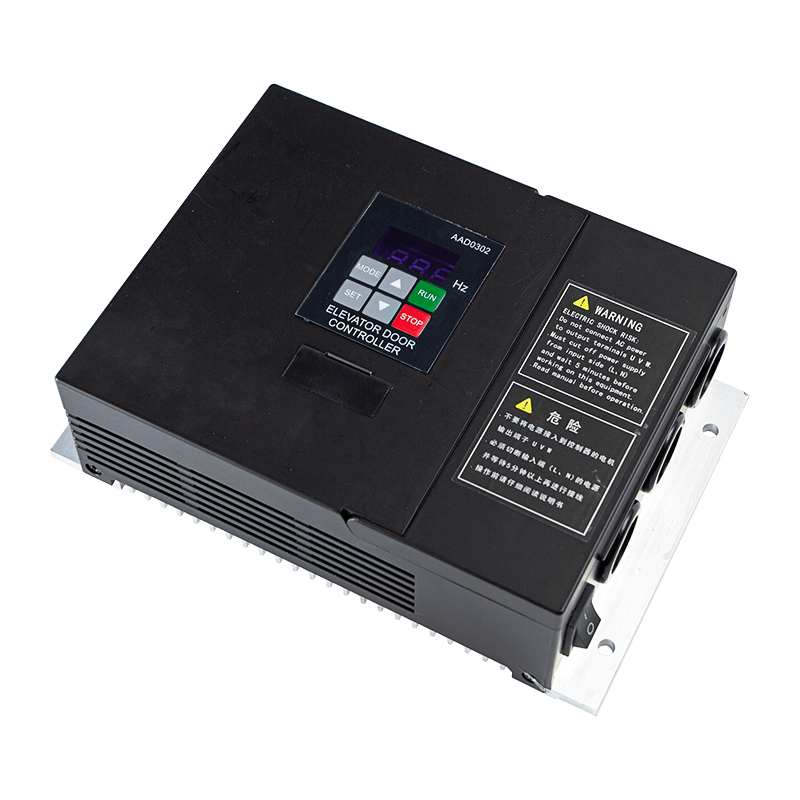
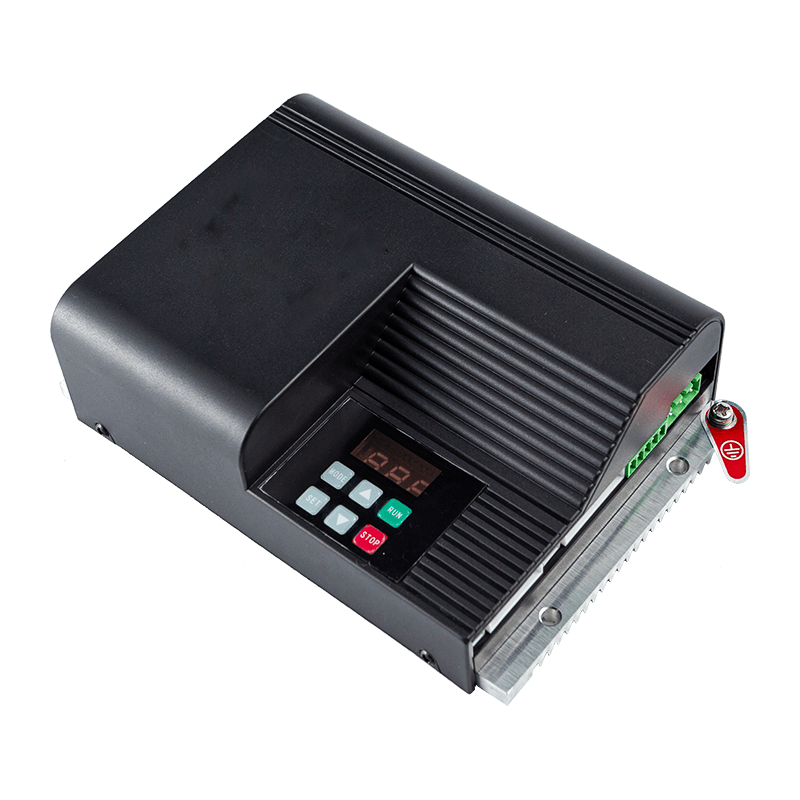
The AIG-750P-06 is a high-capacity motor controller developed for medical heavy sliding doors and other heavy-duty automatic sliding door applications. It is designed to work with a compatible control box, such as the AIG-1500P-02Y, and a high-voltage DC brushless motor, including motor configurations rated at 150W or 200W. The controller provides a rated power profile of 0.75 kW while supporting motor output power up to 1,500W, making it suitable for demanding door assemblies that require strong acceleration, controlled deceleration, and reliable positioning.
Unlike a basic door operator that only starts and stops a motor, this controller coordinates motor movement, safety signals, door locking, environmental accessories, fault detection, commissioning, and network communication. Its design addresses the practical needs of facilities where door performance must remain predictable over a long service life.
Designed for Heavy-Duty Door Automation
Medical heavy sliding doors often use dense panels, specialized shielding structures, sealed surfaces, or lead-lined materials. These construction methods can create considerably more mechanical resistance than a standard commercial entrance. A controller intended for this application must provide stable motor control and sufficient power management while maintaining smooth movement.
The AIG-750P-06 is designed specifically for this type of operating environment. Its primary application is the automated control of heavy sliding doors in medical facilities. It can also be applied to industrial sliding doors and refrigerator or cold-storage doors where the operating conditions demand reliable movement and environmental control.
The controller accepts an input voltage range of 176–264VAC at 50/60Hz. This broad operating range helps accommodate normal variations in commercial and industrial power supplies. The system is rated for 220V operation and 0.75 kW power, while the motor control stage supports a high-voltage DC brushless motor with maximum output power of 1,500W.
For a door manufacturer or system integrator, this combination provides useful design flexibility. The controller can support different heavy-door configurations without requiring a fundamentally different control architecture for every installation. Motor selection, mechanical dimensions, door mass, travel distance, and environmental conditions can be considered during system configuration.
Heavy-duty operation also requires more than a powerful motor. Excessive speed, poor stopping accuracy, or abrupt changes in torque can reduce component life and create safety risks. The controller therefore combines motor management with position learning, adjustable parameters, anti-pinch logic, and fault diagnostics.
Core Technical Specifications
Product type |
Heavy-duty automatic sliding door motor controller |
Primary application |
Medical heavy sliding doors |
Additional applications |
Industrial sliding doors and cold-storage doors |
Input voltage |
176–264VAC, 50/60Hz |
Rated voltage and power profile |
220V, 0.75 kW |
Motor type |
High-voltage DC brushless motor |
Maximum motor output power |
1,500W |
Compatible motor examples |
MT02-WS-200W and MT02-WS-150W configurations |
Communication |
One RS485 interface |
External inputs |
Open, close, stop, anti-pinch, fire protection, door lock, radar, temperature sensing resistor, and related signals |
External outputs |
Air curtain motor, heating element, buzzer, open-position output, and close-position output |
Advantages in Comparison with Basic Door Controllers
Many conventional door controllers are designed for lightweight entrances and limited operating conditions. They may provide only a simple open and close function, with few provisions for safety inputs, cold environments, accessory control, or maintenance analysis. A heavy medical door requires a broader control strategy.
The AIG-750P-06 offers several advantages over a basic controller architecture:
First, it is designed around heavy-door requirements. Its high-voltage DC brushless motor support and maximum 1,500W output capability provide a larger operating range than controllers intended only for light pedestrian doors. This helps system designers address doors with greater mass and resistance.
Second, it integrates multiple safety and facility signals. Open, close, stop, anti-pinch, fire protection, door lock, radar, and temperature sensing inputs can be connected to the control system. This reduces the need to build a collection of separate relay-based control functions around the motor controller.
Third, it supports environmental accessories. The system can manage heating wires rated up to 1 kW and air curtains rated up to 2.2 kW, according to the application information. These functions are particularly useful for cold-storage entrances and controlled spaces where freezing, air exchange, or contamination control must be addressed.
Fourth, it includes commissioning intelligence. During initial power-up, the controller can learn the open and closed door positions. This approach simplifies setup and allows the system to establish operating limits based on the actual installation rather than relying exclusively on manually entered travel values.
Fifth, it provides operating and fault information. The system records the latest four errors, identified as N09–N12 in the documentation, and provides fault codes for conditions such as Hall sensor failure, undervoltage, and overspeed. This is more useful than a controller that reports only a general failure indication.
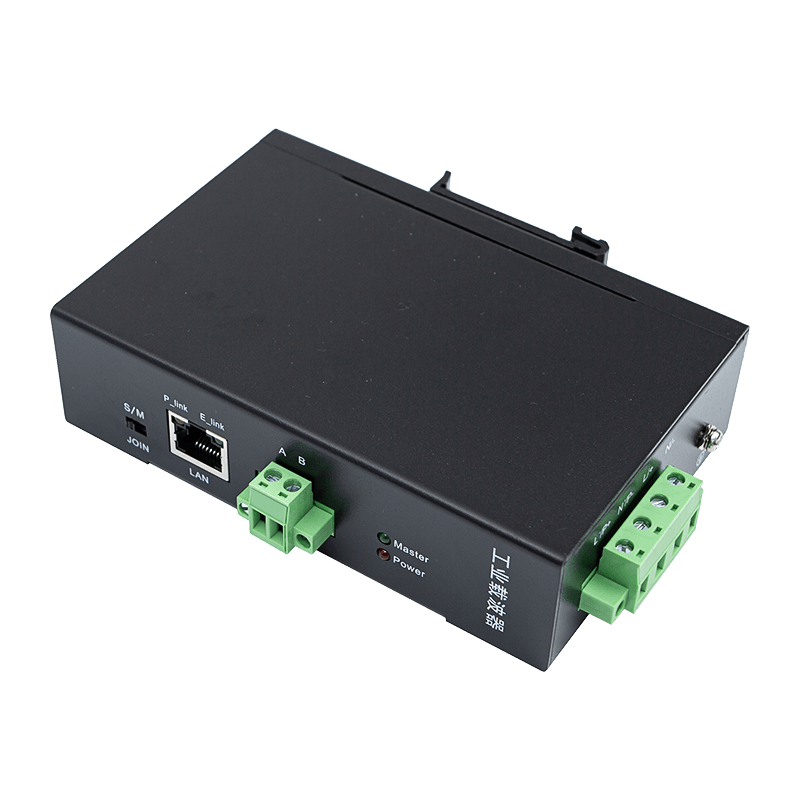
Sixth, it supports networked control through RS485. A communication interface allows the controller to be incorporated into a broader building, industrial, or equipment management system. This can support centralized monitoring and provide a pathway toward more connected facility operations.
Safety-Oriented Motor Control
Safety is a primary consideration for medical and industrial sliding doors. A heavy panel has considerable momentum, and an unexpected obstruction can present a serious hazard. The controller includes anti-pinch logic with adjustable determination times and torque settings. These adjustments allow the door system to be configured according to the mechanical characteristics of the installation.
Torque-based protection can help identify resistance during travel. If the controller detects a condition consistent with an obstruction or abnormal load, the system can respond according to its configured logic. Determination time is also important because a controller must distinguish between a normal short-term change in resistance and a genuine obstruction.
System designers should carefully commission and verify these functions during installation. The documentation states that anti-pinch protection is not active within 20 centimeters of the fully open or fully closed positions. This limitation must be considered in the mechanical design, safety assessment, access-control strategy, and operating procedures. Additional protective measures may be required in these zones depending on the door structure and the applicable safety requirements.
The controller also accepts fire-protection-related signals. In a medical or industrial facility, door behavior during a fire or emergency event may be governed by the building’s life-safety design. The door controller should therefore be integrated with the approved fire alarm and emergency control system by qualified personnel.
Grounding is another essential safety requirement. The motor earth wire must be connected to the grounding mark on the controller. This connection helps prevent high-voltage induced electricity and reduces the risk of electric shock. Because the controller operates with high-voltage input and motor circuits, installation should be performed by trained electrical professionals using appropriate isolation, protective devices, wiring methods, and inspection procedures.
These safety provisions demonstrate an important advantage of an application-specific controller. Instead of treating a heavy door as a simple motorized mechanism, the system considers obstruction detection, emergency signals, grounding, position behavior, and operating feedback as connected parts of the installation.
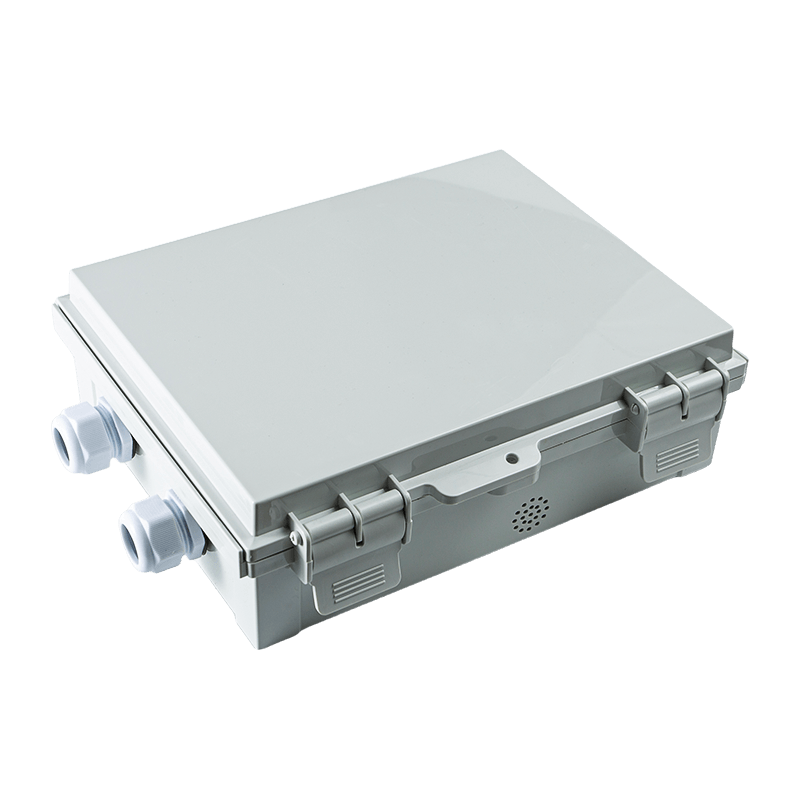
Medical Heavy Duty Door Controller
Brushless Motor Compatibility and Motion Stability
The AIG-750P-06 is designed to control a high-voltage DC brushless motor. Brushless motor technology is well suited to automated doors because it can provide efficient operation, controllable speed, and reduced dependence on mechanical commutation components. When paired with suitable motor and transmission hardware, it can support smooth and repeatable door movement.
Compatible motor examples include the MT02-WS-200W and MT02-WS-150W. The final motor selection should be based on the door’s mass, friction, travel distance, required opening speed, operating cycle, installation environment, and mechanical drive arrangement. The controller provides the electrical control platform, but correct system performance depends on matching the controller, motor, door track, pulleys, belts, and safety devices as a complete assembly.
A heavy sliding door must generally move through several operating phases. It may require controlled acceleration to overcome static resistance, a stable travel speed through the center of the opening, and gradual deceleration before reaching the open or closed position. A suitable controller helps coordinate these phases while avoiding unnecessary shock loads on the door structure.
Position learning contributes to this process. During the initial power-up procedure, the controller identifies the open and closed limits. This reduces commissioning complexity and helps establish repeatable travel behavior. If the door hardware is changed, adjusted, or serviced, the learning process can be repeated according to the applicable installation procedure.
Stable motion is valuable in medical environments for several reasons. It can reduce noise and vibration, protect adjacent equipment, improve user confidence, and reduce stress on the door structure. In cold-storage applications, controlled movement can also support effective sealing and reduce the time that the opening remains exposed.
Applications in Medical Facilities
Medical buildings use specialized doors in operating rooms, imaging areas, treatment rooms, isolation spaces, laboratories, pharmacies, and service corridors. Door requirements vary by location, but many installations share a need for reliable automation, controlled access, smooth movement, and easy integration with other equipment.
In a medical imaging environment, the door may be heavy because of shielding materials. The controller must provide enough motor capacity to move the panel while maintaining positioning accuracy. In treatment and procedure areas, the door may need to respond to radar, push-button, access-control, or equipment-generated signals. In a laboratory or isolation area, the opening cycle may be coordinated with environmental separation requirements.
The input interface supports signals such as open, close, stop, door lock, radar, anti-pinch, fire protection, and temperature sensing. This allows the door operator to be connected to the wider room-control concept rather than functioning as an isolated device.
Medical facilities also value dependable maintenance. An automatic door that is difficult to diagnose can create delays, disrupt patient movement, and increase service costs. The recorded error history and specific fault codes give maintenance personnel useful information when investigating abnormal behavior.
The door controller is not a substitute for a complete medical facility safety design. Its performance depends on the quality of the mechanical installation, sensors, wiring, door panels, tracks, locks, and supervisory systems. Nevertheless, its combination of motor control, safety inputs, accessory management, commissioning, and diagnostics provides a strong foundation for medical door automation.
Cold-Storage and Temperature-Controlled Environments
The product documentation also refers to refrigerator door control boxes and cold-storage doors. These applications introduce additional challenges. Low temperatures can affect lubricants, seals, mechanical clearances, sensor behavior, and motor performance. Condensation and frost may also interfere with door travel and sealing.
The controller can manage heating wires with a capacity of up to 1 kW. Heating elements may be used to help prevent freezing around door seals, frames, or other critical areas, subject to the design of the door assembly and the applicable electrical requirements. The controller can also manage air curtain motors rated up to 2.2 kW, helping maintain separation between different temperature zones.
Temperature sensing resistor input provides another connection point for environmental control. A system integrator can use this type of input as part of a temperature-related operating strategy, provided that the sensor characteristics and control logic are correctly matched.
Compatible motors are described as offering IP65 waterproof protection and operation at temperatures down to -30°C. The suitability of the complete door system must still be evaluated because motor protection alone does not establish the environmental rating of the controller enclosure, wiring, sensors, seals, or accessories.
In a cold-storage facility, rapid and reliable door operation can support energy management. A door that opens and closes consistently can reduce unnecessary exposure between zones. When combined with air curtains, heating elements, temperature sensing, and access-control signals, the system can become part of a broader approach to reducing heat exchange and maintaining product-storage conditions.
Integrated Peripheral Management
A significant strength of the AIG-750P-06 is its ability to manage external hardware. In many installations, the door is only one part of the environmental-control system. An air curtain may be needed to limit air movement, while heating wires may be required to prevent ice formation. A buzzer may provide an audible warning, and open or close position outputs may be needed by other equipment.
The controller’s listed outputs include a 380VAC air curtain motor connection, a 220VAC heating-element connection, buzzer output, open-position output, and close-position output. These provisions can simplify system architecture by allowing key door-related equipment to communicate through the same control platform.
Integrated accessory management can also improve coordination. For example, an air curtain may be activated when the door opens, while heating control may be enabled according to temperature conditions. Position outputs can inform a building-management system or production-control system that the door has reached a defined state.
Electrical compatibility must be verified before connecting any external load. Voltage, current, inrush characteristics, protective devices, conductor sizes, isolation requirements, and local regulations should be considered by the system designer. Where necessary, contactors, relays, overload protection, or dedicated control panels should be used.
From a manufacturing and integration perspective, supporting these functions within one product family can reduce the number of separately sourced control components. This may improve consistency across projects and make replacement planning easier for facility operators.
Fault Diagnostics and Preventive Maintenance
Unexpected door downtime can disrupt medical workflows, production logistics, cold-chain operations, and controlled-area access. Diagnostics therefore have practical value beyond simple technical convenience. The controller records the latest four errors in the N09–N12 positions and provides codes for specific conditions.
Examples include E02 for Hall sensor failure, E05 for undervoltage, and E15 for overspeed. A Hall sensor fault may point toward a sensor, wiring, motor, or connection issue. An undervoltage indication may lead maintenance personnel to inspect the incoming supply, terminals, protective equipment, or voltage stability. An overspeed indication may require examination of motor feedback, control settings, mechanical load, or transmission behavior.
Specific codes help shorten the initial troubleshooting process. Instead of beginning with a complete disassembly, a technician can first review the displayed or recorded condition and focus on the relevant circuit or mechanical area. This does not eliminate the need for professional diagnosis, but it can improve maintenance efficiency.
The system also tracks current runtime and total run count, with cycle information extending to millions of operations. Such data can support preventive maintenance planning. A facility can review usage history, combine it with inspection records, and schedule cleaning, lubrication, belt inspection, sensor testing, or component replacement before a failure occurs.
For high-use medical entrances and industrial doors, cycle-based maintenance is often more meaningful than a calendar-only approach. Two doors installed on the same date may experience very different workloads. Runtime and run-count information helps maintenance teams prioritize equipment based on actual use.
A modern maintenance program can combine controller data with inspection checklists and facility-management records. Through the RS485 interface, the door system may also be connected to a broader monitoring network where project requirements permit.
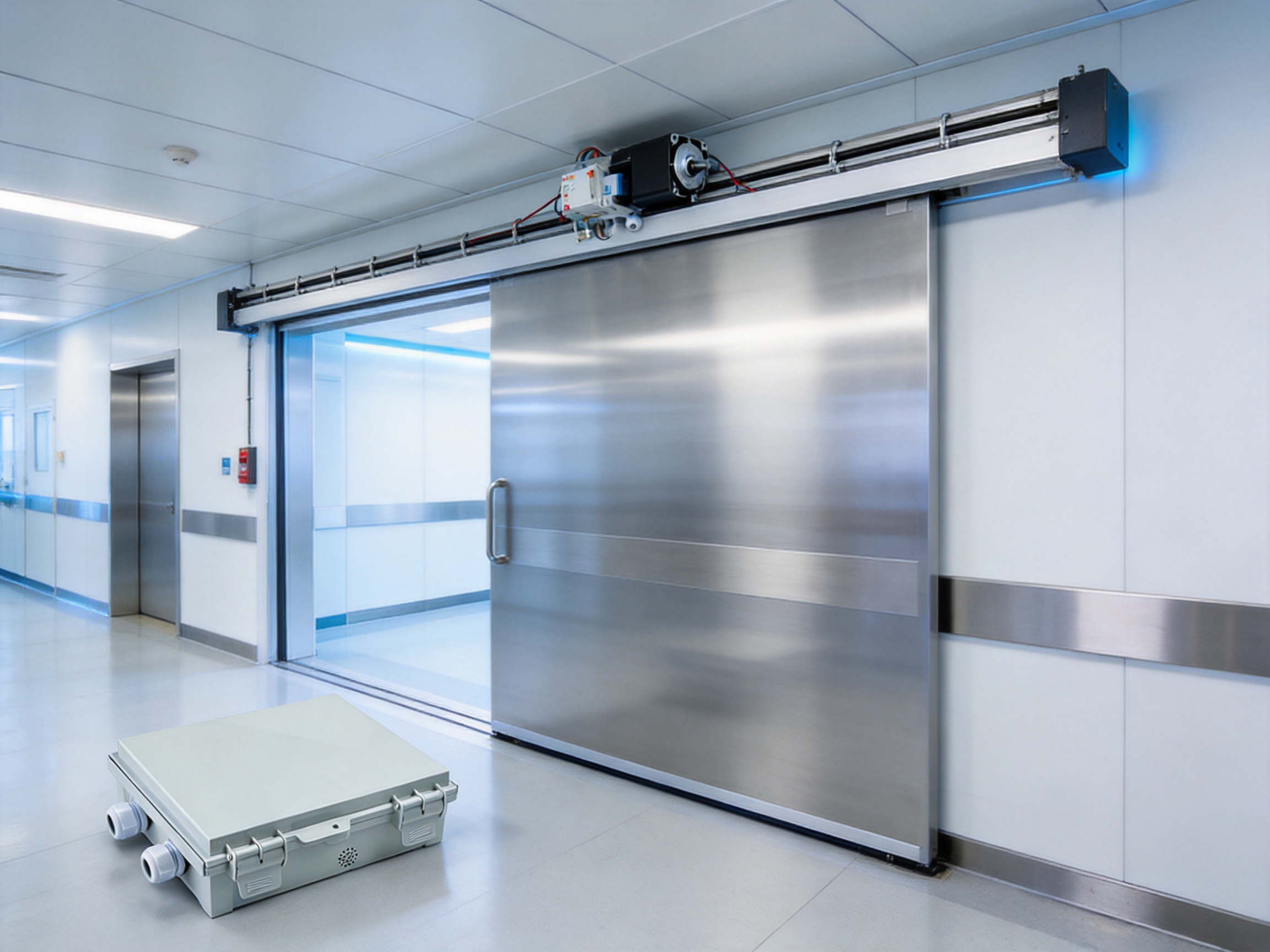
RS485 Communication for Connected Facilities
The controller provides one RS485 communication interface for networked control. RS485 is widely used in industrial environments because it supports robust communication over practical cable distances and can connect multiple devices within an appropriate network design.
In a hospital or industrial facility, network communication can support centralized status monitoring, alarm collection, access coordination, and maintenance reporting. The door controller may become one node in a larger automation system that includes sensors, equipment controllers, building-management devices, and production systems.
Connectivity is especially useful when many heavy doors are distributed across a site. Instead of requiring technicians to inspect every controller for routine status information, a supervisory system may collect selected data centrally. This can help identify doors that have accumulated unusually high cycle counts, generated repeated errors, or remained in an unexpected position.
Communication functions should be implemented according to the controller’s supported protocol, wiring requirements, addressing method, and system documentation. Network design should include suitable grounding, shielding, termination, isolation, and protection against electrical interference where required.
The RS485 interface also contributes to future readiness. Facilities increasingly seek equipment that can participate in condition monitoring and digital maintenance programs. By providing an industrial communication port, the controller can support a gradual transition from standalone operation toward connected equipment management.
Manufacturing Strengths and Engineering Capability
The company behind the product is a high-technology enterprise focused on data sensing, intelligent connectivity, industrial equipment monitoring, energy management, and production-process optimization. Its product portfolio includes broadband power line carriers, wireless temperature monitoring systems, industrial transmitters, flow meters, and automatic door controllers.
This broader portfolio is relevant to the AIG-750P-06 because automatic doors increasingly operate as part of connected industrial environments. Experience in sensing, communication, and industrial electronics can support a more integrated approach to controller development than a narrow focus on motor switching alone.
The company’s stated objective is to help create efficient, reliable, and sustainable smart factories. Its capabilities include self-developed edge-layer hardware products and industrial data integration solutions. These strengths provide a foundation for designing products that connect physical equipment with digital monitoring and facility-level decision-making.
Advanced manufacturing for a door controller involves multiple stages. Electrical design must be coordinated with motor characteristics, protection requirements, sensor inputs, output loads, communication functions, and enclosure considerations. Component selection must account for voltage, temperature, vibration, electromagnetic interference, service life, and production consistency.
A reliable manufacturing process should include controlled printed-circuit-board assembly, accurate component placement, soldering inspection, firmware or parameter verification, wiring inspection, functional testing, and final quality review. The available product information does not specify individual factory machines or certification programs, so exact process claims should be confirmed for each project. However, the product’s integrated functions indicate the need for disciplined electronics engineering and systematic quality control.
Production traceability is also important for industrial controllers. A robust traceability system can associate a unit with its component batches, assembly records, test results, configuration information, and final inspection status. This supports quality investigations, engineering improvements, and after-sales service.
For customized or project-based door systems, manufacturing flexibility is another advantage. A supplier experienced in industrial electronics can work with integrators to review motor selection, I/O requirements, communication needs, accessory loads, environmental conditions, and installation constraints. This type of application engineering helps ensure that the controller is used within a complete and compatible system.
Quality Control Considerations
Quality control for a heavy-duty door controller should cover both electrical performance and system behavior. Electrical tests may include input voltage tolerance, power-stage operation, insulation integrity, grounding continuity, output switching, communication performance, and response to defined input signals.
Functional testing should verify open, close, stop, anti-pinch, fire-protection, door-lock, radar, and temperature-related inputs. The test process should also confirm the operation of position learning, open and closed outputs, buzzer behavior, accessory connections, and error reporting.
Motor testing is particularly important because a controller may behave differently under no-load and loaded conditions. A suitable test program should use compatible motors and representative mechanical loads where practical. Acceleration, deceleration, limit recognition, reversing response, obstruction response, overspeed detection, and repeated cycling should be evaluated.
Environmental considerations may require temperature testing, humidity evaluation, vibration checks, or electromagnetic compatibility assessment according to the intended market and application. If the complete system is used in a low-temperature environment, testing should consider the interaction of the controller, motor, sensors, seals, wiring, and heating functions.
Consistency between engineering samples and mass-produced units is essential. Production test fixtures, standardized procedures, calibration control, operator training, and inspection records all contribute to repeatable quality. These practices are especially valuable when controllers are supplied for hospitals, laboratories, cold-storage sites, and industrial projects where replacement or field modification may be costly.
Installation and Commissioning Guidance
Installation should begin with a complete review of the door mechanism and electrical design. The door track should be aligned, the panel should move freely by hand when safe to do so, and the motor and transmission should be correctly installed. Mechanical friction or misalignment can cause false overload conditions and reduce the effectiveness of electronic safety functions.
The input supply must be checked against the controller’s 176–264VAC, 50/60Hz range. Proper circuit protection, isolation, conductor sizing, and grounding are required. The motor earth wire must be connected to the controller’s designated grounding point to reduce the risk of induced high voltage and electric shock.
All control signals should be identified before wiring. Open, close, stop, door lock, radar, anti-pinch, fire protection, and temperature sensing connections should be checked against the project wiring diagram. External outputs should be verified for voltage and load compatibility before heating wires, air curtains, buzzers, or position-feedback circuits are connected.
During first power-up, the position-learning procedure should be completed according to the installation instructions. The door should be observed throughout the learning movement. The technician should confirm that the open and closed positions are correctly recognized and that the door does not encounter abnormal resistance.
After commissioning, the system should be tested under normal and abnormal conditions. This may include activation of stop inputs, obstruction simulation using an approved method, door-lock response, radar detection, emergency or fire-related signals, position outputs, and accessory operation.
Because anti-pinch protection is not active within 20 centimeters of the fully open or closed positions, the installer must inspect those areas carefully. Mechanical design, sensor placement, access restrictions, and operating procedures should address any remaining risk.
Benefits for System Integrators and Facility Owners
System integrators benefit from a controller that combines power management, safety functions, accessory control, diagnostics, and communication in one product platform. This can reduce design complexity and make it easier to standardize door systems across multiple rooms or facilities.
A common controller architecture also simplifies training. Maintenance staff can become familiar with one set of connection methods, commissioning procedures, error codes, and inspection routines. Spare-parts planning may become more straightforward when compatible systems share a common control platform.
Facility owners benefit from improved visibility into equipment condition. Runtime and cycle counts help identify heavily used doors, while error history provides information for troubleshooting. Position outputs and RS485 communication can support integration with other facility systems where required.
The controller may also contribute to lower operating costs by enabling more coordinated management of doors, heating wires, and air curtains. In cold-storage applications, maintaining proper door behavior can help reduce unnecessary air exchange. In industrial facilities, reliable automatic movement can reduce manual handling and improve traffic flow.
For medical facilities, dependable door operation can support hygiene procedures, privacy, access control, room separation, and staff efficiency. The controller does not independently guarantee these outcomes, but it provides the control functions needed to build an appropriate automated door system.
How the Product Supports Smart Factory Development
Smart factories depend on reliable data from physical equipment. A motor controller with sensing inputs, fault records, cycle tracking, and communication capability can serve as an edge-level equipment node. It connects the mechanical door with higher-level monitoring and management functions.
This role aligns with the company’s broader focus on data sensing and intelligent connectivity. The same industrial philosophy used for power-line communication, wireless temperature monitoring, transmitters, and flow measurement can be applied to door automation: collect useful operating information, connect equipment reliably, and use the information to improve decisions.
In a production facility, door status may be relevant to material flow, clean-zone separation, warehouse temperature, safety interlocks, or equipment scheduling. In a medical facility, door status may relate to access control, room conditions, patient transport routes, and maintenance alerts.
Over time, data from multiple controllers can reveal patterns. A door that repeatedly generates an overload-related condition may require mechanical adjustment. A door with unusually long runtime may have increasing friction. A door that accumulates cycles faster than expected may need a revised maintenance interval. These insights support condition-based maintenance rather than relying only on fixed schedules.
The controller is therefore not only a motor-control device. When properly integrated, it can become part of a larger operational-information system that supports safety, reliability, energy management, and productivity.
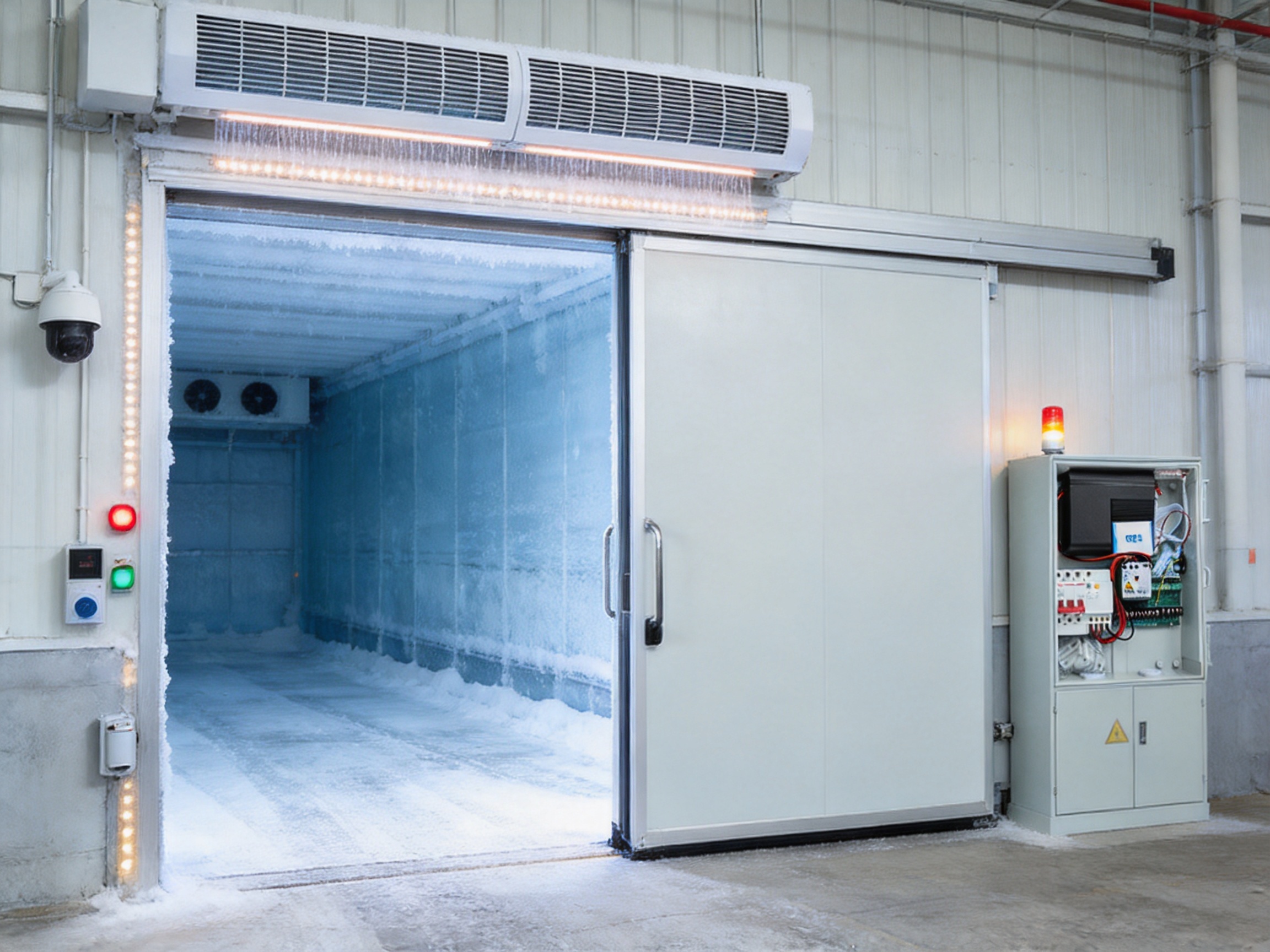
Recommended Selection Criteria
Before selecting the controller for a project, engineers should evaluate several factors. The door mass and dimensions should be compared with the available motor torque and output capacity. The travel distance, desired speed, cycle frequency, and mechanical transmission should be reviewed together.
The electrical environment should also be examined. The facility supply must fall within the controller’s voltage range, and the selected motor and accessories must match the available outputs. Heating elements, air curtains, buzzers, locks, and sensors may have different electrical characteristics, so load calculations should be completed before installation.
Environmental conditions are equally important. Temperature, humidity, dust, water exposure, condensation, cleaning chemicals, electromagnetic interference, and vibration may affect the complete system. Where the motor is specified for IP65 protection and operation down to -30°C, the rest of the installation should be designed to maintain appropriate protection.
Safety requirements should be documented before commissioning. The project team should define anti-pinch behavior, fire-protection response, emergency stopping, door-lock operation, sensor locations, and the risk associated with the final 20 centimeters of travel at each end position.
Finally, communication requirements should be considered. If centralized monitoring is needed, the project should define the RS485 network structure, protocol requirements, data points, cable routing, and maintenance responsibilities.
Frequently Asked Questions
What type of doors is the AIG-750P-06 intended to control?
It is intended primarily for medical heavy sliding doors. It can also be used for heavy industrial sliding doors and cold-storage or refrigerator doors when the motor, mechanics, electrical system, and environmental conditions are properly matched.
What is the controller’s input voltage range?
The specified input range is 176–264VAC at 50/60Hz. The rated voltage and power profile are 220V and 0.75 kW.
What motor technology does it support?
The controller supports a high-voltage DC brushless motor. Compatible motor examples include MT02-WS-200W and MT02-WS-150W configurations. The final motor selection should be based on the complete door load and operating requirements.
What is the maximum motor output power?
The motor control stage supports maximum output power of 1,500W, subject to correct system configuration and operating conditions.
Does the controller support anti-pinch protection?
Yes. It includes adjustable anti-pinch determination times and torque settings. However, the documented protection limitation must be observed: anti-pinch protection is not active within 20 centimeters of the fully open or fully closed positions.
Can the controller operate heating wires and air curtains?
Yes. The application information identifies support for heating wires up to 1 kW and air curtains up to 2.2 kW. The listed outputs include a 380VAC air curtain motor connection and a 220VAC heating-element connection. Load compatibility and protective requirements must be verified for every installation.
Can it be used in cold-storage applications?
Yes. The documentation refers to refrigerator door control boxes and cold-storage doors. Compatible motors are described as offering IP65 protection and operation at temperatures as low as -30°C. The complete door assembly must be assessed for the intended environment.
How does the controller learn the door position?
During the first power-up and commissioning process, the controller can learn the open and closed door positions. The installation technician should supervise this procedure and verify the resulting travel limits.
What diagnostic information is available?
The system records the latest four errors, identified as N09–N12. It also provides specific fault codes, including E02 for Hall sensor failure, E05 for undervoltage, and E15 for overspeed.
Does the controller support communication with other systems?
Yes. It includes one RS485 communication interface for networked control. The actual integration method depends on the supported communication protocol and the requirements of the supervisory system.
Why is grounding especially important?
The motor earth wire must be connected to the grounding mark on the controller. Correct grounding helps prevent high-voltage induced electricity and reduces the risk of electric shock. High-voltage installation work should be completed by qualified professionals.
Can the controller be used as a standalone product?
It is part of a complete automatic door system and is typically integrated with a compatible control box and DC brushless motor. Successful operation also depends on the mechanical door assembly, sensors, wiring, safety devices, and accessory equipment.
How can facility owners use the runtime and cycle information?
Runtime and total run-count information can support preventive maintenance. Facility teams can identify high-use doors, compare actual usage with service intervals, and investigate changes in operating behavior before a major failure occurs.
Conclusion
The AIG-750P-06 is a specialized controller for heavy-duty automatic sliding doors where power, safety, environmental control, and maintainability are all important. Its support for high-voltage DC brushless motors, maximum output power of 1,500W, broad 176–264VAC input range, and application-specific control functions make it suitable for demanding medical, industrial, and cold-storage installations.
Its advantages over simpler door controllers include integrated anti-pinch logic, fire-protection and door-lock inputs, radar and temperature sensing connections, position learning, fault-code reporting, runtime and cycle tracking, RS485 communication, and control of heating wires and air curtains. Together, these functions help transform a door operator from a basic motor switch into a connected equipment-control platform.
The product also reflects the company’s wider strengths in industrial electronics, data sensing, intelligent connectivity, and smart-factory development. By combining edge-layer hardware with industrial data integration capabilities, the company is positioned to support applications that require both reliable physical control and useful operating information.
For the best result, the controller should be selected and commissioned as part of a complete engineered system. Correct motor matching, mechanical alignment, grounding, protective wiring, safety testing, environmental evaluation, and network planning are essential. When these elements are addressed properly, the controller can support safe, consistent, and maintainable heavy-door automation in some of the most demanding operating environments.
References
1. Product technical information for the AIG-750P-06 medical heavy-duty door controller.
2. Product application notes for automatic medical sliding doors, industrial sliding doors, and cold-storage doors.
3. Motor compatibility information for high-voltage DC brushless motor configurations.
4. General engineering principles for automatic door safety, grounding, obstruction detection, and preventive maintenance.
5. Industrial automation practices for RS485 communication, equipment monitoring, and edge-layer control.
6. Facility engineering considerations for medical environments, temperature-controlled spaces, air curtains, and anti-freezing heating systems.