

Reliable temperature monitoring is essential wherever electrical equipment operates under high voltage, high current, outdoor exposure, or continuous industrial load. A small increase in the temperature of a busbar connection, transformer terminal, disconnect switch, or cable clamp can indicate a loose connection, excessive resistance, overloading, insulation deterioration, or an impending equipment failure. If the condition is not detected in time, it may develop into insulation damage, arcing, fire, unplanned shutdown, or a major safety incident.
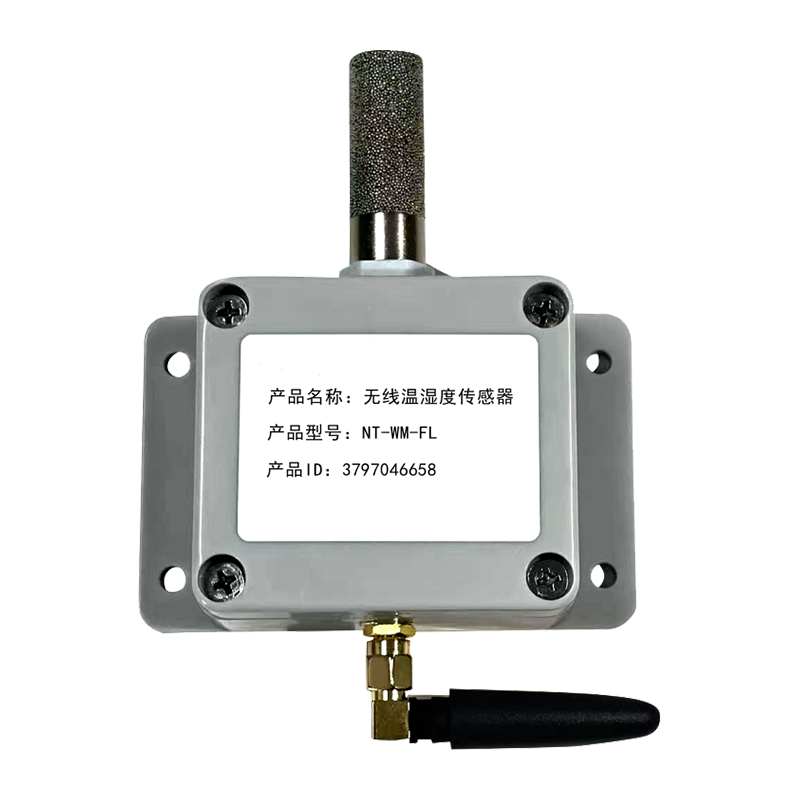
The KL-DS33YS copper plate wireless temperature sensor is designed for this type of condition-monitoring application. It combines a copper mounting plate, a PT1000 temperature-sensing element, low-power electronics, a lithium battery, and LoRa wireless communication in a compact IP68-protected enclosure. The sensor is installed directly on the measured component and transmits temperature data to a wireless temperature measurement host.
Unlike conventional inspection methods that depend on periodic manual rounds or temporary infrared measurements, this sensor is intended to provide continuous or scheduled monitoring of critical points. It can help operators identify temperature changes at their source, improve maintenance planning, and reduce the need to approach energized equipment for routine inspection.
This article explains the product’s operating concept, technical characteristics, application value, installation considerations, manufacturing strengths, and comparison with common alternative monitoring approaches. It also provides a practical question-and-answer section for engineers, integrators, maintenance teams, and industrial buyers.

Copper Plate Temperature Sensor
Why Temperature Monitoring Matters in Electrical and Industrial Equipment
Temperature is one of the most useful indicators of electrical and mechanical equipment condition. When current passes through a conductor or connection, electrical resistance produces heat. Under normal conditions, the heat generated by a properly designed connection remains within an acceptable range and is dissipated into the surrounding environment. However, deterioration can cause localized temperature increases.
Typical causes include loose bolts, oxidation, inadequate contact pressure, corrosion, overloading, unbalanced phases, damaged conductors, poor installation, or an incorrectly sized connection. Outdoor equipment can also experience temperature changes caused by sunlight, wind, rain, humidity, and seasonal conditions. A temperature monitoring system helps distinguish ordinary environmental variation from abnormal heating at a critical contact point.
High-voltage switchgear and outdoor substations present a particular challenge. Important electrical contacts may be energized and physically difficult to access. A technician using a handheld infrared instrument may need to enter a restricted area, observe the equipment during a specific operating condition, and visit the site repeatedly. Infrared measurement can be valuable, but it is generally periodic rather than continuous and may be affected by viewing angle, emissivity, distance, weather, and line-of-sight limitations.
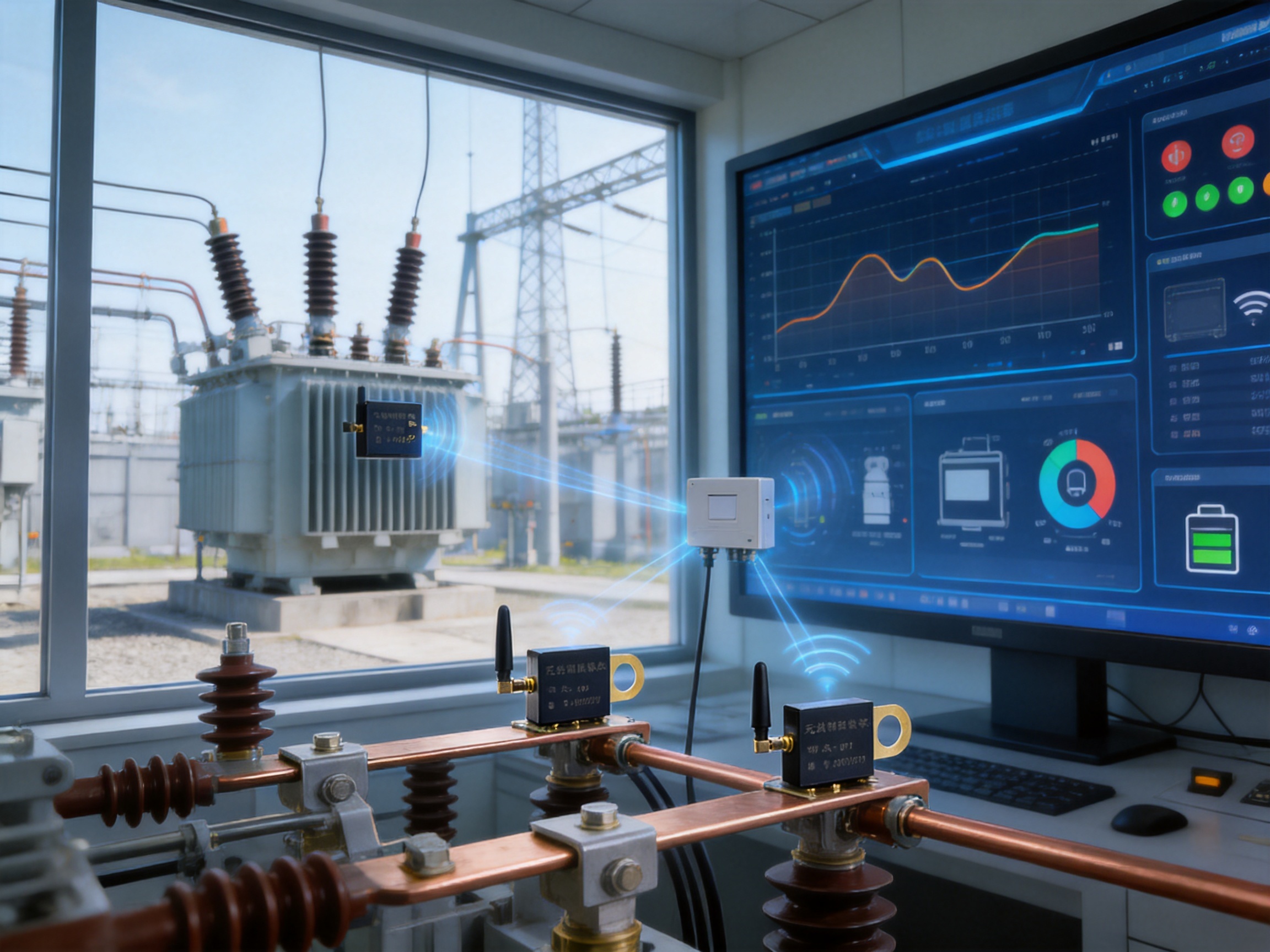
A permanently installed wireless sensor provides another layer of protection. It remains attached to the measured location and can report data automatically. When connected to a host or supervisory system, multiple sensors can be monitored from a safer and more convenient location. This approach is especially suitable for equipment where direct access is difficult or where an abnormal temperature may develop between scheduled inspections.
Product Overview
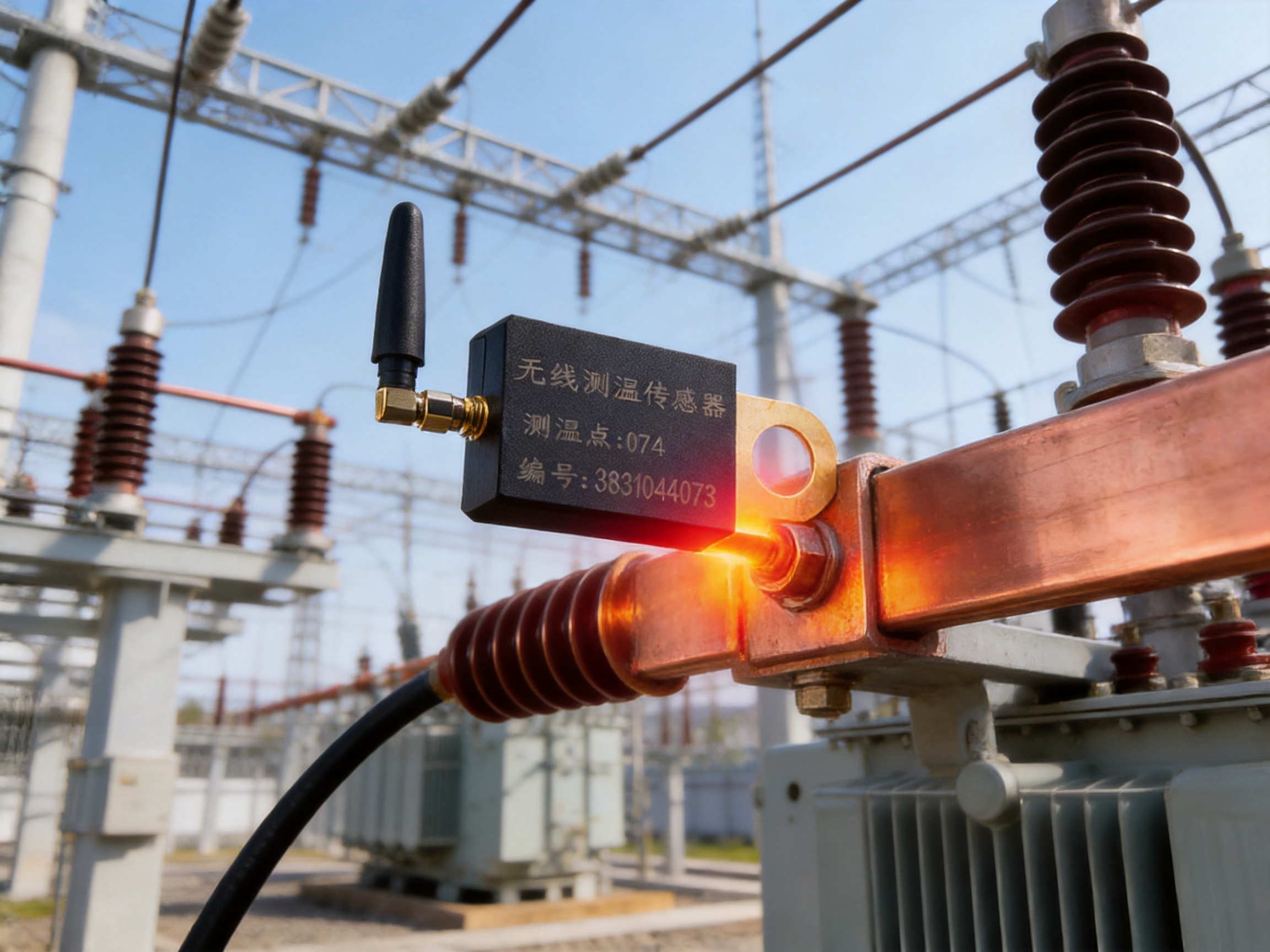
The KL-DS33YS is a single-channel copper plate wireless temperature sensor. It is designed to be mounted directly onto the surface or connection point of high-voltage energized equipment and to send temperature data through a low-power wireless network.
The sensing assembly includes a temperature sensor, signal modulation and amplification circuitry, logic control circuitry, a wireless communication circuit, a lithium battery, and an antenna. These elements work together as a compact measuring and communication unit.
The copper plate forms the thermal interface between the monitored object and the sensing element. When the plate is bolted onto a conductive connection or equipment surface, heat from that point is transferred to the sensor. The internal circuit samples the temperature, processes the measurement, and transmits the result to a compatible wireless temperature measurement host.
The product also includes an internal battery voltage self-test function. In addition to measuring the temperature of the monitored point, the sensor can report its battery voltage to the host. This is important for preventive maintenance because operators can identify a low-battery condition before communication is interrupted.
The sensor is intended for long-term deployment. Its stated battery lifespan is five to eight years, depending on operating conditions, communication activity, sampling settings, environmental factors, and network configuration. This reduces the frequency of battery replacement compared with many short-life wireless sensing devices.
Its IP68 protection level supports use in demanding outdoor and industrial environments. The enclosure is designed to resist dust ingress and water penetration under the conditions associated with the IP68 rating. As with any outdoor electrical product, final suitability should be confirmed against the actual installation environment, including chemical exposure, mechanical vibration, ultraviolet radiation, temperature extremes, and local electrical safety requirements.
Key Technical Specifications
Item |
Specification |
Product model |
KL-DS33YS |
Sensor type |
Copper plate wireless temperature sensor |
Temperature measurement range |
-40 to +200°C |
Measurement accuracy |
±1°C |
Temperature sensing element |
PT1000 |
Temperature sampling frequency |
Default: every 10 seconds |
Communication method |
LoRa |
Wireless frequency |
470–510 MHz |
Wireless transmission distance |
Up to 800 meters under suitable conditions |
Battery lifespan |
Approximately 5–8 years |
Installation method |
Bolt fixing |
External dimensions |
60 mm × 45 mm × 25 mm |
Protection level |
IP68 |
Primary installation environments |
Outdoor isolating switches, wall-penetrating cable clamps, transformer terminals, flexible copper busbar connections, and similar components |
The supplied technical information also lists a general dimension of 105 mm. Because the external enclosure dimensions are specified separately as 60 mm × 45 mm × 25 mm, purchasers should confirm the meaning of the 105 mm value during technical review. It may relate to the complete mounting arrangement or another physical dimension in the product drawing.
How the Sensor Works
Direct Thermal Contact
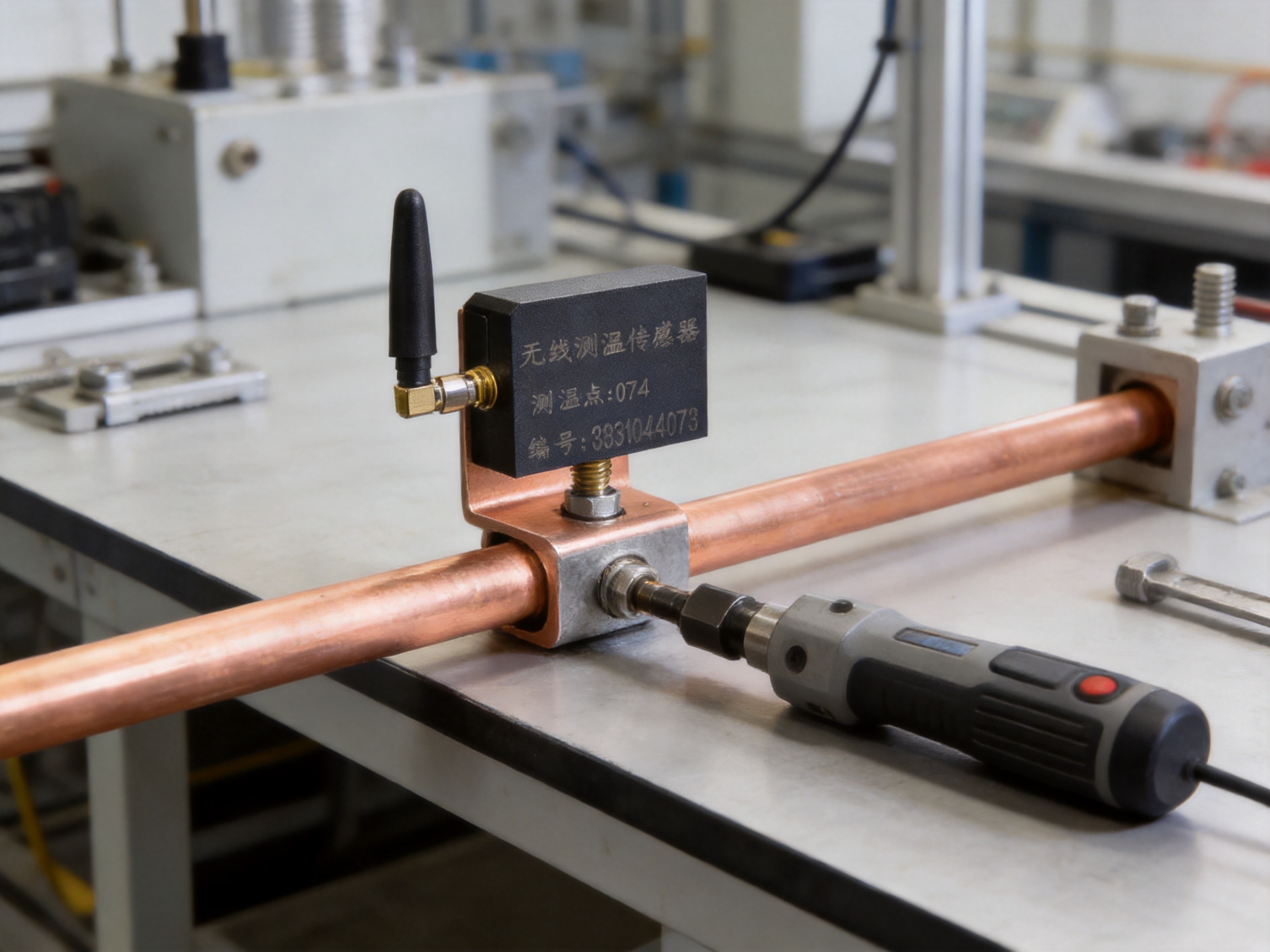
The sensor is designed to be fixed directly to the monitored copper or metal surface. The copper plate creates a practical thermal path from the equipment connection to the sensing element. Direct contact is useful because the sensor measures the temperature at the point of interest rather than estimating it from ambient conditions.
Installation quality has a direct effect on measurement performance. The contact surface should be clean, stable, and properly aligned. The mounting bolt should provide appropriate mechanical pressure without damaging the equipment or exceeding the permitted torque. The installation procedure must also respect the electrical clearance, insulation, grounding, and safety requirements applicable to the equipment.
PT1000 Temperature Measurement
The sensor uses a PT1000 element. A platinum resistance temperature detector changes its electrical resistance in response to temperature. The PT1000 designation indicates a nominal resistance of 1,000 ohms at 0°C. Platinum resistance elements are widely used for industrial measurement because they offer stable and repeatable temperature characteristics over a broad operating range.
In this product, the PT1000 signal is processed by the internal signal modulation and amplification circuit. The logic control circuit manages measurement timing, data processing, battery monitoring, and communication. This integrated architecture allows the sensor to operate as a self-contained wireless node.
Scheduled Wireless Transmission
The default temperature sampling frequency is every 10 seconds. At each sampling interval, the sensor detects the current temperature, processes the result, and transmits the data through the LoRa communication system. The host receives the measurement and can display, record, analyze, or alarm on the information according to the wider monitoring system design.
The actual network behavior may depend on the configuration of the wireless temperature measurement host and the requirements of the project. Sampling frequency, transmission intervals, retransmission policies, alarm thresholds, and data storage functions should be verified during system integration.
Battery Voltage Self-Test
Battery condition is important in any wireless monitoring deployment. A sensor that measures temperature accurately but cannot report reliably because of a depleted battery is not an effective long-term monitoring device. The KL-DS33YS includes a battery voltage self-test function, enabling the host to receive information about the internal battery voltage.
This function allows maintenance teams to schedule battery service according to actual device status rather than relying only on a fixed replacement calendar. It can also help identify sensors that may require inspection because of unusual power consumption, extreme environmental conditions, or communication problems.
Advantages Compared with Common Alternatives
Compared with Manual Inspection
Manual inspection is simple to understand, but it is limited by inspection frequency and access conditions. A connection may operate normally during one inspection and develop an abnormal temperature several days later. A fixed wireless sensor provides data between inspection rounds, allowing maintenance teams to observe trends and respond earlier.
Wireless monitoring can also reduce the need for workers to approach high-voltage equipment for routine temperature checks. This does not eliminate the need for safe work procedures or physical inspections, but it can reduce unnecessary exposure and allow field personnel to focus on corrective work when the monitoring data indicates a problem.
Compared with Handheld Infrared Measurement
Infrared instruments are useful for surveys and troubleshooting, but they require a clear line of sight and an operator at the measurement location. Their readings may be influenced by surface emissivity, reflection, distance, weather, and viewing angle. They also provide a snapshot rather than a continuous record.
A permanently mounted copper plate sensor measures the selected point repeatedly under real operating conditions. It can capture temperature changes that occur during load peaks, overnight operation, weather changes, or equipment transitions. The two technologies can be complementary: wireless sensors provide continuous trend data, while infrared instruments can support detailed diagnostic surveys.
Compared with Wired Sensors
Wired temperature sensors can provide stable data, but cabling may be difficult in high-voltage installations. Cables must be routed safely, protected from mechanical damage, and arranged to maintain required electrical clearances. Installation can require additional conduit, insulation, cable supports, and penetrations.
The KL-DS33YS uses wireless communication, reducing the quantity of signal cabling required between the monitored point and the host. This can simplify retrofit projects, particularly where equipment was not originally designed for temperature measurement. Wireless deployment may also reduce installation disruption and make it easier to add sensors to multiple locations.
Compared with Short-Range Wireless Devices
Many low-power wireless devices are optimized for buildings, rooms, or short-distance applications. High-voltage yards and industrial sites may require longer communication distances and better flexibility around obstacles. The sensor uses LoRa communication in the 470–510 MHz range and specifies a wireless transmission distance of up to 800 meters under suitable conditions.
Actual range depends on antenna placement, terrain, metal structures, equipment layout, radio interference, local regulations, and the sensitivity of the receiving host. Nevertheless, the combination of low-power operation and long-range communication is well suited to distributed monitoring in substations, factories, utility facilities, and outdoor equipment areas.
Compared with Non-Contact Temperature Estimation
Some systems estimate equipment temperature from ambient sensors, load data, thermal models, or remote observation. These methods can be useful for system-level analysis, but they may not identify a localized hot spot at a connection. Direct installation on the monitored point gives the KL-DS33YS a clear physical relationship with the temperature source.
For critical electrical connections, point measurement can provide more actionable information. A temperature increase at one busbar joint, for example, may be more meaningful than a general increase in the surrounding air temperature.
Application Areas
Outdoor Isolating Switches
Outdoor isolating switches contain conductive parts and connections that may be exposed to weather, thermal cycling, and mechanical movement. The sensor can be mounted at suitable connection points to monitor temperature during normal operation and load changes.
Because outdoor isolating switches may be distributed across a large area, wireless communication can reduce the need for long signal cables. The installation team can place sensors at selected high-risk points and connect them to a centralized monitoring host.
High-Voltage Switchgear Connections
High-voltage switchgear includes busbars, terminals, contacts, and cable connections. A poor connection may generate localized heat even while the surrounding enclosure remains within a normal temperature range. Installing temperature sensors at representative or historically problematic points can help maintenance personnel identify developing faults.
The sensor should be integrated only after confirming insulation coordination, available space, mechanical compatibility, and the manufacturer’s approved installation procedure. It must not interfere with moving components, insulating barriers, arc-protection systems, or maintenance access.
Transformer Inlet and Outlet Terminals
Transformer terminals and connection points may experience sustained current, thermal expansion, and environmental exposure. Monitoring these points can support condition-based maintenance and help identify unusual temperature differences between phases or connections.
For a complete transformer monitoring project, point temperature data may be combined with oil temperature, winding temperature, load current, humidity, vibration, and other measurements. The copper plate wireless sensor can serve as one element in a broader asset-monitoring architecture.
Wall-Penetrating Cable Clamps
Cable clamps and wall-penetrating connections can be difficult to inspect visually. They may be affected by contact resistance, installation pressure, moisture, or long-term mechanical stress. A sensor installed at the appropriate clamp or connection point can provide continuous information without requiring a technician to repeatedly access the location.
Flexible Copper Busbar Connections
Flexible copper busbars are used in many industrial and power distribution systems. Their connection points can experience heating if fasteners loosen, surfaces oxidize, or current exceeds design expectations. A copper plate sensor is particularly suitable for monitoring the temperature of conductive connection points where direct thermal contact is possible.
Industrial Motors and High-Power Equipment
High-power motors, power distribution cabinets, and industrial drive systems can contain heavily loaded terminals and exposed electrical connections. The sensor can be applied to suitable surfaces where the temperature range and mechanical arrangement are compatible with the product specifications.
It is important to distinguish connection-temperature monitoring from internal motor winding measurement. The KL-DS33YS is intended for surface or contact-point temperature detection. It should not be treated as a substitute for a dedicated embedded winding sensor unless the application has been specifically engineered and validated.
Manufacturing and Engineering Strengths
The value of an industrial wireless sensor depends not only on the published specifications but also on the consistency of its design, assembly, testing, and integration. ASY Electronics is a high-tech enterprise focused on data sensing and intelligent connectivity for smart factories. Its product range includes wireless temperature monitoring systems, broadband power line carriers, industrial transmitters, flow meters, and automatic door controllers.
This product portfolio gives the company experience across sensing, communication, signal processing, and industrial control. The KL-DS33YS reflects that combination by integrating temperature detection, low-power electronics, battery supervision, and wireless transmission into one field device.
Integrated Product Development
A wireless temperature sensor is a multi-disciplinary product. Mechanical design must support direct mounting and environmental protection. The sensing circuit must deliver stable measurement performance. The embedded logic must manage sampling and power consumption. The radio system must transmit reliably from the installation environment. Battery management must support years of operation.
By developing sensing and connectivity products within the same industrial technology framework, the company can address these functions as a complete system rather than treating the sensor as an isolated component. This supports more practical integration with a wireless temperature measurement host and other industrial data systems.
Focus on Industrial Use
Industrial products must operate under conditions that are more demanding than ordinary indoor consumer applications. Temperature variation, moisture, dust, electrical noise, vibration, limited access, and long maintenance intervals all affect product performance. The KL-DS33YS is designed around these realities, with an IP68 enclosure, a broad -40 to +200°C measurement range, bolt fixing, and long-life battery operation.
The design priorities are consistent with long-term equipment monitoring: reduce installation complexity, protect the electronics, maintain a direct thermal path, and transmit data using a low-power wireless method.
Process-Oriented Quality Control
For products installed on critical electrical equipment, quality must be controlled throughout the manufacturing process. Important areas typically include incoming inspection of electronic components, verification of sensing elements, inspection of printed circuit board assemblies, control of battery installation, enclosure sealing, antenna connection, firmware loading, and finished-product functional testing.
Although detailed internal process records are project-specific, a professional manufacturing approach should include traceability for key components and production batches. It should also include calibration or measurement verification, wireless communication checks, battery-voltage checks, and environmental or sealing inspections appropriate to the product design.
The copper plate and enclosure assembly deserve particular attention. The plate must be mechanically secure and thermally coupled to the sensing element. The enclosure must protect the electronics without compromising the mounting arrangement. Sealing must be consistent so that the claimed protection level can be supported by appropriate production controls.
System Integration Capability
The sensor is intended to transmit data to a wireless temperature measurement host. Therefore, successful deployment requires more than a functioning individual sensor. The network must be planned, the host must recognize the sensor, the radio environment must be checked, and alarm or data-recording rules must be configured.
A supplier with experience in industrial communication can help customers consider sensor quantity, host placement, transmission distance, antenna orientation, data polling, alarm thresholds, and connection to a wider monitoring platform. This systems perspective is valuable for substations, factories, and other sites where many sensors must operate together.
Low-Power Design and Long-Term Operation
Battery life is one of the most important factors in a wireless industrial monitoring project. Replacing batteries at hundreds of sensor locations can be costly and may require taking equipment out of service or arranging special access. The KL-DS33YS is designed for a stated battery lifespan of five to eight years.
Low-power operation is supported by scheduled sampling and low-power wireless communication. The default ten-second sampling interval provides frequent temperature updates while avoiding the continuous power demand associated with always-on transmission. The sensor’s internal logic can coordinate measurement and communication activities to support efficient energy use.
Actual battery life will vary. Factors include ambient temperature, transmission distance, network traffic, retransmission requirements, radio signal strength, sampling frequency, battery characteristics, and the age of the installed battery. Very low or very high temperatures may also influence battery performance. Project designers should use the stated life as an engineering reference rather than a universal guarantee for every installation.
The battery voltage self-test is a practical advantage for lifecycle management. When the host records battery status together with temperature, maintenance staff can rank devices by urgency and plan replacement work before a sensor becomes unavailable.
Environmental Protection and Installation Flexibility
The IP68 protection level makes the sensor suitable for many outdoor and industrial installations where water and dust are concerns. This is important for equipment yards, outdoor switchgear, transformer terminals, and other locations exposed to rain, condensation, airborne contaminants, or washdown conditions.
Protection performance depends on the complete product condition and installation practice. The enclosure, sealing interfaces, fasteners, cable or antenna arrangements, and mounting surface must all be handled according to the approved procedure. Damage to the housing or incorrect reassembly can reduce environmental protection.
Bolt fixing provides a secure mechanical connection and is appropriate for conductive components with an available mounting point. Before installation, engineers should verify that drilling, tapping, or fastening will not damage the equipment or reduce electrical clearances. In many high-voltage applications, installation must be completed during an approved outage by qualified personnel.
The compact external dimensions of 60 mm × 45 mm × 25 mm allow the sensor to fit in many constrained spaces, but the available clearance must be checked at each location. The sensor should not obstruct switch movement, interfere with inspection covers, create a sharp-edge hazard, or compromise insulation distances.
Wireless Communication in Industrial Sites
The sensor uses LoRa communication in the 470–510 MHz frequency range. LoRa technology is widely associated with low-power, long-range data transmission. It can be advantageous in monitoring applications where sensors send small quantities of data at regular intervals and where battery life is important.
The specified transmission distance is up to 800 meters under suitable conditions. A practical radio survey should be conducted before large-scale deployment. Metal enclosures, steel structures, concrete walls, terrain, underground areas, electromagnetic interference, and antenna position can all reduce effective range.
Host placement is also important. A central host may be suitable for a compact site, while a larger facility may require multiple receiving points or a carefully planned network architecture. The system designer should consider the number of sensors, the required reporting interval, the consequences of missed packets, and the availability of communication paths to the supervisory platform.
Wireless communication does not mean that installation planning can be omitted. Each sensor should have a documented identity, physical location, monitored asset, phase or connection reference, and alarm role. Clear labeling and commissioning records make future maintenance much easier.
Recommended Deployment Workflow
1. Identify Critical Monitoring Points
Begin with an asset survey. Identify connections with high current, a history of overheating, difficult access, severe environmental exposure, or high consequences of failure. Typical points include busbar joints, transformer terminals, switchgear connections, cable clamps, and outdoor disconnectors.
2. Review Mechanical Compatibility
Confirm that the copper plate can be mounted securely and that the selected bolt arrangement is mechanically suitable. Check the available surface area, fastener size, access direction, clearance, vibration level, and potential thermal barriers.
3. Review Electrical Safety
Determine whether the sensor is installed on an energized component or during a scheduled outage. The work plan must comply with local electrical safety rules, equipment documentation, lockout procedures, approach boundaries, and personal protective equipment requirements.
4. Plan Wireless Coverage
Review the distance between sensors and the wireless temperature measurement host. Consider metal structures and obstructions. Where necessary, perform a radio test or pilot installation to verify reliable communication before installing the full quantity.
5. Install and Document Each Sensor
Record the sensor identification, equipment name, installation location, phase, connection type, installation date, and initial temperature. A photograph or drawing can help future technicians locate the device and understand its purpose.
6. Configure the Monitoring Host
Assign each sensor to the correct asset and set appropriate alarm thresholds. Thresholds should consider equipment design, normal load, ambient temperature, phase balance, and the difference between absolute temperature and temperature rise. A single universal threshold may not be appropriate for every asset.
7. Establish a Maintenance Procedure
Review temperature trends, communication status, and battery voltage regularly. Define actions for high temperature, rapid temperature rise, abnormal phase difference, missing data, and low battery. Wireless monitoring is most effective when the organization has a clear response process.
Using Temperature Data for Predictive Maintenance
A single temperature value can identify an immediate problem, but long-term trends often provide greater diagnostic value. Operators can compare a connection’s temperature with its historical baseline, neighboring phases, similar assets, load current, and ambient conditions.
A gradual increase may indicate progressive contact deterioration or mechanical loosening. A sudden increase may be associated with a load event, a failed connection, a change in operating configuration, or an environmental condition. A persistent temperature difference between otherwise similar phases may deserve investigation even if all readings remain below an absolute alarm threshold.
Data analysis should consider the relationship between temperature and current. A heavily loaded connection may naturally run warmer than a lightly loaded one. For this reason, temperature monitoring can be enhanced by correlating sensor data with load measurements and operating states.
The sensor’s battery voltage information also supports predictive maintenance. A maintenance dashboard can display temperature, alarm condition, communication quality, and battery status together. This creates a more complete view of device health and reduces the risk of losing monitoring coverage unexpectedly.
Advantages for Smart Factory and Smart Grid Projects
Modern industrial facilities increasingly connect field devices to centralized information systems. The purpose is not simply to collect more data, but to make equipment operation more visible and decisions more timely. The KL-DS33YS can contribute to this objective by converting a difficult-to-access temperature point into a digital wireless data source.
In smart grid applications, wireless temperature monitoring can support substation equipment inspection, distribution automation, and asset condition assessment. In factories, it can support electrical cabinet monitoring, motor connection supervision, energy management, and production continuity programs.
The product also fits projects that combine multiple industrial technologies. Temperature information may be analyzed together with transmitter data, flow measurements, power line communication data, alarms, and production information. Such integration can help organizations move from isolated maintenance activities toward coordinated industrial data management.
Because the sensor is compact and battery-powered, it can be applied to retrofit projects where adding extensive wiring or control infrastructure would be impractical. This makes it relevant to both new installations and upgrades of existing equipment.
Engineering Considerations and Limitations
Every temperature sensor must be applied within its intended operating envelope. The KL-DS33YS is designed for surface or contact-point temperature measurement and should be selected only when the measured location, temperature range, mechanical arrangement, and wireless environment are compatible with the product.
The stated measurement range is -40 to +200°C, with an accuracy of ±1°C. Accuracy in a real installation can also be affected by thermal contact, mounting pressure, heat conduction through adjacent components, sensor placement, environmental airflow, and calibration conditions.
The wireless distance of up to 800 meters is dependent on suitable conditions. It should not be interpreted as a guaranteed distance through dense metal structures or reinforced concrete. A site test is recommended for critical applications.
Battery life is influenced by operating conditions and communication behavior. If a project requires much faster sampling, frequent retransmission, or unusually high radio activity, the expected service period may differ from the nominal five-to-eight-year range.
Finally, the sensor is one component of a monitoring system. It requires a compatible wireless temperature measurement host and an appropriate data-management or alarm platform. Customers should confirm protocol compatibility, network capacity, frequency requirements, regional approvals, installation procedures, and system-level cybersecurity expectations before purchase.
Why Choose a Specialized Industrial Supplier
Industrial customers often need more than a standard catalog device. They may require assistance with sensor placement, host configuration, communication coverage, asset identification, data integration, and production-scale deployment. A specialized supplier can provide value by understanding the relationship between the field device and the wider industrial application.
ASY Electronics focuses on smart factory technologies, data sensing, intelligent connectivity, equipment condition monitoring, energy management, and production process optimization. This orientation is relevant to customers seeking an industrial IoT communication solution rather than a standalone temperature component.
The company’s broader product capabilities in power line carriers, wireless temperature monitoring, industrial transmitters, thermal gas mass flow meters, and automatic door controllers indicate an emphasis on industrial communication and automation. For system integrators, this can simplify discussions when a project combines several types of sensing and connectivity.
A factory-oriented supplier can also support repeatability. Large deployments require consistent sensor identification, stable assembly, controlled testing, documentation, and coordination between hardware and software. These factors are particularly important when hundreds of monitoring points are installed across multiple sites.
Quality and Reliability Expectations
For a product intended to remain on high-voltage equipment for years, reliability should be evaluated at several levels. Measurement reliability includes the stability of the PT1000 sensing circuit and the quality of the thermal interface. Communication reliability includes radio performance, antenna integrity, host compatibility, and network planning. Mechanical reliability includes mounting security, enclosure integrity, and resistance to environmental stress.
Purchasers should request technical documentation relevant to their application, including mechanical drawings, mounting instructions, operating limits, communication information, battery details, and recommended commissioning procedures. They should also confirm whether project-specific calibration records, batch traceability, or inspection reports are available.
A well-managed production process should separate incoming material inspection, assembly verification, software or firmware loading, functional testing, and final inspection. Test records can support quality analysis and provide useful evidence during project acceptance.
For outdoor applications, the installation team should inspect the housing and mounting hardware periodically. Even a robust IP68 product can be affected by impact, unauthorized disassembly, corrosion of external hardware, or changes to the monitored equipment.
Typical Project Benefits
The first benefit is improved visibility. Operators can see the temperature condition of points that may otherwise be inspected only occasionally. This increases awareness of equipment behavior and creates a historical record for analysis.
The second benefit is earlier fault detection. Temperature trends may reveal developing problems before visible damage or an electrical trip occurs. Early warning provides more time to schedule an outage, obtain replacement parts, and coordinate the repair.
The third benefit is improved safety. By reducing the need for routine manual access to energized equipment, wireless monitoring can support safer maintenance planning. It does not replace required safety procedures, but it can reduce unnecessary exposure.
The fourth benefit is lower lifecycle effort. Long battery life, battery voltage monitoring, and wireless installation can reduce recurring labor compared with systems that require frequent battery replacement or extensive signal cabling.
The fifth benefit is scalability. A project can begin with the most critical assets and expand as the organization gains confidence in the monitoring process. Wireless sensor nodes can be added to additional equipment within the communication coverage area.
Q&A
What does the KL-DS33YS measure?
It measures the temperature of a surface or contact point where the copper plate is installed. Typical locations include high-voltage terminals, busbar connections, cable clamps, outdoor disconnectors, and transformer inlet or outlet terminals.
Is the sensor suitable for energized equipment?
It is designed for monitoring high-voltage energized objects, but installation must follow the applicable electrical safety procedures. Whether installation can be performed while energized depends on the equipment, site rules, local regulations, and the qualifications of the installation personnel.
What type of sensing element is used?
The sensor uses a PT1000 temperature-sensing element. The product has a stated measurement range of -40 to +200°C and a stated measurement accuracy of ±1°C.
How often does it collect temperature data?
The default temperature sampling frequency is every 10 seconds. The final operating behavior should be confirmed with the wireless temperature measurement host and the project configuration.
How does the sensor communicate?
It uses LoRa wireless communication in the 470–510 MHz frequency range. The specified wireless transmission distance is up to 800 meters under suitable conditions.
Does the sensor monitor its own battery?
Yes. It includes a battery voltage self-test function and can transmit the internal battery voltage value to the wireless temperature measurement host.
How long can the battery last?
The stated battery lifespan is approximately five to eight years. Actual service life depends on sampling frequency, transmission conditions, retransmissions, ambient temperature, network configuration, and other operating factors.
Is the device suitable for outdoor installation?
The sensor has an IP68 protection level and is intended for outdoor and industrial applications. The final suitability should be verified against the specific environmental conditions and installation requirements of the project.
How is the sensor installed?
The listed installation method is bolt fixing. The copper plate should be mounted securely and make suitable thermal contact with the measured component. Mechanical, electrical-clearance, insulation, and safety requirements must be checked before installation.
Can it replace infrared inspection completely?
No. It provides continuous or scheduled point monitoring, while infrared inspection can survey a wider area and identify conditions outside the sensor locations. The two methods can be used together as complementary maintenance tools.
Can it be used inside a motor?
The product is primarily intended for surface and contact-point temperature measurement. It may be suitable for external motor connections or high-power terminals, but it should not automatically be considered an internal winding sensor. The application must be reviewed technically before use.
What should be checked before ordering?
Customers should confirm the installation point, temperature range, mounting dimensions, available clearance, wireless coverage, host compatibility, required reporting interval, battery expectations, regional radio requirements, and any project-specific certification or documentation needs.
What information should be recorded during commissioning?
Record the sensor identification, asset name, physical location, phase or connection reference, installation date, initial temperature, battery voltage, communication status, and alarm configuration. These records help with future maintenance and data interpretation.
Conclusion
The KL-DS33YS copper plate wireless temperature sensor is designed to provide direct, long-term monitoring of temperature at high-voltage and industrial connection points. Its combination of PT1000 measurement, a -40 to +200°C range, ±1°C stated accuracy, default ten-second sampling, LoRa communication, up to 800 meters of specified transmission distance, five-to-eight-year battery life, bolt fixing, and IP68 protection makes it suitable for many demanding monitoring applications.
Its principal advantage is the combination of direct thermal contact and wireless industrial connectivity. Compared with periodic manual checks, it can provide more continuous visibility. Compared with wired sensors, it can simplify retrofit installation. Compared with short-range battery devices, its low-power LoRa communication is appropriate for distributed equipment areas. Compared with general ambient monitoring, it measures the condition of the selected connection directly.
The product is also supported by a company focused on smart factories, industrial data sensing, and intelligent connectivity. This broader engineering background is valuable when the sensor must operate as part of a complete condition-monitoring or industrial IoT solution.
For best results, customers should combine the sensor with careful installation, wireless network planning, appropriate alarm rules, battery-status management, and a defined maintenance response process. When these elements are implemented together, wireless temperature monitoring can help improve equipment reliability, maintenance efficiency, operational safety, and the long-term digital management of industrial assets.
References
1. Product technical information for KL-DS33YS copper plate wireless temperature sensor, including operating functions and specifications.
2. International Electrotechnical Commission, Industrial platinum resistance thermometer and resistance temperature detector practices.
3. International Electrotechnical Commission, Degrees of protection provided by enclosures for electrical equipment.
4. Industrial condition-monitoring principles for electrical connections, busbars, transformers, switchgear, and high-current terminals.
5. General engineering guidance for low-power long-range wireless sensor networks in industrial environments.
6. General maintenance practices for thermographic inspection and fixed-point temperature monitoring of electrical equipment.