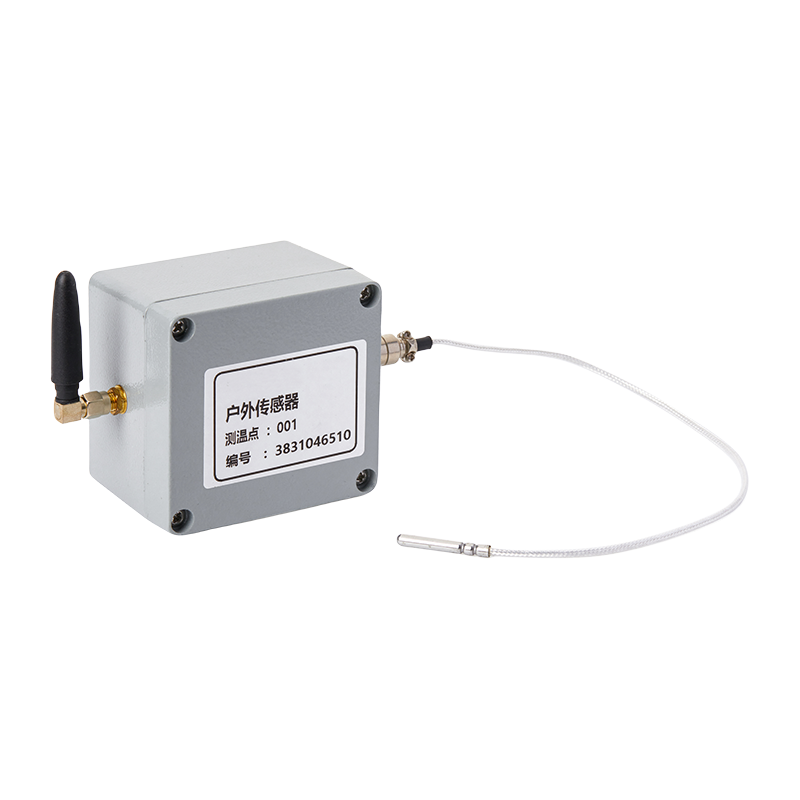


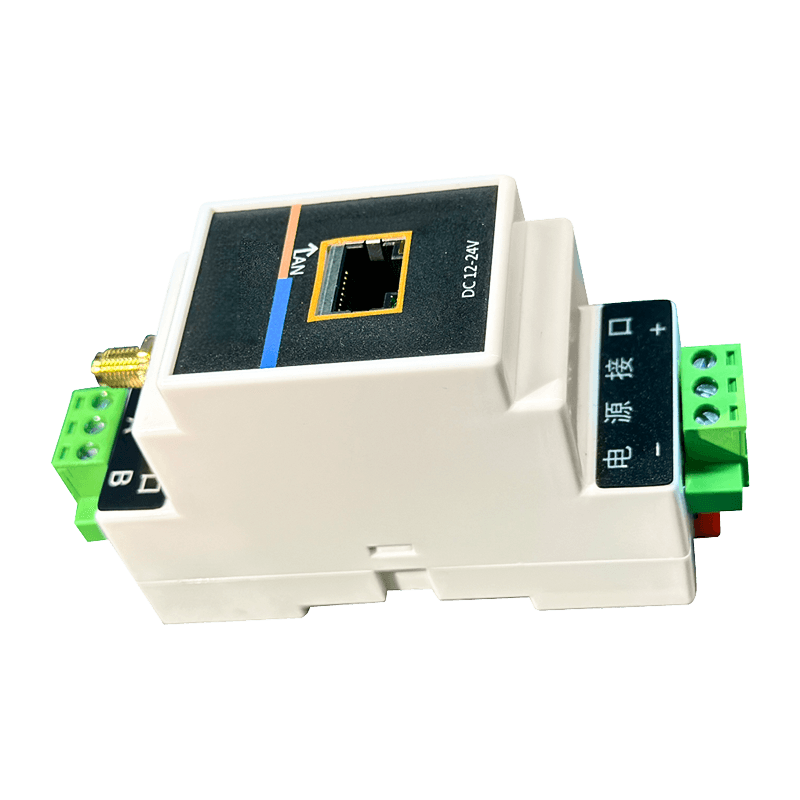
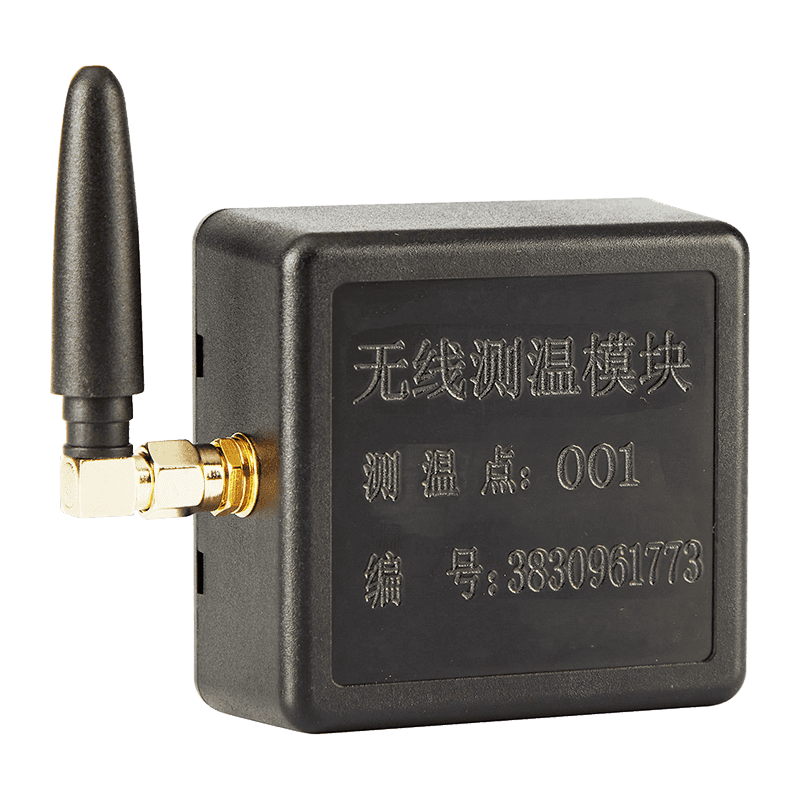
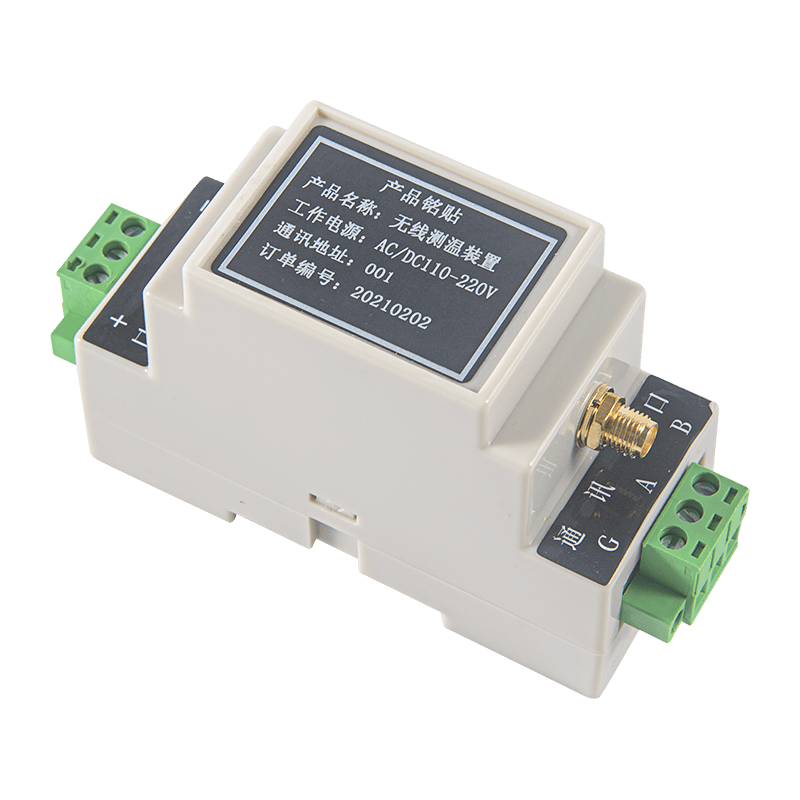
Reliable temperature monitoring is one of the most important requirements in modern electrical infrastructure. High-voltage switchgear, busbars, transformers, motors, disconnectors, cable connections, and other energized assets can experience gradual temperature increases long before a visible failure occurs. Loose connections, excessive electrical resistance, overloads, poor contact pressure, unbalanced loads, environmental heat, and aging components may all create abnormal hot spots. If these conditions remain undetected, they can lead to insulation deterioration, equipment damage, service interruptions, fire, or costly unplanned maintenance.
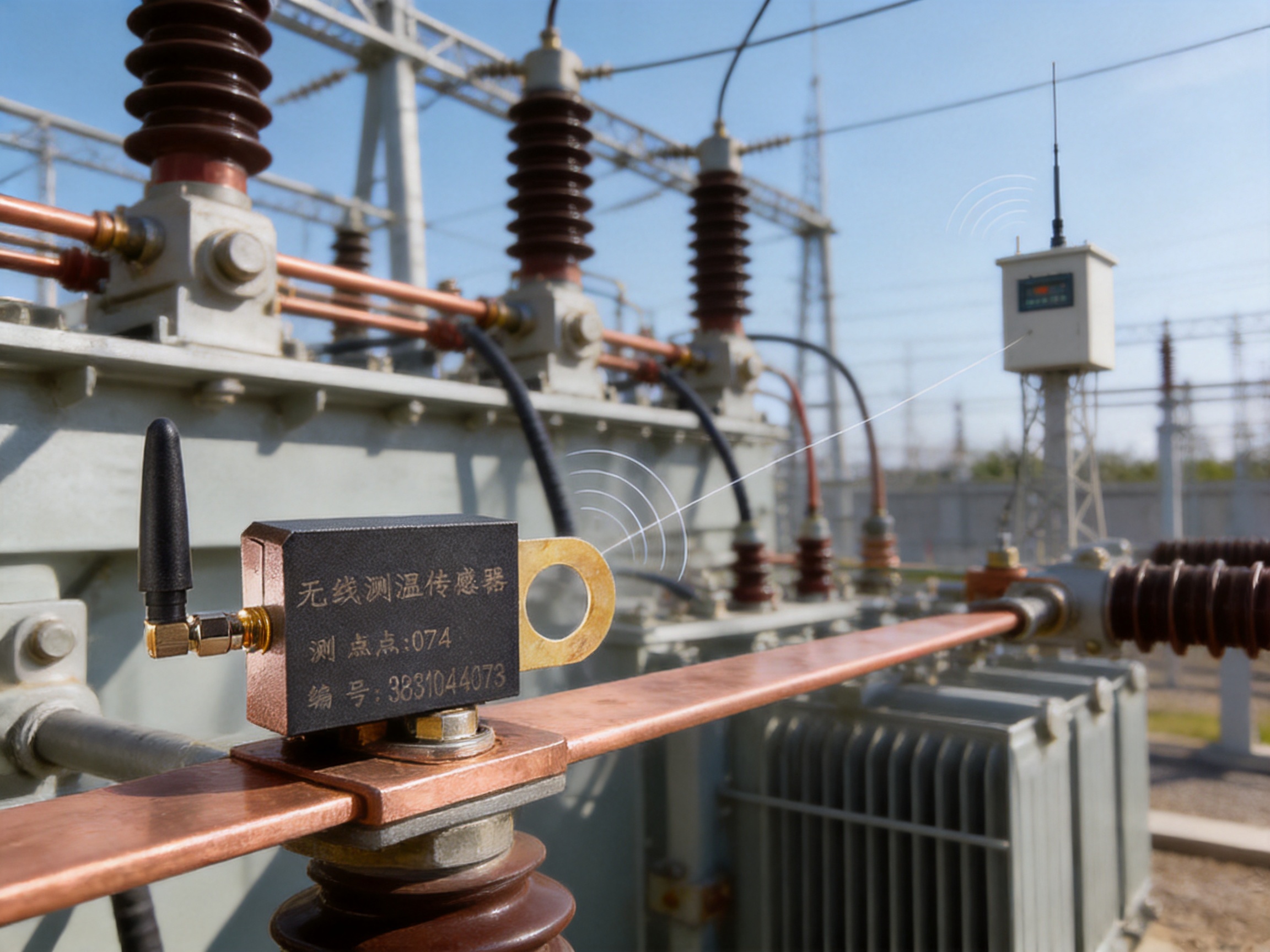
The KL-DS33YS copper-plate wireless temperature sensor is designed for continuous monitoring of the surface temperature of energized electrical equipment. Its copper-plate construction allows direct installation on measured metal surfaces or electrical contacts, while its low-power wireless communication system transfers temperature data to a compatible wireless temperature measurement host. The sensor combines a temperature-sensing element, signal modulation and amplification, logic control, wireless communication, lithium battery, and antenna in a compact industrial device.
With a measurement range of -40 to +200°C, accuracy of ±1°C, a PT1000 thermistor, LoRa communication, a wireless frequency range of 470 to 510 MHz, and a transmission distance of up to 800 meters, the sensor supports practical condition monitoring in demanding industrial environments. Its IP68 protection level, bolt-fixing installation, and expected battery lifespan of five to eight years make it suitable for long-term deployment where wiring is difficult, hazardous, or impractical.
Why Temperature Monitoring Matters in High-Voltage Systems
Electrical temperature is a direct indicator of operating condition. When current passes through a conductor or connection, electrical resistance produces heat. Under normal conditions, that heat remains within the equipment’s designed thermal limits. However, a connection that is loose, corroded, overloaded, improperly installed, or mechanically damaged can develop a higher resistance. The resulting heat may increase progressively and create a localized hot spot.
Traditional inspection methods may not detect these conditions early enough. Manual infrared inspection, for example, is useful but normally requires personnel to approach equipment at scheduled intervals. It may miss abnormal conditions that occur between inspections. It may also be difficult to inspect enclosed switchgear, energized terminals, indoor compartments, or remote outdoor installations. A permanently installed wireless sensor provides a continuous source of operating data instead of relying only on periodic inspection.
Wireless temperature monitoring also improves the safety of maintenance personnel. By collecting temperature information without requiring direct contact with energized parts, the monitoring system can reduce the need for frequent physical inspection. Maintenance teams can review trends from a safer location, identify assets requiring attention, and prioritize site visits according to actual operating conditions.
For utilities and industrial operators, this approach supports a transition from reactive maintenance to condition-based maintenance. Equipment can be inspected when measured data indicates a developing problem rather than solely according to a fixed calendar. This can reduce unnecessary maintenance, improve asset availability, and help prevent failures that would otherwise affect production or power distribution.
Product Overview
The KL-DS33YS is a single-channel wireless temperature sensor intended for direct installation on copper plates, metal surfaces, or electrical contact areas. It is especially suited to applications in which the measured object may be energized and where a wired sensor would introduce installation complexity, insulation concerns, or additional points of failure.
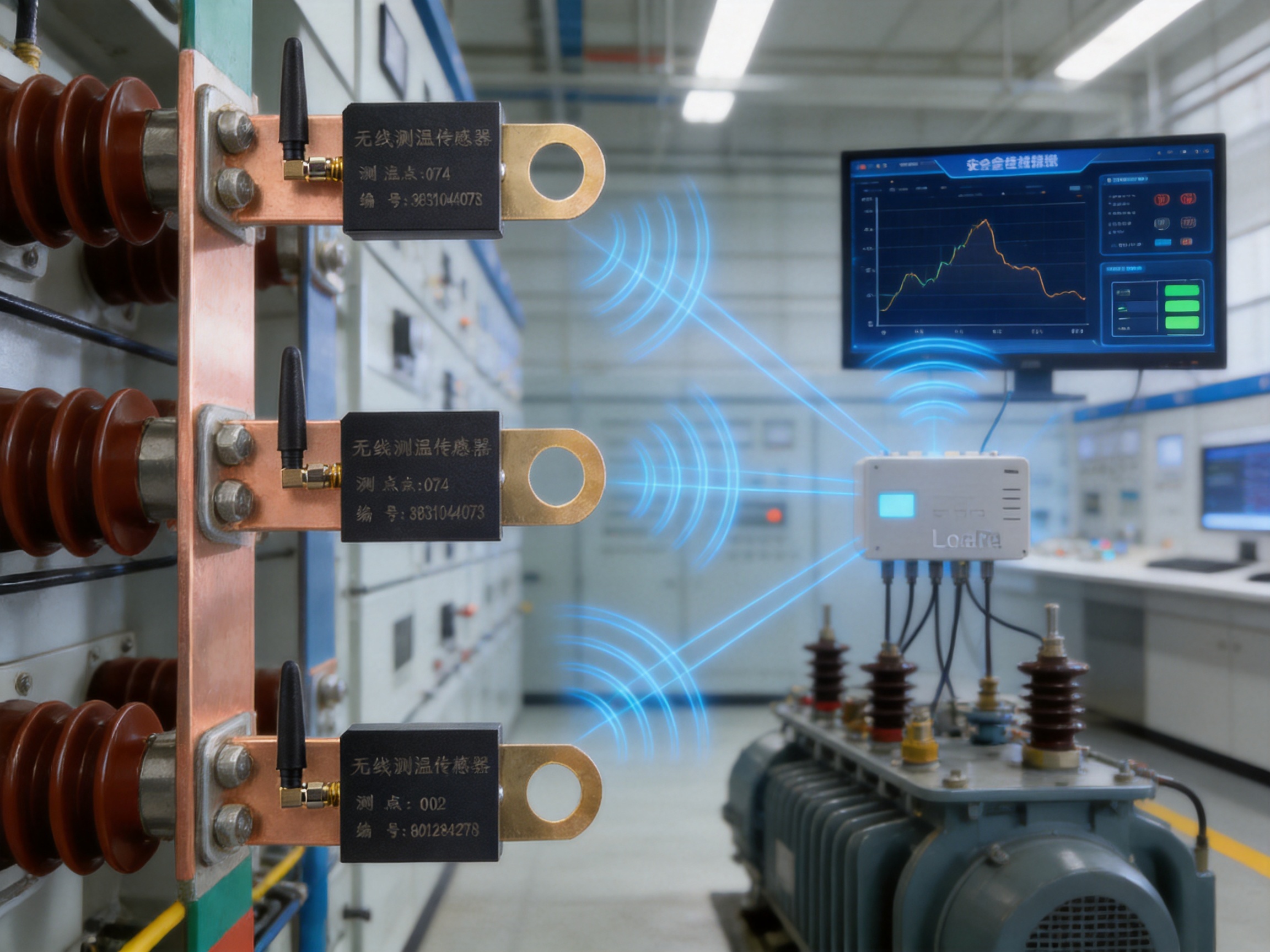
The device incorporates the complete signal chain required for autonomous measurement and wireless reporting. The sensing element detects the temperature of the target surface. The signal modulation and amplification circuit processes the sensor output. A logic control circuit manages sampling and device operation. The wireless communication circuit transmits the measured data. A lithium battery supplies energy, and an integrated antenna supports communication with the receiving host.
The sensor is designed for single-channel temperature detection. It also provides a battery voltage self-test function, enabling the wireless temperature measurement host to receive information about the sensor’s internal battery condition. This is important for large monitoring networks because maintenance teams can identify sensors approaching battery replacement without inspecting every unit manually.
Under the stated default configuration, temperature sampling occurs every ten seconds. All collected sensor data is uploaded to the wireless temperature measurement host through the wireless network. The receiving system can then be used for visualization, alarm management, historical analysis, and maintenance planning, depending on the capabilities of the installed host platform.

Copper Plate Temperature Sensor
Direct Copper-Plate Installation
The product’s copper-plate design is one of its most important application advantages. Instead of measuring air temperature near an electrical component, the sensor is installed directly on the surface or contact area that requires supervision. This allows the measurement to reflect the thermal condition of the actual component rather than a surrounding ambient value.
Direct surface measurement is particularly valuable at connection points. A cable terminal may have a normal surrounding temperature while its contact interface is developing excessive resistance. Similarly, a busbar joint may appear normal during a visual inspection while its temperature rises under load. Installing the sensor at the relevant copper connection allows the monitoring system to observe the point where thermal stress is most likely to begin.
The copper plate also provides a practical interface between the sensor and the measured object. When correctly installed with suitable mechanical contact, it can transfer heat from the monitored surface to the sensing element. Bolt fixing helps maintain a stable installation and makes the sensor appropriate for equipment structures that already include mounting holes, connection points, or serviceable metal assemblies.
Installation should be performed according to the equipment manufacturer’s safety procedures and applicable electrical regulations. The sensor must be positioned so that it does not interfere with insulation clearances, mechanical movement, access doors, or the normal operation of the electrical apparatus. Correct mounting pressure, clean contact surfaces, and proper environmental sealing are important for achieving reliable measurement results.
Technical Performance
| Parameter | Specification |
|---|---|
| Product model | KL-DS33YS |
| Sensor type | Copper-plate wireless temperature sensor |
| Measurement channel | Single channel |
| Temperature measurement range | -40 to +200°C |
| Measurement accuracy | ±1°C |
| Thermistor | PT1000 |
| Default sampling frequency | Every 10 seconds |
| Communication method | LoRa |
| Wireless frequency | 470 to 510 MHz |
| Wireless transmission distance | Up to 800 meters |
| Expected battery lifespan | Five to eight years |
| Installation method | Bolt fixing |
| Overall height or general dimension | 105 mm |
| External dimensions | 60 mm × 45 mm × 25 mm |
| Protection level | IP68 |
The combination of operating range, accuracy, wireless distance, and enclosure protection gives the sensor a practical balance between measurement capability and long-term deployment. The -40 to +200°C range covers the environmental and operational conditions commonly encountered around outdoor electrical equipment, transformer terminals, switchgear contacts, motors, and busbar connections.
An accuracy of ±1°C is suitable for identifying abnormal temperature changes and comparing the operating behavior of similar assets. In a monitoring network, the most important information is often not only the absolute temperature but also the difference between phases, the rise above ambient conditions, and the rate at which a connection is heating. Accurate and repeatable measurement improves the value of these comparisons.
PT1000 Temperature Measurement
The KL-DS33YS uses a PT1000 thermistor as its temperature-sensing element. PT1000 sensors are resistance-based devices whose electrical resistance changes in a predictable manner as temperature changes. Their relatively high nominal resistance can support stable signal processing and help reduce the influence of certain electrical noise conditions when used with an appropriate measurement circuit.
For industrial monitoring, repeatability is essential. A sensor must produce consistent readings over time so that the host system can identify meaningful changes rather than random measurement variation. The specified ±1°C accuracy provides a clear basis for monitoring temperature trends, setting warning levels, and comparing readings between multiple monitored locations.
Temperature accuracy in a real installation depends on more than the sensing element alone. Mechanical contact, installation position, heat transfer, environmental airflow, enclosure design, calibration practices, and the thermal properties of the target surface can all influence the final reading. For this reason, proper installation and system commissioning are important parts of a successful monitoring project.
LoRa Wireless Communication
The sensor uses LoRa wireless communication for low-power data transmission. LoRa technology is widely associated with long-range, low-energy industrial and Internet of Things applications. It is useful when sensors must operate for years on battery power while sending small packets of measurement data over substantial distances.
Compared with short-range wireless technologies intended for consumer environments, a low-power long-range communication method can offer greater flexibility for industrial sites. A receiving host may be positioned in a control room, electrical room, equipment shelter, or other central location while sensors are distributed across outdoor switchyards, transformer areas, production facilities, and utility assets.
The specified wireless frequency range is 470 to 510 MHz, and the stated transmission distance is up to 800 meters. Actual distance depends on site conditions. Metal structures, concrete walls, electrical cabinets, terrain, antenna placement, radio interference, and local regulatory requirements may affect communication performance. A site survey or installation test is recommended for large or complex facilities.
Wireless transmission eliminates the need to route individual signal cables from every high-voltage measurement point to a central monitoring cabinet. This can significantly simplify retrofit projects. It can also reduce the number of cable penetrations, junction boxes, conduit runs, insulation concerns, and maintenance points associated with wired temperature monitoring systems.
Advantages Over Conventional Wired Sensors
Reduced Installation Complexity
Wired sensors often require signal cables, cable trays, protective conduits, terminals, isolators, and additional electrical interfaces. In a high-voltage environment, the installation must also account for insulation distances, electromagnetic compatibility, mechanical protection, and safe routing. These requirements can increase project cost and extend shutdown time.
The KL-DS33YS uses wireless data transmission, allowing the sensor to be installed close to the monitored point without routing a dedicated cable back to the monitoring host. This is especially valuable for existing equipment where cable installation would require extensive modification or a scheduled outage.
Improved Suitability for Energized Equipment
Many electrical contacts and busbar connections are difficult to access during operation. A wireless sensor avoids the need to connect a long wired measurement circuit directly to a remote monitoring panel. Once installed in accordance with safety requirements, it can report temperature without creating a conventional cable path from the energized area.
Wireless architecture does not eliminate the need for professional electrical safety procedures. Installation, commissioning, battery replacement, and maintenance must still be managed by qualified personnel. However, it can make the monitoring design more compatible with equipment where wired measurement would be difficult or undesirable.
Long-Term Battery Operation
The expected battery lifespan of five to eight years reduces the frequency of service visits. Long battery life is particularly advantageous when sensors are installed on outdoor switchgear, elevated structures, remote transformer terminals, or equipment that requires an outage for access.
Battery life is affected by sampling frequency, transmission frequency, temperature, radio conditions, and operating environment. The stated lifespan is therefore best understood as an expected range under appropriate operating conditions. The battery voltage self-test function further supports maintenance planning by helping operators identify low-energy devices before communication is interrupted.
Enhanced Environmental Protection
The IP68 protection level indicates a high degree of resistance to dust ingress and water exposure when the product is installed and sealed according to its design requirements. This protection is important for outdoor electrical assets exposed to rain, humidity, dust, condensation, and changing weather conditions.
Environmental protection helps preserve the stability of the sensor’s electronics and wireless communication components. It also supports deployment in locations where ordinary indoor sensing devices would not provide adequate reliability.
Flexible Deployment
Because the sensor is compact and bolt-fixed, it can be deployed at multiple monitoring points across a facility. Operators may install sensors on outdoor disconnectors, wall-penetrating cable clamps, transformer inlet and outlet terminals, flexible copper busbar connections, and similar components.
This flexibility supports phased implementation. A facility may begin with the most critical assets, evaluate the collected data, and then expand monitoring to additional equipment. The wireless architecture makes it easier to add sensors without redesigning a large cable infrastructure.
Comparison with Other Temperature Monitoring Approaches
| Monitoring approach | Main strengths | Typical limitations | Role of the KL-DS33YS |
|---|---|---|---|
| Manual inspection | Simple to organize for small numbers of assets | Periodic only; may miss rapid temperature changes; requires personnel access | Provides continuous data between inspections |
| Handheld infrared measurement | Non-contact spot checking and visual thermal inspection | Requires line of sight and trained personnel; not continuous; may not access enclosed points | Supports fixed monitoring at concealed or difficult-to-reach connections |
| Wired contact sensor | Continuous measurement and stable communication path | Requires cabling, routing, insulation planning, and more installation work | Provides continuous wireless measurement with simpler retrofit potential |
| Ambient temperature sensor | Low installation complexity | Does not directly measure the temperature of a contact or conductor | Measures the target surface through direct copper-plate installation |
| Wireless infrared device | Non-contact measurement | May depend on alignment, optical conditions, and surface emissivity | Uses direct thermal contact for stable surface measurement |
No single temperature monitoring method is suitable for every application. Infrared inspection remains valuable for surveys and troubleshooting, while wired systems may be preferred in some fixed installations with readily available cable infrastructure. The main advantage of the KL-DS33YS is its combination of direct contact measurement, wireless transmission, long battery operation, and high environmental protection.
For high-voltage equipment, the ability to measure the actual contact surface is particularly important. A nearby ambient sensor may show a normal reading even when the electrical joint is overheating. A direct copper-plate sensor is positioned to detect the thermal behavior of the component that matters.
Key Application Areas
Outdoor Isolating Switches
Outdoor isolating switches are exposed to weather, temperature fluctuations, dust, and mechanical stress. Their conductive connections can develop abnormal heating because of oxidation, loosening, misalignment, or inadequate contact pressure. A wireless sensor can be installed at selected conductive joints to monitor temperature without requiring long signal cables across the switchyard.
Wall-Penetrating Cable Clamps
Cable clamps and wall-penetrating connection points may be exposed to continuous current and mechanical loading. Because these components are often located at transitions between indoor and outdoor areas, they can be affected by moisture, vibration, thermal cycling, and installation conditions. Direct temperature monitoring helps identify changes in the thermal behavior of the connection.
Transformer Inlet and Outlet Terminals
Transformer terminals are critical points in power distribution systems. Abnormal heating may be associated with high load, poor connections, terminal degradation, or other operating issues. Sensors installed at inlet and outlet terminals can provide data for comparison between phases, between transformer sides, or across multiple operating periods.
Flexible Copper Busbar Connections
Flexible copper busbars are used where electrical continuity must be maintained while accommodating movement or vibration. Their connections can be affected by mechanical stress and changes in contact quality. A copper-plate sensor can provide fixed monitoring at the connection area while wireless communication avoids the need to route cables through moving or crowded equipment sections.
High-Power Motors
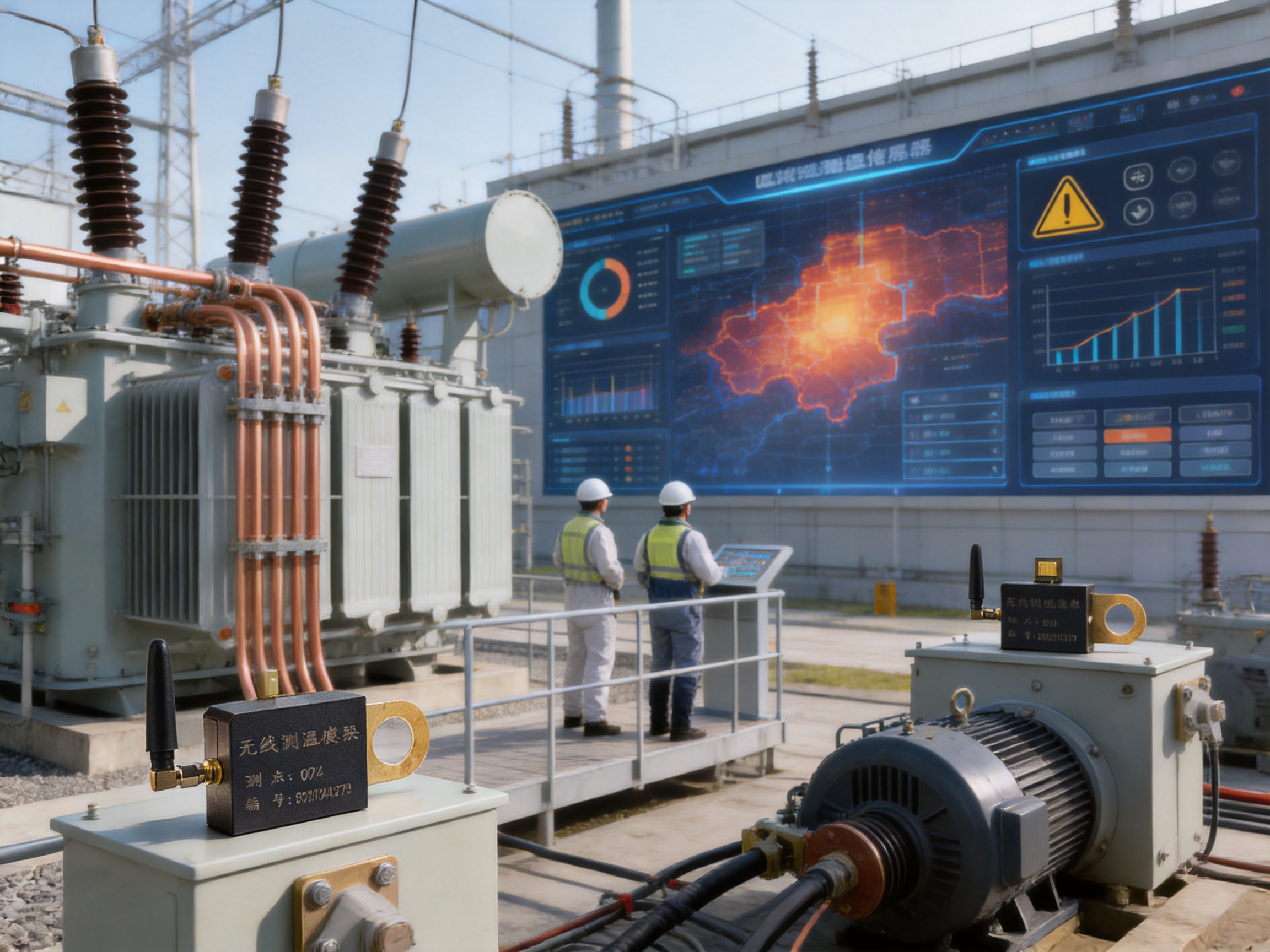
High-power motors can generate considerable heat during normal operation, while abnormal terminal or connection heating may indicate a developing electrical problem. Monitoring the temperature of exposed contacts and associated conductive connections can complement motor current, vibration, insulation, and winding temperature information.
High-Voltage Switchgear
Switchgear includes multiple conductive joints, busbar sections, cable terminations, and contact assemblies. Some areas may be enclosed or difficult to inspect while energized. Fixed wireless sensors can help operators monitor selected high-risk points and establish a thermal history for each panel or section.
Advantages for Condition-Based Maintenance
Condition-based maintenance depends on accurate information about the actual state of equipment. A scheduled maintenance program treats assets according to time intervals, while a condition-based program uses operating data to determine when attention is required. Temperature is one of the most useful condition indicators because abnormal heat often develops before more severe electrical or mechanical damage occurs.
The KL-DS33YS can contribute to a condition-based maintenance strategy in several ways. First, it provides current temperature data at the selected asset. Second, its regular sampling creates a time history that can reveal gradual changes. Third, the host system can compare readings across multiple sensors or phases. Fourth, battery voltage information supports the reliability of the sensor network itself.
Trend analysis is often more informative than a single reading. For example, a connection that repeatedly reaches a higher temperature than comparable connections under similar load conditions may warrant inspection. A gradual increase over several weeks may indicate deterioration even if the absolute temperature remains below an emergency threshold. A sudden rise may suggest a loose connection, overload, or change in operating conditions.
Temperature data should be evaluated together with load, ambient temperature, humidity, equipment status, and maintenance records whenever possible. The sensor provides an important measurement, but an effective monitoring program also requires suitable alarm thresholds, data storage, operator training, and clearly defined maintenance procedures.
Low-Power Design and Network Efficiency
Battery-powered industrial sensors must balance measurement frequency, transmission reliability, processing activity, and energy consumption. The KL-DS33YS is designed around ultra-low-power wireless communication. Its default temperature sampling frequency is ten seconds, allowing the system to collect regular operating data while supporting a long expected battery life.
Low-power design is especially important when a monitoring system includes many sensors. A network with dozens or hundreds of devices must minimize unnecessary maintenance and avoid frequent battery replacement. A five-to-eight-year expected lifespan can support predictable service planning and reduce the total cost of ownership over the project life.
In addition to preserving battery energy, a low-power architecture can simplify the physical design of the sensor. It reduces the need for frequent access and allows the device to remain in locations where maintenance is difficult. For outdoor power assets, reducing site visits can improve safety and lower operational costs.
Environmental Durability and IP68 Protection
Industrial sensors are often exposed to conditions that are more severe than those found in office, laboratory, or residential environments. Outdoor switchyards can experience rain, dust, wind, condensation, ultraviolet exposure, and seasonal temperature changes. Equipment rooms may contain conductive dust, humidity, vibration, and electromagnetic activity. A suitable sensor enclosure must protect internal components from these influences.
The product’s IP68 protection level is an important advantage for outdoor and demanding industrial applications. Protection against dust helps prevent contamination of electronic circuits and internal interfaces. High water-ingress protection supports use in areas exposed to rain or temporary water contact, provided that installation and sealing procedures are correctly followed.
Environmental protection should be considered as part of a complete installation design. The sensor should be mounted in a position that avoids unnecessary mechanical impact, excessive heat beyond the specified range, and direct interference with moving equipment. Bolts, mounting surfaces, and any associated sealing components should be inspected during commissioning and scheduled maintenance.
Long-term reliability also depends on material compatibility. The sensor should be installed on suitable surfaces and in accordance with the electrical equipment manufacturer’s requirements. Attention should be given to galvanic compatibility, contact pressure, corrosion prevention, and the preservation of required creepage and clearance distances.
Manufacturing Strengths and Engineering Capability
The product is supplied by a high-tech electronics manufacturer focused on smart factory development, data sensing, and intelligent connectivity. Its broader product portfolio includes broadband power line carriers, wireless temperature monitoring systems, industrial transmitters, flow meters, and automatic door controllers. This product range indicates experience across sensing, communications, industrial electronics, and equipment integration.
A wireless temperature sensor is not simply a thermistor inside a protective case. Reliable industrial performance requires coordinated design across several disciplines. The sensing circuit must produce stable measurements. The logic circuit must manage sampling and power consumption. The radio circuit must communicate effectively in the intended environment. The battery system must support long-term operation. The enclosure must protect the electronics. Mechanical design must allow secure installation on the monitored equipment.
The company’s focus on edge-layer hardware and industrial data integration supports this type of product development. Edge devices are responsible for collecting information close to the physical asset, processing or formatting that information, and transferring it to a higher-level monitoring system. A sensor that operates reliably at the edge is essential to the quality of the entire Industrial Internet of Things architecture.
Integrated Product Development
The sensor’s integrated construction brings temperature sensing, signal conditioning, logic control, wireless communication, battery supply, and antenna functions into one dedicated device. This type of integration can reduce the number of external components required at the installation point and helps create a more consistent field deployment model.
Integrated development also makes it possible to optimize the relationship between hardware and firmware. Sampling intervals, data packaging, battery monitoring, transmission behavior, and fault handling can be designed as a coordinated system rather than as independent components. This is particularly important for battery-powered devices operating for many years.
Manufacturing Process Considerations
Industrial sensor manufacturing requires disciplined control of electronic assembly, component quality, enclosure construction, firmware loading, calibration, and final testing. Printed circuit boards must be assembled with consistent soldering quality. Components must be correctly placed and electrically verified. The wireless section must be checked for proper operation. Batteries and connectors must be handled according to safety and storage requirements.
For a temperature sensor, calibration and verification are especially important. Production testing should confirm that the sensing circuit responds correctly at relevant temperature points and that the reported value is within the specified accuracy. Communication testing should verify that the device can transmit data to the intended host. Battery voltage measurement should be checked so that low-battery information is meaningful to maintenance personnel.
Environmental sealing is another key manufacturing consideration. An IP68-rated product requires suitable enclosure materials, assembly methods, seals, and inspection procedures. A small weakness in a housing joint or cable-free interface can compromise long-term protection. Proper manufacturing control helps ensure that the enclosure achieves its intended level of resistance when used correctly.
Quality-Oriented Production
Quality in industrial electronics is built through repeatable processes rather than visual inspection alone. Incoming material control, assembly process management, functional testing, traceability, calibration verification, and final inspection all contribute to product consistency. These practices are especially important when sensors are deployed in networks, because one unreliable device can create a gap in the monitoring coverage.
The company’s smart factory orientation is aligned with the need for data-driven production and equipment condition monitoring. Manufacturing organizations that develop sensing and connectivity products for industrial customers must understand both the electronic product and the operational environment in which it will be used. This combination of hardware knowledge and industrial application awareness is a significant advantage when customizing monitoring solutions.
Smart Factory and Industrial IoT Integration
The sensor is an edge device within a larger Industrial IoT solution. Its role is to convert a physical condition—the temperature of an electrical surface—into digital information that can be transmitted, stored, analyzed, and acted upon.
At the sensing layer, the device collects temperature data and checks its own battery voltage. At the communication layer, LoRa transfers the data to a wireless temperature measurement host. At the monitoring layer, the host can organize readings by asset, location, phase, or equipment type. At the management layer, operators can use alarms and trends to support inspection and maintenance decisions.
This layered structure allows the sensor to participate in broader smart factory and smart grid programs. Temperature data may be combined with information from power quality meters, current transformers, vibration sensors, humidity sensors, industrial transmitters, and energy management systems. The result is a more complete view of asset condition and facility performance.
The manufacturer’s experience with industrial data integration is relevant to customers that need more than a standalone sensor. Some projects require a complete solution including sensor selection, network planning, wireless hosts, data collection, dashboard integration, alarm logic, and after-sales support. A supplier with capabilities across sensing and connectivity can help reduce compatibility risks between separate vendors.
Project Planning and Deployment Method
Step One: Identify Critical Monitoring Points
The first step is to identify electrical connections where abnormal heating could create a significant safety, reliability, or production risk. These may include transformer terminals, busbar joints, cable clamps, switchgear contacts, high-power motor connections, and outdoor disconnectors.
Asset criticality, historical failure records, load level, accessibility, environmental exposure, and inspection difficulty should all be considered. The most important points should normally receive priority in the first deployment phase.
Step Two: Confirm Mechanical and Electrical Compatibility
Before installation, the available mounting location should be checked. The sensor’s external dimensions are 60 mm × 45 mm × 25 mm, with a listed general dimension of 105 mm. Engineers should confirm that adequate space is available and that the device will not interfere with covers, operating mechanisms, insulation barriers, or maintenance access.
The mounting method is bolt fixing. The installation design should confirm bolt size, hole position, torque requirements, surface condition, and compatibility with the monitored equipment. Any installation on energized equipment must follow the applicable safety procedures and be performed by qualified personnel.
Step Three: Plan Wireless Coverage
Wireless communication planning should account for the stated transmission distance of up to 800 meters while recognizing that actual performance depends on the site. The location of the wireless temperature measurement host, building construction, metal barriers, antenna orientation, equipment density, and radio interference should be assessed.
Large facilities may require more than one host or a carefully selected host position. A commissioning test should confirm that every sensor can transmit reliably from its final installation point. The network should also be checked under representative operating conditions, particularly in facilities with extensive metal structures.
Step Four: Establish Data and Alarm Policies
Temperature alarm settings should be based on equipment specifications, conductor materials, load conditions, ambient temperature, and operational experience. A single universal alarm value may not be suitable for every asset. It is often useful to define warning, high-temperature, and critical-temperature levels, together with rate-of-rise alarms where the monitoring host supports them.
Battery voltage alarms should also be configured. The purpose is to provide enough time for maintenance planning before a sensor’s battery reaches a level that could interrupt data transmission.
Step Five: Commission and Document the System
Commissioning should verify sensor identity, installation location, communication status, temperature readings, battery voltage reporting, sampling behavior, and alarm transmission. Each sensor should be associated with a clear asset name and physical location in the monitoring host.
Documentation should include installation date, equipment identification, sensor position, communication host, initial temperature, battery condition, and any relevant photographs or drawings. Good documentation makes future maintenance and troubleshooting more efficient.
Operational Benefits for Different Users
Benefits for Power Utilities
Power utilities can use wireless temperature monitoring to improve the visibility of distribution assets, substations, outdoor switchyards, and transformer connections. The sensor’s long-range communication and IP68 protection support deployment across equipment areas where wiring is expensive or difficult.
Continuous data helps utilities identify abnormal connections before they cause service interruptions. It can also support asset ranking, inspection prioritization, and condition-based maintenance programs. Over time, historical temperature data can contribute to better understanding of equipment aging and operating behavior.
Benefits for Industrial Facilities
Industrial plants depend on electrical distribution equipment to keep production lines running. An overheated connection can cause a localized outage that affects control systems, motors, drives, lighting, safety equipment, and production machinery. Wireless monitoring can help plant engineers detect thermal problems while the equipment remains in service.
Because the sensor can be installed at selected high-risk points, a facility can focus investment on the connections most likely to affect production. The system can also complement energy management and equipment condition monitoring programs already in place.
Benefits for Maintenance Teams
Maintenance teams benefit from more targeted inspection. Instead of treating every connection as equally urgent, technicians can review temperature trends and focus on assets showing abnormal behavior. This improves planning and may reduce unnecessary shutdowns.
Battery self-test information is also helpful for scheduling. When a sensor reports a declining battery voltage, replacement can be coordinated with other planned work rather than becoming an emergency service call.
Benefits for Safety Managers
Safety managers can use thermal monitoring as one element of a broader electrical risk-reduction program. Early identification of abnormal heat can help prevent escalation into insulation damage, arc-related incidents, or fire. Wireless measurement can also reduce the frequency of close visual inspection in hazardous areas, although it does not replace required safety audits or qualified maintenance practices.
Product Selection Advantages
Customers comparing industrial temperature sensors should evaluate more than the nominal temperature range. The installation method, communication architecture, battery strategy, environmental protection, sensing accuracy, and support for system integration are equally important.
The KL-DS33YS offers a balanced specification for high-voltage surface monitoring. Its direct copper-plate installation is more application-specific than a general-purpose ambient sensor. Its LoRa communication is designed for long-range, low-power operation. Its IP68 enclosure is appropriate for outdoor exposure. Its PT1000 sensing element supports accurate measurement. Its battery voltage self-test helps maintain network availability. Its five-to-eight-year expected battery lifespan reduces ongoing service requirements.
These features can provide advantages over lower-cost sensors that may have shorter battery life, weaker environmental protection, limited transmission distance, or no direct-contact mounting method. They can also provide a simpler alternative to wired systems when retrofit conditions make cabling expensive or unsafe.
The most suitable solution depends on the complete application. A professional supplier should help evaluate the equipment, installation location, communication environment, monitoring objectives, and data management requirements before final deployment.
Recommended Maintenance Practices
Although the sensor is designed for long-term operation, a monitoring system should be included in the facility’s maintenance program. Periodic review of sensor status can confirm that devices are communicating, reporting plausible values, and maintaining adequate battery voltage.
Maintenance personnel should review temperature trends rather than relying solely on current readings. Sudden changes, repeated peaks, differences between similar phases, and gradual increases may all provide useful evidence. When abnormal data is detected, the equipment should be evaluated using appropriate safety procedures and complementary inspection methods.
The sensor’s external condition should be checked during planned equipment inspections. Personnel should look for signs of mechanical damage, corrosion, loose mounting, contamination, or environmental exposure beyond the intended conditions. Any inspection involving high-voltage equipment must be performed by authorized and trained personnel.
Battery replacement planning should consider the sensor’s installation location and access requirements. If an outage is required to reach the device, replacement should be coordinated with scheduled maintenance. The battery voltage self-test function can help identify the correct timing for this work.
Limitations and Correct Use
The sensor is designed for temperature monitoring and should not be treated as a complete diagnostic system by itself. Temperature can indicate a developing problem, but the cause may require additional investigation. Load conditions, ambient temperature, vibration, corrosion, contact pressure, insulation condition, and equipment design should all be considered when interpreting data.
The stated wireless transmission distance of up to 800 meters is not a guarantee for every installation. Radio performance varies with site structure and local conditions. A communication survey and final commissioning test are recommended, especially in substations, factories, and facilities with large metal enclosures.
The specified five-to-eight-year battery lifespan is also dependent on operating conditions. More frequent sampling or transmission, extreme temperatures, weak radio links, and other factors may affect energy consumption. Customers should establish a practical battery maintenance plan based on actual field data.
The IP68 rating provides strong protection against dust and water ingress, but it does not mean that the sensor can be installed without considering mechanical impact, chemical exposure, temperature extremes, or unsuitable mounting conditions. Correct installation remains essential to achieving expected service performance.
Frequently Asked Questions
What does the KL-DS33YS measure?
The sensor measures the temperature of a selected surface or electrical contact. It is intended for direct installation on copper plates and similar conductive surfaces associated with high-voltage equipment, switchgear, busbars, transformers, motors, disconnectors, and cable connections.
Is it an ambient temperature sensor?
No. It is designed for direct surface temperature monitoring. Its copper-plate installation allows the sensing element to monitor the thermal condition of the target component rather than only the surrounding air.
What is the temperature range?
The specified temperature measurement range is -40 to +200°C.
What is the measurement accuracy?
The specified measurement accuracy is ±1°C.
What sensing element does the product use?
The sensor uses a PT1000 thermistor.
How often does it sample temperature?
The default temperature sampling frequency is every ten seconds. The final operating configuration should be confirmed for the specific monitoring system and application.
What wireless technology does it use?
The product uses LoRa wireless communication and operates within the stated 470 to 510 MHz frequency range.
How far can the sensor transmit?
The stated wireless transmission distance is up to 800 meters. Actual performance depends on the facility layout, building materials, metal structures, antenna placement, interference, and other site conditions.
How long does the battery last?
The expected battery lifespan is five to eight years. Actual service life depends on sampling frequency, transmission behavior, environmental temperature, radio conditions, and operating conditions.
Does the sensor monitor battery condition?
Yes. It includes a battery voltage self-test function that detects the internal battery voltage and uploads the information to the wireless temperature measurement host.
How is the sensor installed?
The stated installation method is bolt fixing. The mounting arrangement must be checked against the electrical equipment design and applicable safety requirements.
Can it be used outdoors?
Yes. The sensor has an IP68 protection level and is intended for applications including outdoor isolating switches, transformer terminals, outdoor flexible copper busbar connections, and other similar components. Correct installation and environmental compatibility remain necessary.
Can it be installed on energized equipment?
The sensor is intended to monitor high-voltage energized objects, but installation must be performed under the safety procedures, authorization requirements, and regulations applicable to the site. The product specification does not replace electrical safety controls.
What type of host receives the data?
The sensor transmits collected data to a compatible wireless temperature measurement host through the wireless network. The host is responsible for receiving and managing temperature and battery information.
Can the sensor replace infrared inspections?
It can complement infrared inspections but should not automatically be considered a complete replacement. Fixed wireless monitoring provides continuous data at selected locations, while infrared inspections can survey broader areas and help locate unexpected hot spots.
What makes this sensor suitable for retrofits?
Its wireless communication reduces the need for long signal cables, and its bolt-fixing design supports installation at selected existing connection points. This can simplify projects where adding new cables would require extensive modification or an equipment outage.
What should be considered before ordering?
Customers should confirm the monitored equipment, mounting location, available space, electrical safety requirements, communication coverage, host compatibility, required sampling behavior, environmental conditions, and battery replacement plan.
Conclusion
The KL-DS33YS copper-plate wireless temperature sensor provides a focused solution for monitoring the thermal condition of high-voltage electrical connections and industrial equipment. Its direct-contact design measures the surface that matters, while LoRa communication transfers data without the installation burden of long signal cables.
The product combines a -40 to +200°C measurement range, ±1°C accuracy, PT1000 sensing, ten-second default sampling, 470 to 510 MHz wireless communication, transmission distance of up to 800 meters, five-to-eight-year expected battery lifespan, bolt fixing, compact dimensions, and IP68 protection. Together, these characteristics support long-term monitoring in substations, switchyards, factories, transformer areas, motor installations, and other demanding environments.
Its advantages over conventional inspection methods and general-purpose sensors are strongest where direct measurement, remote access, outdoor durability, and low maintenance are important. By providing continuous information about connection temperature and battery condition, the sensor helps organizations improve equipment visibility and develop more proactive maintenance practices.
The manufacturer’s broader capabilities in sensing, wireless communication, industrial transmitters, flow measurement, power line communication, and intelligent connectivity further support the development of integrated Industrial IoT solutions. Its smart factory orientation and focus on edge-layer hardware provide a foundation for connecting physical equipment with digital monitoring and management platforms.
For organizations seeking to reduce thermal-failure risk, improve maintenance planning, and modernize high-voltage asset monitoring, a copper-plate wireless temperature sensor can serve as an important building block in a safer and more data-driven industrial infrastructure.
References
1. Product Technical Information: KL-DS33YS Copper-Plate Wireless Temperature Sensor, including operating range, accuracy, sensing element, communication method, battery information, dimensions, and protection rating.
2. Industrial Internet of Things Engineering Principles: Edge sensing, wireless data acquisition, condition monitoring, and maintenance integration.
3. Temperature Measurement Practice for Electrical Equipment: Contact temperature measurement, thermal trend analysis, and interpretation of abnormal heating.
4. LoRa Low-Power Wireless Communication Concepts: Long-range communication, battery-powered sensor networks, and industrial deployment considerations.
5. Electrical Equipment Maintenance Practice: High-voltage connection inspection, thermal-risk reduction, asset criticality assessment, and condition-based maintenance.
6. Enclosure Protection Principles: Ingress protection, outdoor industrial installation, environmental sealing, and equipment maintenance.