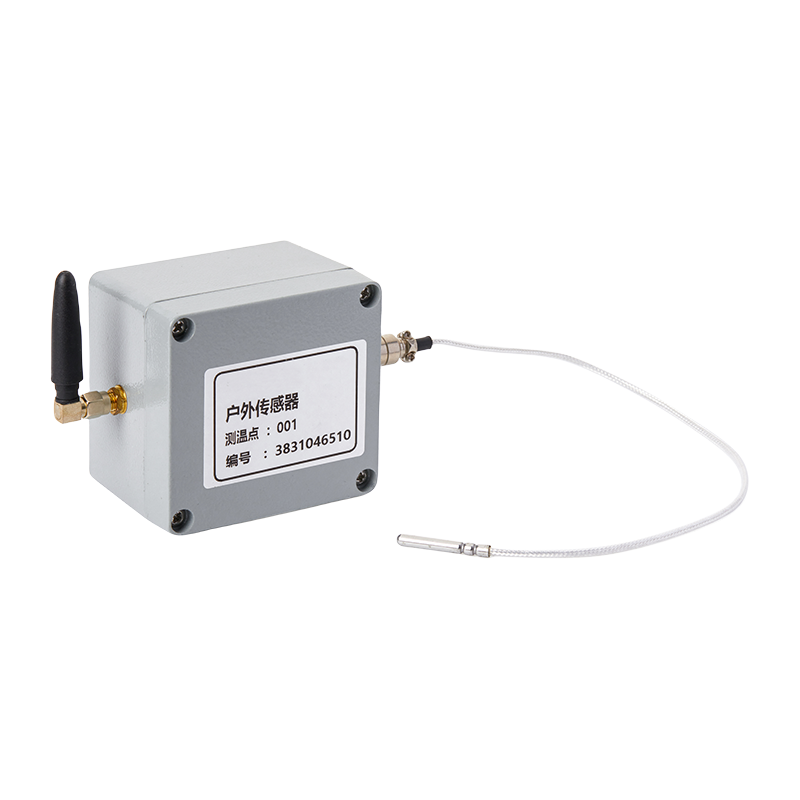


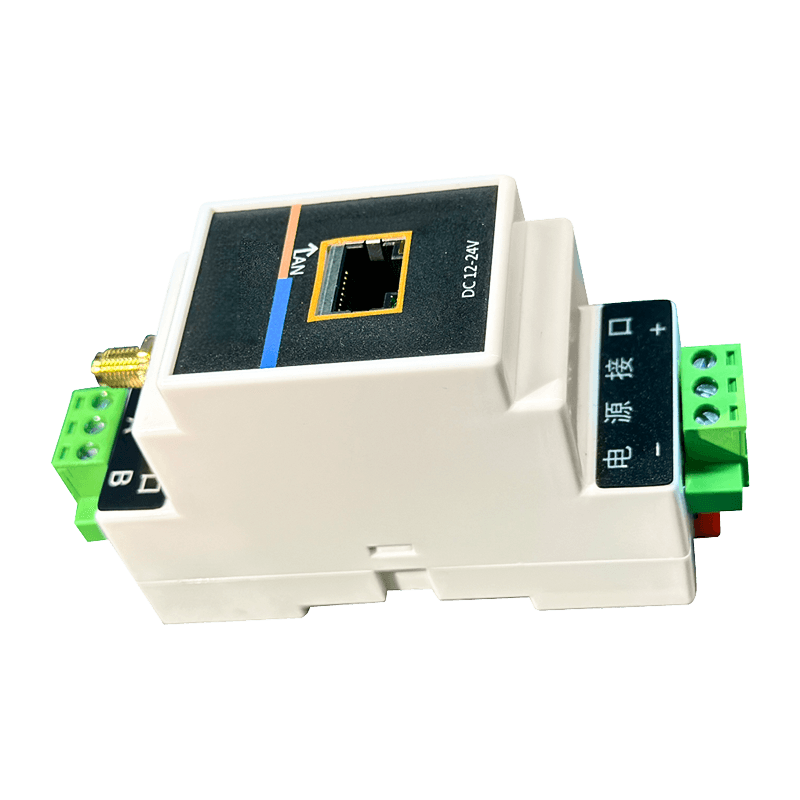
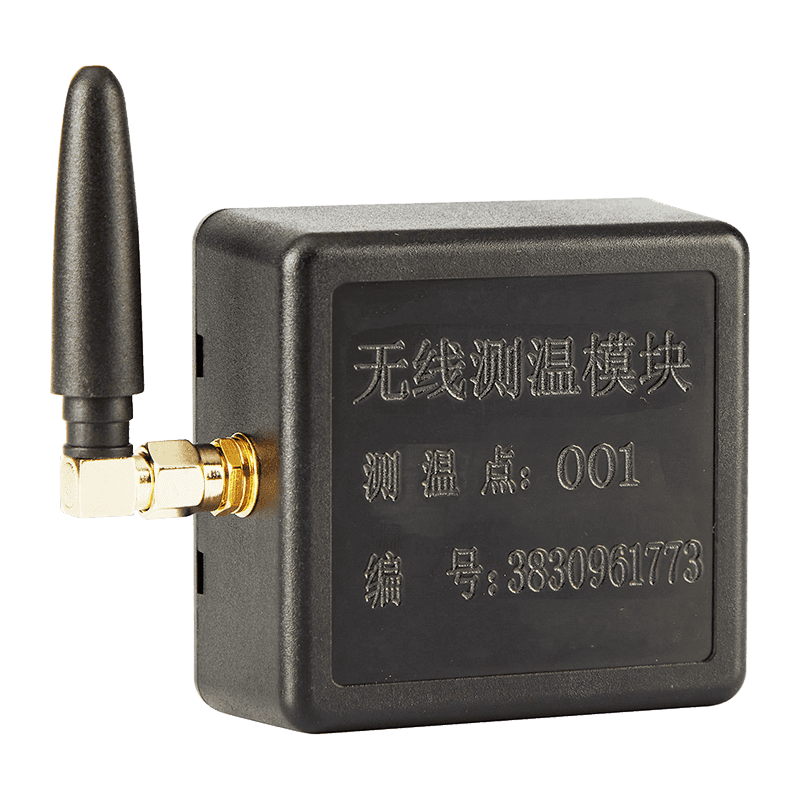
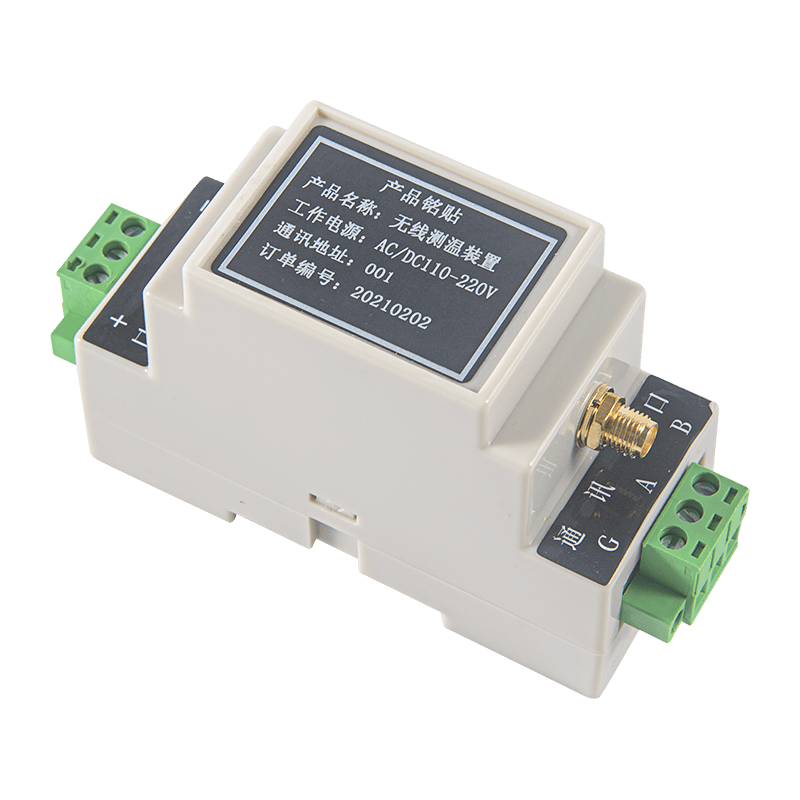
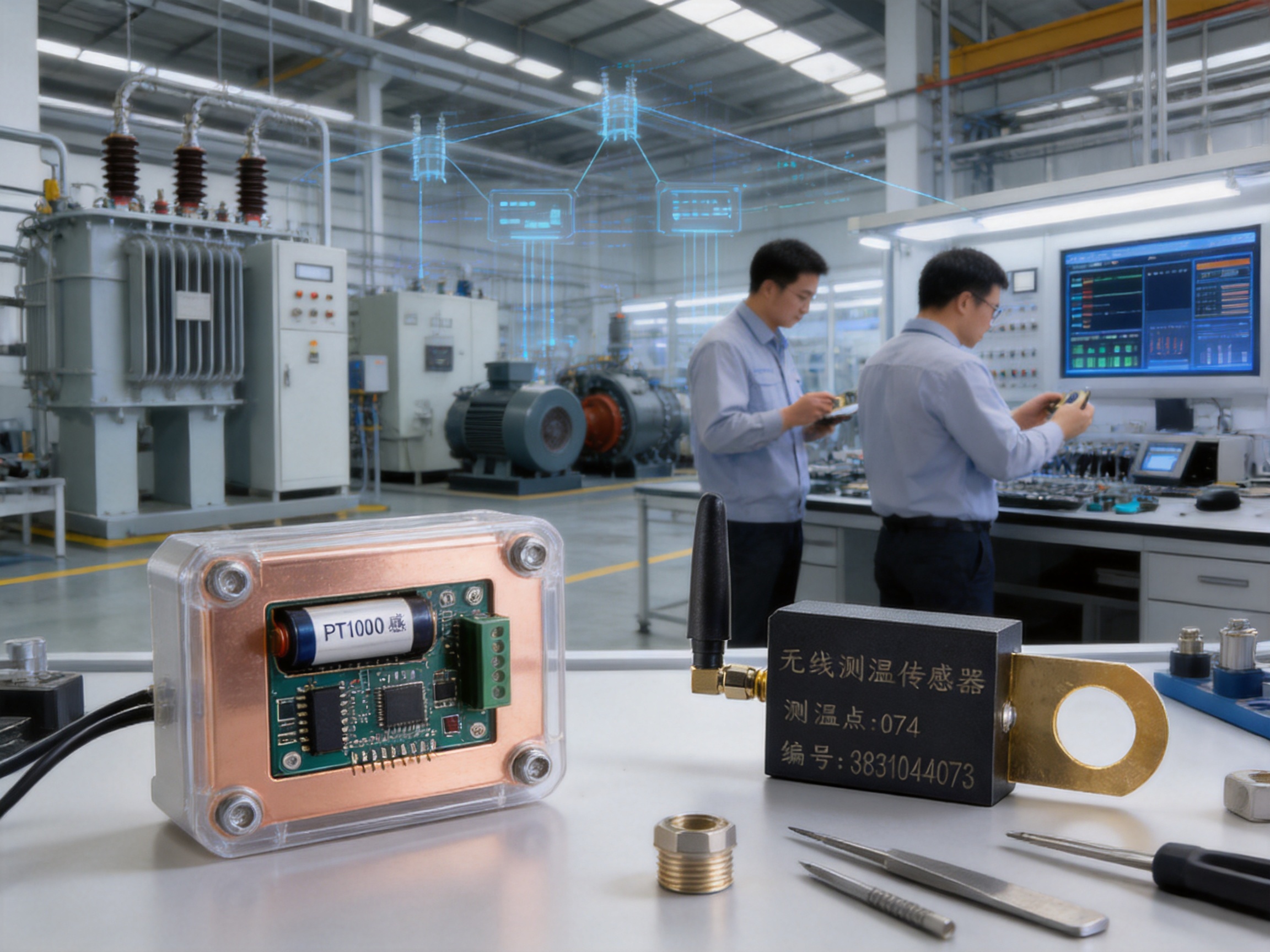
Reliable temperature monitoring is essential for the safe operation of electrical equipment, especially when heat develops at energized contacts, busbar connections, cable terminals, transformers, motors, and outdoor switching devices. A small increase in temperature can indicate excessive resistance, loose connections, oxidation, overloading, insulation deterioration, or an emerging mechanical fault. If the condition is not identified in time, localized heating may progress into equipment damage, unplanned downtime, fire, or a serious power-system failure.
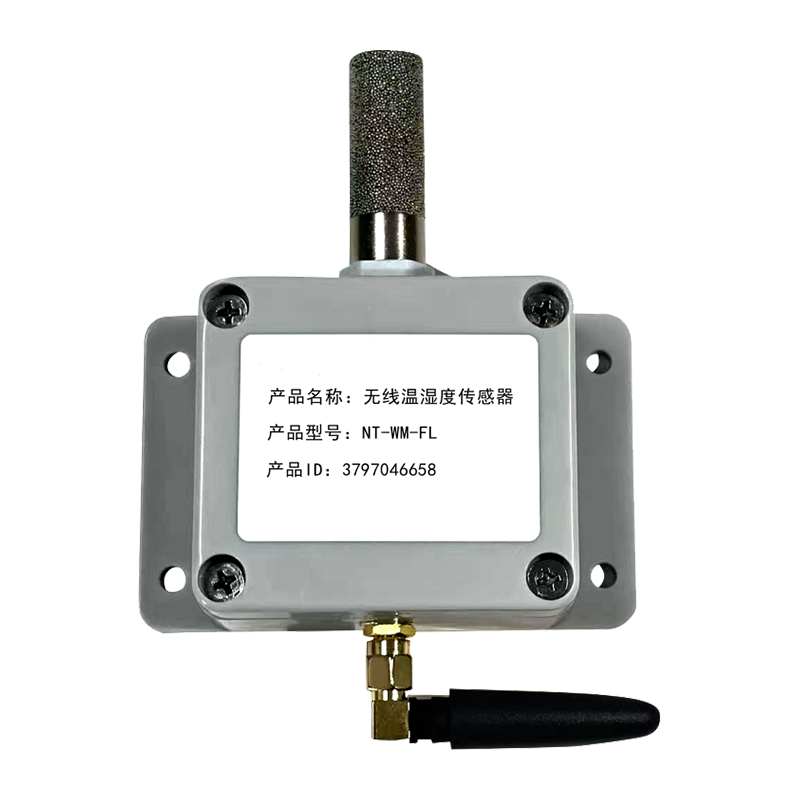
The KL-DS33YS copper-plate wireless temperature sensor is designed for continuous temperature measurement on high-voltage and industrial assets. It combines a copper-plate mounting structure, a PT1000 sensing element, low-power electronics, lithium-battery operation, and LoRa wireless communication in a compact IP68 enclosure. The result is a sensor that can collect temperature data directly from difficult-to-access locations and transmit it to a wireless temperature measurement host without requiring a conventional wired signal connection.
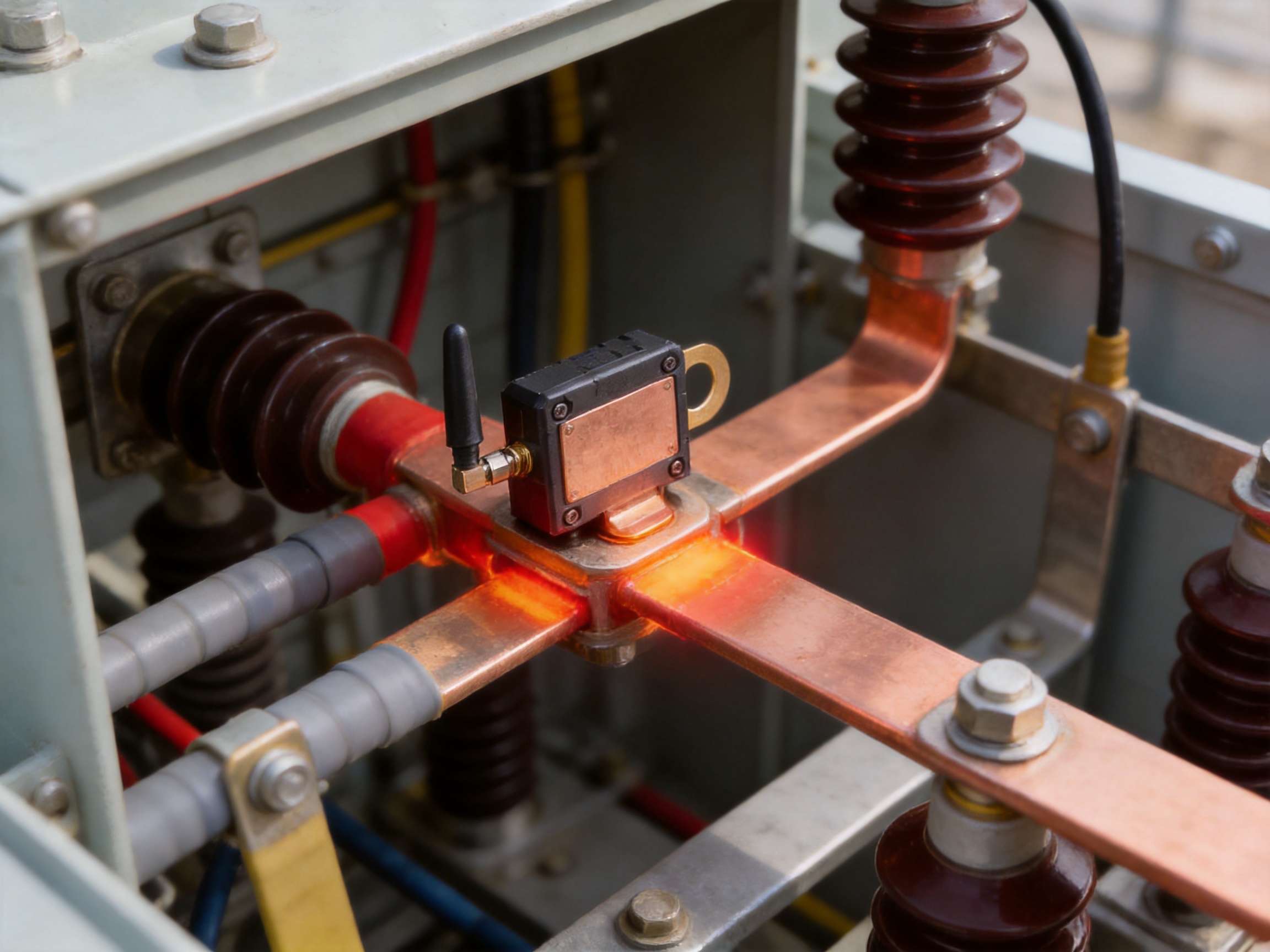
Unlike general-purpose ambient temperature sensors, this product is intended to measure the surface temperature of a specific electrical contact or conductive component. Its direct bolt-fixed installation allows the sensor to remain close to the heat source, making it suitable for monitoring outdoor isolating switches, transformer terminals, wall-penetrating cable clamps, flexible copper busbar connections, high-voltage switchgear contacts, and similar equipment.
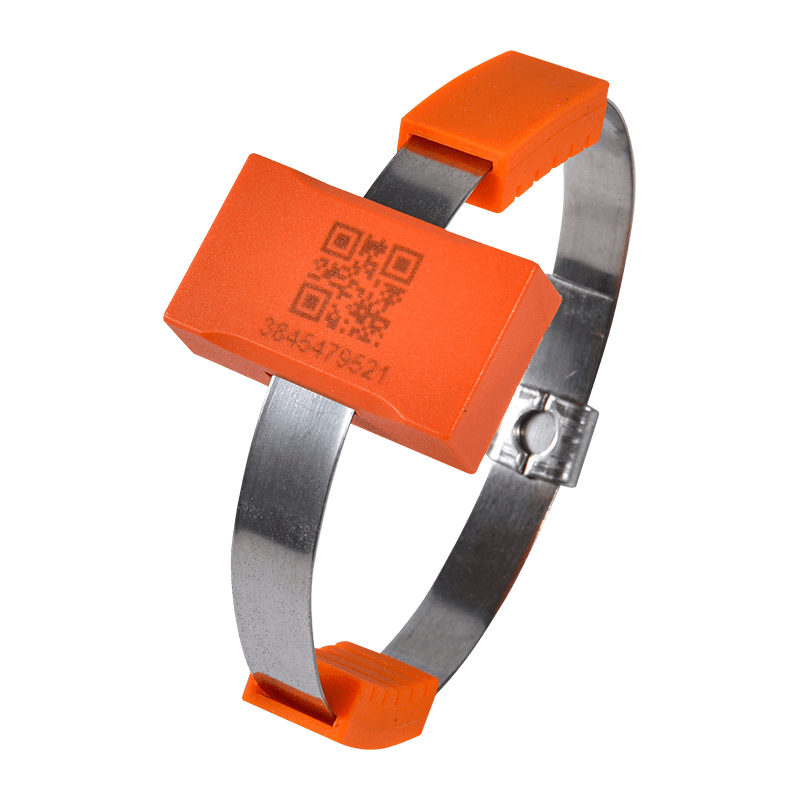
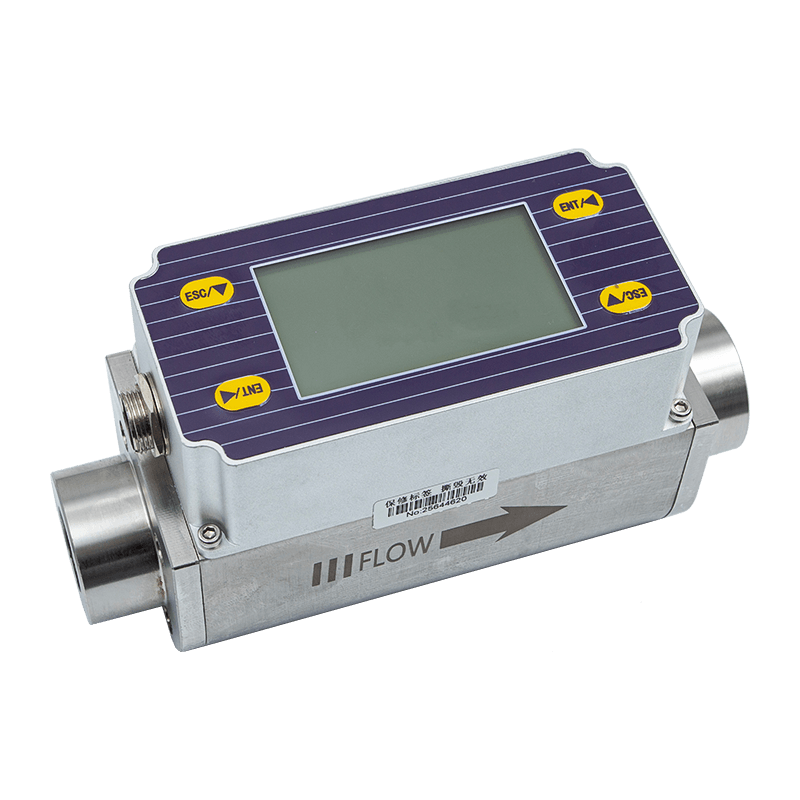
The sensor is part of a broader industrial technology portfolio that includes power line communication products, wireless temperature monitoring systems, industrial transmitters, thermal gas mass flow meters, and automatic door controllers. This product range demonstrates an emphasis on industrial sensing, intelligent connectivity, and data integration for smart-factory and smart-grid applications.

Copper Plate Temperature Sensor
Why Temperature Monitoring Matters in High-Voltage Equipment
Electrical connections generate heat when current flows through resistance. Under normal conditions, this heat remains within the design limits of the equipment. However, a loose fastener, poor contact pressure, corrosion, contamination, mechanical movement, or excessive load can increase the resistance of a connection. Because heat generation increases rapidly as current rises, a relatively small resistance problem can create a significant temperature increase during high-load operation.
Traditional inspection methods often depend on scheduled maintenance or periodic infrared surveys. These methods can be valuable, but they may not provide continuous visibility. A connection can become loose or overloaded between inspection intervals. In addition, infrared inspection may require equipment access, suitable weather, a clear line of sight, and personnel working near high-voltage assets.
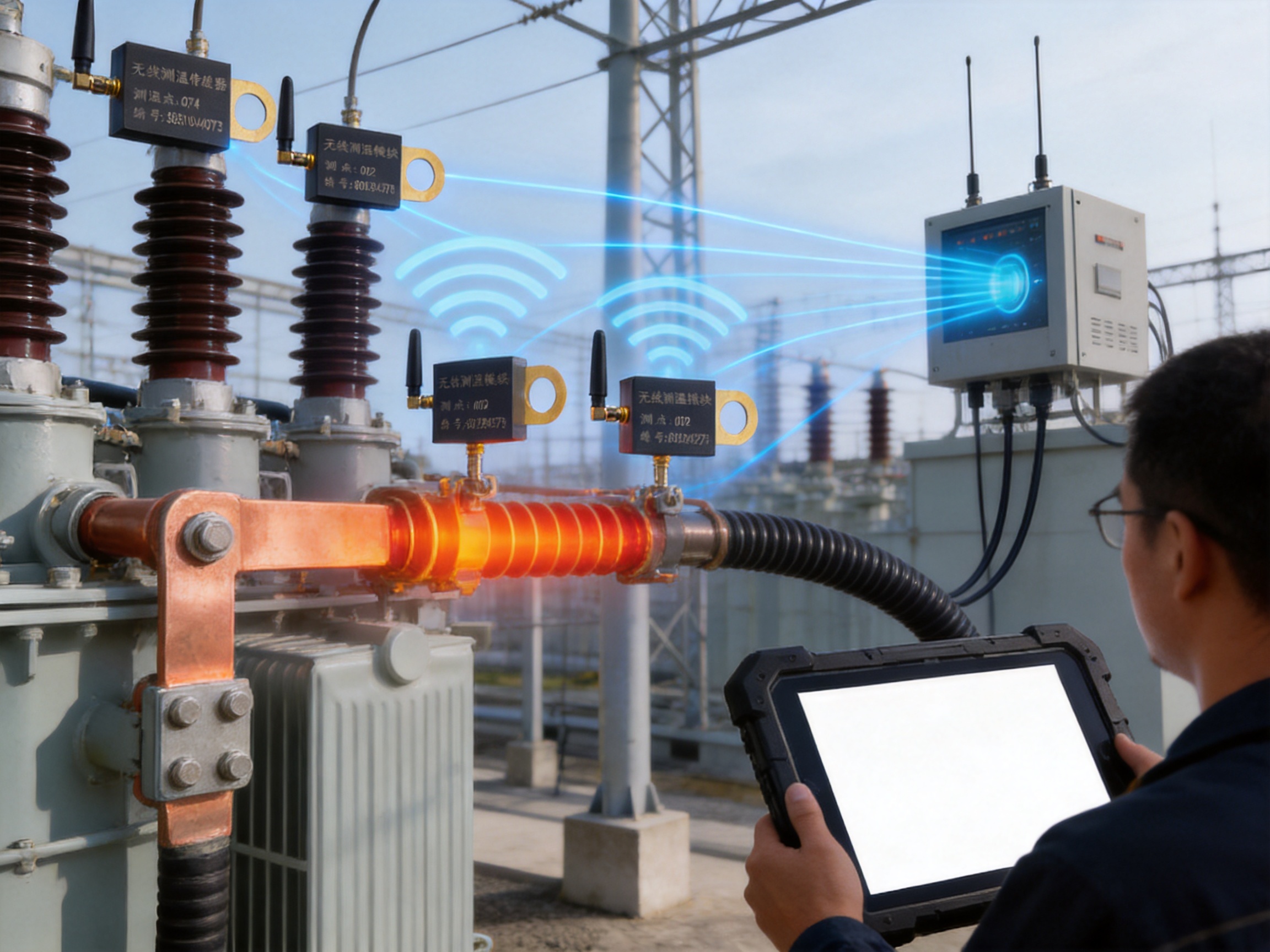
Continuous wireless temperature monitoring addresses these limitations by placing a sensor at the point of interest. The sensor periodically samples the temperature, evaluates its internal battery condition, and transmits the collected information to a wireless host. Operators can then review temperature trends, compare similar phases or connections, and identify abnormal increases before they become critical.
Temperature data also becomes more useful when it is evaluated over time. A single high reading may be caused by a temporary load condition, whereas a gradual rise at one connection compared with neighboring connections may indicate deterioration. Wireless monitoring therefore supports both immediate alarm functions and longer-term predictive maintenance strategies.
Product Overview
The KL-DS33YS is a single-channel wireless temperature sensor with a copper-plate structure for direct installation on a monitored component. Its internal system includes a temperature-sensing element, signal modulation and amplification circuitry, a logic control circuit, a wireless communication circuit, a lithium battery, and an antenna.
The sensor detects the temperature of the installed component and sends the measurement through a low-power wireless network to a wireless temperature measurement host. The default sampling frequency is 10 seconds, allowing the system to capture meaningful changes while maintaining a long battery life. The communication method is LoRa, operating in the 470–510 MHz frequency range, with a stated wireless transmission distance of up to 800 meters under suitable conditions.
The product is rated for a temperature measurement range of -40°C to +200°C and offers an accuracy of ±1°C. These specifications make it suitable for outdoor electrical installations exposed to seasonal temperature changes as well as for high-current equipment where localized heating must be identified quickly.
Parameter | Specification |
Product type | Copper-plate wireless temperature sensor |
Model | KL-DS33YS |
Temperature measurement range | -40°C to +200°C |
Measurement accuracy | ±1°C |
Temperature-sensing element | PT1000 |
Default sampling frequency | 10 seconds |
Wireless communication | LoRa |
Wireless frequency | 470–510 MHz |
Transmission distance | Up to 800 meters |
Expected battery life | 5–8 years |
Installation method | Bolt fixing |
Protection rating | IP68 |
External dimensions | 60 mm × 45 mm × 25 mm |
Listed general dimension | 105 mm |
Direct Copper-Plate Contact for Practical Temperature Measurement
The copper-plate design is one of the most important features of the product. It is intended to make direct physical contact with the monitored electrical component rather than measuring only the surrounding air. This approach is especially valuable when the critical temperature is located at a terminal, joint, busbar, contact surface, or conductive connection.
Ambient temperature sensors can show whether the environment is hot or cold, but they cannot reliably reveal the temperature of a concealed or localized electrical connection. A copper-plate sensor installed directly at the connection provides a more relevant measurement because it follows the thermal behavior of the monitored metal surface.
Bolt fixing also provides a mechanically stable installation method. A properly secured sensor is less likely to move because of vibration, wind, thermal expansion, or routine equipment operation. Stable mounting helps preserve the intended thermal contact and reduces the possibility of inconsistent readings caused by installation movement.
The installation design is well suited to equipment where cable routing is difficult or where an insulated wired sensor would introduce additional maintenance requirements. The sensor can be installed directly at selected monitoring points, while the wireless host remains positioned in an accessible control cabinet, monitoring room, or communications location.
PT1000 Sensing Element and Measurement Accuracy
The KL-DS33YS uses a PT1000 thermistor or resistance temperature detector specified as PT1000 in the product information. PT1000 elements are widely recognized for stable resistance characteristics and practical temperature measurement performance. They are suitable for applications requiring a dependable relationship between temperature and electrical resistance.
The stated measurement accuracy is ±1°C over the specified operating range. In a high-voltage monitoring application, accuracy is important because alarm thresholds may be separated by only a limited temperature margin. A measurement system that is stable and repeatable helps operators distinguish normal load-related heating from a developing abnormal condition.
Actual measurement performance depends on several factors, including the installation surface, contact pressure, thermal interface, surrounding airflow, sensor placement, calibration condition, and the characteristics of the wireless host. For this reason, installation should follow the equipment manufacturer’s procedures, and alarm levels should be established with consideration for the asset type, load profile, ambient conditions, and applicable safety standards.
The 10-second default sampling interval provides a balance between responsiveness and energy consumption. It is fast enough to capture meaningful temperature changes in many industrial applications while avoiding the unnecessary battery drain associated with continuous high-frequency transmission.
LoRa Wireless Communication for Industrial Sites
LoRa communication is designed for low-power, long-range data transmission. It is particularly useful for distributed monitoring systems in which sensors may be installed throughout a substation, factory, utility site, warehouse, or outdoor electrical installation. The communication method reduces the need for long signal cables and supports the deployment of multiple battery-powered sensing points.
The specified operating frequency range is 470–510 MHz. The actual frequency configuration, antenna installation, radio environment, and regulatory requirements should be confirmed for the target market and application. The stated wireless distance of up to 800 meters can be useful for large facilities, although real-world range depends on obstacles, metal structures, equipment arrangement, antenna position, interference, terrain, and the location of the receiving host.
High-voltage equipment often contains metal enclosures, steel structures, concrete walls, and other materials that can affect radio propagation. A successful installation therefore requires communication testing before final sensor placement. The wireless host should be located where it can receive stable signals from all planned sensors, and the antenna should be positioned according to the system design.
Compared with short-range wireless technologies intended for consumer environments, a low-power long-range approach can offer a more practical balance for industrial monitoring. It supports low data volumes over extended distances, which is appropriate for temperature values and battery-status information. The system does not need to transmit large files; it needs to send reliable, periodic measurements from many points.
Low-Power Operation and Long Battery Life
Industrial sensors are often installed in locations where battery replacement is difficult, expensive, or hazardous. A sensor mounted near a high-voltage terminal may require an outage or special work permit before maintenance personnel can approach it. Long battery life therefore has a direct effect on operating cost and worker safety.
The KL-DS33YS is designed for ultra-low power consumption and lists an expected battery lifespan of 5–8 years. Actual battery life depends on the sampling interval, transmission frequency, radio conditions, temperature, battery characteristics, and operating environment. Even so, the stated service life is well suited to condition-monitoring programs that aim to reduce frequent site visits.
The sensor also provides a battery voltage self-test function. This enables the system to detect the internal battery voltage and upload that information to the wireless temperature measurement host. Battery-status monitoring is important because a temperature reading is only useful when the sensor can continue operating reliably. Maintenance teams can use battery information to plan replacement activities before a sensor stops reporting.
Planned battery replacement is more efficient than emergency replacement. When the monitoring platform identifies a battery approaching its service limit, technicians can coordinate replacement with scheduled equipment maintenance or a planned outage. This approach reduces travel, improves resource allocation, and minimizes disruption to production or power distribution.
IP68 Protection for Outdoor and Harsh Environments
The IP68 protection rating is an important advantage for outdoor and industrial installations. Electrical equipment can be exposed to rain, humidity, dust, condensation, splash water, and temporary immersion conditions. A sensor enclosure that is not adequately protected may experience corrosion, signal problems, insulation deterioration, or electronic failure.
IP68 protection helps the sensor withstand demanding environmental conditions when the installation is performed correctly. It is especially relevant for outdoor disconnectors, transformer terminals, outdoor busbar connections, and wall-penetrating cable clamps. The protection rating supports the goal of reducing routine intervention in exposed locations.
However, an IP rating does not eliminate the need for correct installation. Cable openings, covers, mounting surfaces, fasteners, and sealing components must be handled according to the product’s installation instructions. The sensor should also be inspected periodically for mechanical damage, corrosion, abnormal contamination, or conditions that could compromise the enclosure.
Application Areas
Outdoor Isolating Switches
Outdoor isolating switches contain conductive connections that may experience thermal stress under load or abnormal contact conditions. A wireless temperature sensor can be mounted at selected terminals or connection points to monitor the thermal condition without requiring a dedicated signal cable. This is useful for assets distributed across a yard where conventional wiring would be costly or difficult.
High-Voltage Switchgear
High-voltage switchgear contains busbars, cable terminations, contacts, and connectors that must remain within safe operating limits. Sensors can be deployed at critical points to provide continuous information to a monitoring host. Comparing temperatures across phases or similar compartments can help reveal an imbalance or a connection-specific problem.
Transformer Inlet and Outlet Terminals
Transformer terminals and associated connectors can experience heat due to high current, connection resistance, or load variation. Monitoring these points provides an additional layer of operational visibility. The sensor can help maintenance teams identify unusual temperature behavior before it develops into a more severe transformer or connection fault.
Flexible Copper Busbar Connections
Flexible copper busbars can be exposed to vibration, thermal cycling, mechanical movement, and changing current levels. A bolt-fixed sensor can monitor the temperature at a connection while transmitting data wirelessly to the host. This is particularly useful in installations where the busbar arrangement changes or where cable routing would interfere with equipment flexibility.
Wall-Penetrating Cable Clamps
Cable clamps located at wall penetrations may be difficult to inspect visually. Their thermal condition can be affected by cable loading, clamping pressure, installation quality, or local heat accumulation. A compact sensor can provide a direct measurement at the clamp or nearby conductive connection, allowing the condition to be included in a centralized monitoring system.
High-Power Motors
High-power motors generate heat through electrical loading, mechanical friction, and operating conditions. While motor windings and bearings may have their own monitoring systems, external terminals and connections also deserve attention. The sensor can be used at appropriate conductive connection points where direct surface temperature monitoring is practical.
Industrial Equipment and Smart Factories
Manufacturing plants contain many distributed assets that require condition monitoring. A wireless temperature system can be applied to production machinery, control cabinets, power distribution equipment, and process infrastructure. By transmitting data to a common host, the system supports a broader industrial data architecture that may include energy management, equipment condition monitoring, and production optimization.
Advantages Compared with Conventional Temperature Monitoring Methods
Reduced Wiring Requirements
Wired sensors require signal cables, cable trays, conduit, connectors, termination points, and installation labor. In high-voltage areas, cable routing may be especially complex because insulation clearances and electromagnetic conditions must be considered. Wireless communication reduces the amount of physical infrastructure required between the sensing point and the receiving host.
This does not mean that wireless monitoring eliminates all engineering requirements. The host still needs a suitable power and communication arrangement, and radio coverage must be tested. Nevertheless, the absence of long sensor cables can simplify deployment and make it easier to add monitoring points later.
More Relevant Than Ambient Measurement
The copper-plate structure is intended to measure the temperature of the equipment surface or contact itself. This provides more meaningful information than placing a sensor nearby and assuming that the ambient temperature represents the connection temperature. Localized faults can create a high temperature at a contact even when the surrounding air remains normal.
Longer Maintenance Intervals
The combination of low-power electronics, a lithium battery, and battery voltage self-testing supports a maintenance strategy based on condition rather than fixed frequent visits. A listed battery life of 5–8 years can reduce the number of battery replacement operations when compared with short-life wireless devices.
Suitability for Outdoor Deployment
The IP68 enclosure rating and broad temperature measurement range support applications in exposed and demanding environments. The -40°C to +200°C measurement range covers cold outdoor conditions and high-temperature electrical connection monitoring. This makes the product more versatile than sensors designed only for indoor room-temperature measurement.
Compact Installation Footprint
The listed external dimensions of 60 mm × 45 mm × 25 mm allow the sensor to be considered for locations where installation space is limited. Compact construction is useful around switchgear terminals, busbar joints, and transformer connections, where large enclosures could interfere with existing equipment or maintenance access.
Centralized Data Availability
All detected data, including temperature and battery information, is transmitted to the wireless temperature measurement host. Centralized data availability allows operators to review multiple points from one location. It also provides a foundation for alarms, trend analysis, maintenance records, and integration with broader industrial monitoring systems.
Product Engineering and Manufacturing Strengths
The value of an industrial sensor depends not only on its published specifications but also on the engineering discipline used to design, assemble, test, and support it. The manufacturer’s stated focus is on data sensing, intelligent connectivity, self-developed edge-layer hardware, and industrial data integration. These capabilities are directly relevant to a wireless temperature monitoring product.
First, the sensor integrates several functions into one field device: temperature acquisition, signal conditioning, logic control, wireless communication, power management, battery diagnostics, and antenna operation. Integrating these functions requires careful coordination between electrical, mechanical, radio-frequency, firmware, and enclosure design. A manufacturer with experience across these disciplines can optimize the product as a complete system instead of treating each function as an isolated component.
Second, the product is part of an industrial portfolio rather than a single-purpose consumer sensor line. Experience with power line carriers, industrial transmitters, flow meters, and automatic door controllers can contribute to a broader understanding of industrial environments. These products require attention to stable communications, field installation, long operating periods, and practical system integration.
Third, the company describes itself as a high-tech enterprise working toward efficient, reliable, and green smart factories. Its stated manufacturing and technology strengths include self-developed edge hardware and industrial data integration solutions. For customers, this can be valuable when a temperature sensor must become part of a larger monitoring project instead of operating as an isolated instrument.
Advanced manufacturing should be understood as more than automated assembly. It includes requirements definition, component selection, circuit design, embedded software development, mechanical design, enclosure sealing, wireless performance verification, production traceability, functional testing, and after-sales technical support. A robust process should confirm that each product performs consistently before it is delivered for industrial deployment.
For this type of sensor, appropriate manufacturing controls may include inspection of PT1000 sensing elements, verification of wireless communication, battery-voltage testing, sampling-interval confirmation, enclosure inspection, and temperature-response checks. Environmental validation should also consider thermal cycling, humidity, vibration, and sealing performance appropriate to the intended installation. These are practical quality activities for ensuring that field devices deliver dependable data over long service periods.
The product architecture also supports scalable manufacturing. A standardized low-power wireless platform can be adapted for different sensing configurations, installation structures, communication requirements, or customer projects. This gives the manufacturer flexibility to support standard products while also addressing application-specific requirements through engineering customization.
Data Sensing and Industrial Connectivity
A temperature sensor becomes more valuable when its data can be used effectively. The KL-DS33YS is designed to transmit measurements to a wireless temperature measurement host, creating a basic edge-to-host architecture. The sensor acts at the edge of the industrial system, close to the physical equipment, while the host collects and organizes information for operators.
In a smart-grid application, the host may receive readings from many sensors distributed across switchgear, busbars, disconnectors, and transformers. In a factory, it may collect temperatures from production equipment, power distribution points, motors, and control systems. This arrangement allows users to establish a common monitoring view rather than relying on separate manual inspection records.
Temperature and battery data can support several levels of decision-making. At the simplest level, an operator can receive an alarm when a measured value exceeds a configured limit. At a more advanced level, the system can compare the same connection across different phases, evaluate rate of temperature increase, correlate temperature with load, and create maintenance recommendations based on historical trends.
The manufacturer’s wider focus on industrial data integration is relevant here. Data sensing is the first step, but the ultimate value comes from connecting sensor data to maintenance workflows, energy-management systems, equipment databases, and operational dashboards. A reliable edge device helps provide the data foundation needed for these applications.
Recommended Deployment Process
1. Define Monitoring Objectives
Before installation, the user should identify which components require monitoring and why. Priority may be given to high-load connections, historically troublesome terminals, inaccessible outdoor equipment, assets with high replacement costs, or points where infrared inspection is difficult.
2. Select the Measurement Point
The sensor should be placed where its copper plate can make appropriate contact with the surface or connection being monitored. The selected location should represent the thermal condition of the component and should not interfere with mechanical movement, insulation clearances, enclosure operation, or routine maintenance.
3. Confirm Mechanical Compatibility
Bolt fixing requires a suitable mounting point and compatible fastener arrangement. The installer should verify the available space, mounting-hole location, surface condition, required tightening method, and the effect of thermal expansion. Any installation near energized equipment must follow the applicable electrical safety procedures and be completed only by qualified personnel.
4. Test Wireless Coverage
The distance specification of up to 800 meters should be treated as an application reference rather than a guarantee for every site. The installer should test the radio path between each proposed sensor position and the wireless host. Metal barriers, concrete walls, electrical cabinets, terrain, and other structures can reduce signal strength.
5. Register the Sensor
Each sensor should be identified in the monitoring system according to its physical asset, phase, terminal, or equipment location. Clear naming makes alarms more useful and prevents maintenance teams from wasting time locating the sensor associated with an abnormal reading.
6. Establish Baseline Values
After installation, temperature values should be observed under normal operating conditions. Baseline data can be recorded for different load levels, seasons, and operating modes. These records help distinguish normal variation from abnormal behavior.
7. Configure Alarms and Maintenance Rules
Alarm thresholds should reflect the equipment design, operating temperature, manufacturer recommendations, and applicable standards. The system should also generate notifications for missing data, low battery voltage, abnormal communication quality, or a rapidly increasing temperature trend.
Safety and Installation Considerations
Monitoring high-voltage equipment requires careful attention to electrical safety. The sensor is intended to measure the temperature of energized objects, but installation and maintenance must not expose personnel to unnecessary risk. Only qualified technicians should work on or near the relevant equipment, and all procedures should comply with site rules, isolation requirements, approach distances, permits, and applicable electrical regulations.
The sensor should not be treated as a replacement for protective relays, insulation systems, overcurrent protection, thermal protection, or approved maintenance procedures. It is a condition-monitoring device that adds information to the operational system. Its data should be interpreted together with equipment ratings, current measurements, environmental conditions, and other diagnostic information.
Mechanical installation should preserve the integrity of the monitored component. The fastener must be appropriate for the application, and excessive force should be avoided. The sensor’s enclosure, copper plate, and mounting surface should be checked for damage before commissioning. If the equipment is exposed to vibration or repeated thermal cycling, the mounting arrangement should be inspected during scheduled maintenance.
Wireless communication also requires responsible system design. Sensitive industrial data should be managed according to the customer’s cybersecurity and network policies. Access control, device identification, host security, data retention, and alarm management should be included in the overall deployment plan.
How the Sensor Supports Predictive Maintenance
Predictive maintenance depends on identifying changes before failure occurs. Temperature is often one of the earliest measurable indicators of an electrical connection problem. A connection with increasing resistance may show a temperature rise before visible damage becomes apparent.
The sensor supports predictive maintenance by providing repeated measurements at a fixed physical location. Instead of relying only on occasional inspections, maintenance teams can analyze trends and compare conditions across assets. A steady increase over several days or weeks may justify a targeted inspection, while a sudden rise may require immediate investigation.
Battery voltage information also contributes to predictive maintenance. A low-battery warning can be handled as a planned task rather than an unexpected loss of monitoring. Maintaining sensor availability is essential because gaps in data can conceal an equipment problem.
When combined with current, voltage, load, ambient temperature, and operational records, the temperature data can support more advanced analysis. For example, a connection that runs hotter than comparable connections under the same load may deserve priority attention. The sensor does not make this diagnosis by itself, but it supplies a valuable measurement for the condition-monitoring process.
Comparison with Competing Product Categories
Compared with wired resistance temperature detectors, the KL-DS33YS can simplify deployment in locations where cable routing is difficult. Wired systems may provide continuous power and stable communication, but they can require extensive engineering and installation work. A battery-powered wireless sensor is more flexible for retrofit projects and distributed monitoring points.
Compared with handheld infrared thermometers, the sensor provides ongoing monitoring rather than a single inspection reading. Infrared tools remain useful for verification and periodic surveys, but they depend on personnel availability and access conditions. Wireless data can reveal changes between inspection rounds.
Compared with ambient wireless sensors, the copper-plate design is better aligned with applications where the temperature of a conductive connection is more important than room temperature. Direct surface contact helps focus the measurement on the equipment point most likely to develop a localized thermal fault.
Compared with short-range wireless devices, the LoRa communication method and stated transmission distance of up to 800 meters can be advantageous for larger industrial sites. The low-data-rate, low-power design is appropriate for periodic temperature and battery information.
Compared with basic wireless thermometers that provide only temperature data, the KL-DS33YS includes a battery voltage self-test function. This adds operational information that helps maintenance teams evaluate the continued availability of the sensor itself.
These advantages do not mean that one technology is suitable for every project. Wired systems may be preferred where power and communications infrastructure already exist. Infrared systems may be necessary for rapid inspection of many temporary points. The strongest solution is determined by the equipment layout, risk level, maintenance model, environmental conditions, budget, and system-integration requirements.
Role of the Manufacturer as an Industrial IoT Solution Provider
Industrial customers increasingly need more than a standalone product. They require sensors, communication equipment, data collection, system integration, technical documentation, and application support. A manufacturer that develops both edge hardware and industrial data solutions can potentially address these needs through a coordinated product and engineering approach.
ASY Electronics is positioned around industrial IoT communication and sensing technologies. Its product portfolio includes broadband power line carriers, wireless temperature monitoring systems, industrial transmitters, thermal gas mass flow meters, and automatic door controllers. This portfolio reflects experience with different types of industrial signals, communication methods, and field applications.
The company’s stated mission is to help build efficient, reliable, and environmentally responsible smart factories. Its solutions focus on equipment condition monitoring, refined energy management, and production-process optimization. For a customer deploying the KL-DS33YS, this broader capability may make it easier to plan future extensions, such as additional sensors, industrial transmitters, energy data collection, or communication gateways.
Manufacturing strength is also connected to product consistency. Long-life industrial devices need repeatable assembly, dependable component sourcing, firmware control, inspection procedures, and clear traceability. Customers should evaluate these capabilities during supplier qualification and request the appropriate technical documentation, test records, installation guidance, and support commitments for their project.
Maintenance Strategy for Long-Term Operation
A wireless sensor system should be included in the same asset-management program as the equipment it monitors. Periodic reviews should confirm that sensors are communicating, battery voltage remains acceptable, measured values are plausible, and the sensor has not been affected by mechanical damage or environmental exposure.
Users should create a maintenance record for each sensor. The record can include the sensor identification, physical location, monitored asset, installation date, initial baseline, battery replacement date, communication status, and any corrective actions. This information improves traceability and supports future analysis.
The wireless host should also be maintained. Its power supply, antenna, communication configuration, data storage, clock synchronization, and alarm functions should be checked. A sensor may be operating correctly even when data is not visible because the receiving host or network connection has a problem.
Battery replacement should be planned around the expected service life and actual battery-voltage trend. Extreme temperatures and frequent transmissions may affect battery performance. Replacing batteries before the end of useful service helps prevent loss of coverage at critical monitoring points.
Integration into Smart-Grid and Factory Systems
In a smart-grid environment, temperature information can support substation monitoring, equipment-health assessment, maintenance prioritization, and remote operation. Sensors installed on multiple assets can provide a distributed view of thermal conditions. This information may be combined with load data and event records to help identify abnormal behavior.
In a factory, temperature monitoring can contribute to equipment condition monitoring and energy management. High temperatures at power-distribution connections may reveal electrical losses or installation problems. Monitoring motor terminals and other high-power equipment can complement vibration, current, pressure, and flow measurements.
The product is particularly relevant to facilities seeking gradual digital transformation. A customer can begin with a limited number of high-priority sensors, establish the value of continuous monitoring, and expand the system as required. Wireless deployment makes such phased implementation more practical than installing a complete wired infrastructure at the beginning.
Industrial IoT systems are most effective when they turn measurements into actions. A temperature alarm should be connected to a defined response procedure. The procedure may require load verification, visual inspection during the next safe opportunity, infrared confirmation, connection tightening, replacement of a damaged component, or immediate shutdown depending on the severity and equipment criticality.
Frequently Asked Questions
What does the KL-DS33YS measure?
It measures the temperature of the surface or contact area of a monitored electrical or industrial component. It is designed for direct installation on copper plates, terminals, busbar connections, transformer terminals, switchgear contacts, and similar points.
What sensing element does the product use?
The product information specifies a PT1000 temperature-sensing element.
What is the measurement range?
The stated temperature measurement range is -40°C to +200°C.
What is the measurement accuracy?
The stated measurement accuracy is ±1°C.
How often does the sensor sample temperature?
The default temperature sampling frequency is 10 seconds. The final operating configuration should be confirmed for the intended monitoring system.
How does the sensor communicate?
It uses LoRa wireless communication in the 470–510 MHz frequency range and transmits data to a wireless temperature measurement host.
What is the wireless transmission distance?
The listed transmission distance is up to 800 meters. Actual performance depends on the site layout, obstacles, metal structures, antenna position, interference, and receiving-host placement.
How long can the battery last?
The listed battery lifespan is 5–8 years. Actual life depends on sampling, transmission, temperature, radio conditions, and other operating factors.
Does the sensor monitor battery condition?
Yes. It includes a battery voltage self-test function and transmits the detected battery information to the wireless temperature measurement host.
Where can the product be installed?
Typical locations include outdoor isolating switches, wall-penetrating cable clamps, transformer inlet and outlet terminals, outdoor flexible copper busbar connections, high-voltage switchgear, high-power motors, and other similar components.
How is the sensor installed?
The specified installation method is bolt fixing. The mounting arrangement must be compatible with the monitored equipment and installed by qualified personnel according to applicable safety procedures.
Is the product suitable for outdoor use?
The sensor has an IP68 protection rating and is specified for applications that include outdoor electrical equipment. Correct mounting and sealing practices remain essential.
Can the product replace infrared inspection?
It provides continuous point monitoring and can complement infrared inspection, but it should not automatically be considered a complete replacement. Infrared surveys and other diagnostic methods may still be required for verification and broader equipment assessment.
Can it be connected to a smart-factory system?
The sensor transmits data to a wireless temperature measurement host. Depending on the host and project architecture, the collected data may be incorporated into wider industrial monitoring, maintenance, or data-integration systems.
What makes this sensor different from a general wireless thermometer?
It is designed specifically for direct temperature monitoring of electrical contacts and conductive components. Its copper-plate structure, high-temperature measurement capability, long-range low-power communication, IP68 protection, and battery-voltage monitoring are aligned with industrial asset-monitoring requirements.
Conclusion
The KL-DS33YS copper-plate wireless temperature sensor provides a practical way to monitor localized heating in high-voltage and industrial equipment. Its direct copper-plate contact, PT1000 sensing element, ±1°C accuracy, -40°C to +200°C range, LoRa communication, IP68 protection, bolt-fixed installation, and 5–8-year listed battery life address many of the challenges associated with distributed condition monitoring.
Its advantages are particularly clear in retrofit projects and outdoor installations where wired sensors are difficult to deploy. The sensor reduces cable requirements, supports centralized data collection, provides battery-status information, and enables maintenance teams to observe temperature trends between scheduled inspections.
The product also benefits from a manufacturer focused on industrial IoT communication, edge-layer hardware, data sensing, and smart-factory applications. Its wider portfolio of power line communication products, wireless monitoring systems, transmitters, flow meters, and controllers creates a foundation for broader industrial integration.
For best results, the sensor should be applied as part of a complete monitoring strategy. Correct measurement-point selection, qualified installation, wireless coverage testing, baseline establishment, alarm configuration, cybersecurity planning, and scheduled maintenance are all important. When these elements are combined, wireless temperature monitoring can improve equipment visibility, support predictive maintenance, reduce unnecessary inspections, and help industrial operators build safer and more efficient facilities.
References
1. KL-DS33YS Product Technical Information, copper-plate wireless temperature sensor specification.
2. Industrial temperature measurement principles for resistance temperature detectors and PT1000 sensing elements.
3. General guidance for condition monitoring of electrical connections, busbars, switchgear, transformers, and high-current equipment.
4. LoRa low-power wide-area wireless communication principles and industrial sensor-network applications.
5. International enclosure protection concepts for ingress protection ratings, including IP68 applications.
6. Industrial IoT architecture principles for edge sensing, wireless data collection, equipment condition monitoring, and smart-factory integration.
7. Electrical safety practices for installation and maintenance near high-voltage energized equipment.