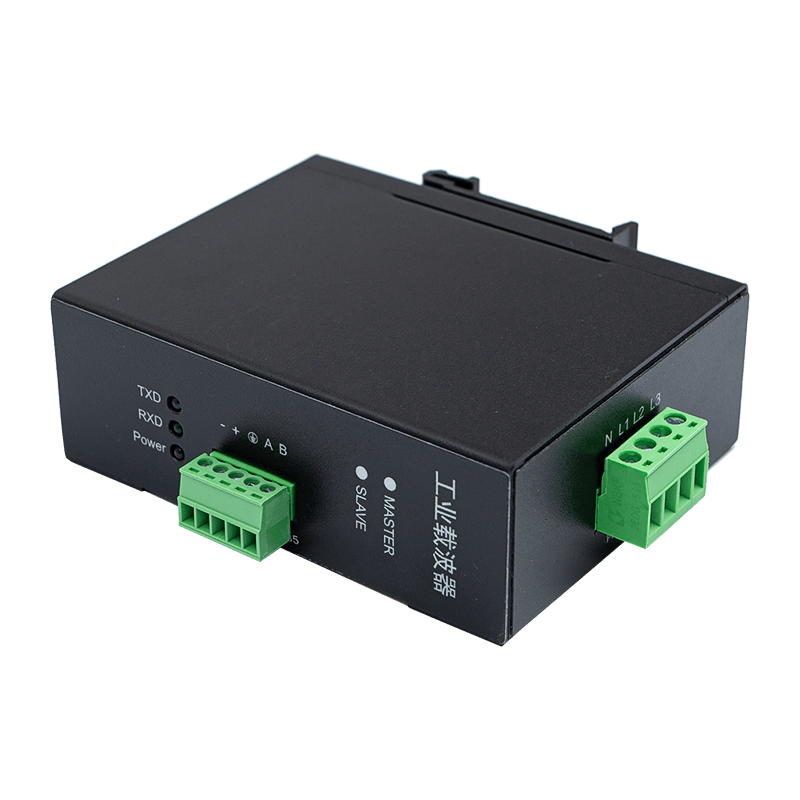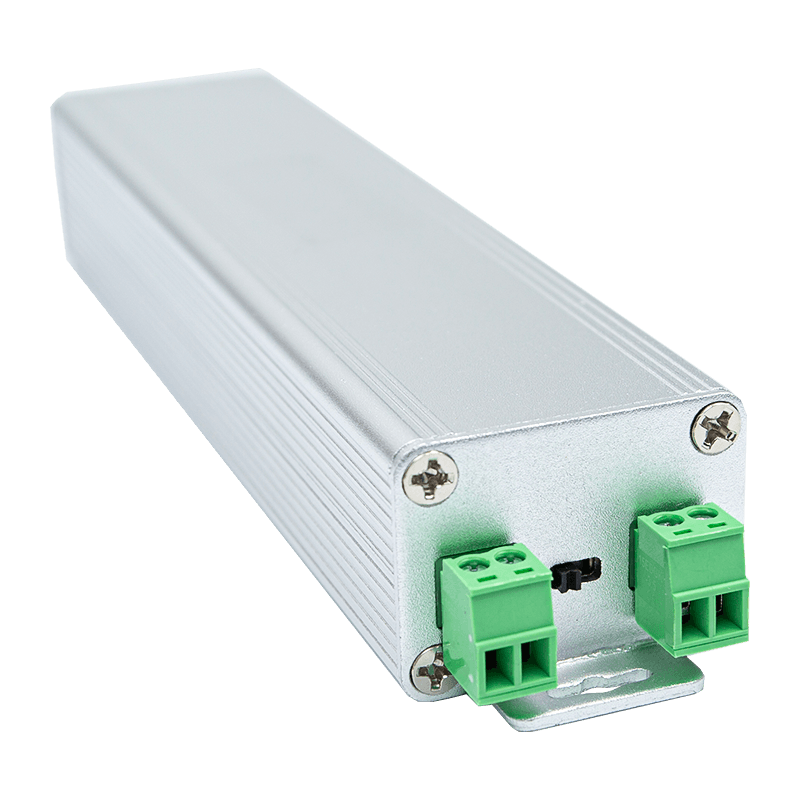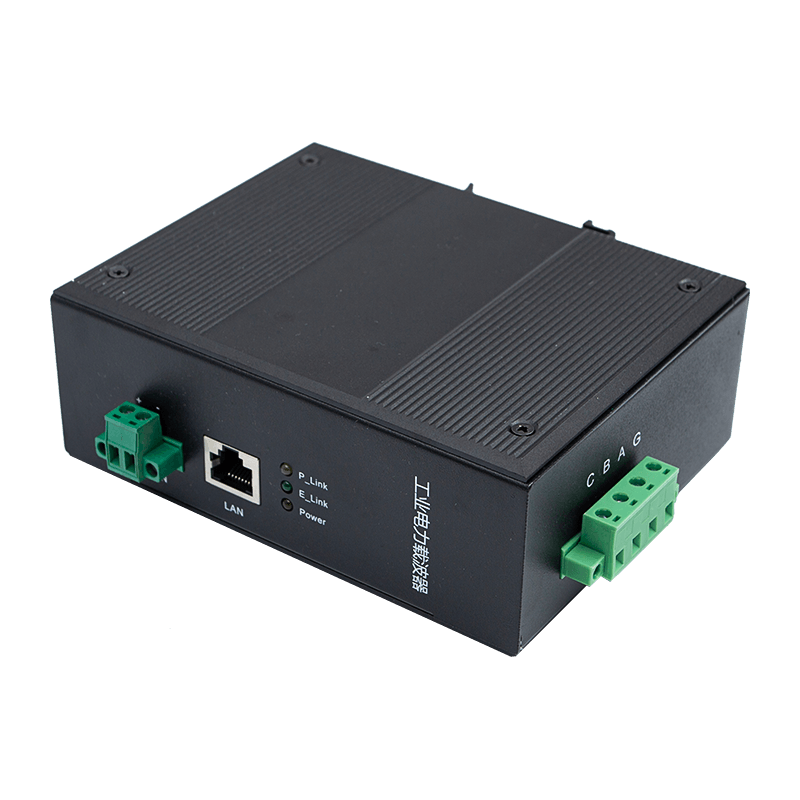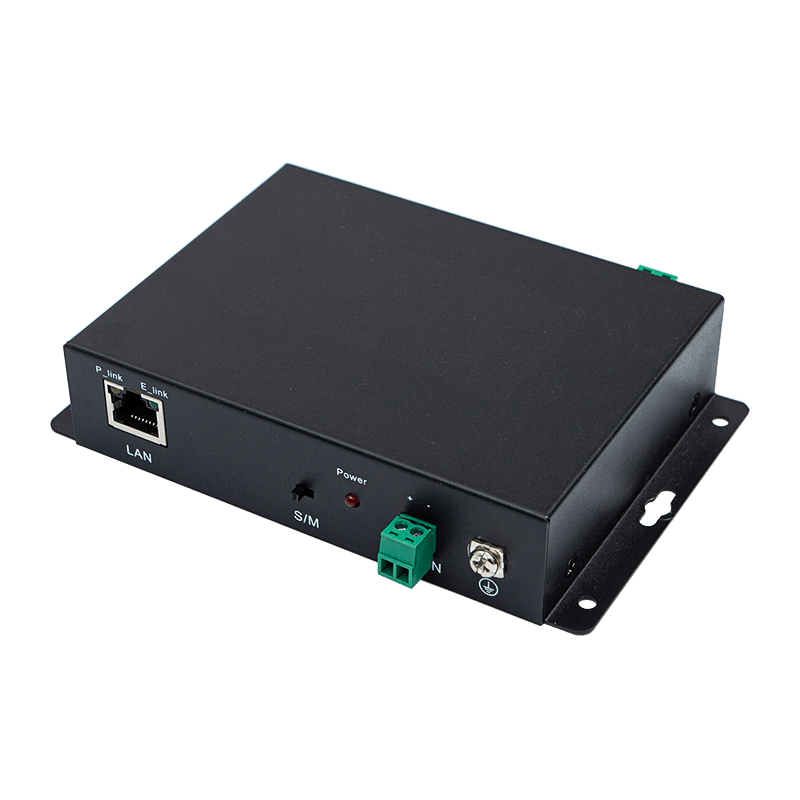


Industrial communication systems must remain dependable when ordinary office telephones, consumer networking equipment, and standard public-address devices are no longer suitable. Dust, water, temperature fluctuations, long cable routes, electrical interference, and the need for rapid group communication can all complicate industrial operations. In these conditions, communication equipment must do more than transmit voice. It must support coordinated response, provide clear alarm and broadcasting functions, simplify installation, and continue operating across a wide environmental range.
The CS618L-FS24 DC Waterproof Digital Telephone is designed for this type of application. It is a PLC digital telephone and industrial intercom terminal that combines multi-party intercom, broadcasting, and alarm communication in one wall-mounted unit. Its communication system uses wideband power carrier technology, allowing power and signal transmission through the same two-core DC cable. The device also supports automatic IP assignment and self-organizing networking, reducing the need for a dedicated network server or complex commissioning procedures.
With an IP66 waterproof enclosure, ABS engineering plastic construction, a DC24V power system, a 25W speaker output, and a declared working temperature range of -40°C to 85°C, the unit is intended for demanding wet or dusty industrial areas that do not specifically require explosion-proof certification. It offers a practical alternative to systems that depend on extensive network cabling, separate power wiring, multiple communication devices, or complicated configuration.
This article examines the product’s architecture, operating characteristics, installation benefits, industrial value, and suitability for different use cases. It also considers the manufacturing and engineering strengths behind the solution, including the importance of enclosure design, power-line communication integration, environmental testing, product standardization, and industrial data connectivity.
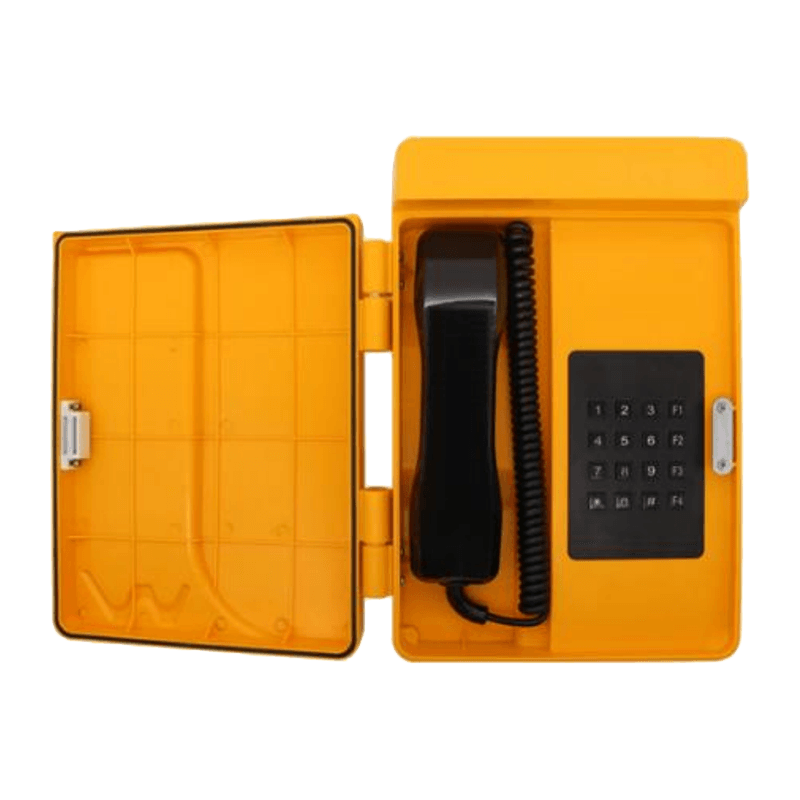
CS618L-FS24 DC Waterproof Digital Telephone
1. The Role of Reliable Communication in Industrial Operations
Industrial sites are often physically larger and more complex than office environments. A factory may contain production halls, workshops, warehouses, loading areas, utility rooms, outdoor equipment zones, and remote control points. A mining-related facility, water-treatment site, energy plant, or large manufacturing workshop may have communication points separated by long distances and exposed to moisture, dust, vibration, or severe seasonal temperatures.
In these environments, communication delays can affect production continuity, worker coordination, maintenance efficiency, and emergency response. A supervisor may need to call several departments at once. An operator may need to broadcast an instruction to a production area. A control room may need to issue an alarm to multiple terminals. A maintenance team may need to communicate from a noisy or isolated location where mobile coverage is unreliable.
Traditional office telephone systems do not always satisfy these requirements. They may require delicate indoor equipment, separate network infrastructure, or a stable server-based architecture. Consumer intercom products may have limited environmental protection. Conventional public-address systems may provide broadcasting but lack two-way communication. Separate alarm and telephone systems can increase installation complexity and maintenance costs.
An integrated industrial communication terminal addresses these challenges by combining several functions in one enclosure. The CS618L-FS24 is designed around this principle. It provides a communication endpoint for intercom, group calling, broadcast, and alarm scenarios while using a rugged industrial enclosure and a simplified power-and-signal connection.
2. Product Overview
The CS618L-FS24 is a DC waterproof digital telephone categorized as a PLC digital telephone. It is intended for wet or dusty industrial environments that require protection against water and dust but do not specifically require explosion-proof certification. The product is mounted on a wall and uses a compact enclosure measuring 322 × 260 × 142 mm.
The enclosure is made from ABS engineering plastic. This material helps maintain a relatively low overall weight of approximately 6 kg while providing a practical housing for industrial communication electronics. The enclosure carries an IP66 protection rating, indicating a high level of protection against dust ingress and water projected by powerful jets under the applicable testing conditions.
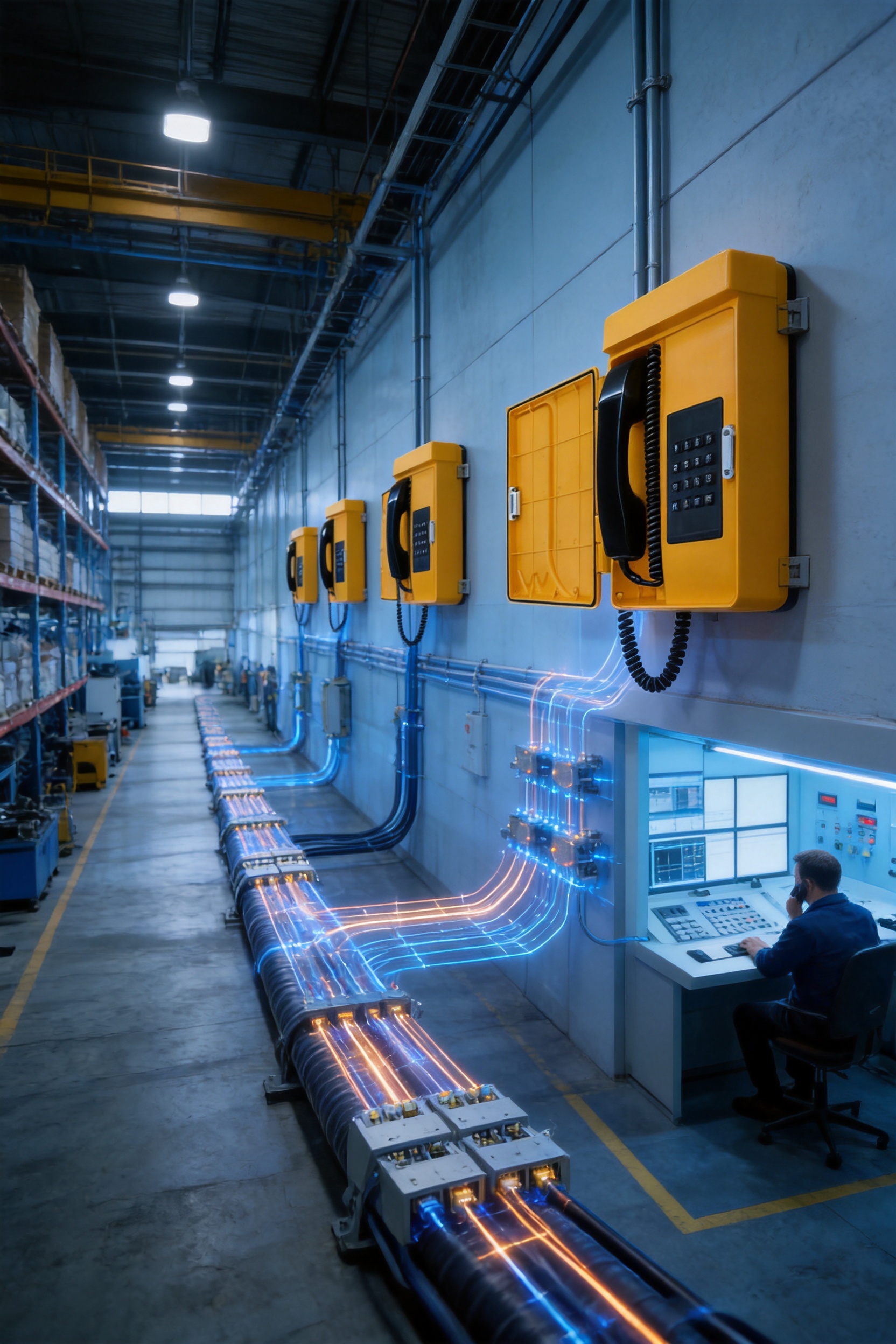
The system operates on DC24V. The power and signal are integrated into the same two-core cable, which simplifies the physical connection between the device and the communication network. Rather than installing one cable for power and another for communication, a suitable two-core connection can support both functions. This architecture is particularly valuable where cable routing is difficult, expansion time is limited, or the facility wishes to reduce wiring work.
Communication is achieved through a wideband power carrier. The product supports automatic IP assignment and self-organizing networking. These functions allow terminals to participate in a network without relying on manual IP configuration for every device or requiring a conventional network server for basic network organization.
The unit provides a 25W speaker output and a stated standby power consumption of 5W, with full-load power consumption of 25W. Its working temperature range is -40°C to 85°C, its relative humidity range is 10% to 95% without condensation, and its specified atmospheric pressure range is 80 to 110 kPa. The corrosion-proof grade is listed as WF1.
Product characteristic |
Specification |
Product type |
DC waterproof digital telephone |
Item number |
CS618L-FS24 |
Application category |
PLC digital telephone |
Supply voltage |
DC24V |
Signal line voltage |
DC24V |
Communication method |
Wideband power carrier |
Networking mode |
Automatic IP assignment and self-organizing network |
Protection grade |
IP66 waterproof enclosure |
Housing material |
ABS engineering plastic |
Speaker output |
8 ohms, 25W |
Power consumption |
5W standby; 25W full load |
Working temperature |
-40°C to 85°C |
Relative humidity |
10% to 95%, non-condensing |
Dimensions |
322 × 260 × 142 mm |
Weight |
Approximately 6 kg |
Installation |
Wall mounting |
3. Integrated Intercom, Broadcasting, and Alarm Functions
One of the product’s primary advantages is functional integration. The CS618L-FS24 is described as a multi-party intercom, broadcast, and alarm all-in-one machine. Instead of deploying separate devices for voice conversation, area-wide announcements, and warning communication, an industrial site can use one type of terminal as part of a coordinated communication system.
Multi-party intercom is useful when several operators or work areas must communicate at the same time. A production supervisor can coordinate with operators, technicians, and control-room personnel without relying on individual point-to-point calls. This supports faster decision-making during production changes, maintenance activities, and abnormal operating conditions.
The broadcast function allows information to be distributed to a wider group. Announcements may include shift instructions, equipment status information, work-area notices, or operational reminders. In a noisy industrial setting, a 25W speaker output provides a stronger audio platform than many office-style communication terminals, although the final intelligibility will also depend on acoustic conditions, installation position, background noise, and system configuration.
The alarm communication function adds another layer of operational value. A communication terminal can serve as a local endpoint for alert messages and coordinated response. By combining alarm-related communication with voice functions, the product can help reduce the number of separate devices that personnel must monitor.
Integration also benefits maintenance. A facility that standardizes on one type of communication endpoint can simplify spare-parts planning, technician training, inspection routines, and replacement procedures. It may also reduce the visual and physical complexity of communication installations across workshops and operating areas.
4. Power and Signal on the Same Two-Core Cable
The power-and-signal architecture is a central feature of the product. The device uses DC24V, while the power and signal are integrated into the same two-core cable. This means that the cable connection performs two roles: it supplies energy to the terminal and carries the communication signal.
In a conventional installation, power and data may require separate cable routes, separate termination points, and additional coordination between electrical and communication contractors. Every additional cable can increase material consumption, installation labor, routing constraints, and potential points of failure. Combining functions within a two-core connection can make the network easier to plan, particularly for retrofit projects and sites where existing conduits are limited.
Fewer conductors can also simplify terminal installation. A wall-mounted unit can be placed at a selected communication point and connected using the designated two-core arrangement. This does not remove the need for proper electrical design, cable selection, power distribution, grounding considerations, and compliance with site standards. However, it can reduce the physical workload associated with deploying multiple independent communication and power circuits.
The architecture is especially relevant to industrial sites with distributed communication points. A long production hall, warehouse, utility corridor, or outdoor service area may need multiple terminals positioned where personnel work. A power-line carrier approach allows the communication system to make use of the power connection while supporting digital networking functions.
This design also supports scalable deployment. New endpoints can be added to an appropriately planned network without necessarily building a complete new Ethernet infrastructure for every communication point. Expansion still requires attention to network capacity, power supply capability, cable conditions, electromagnetic environment, and system planning, but the underlying approach can be more flexible than a fully separate wiring architecture.
5. Automatic IP Assignment and Self-Organizing Networking
Industrial communication networks can become difficult to commission when every device requires manual address assignment and centralized configuration. The CS618L-FS24 supports automatic IP assignment and self-organizing networking. These features are intended to reduce commissioning effort and make the system easier to deploy.
Automatic IP assignment can minimize the risk of duplicate addresses and reduce repetitive configuration work. On a network with numerous terminals, manually recording and entering device addresses can consume considerable time. It can also create opportunities for human error, especially when devices are installed in different production areas or when the network is expanded in stages.
A self-organizing network can allow compatible devices to identify their communication relationships and participate in the system with reduced manual debugging. The product description emphasizes automatic organization without debugging and plug-and-play operation without wiring. In practical terms, this means the system is designed to make installation and initial setup more straightforward than a traditional architecture requiring extensive manual network configuration.
These features are valuable to factories that need rapid deployment or frequent reconfiguration. A production facility may add new workstations, rearrange workshop zones, or extend communication coverage during a capacity expansion. A network that is easier to establish can reduce the time between physical installation and operational use.
Nevertheless, professional installation remains important. Automatic networking does not replace proper cable testing, power-quality verification, system addressing policy, environmental assessment, or acceptance testing. The feature reduces configuration complexity, but the overall network must still be designed and validated according to the requirements of the facility.
6. IP66 Protection for Wet and Dusty Areas
The IP66 enclosure is intended for industrial spaces where water and dust are part of the operating environment. Dust may originate from raw materials, machining, packaging, construction processes, or transport activity. Water may come from washdown procedures, rain exposure, condensation, cleaning operations, or accidental splashing.
IP66 protection provides two important benefits. The first is dust protection. A sealed enclosure helps limit the entry of dust particles that could accumulate on internal components or interfere with electrical operation. The second is water-jet protection. The enclosure is designed to withstand powerful water jets under the conditions associated with its rating.
Protection should not be confused with unlimited environmental immunity. Installation must preserve the integrity of the housing, cable entries, fasteners, seals, and mounting surfaces. Openings created during installation must be properly managed. The product is also not described as explosion-proof, so it should not be installed in areas where hazardous gas, vapor, or dust certification is mandatory unless the complete system has separate approval for that environment.
The product’s intended application is therefore clear: wet or dusty industrial environments that need robust ingress protection but do not specifically require explosion-proof certification. This positioning helps engineers evaluate the device correctly and avoid applying it outside its stated design scope.
Potential application areas include general manufacturing workshops, equipment rooms, logistics and warehouse areas, water-related industrial facilities, utility buildings, and covered outdoor operating zones. Each site must conduct its own assessment of chemical exposure, mechanical impact, electrical classification, temperature, humidity, and cleaning practices.

7. Wide Temperature and Humidity Operating Capability
Industrial communication equipment may be exposed to much wider temperature changes than office devices. Outdoor installations can experience freezing conditions in winter and high enclosure temperatures in summer. Equipment rooms may be heated by nearby machinery, electrical panels, steam lines, or direct solar radiation. A communication terminal that is designed only for moderate indoor temperatures may suffer reduced reliability when installed in such locations.
The CS618L-FS24 specifies an operating temperature range of -40°C to 85°C. This broad range supports use in facilities where seasonal conditions or process environments create significant thermal variation. It also provides greater flexibility when selecting installation locations, provided that the actual site conditions remain within the product’s specified limits.
The listed relative humidity range is 10% to 95% without condensation. This is important because high humidity alone is different from direct condensation. Industrial designers should consider ventilation, enclosure temperature, mounting position, and transitions between cold and warm environments. Even a product with a high humidity specification requires installation practices that prevent persistent condensation inside or around the enclosure.
The stated barometric pressure range of 80 to 110 kPa provides an additional indication of the environmental conditions considered in the product specification. The WF1 corrosion-proof grade indicates that corrosion resistance is part of the product’s stated industrial positioning. The actual suitability of the enclosure and materials must still be reviewed against the specific chemicals, salts, cleaning agents, and atmospheric contaminants present at the installation site.
8. Audio Performance and Communication Distance
The product description states a talking distance of up to 1,000 meters. This figure indicates the intended communication reach of the system under suitable installation and network conditions. Actual performance can vary according to cable length, cable quality, electrical noise, network topology, power distribution, environmental interference, and the number of connected devices.
The speaker specification is listed as 8 ohms and 25W. A 25W output is appropriate for industrial voice communication and broadcasting where sound must be heard over machinery or across a large work area. However, speaker wattage alone does not determine speech intelligibility. Enclosure placement, acoustic reflections, machinery noise, speaker orientation, mounting height, and the distribution of terminals all contribute to the final result.
The technical information also lists an 8-ohm, 5W value under the “Rise upward” parameter. Because the supplied material does not define this term in detail, it should be interpreted according to the manufacturer’s technical documentation during system design. Engineers should confirm whether it refers to a handset, auxiliary audio channel, receiver, or another audio function before preparing a final installation plan.
For long-distance industrial communication, the most effective approach is often to use a planned distribution of endpoints rather than relying on one terminal to cover an entire facility. Terminals can be positioned near work teams, control points, access routes, and emergency gathering areas. This improves local audibility and reduces the need for excessive speaker volume.
9. Advantages Compared with Conventional Communication Solutions
9.1 Reduced Wiring Complexity
A conventional telephone or intercom system may require separate power and communication cables, especially when it is built around standard network switches and independent low-voltage power supplies. The CS618L-FS24 integrates power and signal through a two-core cable, which can reduce wiring complexity and make distributed deployment more practical.
9.2 Less Dependence on Centralized Infrastructure
Some networked communication systems depend heavily on a central server, network cabinet, or complex switching architecture. The self-organizing network design of this product reduces the need for manual network organization and supports operation without a network server for basic self-organizing communication. This can be valuable in facilities where communication must remain simple, localized, and easy to maintain.
9.3 Greater Environmental Protection than Office Devices
Office telephones and standard indoor intercom units are generally not designed for water jets, heavy dust, extreme temperatures, or industrial mounting conditions. The IP66 enclosure, ABS engineering plastic housing, and broad operating temperature specification position the product for applications where ordinary indoor terminals may be unsuitable.
9.4 Combined Communication Functions
A separate telephone, public-address amplifier, and alarm terminal can increase equipment count and create a fragmented user experience. The CS618L-FS24 combines multi-party intercom, broadcast, and alarm communication functions in one industrial endpoint. This can simplify daily operation and help personnel respond through a consistent interface.
9.5 Lower Physical Weight
At approximately 6 kg, the ABS engineering plastic enclosure is lighter than many comparable metal industrial housings of similar size. Lower weight can simplify wall mounting and reduce the mechanical load on supporting structures. It may also make handling and replacement more convenient for installation teams.
9.6 Simplified Commissioning
Automatic IP assignment and self-organizing networking can reduce repetitive setup work. This is particularly useful when a project involves many endpoints or when the system must be expanded in stages. Although professional testing remains necessary, a simplified commissioning process can reduce deployment time.
10. Manufacturing and Engineering Strengths
The value of an industrial communication product depends not only on its feature list but also on the engineering and manufacturing practices used to create it. A reliable terminal must combine mechanical protection, electrical integration, audio performance, communication stability, thermal design, and production consistency.
ASY Electronics is described as a high-tech enterprise focused on smart-factory development, data sensing, intelligent connectivity, industrial data integration, equipment condition monitoring, energy management, and production-process optimization. This background is relevant to the CS618L-FS24 because the product is not an isolated consumer device. It forms part of a broader industrial connectivity portfolio that includes broadband power line carriers, wireless temperature monitoring systems, transmitters, flow meters, and automatic door controllers.
A company working across these product categories must address different sensing, communication, enclosure, and industrial integration requirements. Experience with power-line communication can support the development of terminals that combine energy delivery and data transmission. Experience with industrial sensing and transmitters can encourage attention to field installation, environmental exposure, signal integrity, and equipment maintenance.
The product’s engineering concept reflects an integrated design philosophy. The enclosure, power supply, communication carrier, network organization, speaker system, and mounting method are considered as parts of one industrial solution. This approach can help reduce the mismatch that sometimes occurs when independent components from different suppliers are combined in the field.
Manufacturing quality is especially important for IP-rated products. The enclosure must be formed accurately, mating surfaces must be consistent, cable-entry areas must be managed correctly, and assembly procedures must protect seals and internal components. Production control should also include inspection of dimensions, fastening, electrical connections, audio functions, power consumption, and communication performance.
For a product specified for -40°C to 85°C, environmental validation is also important. Testing may include temperature cycling, high- and low-temperature operation, humidity exposure, water-protection verification, vibration or transport checks, and functional testing before and after environmental stress. The exact tests and acceptance criteria should be confirmed in the manufacturer’s quality documentation.
11. Smart-Factory Manufacturing Philosophy
The company’s stated mission centers on efficient, reliable, and green smart factories. This philosophy is consistent with the role of an industrial communication terminal. Communication infrastructure supports the flow of information between people, machines, and operating areas. When this infrastructure is easier to deploy and maintain, it can contribute to improved operational visibility and faster response.
Smart manufacturing also requires repeatable production. A product intended for industrial deployment should not depend solely on manual adjustment by individual workers. Standardized assembly procedures, controlled component sourcing, process inspection, and functional testing help create consistent products across production batches.
Data sensing and intelligent connectivity are key elements in modern industrial systems. The CS618L-FS24 focuses on communication, while other products in the company’s portfolio address temperature monitoring, flow measurement, transmitters, and automatic door control. Together, these categories support a broader industrial Internet of Things architecture in which field devices collect information, communicate with users or control systems, and support more informed operational decisions.
The relationship between communication and sensing is significant. A temperature sensor may identify an abnormal condition, while a communication terminal can help deliver an instruction or alert to personnel. A flow meter may reveal a process deviation, while industrial transmitters and communication systems help distribute information. This broader product context gives the telephone a role within an industrial connectivity ecosystem rather than treating it as a standalone voice device.
12. Installation Planning
Before installation, engineers should identify communication zones, expected user groups, power sources, cable routes, mounting surfaces, environmental conditions, and required broadcasting coverage. The wall-mounted design allows terminals to be positioned at fixed operational points, but the selected location should provide convenient access without exposing the device to unnecessary impact.
The DC24V power system should be matched to an appropriately sized power supply and distribution arrangement. Designers must consider the number of terminals, standby consumption, full-load demand, cable voltage drop, protection devices, and local electrical standards. The listed standby consumption is 5W, while full-load consumption is 25W. A system with many endpoints should be designed for simultaneous demand rather than average demand alone.
The two-core cable should be selected and installed according to the communication system requirements. Cable length, conductor resistance, shielding or routing considerations, separation from high-power equipment, and connection quality can influence communication performance. Before commissioning, installers should verify polarity, continuity, insulation condition, terminal tightness, and network behavior.
Because the unit has an IP66 enclosure, cable entries and mounting interfaces must preserve the intended protection level. Improperly drilled openings, unsuitable glands, loose covers, or damaged seals can reduce water and dust resistance. The installation team should follow the manufacturer’s instructions for entry hardware, sealing, tightening torque, and enclosure closure.
Audio testing should be performed under normal operating conditions. Operators should confirm call initiation, multi-party communication, broadcast audibility, alarm behavior, and voice clarity at representative locations. If the site contains high background noise, additional terminals or adjusted mounting positions may provide better results than simply increasing volume.
13. Application Scenarios
13.1 Manufacturing Workshops
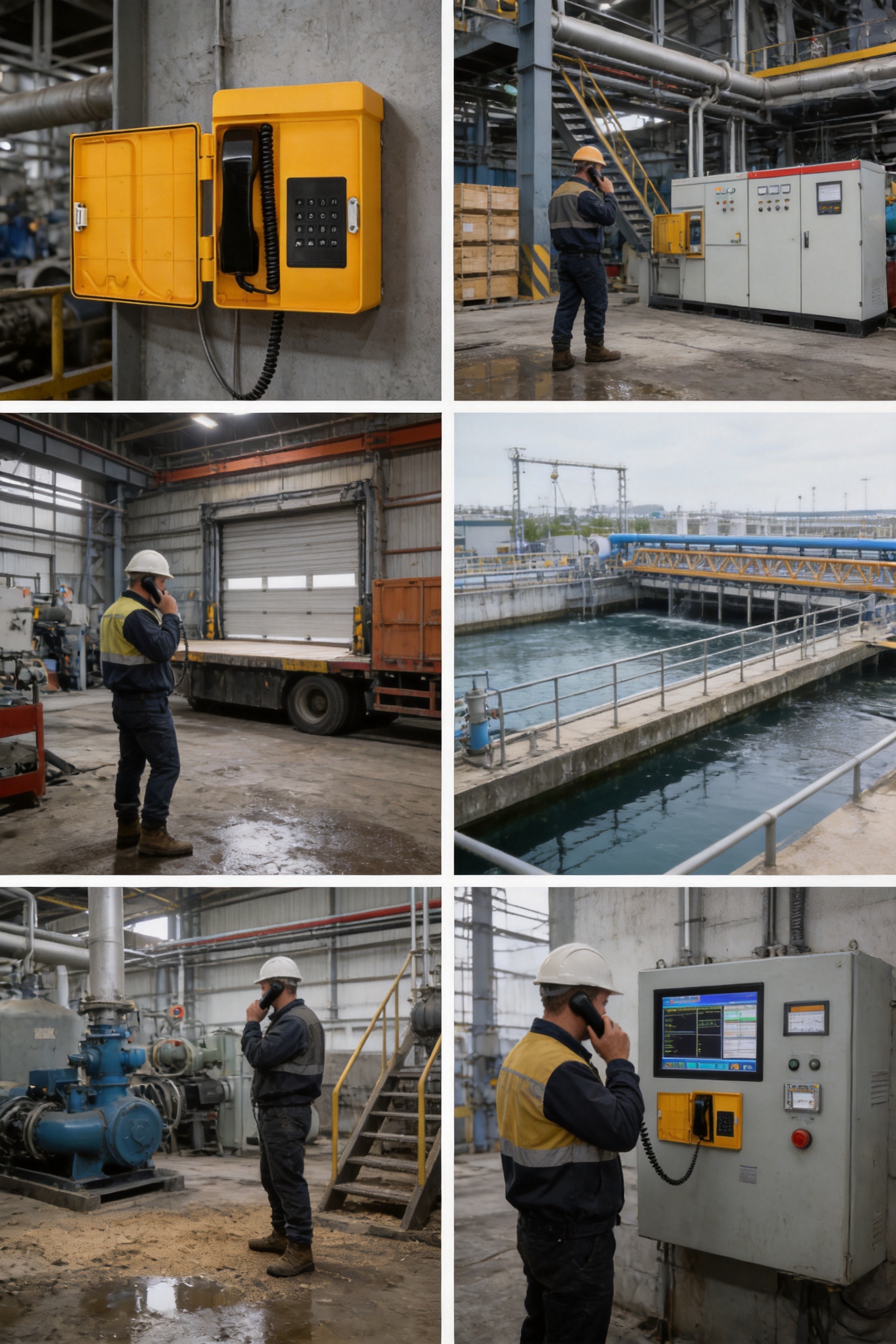
Manufacturing workshops often contain machinery, rotating equipment, conveyors, assembly stations, and maintenance areas. Workers may need to communicate without leaving their work positions. The CS618L-FS24 can provide fixed communication points for operators and supervisors while also supporting area-wide announcements.
Its IP66 protection is useful in workshops where dust, cleaning water, or process residue may be present. The broad temperature range can also support areas that are exposed to heat from production equipment or cold air from large doors.
13.2 Warehouses and Logistics Facilities
Warehouses may include high ceilings, long aisles, loading bays, vehicle routes, and separated operating zones. A distributed communication network can help coordinate receiving, storage, picking, dispatch, and maintenance activities. Wall-mounted terminals placed near loading or supervision points can provide direct access to voice communication and broadcasting.
The self-organizing network approach may simplify expansion when a warehouse adds storage zones or modifies its internal layout. As with all installations, the communication plan should account for physical obstructions, background noise, and the location of personnel.
13.3 Utility and Water-Related Facilities
Water-treatment buildings, pumping stations, utility rooms, and related industrial areas often have high humidity or exposure to water. An IP66 communication terminal can be considered for these environments when explosion-proof certification is not required and the chemical atmosphere remains within the product’s suitability limits.
Communication is useful in facilities where equipment rooms are separated from control rooms or where operators must coordinate inspection and maintenance activities. The system can help connect local personnel with central operating staff without requiring every communication point to use a conventional indoor telephone.
13.4 Energy and Infrastructure Sites
Energy and infrastructure facilities may have remote areas, equipment yards, service buildings, and maintenance corridors. Reliable voice and alarm communication can assist with routine operations and coordinated response. The product’s wide temperature rating is relevant to installations that experience seasonal outdoor conditions, although the enclosure should be positioned and protected according to the site’s mechanical and weather requirements.
13.5 General Industrial Buildings
Many industrial buildings need communication systems but do not require specialized explosion-proof equipment. In these facilities, the CS618L-FS24 can offer a balance between environmental protection, installation simplicity, integrated functions, and network scalability.
14. Energy Use and Operational Efficiency
Energy consumption is an important consideration when a facility installs multiple continuously available communication terminals. The product lists 5W standby consumption and 25W full-load consumption. The difference reflects the increased demand associated with active communication or high speaker output.
For system planning, standby consumption can help estimate the base load when terminals are powered but not actively broadcasting. Full-load consumption is more relevant when evaluating power supply capacity and worst-case conditions. If a network includes many units, the designer should calculate the aggregate load and include an appropriate engineering margin.
Operational efficiency also includes installation labor, maintenance time, network administration, and equipment replacement. A two-core power-and-signal architecture can reduce installation complexity. Automatic IP assignment and self-organization can reduce setup time. A combined intercom, broadcast, and alarm unit can reduce the number of independent devices requiring inspection.
These benefits should be evaluated over the complete life cycle of the system. A lower initial equipment price does not necessarily produce the lowest total cost if installation is difficult, configuration is time-consuming, or maintenance requires many different spare parts. A well-integrated industrial terminal may provide value through simpler deployment and more consistent operation.
15. Maintenance and Long-Term Reliability
Routine maintenance should include visual inspection of the enclosure, mounting hardware, cable entries, connector areas, and speaker openings. Dust, chemical deposits, physical damage, or loose fittings should be addressed promptly. Cleaning procedures should be compatible with ABS engineering plastic and the enclosure’s sealing components.
Functional checks should confirm that the device can participate in calls, broadcast messages, transmit or receive alarms, and communicate with the intended network endpoints. Periodic testing is particularly important for terminals assigned to emergency or safety-related communication tasks.
Network documentation should record terminal locations, cable routes, power distribution points, and configuration information. Even when the system supports automatic organization, maintenance teams benefit from accurate records. Clear labeling can speed up troubleshooting and replacement.
If a terminal is removed for service, the replacement unit should be checked for correct voltage, cable condition, enclosure integrity, and network participation. The IP66 rating depends on maintaining the complete enclosure assembly. A replacement that has damaged seals or improperly installed cable entries may not provide the expected environmental protection.
16. Limitations and Proper Product Selection
Responsible product selection requires understanding what the device is designed to do and what it is not designed to do. The CS618L-FS24 is intended for wet or dusty industrial environments without a specific explosion-proof requirement. It should not automatically be selected for hazardous areas classified as requiring explosion-proof or intrinsically safe equipment.
IP66 protection does not mean that the terminal can be submerged, exposed indefinitely to corrosive chemicals, or subjected to severe mechanical impact without additional protection. The site’s environmental conditions must be compared with the product’s technical specifications and the manufacturer’s application guidance.
The stated 1,000-meter talking distance should be treated as an application reference rather than a guarantee for every cable arrangement. Communication distance depends on the electrical and network conditions of the installation. A site survey or pilot deployment may be appropriate for large, electrically noisy, or structurally complex facilities.
Similarly, a 25W speaker output does not guarantee identical sound quality in every workshop. Acoustic design remains important. In areas with extreme noise, the system may require additional endpoints, carefully selected mounting locations, or supplementary visual indicators.
These considerations do not reduce the product’s value. Instead, they help engineers apply its advantages correctly and avoid unrealistic expectations. A properly matched installation is more likely to deliver reliable long-term performance.
17. Questions and Answers
Q1: What type of product is the CS618L-FS24?
It is a DC waterproof digital telephone and PLC digital telephone designed for industrial communication. It combines multi-party intercom, broadcasting, and alarm communication functions in one wall-mounted unit.
Q2: What environments are suitable for this telephone?
It is intended for wet or dusty industrial environments that require IP66 protection but do not specifically require explosion-proof certification. The actual site must also remain within the specified temperature, humidity, pressure, corrosion, and electrical conditions.
Q3: Does it require separate power and communication cables?
The product uses a DC24V system in which power and signal are integrated into the same two-core cable. This can simplify installation compared with systems that require separate power and communication wiring.
Q4: How does the networking system work?
The device uses wideband power carrier communication and supports automatic IP assignment and self-organizing networking. These features are intended to reduce manual configuration and simplify commissioning.
Q5: Does the system need a network server?
The product information states that the system can support self-organizing networking without a network server. The complete application should still be designed according to the communication requirements, number of devices, and control architecture of the facility.
Q6: What is the speaker output?
The listed speaker specification is 8 ohms and 25W. This output is intended for industrial intercom and broadcasting applications, but final audibility depends on installation location, background noise, room acoustics, and network design.
Q7: What is the maximum communication distance?
The product description states a talking distance of up to 1,000 meters. Actual distance depends on cable characteristics, network conditions, electrical interference, power distribution, and system configuration.
Q8: What is the operating temperature range?
The specified working temperature range is -40°C to 85°C.
Q9: What is the product’s protection rating?
The enclosure has an IP66 waterproof rating. Installation practices must preserve enclosure sealing, cable-entry protection, and mechanical integrity.
Q10: What material is used for the enclosure?
The enclosure is made from ABS engineering plastic. The stated overall weight is approximately 6 kg.
Q11: How is the device installed?
It is designed for wall mounting. The mounting surface, cable route, enclosure orientation, and cable-entry method should be selected to preserve accessibility and environmental protection.
Q12: What is the power consumption?
Standby power consumption is listed as 5W, while full-load power consumption is listed as 25W.
Q13: Can it be used in an explosion-hazardous area?
The supplied information specifically describes the product for areas that do not require explosion-proof certification. It should not be used in a classified hazardous area unless the complete product and installation have the required approvals.
Q14: What company capabilities support this product?
ASY Electronics focuses on smart-factory solutions, data sensing, intelligent connectivity, industrial data integration, equipment condition monitoring, energy management, and production-process optimization. Its product portfolio includes broadband power line carriers, wireless temperature monitoring systems, transmitters, flow meters, and automatic door controllers.
Q15: What should be checked before ordering?
Users should verify the required protection level, electrical classification, DC24V power availability, cable route, communication distance, number of terminals, audio environment, temperature and humidity conditions, mounting requirements, and whether the site requires explosion-proof certification.
18. Conclusion
The CS618L-FS24 is designed as a practical industrial communication terminal for demanding but non-explosion-proof environments. Its main advantages are the combination of intercom, broadcasting, and alarm functions; IP66 protection; DC24V operation; integrated power and signal on a two-core cable; automatic IP assignment; self-organizing networking; 25W speaker output; and a wide -40°C to 85°C working temperature range.
Compared with conventional office telephones, separate public-address systems, and communication networks requiring extensive independent wiring, the product offers a more integrated approach. Its design can reduce installation complexity, simplify network organization, and provide a consistent communication endpoint across industrial areas.
The product also reflects a wider manufacturing and engineering capability focused on industrial connectivity. The company’s work in power-line carriers, sensing systems, transmitters, flow meters, and automatic door controllers supports a broader smart-factory vision in which people, equipment, and data are connected through practical field-level technologies.
For factories, warehouses, utility buildings, water-related facilities, infrastructure sites, and other industrial locations, the product can serve as a robust communication component when its technical limits are properly understood. Careful site assessment, correct cable installation, suitable power planning, enclosure protection, and functional testing remain essential. When these factors are addressed, the CS618L-FS24 can provide a streamlined foundation for reliable industrial voice, broadcast, and alarm communication.
References
1. Product technical information for the CS618L-FS24 DC Waterproof Digital Telephone, including electrical, mechanical, environmental, and networking specifications.
2. Industrial communication system design principles for distributed intercom, public-address, and alarm communication networks.
3. General guidance on IP enclosure protection classifications and the application of dust- and water-resistant equipment.
4. Engineering practices for DC24V industrial power distribution and low-voltage field-device installation.
5. Smart-factory architecture concepts covering industrial data sensing, intelligent connectivity, equipment condition monitoring, and process optimization.
6. General principles of power-line carrier communication and self-organizing industrial networks.