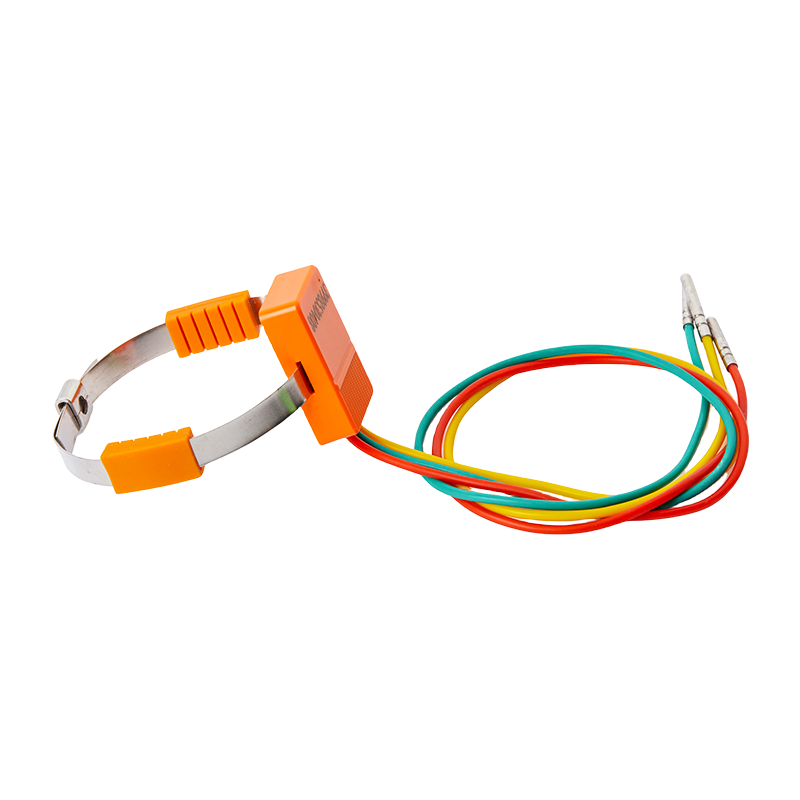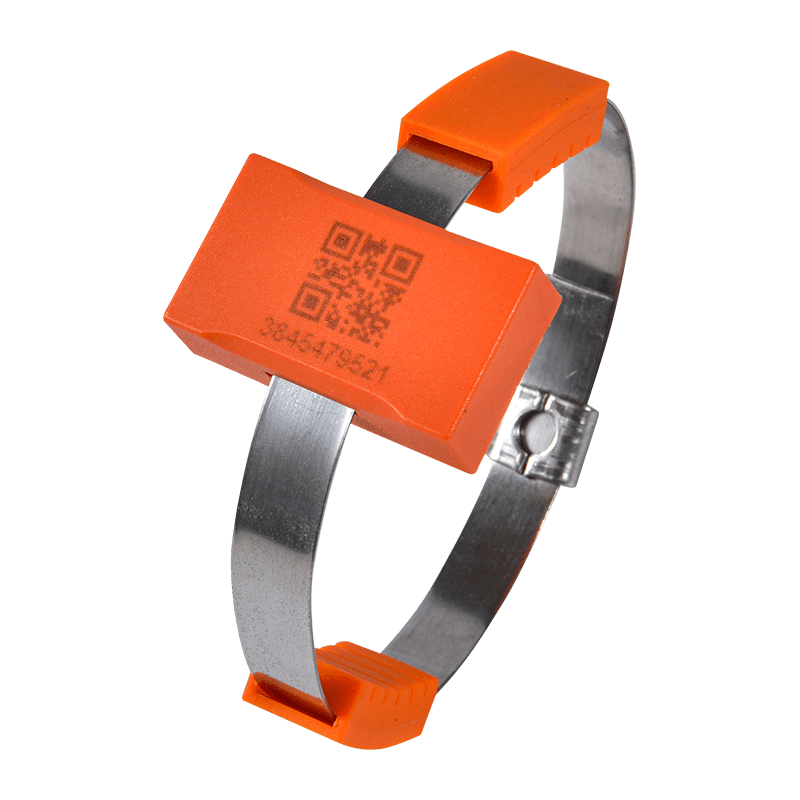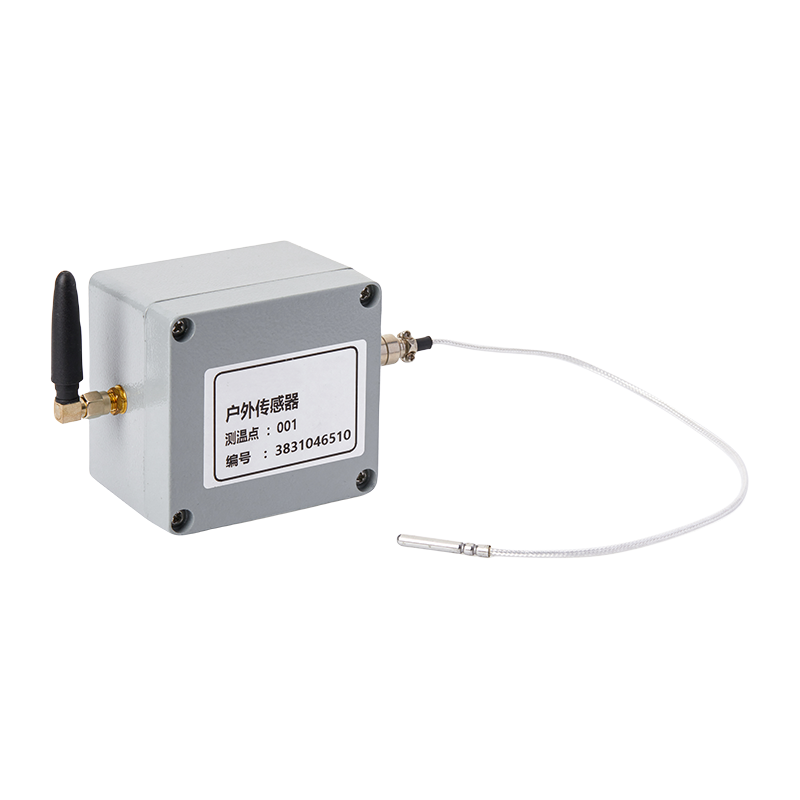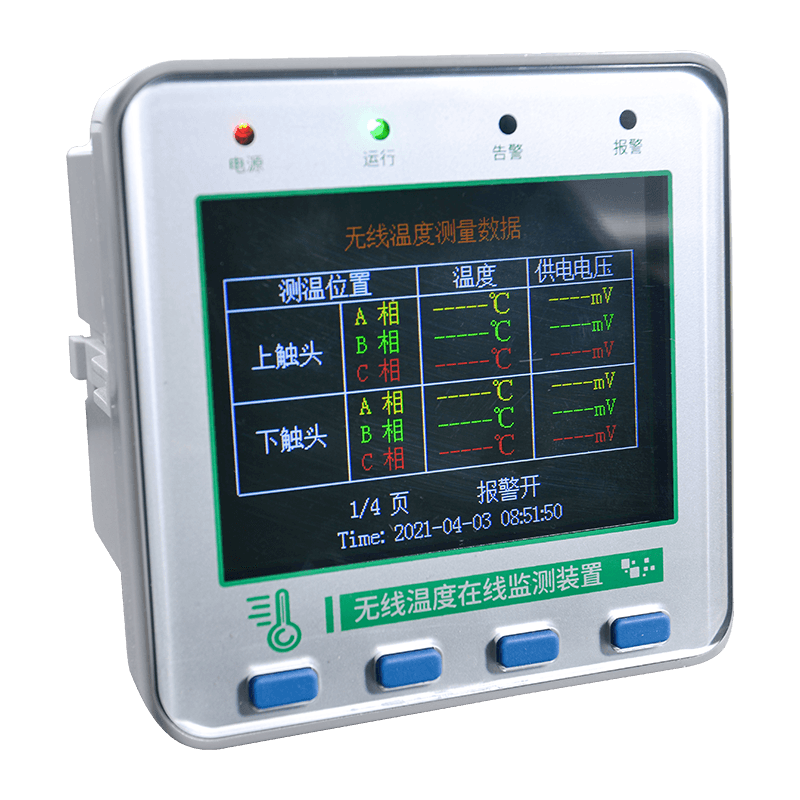


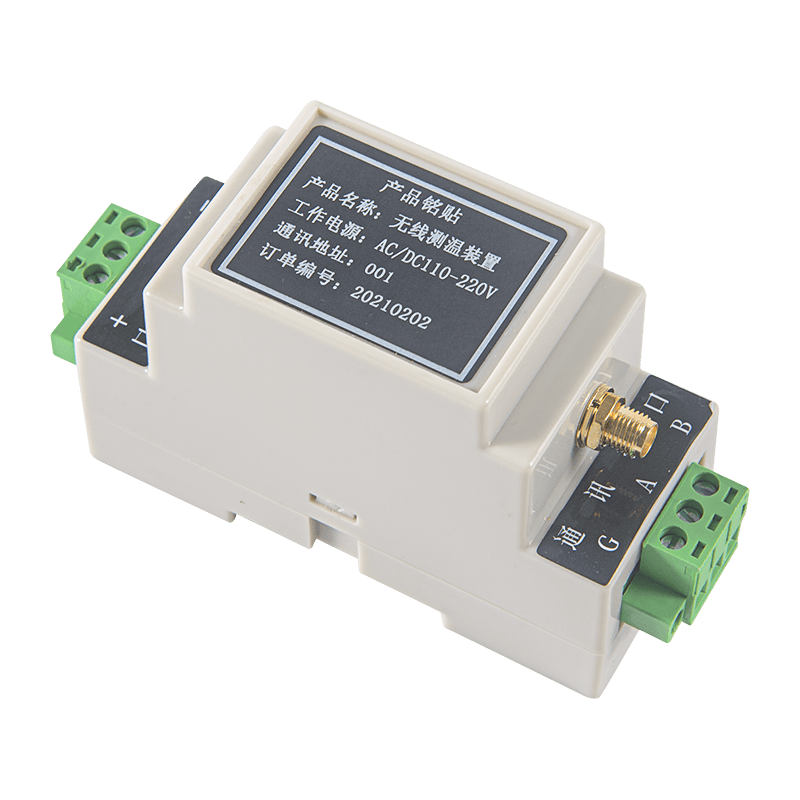
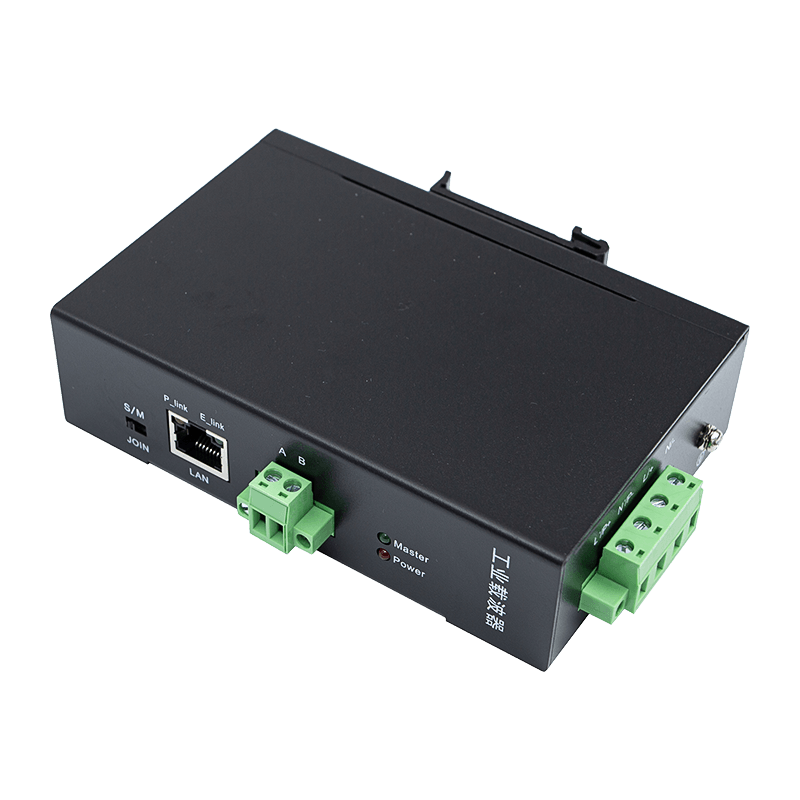
Reliable temperature monitoring is one of the most practical ways to prevent electrical failures, production interruptions, and unplanned maintenance in industrial environments. In high-voltage switchgear, busbar joints, transformer terminals, outdoor disconnect switches, high-power motors, cable clamps, and flexible copper busbar connections, overheating is often the first visible sign of abnormal contact resistance, loose connections, insulation aging, overload, or poor operating conditions. A magnetic-attachment wireless temperature measurement sensor provides a direct, convenient, and highly efficient method for continuously observing these critical thermal points without extensive wiring or complicated installation work.
The magnetic-attachment wireless temperature measurement sensor described in this article is designed for industrial and power-distribution applications that require accurate, stable, and long-life temperature data acquisition. With a measurement range of -40 to +200°C, ±1°C accuracy, a PT1000 thermistor, LoRa wireless communication, magnetic fixation, and a battery lifespan of 5 to 8 years, the sensor is built to meet the needs of modern smart grid, smart factory, and industrial equipment condition monitoring projects. It supports real-time temperature detection and battery voltage self-test, and it uploads collected data wirelessly to a temperature measurement host for centralized monitoring and management.
For manufacturers, utilities, maintenance teams, and system integrators, this type of sensor is more than a simple measuring device. It is an edge-layer sensing component that helps transform thermal conditions into usable digital information. When deployed across electrical cabinets, outdoor switchyards, transformer interfaces, and critical busbar connections, it enables predictive maintenance, refined asset management, and safer operation. It also reduces the dependence on manual inspection, infrared spot checks, and temporary test instruments, making thermal supervision more continuous, more traceable, and more suitable for automated industrial operations.
Product Overview
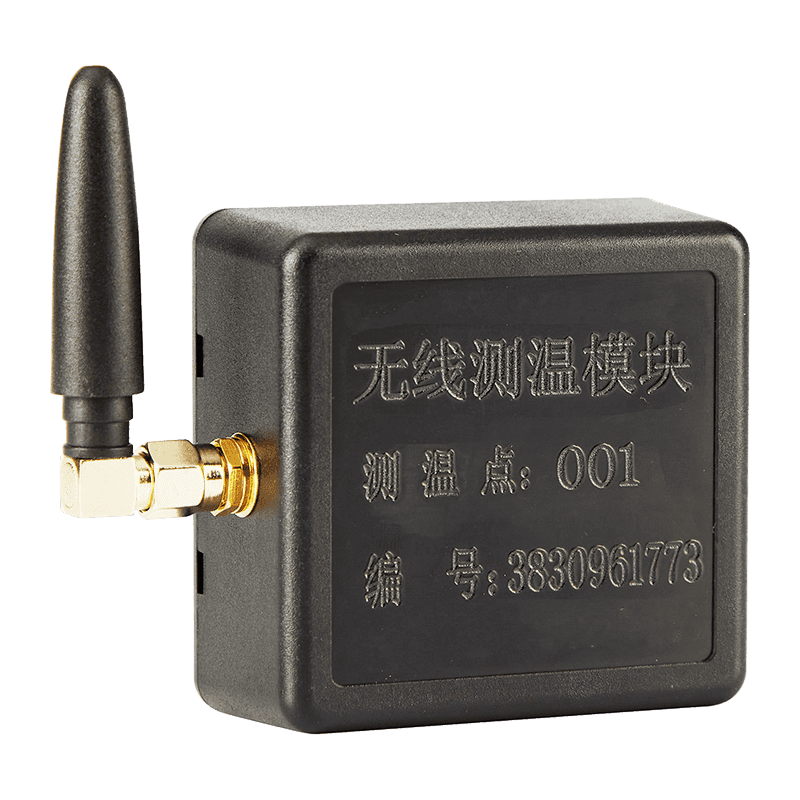
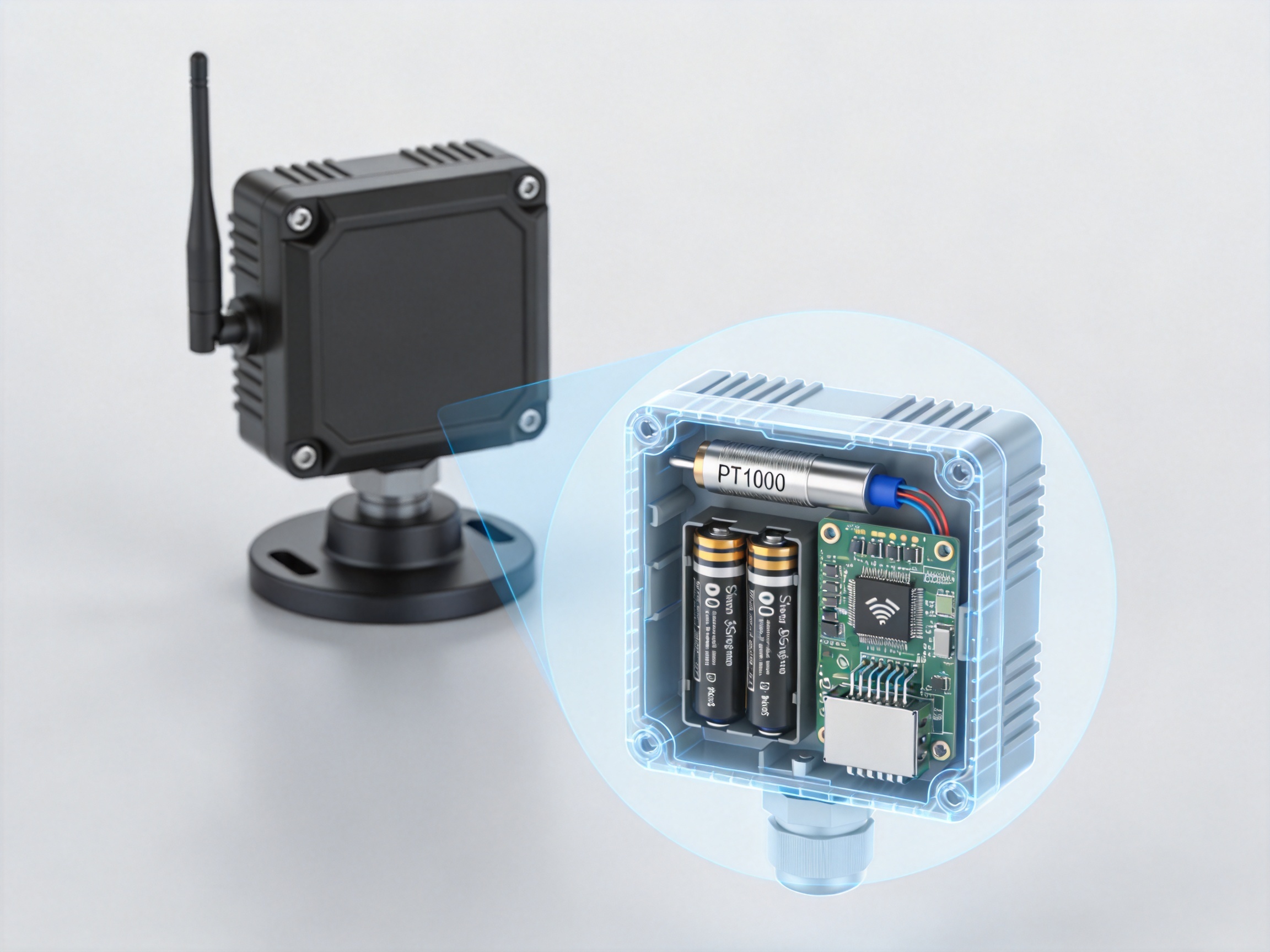
The magnetic-attachment wireless temperature measurement sensor is a single-channel temperature monitoring device with ultra-low power consumption and high measurement accuracy. It is composed of a temperature sensing element, signal modulation and amplification circuit, logic control circuit, wireless communication circuit, lithium battery, antenna, and rugged enclosure. The sensor collects temperature data from the monitored surface or contact point and transmits it through a wireless network to a wireless temperature measurement host.
Its magnetic installation method is one of its most important advantages. In many industrial power environments, wiring additional temperature probes can be expensive, disruptive, and difficult. Cable routing inside high-voltage equipment may introduce insulation concerns, increase installation time, or require shutdowns. Magnetic mounting simplifies this process. The sensor can be placed on the surface of suitable ferromagnetic components or on prepared mounting positions, making it practical for retrofitting existing equipment and expanding monitoring coverage across multiple assets.
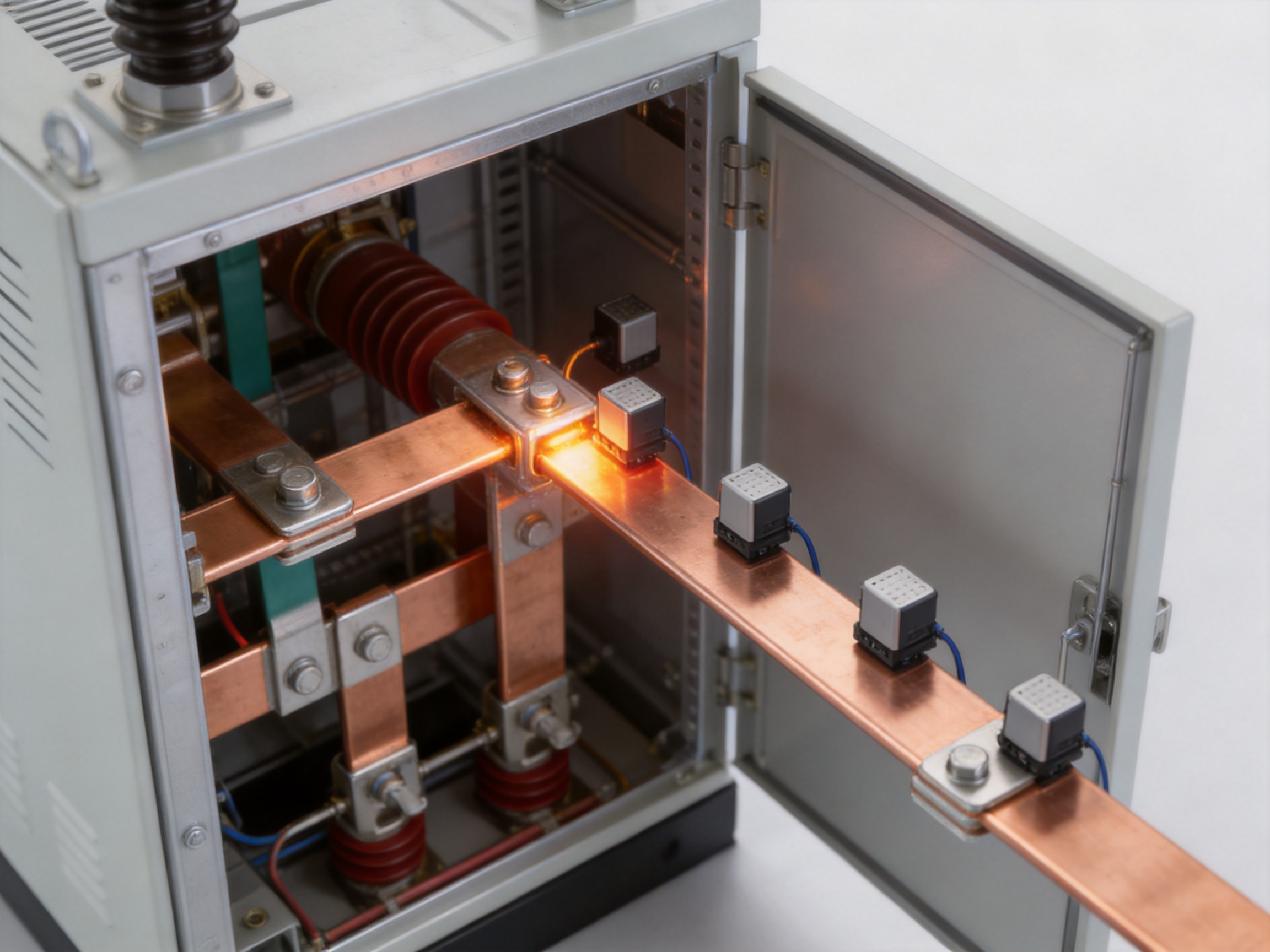
The sensor is especially suitable for measuring the operating temperature of high-voltage energized objects and related components. Common application points include high-power motor terminals, exposed contacts in high-voltage switchgear, busbar connections, outdoor disconnect switches, transformer inlet and outlet terminals, wall-penetrating cable clamps, outdoor flexible copper busbar connections, and similar electrical interfaces. These locations are often exposed to thermal stress and are critical to safe power transmission and distribution.
Unlike conventional wired temperature measurement solutions, this wireless sensor reduces installation complexity and helps avoid extensive cable laying. Unlike occasional handheld thermal inspection, it supports continuous or scheduled monitoring with a default sampling frequency of 10 seconds. The data can be uploaded automatically, allowing the host system to analyze trends, generate alarms, and support maintenance decisions. This makes it particularly valuable in environments where early warning is essential and where abnormal temperature rise may lead to downtime, equipment damage, or safety incidents.
Core Technical Specifications
The technical configuration of the sensor reflects a balance between measurement performance, wireless stability, installation convenience, and long-term maintenance economy. The following table summarizes key parameters.
Parameter |
Specification |
Operational Value |
Temperature measurement range |
-40 to +200°C |
Supports low-temperature outdoor conditions and high-temperature electrical contact monitoring. |
Measurement accuracy |
±1°C |
Provides dependable data for alarms, trend analysis, and predictive maintenance. |
Temperature sensing element |
PT1000 thermistor |
Offers stable resistance-temperature characteristics suitable for industrial measurement. |
Sampling frequency |
Default 10 seconds |
Enables near real-time thermal observation without excessive battery consumption. |
Communication method |
LoRa |
Provides long-distance, low-power wireless data transmission. |
Wireless frequency |
470 to 510 MHz |
Suitable for industrial wireless temperature monitoring networks. |
Wireless transmission distance |
Up to 800 meters |
Allows flexible deployment in factories, switchyards, substations, and large facilities. |
Battery lifespan |
5 to 8 years |
Reduces maintenance frequency and supports long-term asset monitoring. |
Installation method |
Magnetic fixation |
Simplifies installation and makes retrofitting more efficient. |
External dimensions |
85 mm × 85 mm × 34 mm |
Compact form factor for installation on various equipment surfaces. |
Why Temperature Monitoring Matters in Industrial Power Systems
Electrical equipment failures rarely appear without warning. In many cases, a dangerous fault begins as a small increase in contact resistance. This may occur because of loose bolts, oxidation, poor crimping, vibration, contamination, aging conductive surfaces, or repeated thermal cycling. As resistance increases, heat generation increases according to the relationship between current and resistance. The hotter the connection becomes, the more quickly materials degrade, which may further increase resistance and create a negative feedback cycle. If the problem is not found early, it can lead to insulation breakdown, arcing, conductor deformation, fire, or power outage.
Traditional maintenance methods often rely on periodic inspection. Technicians may use infrared cameras or contact thermometers during scheduled rounds. These methods are useful, but they only capture conditions at a specific moment. A connection may appear normal during inspection and overheat later during peak load. Outdoor equipment may experience temperature variation due to weather, solar radiation, humidity, wind, and load changes. Industrial production lines may also operate at different loads throughout the day. For these reasons, continuous or frequent wireless temperature measurement is more effective than occasional inspection alone.
A magnetic wireless temperature sensor provides a practical bridge between manual inspection and fully digital predictive maintenance. By installing sensors on known risk points, users can collect regular temperature data, compare operating values across similar components, identify abnormal trends, and respond before failure occurs. When integrated into a wireless temperature measurement host or broader industrial IoT platform, this data becomes part of an intelligent condition monitoring system. Maintenance teams gain visibility into equipment health without opening cabinets frequently or entering high-risk areas unnecessarily.
This approach contributes to safety as well as efficiency. In high-voltage environments, reducing direct human contact with energized equipment is a significant benefit. Wireless monitoring can limit the need for frequent physical inspection in hazardous zones. It can also help avoid unexpected shutdowns, protect expensive assets, and support compliance with internal safety and maintenance standards. For factories pursuing digital transformation, temperature monitoring is often one of the most cost-effective first steps because it addresses a clear operational risk and produces measurable value.
Key Product Advantages
Magnetic Installation for Fast Deployment
One of the strongest advantages of this sensor is its magnetic mounting method. Compared with bolted, strapped, or wired probes, magnetic fixation can significantly reduce installation workload. In many retrofit projects, the cost of installing monitoring hardware is not limited to the sensor itself; it also includes shutdown planning, cabinet modification, wiring, labor, insulation verification, and commissioning. A magnetic sensor helps reduce these barriers by allowing faster placement on suitable surfaces.
This convenience is especially important for existing plants and power facilities. Many electrical assets were not originally designed with built-in temperature sensors. Adding wired probes may require drilling, routing cables, or modifying internal layouts. Magnetic installation provides a more flexible option. It also allows maintenance teams to adjust monitoring points more easily as risk assessments change. If an operating condition indicates that another connection requires observation, the sensor can be redeployed according to site requirements.
Wide Temperature Range for Harsh Industrial Environments
The measurement range of -40 to +200°C makes the sensor suitable for a broad range of operating conditions. Outdoor installations may experience low ambient temperatures, while electrical contact points can rise sharply under abnormal load or poor contact conditions. A narrow-range sensor may fail to provide meaningful data in extreme conditions, but this product is designed to cover both cold and high-temperature scenarios common in industrial and power-distribution applications.
This wide range supports equipment such as outdoor isolating switches, transformer terminals, busbar joints, and motor connections. In real-world conditions, temperature monitoring must account not only for normal operation but also for fault development. The ability to measure up to +200°C gives users valuable visibility into serious overheating trends before catastrophic failure occurs.
High Accuracy for Reliable Decision-Making
The sensor provides measurement accuracy of ±1°C. In industrial temperature monitoring, accuracy is not only a specification; it determines the reliability of alarms and the credibility of trend analysis. If a sensor is unstable or inaccurate, users may face false alarms or miss early warning signs. Accurate measurement allows maintenance teams to define alarm thresholds with greater confidence, compare similar equipment points, and track gradual temperature increases over time.
The PT1000 sensing element contributes to stable performance. PT1000 elements are widely used in industrial temperature measurement because of their predictable resistance-temperature behavior and suitability for precision applications. When combined with signal modulation and amplification circuits, logic control, and calibrated processing, the sensor can deliver dependable data for long-term monitoring.
LoRa Wireless Communication for Long-Distance Transmission
The use of LoRa wireless communication is a major advantage in industrial facilities. LoRa technology is known for long-distance transmission, low power consumption, and good performance in complex deployment environments. With a transmission distance of up to 800 meters, the sensor can support broad monitoring coverage in factories, distribution rooms, substations, outdoor switchyards, and large equipment areas.
Wireless communication reduces the need for data cables and allows flexible network planning. This is valuable where wiring is difficult, expensive, or undesirable. The 470 to 510 MHz wireless frequency range supports reliable communication for the intended monitoring system. When properly deployed with a compatible host, sensors can upload temperature data and battery voltage information to a centralized platform, making multi-point supervision more efficient.
Ultra-Low Power Design and Long Battery Life
Battery life is a critical factor for wireless sensors. A product that requires frequent battery replacement may become costly and inconvenient, especially when installed in high-voltage cabinets, outdoor structures, or hard-to-reach positions. This sensor is designed for ultra-low power operation and offers a battery lifespan of 5 to 8 years. That long service life reduces maintenance frequency and makes large-scale deployment more practical.
The default 10-second sampling frequency provides a strong balance between timely data collection and energy efficiency. The internal logic control circuit manages measurement and wireless transmission behavior to conserve power while maintaining monitoring effectiveness. The battery voltage self-test function also helps users understand sensor health and plan replacement before power depletion affects monitoring continuity.
Compact Structure and Practical Dimensions
The external dimensions of 85 mm × 85 mm × 34 mm make the sensor compact enough for many industrial installation points while still accommodating the sensing element, battery, antenna, wireless circuit, and protective enclosure. A compact design is important because electrical equipment often has limited available space. The sensor must be large enough to perform reliably but small enough to avoid interfering with equipment operation, cabinet doors, insulation clearances, or maintenance access.
Single-Channel Focus for Point-Specific Monitoring
The product is designed for single-channel temperature detection. This is beneficial when monitoring specific high-risk points. Instead of using one multi-channel device with multiple wired probes, users can place individual wireless sensors directly at each critical location. This distributed architecture improves flexibility and reduces wiring complexity. Each sensor becomes an independent measuring node, and the system can be expanded according to the number of monitored assets.
Advantages Compared with Competing Solutions
In the market for industrial temperature monitoring, users may consider wired sensors, passive wireless sensors, infrared inspection tools, fiber-optic temperature systems, or general-purpose IoT temperature devices. The magnetic-attachment wireless temperature measurement sensor offers a strong combination of installation convenience, measurement accuracy, battery life, and industrial applicability.
Compared with wired temperature sensors, it dramatically reduces installation complexity. Wired systems may provide stable communication, but they require cable routing, terminal connections, insulation planning, and often more installation time. In high-voltage or high-current equipment, additional wiring can complicate maintenance and may not be suitable for retrofit projects. A wireless magnetic sensor avoids these concerns and can be deployed with less disruption.
Compared with handheld infrared thermal inspection, it offers continuous monitoring rather than periodic snapshots. Infrared inspection remains useful, but it depends on technician availability, inspection intervals, line of sight, and environmental conditions. A wireless sensor installed at the risk point can detect changes between inspection rounds and provide more consistent trend data.
Compared with general-purpose wireless temperature devices, this sensor is designed for industrial power applications. Its temperature range, PT1000 sensing element, LoRa communication, magnetic mounting, and long-life battery are aligned with the needs of electrical asset monitoring. Many consumer or generic IoT temperature sensors are not intended for high-temperature contact points, high-voltage environments, or long-term industrial deployment.
Compared with complex fiber-optic temperature systems, this sensor can be more economical and easier to scale for many point-monitoring applications. Fiber-optic systems have advantages in certain high-electromagnetic-interference or specialized environments, but they may require more costly installation and supporting equipment. A magnetic wireless sensor is often better suited when users need practical monitoring across many electrical connections without heavy infrastructure work.
Compared with passive wireless sensing methods, the built-in lithium battery and active LoRa communication provide strong transmission capability and predictable data upload behavior. The self-contained design makes the sensor suitable for distributed monitoring networks where data must reach a host over meaningful distances.
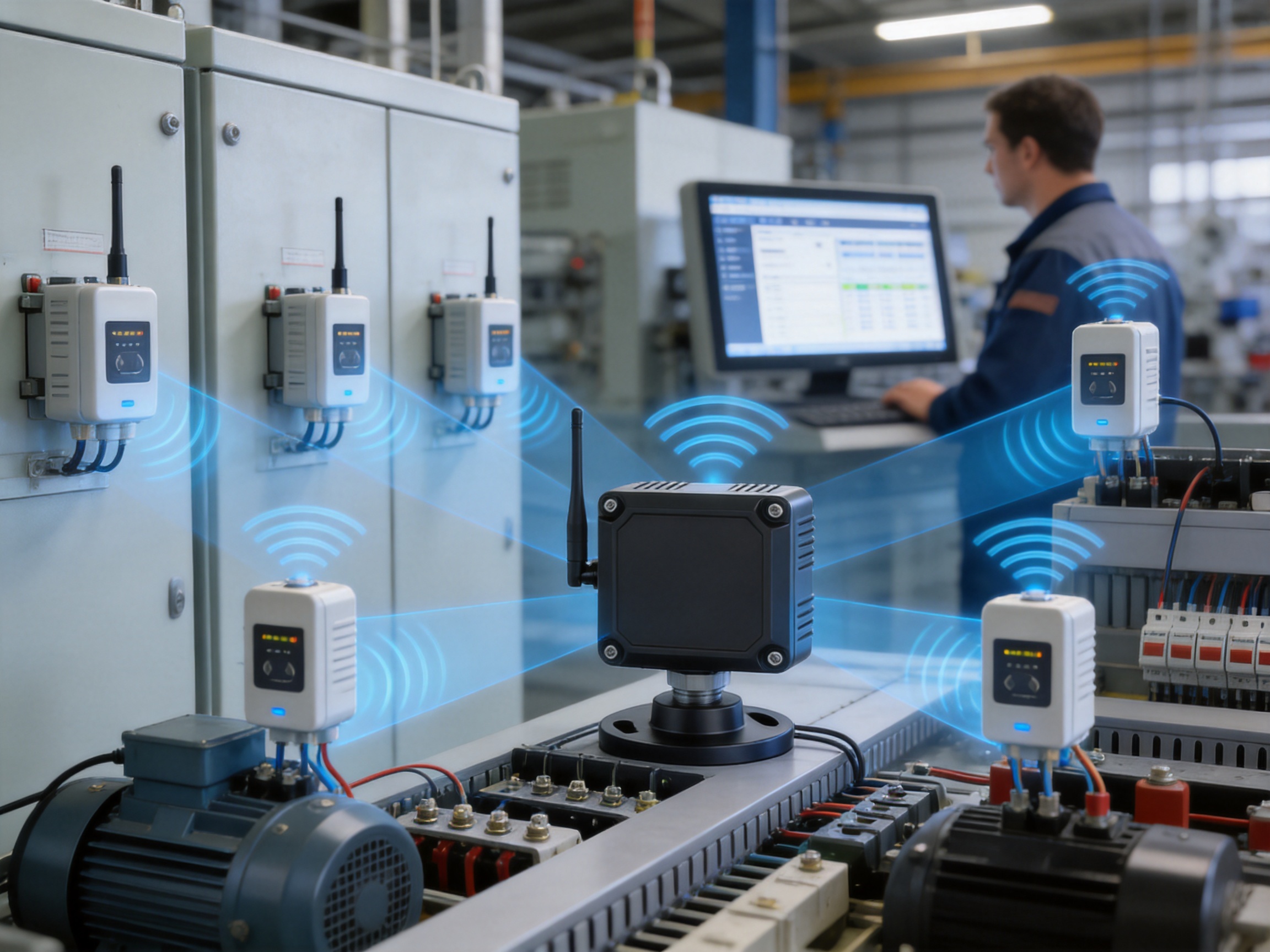
Application Scenarios
High-Voltage Switchgear
High-voltage switchgear contains multiple contact points, busbar connections, and terminals where overheating may develop. Loose connections, load imbalance, aging contacts, and environmental contamination can create localized hot spots. Installing magnetic wireless temperature sensors on exposed contacts and busbar joints helps monitor these conditions in real time. The system can alert operators when temperature exceeds preset thresholds or when one phase shows abnormal heating compared with others.
Transformer Inlet and Outlet Terminals
Transformer terminals are critical interfaces in power distribution. They carry substantial current and are exposed to mechanical stress, thermal cycling, and environmental factors. Abnormal terminal temperature may indicate poor connection, overload, or conductor deterioration. Wireless sensors can monitor these points without complex wiring, helping utilities and industrial facilities protect transformer reliability.
Outdoor Disconnect Switches and Isolating Switches
Outdoor switches experience temperature variation, moisture, wind, dust, and mechanical movement. Their contacts and connection points may degrade over time. Since these devices are often distributed across a site, wired monitoring may be difficult. LoRa wireless transmission and magnetic installation make this sensor suitable for outdoor switch monitoring within the supported communication range.
Busbar Connections and Flexible Copper Links
Busbar systems are essential for power distribution in switchboards, motor control centers, and industrial electrical rooms. A poor busbar joint can generate excessive heat and lead to serious failure. Flexible copper busbar connections are also subject to mechanical movement and connection stress. Installing sensors at these points provides continuous data for preventive maintenance.
High-Power Motors
High-power motors are widely used in manufacturing, mining, water treatment, petrochemical, and infrastructure applications. Motor terminal overheating can result from loose wiring, overload, poor ventilation, or electrical imbalance. Magnetic wireless sensors can support motor condition monitoring by tracking terminal or surface temperature and helping maintenance teams detect abnormal operating conditions.
Wall-Penetrating Cable Clamps
Wall-penetrating cable clamps and similar connection points may be difficult to inspect frequently. If contact resistance increases or thermal stress develops, problems may remain hidden until they become severe. Wireless monitoring provides a practical method for observing these points remotely.
Smart Factories and Industrial IoT Systems
In smart factories, equipment condition monitoring is an important layer of digital productivity. Temperature sensors provide foundational data for predictive maintenance, energy management, and process optimization. When integrated into an industrial IoT architecture, wireless temperature measurement data can be combined with current, voltage, vibration, pressure, flow, and production data. This creates a more complete understanding of asset health and operating efficiency.
System Integration and Data Value
The sensor uploads temperature and battery voltage data to a wireless temperature measurement host. This host can be used to display data, manage sensor nodes, support alarm thresholds, and provide information to higher-level systems. The value of the sensor increases when its data is integrated with digital maintenance workflows.
For example, a maintenance team can use temperature trends to identify gradual deterioration. If a busbar connection normally operates at 45°C under a given load but begins rising to 60°C under similar conditions, the system can flag the change even before an absolute high-temperature alarm occurs. Phase comparison can also reveal problems. If one phase of a three-phase connection is consistently hotter than the others, technicians can investigate imbalance, contact resistance, or connection quality.
Battery voltage self-test data supports operational reliability. Instead of discovering a dead sensor after a monitoring gap, users can track battery condition and plan replacement during scheduled maintenance. This is important in large deployments where many sensors may be installed across different locations.
In a broader smart factory system, temperature data can support maintenance orders, alarm records, historical analysis, and risk ranking. Assets with repeated high-temperature events can be prioritized for inspection. Maintenance results can be compared with temperature trends to confirm whether corrective actions were effective. Over time, this creates a closed-loop maintenance process that is more data-driven than traditional manual rounds.
Manufacturing Strengths Behind the Product
A high-quality wireless temperature sensor requires more than a temperature element and a radio module. It depends on disciplined product design, stable manufacturing processes, careful component selection, assembly quality, calibration, inspection, and reliability verification. ASY Electronics (JiaXing) Co., Ltd. operates as a high-tech enterprise focused on smart factory solutions, data sensing, intelligent connectivity, and industrial data integration. Its product portfolio includes broadband power line carrier products, wireless temperature monitoring systems, transmitters, flow meters, and automatic door controllers, giving the company broad experience in industrial sensing and communication technologies.
The company’s manufacturing strength is reflected in its ability to combine sensing hardware with communication systems. Wireless temperature monitoring is not only a mechanical product and not only an electronic product; it must perform as a complete field device in an industrial network. The temperature measurement circuit must capture accurate data. The logic control circuit must manage sampling and power consumption. The wireless communication circuit must transmit reliably. The enclosure and installation design must support practical use. The battery system must maintain long service life. These requirements demand integrated engineering capability.
Advanced manufacturing processes typically begin with design verification. Product engineers evaluate sensing accuracy, circuit stability, wireless performance, power consumption, mechanical structure, installation reliability, and environmental suitability. Component selection is controlled to ensure consistency. The PT1000 sensing element, lithium battery, communication components, antenna, and circuit elements must work together across the specified temperature range and under real operating conditions.
Printed circuit board assembly quality is central to product reliability. Industrial wireless sensors require stable soldering, clean assembly, controlled process parameters, and inspection procedures. Signal paths must be designed and produced to reduce noise and maintain measurement stability. Low-power circuits must be assembled with attention to leakage, component tolerance, and firmware behavior. Wireless circuits must maintain antenna performance and frequency stability.
Calibration and testing are equally important. A sensor with ±1°C accuracy must be verified through controlled procedures. Temperature response, measurement consistency, wireless communication, battery voltage reporting, and sampling behavior should be checked before delivery. For industrial customers, this process quality reduces commissioning problems and improves long-term trust in the monitoring data.
The company’s broader focus on industrial IoT communication solutions also strengthens the product. Because wireless temperature monitoring often forms part of a larger system, experience with connectivity, edge-layer hardware, and data integration is valuable. The sensor is not developed in isolation; it belongs to a product ecosystem aimed at equipment condition monitoring, energy management, and production process optimization. This system-level perspective helps ensure that the product is practical for real industrial users rather than being limited to laboratory performance.
Design Philosophy: Efficient, Reliable, and Green Monitoring
The sensor aligns with three major goals of modern industrial digitalization: efficiency, reliability, and sustainability. Efficiency is achieved through fast installation, wireless data transmission, low maintenance requirements, and scalable deployment. Reliability is achieved through accurate measurement, stable communication, long battery life, and real-time monitoring capability. Sustainability is supported by preventive maintenance, reduced equipment failure, longer asset service life, and better energy and resource management.
In many factories, unplanned equipment failure creates waste. It wastes energy, spare parts, production time, labor, and sometimes raw materials. Preventing a thermal fault before it causes breakdown is therefore not only a safety or cost issue; it also supports greener operation. By helping users maintain equipment in healthy condition, wireless temperature sensors contribute to more sustainable industrial productivity.
The long battery life of 5 to 8 years also supports maintenance efficiency. Fewer battery replacements mean less labor, fewer site interventions, and reduced operational burden. Ultra-low power wireless communication is important for large sensor networks because energy consumption directly affects lifecycle cost and maintenance planning.
Installation Considerations
Although magnetic installation is simple, proper placement remains important for accurate and reliable monitoring. The sensor should be installed at a location that represents the thermal condition of the target component. The contact surface should be suitable for magnetic fixation and should allow stable attachment. The sensor should not interfere with equipment movement, clearance requirements, insulation safety, or routine maintenance access.
Before installation, users should identify critical temperature points through equipment drawings, maintenance history, load analysis, infrared inspection, or engineering judgment. Common points include busbar joints, terminals, cable lugs, switch contacts, transformer connections, and motor terminals. In three-phase systems, similar points on each phase should often be monitored to support comparison.
Wireless communication should also be considered. The sensor supports transmission up to 800 meters, but actual performance may depend on site layout, metal enclosures, walls, electromagnetic conditions, antenna placement, and host position. During commissioning, users should verify communication quality and adjust host or sensor locations if necessary. A well-planned wireless network improves data continuity and reduces missed transmissions.
Alarm thresholds should be defined according to equipment type, ambient temperature, load conditions, and maintenance standards. A fixed high-temperature threshold can be useful, but trend-based alarms and phase-difference alarms may provide earlier warnings. For example, a point that rises rapidly or becomes much hotter than adjacent points may deserve attention even if it has not reached the maximum allowable temperature.
Maintenance and Lifecycle Benefits
The sensor is designed for long-term operation with minimal maintenance. Its internal battery supports 5 to 8 years of service under suitable operating conditions. The battery voltage self-test function allows users to monitor remaining battery health and plan replacement. Because data is transmitted wirelessly, maintenance teams can check sensor status through the monitoring host instead of physically inspecting each device frequently.
Lifecycle benefits include reduced inspection labor, improved failure prevention, better maintenance scheduling, and lower risk of unplanned downtime. A single avoided equipment failure may justify a broad monitoring project, especially in facilities where production interruption is expensive. Electrical fires, transformer failures, switchgear damage, and motor terminal faults can have serious financial and safety consequences. Continuous temperature monitoring helps reduce these risks.
Another lifecycle advantage is scalability. Users can begin with the most critical assets and expand monitoring coverage over time. Because each sensor is an independent wireless node, additional points can be added as budgets and maintenance strategies evolve. This modular approach is suitable for factories transitioning gradually toward smart maintenance.
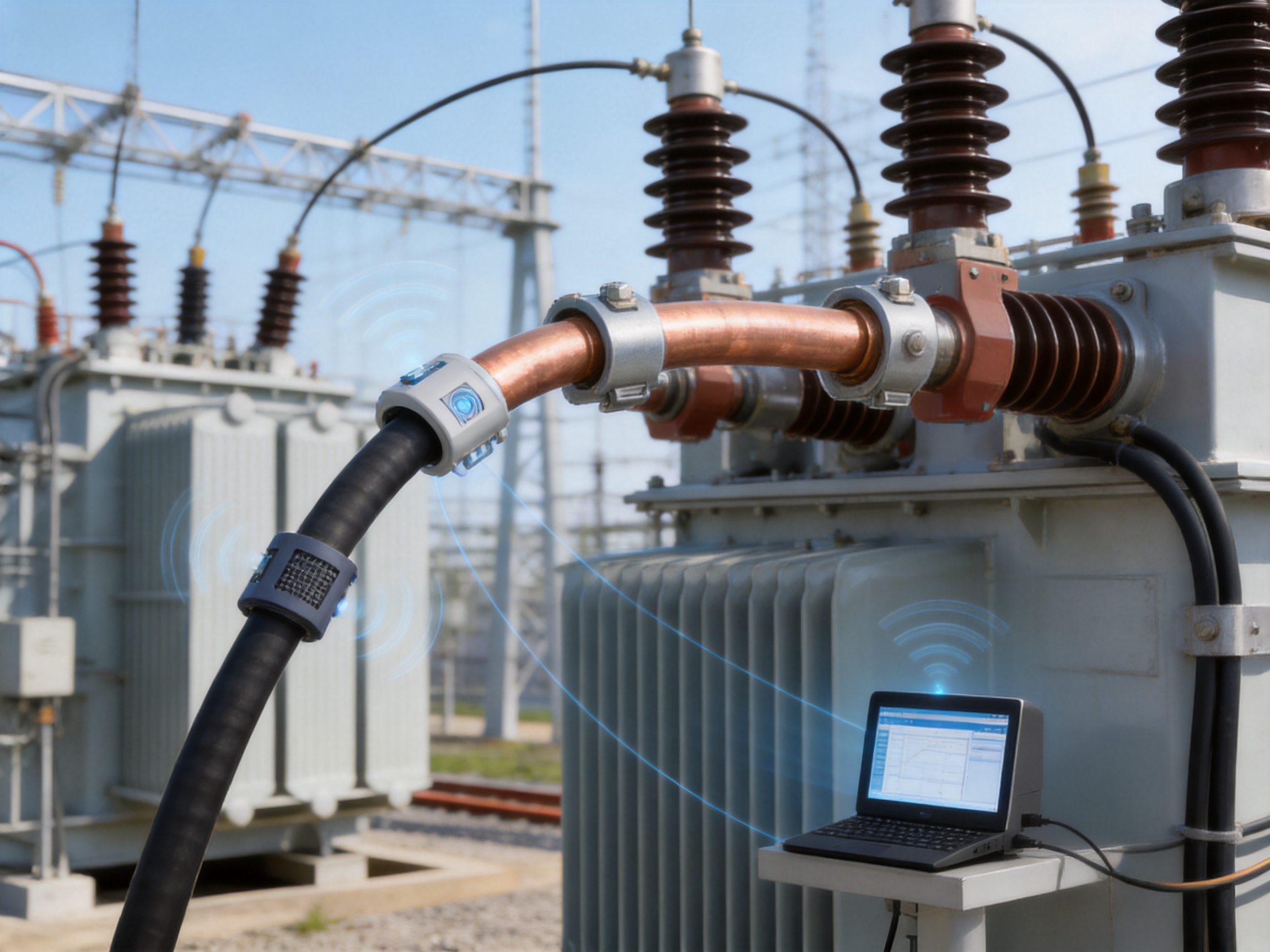
How the Sensor Supports Predictive Maintenance
Predictive maintenance depends on detecting changes before failure occurs. Temperature is one of the most direct indicators of electrical connection health. When a connection deteriorates, temperature often rises before visible damage appears. By collecting data every 10 seconds by default, the sensor provides a detailed thermal history that can be used to identify abnormal operating patterns.
Maintenance teams can analyze maximum temperature, average temperature, rate of temperature rise, duration above threshold, difference between phases, and correlation with load. If the monitoring host or connected platform stores historical data, users can compare current conditions with previous weeks or months. This makes maintenance more scientific. Instead of replacing components only after failure or on a fixed schedule, teams can prioritize assets showing early signs of thermal stress.
Predictive maintenance also improves spare parts planning. If several monitored points show gradual deterioration, parts and labor can be scheduled before a shutdown. This reduces emergency repair costs and improves production planning. In power distribution systems, planned intervention is usually safer and less disruptive than emergency response.
Role in Smart Grid and Smart Factory Development
Smart grid and smart factory systems require accurate field data. Without reliable sensing, digital platforms cannot understand equipment condition. The magnetic-attachment wireless temperature measurement sensor serves as a field data acquisition node for thermal condition monitoring. It helps convert invisible heat risk into measurable data that can be displayed, analyzed, and acted upon.
In smart grid applications, wireless temperature monitoring can improve distribution equipment reliability. Transformers, switchgear, disconnect switches, and busbar systems are essential to power continuity. Monitoring their thermal condition supports grid resilience and reduces outage risk. In smart factories, similar benefits apply to power distribution rooms, motor control centers, production equipment, and energy infrastructure.
The sensor also fits with refined energy management. Overheated electrical connections waste energy because resistance losses increase. While a single connection may seem small, multiple poor connections across a facility can represent unnecessary losses and safety risks. Identifying and correcting abnormal heating improves both reliability and energy efficiency.
Quality, Reliability, and Industrial Suitability
Industrial users expect field devices to operate reliably over long periods. A wireless temperature sensor must maintain measurement stability, communication performance, and power efficiency despite environmental changes. The product’s structure integrates a PT1000 temperature sensing element, signal conditioning, logic control, wireless communication, lithium battery, and antenna in a compact package. This integrated design reduces external dependencies and supports reliable operation.
The magnetic mounting approach also reduces potential wiring failure points. In wired systems, cable damage, connector loosening, and routing problems can affect reliability. A wireless self-contained sensor avoids many of these issues. Its compact enclosure protects the internal electronics, while the magnetic base supports stable attachment when installed correctly.
Quality control in manufacturing is essential for consistency. Industrial customers may deploy dozens, hundreds, or even thousands of sensors. Consistent measurement behavior across units is necessary for meaningful comparison. Stable production processes, inspection, calibration, and communication testing help ensure that each sensor performs according to specification.
Purchasing Considerations for Industrial Users
When evaluating wireless temperature sensors, buyers should consider more than the initial purchase price. Important factors include measurement range, accuracy, communication distance, battery life, installation method, compatibility with monitoring hosts, environmental suitability, supplier engineering capability, and long-term support. A low-cost sensor with short battery life or poor communication may become expensive over time due to maintenance, data loss, or replacement needs.
This magnetic wireless sensor offers a strong overall value proposition because it combines ±1°C accuracy, a wide temperature range, LoRa communication, up to 800 meters transmission distance, 5 to 8 years battery life, and magnetic installation. These characteristics directly address common industrial pain points: difficult wiring, limited inspection frequency, hidden hot spots, maintenance labor, and safety risk.
Supplier capability is also important. ASY Electronics (JiaXing) Co., Ltd. focuses on industrial IoT communication solutions and smart factory technologies. Its experience in data sensing, intelligent connectivity, broadband power line carrier technology, wireless temperature monitoring systems, transmitters, flow meters, and controllers gives it a broad technical foundation. This is valuable for customers who need not only a sensor but also system-level understanding and integration support.
Frequently Asked Questions
What is the main purpose of the magnetic-attachment wireless temperature measurement sensor?
The main purpose is to monitor the temperature of critical electrical and industrial equipment points, especially surfaces or contacts of high-voltage energized objects. It helps detect overheating in switchgear contacts, busbar joints, transformer terminals, outdoor disconnect switches, motor terminals, cable clamps, and flexible copper connections.
What temperature range does the sensor support?
The sensor supports a temperature measurement range from -40 to +200°C. This makes it suitable for both low-temperature outdoor environments and high-temperature electrical contact monitoring.
How accurate is the sensor?
The measurement accuracy is ±1°C. This level of accuracy supports reliable alarm setting, thermal trend analysis, and maintenance decision-making.
What sensing element is used?
The sensor uses a PT1000 thermistor, a widely used industrial temperature sensing element known for stable temperature-resistance characteristics.
How often does the sensor sample temperature?
The default temperature sampling frequency is 10 seconds. This provides near real-time monitoring while supporting low-power operation.
What wireless communication method does it use?
The sensor uses LoRa wireless communication. LoRa is suitable for long-distance, low-power industrial monitoring applications.
What is the wireless transmission distance?
The wireless transmission distance is up to 800 meters under suitable conditions. Actual performance may vary depending on site structure, obstacles, electromagnetic environment, and host placement.
How long does the battery last?
The built-in lithium battery is designed for a lifespan of 5 to 8 years, depending on operating conditions, sampling and transmission behavior, and environmental factors.
How is the sensor installed?
The sensor uses magnetic fixation. This allows fast installation on suitable surfaces and is especially useful for retrofit projects where wiring is difficult or expensive.
Does the sensor monitor its own battery voltage?
Yes. It includes a battery voltage self-test function. Battery status data is uploaded to the wireless temperature measurement host so users can plan maintenance before battery depletion.
Is this sensor suitable for smart factory projects?
Yes. It is well suited for smart factory condition monitoring because it provides wireless thermal data from critical equipment points. The data can support predictive maintenance, energy management, and production reliability improvement.
How does it compare with handheld infrared inspection?
Handheld infrared inspection provides useful spot checks, but it is periodic and depends on manual inspection schedules. This wireless sensor provides continuous or frequent monitoring, making it better for detecting temperature changes that occur between inspection rounds.
Why is magnetic mounting important?
Magnetic mounting reduces installation complexity, avoids extensive wiring, supports faster deployment, and makes it easier to retrofit existing electrical equipment. It also allows flexible adjustment of monitoring points when site requirements change.
What industries can benefit from this sensor?
Industries including power distribution, manufacturing, petrochemical processing, metallurgy, mining, water treatment, transportation infrastructure, data centers, and large commercial facilities can benefit from wireless temperature monitoring of electrical assets.
Conclusion
The magnetic-attachment wireless temperature measurement sensor is a practical and powerful solution for industrial temperature monitoring. It addresses a critical need: detecting abnormal heat in electrical and power-distribution assets before failures occur. With a measurement range of -40 to +200°C, ±1°C accuracy, PT1000 sensing technology, LoRa communication, up to 800 meters wireless transmission, a 5 to 8 year battery lifespan, and magnetic installation, it provides a strong balance of performance, convenience, and lifecycle value.
Its advantages over competing solutions are clear. Compared with wired sensors, it reduces installation complexity. Compared with infrared inspection, it provides continuous data. Compared with general-purpose IoT sensors, it is better aligned with industrial power applications. Compared with complex alternatives, it offers practical scalability and cost-effective deployment. These strengths make it suitable for high-voltage switchgear, transformer terminals, busbar connections, outdoor switches, high-power motors, cable clamps, and smart factory systems.
Behind the product is a company focused on industrial IoT communication, sensing, intelligent connectivity, and smart factory solutions. ASY Electronics (JiaXing) Co., Ltd. brings experience in edge-layer hardware, wireless temperature monitoring, power line communication, transmitters, flow meters, and industrial control products. This background supports not only product manufacturing but also system-level understanding, which is essential for successful industrial monitoring projects.
For organizations seeking safer, more reliable, and more efficient operation, wireless temperature monitoring is a valuable investment. It turns hidden thermal risk into visible data, enables predictive maintenance, reduces manual inspection pressure, and supports the broader transition toward digital and sustainable industrial productivity.
References
1. Industrial Temperature Measurement Engineering Handbook, Electrical Equipment Monitoring Edition.
2. Practical Guide to Predictive Maintenance for Power Distribution Assets.
3. LoRa Wireless Communication Principles for Industrial Sensor Networks.
4. PT1000 Resistance Temperature Detector Application Notes for Industrial Measurement.
5. Smart Factory Condition Monitoring and Edge Sensing Technology Overview.
6. Electrical Contact Overheating Mechanisms and Preventive Maintenance Methods.