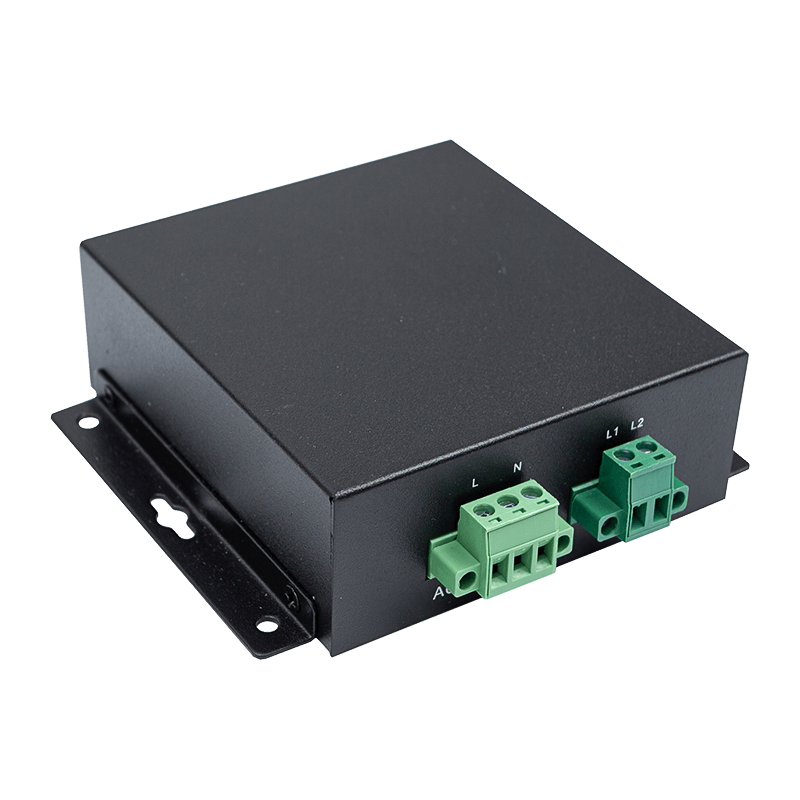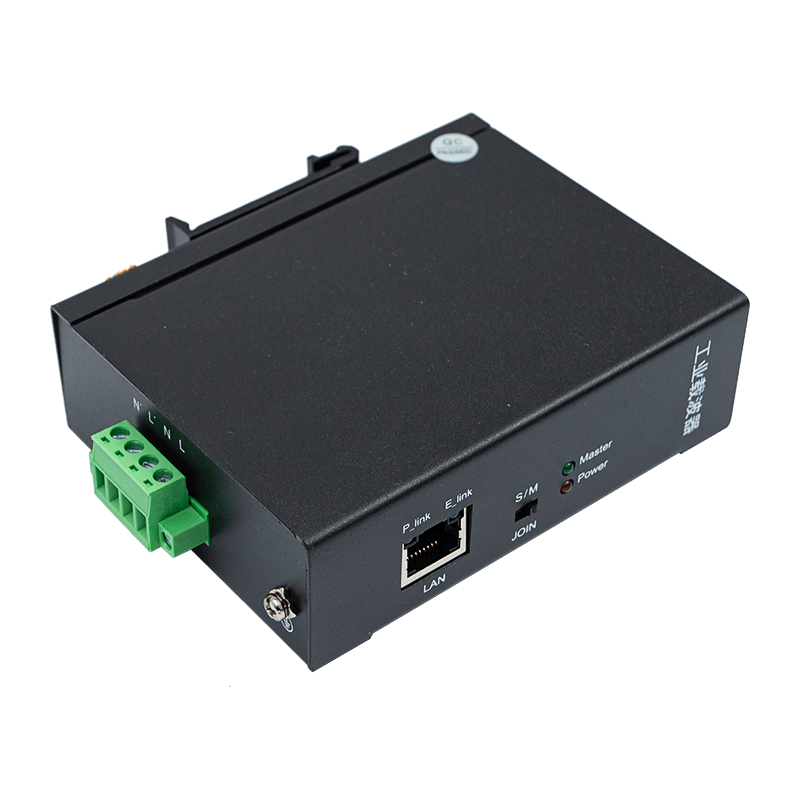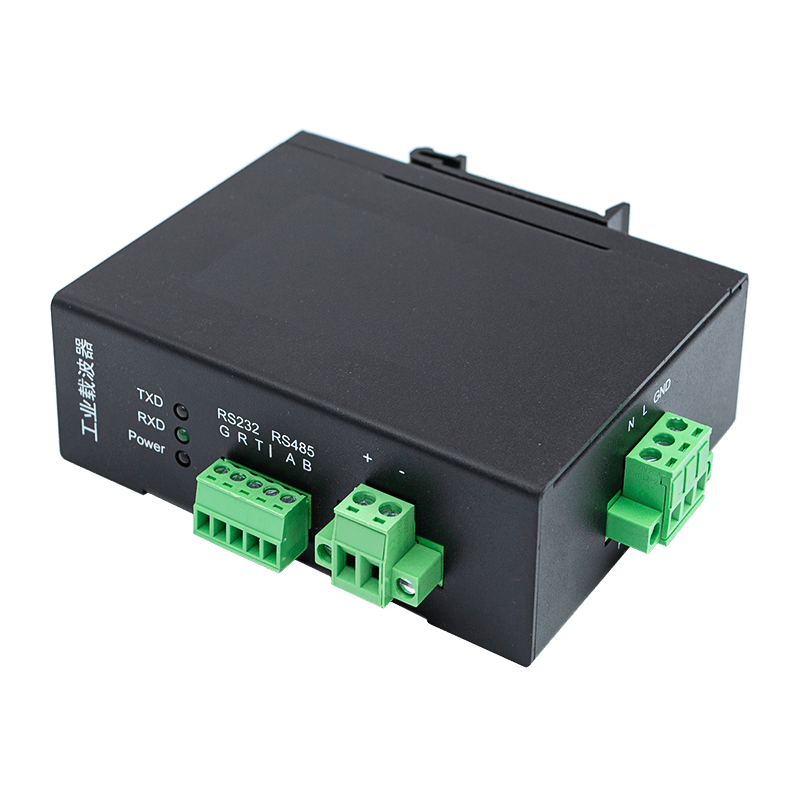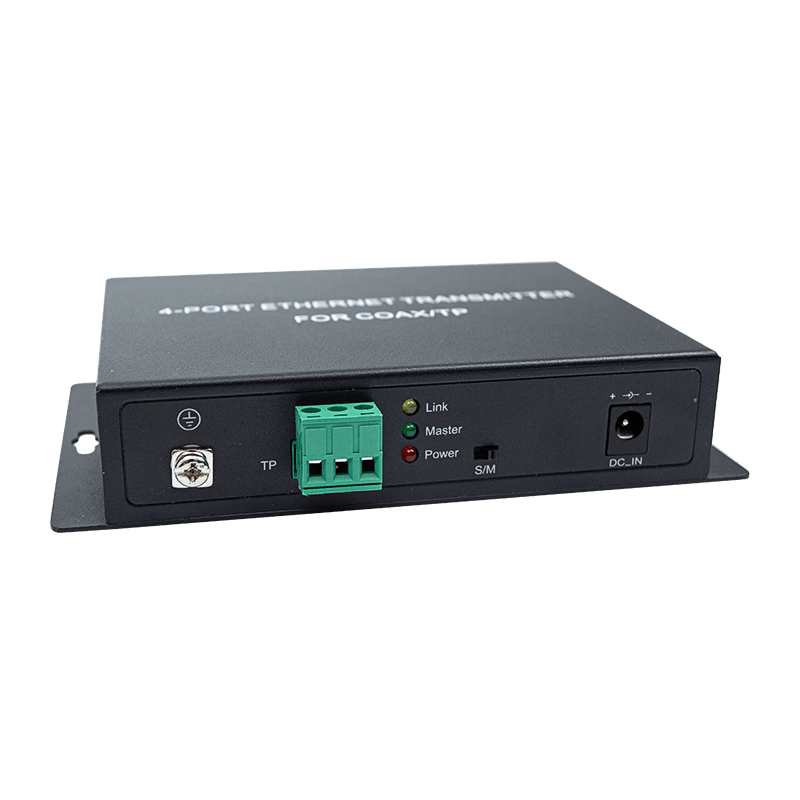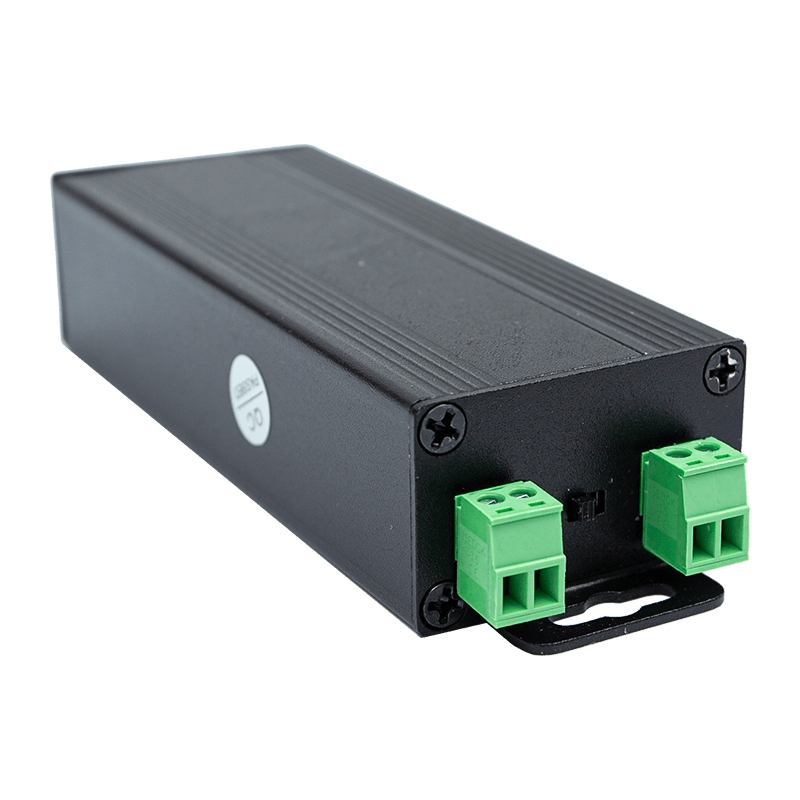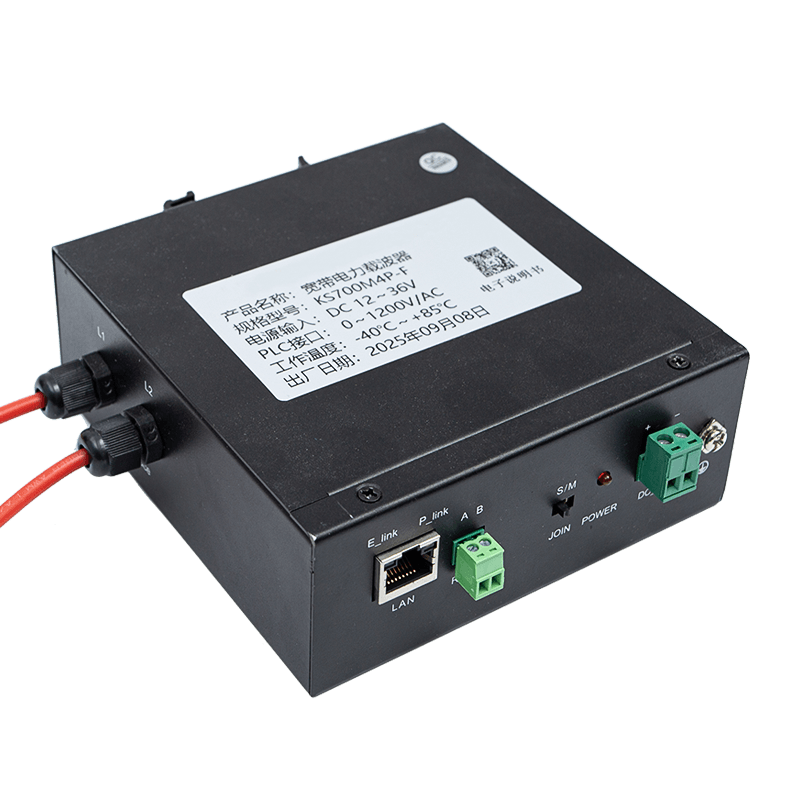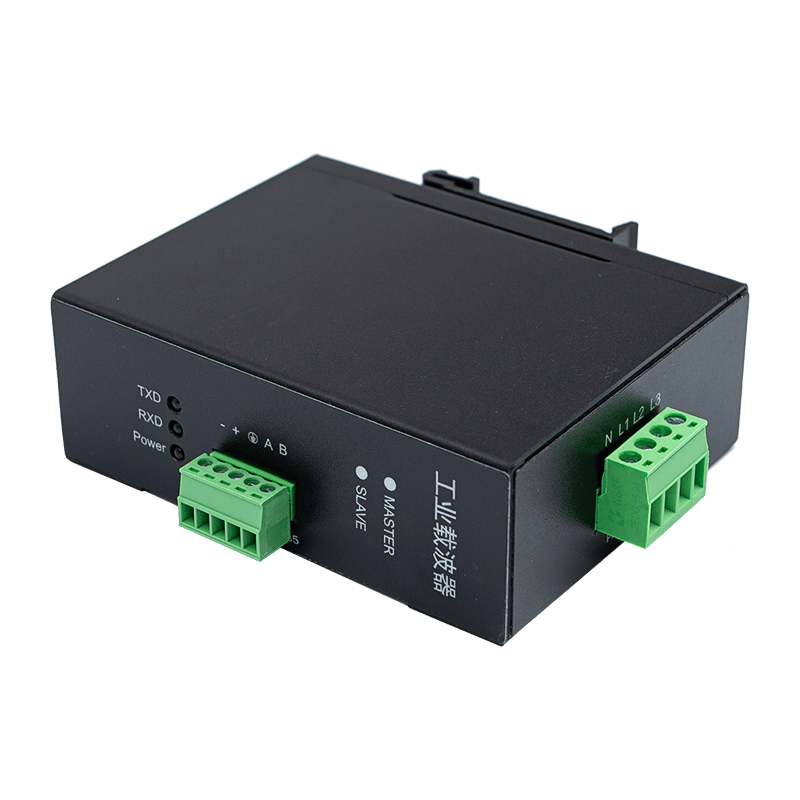


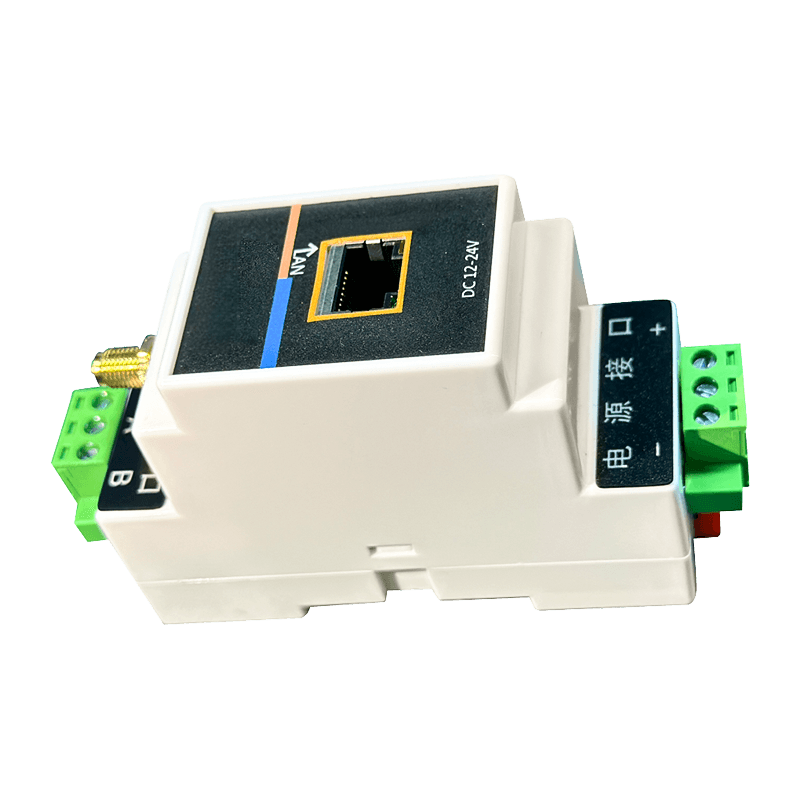
Industrial digital transformation depends on a simple but difficult requirement: machines, sensors, cameras, controllers, and monitoring platforms must communicate reliably in environments that were never designed for modern data traffic. Steel structures, moving equipment, electrical noise, long cable routes, and limited installation windows often make conventional Ethernet cabling expensive or impractical. The single-phase dual-port broadband powerline transceiver addresses this challenge by turning existing power conductors into a high-speed data transmission medium while also providing practical on-site power output for connected devices.
This product is an industrial-grade broadband power line communication device designed for high-speed, long-distance, bidirectional transparent data transmission over AC power lines, slip contact cords, slip ring cables, and other conductive paths. Based on IEEE P1901 powerline communication principles and OFDM modulation technology, it enables industrial users to deploy reliable connectivity without laying dedicated communication cables. Its dual LAN design, integrated coupling circuit, high-voltage isolation, surge protection, automatic networking, and route optimization functions make it especially valuable for industrial IoT, security monitoring, elevator surveillance, railway monitoring, mine monitoring, factory video surveillance, and equipment access scenarios.
Unlike ordinary consumer powerline adapters, this transceiver is built for continuous industrial work. It supports operation across harsh temperature conditions, provides low communication delay, offers AES-128 bit encryption, and supports multiple industrial and Ethernet protocols. It can transmit over power lines up to 500 meters point to point and can reach much longer distances over coaxial cable. For industrial integrators, system builders, equipment manufacturers, and factory operators, it offers a compact and cost-effective way to extend network coverage where standard cabling is difficult, slow, or unsafe to install.
Product Overview
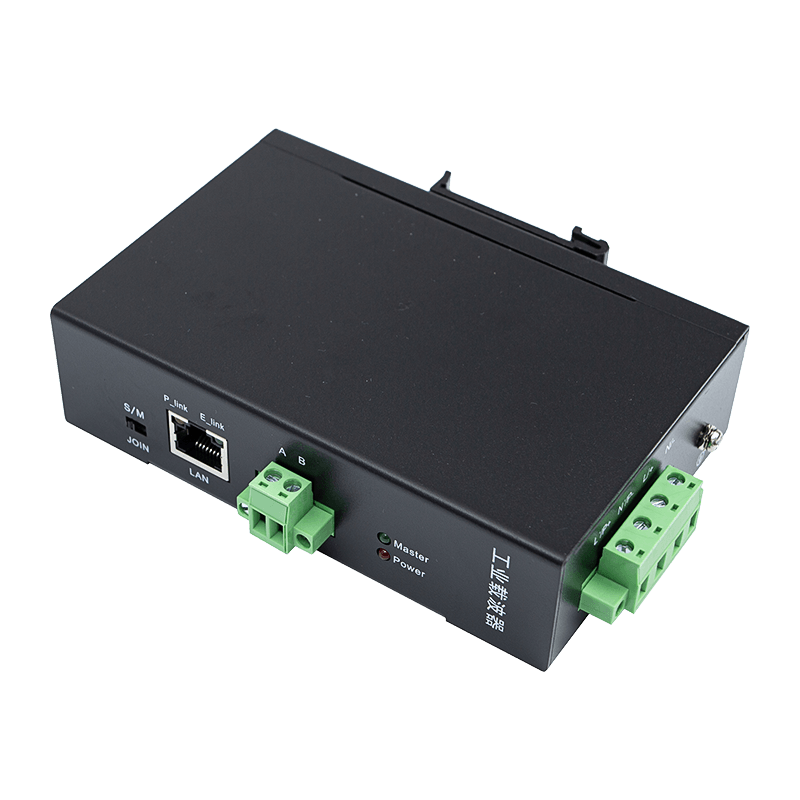
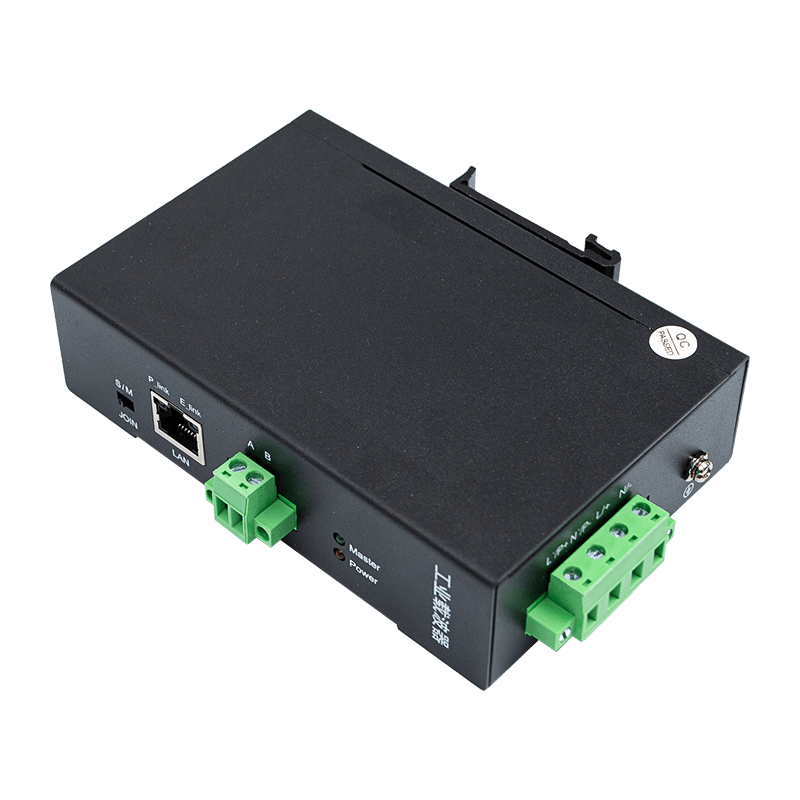
The single-phase dual-port broadband powerline transceiver is designed for AC 100 V to 220 V single-phase power environments. It uses existing power wiring as the communication channel and provides two standard RJ45 Ethernet ports for connecting local network equipment. This dual LAN configuration allows two devices, such as an industrial camera and a controller, or a sensor gateway and an HMI terminal, to access the powerline communication network at the same point. In many field installations, this feature reduces the need for extra Ethernet switches, simplifies wiring, and lowers cabinet space requirements.
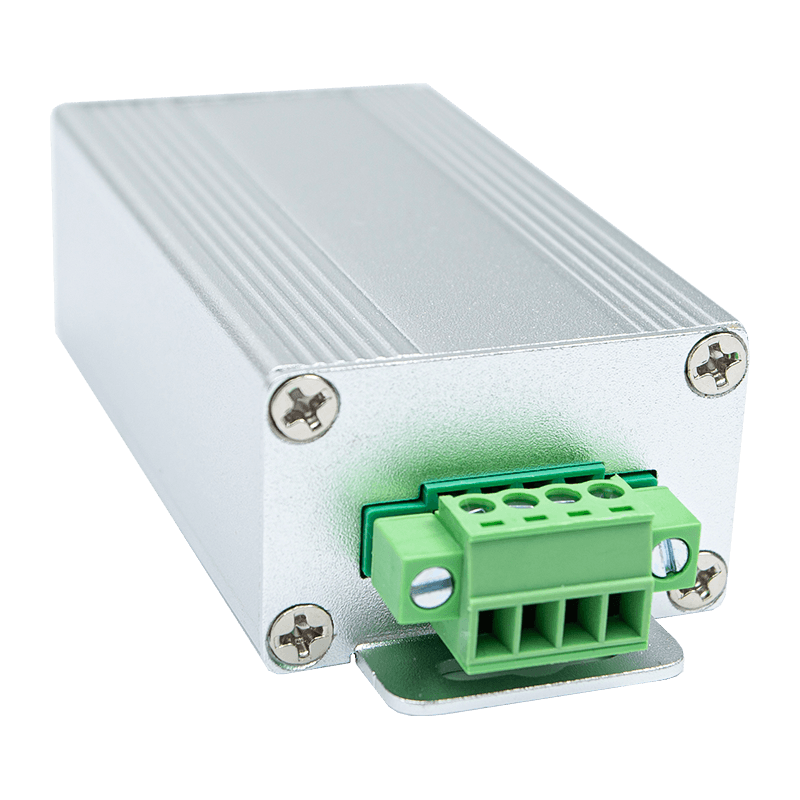
The device also provides a DC 12 V power output with 24 W capacity, enabling it to supply power to connected network equipment in suitable applications. This is particularly useful when an industrial camera, data acquisition unit, wireless bridge, or small controller needs both network access and local DC power. By combining powerline communication and DC auxiliary output in one compact industrial unit, the transceiver reduces the number of installation components and improves deployment efficiency.
Its communication architecture is based on broadband carrier technology. OFDM modulation and demodulation divide the carrier bandwidth into multiple subcarriers, improving anti-interference performance and allowing stable transmission even when the electrical environment is complex. The carrier frequency range from 2 MHz to 28 MHz enables broadband data transmission through existing conductors, while the Ethernet side supports 10 Mbps and 100 Mbps self-adaptive operation.
The transceiver is designed for transparent data transmission, meaning that field devices can communicate through it as if they were connected through a direct Ethernet link. This is a major advantage for industrial applications because it helps preserve existing communication structures and reduces the need for changes in upper-level software, device addressing, or protocol logic. The device supports TCP/IP, UDP, Profinet, Modbus-TCP, HomePlug-related communication, and common IEEE Ethernet standards, making it suitable for a wide range of industrial systems.
Why Powerline Communication Matters in Industrial IoT
In many industrial sites, the most expensive part of a communication upgrade is not the communication device itself but the process of laying cable. New cable trays, drilling, shutdown scheduling, protective conduit, long-distance routing, certification, and labor can increase project cost and extend implementation time. Powerline communication changes this equation by using existing power lines as a data path.
Industrial plants, elevators, mines, rail systems, warehouses, workshops, and security facilities already have power distributed throughout the site. If data can be transmitted through those same conductors, network deployment becomes faster and less invasive. This can be especially beneficial in renovated factories, legacy production lines, moving platforms, crane systems, rotating mechanisms, temporary industrial sites, and areas where signal cables are difficult to install.
Compared with wireless networks, powerline communication can provide stronger physical path stability in metal-dense environments. Industrial wireless systems can be affected by metal walls, moving machinery, electromagnetic interference, signal reflection, and spectrum congestion. While wireless technology remains valuable, powerline communication offers a wired-medium alternative without requiring new data cables. It combines the deployment convenience of using existing infrastructure with the predictable behavior of a conductive communication path.
Compared with fiber or dedicated Ethernet cabling, powerline communication reduces installation complexity. Fiber provides excellent bandwidth and immunity to electromagnetic interference, but it often requires careful termination, optical modules, dedicated protection, and trained installers. Ethernet cabling is familiar and cost-effective for short routes, but it faces distance limitations and may be unsuitable across moving parts or complex mechanical structures. A broadband powerline transceiver fills the gap by enabling communication where power conductors are already available but dedicated data paths are not.
Core Technical Characteristics
The product’s value comes from the combination of communication capability, ruggedized design, and practical field integration. Its main technical characteristics include AC 100 V to 220 V powerline operation, dual RJ45 network ports, DC 12 V output, OFDM modulation, 2 MHz to 28 MHz carrier frequency, AES-128 bit encryption, industrial environmental tolerance, automatic networking, and support for multiple network topologies.
The device supports point-to-point transmission over power lines up to 500 meters, which is suitable for many elevator shafts, factory aisles, warehouse lines, monitoring routes, and equipment clusters. In coaxial cable scenarios, the transmission distance can reach approximately 2 to 3 kilometers, expanding its suitability for special monitoring and communication systems. Data delay is within 10 ms, and packet loss probability is less than 0.1 per mille under suitable conditions. These indicators make the device appropriate for video monitoring, sensor data transmission, industrial control information, and remote equipment access.
Its overall power consumption is no more than 3 W, excluding connected load requirements through the DC output. Low power consumption helps reduce cabinet heat, improves system efficiency, and supports continuous operation. The operating temperature range from minus 40 degrees Celsius to 85 degrees Celsius allows deployment in harsh industrial environments, including outdoor cabinets, elevator rooms, mining-related facilities, rail infrastructure, and workshops with significant temperature variation.
The integrated coupling circuit is another important feature. It provides high-voltage isolation and surge protection, which are essential when communication signals are coupled onto power lines. Industrial electrical environments can include voltage fluctuation, transient surge, switching noise, motor interference, and grounding complexity. A properly designed coupling and protection structure improves device safety and communication stability, distinguishing industrial-grade equipment from consumer-grade alternatives.
Technical Data
Classification |
Technical Indicators |
Power supply port |
AC 100 V to 220 V |
PLC signal port |
AC 100 V to 220 V power line, slip contact cord, slip ring cable, and similar conductive media |
DC power output |
DC 12 V, 24 W |
Modulation type |
OFDM modulation |
Carrier frequency |
2 MHz to 28 MHz |
Network interface |
2 standard RJ45 ports, dual LAN |
Ethernet bandwidth |
10 Mbps and 100 Mbps self-adaptive |
Transmission distance |
Power line point to point up to 500 meters; coaxial cable approximately 2 to 3 kilometers |
Data delay |
Within 10 ms |
Packet loss probability |
Less than 0.1 per mille |
Overall power consumption |
No more than 3 W |
Protocol support |
TCP/IP, UDP, Profinet, HomePlug-related communication, Modbus-TCP, IEEE 802.3, IEEE 802.3u, IEEE 802.3ab, IEEE 1905.1, IEEE 1900, IEEE 1901, and related protocols |
Encryption |
AES-128 bit |
Multicast |
Supports IGMP multicast protocols; maximum number of nodes is 128 |
Dimensions |
114 mm by 98 mm by 35.2 mm; weight approximately 330 g |
Mounting method |
Bracket mounting |
Environmental range |
Operating temperature from minus 40 degrees Celsius to 85 degrees Celsius; operating humidity from 20 percent to 95 percent, non-condensing |
Working capability |
Industrial grade, suitable for 24 hours a day and 7 days a week operation |
Dual LAN Ports: More Than a Convenience Feature
One of the most practical advantages of this transceiver is its dual Ethernet port design. Many competing powerline products provide only one RJ45 interface, which means that an additional switch is required if two devices must be connected at the same installation point. In industrial projects, every added device increases cost, wiring, cabinet space, power consumption, and potential points of failure.
With two standard RJ45 ports, this transceiver can connect two local network devices directly. For example, in an elevator monitoring system, one port may connect to a camera while the other connects to a status controller or sensor gateway. In a factory surveillance system, one port may connect to a high-definition camera while the other links to a local access control unit. In a mining monitoring application, the ports can support a camera and an environmental sensor interface at the same node.
This feature improves single-point access capacity. It also supports flexible local topology design. Instead of treating each communication node as a single-device endpoint, system integrators can design compact network clusters around each transceiver. This helps reduce material lists, simplify installation drawings, and improve maintenance efficiency.
The dual LAN design is especially meaningful when combined with the DC 12 V output. In many cases, the same unit can support both network access and local power for a connected device. This integration reduces the need for separate power adapters or additional DC distribution modules. For field installations where cabinet space is limited or installation time is tightly controlled, this advantage can be decisive.
Automatic Networking and Route Optimization
Industrial sites rarely follow a perfect point-to-point communication structure. Equipment may be distributed across floors, along production lines, inside shafts, around rail corridors, or throughout workshops. The product supports automatic networking and route optimization, enabling it to participate in flexible network topologies such as bus, star, tree, and hybrid structures.
Automatic networking reduces commissioning difficulty. Devices can identify and establish communication paths through the existing powerline medium, helping technicians build a functioning system without extensive manual configuration. Route optimization improves communication reliability by selecting more suitable paths when network conditions vary. In environments where electrical noise, load changes, or distance can affect signal quality, this function contributes to stable data transmission.
This capability provides an important advantage over simple point-to-point communication devices. Some competing products may require fixed pairing, limited topology planning, or manual adjustment when the site layout changes. The automatic networking design supports scalable deployment and makes it easier to expand the system as new devices are added. Since the maximum number of nodes can reach 128 under supported multicast conditions, the product is suitable not only for small installations but also for more complex industrial communication networks.
Route optimization also matters for maintenance. Industrial equipment layouts change over time. Machines are relocated, monitoring points are added, production lines are expanded, and power distribution may be adjusted. A communication solution that can adapt to topology changes lowers long-term maintenance cost and helps extend system service life.
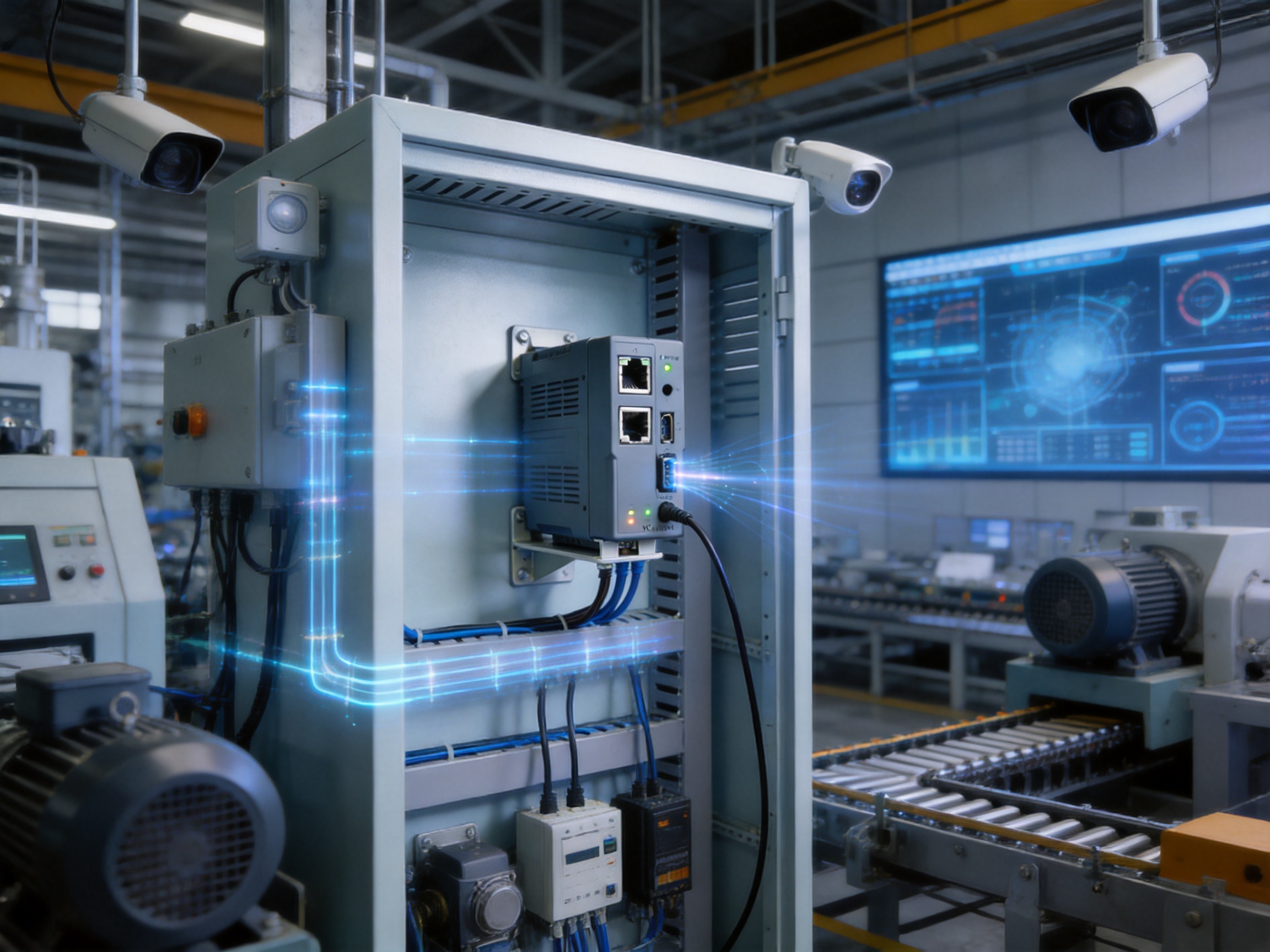
Industrial-Grade Stability and Safety
Industrial communication equipment must operate reliably despite harsh surroundings. The transceiver is designed to support continuous operation 24 hours a day and 7 days a week. Its operating temperature range from minus 40 degrees Celsius to 85 degrees Celsius allows it to serve in locations where standard office or consumer network devices would not be dependable. The supported humidity range from 20 percent to 95 percent, non-condensing, expands its applicability in industrial cabinets, transportation facilities, and semi-outdoor installations.
High-voltage isolation and surge protection are essential to a powerline communication system. Because the communication signal is coupled onto power conductors, the device must isolate sensitive network electronics from high-voltage circuits while protecting against transients. The integrated coupling circuit helps address these requirements by combining communication coupling with electrical safety design. This contributes to the product’s stability and protects connected equipment.
Low packet loss and low latency further support industrial applications. Video surveillance systems require stable bandwidth and low interruption. Sensor networks require reliable delivery of status and measurement data. Controllers and industrial gateways need predictable communication timing. With data delay within 10 ms and packet loss probability below 0.1 per mille under appropriate installation conditions, the transceiver is well aligned with many industrial IoT requirements.
The product also supports AES-128 bit encryption, helping protect transmitted data from unauthorized access. In industrial IoT systems, cybersecurity is increasingly important because field communication networks may carry equipment status, process data, surveillance video, and control-related information. Encryption provides an additional layer of protection, especially when multiple devices share the same physical powerline medium.
Advantages Over Common Competing Solutions
Compared with consumer powerline adapters, this industrial transceiver offers stronger environmental tolerance, more robust electrical protection, industrial protocol compatibility, and continuous operation capability. Consumer adapters are generally designed for indoor residential or office use and may not withstand wide temperature ranges, high humidity, electrical transients, or demanding 24-hour industrial workloads. This product is engineered for industrial-grade reliability.
Compared with single-port industrial powerline devices, the dual LAN interface provides higher access flexibility. It can reduce the need for external Ethernet switches and allow two nearby devices to connect directly. This improves installation simplicity and reduces total system cost. In projects with dozens of monitoring points, eliminating extra switches at multiple nodes can significantly lower hardware quantity, wiring complexity, and future maintenance effort.
Compared with wireless bridges, the transceiver avoids dependence on radio propagation. Wireless communication can be excellent in open spaces, but performance may decline in metal shafts, underground areas, dense factories, or locations with strong electromagnetic interference. Powerline communication uses conductive paths already present in the facility, offering a more controlled communication medium in many industrial layouts.
Compared with new Ethernet cabling, powerline communication reduces installation time and avoids major structural modification. It is particularly useful where cabling would require production shutdown, drilling, conduit installation, high-altitude work, or complex routing. Since the device uses the existing power line as the data medium, it can greatly simplify deployment in renovated projects and existing facilities.
Compared with fiber deployment, the solution offers easier endpoint installation and lower termination complexity. Fiber remains ideal for backbone communication and long-distance high-immunity links, but it can be excessive for many local industrial extensions. The broadband powerline transceiver provides a practical alternative for connecting distributed field devices where power already exists.
Comparison with Alternative Communication Methods
Communication Method |
Typical Strength |
Common Limitation |
How This Product Improves Deployment |
Traditional Ethernet cabling |
Stable and familiar networking |
Requires new cable routes and has distance limitations |
Uses existing power conductors to avoid additional data cabling in difficult areas |
Fiber optic communication |
Long distance and strong interference immunity |
Higher installation skill, termination requirements, and accessory cost |
Provides easier field access for distributed equipment when power wiring already exists |
Wireless communication |
Flexible and fast in open spaces |
May be affected by metal structures, interference, and signal blockage |
Transmits through conductive lines, improving reliability in many industrial environments |
Consumer powerline adapters |
Simple home or office networking |
Limited industrial robustness and environmental tolerance |
Industrial-grade temperature range, protection design, protocol support, and continuous operation |
Single-port PLC devices |
Basic powerline network access |
Often requires extra switch for multiple local devices |
Dual LAN ports support two network devices at one access point |
Application in Elevator Video Surveillance
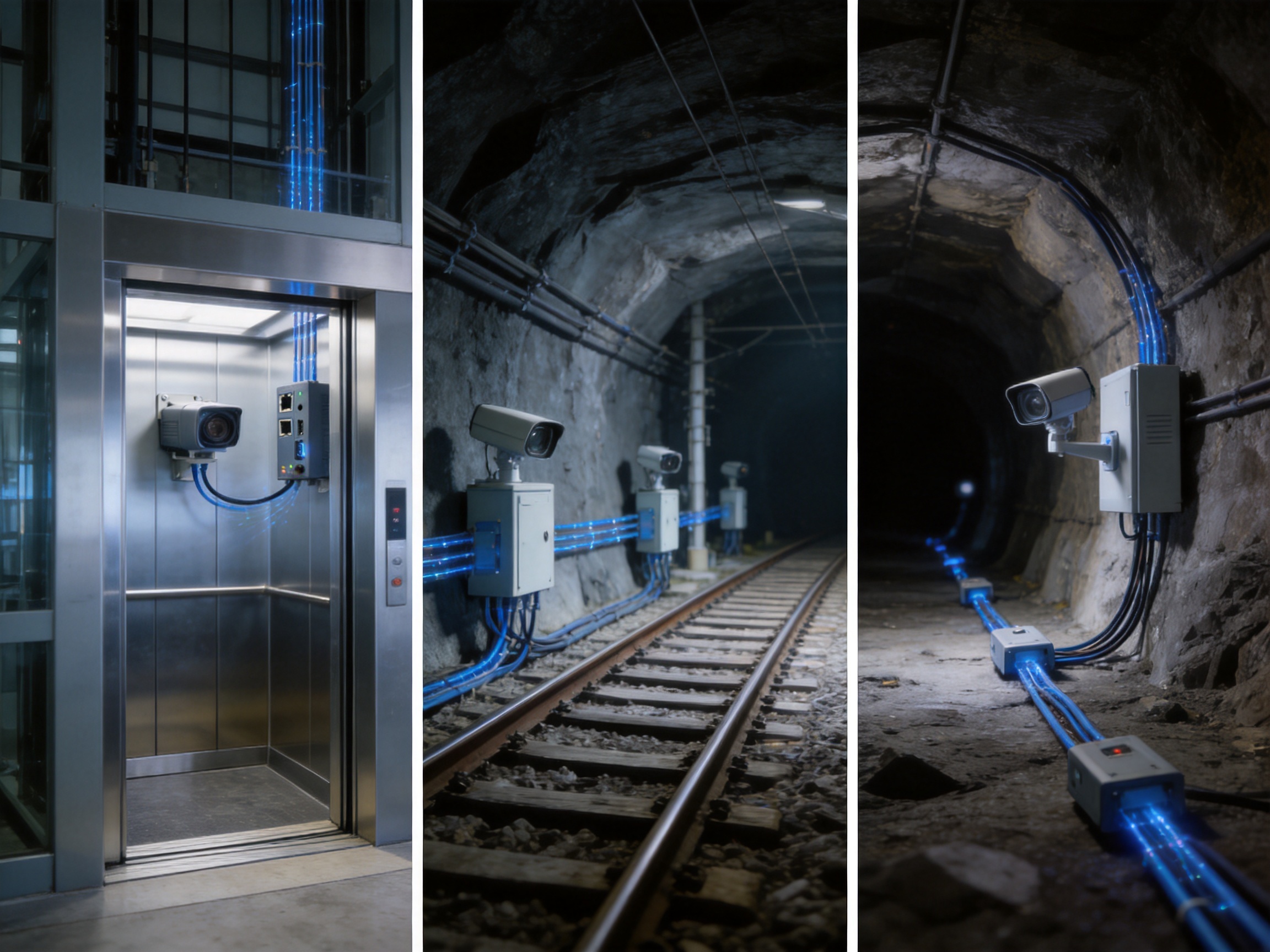
Elevator communication is one of the most suitable applications for broadband powerline communication. Elevator shafts often contain moving cables, limited installation space, strict safety requirements, and long vertical distances. Installing new network cables can be difficult, and wireless transmission may be unstable due to the metal environment and movement of the elevator car.
The transceiver can use existing elevator power-related conductive paths or suitable slip contact systems for data transmission. It supports high-speed communication for video surveillance, allowing cameras inside the elevator car or related monitoring points to transmit video to a control center. The low latency and low packet loss characteristics help maintain clear and continuous video streams.
The dual LAN ports make it possible to connect a camera and another device at the elevator endpoint. For example, a maintenance sensor, access device, or elevator status unit can share the same communication node. The DC 12 V output can also simplify local device powering when the connected equipment fits within the power output specification.
In elevator modernization projects, avoiding additional cable installation can significantly reduce construction time. Building operators often need to minimize elevator downtime. A powerline communication solution can support faster retrofitting, reduce disturbance to the building structure, and provide a scalable path for adding smart monitoring functions.
Application in Railway Communication Monitoring
Railway and rail-related industrial environments require communication systems that can handle distance, vibration, electrical complexity, and distributed monitoring. Cameras, sensors, and access points may be installed across platforms, maintenance sections, equipment rooms, or trackside facilities. In many cases, suitable power wiring is already available, while new data cabling may be costly or difficult to route.
The broadband powerline transceiver supports industrial-grade operation and can be used to extend network communication across existing conductive media. Its support for automatic networking and route optimization helps create flexible communication structures along linear or distributed railway environments. The device’s wide temperature range is also valuable for outdoor or semi-outdoor railway cabinets.
For monitoring systems, transmission stability is crucial. Video streams, equipment state information, alarm data, and environmental monitoring values must reach the management platform reliably. The product’s OFDM-based broadband carrier communication, low delay, and encryption support contribute to secure and consistent communication.
Railway systems also benefit from rugged construction and surge protection. Electrical disturbances may occur due to switching equipment, traction-related systems, or nearby high-power loads. An industrial powerline communication unit with isolation and protection functions is better suited to these conditions than non-industrial networking devices.
Application in Mine Monitoring and Industrial Safety
Mining environments demand practical communication solutions for safety monitoring, video surveillance, personnel-related systems, ventilation monitoring, and equipment condition tracking. Underground or remote industrial spaces can make cable installation difficult, and wireless signals may be blocked by geology, tunnels, machinery, and structural complexity.
Where suitable power conductors are present, the transceiver can provide a data path for monitoring equipment. Its operating temperature range and industrial-grade design support demanding conditions, while the low packet loss characteristic supports dependable data transmission. The dual LAN ports allow monitoring nodes to connect multiple devices, such as a camera and a sensor gateway, without requiring an extra local switch.
Safety-oriented systems benefit from rapid deployment. When new monitoring points are needed, the ability to use existing power infrastructure can shorten installation time and improve coverage. For mining operators, this can support better visibility into underground conditions, equipment operation, and environmental changes.
Although every mine environment requires careful engineering evaluation, explosion safety assessment where applicable, and compliance with local industrial regulations, broadband powerline communication can be an important part of a robust monitoring architecture. The product provides a practical field connectivity option when conventional cabling and wireless communication are constrained.
Application in Factory Video Surveillance and Smart Manufacturing
Smart factories rely on data. Video surveillance, machine condition monitoring, energy management, production process optimization, and safety supervision all require reliable communication. However, many factories were built before digital networking became a central requirement. Retrofitting them with new network cables can involve long installation routes, interference with production, and high labor costs.
The single-phase dual-port broadband powerline transceiver allows factories to extend communication through existing electrical infrastructure. This makes it suitable for production line surveillance, machine-side data collection, mobile equipment monitoring, warehouse camera networks, and remote access to controllers. In a smart manufacturing environment, the ability to quickly add communication nodes can accelerate digital transformation.
Factories often contain motors, variable frequency drives, welding equipment, switching power supplies, and other sources of electrical noise. OFDM modulation helps improve communication robustness in such conditions by distributing data across multiple subcarriers. Combined with route optimization, the device can maintain stable links in complex industrial electrical environments.
The product’s protocol compatibility also supports integration with industrial systems. Support for TCP/IP, UDP, Profinet, Modbus-TCP, and standard Ethernet protocols means it can serve many types of devices without requiring proprietary communication redesign. This is important for factories using mixed equipment from different generations and suppliers.
Manufacturing Strength Behind the Product
A high-quality industrial communication device depends not only on circuit design but also on manufacturing discipline. ASY Electronics focuses on industrial IoT communication, smart factory connectivity, and edge-layer hardware. Its product portfolio includes broadband power line carriers, wireless temperature monitoring systems, industrial transmitters, thermal gas mass flow meters, and automatic door controllers. This broad industrial product foundation gives the company practical knowledge of sensing, communication, control, and field reliability.
The manufacturing strength behind this transceiver can be understood through several dimensions: industrial design capability, component selection, circuit protection engineering, production process control, test verification, and application-oriented customization. A device that must operate on power lines must be designed with careful attention to electrical isolation, electromagnetic compatibility, thermal management, signal coupling, mechanical durability, and long-term stability.
Advanced manufacturing begins with design for reliability. The internal circuit must balance broadband communication performance with safety requirements. The coupling circuit must allow data signal transmission while maintaining isolation from high-voltage power. Surge protection components must respond to transient events without compromising normal communication. Layout design must reduce interference, preserve signal integrity, and support consistent production quality.
Component selection is equally important. Industrial-grade devices require components suitable for wide temperature operation and long service life. Capacitors, protection devices, transformers, connectors, housings, and power modules must be chosen based on electrical stress, environmental conditions, and expected field usage. This distinguishes industrial manufacturing from low-cost consumer production, where component ratings may be optimized mainly for indoor conditions.
Process Control and Quality Assurance
Reliable industrial manufacturing requires repeatability. Each unit must be produced with controlled soldering quality, correct component placement, stable firmware programming, and full functional verification. In a broadband powerline transceiver, small inconsistencies in coupling components, connector quality, shielding, or solder joints can affect communication stability. Therefore, manufacturing process control is essential.
Production of this type of device typically involves incoming material inspection, printed circuit board assembly, automated or semi-automated soldering, optical inspection, functional programming, electrical testing, communication testing, aging tests, mechanical assembly, final inspection, packaging, and shipment verification. These steps help ensure that the product reaching the customer performs consistently in real applications.
Quality assurance should also include environmental and stress-related evaluation. Since the product is rated for operation from minus 40 degrees Celsius to 85 degrees Celsius, verification must consider thermal expansion, component drift, housing performance, and power module stability. Humidity tolerance requires attention to insulation, corrosion resistance, conformal protection where applicable, and proper enclosure design. Surge and isolation testing help confirm safe operation in powerline environments.
Communication performance testing is particularly important. A powerline transceiver must be evaluated not only for Ethernet port functionality but also for real carrier communication over representative conductors. Tests may include throughput verification, latency measurement, packet loss observation, automatic networking behavior, encryption function checks, multicast behavior, and long-distance transmission validation. This application-oriented test approach ensures that the product is not merely electrically functional but also practically useful at industrial sites.
Engineering Advantages for System Integrators
For system integrators, product selection is often based on total project success rather than a single specification. The single-phase dual-port broadband powerline transceiver offers several integration advantages: it reduces cabling work, supports two local Ethernet devices, provides auxiliary DC power, supports multiple protocols, tolerates harsh environments, and enables flexible topologies.
Integrators can use the device to solve difficult last-meter or long-route communication problems. In many projects, the main network backbone may already exist, but extending it to moving equipment, vertical shafts, remote monitoring points, or renovated areas remains challenging. The transceiver serves as a bridge between the existing Ethernet system and the powerline medium, allowing integrators to deliver network access with less construction complexity.
The product’s transparent transmission behavior reduces software integration risk. Field devices can continue using familiar IP-based communication. Cameras can stream video through standard network protocols, sensors can send data through gateway systems, and controllers can communicate through industrial Ethernet protocols. This reduces training needs and shortens commissioning time.
The compact size and bracket mounting design also support practical installation. At approximately 114 mm by 98 mm by 35.2 mm and 330 g, the device can fit into cabinets, equipment panels, elevator-related spaces, monitoring boxes, and local control enclosures. Bracket mounting provides stable mechanical installation and helps protect wiring connections from vibration or accidental movement.
Scalability for Industrial Networks
Industrial IoT projects usually begin with a limited scope and then expand. A factory may first install video monitoring in one workshop, then add machine data collection, energy monitoring, and additional safety sensors. A railway facility may begin with a few monitoring nodes and later expand to more points. A mine may add environmental monitoring as operational areas change. Communication devices must therefore support scalable deployment.
The transceiver supports automatic networking and flexible topologies, making it suitable for expansion. Bus structures can be used along linear facilities, star structures can support centralized distribution, tree structures can match hierarchical site layouts, and hybrid structures can handle complex real-world arrangements. This flexibility helps users avoid redesigning the entire communication network when new endpoints are added.
Support for IGMP multicast protocols and up to 128 nodes under supported conditions is valuable in monitoring systems. Multicast can improve efficiency when video or data streams need to be distributed or managed across network segments. In practical deployment, network planning should still consider bandwidth, traffic type, powerline quality, and device density, but the product’s node support gives designers room for system growth.
Scalability also depends on maintenance simplicity. Devices that require extensive manual configuration at every expansion point can become difficult to manage. Automatic networking reduces this burden. Route optimization further supports stable operation when the communication environment changes. Together, these features make the transceiver suitable for evolving industrial systems.
Security and Data Protection
Industrial connectivity increases operational visibility, but it also introduces cybersecurity responsibilities. Field communication networks may transmit video, equipment status, alarms, production data, and control-related information. Unauthorized access or data interception can create safety, privacy, or operational risks. Therefore, encryption support is a necessary feature in modern industrial communication equipment.
The transceiver supports AES-128 bit encryption, which helps protect data carried over the powerline medium. While encryption is only one part of a complete cybersecurity strategy, it is an important foundation. Industrial users should combine device-level encryption with network segmentation, secure password policies, access control, firewall rules, monitoring, firmware management, and appropriate cybersecurity governance.
Powerline communication networks also require physical and logical planning. Since the transmission medium is a power conductor, engineers should consider the boundaries of the electrical network, coupling points, distribution panels, and possible signal paths. Proper installation helps ensure that communication remains within intended areas and meets security expectations.
Compared with basic unencrypted communication devices, encrypted powerline communication provides stronger protection for industrial IoT data. This is especially important for surveillance systems, smart factory production monitoring, and infrastructure-related communication where data integrity and confidentiality matter.
Energy Efficiency and Sustainable Deployment
The product’s low overall power consumption of no more than 3 W contributes to efficient operation. In large systems with many communication nodes, power consumption accumulates. Lower device power reduces energy cost, heat generation, and cabinet thermal load. This supports sustainable industrial network deployment.
The ability to use existing power lines also supports greener installation practices. New cabling requires copper, plastic insulation, conduit, trays, packaging, transportation, and installation labor. By reducing the need for additional data cabling, powerline communication can lower material consumption and shorten construction time. In retrofit projects, it may also reduce waste from structural modification.
Smart factory development is closely connected with energy management and operational efficiency. Communication infrastructure enables data collection for optimization, but that infrastructure should itself be efficient and practical. A low-power industrial transceiver that simplifies deployment aligns well with the goals of reliable and sustainable digital productivity.
Installation Considerations
Although the product is designed for flexible deployment, correct installation remains important. Engineers should confirm that the powerline medium is suitable for communication, that voltage levels are within the supported AC 100 V to 220 V range, and that wiring practices follow local electrical safety standards. Installation should be performed by qualified personnel familiar with industrial electrical systems.
The physical distance, cable type, branch structure, electrical noise, and connected loads can influence communication quality. Heavy industrial loads, switching devices, filters, transformers, and poor connections may affect signal transmission. Site evaluation and testing are recommended, especially for complex environments. Proper grounding, surge protection coordination, and cable routing practices can improve performance.
For devices connected to the dual RJ45 ports, bandwidth planning is important. High-definition cameras can consume significant network capacity, particularly when multiple video streams are active. Users should select appropriate video encoding, resolution, frame rate, and network architecture. The powerline link should be planned as part of the complete system rather than treated as an isolated component.
When using the DC 12 V output, engineers should confirm the current and power requirements of connected equipment. The rated output is 24 W, and connected loads should remain within safe operating limits. Overloading auxiliary power can affect reliability and should be avoided.
Maintenance and Lifecycle Value
Industrial customers evaluate equipment not only by purchase price but also by lifecycle value. A communication device that reduces installation work, avoids additional switches, supports multiple devices, and operates reliably over time can deliver strong economic benefits. The transceiver’s lifecycle value comes from simpler deployment, reduced accessory needs, lower maintenance complexity, and industrial durability.
Maintenance teams benefit from clear connection points and transparent communication. If a field device fails, technicians can check the local Ethernet port, DC power output, powerline connection, and network status in a structured way. Since the device supports standard Ethernet interfaces and common protocols, troubleshooting can use familiar tools and methods.
Long-term operation also benefits from industrial environmental ratings. Equipment installed in cabinets, shafts, remote facilities, or production areas may be difficult to access frequently. A device designed for wide temperature and continuous service reduces the need for replacement and helps maintain system uptime.
The dual LAN ports can simplify spares management. Instead of stocking separate single-port adapters and small switches for every endpoint, users may standardize on a dual-port communication unit for many installations. This can reduce spare part complexity and improve response speed during maintenance.

Company Capability and Industrial Solution Experience
ASY Electronics is a high-tech enterprise dedicated to building the smart factories of the future. Its mission emphasizes efficient, reliable, and green smart factories, supported by capabilities in data sensing and intelligent connectivity. The company develops edge-layer hardware products and industrial data integration solutions for equipment condition monitoring, refined energy management, and production process optimization.
This background is directly relevant to the single-phase dual-port broadband powerline transceiver. Powerline communication is not an isolated product category; it is part of a wider industrial IoT architecture. Field devices must sense data, transmit data, integrate data, and support decision-making. A manufacturer with experience across sensors, transmitters, flow meters, wireless temperature monitoring, and communication equipment is better positioned to understand practical site requirements.
The company’s manufacturing and engineering strengths support custom powerline carrier solutions for smart grid, industrial IoT, security, and factory applications. Because industrial sites differ widely, standard products often need application guidance or configuration support. Experience with multiple industrial sectors allows the company to help customers evaluate communication media, topology options, node placement, and integration requirements.
Advanced manufacturing also includes responsiveness. Industrial projects frequently need technical consultation, sample testing, adaptation to site conditions, and after-sales engineering support. A manufacturer focused on industrial IoT solutions can provide more than a device; it can provide knowledge for deployment, troubleshooting, and system optimization.
Why This Product Is Well Suited for Smart Grid and Industrial IoT
Smart grid and industrial IoT systems share a common need for reliable distributed communication. Devices are often spread across large facilities, substations, workshops, energy management points, and remote monitoring locations. Existing power infrastructure is widely available, making powerline communication a natural option for certain network layers.
The transceiver’s support for powerline transmission, Ethernet access, encryption, multicast, and industrial protocols makes it suitable for distributed monitoring and data acquisition. In energy management systems, it can support communication between local meters, gateways, and monitoring devices where new cabling is inconvenient. In equipment monitoring systems, it can connect sensors and controllers at machine-side locations. In security systems, it can transmit camera data through existing conductors.
Its industrial design allows deployment in demanding environments where consumer communication products would be unsuitable. The wide temperature range, low latency, surge protection, high-voltage isolation, and 24-hour operation capability support infrastructure-grade applications. This combination is particularly important for smart grid and industrial IoT projects where reliability is not optional.
The product also aligns with the trend toward edge connectivity. As factories and infrastructure systems become smarter, more data is processed near the equipment. Edge devices require stable local communication to send selected data to supervisory platforms. A compact broadband powerline transceiver provides a practical access layer for this edge architecture.
Procurement Value for OEMs and Project Owners
Original equipment manufacturers and project owners need products that are technically capable, easy to integrate, and dependable in field service. The single-phase dual-port broadband powerline transceiver provides procurement value through integrated functions, industrial-grade design, and flexible application coverage.
For OEMs, the device can be integrated into equipment systems that require network communication over existing power conductors or moving contact structures. Examples may include elevator monitoring packages, inspection systems, industrial mobile platforms, and specialized surveillance equipment. The dual LAN ports and DC output reduce external accessories and simplify equipment architecture.
For project owners, the product can reduce deployment cost and shorten installation schedules. Avoiding new communication cable routes can reduce labor, downtime, and construction complexity. This is particularly valuable in operating facilities where shutdown time is expensive. The product can also support phased upgrades, allowing users to add network points as budgets and operational needs evolve.
For distributors and system integrators, the product offers clear market differentiation. It is not merely a standard network adapter; it is an industrial broadband powerline communication device with dual Ethernet access, auxiliary power output, robust environmental tolerance, and flexible networking capability. These advantages help address real field problems and create value beyond basic connectivity.
Q&A
What is the main purpose of this single-phase dual-port broadband powerline transceiver?
Its main purpose is to transmit Ethernet data through existing AC power lines or suitable conductive media, reducing the need for separate communication cabling in industrial environments. It is especially useful for connecting cameras, sensors, controllers, and industrial gateways in locations where installing new network cables is difficult.
How does it differ from an ordinary consumer powerline adapter?
It is designed for industrial operation, not home networking. It supports a wide operating temperature range, 24-hour continuous service, high-voltage isolation, surge protection, industrial protocol compatibility, automatic networking, route optimization, and a rugged mounting structure. These features make it more suitable for factories, elevators, mines, railway systems, and industrial monitoring projects.
Why are two RJ45 ports important?
The dual RJ45 ports allow two network devices to connect at the same installation point. This can eliminate the need for an additional local Ethernet switch, reducing cost, wiring, power consumption, and maintenance complexity. It is useful when a camera and a sensor gateway, or a controller and a monitoring device, must share one communication node.
Can the device provide power to connected equipment?
Yes. It provides a DC 12 V output with 24 W capacity. This can power suitable connected equipment, such as certain cameras, gateways, or small network devices, provided their power requirements remain within the rated output specification.
What transmission distance can be expected?
The device supports point-to-point transmission over power lines up to 500 meters under suitable conditions. Over coaxial cable, the distance can reach approximately 2 to 3 kilometers. Actual performance depends on cable quality, topology, electrical noise, connected loads, and installation conditions.
What protocols does it support?
It supports common Ethernet and industrial communication protocols including TCP/IP, UDP, Profinet, Modbus-TCP, IEEE 802.3, IEEE 802.3u, IEEE 802.3ab, IEEE 1905.1, IEEE 1900, IEEE 1901, and related communication standards. This broad compatibility helps integrate it into existing industrial IoT and monitoring systems.
Is the product suitable for video surveillance?
Yes. The product is well suited for industrial video surveillance applications such as elevator video monitoring, factory camera systems, railway monitoring, mine monitoring, and security systems. Its low latency, low packet loss, and broadband carrier communication support stable video data transmission under appropriate network planning.
Does the product support secure communication?
Yes. It supports AES-128 bit encryption, helping protect data transmitted over the powerline medium. For complete security, users should also apply network segmentation, access control, device management, and cybersecurity best practices.
What network topologies can be built?
The product supports flexible topologies including bus, star, tree, and hybrid networks. Automatic networking and route optimization make it easier to deploy and expand communication systems in complex industrial sites.
Who should consider using this product?
System integrators, OEMs, factory operators, infrastructure managers, security contractors, elevator monitoring providers, mining safety system builders, railway monitoring teams, and smart grid solution developers should consider it when reliable data communication is needed through existing power conductors.
Conclusion
The single-phase dual-port broadband powerline transceiver provides a practical and industrial-grade answer to one of the most persistent problems in industrial IoT: how to extend reliable network communication without expensive or difficult cabling. By using existing power lines as the data transmission medium, it helps reduce installation cost, shorten project schedules, and expand connectivity into areas where conventional Ethernet, fiber, or wireless methods may be inconvenient.
Its key strengths include dual LAN ports, DC 12 V auxiliary output, OFDM broadband carrier communication, AC 100 V to 220 V operation, low latency, low packet loss, AES-128 bit encryption, automatic networking, route optimization, industrial environmental tolerance, and support for continuous 24-hour operation. These features distinguish it from consumer powerline adapters and many basic industrial communication devices.
The product is especially valuable in elevator video surveillance, railway monitoring, mine safety systems, factory surveillance, smart manufacturing, security networks, and distributed industrial IoT access. Its dual-port design and auxiliary power output make each node more capable, while its automatic networking and flexible topology support make it scalable for expanding systems.
Backed by ASY Electronics’ industrial IoT manufacturing experience, edge hardware development capability, and focus on smart factory connectivity, the transceiver represents more than a communication component. It is a field-ready connectivity solution designed for practical deployment, reliable operation, and long-term industrial value.
References
IEEE Standards Association. IEEE 1901 Standard for Broadband over Power Line Networks.
European Committee for Electrotechnical Standardization. EN 50561 Power Line Communication Apparatus Used in Low-Voltage Installations.
IEEE Standards Association. IEEE 802.3 Ethernet Working Group Standards.
HomePlug Powerline Alliance. HomePlug AV and Broadband Powerline Communication Technical Literature.
International Electrotechnical Commission. Industrial Communication Networks and Electromagnetic Compatibility Guidance.
National Institute of Standards and Technology. Guide to Industrial Control Systems Security.
Industrial Ethernet Book. Technical Articles on Industrial Ethernet, Profinet, Modbus-TCP, and Field Communication Integration.