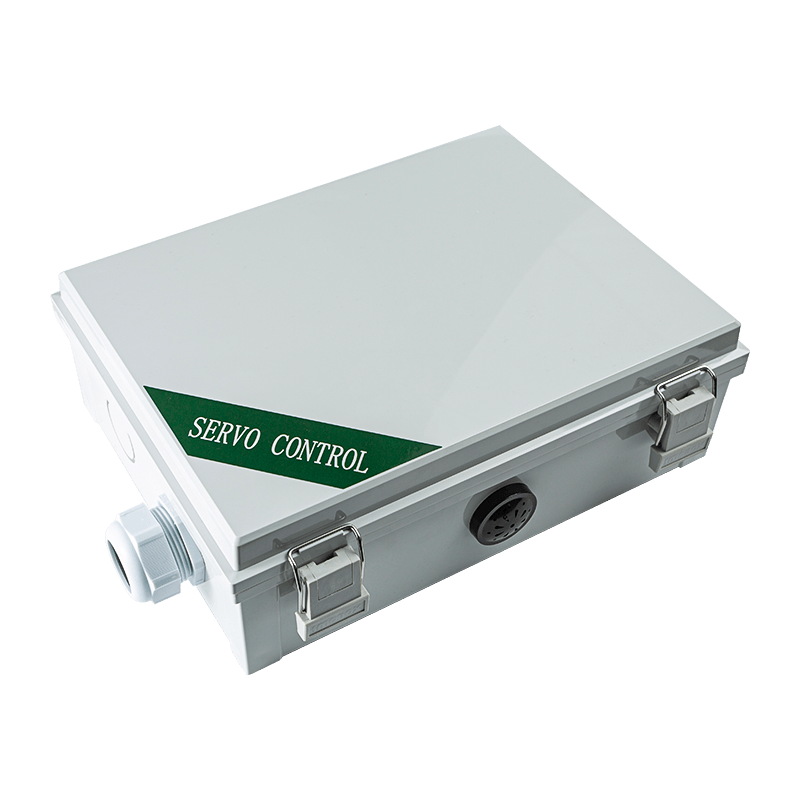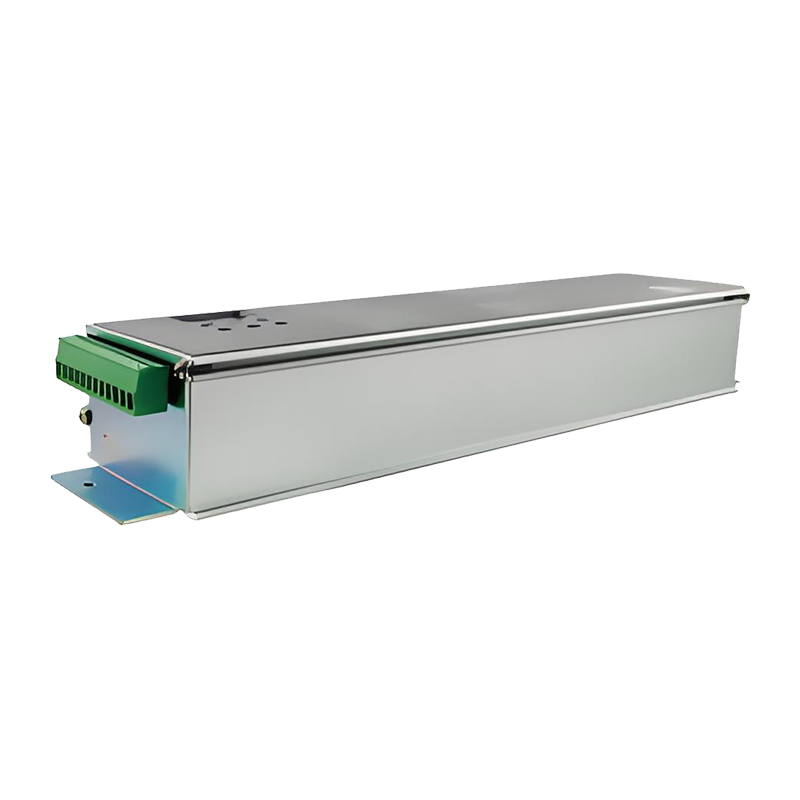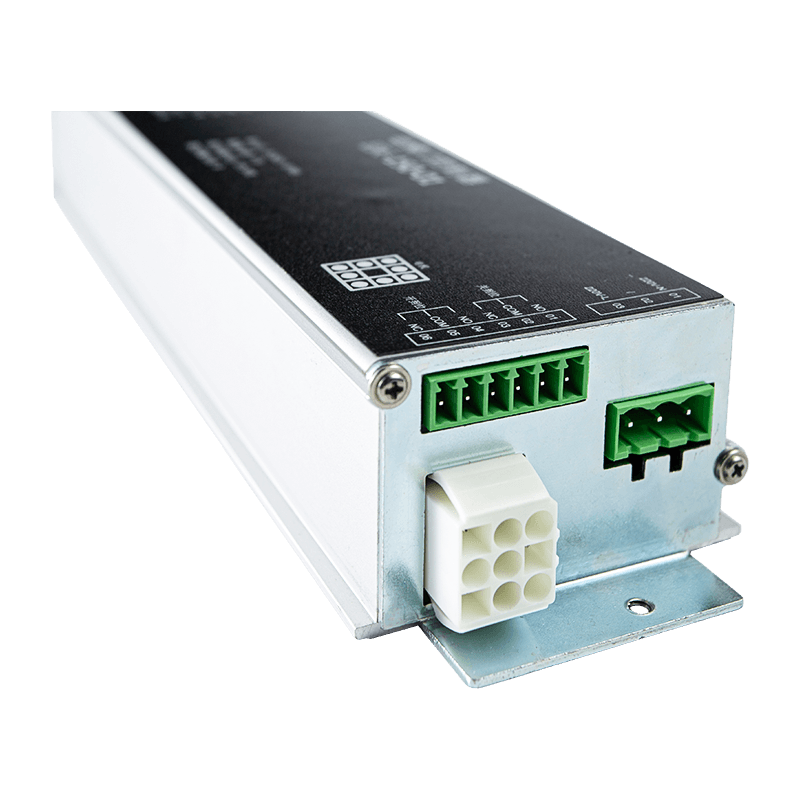


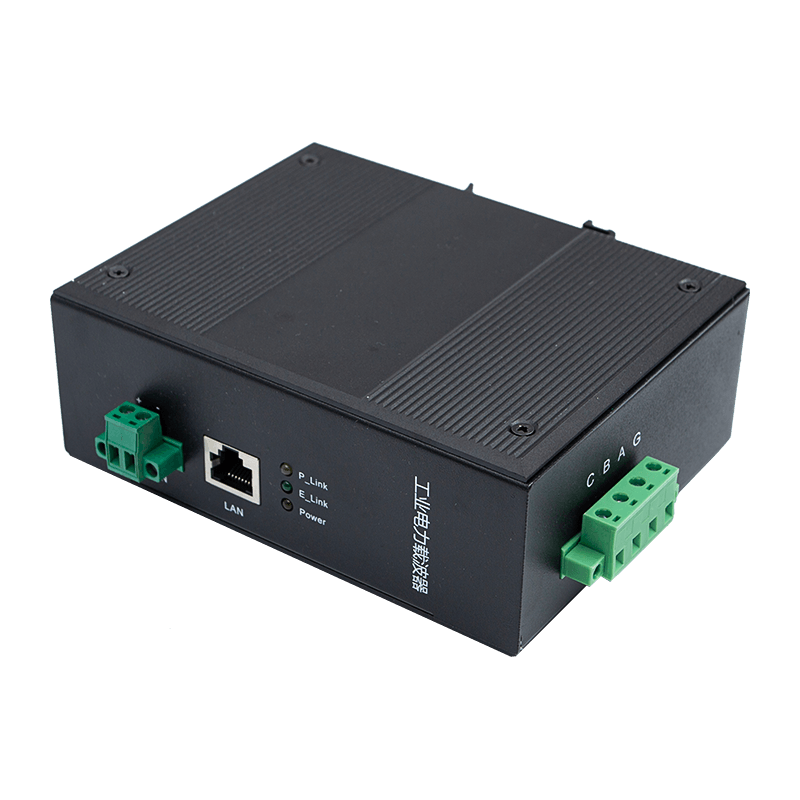
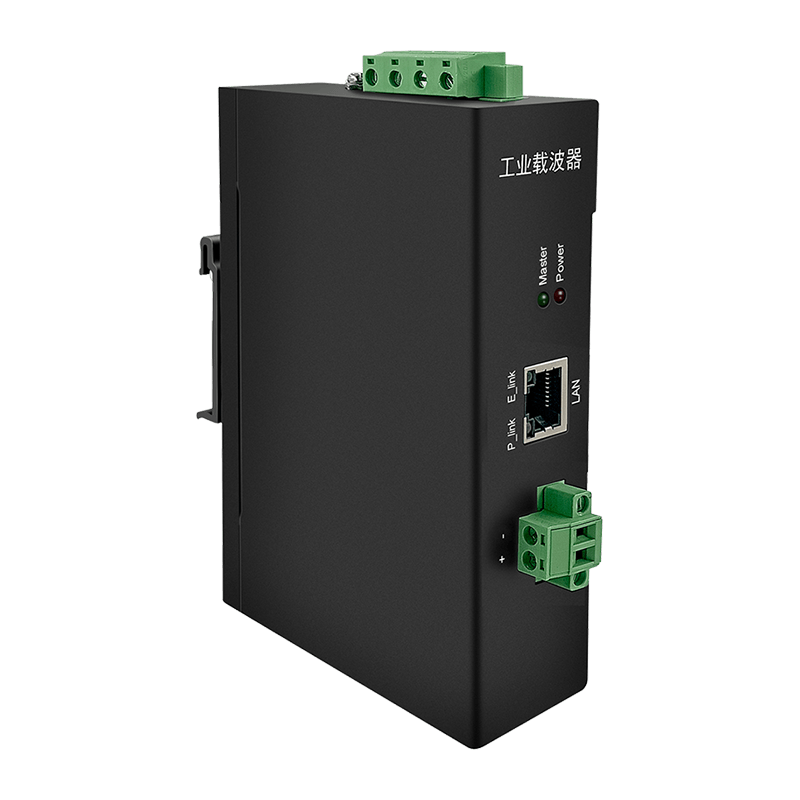
Cold storage facilities depend on doors that open and close reliably, quickly, safely, and efficiently under harsh operating conditions. A sliding door in a refrigerated warehouse is not simply a moving panel; it is part of a temperature-control system, a logistics process, an energy-saving strategy, and a safety barrier. When the door controller is weak, slow, difficult to configure, or poorly protected against humidity and low temperature, the entire cold-chain workflow can suffer. The DC Brushless Motor Controller for Cold Storage Sliding Doors, model AIG-750L-06, is designed to address these industrial demands with precise motion control, flexible configuration, strong peripheral integration, and dependable monitoring functions.
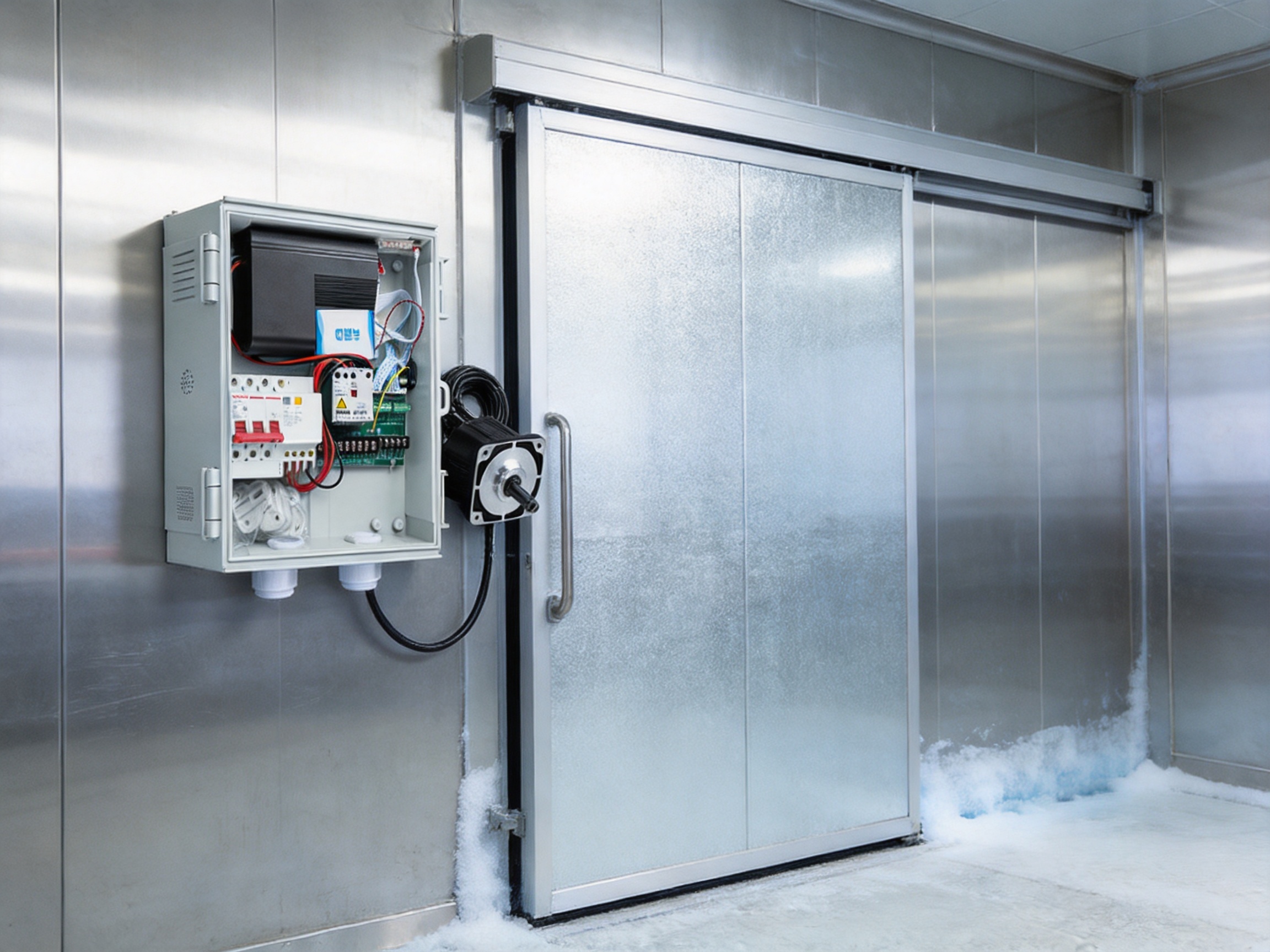
This controller belongs to the automatic door controller category and is designed specifically for cold storage sliding doors and heavy-duty industrial sliding doors. It is commonly used as part of a complete door automation system that may include an AIG-1500P-02Y control box, the AIG-750L-06 controller, and a compatible high-voltage DC brushless motor. Together, these components create a drive and control system suitable for cold rooms, refrigerated warehouses, food processing plants, pharmaceutical storage areas, logistics hubs, and industrial buildings where reliable sliding door automation is critical.
Unlike general-purpose door controllers that are adapted for cold environments after design, this controller is built around the requirements of cold storage operation. Compatible motors are designed for operating temperatures from -30°C to 60°C, while the controller provides parameter settings for opening speed, closing speed, torque, delayed closing time, anti-pinch behavior, external input modes, and peripheral outputs. These features allow installers and maintenance teams to match door movement to the exact size, weight, location, traffic pattern, and safety requirements of each project.
DC Brushless Motor Controller for Cold Storage Sliding Doors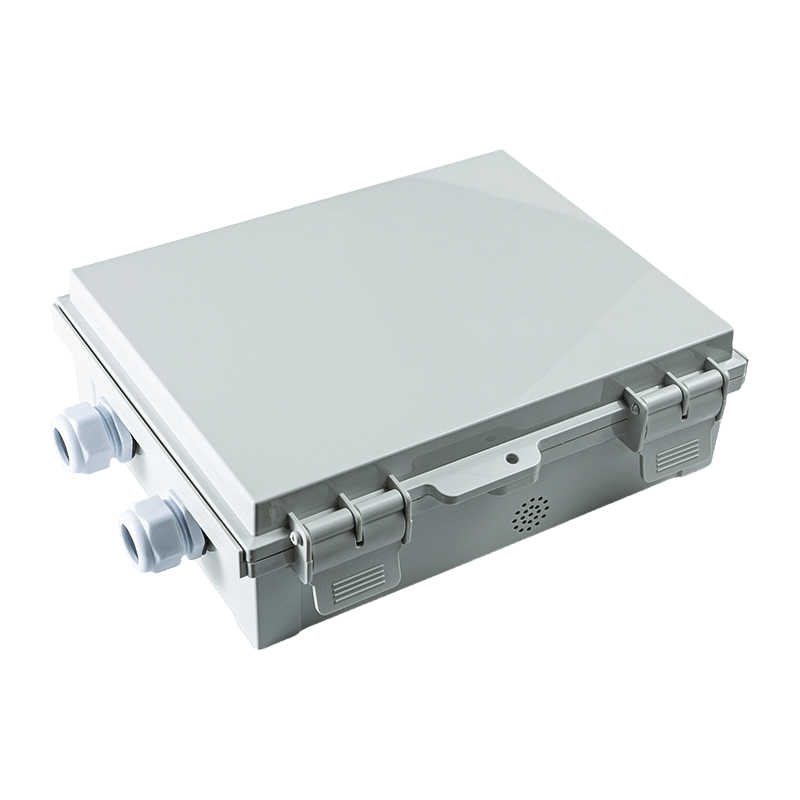
Product Overview
The AIG-750L-06 controller is a DC brushless motor controller developed for cold storage sliding doors that require smooth movement, dependable stopping accuracy, fault visibility, and intelligent peripheral control. It supports high-voltage DC brushless motors with maximum output power up to 1500 W, making it suitable for heavy-duty door applications where the motor must overcome mechanical resistance, seal friction, door weight, and the influence of low temperature on moving parts.
The controller accepts a wide range of input signals, including open, close, stop, anti-pinch or fire protection input, door lock status, radar detection, pull cord, remote control, and temperature detection resistance. This flexibility allows the controller to integrate into different access control and warehouse automation designs. A facility may use radar activation for forklift traffic, pull-cord activation for operators, remote control for supervisors, or panel-click operation for service personnel. The same controller can be adapted to different operational preferences without requiring a completely different control architecture.
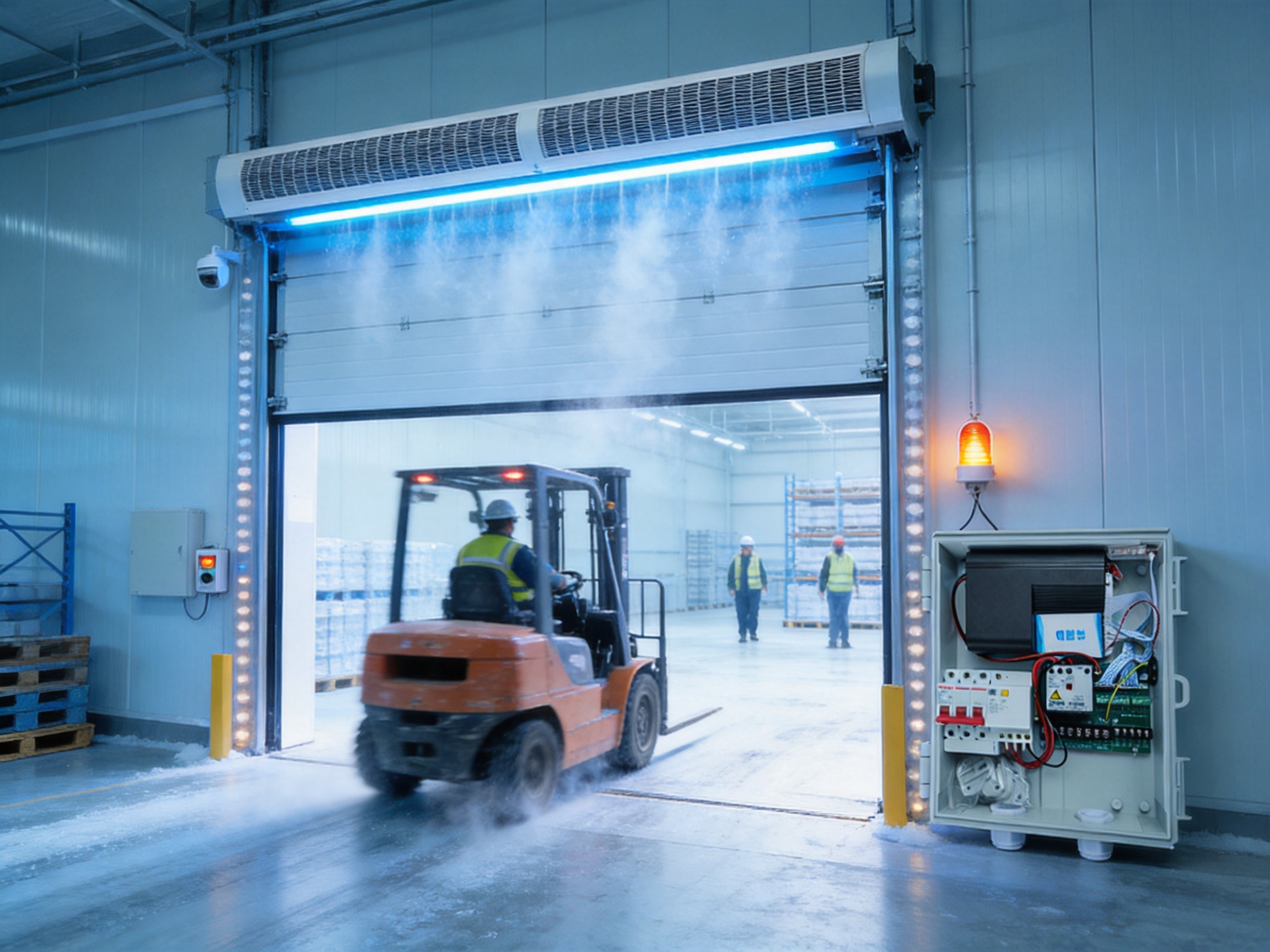
The controller also provides output management for external devices such as a 380 VAC air curtain motor, a 220 VAC heating element, buzzer, open-position output, and close-position output. In cold storage environments, these outputs are not secondary conveniences. A heating element helps reduce frost formation around the door area, while an air curtain reduces cold air loss and limits the inflow of warm humid air. By managing these devices through the door controller, the system can coordinate door motion and environmental protection more effectively.
A key feature is the digital tube display, which provides quick status recognition using clear numerical codes. Standby is shown as “000.” Opening and closing are displayed as “001” and “002.” Input sources are also identified, including remote controls, pull cords, radar activation, and anti-pinch sensors. This makes field troubleshooting much faster because technicians can immediately see which signal is active and whether the controller is responding correctly.
Why Cold Storage Door Control Requires Specialized Engineering
Cold storage doors face more severe challenges than standard commercial automatic doors. Low temperature changes the behavior of grease, seals, rollers, chains, tracks, and other mechanical components. Moisture and condensation can affect electrical components. Frost accumulation may increase movement resistance. Frequent forklift traffic can create high cycle counts, while temperature leakage through open doors can increase refrigeration energy consumption. A door controller for this environment must therefore deliver more than basic open-and-close control.
In a refrigerated warehouse, door speed affects energy consumption. If the door opens too slowly, forklifts wait longer and operational efficiency decreases. If the door closes too slowly, cold air escapes and warm air enters. If the door closes too quickly, safety risks increase and mechanical stress may damage the door system. The AIG-750L-06 addresses this balance by allowing users to adjust opening and closing speeds, torque, and delayed closing times. This level of control helps facilities optimize both productivity and energy efficiency.
Safety is another important engineering concern. A sliding cold storage door can be large and heavy, and it may move in an environment where workers, carts, pallet jacks, and forklifts are present. The controller provides anti-pinch torque settings and determination times to reduce the risk of accidents. It is important to note that entrapment protection is not active within 20 cm of the fully open or fully closed positions, so mechanical design, sensor placement, safety signage, and operator training should be considered together with controller configuration.
Cold storage environments also demand maintenance visibility. When a door fails, the cost is not limited to the door itself. A malfunctioning cold-room door can interrupt logistics, allow temperature deviation, increase compressor workload, affect product quality, and create safety hazards. The controller records the latest four faults, using error codes from E01 to E99. These fault records support rapid diagnosis of issues such as Hall sensor failures, undervoltage, and overspeed. This is a major advantage over simple controllers that offer little or no fault memory.
Core Technical Parameters
The following table summarizes the main performance parameters and functional capabilities of the controller. These specifications show why it is appropriate for cold storage sliding doors and demanding industrial applications.
Item |
Specification or Function |
Practical Benefit |
Input Voltage |
176–264 VAC, 50/60 Hz |
Supports common industrial power environments with tolerance for voltage variation. |
Motor Control |
High-voltage DC brushless motor, maximum output power 1500 W |
Provides strong motion capability for heavy sliding doors. |
Input Signals |
Open, close, stop, anti-pinch or fire protection, door lock, radar, pull cord, remote control, temperature detection resistance |
Allows flexible system integration for different warehouse traffic patterns. |
Outputs |
380 VAC air curtain motor, 220 VAC heating element, buzzer, open-position output, close-position output |
Coordinates door movement with cold-chain environmental protection devices. |
Heating Wire Control |
Up to 1 kW |
Helps reduce frost and moisture-related issues around door zones. |
Air Curtain Control |
Up to 2.2 kW |
Supports energy conservation by reducing temperature exchange during door operation. |
Communication |
One RS-485 interface |
Enables networked control and integration with industrial management systems. |
Monitoring Functions |
Monitoring menu parameters N01–N24 |
Provides real-time data for commissioning, diagnostics, and maintenance. |
Fault Records |
Latest four faults recorded, E01–E99 code range |
Improves troubleshooting efficiency and reduces downtime. |
Application Range |
Cold storage doors and heavy-duty industrial sliding doors |
Suitable for high-traffic, demanding industrial environments. |
Advantages of DC Brushless Motor Control
DC brushless motor control offers important advantages in automatic door systems. Compared with traditional brushed motor systems, brushless motors eliminate brush wear, reduce maintenance requirements, improve energy conversion efficiency, and provide smoother speed control. In a cold storage environment, where maintenance access may be inconvenient and downtime can be expensive, these advantages are especially valuable.
The AIG-750L-06 is designed to control a compatible high-voltage DC brushless motor with refined parameter adjustment. This allows the door to move with controlled acceleration, consistent torque, and stable response. Smooth operation reduces mechanical impact on tracks, brackets, belts, chains, seals, and door panels. Over time, smoother motion can help extend the service life of the entire door system.
Another advantage is controllability. Brushless motor systems can provide better speed regulation and response than many simple AC or brushed DC solutions. The controller can adjust opening and closing speeds according to site requirements. For example, a busy loading area may require faster opening to reduce forklift waiting time, while a pedestrian-access cold room may require slower and safer movement. With adjustable parameters, the same platform can support different door sizes and workflows.
Brushless control also supports more intelligent protection. Because the controller can monitor operating conditions such as current, output frequency, door position, and fault history, it can provide more useful information than a basic relay-based control system. This monitoring capability is one of the main ways the product differentiates itself from lower-cost competitors.
Advanced Monitoring and Diagnostic Capability
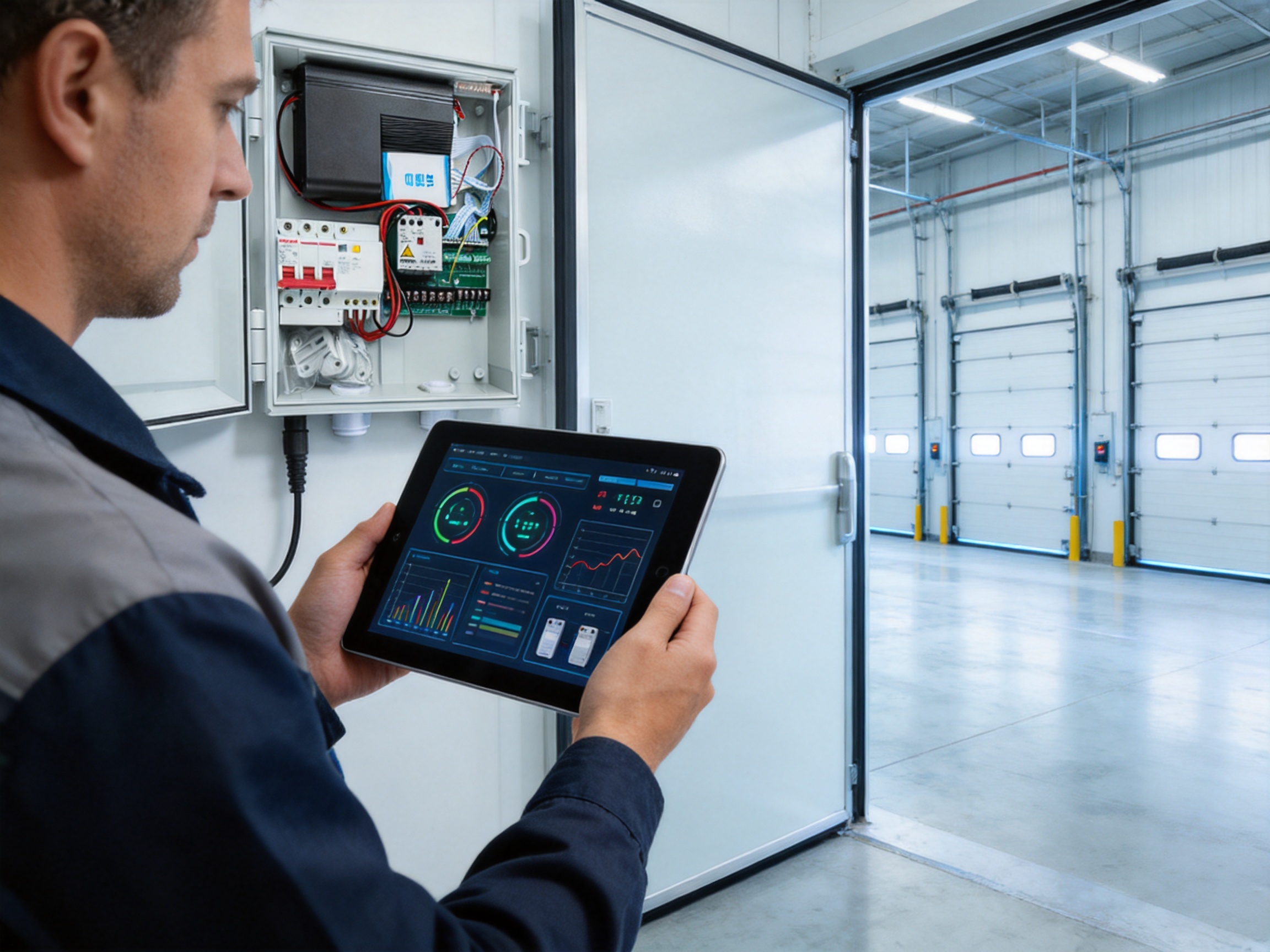
One of the strongest features of the controller is its monitoring menu, with parameters N01 to N24. These monitoring parameters allow technicians to observe real-time operating data, including output frequency, current, door position, fault records, and total run times. For commissioning and maintenance, this capability is highly valuable.
When a door system is first installed, technicians must confirm that the door opens and closes at the correct speed, stops at the correct position, responds to safety inputs, and works properly with peripheral devices. Without real-time monitoring, this process may rely heavily on trial and error. With a controller that displays operational data, commissioning becomes more systematic and repeatable.
During long-term operation, monitoring data helps maintenance teams identify trends. If the operating current gradually rises, it may indicate mechanical resistance, misalignment, frost buildup, seal compression, roller wear, or track contamination. If door run time changes, the cause may be mechanical drag or changed parameter settings. If repeated faults appear, technicians can check the relevant sensors, power supply, wiring, or motor components more quickly.
The fault record function stores the latest four faults. This is important because many door failures are intermittent. A technician may arrive after the door has resumed operation, and without fault memory there may be no evidence of what happened. The controller’s fault codes provide a starting point for analysis. Examples include Hall sensor failure, undervoltage, and overspeed. This diagnostic approach supports faster repair and reduces unnecessary replacement of parts.
Digital Display Codes for Fast On-Site Interpretation
The controller’s digital tube display uses clear status codes to identify system states and active inputs. In industrial environments, technicians often need to make decisions quickly while standing near a noisy loading dock, a cold-room entrance, or a maintenance panel. A display that communicates system status in simple numerical form can be easier to interpret than an indicator-only design.
When the controller is in standby, it displays “000.” When the door is opening, it displays “001.” When the door is closing, it displays “002.” Input signals are also identified through codes, including remote control input, pull-cord input, radar input, and anti-pinch input. This helps technicians distinguish between a controller problem and an external signal problem.
For example, if a door unexpectedly opens and the display shows a radar-related input code, the technician can inspect the radar sensor location, sensitivity, wiring, or environmental interference. If a pull-cord signal remains active, the issue may be a stuck switch or wiring short. If an anti-pinch input is shown, the safety edge or related circuit may require inspection. This level of visibility is a competitive advantage compared with controllers that provide only generic alarm lights.
The display also supports operator confidence. Maintenance teams can verify that the controller has received a command and that the door is performing the expected operation. In facilities where multiple activation methods are used, such as radar, pull cord, remote control, and panel operation, clear input identification reduces confusion.
Flexible Parameter Configuration
Cold storage door systems are not identical. Door height, width, panel material, seal design, rail friction, installation angle, temperature range, cycle frequency, and traffic pattern all influence the best controller settings. The AIG-750L-06 allows users to adjust a wide array of operating parameters, including opening speed, closing speed, torque, and delayed closing time.
Opening speed should be selected based on productivity and safety. High-speed opening can improve forklift flow and reduce waiting time, but the motion must remain stable and mechanically safe. Closing speed affects both safety and energy conservation. A faster close reduces air exchange but must be coordinated with anti-pinch settings, warning devices, and site procedures.
Torque settings are especially important in cold storage. Door resistance may increase because of low-temperature effects, frost, seal pressure, or mechanical wear. If torque is too low, the door may fail to complete its movement. If torque is too high, it may increase the risk of damage or unsafe force. Adjustable torque allows the installer to find a suitable balance for the actual door system.
Delayed closing time is another practical feature. In a warehouse, the ideal delay may depend on forklift length, operator habits, traffic density, and visibility. Too short a delay can close the door before vehicles pass safely. Too long a delay wastes energy by leaving the cold room open. Adjustable delay lets the facility match door behavior to real operational conditions.
Safety Functions and Responsible Application
Safety is central to automatic door control. The controller includes anti-pinch torque settings and determination times to help prevent accidents. These functions are intended to detect abnormal resistance during door movement and respond according to configured protection behavior. Proper adjustment is essential because different doors have different masses, friction levels, and mechanical characteristics.
It is important to follow the safety note that entrapment protection is not active within 20 cm of the fully open or fully closed positions. This means system designers and installers should not rely on the controller alone as the only safety measure. Mechanical guards, warning signs, safety edges, photocells, radar positioning, operator training, and maintenance inspection may all be part of a complete safety strategy.
The controller also supports inputs such as anti-pinch or fire protection. Fire-related inputs may be used in broader facility safety systems, depending on local design requirements and regulations. Door lock inputs can help coordinate movement with mechanical locking devices. Stop inputs provide immediate command interruption when needed.
Another critical safety instruction is grounding. To prevent high-voltage induced electricity and reduce the risk of electric shock, the motor earth wire must be connected to the controller’s grounding mark. This requirement should be treated as essential during installation and inspection. Proper grounding supports personnel safety, equipment reliability, and electromagnetic stability.
Integrated Peripheral Management
A cold storage door is often surrounded by additional equipment. Heating wires may prevent ice formation, air curtains may reduce thermal exchange, buzzers may warn personnel of motion, and position outputs may communicate with warehouse control systems. The AIG-750L-06 is designed to manage these external components, allowing the door system to function as an integrated unit rather than a collection of separate devices.
The heating wire output supports up to 1 kW. In humid and low-temperature environments, heating elements can help reduce condensation, freezing, and frost accumulation around door seals and thresholds. This improves reliability and reduces the likelihood of mechanical obstruction caused by ice.
The air curtain output supports up to 2.2 kW. Air curtains are important in cold storage because they reduce air exchange when the door is open. Every second that a door remains open can allow cold air to escape and warm moist air to enter. This increases refrigeration load and may create frost. By coordinating air curtain operation with door movement, facilities can improve energy performance and environmental control.
The buzzer output provides audible notification. In a busy industrial setting, visual indicators alone may not be enough. A buzzer can warn workers that the door is about to move or is currently moving. Position outputs for open and close states allow integration with other systems, such as access management, loading control, conveyor logic, building automation, or cold-chain monitoring.
RS-485 Communication for Networked Control
The controller includes one RS-485 interface for networked control. RS-485 is widely used in industrial environments because it supports robust communication over practical distances and is suitable for multi-device networks. For cold storage facilities moving toward digital management, this communication capability is an important advantage.
With networked control, door status and operating information can become part of a larger facility management system. Maintenance teams may track door cycles, monitor operating conditions, identify abnormal behavior, and coordinate door activity with other equipment. This aligns with the broader trend of smart factories and industrial Internet of Things development.
Compared with competitors that provide only local manual control, a controller with RS-485 communication is better prepared for connected industrial environments. It can support centralized supervision, data acquisition, remote status checking, and integration with energy-management strategies. For multi-door facilities, this can significantly improve operational visibility.
Networked door control is also valuable for energy management. Facilities can analyze how frequently doors open, how long they remain open, and whether specific doors contribute to temperature loss. This information can guide process improvements, traffic redesign, staff training, or door parameter adjustment.
Advantages Over Conventional and Competing Controllers
The AIG-750L-06 offers several advantages over many conventional door controllers and lower-function competing products. The first advantage is its cold-storage-specific design orientation. Many general automatic door controllers are built for moderate indoor environments and may require additional engineering to operate well in cold, humid, high-cycle applications. This controller is intended for cold storage sliding doors from the start, and compatible motors are designed for -30°C to 60°C environments.
The second advantage is strong motor capacity. With support for high-voltage DC brushless motors up to 1500 W, the controller is suitable for heavy doors and demanding industrial use. Lower-capacity controllers may be adequate for light commercial doors but struggle with large insulated panels, high seal pressure, or high-frequency operation.
The third advantage is parameter flexibility. Competitors with fixed-speed or limited-setting designs may not adapt well to varied door sizes and workflows. The AIG-750L-06 allows adjustment of speeds, torque, delay, and operating modes. This reduces the need for multiple controller models and supports better optimization at the installation site.
The fourth advantage is diagnostic transparency. The monitoring menu and fault record system provide practical maintenance value. In many competitive systems, troubleshooting requires external measurement tools or component replacement by guesswork. Here, technicians can reference real-time data and stored error codes, making service work faster and more accurate.
The fifth advantage is peripheral integration. Built-in management of heating wires, air curtains, buzzers, and position outputs reduces system complexity. Competitor designs may require separate control modules for these devices, increasing wiring, installation time, and potential failure points.
The sixth advantage is network readiness through RS-485. As industrial facilities become more connected, isolated door controllers become a limitation. RS-485 communication supports future expansion into centralized monitoring and smart-factory systems.
Application Scenarios
The most direct application is cold storage sliding doors. These doors are used in frozen food warehouses, fresh produce distribution centers, meat processing plants, seafood storage facilities, dairy facilities, pharmaceutical cold rooms, and logistics centers. In each of these settings, reliable door operation helps maintain product quality and workflow continuity.
In food processing facilities, cold rooms may experience frequent door cycles as materials move between production, packing, storage, and dispatch. A controller that supports fast operation, safe closing, and energy-related peripherals can improve both process flow and hygiene management. Reduced door-open time helps limit condensation and temperature fluctuation.
In pharmaceutical cold-chain facilities, temperature control is essential for compliance and product safety. Door automation must be reliable and predictable. Fault records and monitoring data are especially useful in such environments because maintenance teams need evidence-based diagnostics and may need to document operational reliability.
In logistics hubs, forklifts and pallet trucks often pass through cold storage doors repeatedly. Radar activation, pull-cord control, and remote operation can be combined according to traffic layout. Adjustable closing delay helps ensure that doors do not close too early or remain open unnecessarily.
Heavy-duty industrial sliding doors outside cold storage can also benefit from this controller. Facilities with large doors, demanding cycle requirements, or the need for integrated peripheral control may use the same functional advantages. The strong motor output, display codes, monitoring menu, and RS-485 communication make the controller suitable for broader industrial automation.
Installation and Commissioning Considerations
Proper installation is essential to achieve reliable performance. The power supply should match the specified input voltage range of 176–264 VAC at 50/60 Hz. Wiring should be completed according to the controller documentation, and the motor earth wire must be connected to the controller grounding mark. Grounding should be inspected carefully because cold storage environments may involve moisture, conductive structures, and long cable runs.
During installation, technicians should verify all input signals. Open, close, stop, anti-pinch, door lock, radar, pull cord, and remote control inputs should be tested individually. The digital display codes make this process easier because the installer can confirm whether the controller recognizes each command source correctly.
Motor direction and door travel should be checked before full-speed operation. Initial tests should be performed carefully, with the area clear of personnel and obstacles. Opening and closing positions should be confirmed, and torque settings should be adjusted gradually to match the actual door load. The door should move smoothly without vibration, impact, or abnormal noise.
Peripheral outputs should also be tested. Heating wires should operate within the rated output capacity. Air curtain operation should be coordinated with door activity. Buzzers and position outputs should be confirmed for correct timing and signal logic. If the system is connected through RS-485, communication settings and network addressing should be verified.
Commissioning should include safety testing. Anti-pinch behavior should be configured according to the door system, and the limitation near the fully open and closed positions should be understood by the installer and facility operator. Any external safety devices should be inspected and tested. A commissioning record should be created for future maintenance reference.
Maintenance Strategy for Long-Term Reliability
Long-term reliability depends on both controller design and maintenance discipline. The AIG-750L-06 supports maintenance through monitoring data and fault memory, but facilities should still implement a regular inspection plan. Door tracks, rollers, seals, motor mounts, wiring, sensors, and safety devices should be checked at intervals suitable for the cycle frequency and environment.
Monitoring current and operating behavior can help identify mechanical problems early. If the controller shows increasing current during normal operation, the door may require mechanical cleaning, lubrication, alignment, or seal adjustment. If the door position reading becomes inconsistent, sensors or mechanical stops should be inspected. If fault records show repeated Hall sensor or undervoltage errors, wiring and power supply stability should be checked.
The controller’s latest-four-fault record is useful for recurring problems. Maintenance teams should document fault codes, operating conditions, time of occurrence, and corrective actions. Over time, this creates a valuable maintenance history that can reveal patterns and support preventive maintenance.
Heating elements and air curtains should also be maintained. A failed heating wire may allow frost accumulation, increasing mechanical resistance and causing door problems. A poorly performing air curtain may increase energy consumption and frost formation. Because the controller integrates these peripherals, maintenance should treat the door area as a complete controlled system.
Advanced Manufacturing Strengths Behind the Product
ASY Electronics is a high-tech enterprise dedicated to building future-oriented smart factories by combining data sensing, intelligent connectivity, edge-layer hardware, and industrial data integration solutions. These strengths are directly relevant to the development and manufacturing of automatic door controllers for demanding industrial environments.
The company’s broader product portfolio includes broadband power line carrier products, wireless temperature monitoring systems, industrial transmitters, thermal gas mass flow meters, and automatic door controllers. This combination of technologies reflects experience in industrial communication, sensing, control, and reliable hardware design. A door controller for cold storage benefits from the same engineering culture: stable signal processing, durable electronic design, practical data visibility, and integration capability.
Advanced manufacturing for industrial controllers requires careful attention to circuit design, component selection, assembly quality, testing, and environmental reliability. Controllers used in cold storage must tolerate electrical noise, voltage variation, humidity, condensation risk, and frequent operation. A strong manufacturer therefore focuses not only on producing circuit boards but also on creating a repeatable process that supports consistent performance.
The company’s smart-factory orientation supports disciplined production and quality management. Edge hardware products require accurate assembly and reliable testing because they operate close to machines, sensors, motors, and power systems. In the case of the AIG-750L-06, this manufacturing mindset helps ensure that the controller can perform reliably in a real industrial environment rather than only under ideal laboratory conditions.
Manufacturing strengths may include structured incoming material inspection, standardized assembly procedures, electrical performance verification, functional testing, parameter validation, and final quality inspection. For an automatic door controller, testing should confirm power input tolerance, motor output behavior, signal input recognition, display code operation, relay or output function, communication interface performance, and fault response. These steps reduce the risk of installation failure and improve customer confidence.
The company’s experience in industrial IoT communication solutions also supports the controller’s RS-485 networking capability. As factories become more data-driven, hardware must be designed with connectivity and integration in mind. The AIG-750L-06 is not only a local motor controller; it is also a potential node in a connected industrial system.
Contribution to Energy Efficiency
Cold storage energy consumption is strongly affected by door behavior. Every opening allows temperature exchange, and every delayed closing increases refrigeration load. A controller that improves door timing and coordinates air curtains and heating elements can contribute to energy efficiency.
Adjustable opening and closing speeds help reduce unnecessary open time. Delayed closing time can be tuned to match actual traffic rather than relying on a generic factory setting. Air curtain control helps reduce cold-air escape during opening. Heating element control helps reduce frost, which can otherwise prevent proper sealing and increase door leakage.
Energy efficiency is not achieved by one component alone; it is the result of system coordination. The controller supports this coordination by managing door motion and peripheral devices together. In a facility with many doors and frequent traffic, even small reductions in open time and air leakage can become meaningful over daily, monthly, and yearly operation.
Monitoring data can further support energy optimization. By observing door operating times and cycle counts, facility managers can identify doors with abnormal usage patterns. They may adjust logistics routes, change sensor settings, retrain operators, or modify delay times. This data-driven approach aligns with the movement toward refined energy management in smart factories.
Operational Reliability in Harsh Environments
Cold storage environments combine low temperature with humidity, condensation, frost, and frequent mechanical operation. Reliable door control in such conditions requires robust system design. Compatible motors are built with insulation Grade B and moisture-proof characteristics, making them suitable for high-humidity cold storage conditions. This is important because motor reliability directly affects door reliability.
The controller’s ability to detect and record faults supports operational reliability. Instead of allowing small problems to develop unnoticed, the system provides signals that maintenance teams can investigate. For example, undervoltage warnings may indicate power supply instability. Overspeed faults may point to mechanical or control issues. Hall sensor faults may identify motor feedback problems.
Reliability also comes from reducing complexity. By integrating multiple functions into one controller, the system can reduce the number of separate devices and wiring interfaces. Fewer independent control boxes can mean fewer installation mistakes and fewer points of failure. At the same time, the controller remains flexible enough to support multiple control modes and external devices.
User Experience for Operators and Technicians
A good industrial controller must serve both operators and technicians. Operators need predictable door behavior, clear warning signals, safe movement, and minimal interruptions. Technicians need accessible settings, clear diagnostics, and reliable fault information. The AIG-750L-06 supports both groups.
Operators benefit from flexible activation methods such as radar, pull cord, remote control, and panel operation. This allows the door to fit naturally into the workflow. Forklift drivers may prefer radar or pull cord activation, while supervisors may use remote control. Maintenance personnel can use panel operation during testing.
Technicians benefit from digital display codes, monitoring parameters, and fault records. These features reduce guesswork and support efficient service. Instead of replacing components randomly, technicians can use displayed data to identify likely causes. This improves maintenance accuracy and reduces downtime.
Facility managers benefit from a system that can be configured for productivity, safety, and energy performance. The controller’s adjustable parameters make it possible to optimize operation after installation, especially if traffic patterns change or the door is used in a new process.
Quality, Customization, and Industrial Support
Industrial customers often need more than a product; they need a supplier that understands application requirements and can support practical deployment. ASY Electronics provides industrial products and solutions in fields such as smart grid communication, industrial IoT, wireless temperature monitoring, transmitters, flow meters, and automatic door control. This range of experience supports cross-disciplinary understanding of industrial environments.
The company’s mission of creating efficient, reliable, and green smart factories is reflected in the controller’s design direction. Efficiency appears in fast and adjustable door operation. Reliability appears in fault recording, monitoring, and cold-environment suitability. Green operation appears in energy-conscious features such as air curtain and heating coordination.
Customization is also important. Different customers may require different control modes, door behavior, communication integration, and installation layouts. A controller with flexible parameters and multiple input and output options provides a strong foundation for customized system design. Rather than forcing a facility to adapt to a rigid controller, the controller can be adapted to the facility.
Support for industrial customers may include product selection guidance, system configuration recommendations, wiring assistance, parameter setup advice, and troubleshooting support. For cold storage projects, correct configuration is particularly important because door performance affects both logistics and temperature control.
Comparison with Typical Market Alternatives
Many automatic door controllers in the market can open and close a door, but not all are suitable for demanding cold storage applications. Some low-end controllers provide limited parameter adjustment, no fault memory, weak peripheral integration, and minimal communication capability. Such designs may appear economical at purchase but can become costly through downtime, inefficient operation, and difficult maintenance.
Compared with simple relay-based controllers, the AIG-750L-06 offers smarter motor control, more precise settings, and better diagnostics. Relay-based systems may be easy to understand, but they often lack smooth speed control and data feedback. They may also require separate modules for heating, air curtains, and alarms.
Compared with generic industrial motor drives, the AIG-750L-06 is more application-focused. A general drive may control a motor, but it may not include door-specific inputs, display codes, delayed closing logic, anti-pinch functions, door position outputs, and cold-storage peripheral control. Application-specific design reduces engineering workload for installers.
Compared with controllers that lack communication, the RS-485 interface provides future-ready integration. Even if a facility begins with local control only, network capability leaves room for later expansion into centralized monitoring or smart-factory systems.
Compared with products that have limited diagnostic visibility, the monitoring menu and fault records provide a clear service advantage. In industrial operation, the cost of diagnosing a problem can exceed the cost difference between controllers. Better diagnostics can pay for themselves by reducing downtime and service labor.
Best Practices for Selecting a Door Controller
When selecting a controller for a cold storage sliding door, buyers should consider more than motor power. The first question is whether the controller is designed for the operating environment. Cold storage requires attention to temperature, humidity, frost, and frequent cycles.
The second question is whether the controller can support the actual door weight and mechanical resistance. A maximum output power of 1500 W provides strong capability for heavy-duty sliding doors, but mechanical design must also be correct. Tracks, rollers, guides, and seals must be properly installed.
The third question is whether the system can be adjusted. Fixed settings may not work well in all locations. Adjustable speed, torque, and delay help match real conditions.
The fourth question is whether diagnostics are available. Fault records and monitoring data are essential for industrial maintenance. A controller without diagnostic visibility may cause longer downtime.
The fifth question is whether the controller can integrate external devices. Cold storage doors often need heating wires, air curtains, alarms, and position outputs. Integrated peripheral control simplifies the overall system.
The sixth question is whether communication is available. RS-485 networking can support future smart-factory integration and centralized management.
Frequently Asked Questions
What is the main purpose of this controller?
The controller is designed to manage the operation of cold storage sliding doors and heavy-duty industrial sliding doors. It controls a compatible DC brushless motor and coordinates input signals, safety functions, status display, fault monitoring, and peripheral outputs.
What type of motor does it support?
It supports high-voltage DC brushless motors with maximum output power up to 1500 W. DC brushless motor control provides smooth movement, strong efficiency, reduced maintenance compared with brushed motors, and better controllability for industrial doors.
Can it be used in very cold environments?
Yes. The system is intended for cold storage applications, and compatible motors are designed for environments ranging from -30°C to 60°C. The motor design includes insulation Grade B and moisture-proof characteristics suitable for high-humidity cold storage environments.
What inputs can the controller accept?
The controller can accept open, close, stop, anti-pinch or fire protection, door lock, radar, pull cord, remote control, and temperature detection resistance inputs. This allows flexible integration into different warehouse and industrial access systems.
Does the controller support safety protection?
Yes. It includes anti-pinch torque settings and determination times. However, entrapment protection is not active within 20 cm of the fully open or fully closed positions, so proper installation, external safety devices, and safe operating procedures remain necessary.
What external devices can it control?
It can manage external components such as heating wires up to 1 kW, air curtains up to 2.2 kW, buzzers, open-position outputs, and close-position outputs. These functions are especially useful in cold storage environments where frost control and energy conservation are important.
How does the display help technicians?
The digital tube display shows clear numerical codes. Standby is “000,” opening is “001,” and closing is “002.” It can also identify input sources such as remote control, pull cord, radar, and anti-pinch signals. This helps technicians diagnose operation and wiring conditions quickly.
Does the controller record faults?
Yes. It records the latest four faults using error codes from E01 to E99. This helps technicians diagnose issues such as Hall sensor failure, undervoltage, overspeed, and other system problems.
Can it be connected to a larger control network?
Yes. The controller includes one RS-485 interface for networked control. This makes it suitable for centralized monitoring, industrial communication systems, and future smart-factory integration.
Why is grounding important?
The motor earth wire must be connected to the controller’s grounding mark to prevent high-voltage induced electricity and reduce the risk of electric shock. Proper grounding is essential for safety and reliable operation.
Conclusion
The DC Brushless Motor Controller for Cold Storage Sliding Doors, model AIG-750L-06, is a purpose-built solution for demanding cold-chain and industrial door applications. It combines powerful DC brushless motor control, adjustable operating parameters, integrated peripheral management, real-time monitoring, fault recording, digital display codes, safety functions, and RS-485 communication.
Its advantages over many competing products are clear. It is designed for cold storage use, supports high motor output, provides practical diagnostics, integrates heating and air curtain control, offers flexible input modes, and can participate in networked industrial systems. These features help reduce downtime, improve maintenance efficiency, support energy-conscious operation, and adapt to varied site requirements.
Behind the product is a manufacturer focused on industrial IoT communication, sensing, intelligent connectivity, and smart-factory solutions. This technical background supports the development of reliable edge-layer hardware for real industrial environments. For cold storage facilities, logistics centers, food processing plants, pharmaceutical warehouses, and heavy-duty industrial door systems, this controller provides a strong foundation for safer, smarter, and more efficient sliding door automation.
References
Industrial Door Safety Standards and Application Guidelines.
Cold Storage Facility Design and Energy Management Handbook.
Brushless DC Motor Control Principles for Industrial Automation.
Industrial RS-485 Communication and Field Device Integration Manual.
Preventive Maintenance Practices for Automated Sliding Door Systems.
Refrigerated Warehouse Operation and Cold-Chain Logistics Management.