

Industrial liquid level measurement has become a critical part of modern automation, environmental monitoring, water resource management, and digital infrastructure. In many applications, level data is no longer only a local indication; it is a real-time operating variable that supports remote supervision, safety decisions, predictive maintenance, and process optimization. The Intelligent Submersible Level Transmitter, model AI-LF, is designed for these demanding requirements. It combines a high-performance diffused silicon pressure sensor, a rugged 316L stainless steel submerged structure, IP68 protection, precision temperature compensation, and RS485 Modbus RTU digital communication to deliver stable and accurate level monitoring in harsh environments.
This product is built for applications where ordinary analog level transmitters may struggle with long-distance wiring, electromagnetic interference, unstable temperature conditions, corrosive surroundings, sediment buildup, or data integration limitations. By using digital output and intelligent compensation, the transmitter provides a more reliable measurement foundation for shipping, hydrology, marine monitoring, urban water supply, sewage monitoring, petrochemical systems, power facilities, tanks, wells, rivers, groundwater, and industrial liquid depth measurement.
Intelligent Submersible Level Transmitter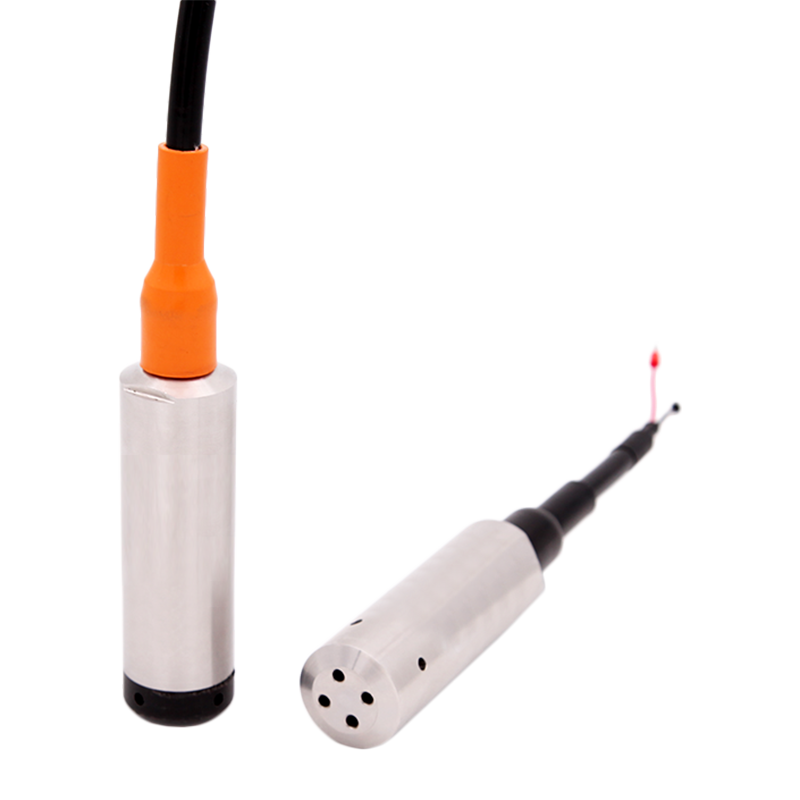
Product Overview
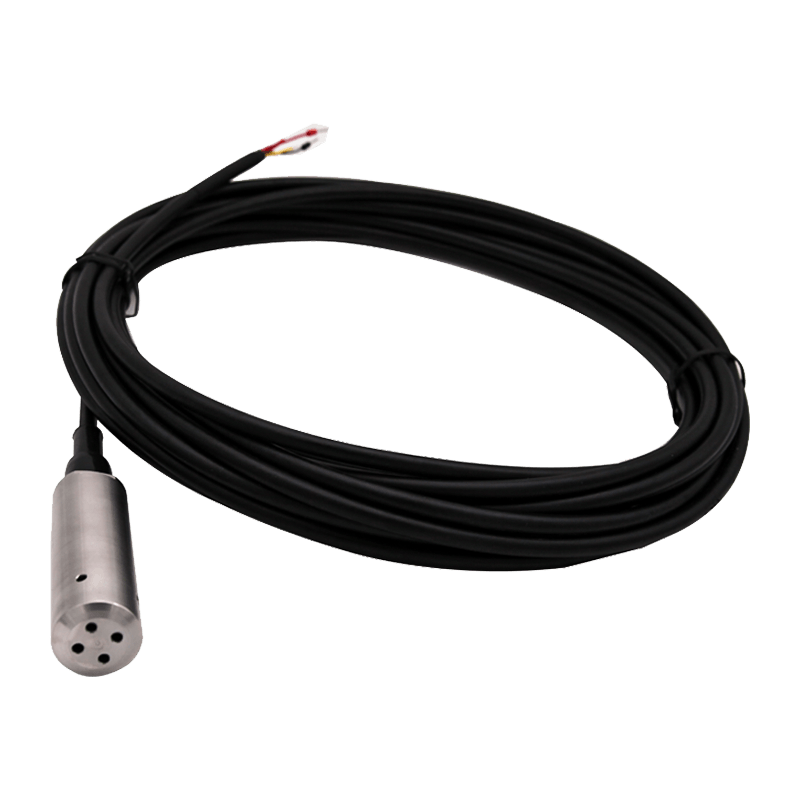
The AI-LF Intelligent Submersible Level Transmitter is a new-generation digital level measurement device designed to convert liquid depth into reliable pressure-based measurement data. The core measuring element is a high-performance diffused silicon pressure sensor. The sensor detects hydrostatic pressure generated by the height of liquid above the probe, and the transmitter converts this signal into level data through internal signal processing, correction, and compensation.
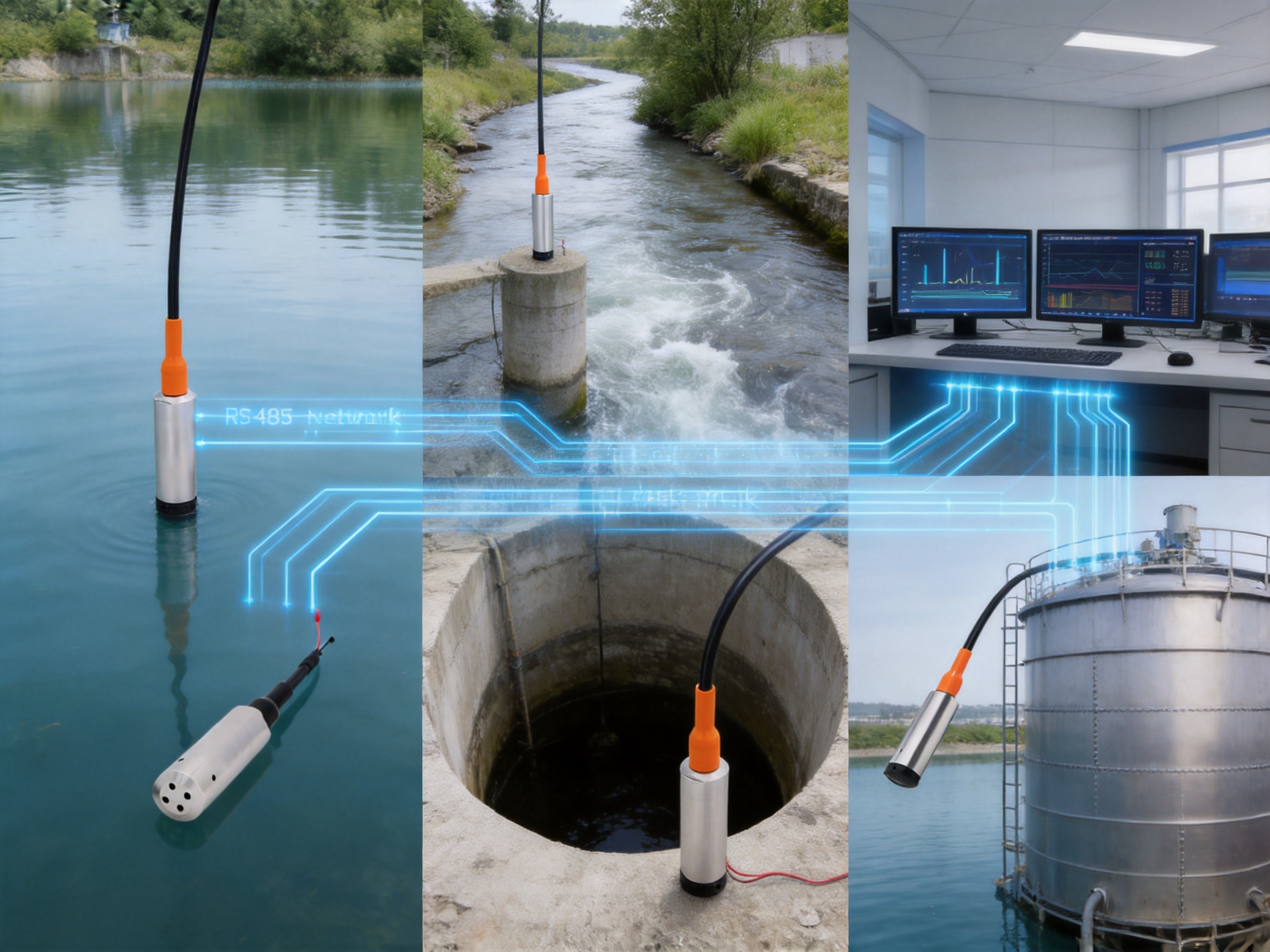
Unlike conventional submersible transmitters that rely mainly on basic analog output, this model transmits level signals through an RS485 Modbus RTU digital interface. This allows the product to be integrated directly into industrial IoT systems, PLC networks, supervisory control platforms, remote terminal units, water monitoring stations, and intelligent energy management systems. Up to 99 transmitters can be connected through an RS485 bus, which makes the product highly suitable for distributed measurement points such as reservoirs, water treatment facilities, underground pipe networks, tank farms, and marine monitoring systems.
The complete structure is designed with 316L stainless steel and stainless-steel enclosure materials, providing excellent mechanical strength and strong resistance to many industrial and water-related media. The sealing system uses fluororubber, while the special polyethylene cable supports reliable submerged installation. The IP68 protection rating makes the transmitter suitable for continuous underwater operation, and the probe design helps prevent sedimentation, sharp-object damage, and marine organism growth.
One of the most important advantages of the product is its intelligent compensation capability. Pressure sensors can be affected by temperature drift, sensor nonlinearity, and long-term environmental changes. The AI-LF transmitter addresses these issues through precision correction and compensation across the entire temperature range. Its design accuracy can reach up to 0.1%FS under suitable configuration, which is a strong advantage for demanding level monitoring applications where small deviations can create operational risk or inaccurate resource management.
Why Digital Submersible Level Measurement Matters
Liquid level measurement may appear simple, but in real operating environments it is affected by many variables. Water and industrial fluids may contain suspended solids, sediment, bubbles, biological matter, chemical additives, or floating debris. Installation locations may be exposed to vibration, lightning-related surges, electromagnetic interference, humidity, temperature variations, and mechanical impact. Cable distances may be long, especially in hydrological, river, marine, and wastewater applications. In such conditions, a basic transmitter may produce unstable signals or require frequent maintenance.
A digital submersible level transmitter offers a more intelligent solution. RS485 Modbus RTU communication can support multi-point networking, reduce signal degradation over long distances, and provide direct digital data for automated systems. Compared with traditional 4 mA to 20 mA analog solutions, digital communication can simplify data acquisition in multi-sensor installations and improve compatibility with industrial IoT platforms. The ability to connect multiple transmitters on the same bus reduces cabling complexity and helps operators build scalable monitoring networks.
The AI-LF transmitter is especially valuable where level information is used for decision-making rather than simple display. For example, in urban drainage networks, accurate liquid depth monitoring can help detect blockage, overflow risk, or abnormal sewage behavior. In hydrology, stable river and groundwater readings support flood prevention and water resource planning. In industrial tanks, precise depth monitoring helps optimize inventory control and protect pumps from dry running. In petrochemical and power applications, reliable level data improves safety and process continuity.
Core Advantages Over Ordinary Competitor Products
The AI-LF Intelligent Submersible Level Transmitter is positioned as a robust, high-accuracy, digitally integrated solution. Its advantages over many conventional competitor products can be understood in terms of material construction, measurement accuracy, anti-interference capability, digital networking, environmental adaptability, and lifecycle reliability.
1. Full 316L Stainless Steel Design for Harsh Environments
Many low-cost submersible level transmitters use ordinary stainless steel, partially protected metal structures, or less durable probe housings. These designs may be acceptable for clean water tanks but can become unreliable in seawater, wastewater, industrial drainage, or environments with suspended solids. The AI-LF product is designed entirely around corrosion-resistant stainless-steel construction, with the sensor made from 316L stainless steel. This gives the transmitter a strong advantage in applications involving humidity, submerged exposure, marine atmosphere, and industrial liquids that do not corrode 316L stainless steel and fluororubber.
316L stainless steel is widely valued for its improved corrosion resistance compared with many standard stainless steels. For a submerged level transmitter, this matters because the sensor and body may remain continuously exposed to water or fluid for long periods. Better material quality reduces the risk of housing degradation, sensor face damage, leakage, and unexpected failure.
2. IP68 Protection for Continuous Submerged Use
In real applications, a submersible transmitter must resist water ingress not only for a short test period but throughout long-term operation. The IP68 protection rating indicates that the product is built for submerged service. This is especially important in deep wells, reservoirs, rivers, tanks, and marine installations where retrieval for inspection can be costly. Competitor products with lower protection ratings may be more vulnerable to sealing failure, moisture intrusion, or cable entry problems.
The IP68 design of the AI-LF transmitter supports stable field operation and helps reduce maintenance frequency. Combined with fluororubber sealing and dedicated polyethylene cable, the device provides a strong structure for long-term underwater monitoring.
3. Intelligent Temperature Compensation Across the Measurement Range
Temperature changes are among the most common causes of measurement drift in pressure-based level instruments. A transmitter installed outdoors may experience seasonal changes, day-night cycling, and water temperature variation. A transmitter installed in industrial liquid systems may encounter process-related temperature shifts. The AI-LF transmitter is engineered with precision correction and compensation across the full operating range, with compensation temperature from -10°C to 80°C and operating temperature from -20°C to 85°C.
This intelligent compensation improves measurement reliability compared with basic transmitters that may only be calibrated at room temperature. The product’s design accuracy can reach 0.1%FS, and its technical specifications indicate accuracy options from ±0.1%FS minimum to ±0.5%FS maximum depending on configuration and conditions. This allows users to select a performance level appropriate for their application.
4. RS485 Modbus RTU Digital Output for Industrial IoT Integration
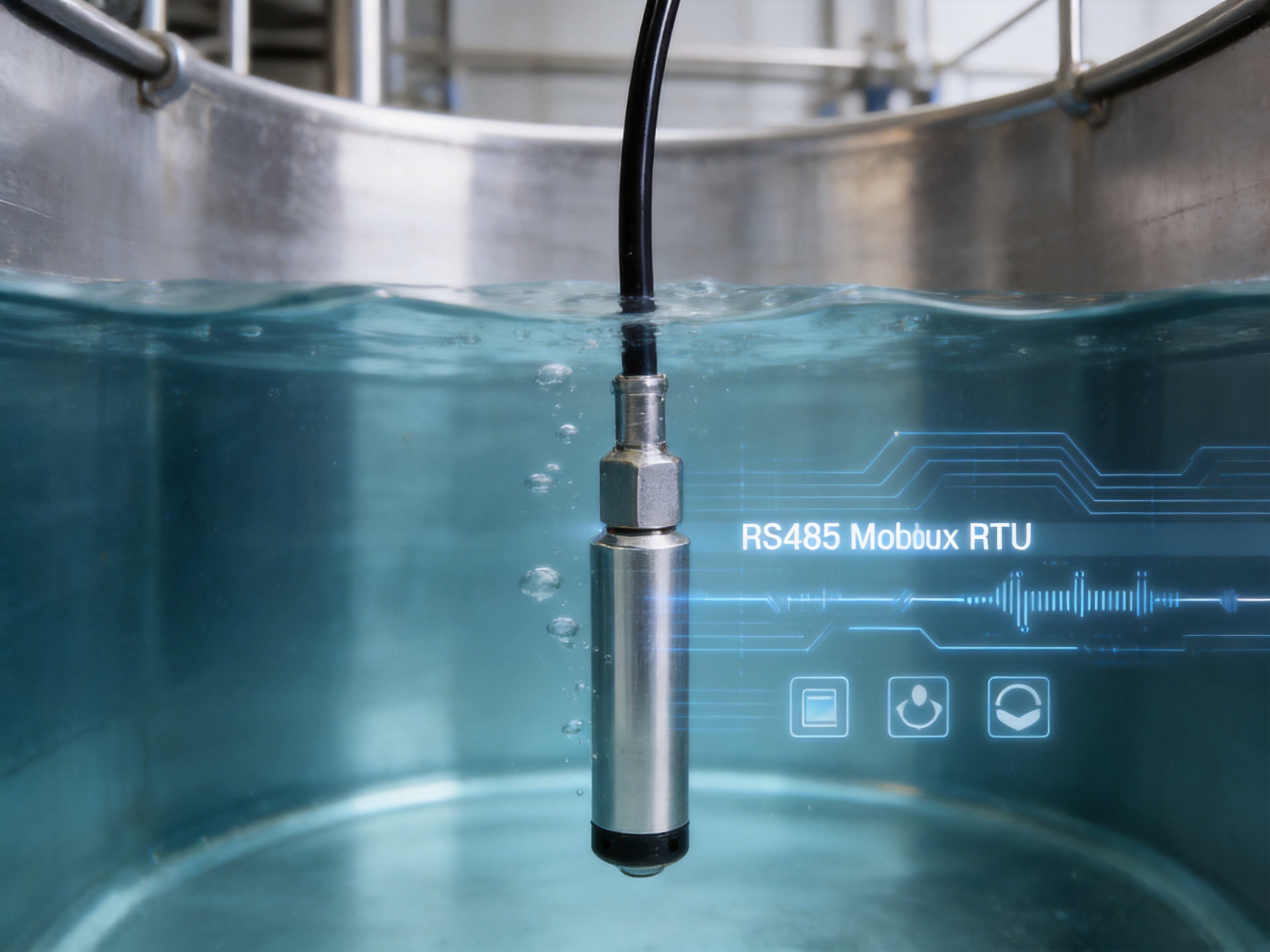
The transmitter uses RS485 Modbus protocol output, which provides a major advantage over traditional analog-only sensors. Modbus RTU is widely used in industrial automation because it is simple, stable, and compatible with many controllers, data loggers, gateways, and supervisory systems. With RS485 bus communication, as many as 99 transmitters can be connected in one network, enabling large-scale monitoring with fewer communication lines.
This feature supports the development of digital factories, smart water systems, intelligent urban infrastructure, and remote environmental monitoring networks. It also aligns well with ASY Electronics’ broader focus on industrial IoT communication solutions, edge-layer hardware, and industrial data integration.
5. Strong Resistance to Electromagnetic Interference
Industrial and municipal environments often contain strong electromagnetic interference from pumps, motors, variable-frequency drives, power equipment, communication systems, and lightning-prone outdoor wiring. The AI-LF transmitter is designed to meet EMC environmental requirements and has undergone long-term verification for stable and reliable data operation. This is a key differentiator for customers who need dependable readings in environments where weak analog signals may be distorted.
Digital RS485 communication combined with EMC-focused design helps protect measurement data integrity. In practical terms, this can reduce false alarms, data jumps, and maintenance visits caused by electrical noise rather than actual level changes.
6. Probe Design That Reduces Common Field Problems
Submersible probes often face problems that do not appear in laboratory conditions. Sediment can accumulate around the pressure port, biological growth can affect the sensing area, and sharp debris may damage the probe during installation or operation. The AI-LF probe is designed with functions to help prevent sedimentation, prevent injury from sharp objects, and prevent the growth of marine organisms. This makes it especially suitable for rivers, sewage systems, marine monitoring, and outdoor water environments.
Compared with competitors using simpler probe structures, this design helps maintain measurement stability over longer operating periods. It can also reduce the need for manual cleaning, which is valuable in difficult-to-access installation sites.
Key Technical Parameters
The following table summarizes the main technical characteristics of the AI-LF Intelligent Submersible Level Transmitter. These parameters show why the product is suitable for demanding industrial, municipal, and environmental level monitoring applications.
| Parameter Category | Specification | Practical Value |
|---|---|---|
| Measurement Range | 0 mH2O to 1 mH2O, up to 200 mH2O | Supports shallow and deep level applications |
| Overload Capacity | 2 times full-scale pressure; 5 times overpressure for 5 mH2O and below | Improves protection against accidental pressure impact |
| Power Supply | 10 V to 28 V DC | Compatible with common industrial DC power systems |
| Output Signal | RS485 Modbus RTU | Enables digital networking and remote data integration |
| Bus Capacity | Up to 99 transmitters via RS485 bus | Reduces wiring complexity in multi-point monitoring |
| Insulation Resistance | 100 MΩ, 50 V DC | Supports electrical safety and stable signal performance |
| Enclosure Material | Stainless steel | Provides mechanical durability |
| Sensor Material | 316L stainless steel | Improves corrosion resistance in suitable media |
| Sealing Ring | Fluororubber | Enhances sealing reliability and chemical compatibility |
| Cable | 7.5 mm polyethylene special cable | Suitable for submerged installation |
| Protection Rating | IP68 | Designed for continuous underwater service |
| Media Suitability | Fluids that do not corrode 316L stainless steel and fluororubber | Applicable to water, wastewater, and many industrial liquids |
| Compensation Temperature | -10°C to 80°C | Improves accuracy under temperature variation |
| Operating Temperature | -20°C to 85°C | Supports outdoor and industrial environments |
| Storage Temperature | -40°C to 125°C | Improves transport and storage flexibility |
| Accuracy | ±0.1%FS minimum, ±0.5%FS maximum | Provides options for precision applications |
| Long-Term Stability | ±0.3%FS per year maximum | Supports reliable long-term operation |
Structural Design for Field Reliability
A submersible level transmitter succeeds or fails based on its structure as much as its sensor electronics. The AI-LF transmitter is engineered with a rugged external body, carefully selected materials, and a protective probe concept. The stainless-steel enclosure protects the internal electronics from mechanical stress, while the 316L stainless-steel sensor section provides durability where the measuring element contacts the liquid.
The fluororubber sealing ring is an important element of the protection system. In submerged applications, sealing performance must withstand long-term exposure, water pressure, temperature variation, and installation movement. A weak seal can allow moisture to enter the electronics, causing drift, corrosion, or total failure. By using appropriate sealing materials and controlled assembly procedures, the transmitter improves its service life in field conditions.
The polyethylene special cable is another essential part of the system. In a submersible transmitter, the cable is not just an electrical connection; it is part of the environmental barrier. A dedicated cable helps maintain signal reliability, prevent water penetration, and withstand installation stress. The 7.5 mm cable diameter provides mechanical strength while remaining practical for installation in wells, tanks, and monitoring points.
Measurement Principle and Intelligent Signal Processing
The transmitter operates on the hydrostatic pressure principle. When the probe is submerged in liquid, the pressure acting on the sensor is proportional to the height of the liquid column above it. The diffused silicon pressure sensor converts this pressure into an electrical signal. The transmitter electronics then process the signal, apply correction and compensation, and output the result through the RS485 Modbus RTU interface.
Diffused silicon pressure sensors are known for high sensitivity, compact size, and good repeatability. However, like all precision sensors, their output can be influenced by temperature and mechanical characteristics. The AI-LF transmitter addresses these influences through internal compensation. This enables the product to maintain more stable performance under changing environmental conditions.
Digital signal processing also improves consistency. Instead of sending a raw analog signal over long cable distances, the transmitter processes the data internally and communicates digitally. This reduces the possibility of signal loss and makes the output easier to integrate with data acquisition systems. The result is a device that does more than simply measure pressure; it delivers usable, network-ready level information.
Applications in Shipping and Marine Monitoring
Marine environments are among the most demanding locations for level instruments. Salt spray, humidity, biological activity, vibration, and electrical interference can damage or destabilize standard equipment. The AI-LF transmitter’s 316L stainless-steel structure, IP68 protection, anti-biological probe design, and EMC-oriented performance make it suitable for marine monitoring and shipping-related applications.
In shipping, the transmitter can be used for water tank level measurement, ballast-related monitoring, bilge water monitoring, or auxiliary liquid depth measurement where the medium is compatible with the materials. In marine monitoring, it can support tide-related measurement, coastal water level monitoring, and underwater environmental data collection. Its digital RS485 output allows multiple measurement points to be connected into a centralized system, improving operational visibility.
Compared with less rugged transmitters, the AI-LF product offers better resistance to the factors that commonly affect marine installations. The probe design helps reduce biological growth, which is especially valuable because marine organisms can gradually alter sensing surfaces and measurement conditions. Reduced maintenance in these environments can significantly lower lifecycle cost.
Applications in Water Conservancy and Hydrology
Water conservancy and hydrology projects require stable level data for reservoirs, rivers, lakes, wells, groundwater, irrigation channels, and flood prevention systems. These sites are often remote, exposed to weather, and difficult to maintain frequently. A transmitter used in these locations must operate reliably over long periods and provide data that can be transmitted to remote monitoring platforms.
The AI-LF transmitter supports these needs through digital communication, broad measurement range options, and strong environmental protection. For shallow water monitoring, ranges starting at 0 mH2O to 1 mH2O can provide high sensitivity. For deeper applications, ranges up to 200 mH2O allow the product to be used in wells and deep water bodies. The overload capability also provides protection when sudden water pressure changes occur.
In hydrological monitoring networks, RS485 communication can be connected to data loggers, RTUs, gateways, and telemetry systems. This allows water level readings to be collected automatically and used for trend analysis, warning systems, and resource planning. Compared with manual measurement or analog-only sensors, the digital transmitter can help organizations build more efficient and scalable water data infrastructure.
Applications in Urban Water Supply and Sewage Monitoring
Urban water infrastructure increasingly depends on accurate real-time monitoring. Water supply systems require tank, reservoir, and pipeline-related level data to maintain service stability. Sewage systems require level monitoring to prevent overflow, detect abnormal accumulation, and optimize pump station operation. In both cases, the operating environment may contain moisture, dirt, corrosive gases, and electrical interference.
The AI-LF transmitter is well suited for urban water and sewage monitoring because it is built for submerged operation and digital networking. Its probe design helps reduce the influence of sediment, which is especially important in drainage and sewage applications. The ability to connect up to 99 transmitters on an RS485 bus can support distributed monitoring across pump stations, manholes, collection wells, and treatment plant basins.
For smart city applications, digital level measurement can be integrated with supervisory systems and IoT platforms. Operators can monitor changes remotely, compare readings across different locations, and identify abnormal conditions before they become emergencies. In this way, the transmitter supports not only measurement but also intelligent infrastructure management.
Applications in Petrochemical and Power Industries
Petrochemical and power facilities require reliable instrumentation because liquid level affects safety, production continuity, and equipment protection. Storage tanks, process vessels, cooling systems, wastewater basins, and auxiliary liquid systems all depend on accurate level information. The AI-LF transmitter can be used in liquid depth monitoring where the medium is compatible with 316L stainless steel and fluororubber.
In these industries, electromagnetic interference can be strong due to large motors, pumps, transformers, switching equipment, and power distribution systems. The transmitter’s EMC-oriented design and digital output help maintain data quality in such environments. The operating temperature range from -20°C to 85°C also supports use in many industrial installations.
Compared with competitor products that focus only on general water applications, the AI-LF transmitter is developed with reference to demanding standards and specifications such as marine products, explosion-proof standards, GJB150, GB/T2423, and JJG860. This standards-oriented development approach reflects a higher level of engineering discipline and quality expectation, making the product more suitable for industrial customers who require confidence in long-term operation.
Manufacturing Strengths Behind the Product
The performance of a precision transmitter depends not only on its design but also on the manufacturing process behind it. ASY Electronics (JiaXing) Co.,Ltd. operates as a high-tech enterprise focused on smart factory development, data sensing, intelligent connectivity, edge-layer hardware products, and industrial data integration solutions. This background gives the company a strong foundation for producing digital instrumentation that fits modern industrial IoT requirements.
The company’s product portfolio includes broadband power line carriers, wireless temperature monitoring systems, transmitters, flow meters, and automatic door controllers. This diverse technical foundation is important because it combines sensing, communication, industrial control, and data integration expertise. For the AI-LF transmitter, this means the product is not developed as an isolated sensor, but as part of a broader ecosystem of industrial data acquisition and intelligent connectivity.
Manufacturing under ISO9001:2015 quality management system requirements supports process control, traceability, inspection discipline, and continuous improvement. For a transmitter used in submerged and remote environments, quality consistency is essential. A small defect in sealing, welding, sensor assembly, cable connection, or calibration can become a major failure after installation. A controlled manufacturing system reduces these risks and helps ensure that each product meets defined requirements.
Precision Sensor Selection and Calibration
The measuring element is the heart of the transmitter. The use of a high-performance diffused silicon pressure sensor enables high sensitivity and accurate pressure detection. During manufacturing, sensor selection and testing are critical. Sensors must be evaluated for baseline performance, stability, pressure response, and temperature behavior. Only suitable sensor elements should be used in finished transmitters.
After assembly, calibration is necessary to align the transmitter’s output with actual pressure and level values. For intelligent transmitters, calibration is not just a single-point adjustment. It may include multi-point correction, temperature compensation, and digital parameter configuration. The AI-LF product’s precision correction and compensation across the temperature range demonstrate the importance of controlled calibration during production.
Material Processing and Mechanical Integrity
Stainless-steel construction requires accurate machining, surface finishing, and assembly. The sensor section must protect the measuring element while allowing pressure transmission. The enclosure must resist mechanical stress and maintain sealing integrity. Cable entry points must be carefully managed because they are common failure locations in submersible instruments.
Advanced manufacturing processes help ensure that the housing dimensions, sealing surfaces, and assembly tolerances meet design requirements. This supports IP68 protection and long-term reliability. Compared with manufacturers that depend on generic housings and minimal inspection, a company with stronger process control can deliver more consistent product performance.
Digital Electronics and Communication Testing
The RS485 Modbus RTU interface is one of the most important features of the transmitter. During production, communication circuits must be verified for stable addressing, data transmission, and bus compatibility. Since up to 99 transmitters may be connected on a bus, each unit must communicate reliably without causing network instability.
Digital output also requires firmware consistency and parameter accuracy. Manufacturing processes must include electrical testing, insulation resistance checks, output verification, and communication validation. The specified insulation resistance of 100 MΩ at 50 V DC supports electrical reliability and helps confirm that the product is suitable for industrial installation.
Environmental Verification and Reliability Assurance
The AI-LF transmitter is designed and developed with reference to demanding environmental and product standards. Long-term verification has demonstrated stable and reliable data operation. Environmental verification is important because submersible level transmitters may be exposed to temperature cycling, vibration, humidity, electromagnetic interference, and continuous immersion.
Reliability assurance may include pressure testing, sealing inspection, temperature testing, communication testing, and output stability checks. These procedures help identify weaknesses before products reach customer sites. For users, this means fewer unexpected failures and better confidence in long-term monitoring data.
How the Product Supports Smart Factory and Industrial IoT Development
Modern industrial operations increasingly require connected devices that provide accurate field data. A transmitter with digital output is more valuable than a simple measuring device because it can become part of a data-driven production and monitoring system. The AI-LF transmitter supports this trend by providing RS485 Modbus RTU output, multi-device bus connection, and reliable measurement data suitable for integration into digital platforms.
ASY Electronics focuses on building efficient, reliable, and green smart factories. Its capabilities in data sensing and intelligent connectivity are directly relevant to the AI-LF transmitter. The product can help manufacturing enterprises and infrastructure operators collect reliable liquid level data, integrate it into equipment condition monitoring systems, support refined energy management, and optimize production processes.
For example, in a pump station, level data can determine pump start and stop logic. Accurate measurement prevents unnecessary pump operation, reduces energy consumption, and extends equipment life. In a water treatment plant, level data supports stable basin control and chemical dosing processes. In industrial tanks, level trends can be used for inventory planning and abnormal consumption detection. These applications show how a high-quality transmitter contributes to digital productivity.
Installation and Integration Considerations
Correct installation is essential for achieving the best performance from any submersible level transmitter. The AI-LF transmitter should be installed so that the probe is positioned at the intended measuring point and remains stable during operation. The cable should be protected from sharp edges, excessive pulling force, and mechanical abrasion. In wells or tanks with strong turbulence, appropriate stilling measures may improve measurement stability.
Because the product uses RS485 Modbus RTU communication, proper bus wiring practices should be followed. This includes correct polarity, suitable cable layout, proper grounding strategy, and attention to termination requirements in longer networks. When multiple transmitters are connected, each unit should have a unique communication address. Power supply should remain within the specified 10 V to 28 V DC range.
Media compatibility should also be confirmed before installation. The transmitter is suitable for various fluids that do not corrode 316L stainless steel and fluororubber. If the liquid contains aggressive chemicals, unusual solvents, or high concentrations of corrosive substances, compatibility should be evaluated carefully. Good application review helps maximize service life and measurement reliability.
Lifecycle Value and Cost Efficiency
The lowest purchase price does not always result in the lowest total cost. In level monitoring, the true cost includes installation labor, wiring, maintenance visits, downtime, calibration effort, replacement frequency, and data reliability. The AI-LF transmitter provides lifecycle value through rugged materials, IP68 protection, digital communication, intelligent compensation, and stable long-term operation.
Compared with low-cost analog competitors, this product can reduce system complexity in multi-point installations by using RS485 bus communication. It can reduce maintenance requirements through its anti-sedimentation and anti-biological probe features. It can improve data confidence through temperature compensation and EMC resistance. It can also support future expansion because digital networks are easier to integrate with industrial IoT platforms.
For infrastructure operators, reliable data may be worth far more than the cost of the sensor itself. A false reading in a flood monitoring system, sewage pump station, or industrial tank can lead to incorrect decisions. By improving measurement stability, the transmitter helps users reduce operational risk.
Comparison With Conventional Level Transmitters
Conventional submersible level transmitters often provide basic pressure measurement with analog output. These products may be acceptable for clean, simple, short-distance applications. However, they can be limited in modern industrial and environmental monitoring systems. Analog signals can be affected by wiring resistance, electromagnetic interference, and signal conversion errors. Multi-point measurement often requires separate wiring or additional analog input modules.
The AI-LF transmitter offers a more advanced architecture. Its RS485 Modbus RTU output is suitable for direct digital acquisition. Multiple units can share one bus, reducing wiring and simplifying monitoring networks. Internal compensation improves measurement accuracy under temperature variation. The robust probe and IP68 structure improve field durability. These advantages make the product better suited for smart monitoring and industrial IoT environments.
Another important difference is development philosophy. The AI-LF transmitter is designed in accordance with multiple national standards and specifications and manufactured under ISO9001:2015 quality management system requirements. This creates a stronger reliability framework than products developed only for basic market entry. Customers who need stable operation in harsh environments benefit from this engineering and quality assurance approach.
Quality, Standards, and Trust
Industrial customers need products that perform consistently, not only during initial testing but throughout years of operation. The AI-LF transmitter is designed and developed according to standards and specifications related to marine products, explosion-proof standards, GJB150, GB/T2423, and JJG860. It is manufactured and inspected according to ISO9001:2015 quality management system requirements and company standards.
This standards-based approach supports product trust. It indicates that the transmitter has been considered from the perspectives of environment, safety, measurement performance, and production consistency. The product has also undergone long-term verification, demonstrating stable and reliable data operation. For users in water conservancy, marine monitoring, urban infrastructure, petrochemical, and power industries, this verification is an important factor when selecting instrumentation.
The company’s manufacturing strengths also come from its broader industrial background. ASY Electronics is not limited to one type of sensor; it develops and supplies communication and sensing products for smart factory applications. This combination helps the company understand both field measurement and data transmission requirements. The AI-LF transmitter reflects this dual capability by combining reliable sensing with intelligent digital communication.

Q&A Section
Q1: What is the main purpose of the AI-LF Intelligent Submersible Level Transmitter?
The main purpose is to measure liquid level or liquid depth by detecting hydrostatic pressure through a submerged probe. It converts pressure into digital level data and transmits the information through an RS485 Modbus RTU interface for industrial, municipal, marine, and environmental monitoring systems.
Q2: What makes this transmitter different from ordinary analog level transmitters?
The transmitter provides RS485 Modbus RTU digital output instead of relying only on analog signals. This improves networking capability, supports up to 99 transmitters on an RS485 bus, reduces wiring complexity, and makes integration with industrial IoT systems easier. It also offers intelligent temperature compensation, strong EMC resistance, IP68 protection, and a 316L stainless-steel sensing structure.
Q3: What materials are used in the transmitter?
The enclosure is made from stainless steel, the sensor is made from 316L stainless steel, the sealing ring is made from fluororubber, and the cable is a 7.5 mm polyethylene special cable. These materials are selected to support submerged operation and long-term durability in compatible media.
Q4: What types of liquids can the transmitter measure?
The transmitter is suitable for various fluids that do not corrode 316L stainless steel and fluororubber. Typical applications include water, groundwater, river water, urban water supply systems, wastewater, and compatible industrial liquids. For aggressive chemical media, compatibility should be checked before use.
Q5: What is the measurement range?
The product supports ranges from 0 mH2O to 1 mH2O and up to 200 mH2O. This allows it to be used in shallow water monitoring as well as deeper tanks, wells, and water bodies.
Q6: What is the accuracy of the transmitter?
The transmitter offers accuracy from ±0.1%FS minimum to ±0.5%FS maximum depending on configuration and application conditions. Its precision correction and temperature compensation help maintain stable performance across changing environments.
Q7: Is the transmitter suitable for outdoor and harsh environments?
Yes. The product has an IP68 protection rating, operates from -20°C to 85°C, and is designed to meet EMC environmental requirements. It is suitable for harsh environments with strong interference, including water conservancy, marine monitoring, sewage monitoring, petrochemical, and power-related applications.
Q8: How many transmitters can be connected in one RS485 network?
Up to 99 transmitters can be connected through the RS485 bus. This makes the product useful for distributed monitoring systems that require many measurement points.
Q9: What power supply does the transmitter require?
The transmitter operates with a 10 V to 28 V DC power supply, which is compatible with many industrial power systems and remote monitoring installations.
Q10: Why is temperature compensation important?
Pressure sensor output can drift when temperature changes. Temperature compensation helps correct this effect, improving measurement stability and accuracy. The transmitter supports compensation from -10°C to 80°C, making it suitable for environments with seasonal, outdoor, or process-related temperature variation.
Q11: Can the transmitter be used in sewage systems?
Yes, it can be used in urban road sewage monitoring and related wastewater applications when the medium is compatible with the product materials. Its probe design helps prevent sedimentation, which is an important advantage in sewage and drainage environments.
Q12: What company strengths support the quality of this transmitter?
ASY Electronics (JiaXing) Co.,Ltd. has capabilities in data sensing, intelligent connectivity, edge-layer hardware, and industrial data integration. The product is manufactured and inspected according to ISO9001:2015 quality management system requirements and company standards, supporting stable production quality and long-term reliability.
Conclusion
The AI-LF Intelligent Submersible Level Transmitter is a robust and digitally advanced solution for liquid level monitoring. It combines a high-performance diffused silicon pressure sensor, 316L stainless-steel sensing structure, stainless-steel enclosure, fluororubber sealing, polyethylene special cable, IP68 protection, RS485 Modbus RTU communication, and intelligent temperature compensation. These features make it suitable for demanding applications in shipping, hydrology, marine monitoring, urban water supply, sewage systems, petrochemical facilities, power plants, tanks, rivers, wells, and groundwater monitoring.
Its advantages over many competitor products are clear. It offers stronger material durability, better submerged protection, digital networking, multi-point RS485 bus capability, anti-interference design, intelligent compensation, and a probe structure intended to reduce sedimentation and biological influence. The ability to connect up to 99 transmitters on one RS485 bus makes it especially valuable for modern distributed monitoring systems.
Behind the product is the manufacturing and engineering strength of ASY Electronics, a company focused on smart factory development, industrial IoT communication, data sensing, and intelligent connectivity. With ISO9001:2015 quality management, standards-oriented development, long-term verification, and a broad industrial technology foundation, the company provides more than a sensor; it provides a reliable field data source for digital infrastructure and smart industrial operation.
For organizations seeking accurate, durable, and network-ready liquid level measurement, the AI-LF Intelligent Submersible Level Transmitter offers a strong balance of precision, ruggedness, integration capability, and lifecycle value. It is a practical choice for users who want stable measurement data in harsh environments and a future-ready foundation for industrial IoT monitoring.
References
1. International Organization for Standardization. ISO 9001:2015 Quality Management Systems: Requirements.
2. International Electrotechnical Commission. Degrees of Protection Provided by Enclosures, IP Code Technical Guidance.
3. Modbus Organization. Modbus Application Protocol Specification.
4. GB/T 2423 Environmental Testing Standards for Electric and Electronic Products.
5. JJG 860 Verification Regulation for Pressure Transmitters.
6. GJB150 Environmental Test Methods for Military Equipment.
7. Technical literature on diffused silicon pressure sensors and hydrostatic level measurement principles.