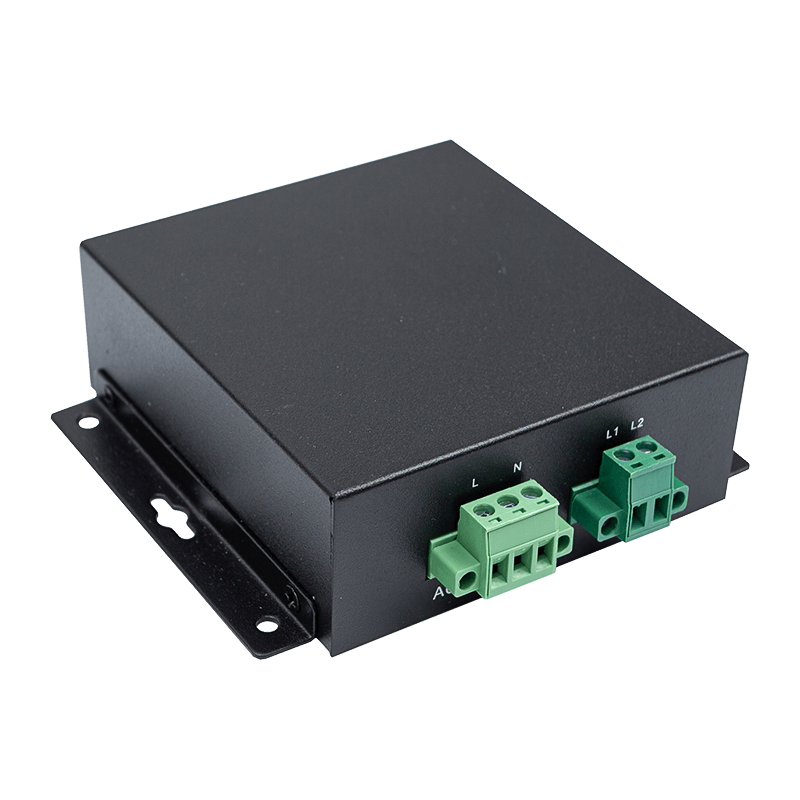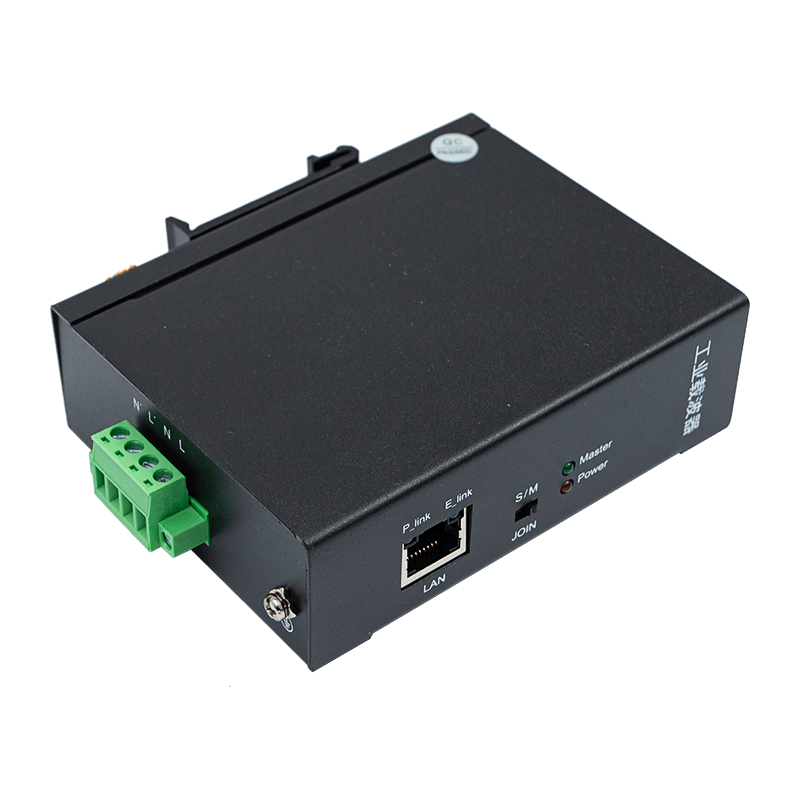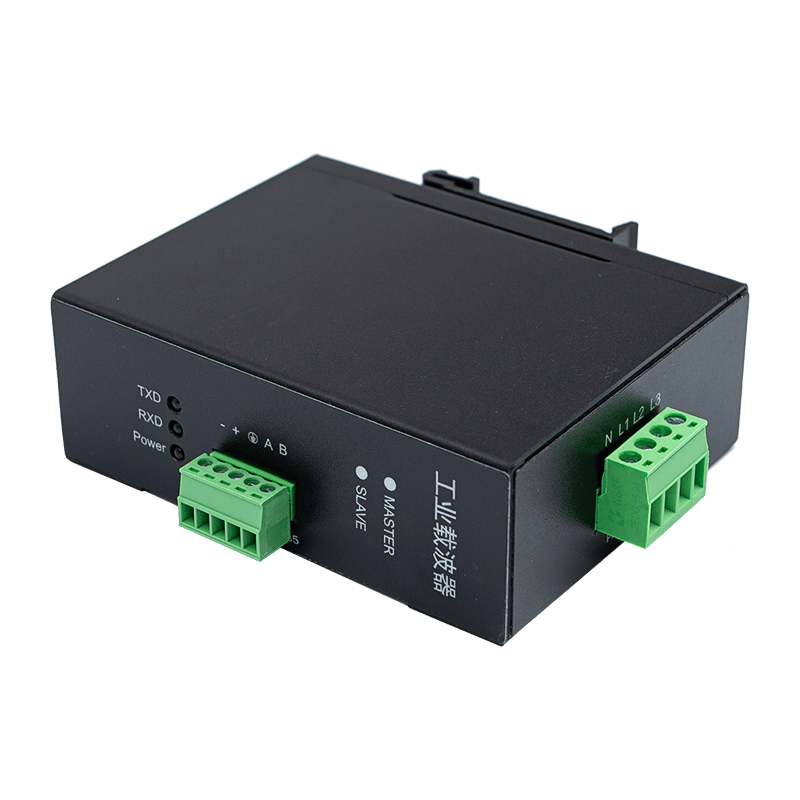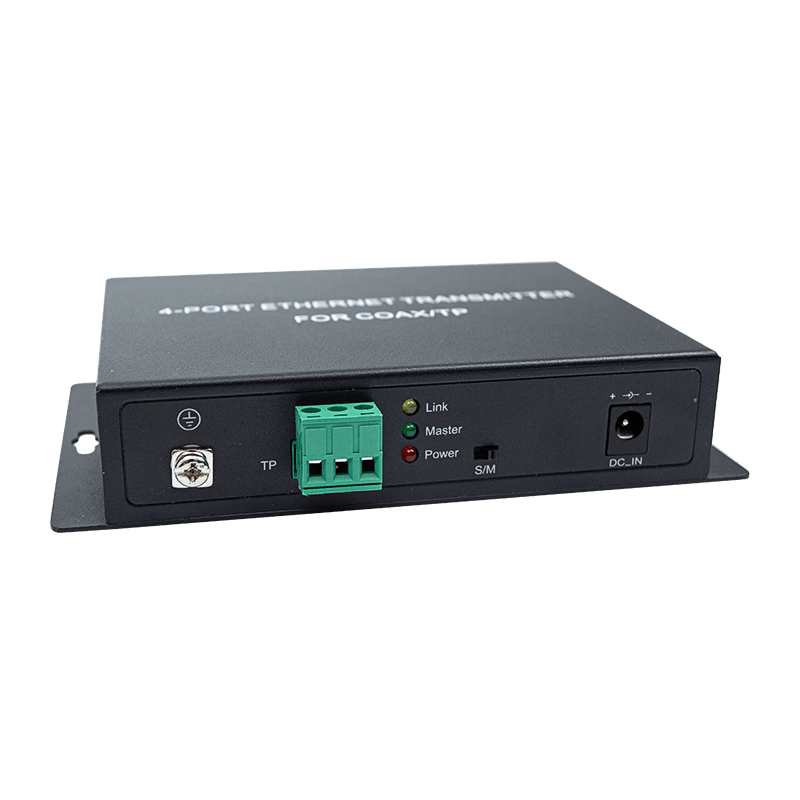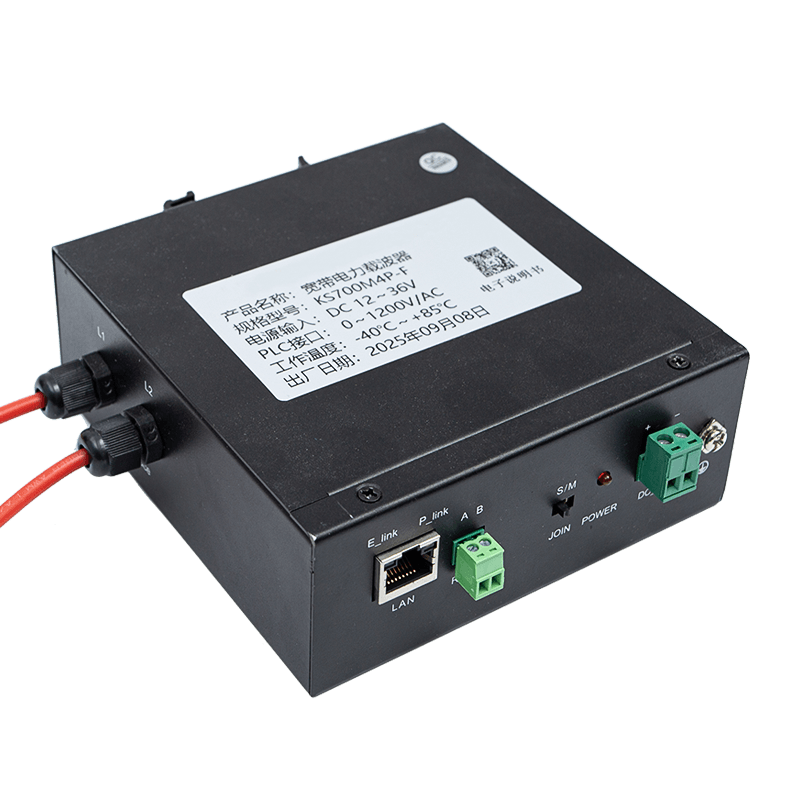


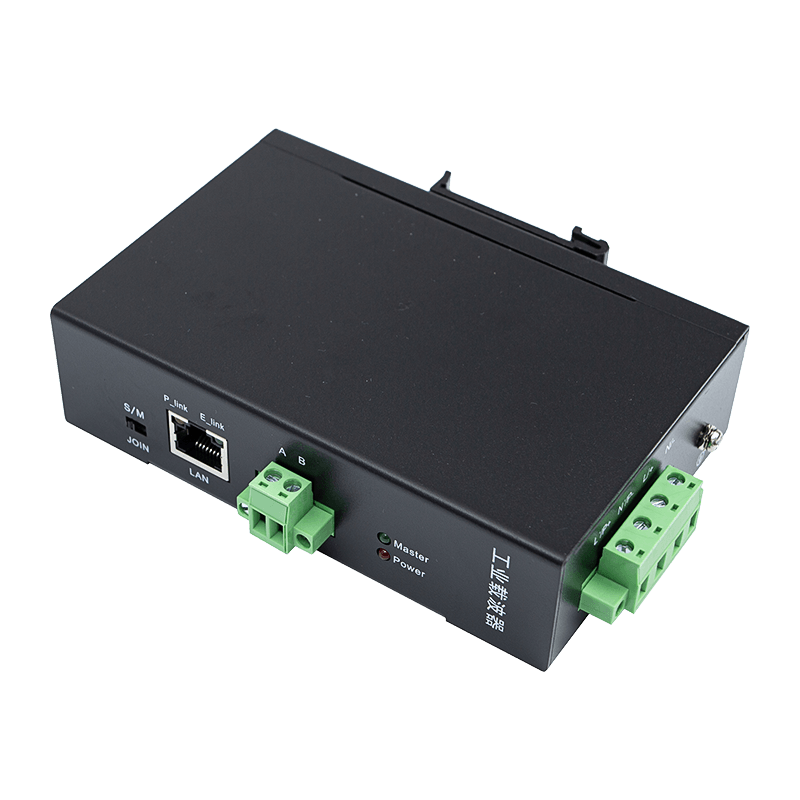
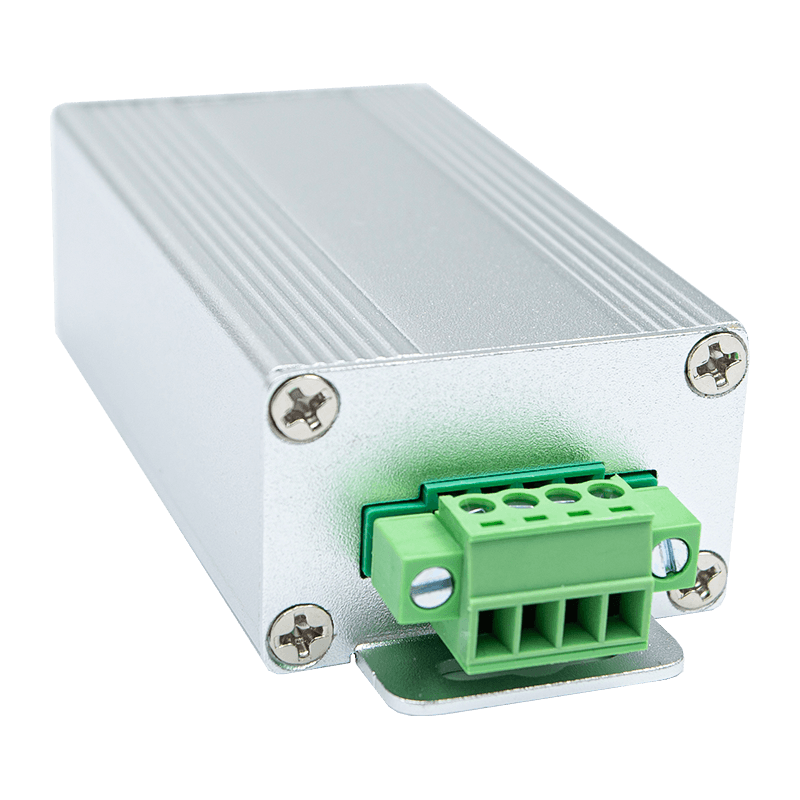
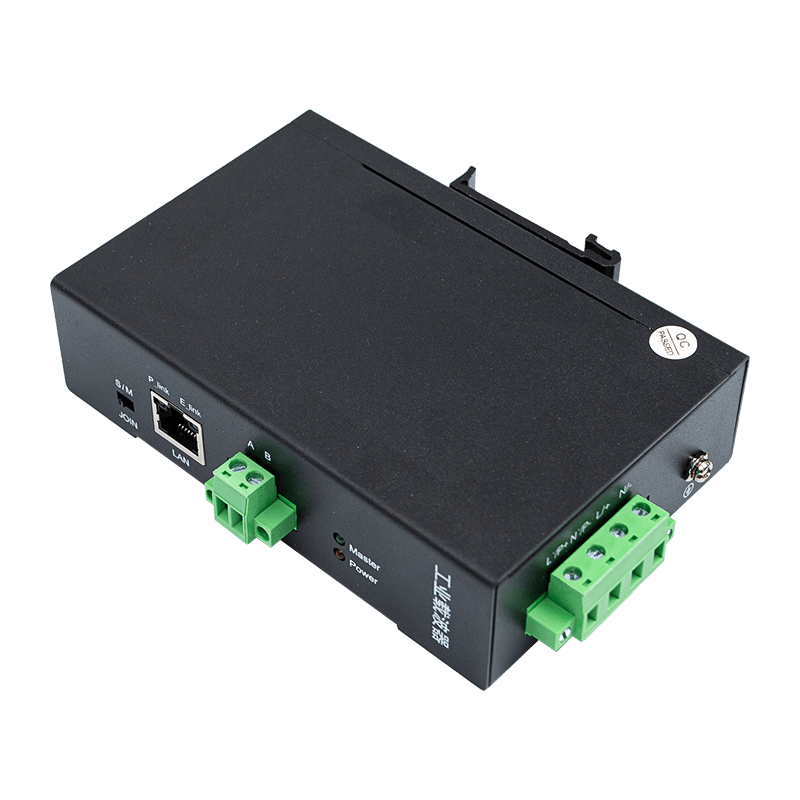
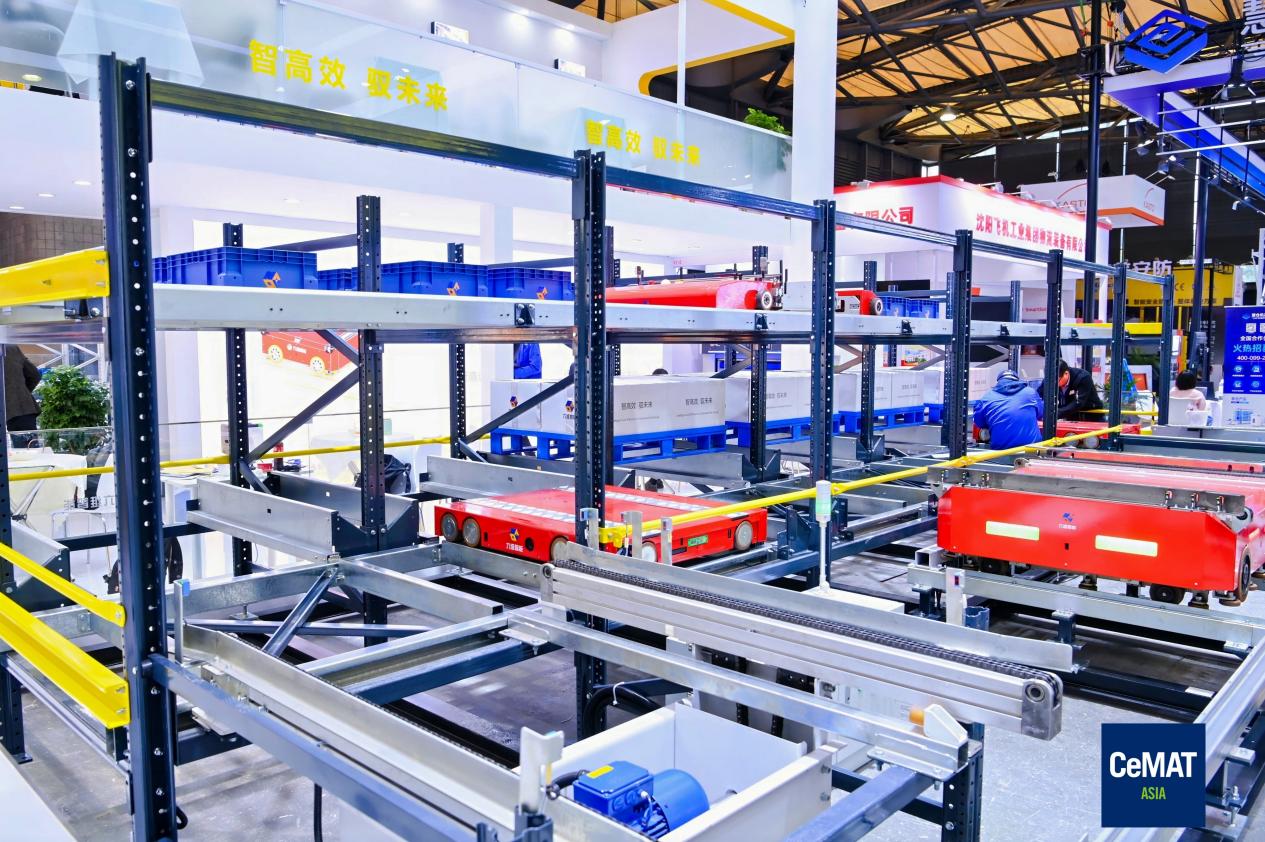
Industrial networks are expanding rapidly as factories, utilities, public infrastructure, and energy systems demand more data from more field devices. However, many industrial sites face a persistent problem: the devices that need to communicate are often distributed across long distances, harsh environments, or legacy electrical layouts where new network cabling is expensive, disruptive, or technically difficult. A single-phase serial port powerline transceiver provides a practical answer by converting existing power cables into a stable communication medium for transparent data transmission.
The KS500L Single-Phase Serial Port Powerline Transceiver is designed for industrial high-speed power line communication applications where RS232 and RS485 data must be transmitted across existing AC or DC power lines. Based on an industrial SOC processor and OFDM modulation technology, it supports long-distance communication, flexible networking, secure data transfer, and high environmental reliability. It is suitable for power grid meter reading, industrial control, instrumentation, intelligent transformation projects, smart street lighting, intelligent parking lots, and many other Industrial IoT scenarios.
This article introduces the product’s core technology, application value, competitive advantages, technical data, deployment methods, and the manufacturing strengths behind its reliability. It also explains why this type of powerline carrier communication equipment is becoming increasingly important for industrial connectivity and how ASY Electronics (JiaXing) Co., Ltd. supports customers with practical, scalable, and durable communication solutions.
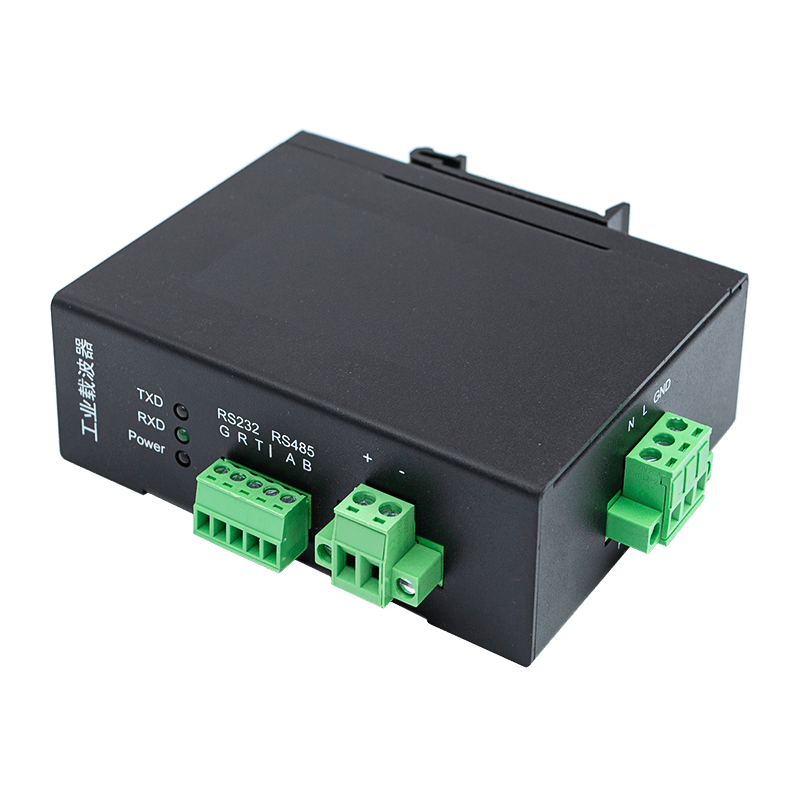
Single-Phase Serial Port Powerline Transceiver
Product Overview
The KS500L is a high-performance industrial power line carrier communication device that uses the existing power line as the data transmission channel. Instead of requiring a dedicated Ethernet cable, fiber cable, or wireless network infrastructure, the device allows data from RS485 and RS232 serial ports to be transmitted through the power cable itself. This approach can significantly reduce installation complexity, lower project cost, and shorten deployment time, especially in industrial environments where rewiring is difficult.
The device operates over AC85-300V or DC70-430V power lines, making it compatible with a wide range of industrial power systems. It uses OFDM modulation technology, with subcarriers supporting BPSK, QPSK, and 16QAM modulation. The carrier frequency band is 700 kHz to 2 MHz, and the communication rate supports 2400 bps to 1 Mbps. This range of data rates allows the product to serve both low-speed instrument data transmission and higher-bandwidth industrial telemetry applications.
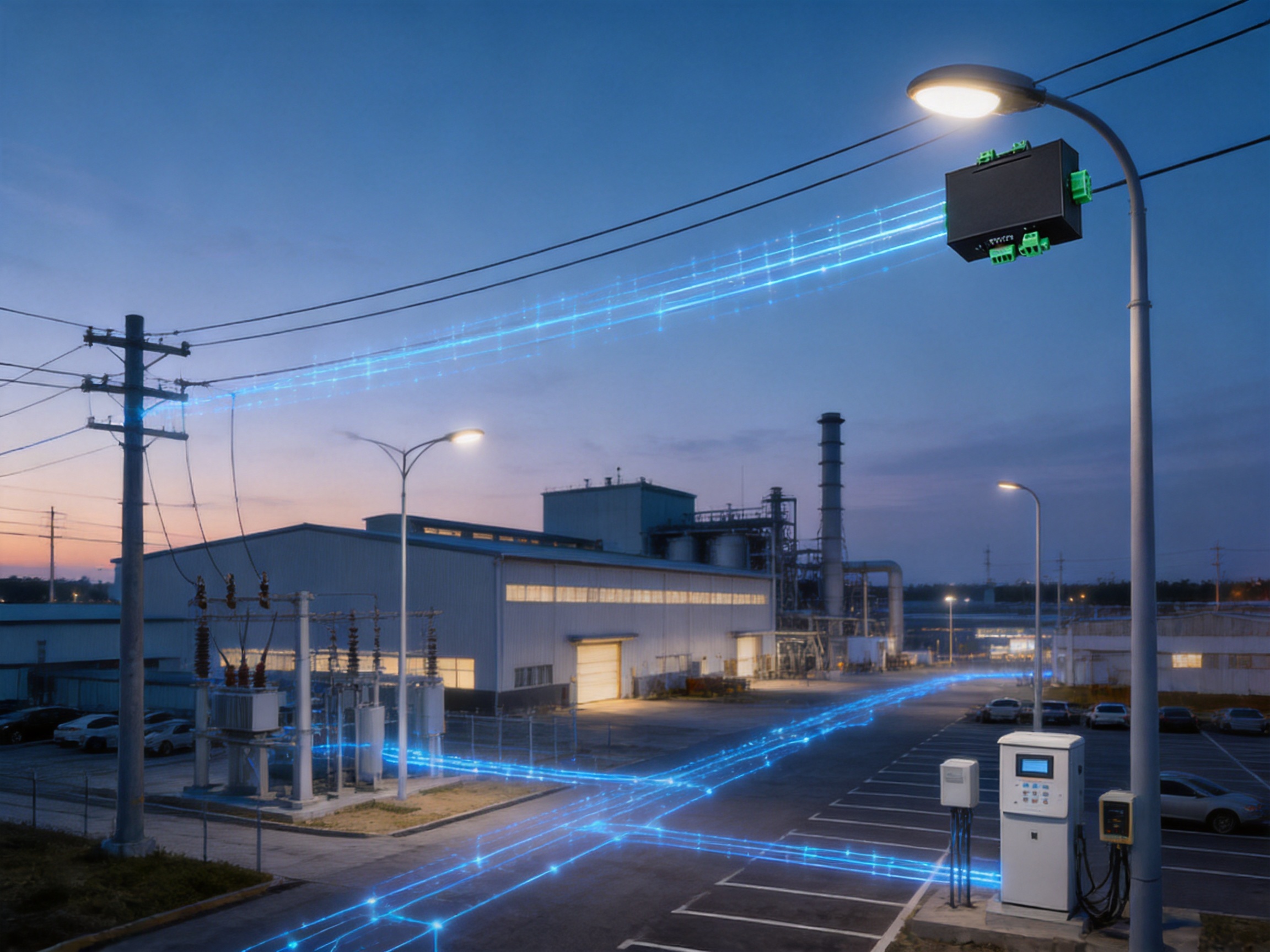
One of the most important features of the product is its long-distance point-to-point transmission capability of up to 3000 meters on a power line. This is especially valuable for sites such as factories, mines, campuses, power distribution networks, streetlight systems, parking facilities, and large industrial parks. In these locations, field devices are often separated by hundreds or thousands of meters, and running new cables may require trenching, conduit installation, production shutdowns, or complex engineering approval.
The device supports up to 1000 nodes in a network. This large networking capability allows system integrators and end users to create distributed data collection and control networks across broad facilities. The device supports bus, star, tree, and hybrid topology structures, providing flexibility for real-world power distribution architectures. Built-in routing algorithms and automatic networking further simplify implementation, while LDPC error correction and AES-128bit encryption improve reliability and security.
With an industrial operating temperature range of -40 degrees Celsius to 85 degrees Celsius, the product is designed for demanding environments. It supports 7-by-24-hour all-weather operation and has an overall power consumption of no more than 2 W. These characteristics make it well suited to unattended equipment rooms, outdoor cabinets, utility infrastructure, and industrial control panels.
Why Power Line Communication Matters in Industrial IoT
Industrial IoT depends on data. Sensors, meters, actuators, controllers, and monitoring systems must exchange information continuously. Yet industrial facilities are not always designed for modern data networks. Many factories were built long before digital transformation became a priority. Their electrical systems may be extensive and reliable, while their communication infrastructure may be incomplete or fragmented.
Power line communication solves this mismatch by using the existing power network as the communication path. Since almost every field device already requires power, the power line is usually available exactly where communication is needed. This reduces the need for additional cabling and makes retrofitting easier. For manufacturers, utilities, and infrastructure operators, this can transform digital upgrade projects from expensive civil engineering tasks into manageable equipment integration projects.
Compared with wireless communication, power line carrier communication is less affected by radio barriers such as metal walls, underground structures, electromagnetic shielding, equipment rooms, and reinforced concrete. Compared with new signal cabling, it avoids extensive labor, installation downtime, and material cost. Compared with short-range serial communication, it extends data transmission distance dramatically. For many industrial systems, this combination of practical advantages makes power line communication a highly attractive connectivity technology.
The KS500L is particularly relevant because it focuses on industrial serial data transmission. RS485 and RS232 remain widely used in power meters, PLCs, instruments, sensors, motor drives, environmental monitoring devices, flow meters, and industrial controllers. Many facilities have thousands of serial devices that still perform reliably but lack convenient long-distance network connectivity. By transparently transmitting serial data through the power line, the transceiver allows these legacy and modern devices to join broader data systems without replacement.
Core Technical Architecture
The product is based on an SOC processor and uses OFDM modulation technology. OFDM, or orthogonal frequency division multiplexing, divides the data stream into multiple subcarriers. This approach helps communication signals withstand noise, attenuation, and frequency-selective interference that may be present on power lines. Industrial power lines are not ideal communication media; they can include switching noise, motor interference, harmonic distortion, and impedance changes. OFDM helps maintain stable communication under these changing conditions.
The device supports BPSK, QPSK, and 16QAM modulation on its subcarriers. This allows the system to balance transmission robustness and data rate according to channel conditions. BPSK offers stronger resistance to noise, while higher-order modulation such as 16QAM can provide greater throughput when the power line channel is clean enough. This adaptive capability is important in industrial networks because power conditions may vary across different lines, loads, and time periods.
The built-in LDPC error correction codec improves data integrity. LDPC, or low-density parity-check coding, is a powerful forward error correction method used in modern communication systems. It can detect and correct many transmission errors without requiring repeated retransmission. This is valuable in power line networks because impulse noise or temporary interference may otherwise corrupt data packets. By improving error correction performance, the product supports more stable transparent data transmission.
AES-128bit encryption provides data protection for industrial communication. As industrial equipment becomes connected to supervisory platforms, data security becomes more important. Meter readings, control commands, production data, and equipment status information may be sensitive. Encryption helps protect communication from unauthorized interception or tampering, especially in distributed infrastructure systems where devices may be installed in public or semi-public locations.
The product’s built-in routing algorithm and automatic networking design reduce the engineering workload. In large-scale field deployment, manual configuration of every communication route can be time-consuming and error-prone. Automatic networking helps the network organize itself according to available paths, while routing support enables flexible topologies. This is especially useful when the power network layout is complex or when nodes are added gradually over time.
Key Product Advantages
Long-Distance Transmission up to 3000 Meters
A major advantage of the KS500L is its ability to support point-to-point transmission up to 3000 meters over the power line. Many competing communication devices are limited by cable distance, radio range, or environmental obstacles. Standard RS485 communication can support relatively long distances under ideal conditions, but it requires dedicated twisted-pair cabling and careful installation. Wireless systems may cover long distances in open spaces but often suffer in industrial plants, underground facilities, or dense urban infrastructure. By using the existing power line, the product delivers long-range connectivity in a way that aligns naturally with industrial site layouts.
This long-distance capability is useful for power distribution monitoring, streetlight control, water treatment facilities, mining equipment, parking systems, and large factory campuses. It can connect widely distributed endpoints without trenching, fiber laying, or repeater-heavy wireless planning. The result is a more efficient and scalable network design.
Support for up to 1000 Nodes
Industrial IoT projects often begin with a small number of devices and later expand to hundreds or thousands of nodes. A communication device that cannot scale becomes a bottleneck. The KS500L supports networking capability for up to 1000 nodes, enabling large distributed systems. This makes it suitable for smart meter reading, streetlight networks, equipment monitoring, and other applications where many endpoints must report data to a central system.
Compared with simpler point-to-point communication converters, this large-node capability gives the product a clear advantage. It is not only a serial extension tool but also a foundation for broader industrial data acquisition networks. For system integrators, this means fewer concerns about future expansion and a more consistent architecture across small, medium, and large projects.
Transparent Transmission for RS232 and RS485
The product supports RS232 and RS485 serial data transmission. Transparent transmission means the device can carry data without requiring major changes to the user’s existing communication protocol. This is important because many industrial instruments and controllers use proprietary or application-specific serial protocols. Rewriting software or replacing equipment can be expensive and risky. Transparent transmission reduces integration effort and helps preserve existing investments.
For customers, this plug-and-play characteristic is a practical benefit. Field engineers can connect existing serial devices to the transceiver and use the power line as the communication path. This shortens commissioning time and reduces the need for specialized protocol conversion.
Wide Power Input Compatibility
The device operates on AC85-300V or DC70-430V power lines. This wide voltage compatibility allows the product to adapt to many industrial and utility environments. It can be used in AC power distribution systems, DC power applications, and equipment cabinets where power conditions differ from site to site.
Some competing products are designed for narrower voltage ranges, requiring additional power adapters, protection devices, or model selection complexity. A wide working voltage range simplifies inventory, engineering design, and deployment. It also improves the product’s suitability for global industrial applications where power standards and site conditions vary.
Industrial Temperature Range
The operating temperature range of -40 degrees Celsius to 85 degrees Celsius enables deployment in harsh environments. This is crucial for outdoor control cabinets, unheated utility rooms, roadside infrastructure, and industrial sites where ambient temperature can fluctuate dramatically. Consumer-grade or commercial-grade communication products may fail or become unstable under such conditions.
Industrial temperature capability provides confidence for continuous operation. Since communication failures can interrupt monitoring, control, billing, or safety functions, environmental durability is not merely a specification; it is a business continuity requirement.
Low Power Consumption
The overall power consumption is no more than 2 W. Low power consumption reduces heat generation inside sealed control cabinets and contributes to long-term reliability. In distributed networks with many nodes, low power consumption also reduces total energy usage. For smart grid, smart lighting, and industrial IoT applications, energy efficiency supports both operating cost reduction and sustainability goals.
Secure Data Transmission
AES-128bit encryption strengthens the communication system by protecting data confidentiality. Industrial users increasingly require secure communication, especially in energy, municipal, transportation, and manufacturing systems. Security is becoming a standard procurement criterion rather than an optional feature. By integrating encryption into the device, the product provides security at the communication layer and reduces the need for additional external protection mechanisms.
Flexible Network Topologies
The device supports bus, star, tree, and hybrid network topologies. This flexibility matters because power line structures are rarely uniform. A factory may have multiple branches, sub-distribution cabinets, and production zones. A streetlight system may follow long linear routes with branch circuits. A parking lot may have radial power distribution from several panels. Supporting different topology types allows engineers to design communication networks around the actual electrical infrastructure instead of forcing the site to conform to a rigid communication architecture.
Compliance-Oriented Design
The carrier communication technology follows the EU EN-50561 standard specification. Standards-oriented design is valuable for industrial users because it supports predictable performance, regulatory alignment, and professional engineering acceptance. In markets where electromagnetic compatibility and communication behavior are closely evaluated, a standard-conscious product design can reduce project risk.
Technical Specifications
Item |
Specification |
Customer Value |
Power Line Interface |
AC85-300V or DC70-430V power line |
Adapts to a wide range of industrial AC and DC systems |
Data Interface |
RS485 and RS232 |
Supports common industrial serial devices and legacy systems |
Modulation Type |
OFDM with BPSK, QPSK, and 16QAM |
Balances robustness and data rate under changing line conditions |
Carrier Frequency |
700 kHz to 2 MHz |
Designed for power line carrier data communication |
Communication Speed |
2400 bps to 1 Mbps |
Supports both low-speed meter data and higher-bandwidth telemetry |
Transmission Distance |
Up to 3000 meters point to point |
Reduces the need for repeaters, new cables, or wireless infrastructure |
Networking Capability |
Maximum support for 1000 nodes |
Enables large-scale Industrial IoT and utility networks |
Gain |
100 dB |
Supports communication over challenging power line channels |
Power Consumption |
Not more than 2 W |
Improves energy efficiency and cabinet thermal performance |
Encryption |
AES-128bit |
Improves data security for industrial applications |
Dimensions |
79.3 x 35 x 100 mm |
Compact size for installation in control panels and equipment cabinets |
Weight |
280 g |
Lightweight and convenient for field installation |
Operating Temperature |
-40 degrees Celsius to 85 degrees Celsius |
Suitable for harsh industrial and outdoor environments |
Operating Humidity |
20 percent to 95 percent, non-condensing |
Supports stable use in demanding field environments |
Working Time |
Industrial grade, 7-by-24-hour all-weather operation |
Designed for continuous unattended operation |
Competitive Advantages over Conventional Communication Methods
Compared with Dedicated Serial Cabling
Dedicated RS485 or RS232 cabling is a common solution for industrial data transmission, but it can be expensive and inconvenient in existing facilities. Installing new communication cable may require cable trays, conduits, wall drilling, underground trenching, plant shutdowns, and labor-intensive wiring. For long-distance routes, cable quality, grounding, shielding, and electromagnetic interference must be carefully managed.
The KS500L uses the existing power line, reducing or eliminating the need for additional communication cabling. This advantage is especially significant in retrofit projects. It helps customers complete digital upgrades with less disruption to production and infrastructure. For large sites, the cost savings can be substantial because power lines are already distributed to the devices and areas that require communication.
Compared with Wireless Communication
Wireless systems are convenient in some applications, but industrial environments can be difficult for radio communication. Metal structures, machines, electrical cabinets, underground spaces, thick walls, and electromagnetic interference can reduce signal quality. Wireless networks may require careful antenna placement, repeaters, site surveys, and ongoing maintenance. In some industrial or municipal environments, radio spectrum management and security concerns also complicate deployment.
Power line communication offers an alternative path that is physically tied to the electrical infrastructure. It does not rely on line-of-sight radio propagation. In environments where wireless signals are unstable or prohibited, the KS500L can provide a more dependable solution. It also reduces the visual and maintenance impact of antennas, outdoor repeaters, and wireless access points.
Compared with Ethernet or Fiber Retrofit
Ethernet and fiber can provide high bandwidth, but they are not always economical for serial device networks. Many instruments only transmit small data packets, status messages, meter readings, or control commands. Installing fiber or Ethernet to every field point may be excessive, particularly when the main need is reliable serial communication across distance.
The KS500L offers a balanced solution. It provides transparent serial transmission through existing power lines with communication speeds up to 1 Mbps. For many industrial monitoring and control applications, this is more than sufficient. It allows customers to achieve digital connectivity without overbuilding network infrastructure.
Compared with Low-End Powerline Adapters
General consumer-grade powerline adapters are designed for home or office networking, not harsh industrial environments. They may not support wide voltage ranges, industrial temperature operation, RS485 or RS232 interfaces, secure industrial networking, or large node counts. They may also lack the durability needed for continuous operation in electrical cabinets, outdoor facilities, or utility systems.
The KS500L is positioned as an industrial standard product. Its wide operating voltage, -40 degrees Celsius to 85 degrees Celsius temperature range, AES-128bit encryption, LDPC error correction, automatic networking, and support for 1000 nodes distinguish it from low-end alternatives. It is designed not simply to transmit data, but to support industrial-grade system reliability.
Application Areas
Power Grid Meter Reading
Smart meter reading is one of the classic applications for power line carrier communication. Meters are already connected to the power network, so using the same line for data transmission is logical and cost-effective. The KS500L can support long-distance meter data collection and large node networks, making it suitable for utility infrastructure, industrial power distribution, and energy management systems.
In power grid applications, communication reliability directly affects billing accuracy, load analysis, and maintenance planning. The product’s error correction, encryption, and long-distance capability help build a stable data collection system. Its support for automatic networking can also reduce the complexity of large deployment projects.
Industrial Control
Industrial control systems often include controllers, sensors, actuators, drives, and instruments distributed across production lines or plant zones. When new communication lines are difficult to install, power line carrier communication can connect equipment through the existing electrical network. The KS500L can transmit RS485 and RS232 data transparently, allowing many industrial devices to communicate without protocol redesign.
This is useful for remote equipment status monitoring, distributed machine data acquisition, auxiliary control systems, and production process optimization. It supports the broader goal of building efficient, reliable, and green smart factories.
Instruments and Apparatus
Many instruments continue to use serial ports because RS485 and RS232 are robust, simple, and widely supported. Flow meters, temperature sensors, pressure transmitters, weighing instruments, environmental sensors, and laboratory apparatus may all generate serial data. The KS500L allows these devices to communicate through power lines across long distances.
For instrument manufacturers and system integrators, the product can become a connectivity module that extends the application range of existing devices. For end users, it protects previous investments by enabling old and new instruments to participate in digital monitoring systems.
Intelligent Transformation Projects
Digital transformation often faces a practical obstacle: existing equipment works well mechanically or electrically but lacks modern connectivity. Replacing all equipment is rarely economical. A powerline transceiver helps bridge the gap by connecting legacy serial devices to modern data platforms.
The KS500L supports intelligent transformation by reducing the cost and disruption of communication upgrades. It can be deployed in brownfield facilities where production continuity is essential. Instead of redesigning the entire electrical and communication infrastructure, users can add communication capability over the lines already present.
Smart Street Lighting
Streetlight systems are distributed over long distances and already have power cables running along roadways. This makes them ideal candidates for power line carrier communication. The KS500L’s 3000-meter point-to-point capability, large node support, and topology flexibility can help build smart lighting control and monitoring networks.
Applications may include lamp status monitoring, energy consumption reporting, remote switching, dimming control, fault detection, and integration with municipal management platforms. Compared with wireless streetlight communication, power line communication can reduce dependence on radio coverage and simplify installation in areas where wireless performance is uncertain.
Intelligent Parking Lots
Parking facilities often include gates, sensors, payment equipment, lighting, guidance displays, and security systems distributed throughout large areas. Installing new data cabling can be costly, particularly in completed buildings or outdoor lots. The KS500L can use existing power circuits to transmit serial data among devices and control systems.
This supports smart parking applications such as occupancy monitoring, entry and exit control, equipment status collection, and energy management. The device’s compact size and industrial operating range make it suitable for control boxes, parking terminals, and outdoor electrical cabinets.
Design for Reliability in Harsh Environments
Industrial customers often evaluate communication equipment not only by peak performance but by long-term stability. A device installed in a factory cabinet, outdoor pole box, or utility substation may be expected to work continuously for years. It may face temperature extremes, humidity, voltage fluctuations, electrical noise, vibration, and limited maintenance access. The KS500L is designed around these realities.
The product’s industrial temperature range helps it remain operational in cold winters, hot summers, and enclosed control cabinets where internal temperature can rise. The non-condensing humidity tolerance of 20 percent to 95 percent supports installation in many field environments. Low power consumption reduces internal heat stress, which can improve long-term component life.
Power line communication equipment must also handle a complex electrical environment. Power lines can carry noise from switching power supplies, motors, inverters, contactors, relays, and other industrial loads. The use of OFDM modulation, LDPC error correction, and strong gain supports more robust communication under these conditions. This is one reason the product is suitable for industrial rather than purely commercial applications.
Security and reliability work together. An unstable network can lose data, while an unsecured network can expose data. By integrating AES-128bit encryption, the product addresses the increasing need for secure industrial communication. In applications such as meter reading, energy management, and remote control, protecting data integrity and confidentiality is essential.
Manufacturing Strengths and Quality Orientation
ASY Electronics (JiaXing) Co., Ltd. is a high-tech enterprise focused on industrial data sensing and intelligent connectivity. Its product portfolio includes broadband power line carriers, wireless temperature monitoring systems, transmitters, flow meters, and automatic door controllers. This broad industrial background is important because communication equipment must operate within real industrial ecosystems, not isolated laboratory conditions.
The company’s mission is to help build efficient, reliable, and green smart factories. To support this mission, it develops edge-layer hardware products and industrial data integration solutions. Edge-layer hardware is the foundation of industrial digitalization because it connects real machines, sensors, instruments, and power systems to higher-level platforms. The KS500L fits directly into this strategy by enabling equipment data to move across existing power infrastructure.
Advanced manufacturing processes for industrial communication products require attention to electronic design, component selection, assembly quality, testing, and traceability. A powerline transceiver must maintain signal integrity while operating near power circuits. This requires careful design of the power interface, communication coupling, PCB layout, isolation strategy, thermal performance, and enclosure structure. Manufacturing consistency is essential because small variations can affect communication performance in the field.
In a professional industrial electronics production environment, quality begins with design validation. Engineering teams verify that the device meets communication, electrical, environmental, and mechanical requirements. The modulation performance, serial interface compatibility, power input tolerance, and thermal behavior must be reviewed under expected application conditions. For a product intended to operate from -40 degrees Celsius to 85 degrees Celsius, component derating and thermal margin are particularly important.
Component selection also affects product reliability. Industrial-grade components are chosen to support wide temperature operation, stable electrical characteristics, and long service life. Power-related components must withstand voltage variation, transients, and continuous operation. Communication components must support accurate signal processing and low error rates. The compact dimensions of 79.3 x 35 x 100 mm require an efficient internal layout that balances size, heat dissipation, electrical safety, and installation convenience.
Manufacturing process control is another strength. Industrial electronics production typically includes controlled PCB assembly, soldering process management, visual inspection, electrical testing, functional verification, and final product inspection. For communication equipment, functional testing is especially important because a device must not only power on but also transmit data reliably through realistic channels. Serial interface testing, power input testing, and communication performance verification help ensure that products delivered to customers meet practical field requirements.
Environmental reliability is equally important. Products intended for harsh industrial use benefit from testing or validation under temperature stress, humidity conditions, continuous operation, and electrical load scenarios. Although every project environment is different, robust factory testing helps reduce early failures and improve field confidence. The product’s 7-by-24-hour all-weather operating design reflects this industrial reliability mindset.
ASY Electronics’ advantage is not limited to producing hardware. The company also provides industrial data integration solutions, which means it understands how field communication devices interact with sensors, transmitters, meters, controllers, and management platforms. This system-level perspective helps customers select appropriate products, plan network topologies, and implement communication solutions that match actual site conditions.
How the Product Supports Smart Factory Development
Smart factories depend on continuous data flow from the production floor. Equipment condition monitoring, refined energy management, and production process optimization all require reliable connectivity. However, many factories contain a mix of old and new machines, different control systems, and distributed power circuits. The KS500L can help unify these environments by creating a communication path through the existing electrical network.
For equipment condition monitoring, serial sensors and instruments can send operating data, fault status, and measurement values to monitoring systems. For energy management, meters can transmit electricity consumption data from different production zones without new communication wiring. For process optimization, distributed controllers and instruments can share data that helps improve production visibility and decision-making.
Because the device supports transparent transmission, it can work with many existing serial protocols. This is important in factories where equipment vendors, protocols, and ages vary widely. A communication upgrade that requires minimal change to existing equipment is easier to approve and implement. It also reduces the risk of production interruption.
The product’s long range and large node support align with factory expansion. A smart factory network may begin with one workshop and later expand to warehouses, utility rooms, outdoor facilities, and remote equipment areas. The ability to support up to 1000 nodes provides room for phased deployment. Flexible topologies allow engineers to adapt the communication network as factory layouts evolve.
Installation and Deployment Considerations
Successful power line communication deployment begins with understanding the electrical network. Engineers should identify the power circuits that will carry communication, the distance between nodes, the presence of transformers or filters, the type of loads connected, and the desired network topology. Although the KS500L is designed for plug-and-play transparent transmission, thoughtful planning improves performance and reliability.
For point-to-point applications, two devices can be installed at opposite ends of a power line segment to carry serial data. For multi-node applications, devices can be distributed along the power network according to the system architecture. The maximum support for 1000 nodes makes it possible to create large systems, but node addressing, data polling strategy, and host system design should be planned carefully.
Because the device supports RS485 and RS232, users should confirm serial parameters such as baud rate, parity, data bits, stop bits, and protocol timing. Transparent transmission depends on matching the requirements of connected devices. In RS485 networks, attention should also be paid to bus termination, grounding practice, and device addressing when applicable.
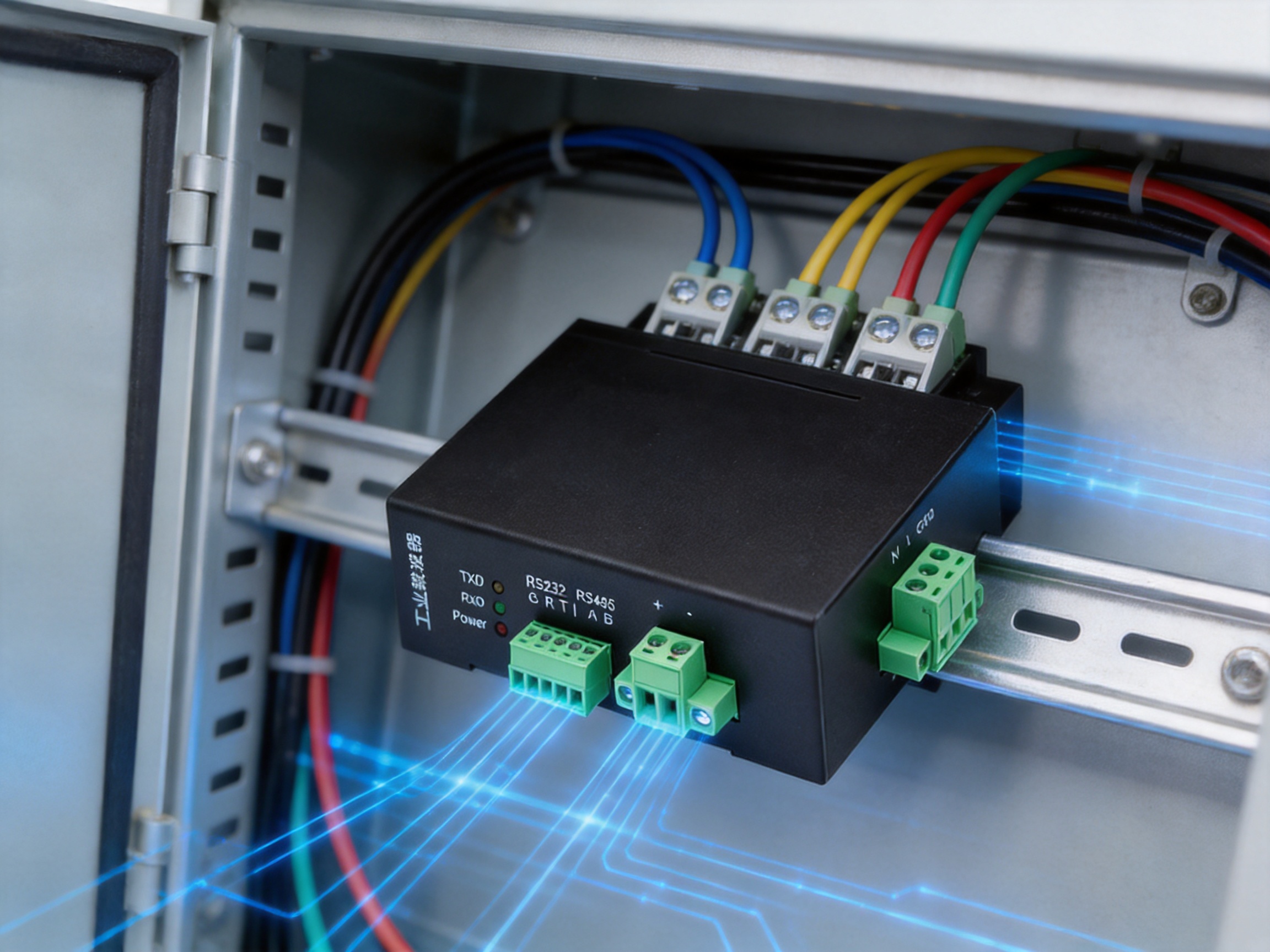
The power input range of AC85-300V or DC70-430V allows broad application, but installation should always follow electrical safety rules. The device should be mounted in a suitable enclosure or cabinet, protected from direct water exposure, mechanical damage, and unauthorized access. The operating humidity specification is non-condensing, so condensation should be avoided through proper cabinet design, sealing, ventilation, or heating where necessary.
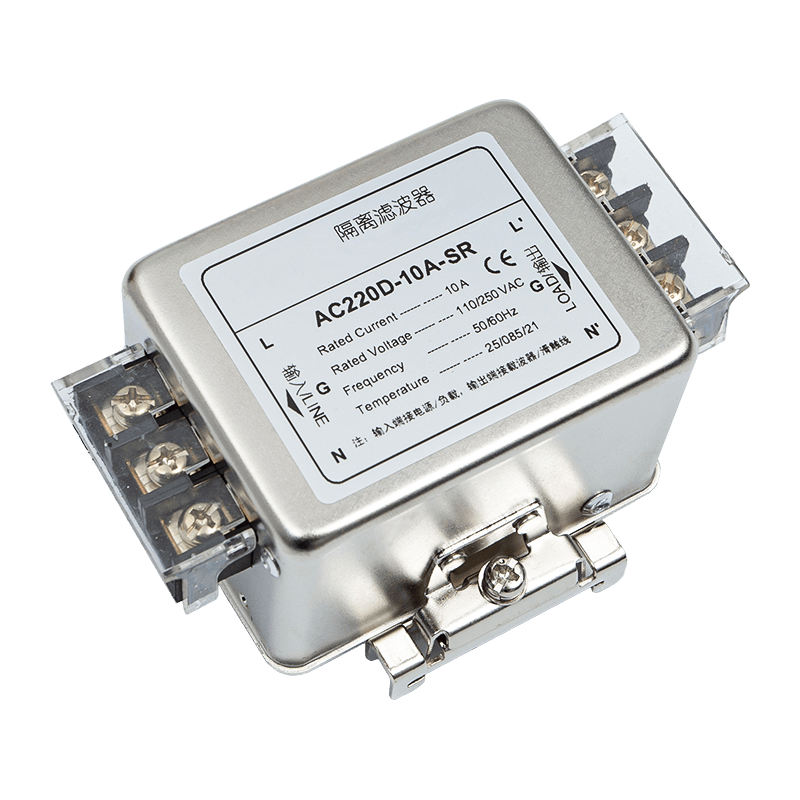
In noisy electrical environments, communication performance may be affected by high-power inverters, welding machines, variable-frequency drives, or switching equipment. Proper circuit selection, filtering strategy, and installation practice can help optimize performance. The product’s OFDM modulation and error correction provide a strong foundation, but good engineering practice remains important in demanding industrial sites.
Economic Value and Return on Investment
The economic value of the KS500L comes from reducing infrastructure cost, shortening installation time, preserving existing equipment, and enabling data-driven operations. In many industrial communication projects, the cost of cable installation can exceed the cost of electronic devices. Labor, cable trays, conduit, shutdown time, civil construction, and commissioning can all increase project budgets. By using existing power lines, the product can reduce these costs significantly.
Return on investment also comes from faster digital transformation. When communication infrastructure is easier to deploy, companies can begin collecting useful data sooner. Energy management systems can identify waste, equipment monitoring systems can detect faults earlier, and production optimization projects can use real operational data. These benefits can improve efficiency, reduce downtime, and support sustainability targets.
For utilities and municipal projects, cost savings may be multiplied across large numbers of endpoints. A streetlight or meter reading network with hundreds or thousands of nodes benefits from every reduction in installation labor and material. The product’s support for up to 1000 nodes and long-distance communication helps large deployments remain practical.
Another economic advantage is lifecycle continuity. Many industrial devices using RS232 or RS485 are still reliable and do not need replacement. The KS500L allows these devices to connect through modern communication infrastructure without forcing a full equipment upgrade. This protects capital investment and reduces electronic waste.
Product Positioning in Industrial IoT Communication Solutions
The KS500L occupies a practical position in the Industrial IoT communication landscape. It is not intended to replace every communication technology. Fiber, Ethernet, wireless, cellular, and fieldbus systems all have appropriate roles. However, for long-distance serial data transmission over existing power infrastructure, it offers a combination of advantages that few alternatives can match.
It is especially suitable when the site already has reliable power lines, when field devices use RS485 or RS232, when new communication wiring is expensive, when wireless communication is unstable, and when long-distance or multi-node deployment is required. These conditions are common in industrial plants, utility systems, smart infrastructure, and retrofit projects.
The product also fits well with ASY Electronics’ broader offering in smart factory and industrial IoT solutions. Alongside wireless temperature monitoring sensors, industrial transmitters, thermal gas mass flow meters, and automatic door controllers, power line carrier communication can form part of a complete edge-layer data acquisition and control architecture. This integrated perspective helps users build practical digital systems rather than isolated device connections.

Frequently Asked Questions
What is the main function of the single-phase serial port powerline transceiver?
The main function is to transmit RS232 and RS485 serial data through existing power lines. It enables long-distance transparent data communication without installing dedicated communication cables.
What transmission distance can the product support?
The product supports power line point-to-point transmission up to 3000 meters, depending on site conditions, power line quality, electrical noise, and network design.
How many nodes can be supported in one network?
The device supports networking capability for up to 1000 nodes, making it suitable for large industrial, utility, and infrastructure applications.
Which serial interfaces are supported?
The product supports RS485 and RS232 serial interfaces. These are widely used in industrial meters, instruments, sensors, controllers, and other field devices.
What modulation technology does the product use?
It uses OFDM modulation technology, with subcarriers supporting BPSK, QPSK, and 16QAM. This helps improve communication performance over noisy or variable power line channels.
Is the product suitable for harsh industrial environments?
Yes. It is designed for industrial use, with an operating temperature range of -40 degrees Celsius to 85 degrees Celsius and support for continuous 7-by-24-hour operation.
What power input range does the device support?
The device supports AC85-300V or DC70-430V power lines, allowing it to be used in many AC and DC industrial power systems.
Does the device provide data security?
Yes. It integrates AES-128bit encryption to help protect transmitted data, which is important for industrial control, meter reading, and infrastructure monitoring applications.
Can it be used in smart street lighting systems?
Yes. Smart street lighting is one of the suitable application areas because streetlights are distributed over long distances and already have power lines available for communication.
How does it reduce project cost?
It reduces or eliminates the need for new communication cabling by using existing power lines. This can lower material cost, labor cost, installation time, and project disruption.
What makes it different from consumer powerline adapters?
It is designed for industrial serial communication, wide voltage operation, harsh temperature conditions, large node networks, secure transmission, and continuous operation. Consumer adapters typically do not provide the same industrial features.
Who manufactures and supports the product?
The product is provided by ASY Electronics (JiaXing) Co., Ltd., a high-tech enterprise focused on industrial data sensing, intelligent connectivity, and smart factory solutions.
Conclusion
The KS500L Single-Phase Serial Port Powerline Transceiver provides a powerful and practical solution for industrial communication challenges. By transmitting RS232 and RS485 data through existing power lines, it helps customers avoid costly rewiring, extend communication distance, and connect distributed devices across complex industrial sites. Its support for up to 3000 meters point-to-point transmission, up to 1000 nodes, OFDM modulation, LDPC error correction, AES-128bit encryption, wide voltage input, and industrial temperature operation makes it a strong choice for demanding applications.
Compared with dedicated serial cabling, wireless communication, Ethernet retrofit, and low-end powerline alternatives, the product offers a balanced combination of installation economy, industrial durability, topology flexibility, and secure transparent transmission. It is well suited for power grid meter reading, industrial control, instruments, intelligent transformation, smart street lighting, and intelligent parking systems.
Behind the product is ASY Electronics (JiaXing) Co., Ltd., a company focused on building the smart factories of the future through data sensing and intelligent connectivity. Its industrial hardware capabilities and system-level understanding help customers implement reliable communication solutions for equipment condition monitoring, energy management, and production process optimization. For organizations seeking efficient, reliable, and scalable Industrial IoT communication, this powerline transceiver provides a practical bridge between existing electrical infrastructure and modern digital productivity.
References
1. Proakis, John G., and Masoud Salehi. Digital Communications. McGraw-Hill Education.
2. Galli, Stefano, Anna Scaglione, and Zhifang Wang. Power Line Communications and the Smart Grid. IEEE Communications Magazine.
3. Ferreira, Hendrik C., Lutz Lampe, John Newbury, and Theo G. Swart. Power Line Communications: Theory and Applications for Narrowband and Broadband Communications over Power Lines. Wiley.
4. European Committee for Electrotechnical Standardization. EN 50561 Power Line Communication Apparatus Used in Low-Voltage Installations.
5. Richardson, Tom, and Ruediger Urbanke. Modern Coding Theory. Cambridge University Press.
6. National Institute of Standards and Technology. Advanced Encryption Standard Documentation and Technical Guidance.