

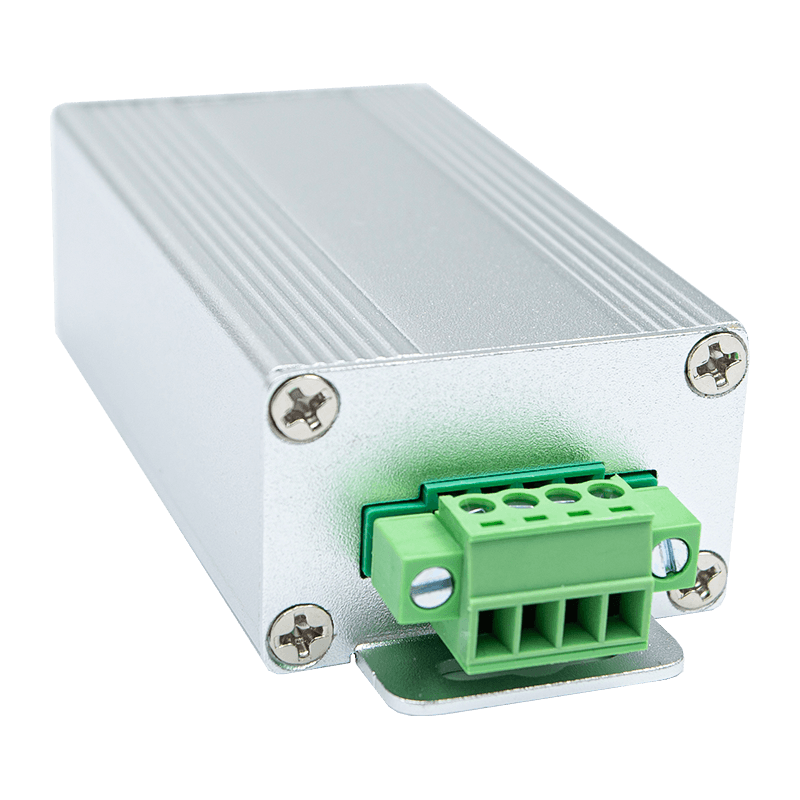
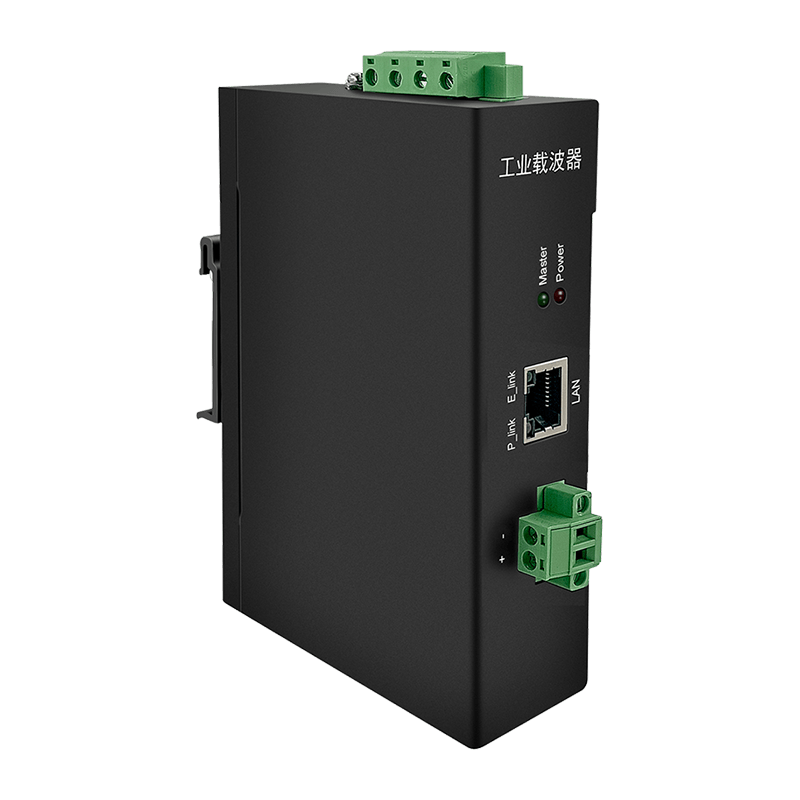
Industrial communication networks are becoming more distributed, mobile, and demanding. Robots, inspection platforms, automated production equipment, mine-monitoring systems, and other connected assets often need reliable Ethernet communication in locations where conventional network cabling is difficult to install. In many of these environments, the available infrastructure already includes a two-core DC conductor, power rail, slip ring, twisted pair, or coaxial cable. Installing a separate communication cable can increase cost, installation time, mechanical complexity, and maintenance requirements.
The KS704Q DC four-port broadband powerline transceiver addresses this challenge by combining power delivery and Ethernet communication over the same two-core line. It enables synchronous data transmission of up to 100 Mbps while operating in a DC power environment below 56 V. Depending on the cable type and operating conditions, the transmission distance can reach up to 1,000 meters. This architecture reduces the number of cables required and supports practical plug-and-play deployment in industrial locations.
More than a simple powerline modem, the KS704Q is an industrial-grade communication device with four Ethernet ports, flexible network topology, intelligent routing, AES-128 encryption, industrial temperature performance, and support for several widely used network protocols. Its design is suited to applications that require long-distance connectivity, multiple network terminals, low delay, and continuous operation in electrically challenging environments.
Product Overview
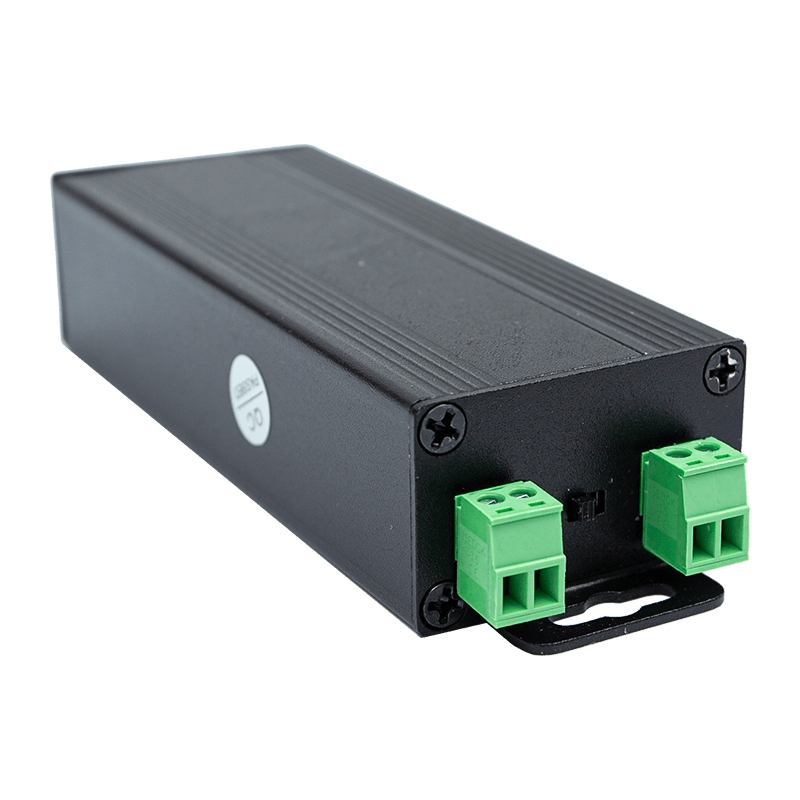
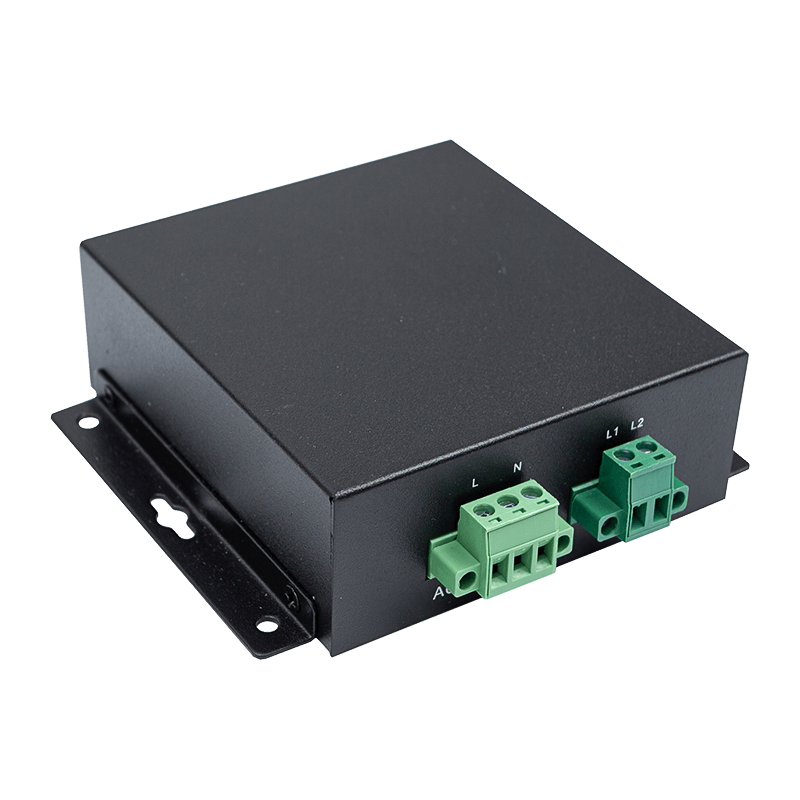
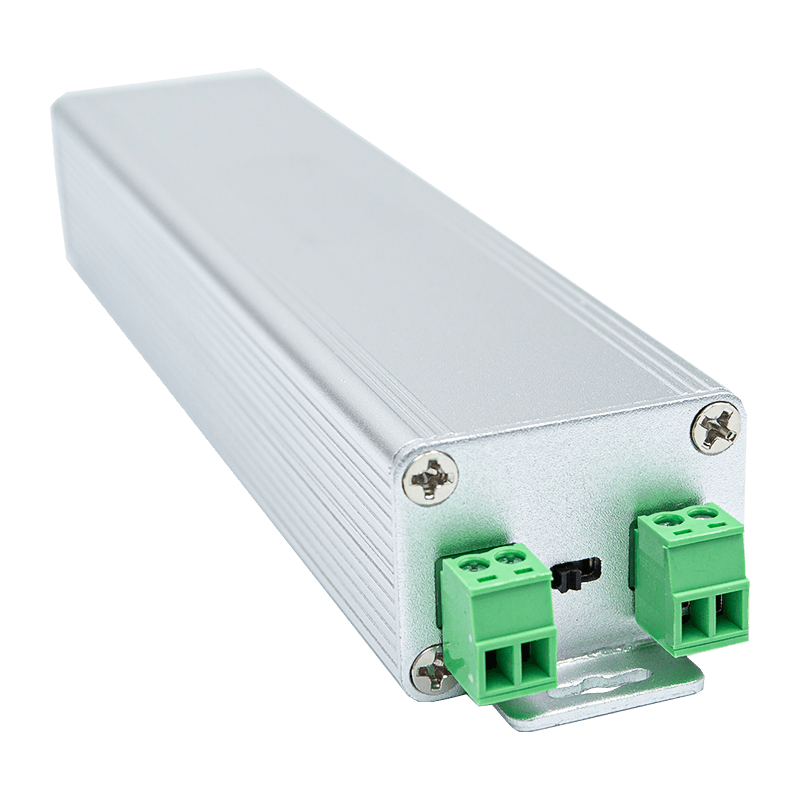
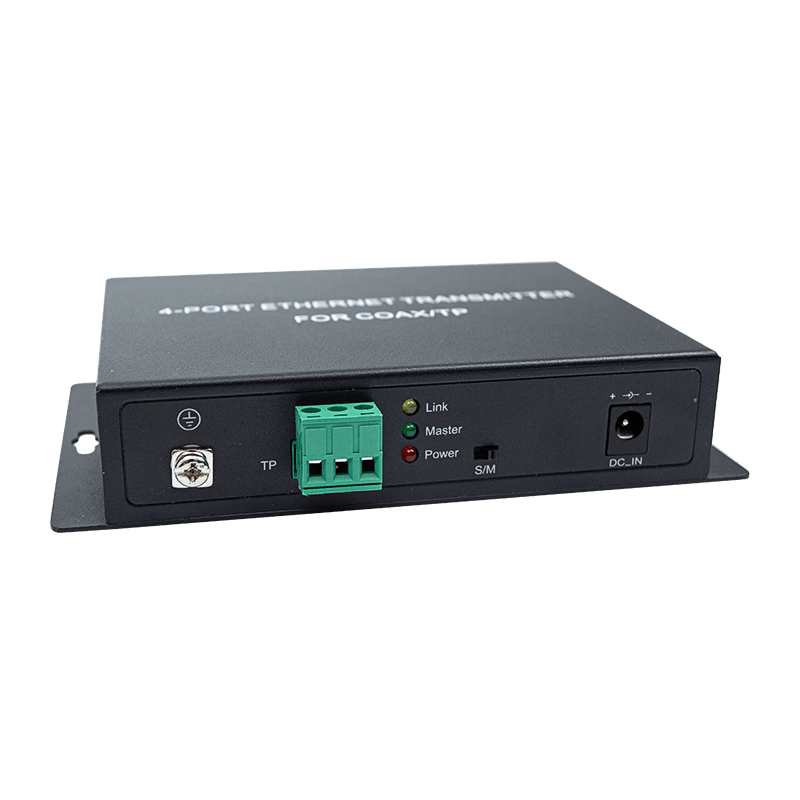
The KS704Q is a DC broadband Power Line Communication device designed to transmit Ethernet data through a DC power line or another suitable two-core conductor. It supports DC12–56V power input and can use conductors such as parallel wires, shielded twisted pair, standard power lines, slip ring cables, conductor rails, or coaxial cable, provided that the installation meets the relevant electrical requirements.
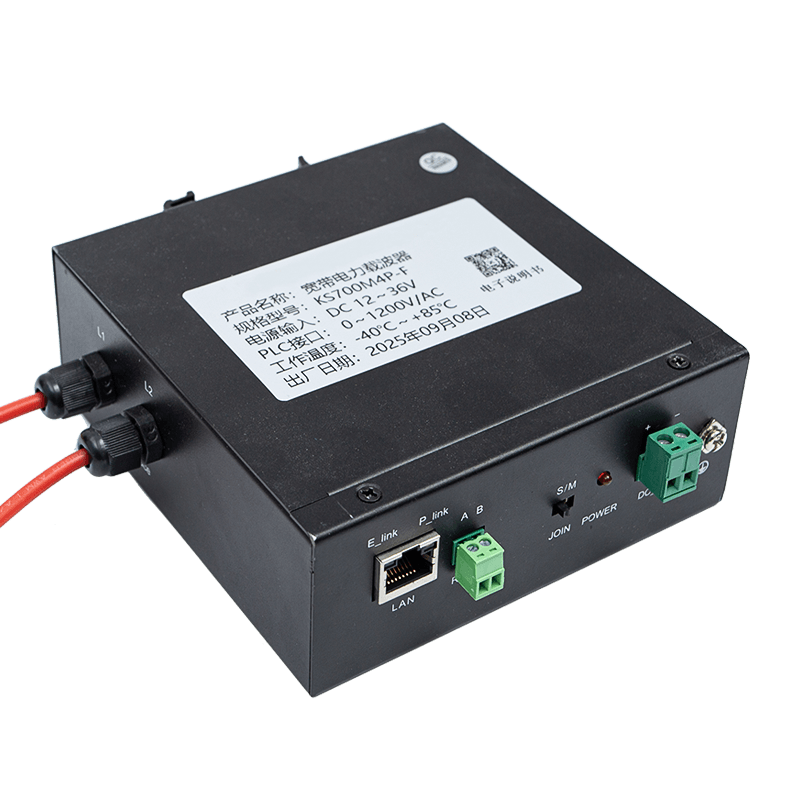
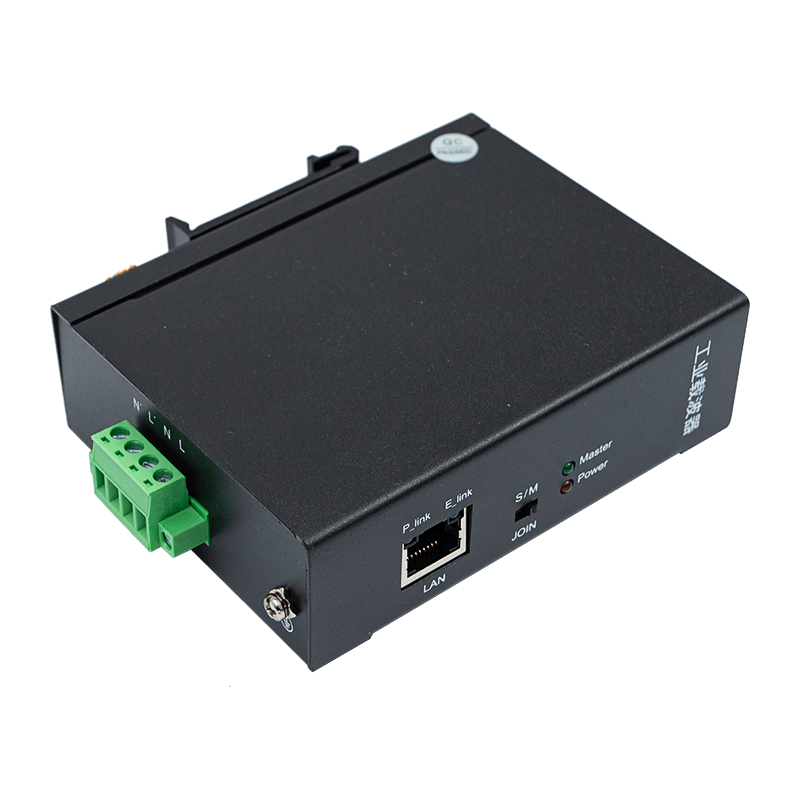
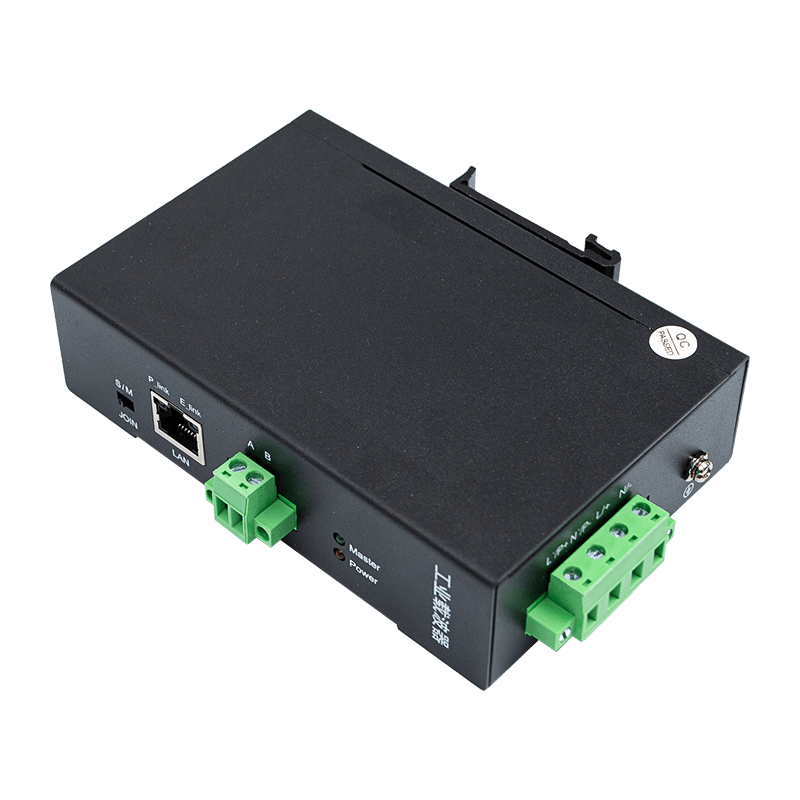
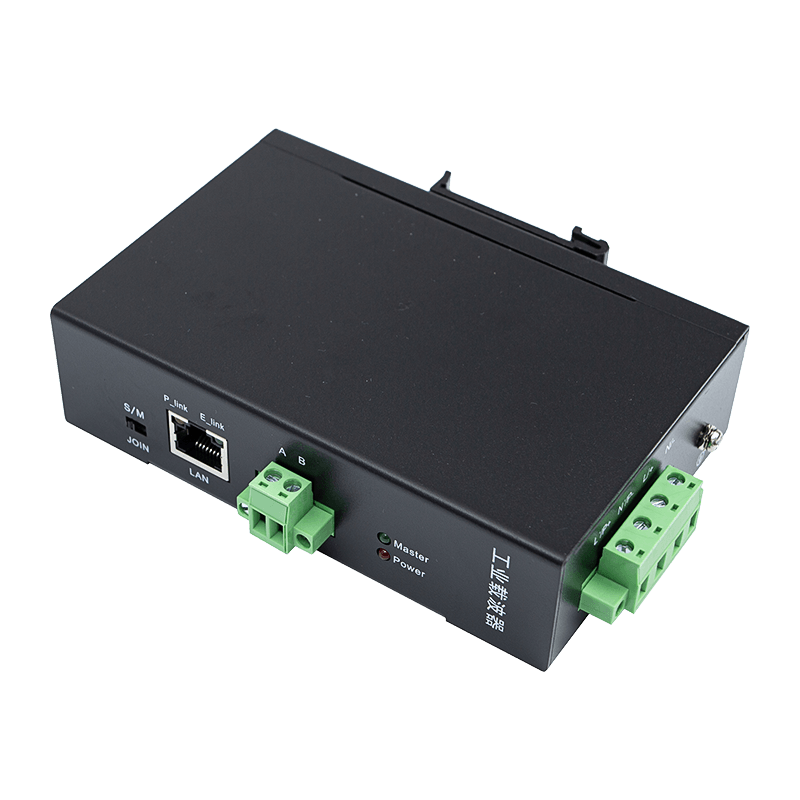
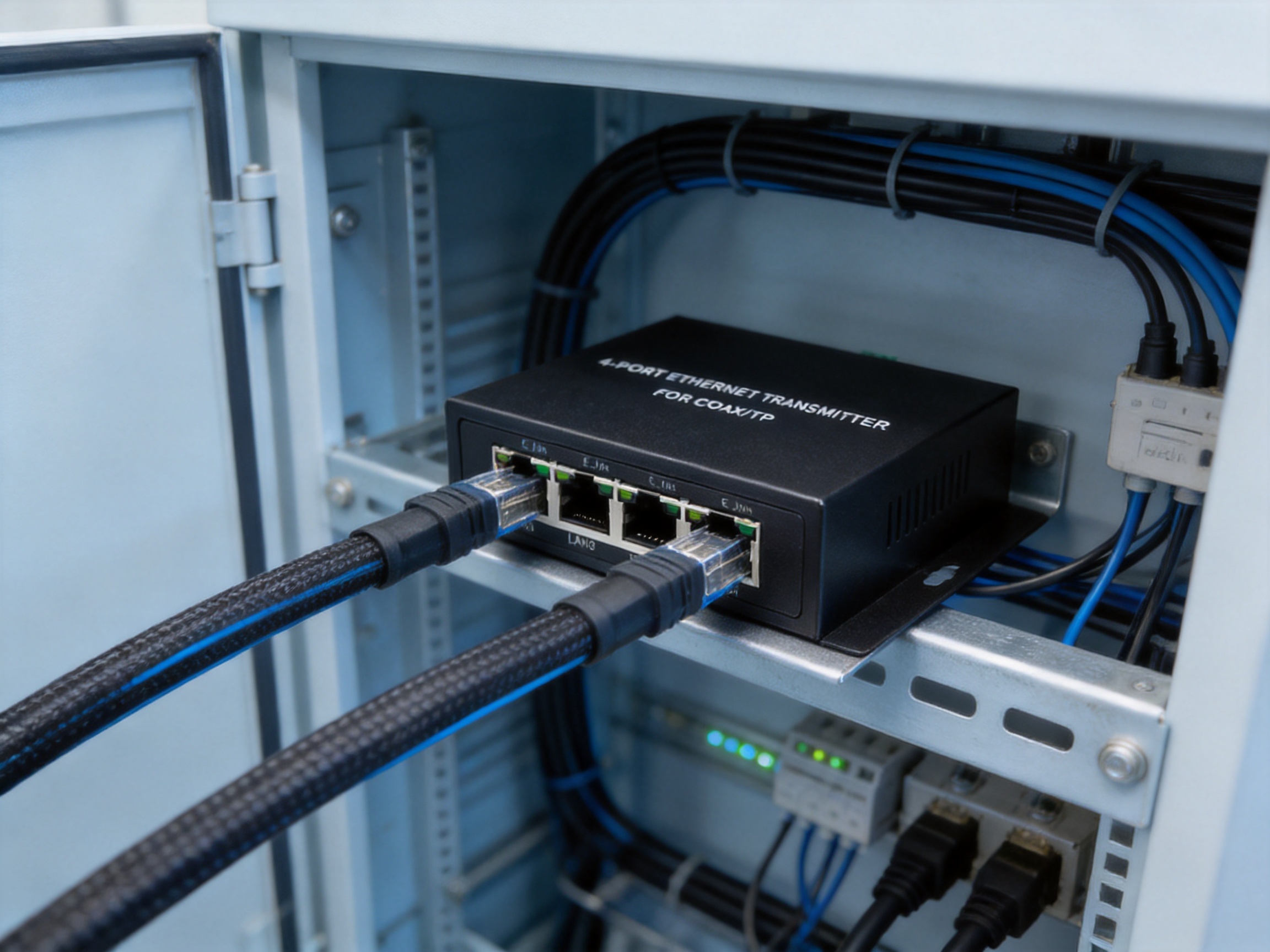
The device provides four standard RJ45 Ethernet ports. Each port supports 10M/100Mbps auto-negotiation, allowing several network terminals to be connected simultaneously. The transceiver can therefore serve as both a communication bridge and a compact industrial network access point.
A master/slave DIP switch simplifies network configuration. Depending on the deployment, the equipment can be arranged for point-to-point communication or one-to-many communication. Its built-in intelligent routing algorithm supports bus, star, tree, and hybrid network structures. This flexibility is particularly useful when a project must connect multiple devices distributed along a production line, mobile platform, inspection route, or industrial facility.
The product operates from -40°C to 85°C and supports 7×24-hour industrial operation. With power consumption of no more than 3 W, it can be integrated into equipment where thermal design, cabinet space, and energy efficiency are important considerations.
Integrated Power and Data over One Cable
The most important advantage of the KS704Q is its ability to carry power and data over one physical cable. Traditional industrial Ethernet installations generally require a dedicated communication cable in addition to the power cable. In a moving machine, robot, lifting mechanism, or rotating assembly, this can create routing problems and increase the number of components exposed to wear.
By using an existing DC power line as the communication medium, the KS704Q can reduce cable duplication. A two-core conductor can deliver electrical power while also carrying Ethernet data through the powerline communication channel. The result is a cleaner installation with fewer cable runs, fewer connection points, and less mechanical congestion.
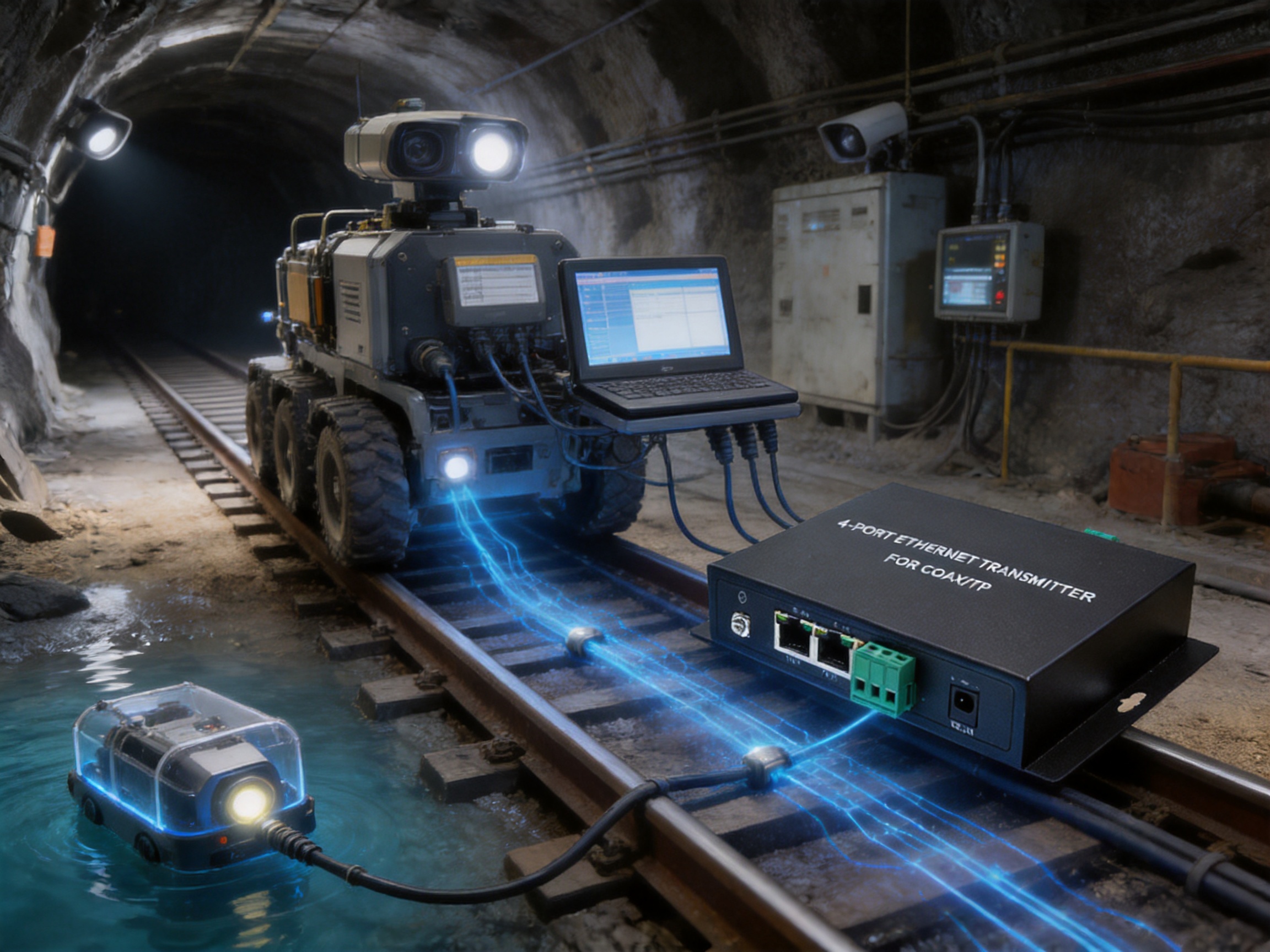
This approach is valuable in equipment where cable routing is restricted. Underwater robots, for example, may have limited space for additional communication wiring. Inspection robots may travel through narrow industrial passages or along fixed rails. Mine surveillance equipment may need to use an existing power distribution path. Automated machinery may include rotating or sliding interfaces where a separate data cable would be difficult to protect.
Using one cable for both functions can also simplify commissioning. Installers do not need to plan an independent Ethernet route for every endpoint. Once the power and communication path is correctly connected, the KS704Q can provide network access without requiring a separate signal cable between the connected devices.
The product supports an operating DC environment below 56 V, with a stated power supply range of DC12–56V. This range accommodates many low-voltage industrial applications while allowing the equipment to be integrated into existing DC systems. Proper power design, grounding, cable selection, and installation practices remain essential for reliable operation.
Compared with conventional solutions that use separate power and data cables, the integrated approach can provide several practical benefits:
• Reduced cable quantity and installation complexity.
• Less space required in cable trays, drag chains, and machine interfaces.
• Easier deployment in mobile, rotating, sliding, or compact equipment.
• Lower dependence on newly installed communication infrastructure.
• Simplified expansion when additional network terminals are required.
• More convenient maintenance because power and communication are managed through an integrated link.
DC Four-Port Broadband Powerline Transceiver
Long-Distance Industrial Ethernet Transmission
Industrial networks often extend beyond the normal distance limits associated with standard copper Ethernet. A conventional Ethernet connection may require additional switches, repeaters, fiber converters, or intermediate cabinets when the distance becomes substantial. Each additional device introduces another power requirement, connection point, enclosure, and possible failure source.
The KS704Q supports transmission distances of up to 1,000 meters over shielded twisted pair under suitable conditions. It can also support up to 500 meters over a standard power line and up to 300 meters over slip ring lines or conductor rails. These capabilities make it suitable for distributed equipment and long mechanical structures where placing network switches at frequent intervals would be inconvenient.
The actual distance achieved in a project depends on cable characteristics, conductor quality, line impedance, electromagnetic noise, power conditions, network loading, and installation topology. Nevertheless, the stated transmission ranges demonstrate that the device is designed for industrial distances rather than only short indoor connections.
Long-distance communication is especially useful in the following situations:
• Mine video surveillance systems requiring network connectivity along extended tunnels or working areas.
• Inspection robots traveling over long rails, pipelines, or industrial structures.
• Automated production lines with equipment distributed over a large factory floor.
• Industrial vehicles and mobile equipment using a conductor rail or slip ring interface.
• Remote monitoring points where installing new Ethernet cable is expensive or disruptive.
• Underwater or enclosed robotic systems where cable count and physical space are limited.
By transmitting data through an existing power path, the KS704Q can help reduce the need for intermediate networking equipment. This can improve the physical simplicity of a system and make troubleshooting more straightforward. It also supports a more compact design for edge equipment, which is beneficial when every enclosure, connector, and power supply must be carefully managed.
Four-Port Ethernet Access
Many industrial powerline communication products provide only one Ethernet interface. Although a single port may be adequate for a basic point-to-point link, it can become restrictive when a remote machine or control station must connect several devices. The KS704Q integrates four standard RJ45 ports, allowing up to four Ethernet terminals to be connected directly.
The four-port design can reduce the need for an additional local Ethernet switch. Cameras, controllers, sensors, embedded computers, gateways, and other network terminals can share the transceiver. This is particularly helpful at remote endpoints where cabinet space, power availability, and environmental protection are limited.
A four-port device also provides greater flexibility during system expansion. An initial deployment may use only one or two ports, while future upgrades may add additional monitoring cameras, diagnostic computers, safety devices, or automation controllers. The spare interfaces can help accommodate such changes without replacing the communication unit.
The four-port configuration also has advantages in robotic and mobile equipment. A single transceiver can connect a camera system, motion controller, onboard computer, and sensor gateway. All of these devices can communicate through the same powerline link without requiring separate communication modules for each endpoint.
Because the ports support 10M/100Mbps auto-adaptation, the device can connect to Ethernet equipment with different speed requirements within the supported range. This allows legacy 10Mbps equipment and higher-speed 100Mbps equipment to operate within the same practical network environment.
Flexible Topology and Intelligent Networking
Industrial networks rarely follow one universal layout. A production line may use a bus structure. A machine cell may use a star arrangement. A large facility may combine several branches into a tree. Mobile and distributed applications may require a hybrid structure that changes as equipment is added.
The KS704Q supports bus, star, tree, and hybrid network topologies through its intelligent routing capability. This helps engineers design a network around the physical layout instead of forcing the application into a fixed architecture.
The master/slave DIP switch provides a quick method for basic role configuration. This is valuable during installation and service because the operating role can be set without complex software procedures. A straightforward hardware configuration can reduce commissioning time and make field replacement easier for maintenance personnel.
In a point-to-point arrangement, one device can communicate directly with another over the DC line. This structure is suitable for a remote camera, robot, controller, or monitoring station. In a one-to-many arrangement, one master can communicate with multiple slave devices. This is useful for connecting distributed nodes along a production line, rail, power path, or industrial process.
Intelligent routing also supports the creation of flexible networks as system requirements grow. Instead of redesigning the entire communication architecture each time a node is added, engineers can use the existing powerline path and select a suitable arrangement for the new equipment. This can reduce project disruption and help organizations scale industrial connectivity in stages.
Compared with a fixed single-link powerline adapter, the KS704Q offers a broader range of network possibilities. Compared with a conventional Ethernet switch that still requires a separate data cable, it combines local multi-port access with long-distance powerline communication. This combination is one of the product’s main differentiators.
Data Transparency and Protocol Compatibility
Industrial automation systems often contain equipment from multiple suppliers. Controllers, computers, cameras, programmable devices, and data gateways may communicate through different application protocols. A communication device that alters or interprets the payload unnecessarily can create integration problems and increase the engineering workload.
The KS704Q is designed for data transparency. Its multiple network protocol stacks allow data to pass through without requiring protocol conversion at the powerline communication layer. This means that the device functions primarily as a transport platform, allowing the application-level communication system to remain independent.
Supported standards and protocols include TCP/IP, UDP, Profinet, HomePlug, Modbus-TCP, IEEE 802.3, IEEE 802.3u, IEEE 802.3ab, IEEE 1905.1, IEEE 1900, and IEEE 1901. The product specification lists these protocols and standards as part of its communication compatibility.
This protocol transparency is important for industrial system designers. A Profinet-based automation system, a Modbus-TCP monitoring application, and a standard IP video stream can be transported through the same general communication infrastructure, subject to the requirements of the complete network design. The powerline device does not need to become the application controller or perform unnecessary protocol translation.
Data transparency also simplifies maintenance. When a device is replaced, engineers can focus on the physical connection, power supply, network role, and cable condition rather than reconfiguring a complex protocol gateway. This can help reduce the time needed to restore service in a production environment.
Communication Security with AES-128 Encryption
Industrial data can include production information, equipment status, video streams, control messages, and operational parameters. Protecting this information is increasingly important, especially when communication links extend across large facilities or pass through shared infrastructure.
The KS704Q supports AES-128-bit encrypted data transmission. Encryption helps protect communication privacy and reduces the risk of unauthorized access to data traveling over the powerline channel. It also contributes to communication stability by ensuring that the intended devices can participate in the configured network.
Encryption is not a replacement for complete industrial cybersecurity. A secure deployment should also consider network segmentation, user authentication, access control, firmware management, physical protection, and appropriate configuration of connected devices. However, built-in link encryption provides an important layer of protection at the communication device level.
The inclusion of encryption is particularly useful in shared industrial environments, large facilities, and applications where the physical communication path may be accessible to multiple pieces of equipment. It helps ensure that the advantages of using an existing power line do not come at the expense of basic data confidentiality.
Industrial-Grade Environmental Performance
Industrial communication devices must operate in conditions that are more demanding than those found in typical office environments. Equipment may be exposed to cold workshops, hot machinery rooms, dust, vibration, electromagnetic interference, moisture, and continuous operation. A product intended for these environments must be designed around stability rather than only peak laboratory performance.
The KS704Q supports an operating temperature range of -40°C to 85°C. It also supports storage temperatures from -40°C to 85°C and operating humidity from 20% to 95% non-condensing. These specifications allow the device to serve in a wide range of industrial installations, including areas with significant seasonal or equipment-related temperature variation.
The device is classified as industrial grade and supports 7×24-hour all-weather operation. This continuous-duty capability is important for surveillance, process control, remote monitoring, and other applications where communication must remain available outside normal working hours.
Strong anti-interference capability is another important product characteristic. Industrial environments often contain motors, variable-frequency drives, relays, welding equipment, switching power supplies, and other sources of electromagnetic noise. Since the KS704Q uses an existing powerline or conductor path for data transmission, resistance to interference is central to its practical value.
Its OFDM modulation technology supports broadband communication across a powerline environment that may contain variable noise and attenuation characteristics. Orthogonal Frequency Division Multiplexing divides data across multiple subcarriers, allowing the communication system to use the available channel more effectively. In practical industrial use, the quality of the complete installation still depends on cable type, electrical conditions, grounding, and interference management.
The combination of extended temperature performance, low power consumption, encryption, industrial communication support, and continuous-duty operation gives the KS704Q an advantage over ordinary consumer-oriented powerline networking equipment. Consumer adapters are typically designed for stable indoor electrical systems and general home networking, whereas the KS704Q is positioned for industrial connectivity and demanding field conditions.
Performance Specifications
Item |
Specification |
Product type |
DC four-port broadband powerline transceiver |
Power supply |
DC12–56V |
PLC signal path |
DC 0–56V through any suitable two-core conductor, power line, slip contact cord, slip ring cable, or similar conductor |
Modulation |
OFDM |
Ethernet interfaces |
Four standard RJ45 ports |
Ethernet bandwidth |
10M/100Mbps auto-adaptation |
Transmission distance |
Up to 1,000m over shielded twisted pair; up to 500m over standard power line; up to 300m over slip ring line or conductor rail |
Data delay |
Within 10ms |
Packet loss probability |
Less than 0.1‰ under specified conditions |
Power consumption |
No more than 3W |
Encryption |
AES-128-bit |
Multicast |
IGMP multicast support; maximum number of nodes is 8 |
Dimensions |
147 × 94.4 × 29mm |
Weight |
350g |
Mounting |
Bracket mounting type |
Operating temperature |
-40°C to 85°C |
Operating humidity |
20%–95%, non-condensing |
Operating schedule |
Industrial-grade 7×24-hour operation |
Why the KS704Q Can Outperform Conventional Alternatives
Compared with Separate Ethernet and Power Cabling
A separate-cable architecture can provide reliable communication, but it may require additional cable trays, connectors, junction boxes, cable glands, and routing space. In mobile equipment, a second cable may increase the bending radius, drag-chain load, or wear at moving interfaces. The KS704Q reduces these concerns by using the DC conductor for both power and data.
This does not mean that a separate Ethernet cable is unsuitable for every project. Fiber, shielded Ethernet, or other dedicated media may be preferred where very high bandwidth, strict galvanic isolation, or specialized network requirements exist. The advantage of the KS704Q is that it provides an effective alternative when the available power conductor is already part of the system and when 10M/100Mbps communication is sufficient.
Compared with Short-Range Wireless Communication
Wireless communication can eliminate cables, but industrial wireless systems may be affected by metal structures, obstacles, interference, moving equipment, reflections, security requirements, or changing radio conditions. A powerline communication system uses a physical conductor, providing a defined communication path while still avoiding the need for an additional data cable.
The KS704Q is therefore well suited to applications where wireless communication is difficult but an existing power line or conductor rail is available. It can provide a more predictable physical link for equipment that must maintain communication while moving through a fixed industrial route.
Compared with Consumer Powerline Adapters
Consumer powerline adapters are generally designed for residential AC power networks and ordinary indoor conditions. They may not support low-voltage DC operation, industrial temperature ranges, multiple RJ45 ports, master/slave configuration, industrial protocols, or continuous all-weather service.
The KS704Q is designed around industrial requirements. Its DC12–56V supply range, 4-port Ethernet access, extended temperature range, industrial-grade operation, encryption, topology flexibility, and support for powerline and conductor-based applications give it a more appropriate feature set for professional installations.
Compared with Single-Port Industrial PLC Devices
A single-port device may be adequate for one endpoint, but it often requires an additional switch when several local terminals need network access. The KS704Q includes four RJ45 ports, which can reduce component count and simplify the remote node. This can be particularly valuable in compact cabinets, robots, control boxes, and field enclosures.
Compared with Point-to-Point-Only Equipment
Point-to-point communication is simple, but it can limit future expansion. The KS704Q supports one-to-one and one-to-many communication, along with bus, star, tree, and hybrid network structures. This allows the same product family to be used in small links and more distributed systems, reducing the need to select a completely different communication architecture as a project grows.
Applications in Industrial Automation
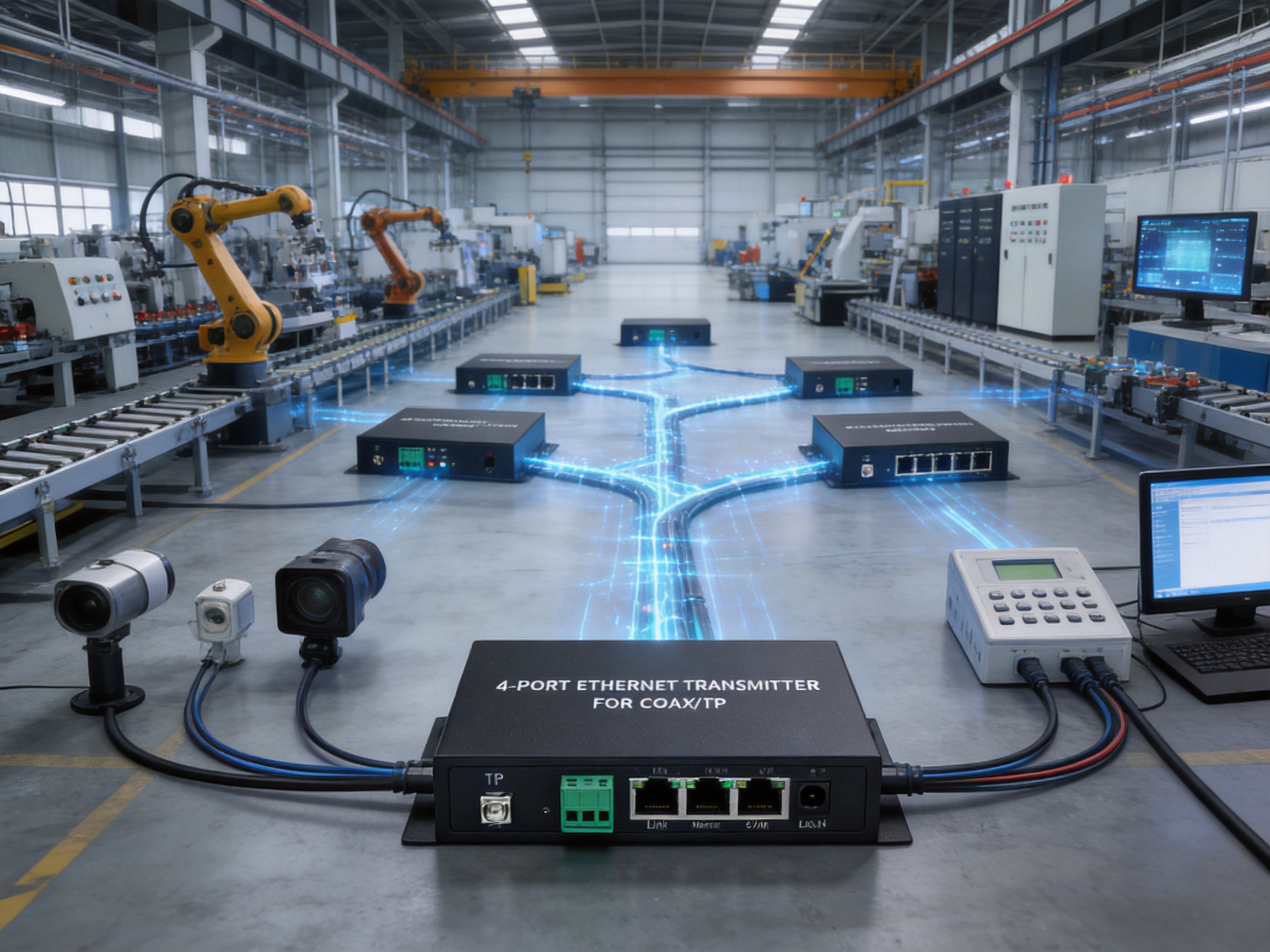
Industrial automation systems frequently distribute controllers, sensors, cameras, and actuators across large areas. Traditional network deployment can become complicated when equipment is mounted on moving machinery, separated by long distances, or connected through existing power distribution structures.
The KS704Q can connect an industrial controller to remote equipment through a DC power path while supplying Ethernet access to several local devices. A machine-side transceiver may connect a camera, controller, embedded computer, and diagnostic terminal. The remote transceiver can then carry the combined traffic back to the main control network.
In a production line, multiple nodes can be arranged along a bus or tree topology. The network can carry control data, monitoring information, and machine status. With data delay specified within 10ms, the product is suitable for many monitoring and industrial communication tasks that require responsive data exchange. Engineers should evaluate the complete system latency for time-critical control applications.
The product can also support refined energy management. Since the same company develops industrial data integration and energy-related monitoring solutions, a powerline communication device such as the KS704Q can serve as part of a broader industrial connectivity architecture. It can help connect edge equipment to data collection systems without requiring a new communication cable for every power-consuming device.
Applications in Robots and Mobile Platforms
Robots often require reliable communication while moving through a defined area. A robot may carry cameras, sensors, control computers, and safety equipment, all of which need access to a supervisory network. At the same time, the robot may receive power through a conductor rail, slip ring, or two-core cable.
The KS704Q is designed to take advantage of these existing conductors. A transceiver installed on the mobile platform can connect several onboard Ethernet devices. Another transceiver installed at the control side can bridge the communication path to the wider network.
Slip ring and conductor rail applications are especially relevant because these interfaces already provide power to moving equipment. The stated transmission distance of up to 300 meters over slip ring lines or conductor rails provides a basis for long-route applications, subject to the actual characteristics of the installation.
Using the same interface for power and data can reduce the need for additional rotating communication contacts or separate flexible data cables. This may simplify mechanical design and reduce the number of wear points. It can also make equipment upgrades easier because Ethernet terminals can be added through the transceiver’s four RJ45 ports.
Applications in Mine Video Surveillance
Mines and other large industrial sites may require video surveillance over long distances. Installing conventional network cable throughout an underground or remote work area can be expensive and difficult. Electrical noise, dust, temperature variation, limited access, and changing equipment locations can make the project even more challenging.
Where a suitable low-voltage power path is available, the KS704Q can transmit Ethernet data through the same two-core infrastructure. A surveillance camera or local video system can connect to one of the RJ45 ports, while additional ports can serve other monitoring or control devices.
The device’s industrial temperature range, compact bracket-mounting form, low power consumption, and long-distance capability support practical field installation. AES-128 encryption adds a layer of protection for video and operational data. Network designers should still address the requirements of mine safety regulations, equipment certification, grounding, environmental protection, and hazardous-area installation before deployment.
Applications in Underwater and Inspection Robots
Underwater robots and inspection robots often operate in environments where communication options are limited. Radio signals may not be practical underwater, and adding multiple cables can increase drag, weight, and mechanical complexity. A two-core tether that provides power can potentially serve as the communication medium as well.
The KS704Q supports communication over suitable two-core conductors, making it a candidate for systems that already use a DC tether. The transceiver can provide Ethernet access to onboard cameras, navigation systems, sensors, and control computers while power is delivered through the same cable.
Inspection robots used in factories, tanks, pipelines, tunnels, or industrial structures can benefit from a similar architecture. When the robot moves along a known route, a conductor or cable-based communication path can provide a stable alternative to wireless networking. The four-port design allows multiple onboard systems to share a single broadband communication link.
Mechanical protection, waterproofing, connector selection, cable impedance, and environmental sealing must be addressed at the system level. The KS704Q provides the communication function, while the complete robot design must ensure that all components are appropriate for the operating environment.
Applications in Smart Grid and Industrial Data Connectivity
Smart grid and industrial energy systems depend on reliable communication between field equipment, monitoring devices, controllers, and supervisory platforms. In some installations, the physical power network already reaches the locations where data must be collected. A powerline communication device can therefore reduce the need for separate communication infrastructure.
The KS704Q is relevant to low-voltage DC environments where equipment condition, energy use, and operational data must be transported over a distributed network. Its support for standard IP communication and industrial protocols allows it to serve as a link between edge-layer devices and higher-level data systems.
Industrial digitalization increasingly depends on edge connectivity. Sensors and equipment must be connected close to the production process, while data may be analyzed by local computers, plant servers, or cloud-connected platforms. The KS704Q can provide a physical communication bridge for this architecture, especially when the edge device already receives DC power through a suitable two-core conductor.
Because the transceiver does not require protocol conversion for ordinary transparent data transport, it can be incorporated into a broader system that uses existing industrial software and communication standards. This helps protect the customer’s investment in controllers, monitoring platforms, and network management tools.
Manufacturing and Engineering Strengths
The product is supplied by ASY Electronics, a high-tech enterprise focused on smart factory development, data sensing, intelligent connectivity, industrial communication, and data integration. Its product portfolio includes broadband powerline carriers, wireless temperature monitoring systems, industrial transmitters, thermal gas mass flow meters, and automatic door controllers.
This product range demonstrates a focus on industrial edge equipment rather than a single consumer networking category. The KS704Q reflects that broader approach by combining connectivity, field installation practicality, protocol transparency, and environmental durability in one product.
The company’s stated mission is to support efficient, reliable, and green smart factories. Its work includes self-developed edge-layer hardware and industrial data integration solutions for equipment condition monitoring, refined energy management, and production process optimization. These capabilities are relevant to the development of a broadband powerline transceiver because the device must operate as part of a complete industrial information chain, not as an isolated networking accessory.
Integrated Product Development
A strong industrial product begins with the integration of electrical, communication, mechanical, and application requirements. The KS704Q combines a DC power input, powerline signal path, OFDM communication, four Ethernet ports, routing functions, encryption, mounting provisions, and industrial environmental performance. Such integration reduces the need for users to assemble several independent components.
The product’s compact 147 × 94.4 × 29mm enclosure and 350g weight indicate attention to field installation and equipment integration. Bracket mounting provides a practical way to secure the device in control cabinets, machine frames, inspection equipment, or other industrial structures.
Designing a device that communicates over a power line requires attention to both power delivery and signal integrity. The communication channel must coexist with DC power while maintaining adequate bandwidth and low delay. The product specification’s use of OFDM, transmission-distance targets, packet-loss performance, and industrial temperature range reflects a design approach focused on real installation conditions.
Industrial Application Orientation
The company’s strengths extend beyond hardware. Its focus on industrial data sensing and intelligent connectivity helps align product development with actual factory and field requirements. Customers often need more than a basic device specification; they need communication equipment that can work with existing machines, support long-term operation, and fit into a broader digital transformation project.
The KS704Q supports this application-oriented approach through multiple ports, flexible topology, transparent data handling, and compatibility with industrial communication protocols. These features can help system integrators reduce redesign work and build communication networks around the customer’s existing infrastructure.
Quality and Reliability Perspective
Industrial reliability is achieved through the combination of suitable component selection, electrical design, thermal management, communication testing, mechanical construction, and production control. Although individual manufacturing procedures may vary by production model and project requirements, the KS704Q’s stated specifications show that the product is developed for extended temperature operation, continuous service, low power consumption, and resistance to complex electromagnetic environments.
The industrial-grade positioning also requires attention to consistency between units. A communication system may contain several transceivers, and each device must perform predictably within the network. Consistent assembly, inspection, functional testing, interface verification, and communication validation are important parts of an industrial manufacturing process.
For customers purchasing equipment in volume, the ability to obtain products from a company that develops related industrial communication and sensing technologies can also simplify supplier management. A supplier with experience across powerline communication, wireless monitoring, transmitters, flow measurement, and automatic control products may better understand the integration challenges found in industrial automation projects.
Installation and Network Planning
Before installation, engineers should identify the DC voltage, conductor type, cable length, expected network topology, connected devices, environmental conditions, and required bandwidth. The power supply should remain within the specified DC12–56V range, and the communication path should be evaluated for its suitability as a two-core transmission medium.
Shielded twisted pair can provide a transmission distance of up to 1,000 meters under the stated conditions. Standard powerline installations can reach up to 500 meters, while slip ring lines and conductor rails can reach up to 300 meters. These are application reference values rather than guarantees for every site. Cable quality and electromagnetic conditions should be checked during project design and commissioning.
The master/slave DIP switch should be configured according to the network plan. Point-to-point links typically use one master and one slave. One-to-many networks require careful assignment of device roles and node locations. Where multiple branches are used, engineers should confirm that the selected bus, star, tree, or hybrid arrangement is compatible with the physical powerline structure.
The four Ethernet ports should be connected to devices within the intended bandwidth and protocol requirements. If cameras or other high-data-rate devices are used, the system designer should consider the combined traffic from all ports, the available 100Mbps link capacity, multicast behavior, and the requirements of the upstream network.
For multicast applications, the KS704Q supports IGMP multicast protocols, with a maximum number of nodes specified as eight. This capability is useful for selected video, monitoring, and industrial data applications, but network planners should confirm node count, traffic patterns, and switch configuration before deployment.
Installation should also include appropriate protection against moisture, vibration, dust, accidental contact, and mechanical stress. The device’s operating humidity specification is 20%–95% non-condensing. Condensation should be prevented through enclosure design, thermal planning, and installation practices.
System Integration Considerations
The KS704Q is a communication component within a larger industrial system. Reliable performance depends on the complete chain, including the DC power source, cable, connectors, grounding, Ethernet equipment, application software, and environmental enclosure.
Power supplies should provide stable voltage and sufficient current for both the connected equipment and the transceiver. Although the transceiver’s own power consumption is no more than 3 W, the total system power budget must include cameras, controllers, sensors, computers, and other devices connected through the same infrastructure.
Network segmentation may be appropriate when control traffic, video traffic, and general data traffic share a physical communication path. VLANs, managed switches, access rules, and monitoring tools can help maintain organized network operation. The KS704Q provides transparent data transport, so higher-level network architecture remains the responsibility of the system designer.
Maintenance planning should include inspection of cable connections, power quality, network status, mounting security, and environmental conditions. A spare-unit strategy can reduce downtime in critical installations. The compact bracket-mounting design allows a replacement device to be installed without extensive mechanical modification when the system has been planned appropriately.
Economic and Operational Benefits
The value of an industrial communication product should be considered over the complete life cycle rather than only the purchase price. A solution that reduces cabling, eliminates intermediate devices, simplifies installation, and lowers maintenance effort may provide stronger overall economics than a lower-cost device that requires more supporting infrastructure.
The KS704Q can reduce the number of cables needed in suitable installations. It can also reduce the requirement for local Ethernet switches at remote endpoints because four RJ45 ports are integrated into the transceiver. Lower component count may reduce cabinet space, wiring labor, power consumption, and the number of potential connection failures.
Long-distance transmission can further reduce infrastructure costs. Where the powerline path is already available, the project may avoid installing additional Ethernet cable across difficult terrain, moving equipment, or large industrial areas. This can be particularly valuable when cable installation would interrupt production or require extensive mechanical modifications.
Low power consumption of no more than 3 W supports energy-conscious system design. In a large deployment with many communication nodes, efficient edge equipment can reduce the cumulative heat load in cabinets and remote enclosures.
Flexible topology and four-port access also support gradual expansion. A customer can begin with a small point-to-point network and later add nodes or local Ethernet devices. This helps protect the initial investment and allows digitalization projects to develop in practical stages.
Q&A
What is the primary function of the KS704Q?
The KS704Q transmits Ethernet data through a DC power line or another suitable two-core conductor. It combines power delivery and broadband communication over one cable and provides four RJ45 Ethernet ports for local network devices.
What voltage range does the device support?
The stated power supply range is DC12–56V. The PLC signal path operates in a DC environment from 0–56V, subject to suitable installation conditions and system design.
Can it transmit data and power at the same time?
Yes. The product is designed for synchronous 100Mbps data transmission and power delivery over one DC power line. The exact performance depends on the cable, voltage, distance, noise level, and complete system configuration.
How far can the KS704Q transmit?
The specified distance is up to 1,000 meters over shielded twisted pair, up to 500 meters over a standard power line, and up to 300 meters over a slip ring line or conductor rail. Actual distance should be verified for the specific installation.
How many Ethernet devices can be connected directly?
The transceiver has four standard RJ45 ports, allowing up to four network terminal devices to be connected directly to one unit.
Does the product support one-to-many communication?
Yes. A master/slave DIP switch supports quick configuration for master/slave operation, and the device supports both point-to-point and one-to-many communication modes.
Which network topologies are supported?
The intelligent routing algorithm supports bus, star, tree, and hybrid network structures. The most appropriate topology depends on the physical layout and electrical structure of the project.
Does the device convert industrial protocols?
The KS704Q is designed for data transparency. Its network protocol support allows data to pass through without requiring protocol conversion at the PLC communication layer. Supported standards include TCP/IP, UDP, Profinet, Modbus-TCP, and several IEEE-related standards.
Is communication encrypted?
Yes. The product supports AES-128-bit encrypted data transmission. Additional cybersecurity measures, such as network segmentation and access control, should be implemented according to the application.
Can it operate in cold or hot industrial environments?
The specified operating temperature range is -40°C to 85°C. The storage temperature range is also -40°C to 85°C. The operating humidity range is 20%–95% non-condensing.
What is the power consumption?
The overall power consumption is specified as no more than 3 W.
Does it support multicast data?
Yes. The device supports IGMP multicast protocols, with a maximum node quantity specified as eight.
How is the device mounted?
The KS704Q uses a bracket mounting type. Its dimensions are 147 × 94.4 × 29mm, and its stated weight is 350g.
Which applications are suitable for the product?
Suitable applications include underwater robots, inspection robots, mine video surveillance, industrial automation, distributed equipment monitoring, conductor rail systems, slip ring communication, and other industrial scenarios requiring long-distance Ethernet over a DC power path.
Is the KS704Q a replacement for fiber optic communication in every application?
No. Fiber may be preferred for very high bandwidth, long-haul communication, strict electrical isolation, or specialized electromagnetic environments. The KS704Q is an alternative for suitable low-voltage DC and two-core conductor applications where 10M/100Mbps Ethernet is sufficient and integrated power-and-data transmission provides practical advantages.
Conclusion
The KS704Q provides a practical solution for industrial communication systems that need to transmit Ethernet data through an existing DC power path. Its ability to combine power and data over one cable can reduce wiring complexity and simplify deployment in robots, inspection equipment, mine surveillance systems, automated machinery, conductor rail installations, and other distributed industrial environments.
Its four RJ45 ports provide more local connectivity than a single-port powerline adapter, while the master/slave configuration and intelligent routing support flexible network structures. Data transparency, compatibility with common industrial protocols, AES-128 encryption, IGMP multicast support, low delay, and low packet-loss performance give the product a broad technical foundation for industrial applications.
The industrial-grade temperature range and 7×24-hour operating capability further distinguish the KS704Q from ordinary consumer-oriented powerline products. Its compact bracket-mounted enclosure, low power consumption, and support for multiple conductor types contribute to practical equipment integration.
Backed by a company focused on smart factories, edge-layer hardware, data sensing, intelligent connectivity, and industrial data integration, the product reflects an application-oriented approach to industrial digitalization. For organizations seeking a reliable method to extend Ethernet communication without installing a separate signal cable, the KS704Q offers a flexible and efficient platform for long-distance DC broadband powerline networking.
References
1. KS704Q Product Technical Data, including power supply, Ethernet interface, transmission distance, environmental requirements, and communication specifications.
2. Industrial Ethernet Engineering Principles, covering network topology, transmission planning, protocol transparency, and field installation considerations.
3. Power Line Communication Technology References, including OFDM-based broadband transmission over wired electrical conductors.
4. Industrial Network Security Guidelines, including encryption, segmentation, access control, and secure system integration.
5. Smart Factory and Industrial Internet of Things Engineering Practices, covering edge-layer connectivity, equipment monitoring, energy management, and production data integration.
6. Ethernet and Industrial Communication Standards References, including IEEE 802.3, IEEE 802.3u, IEEE 802.3ab, IEEE 1905.1, IEEE 1900, and IEEE 1901.
7. Company product and technology information for industrial broadband powerline carriers, wireless temperature monitoring systems, industrial transmitters, thermal gas mass flow meters, and automatic door controllers.