

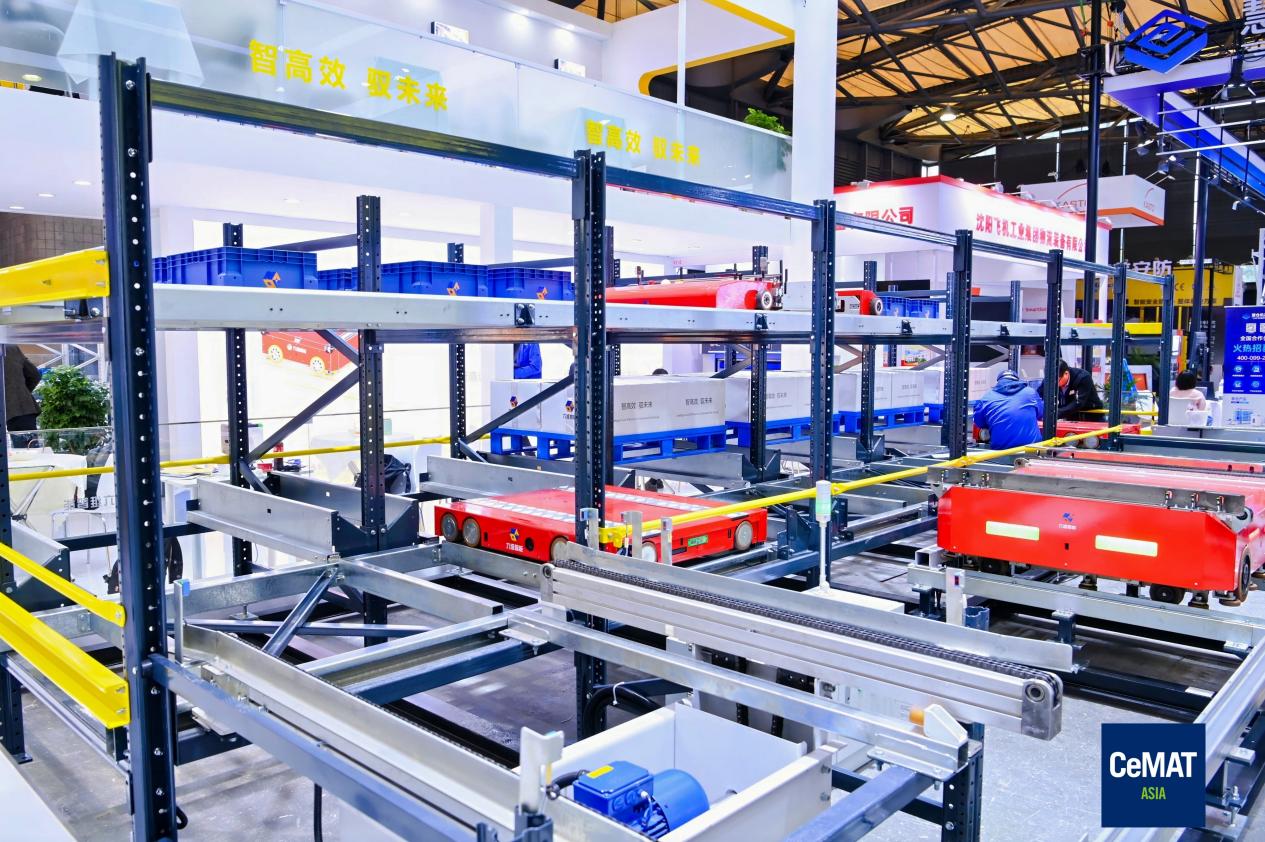
Modern industrial facilities depend on continuous, reliable communication between controllers, sensors, drives, meters, robots, gateways, and supervisory platforms. As factories become more automated, the communication network must carry larger volumes of data while operating in environments filled with electrical noise, vibration, temperature variation, and complex machinery. Installing a new communication cable for every device can be expensive, disruptive, and difficult to maintain. Broadband power line communication provides an alternative by using existing power conductors or slip-contact lines as both the energy source and the communication medium.
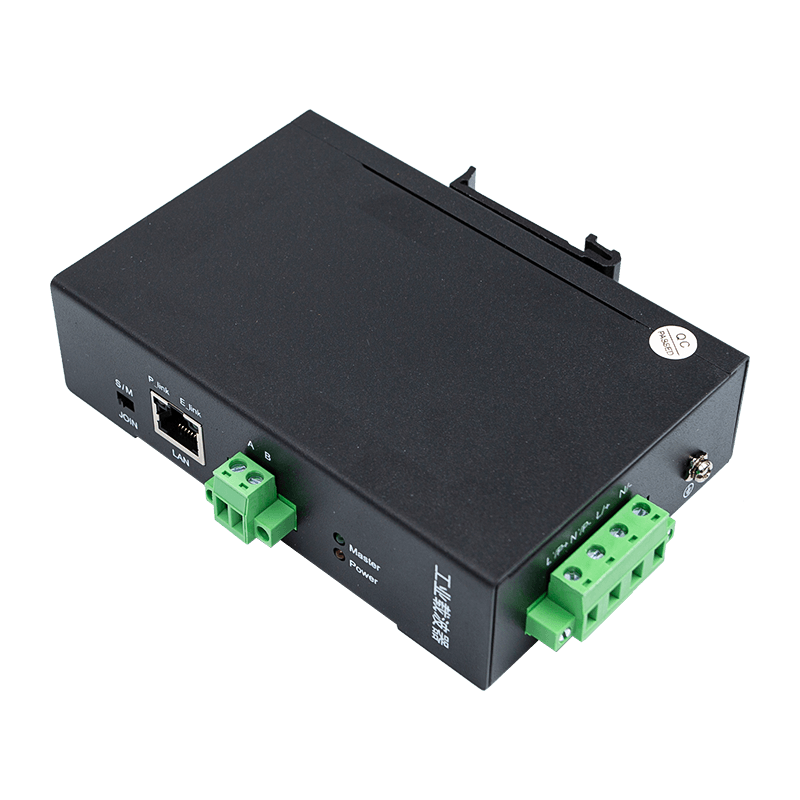
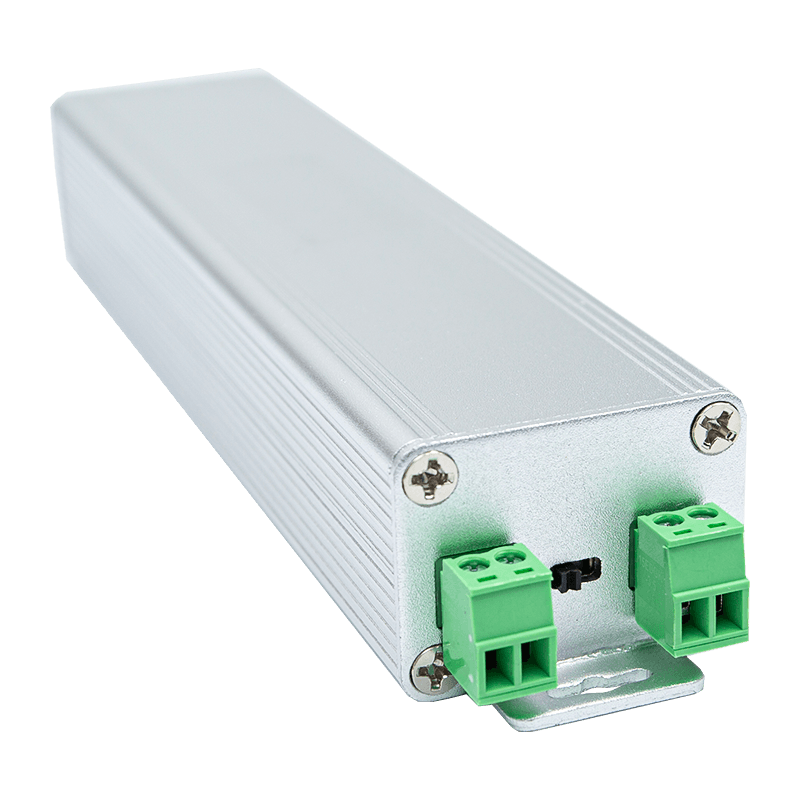
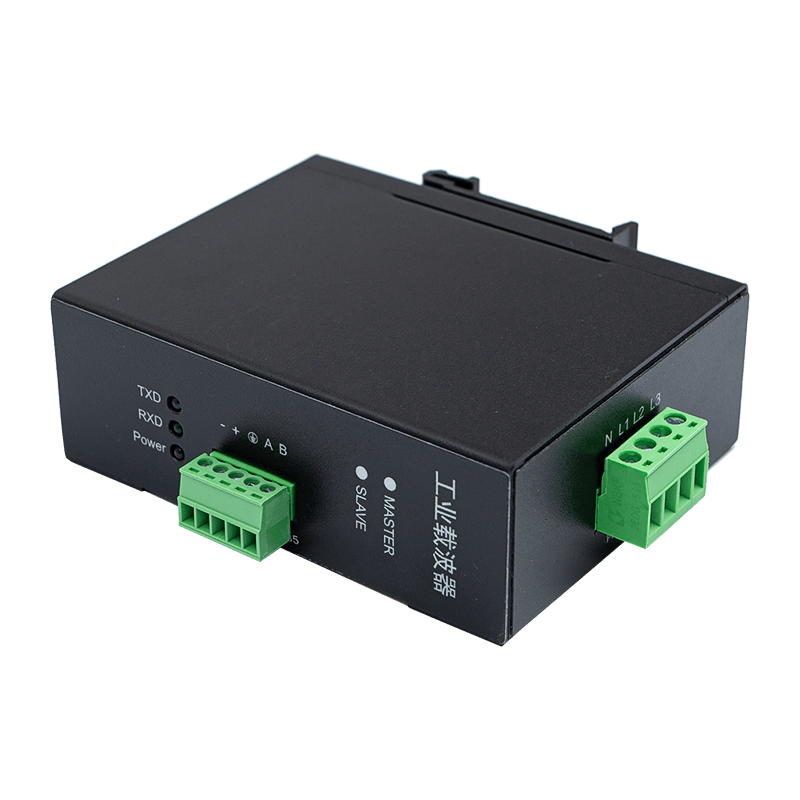
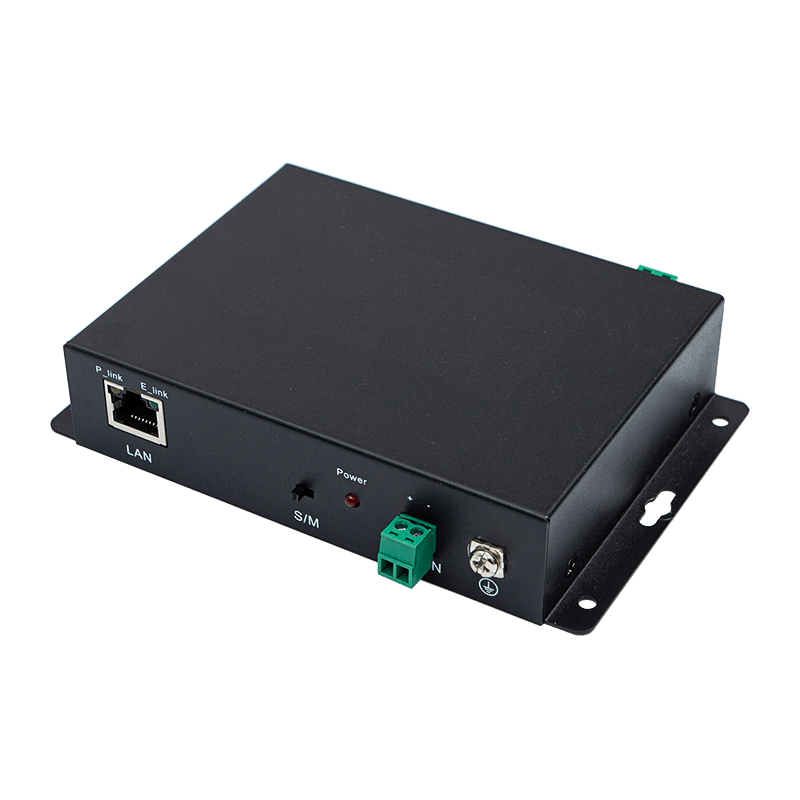
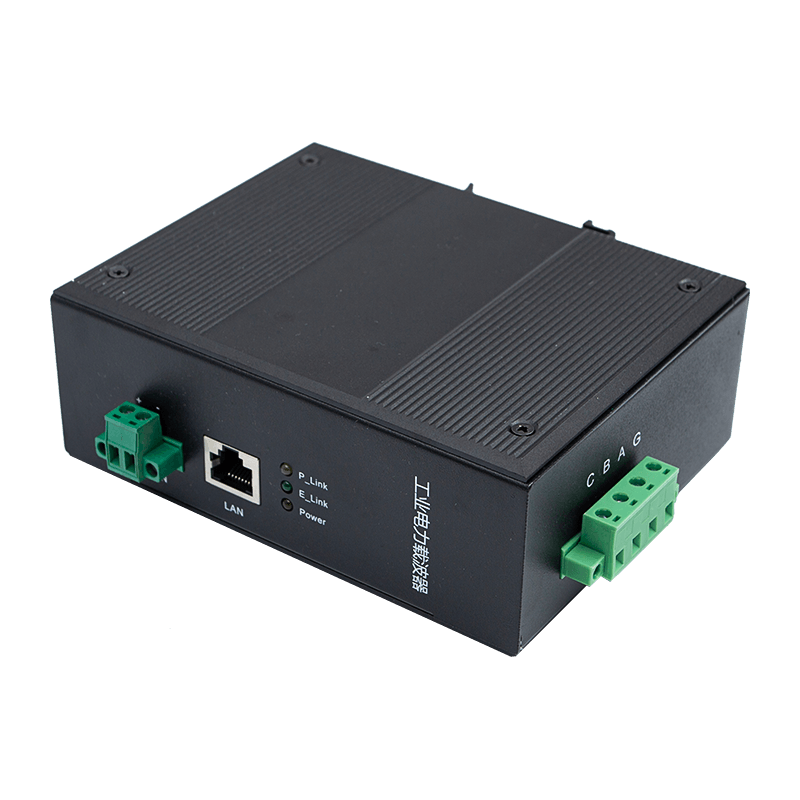
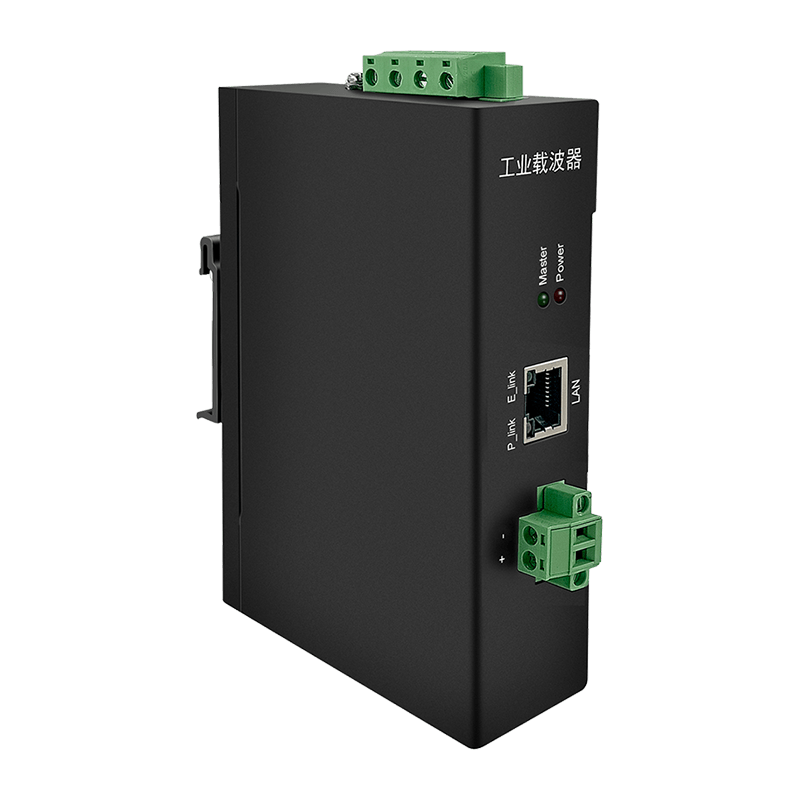
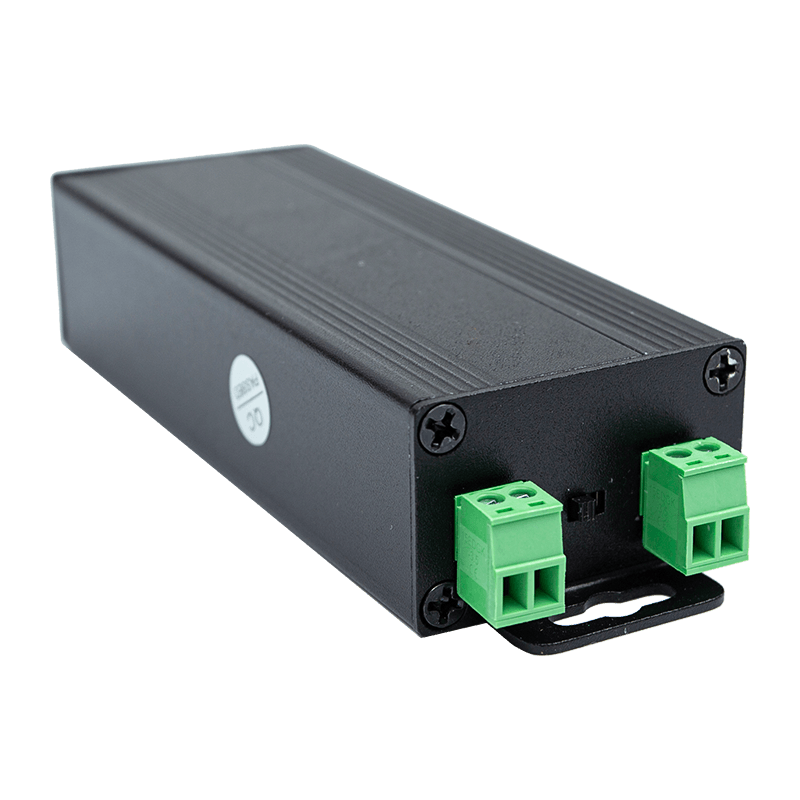
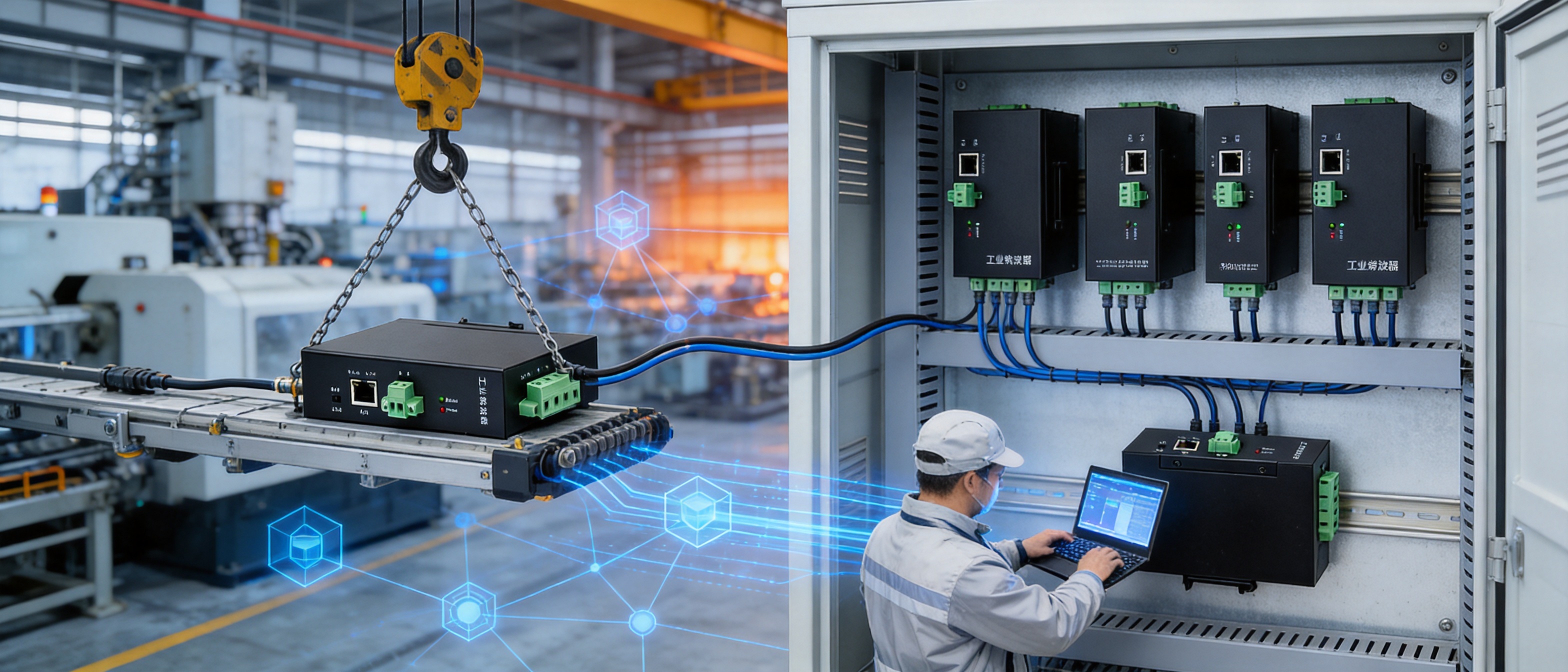
The KS910L Three-Phase Broadband Power Line Carrier is an industrial-grade communication device designed for this purpose. It enables high-speed data transmission over single-phase, three-phase, and DC power lines, while also supporting slip-contact applications. With Ethernet and RS485 interfaces, the device can connect modern IP-based equipment and conventional industrial instruments through the same power-line communication network. Its design combines automatic networking, routing, error correction, encryption, adaptive Ethernet bandwidth, and wide operating-temperature capability in a compact DIN-rail-mountable enclosure.
This article examines the device’s communication architecture, industrial advantages, application value, manufacturing strengths, installation considerations, and suitability for smart factories, logistics systems, automated warehouses, parking equipment, cranes, robots, energy systems, and industrial control networks.
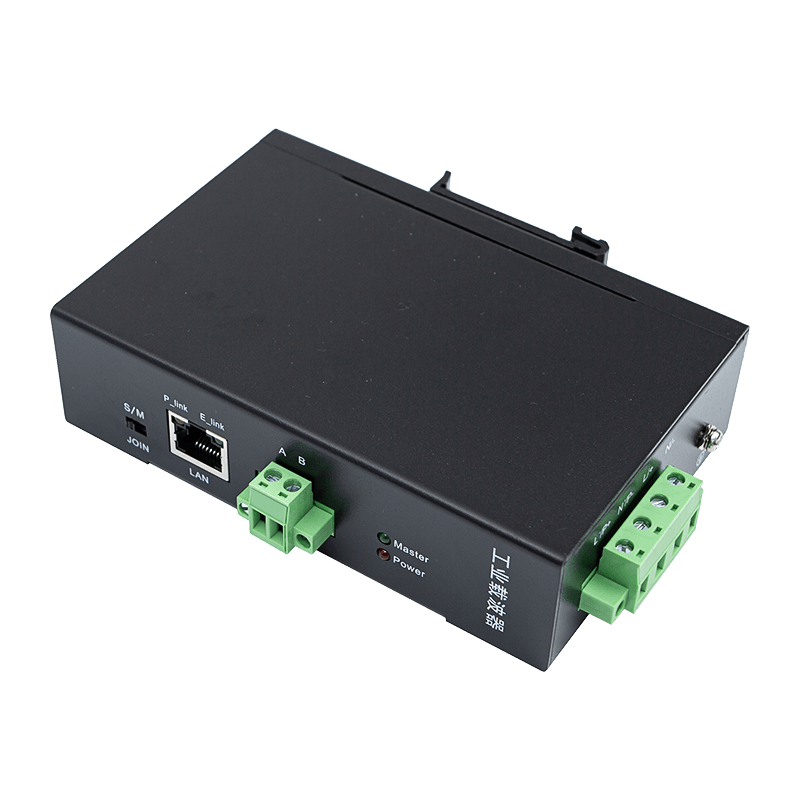
Three-Phase Broadband Power Line Carrier (PLC)
1. The Industrial Connectivity Challenge
Industrial communication networks face requirements that are considerably more demanding than those found in ordinary office or residential environments. A factory network may need to operate beside variable-frequency drives, motors, relays, welding equipment, switching power supplies, elevators, pumps, and high-current distribution systems. These devices can introduce electromagnetic interference, voltage fluctuations, transient disturbances, and unpredictable changes in the transmission channel.
At the same time, industrial equipment is often distributed across large areas. A logistics center may contain long conveyor lines, moving sorting mechanisms, automated storage and retrieval systems, and multiple control cabinets. A three-dimensional parking structure may have vertically separated equipment connected through power distribution networks. An overhead crane may require communication across moving components and slip-contact systems. Inspection robots and automated vehicles may operate where fixed network cabling is difficult to install or maintain.
Traditional Ethernet cabling remains highly valuable, but it is not always the most economical or practical choice. New cable routes may require engineering permits, cable trays, shutdowns, protective conduits, and additional labor. In moving or rotating systems, a fixed cable may be exposed to repeated mechanical stress. In retrofit projects, the available route may be crowded or inaccessible. Wireless communication can solve some installation challenges, but radio propagation may be affected by metal structures, machinery, reflections, interference, and changing equipment positions.
Power line communication addresses these limitations by using conductors that already exist in the facility. The power line continues to supply energy to the equipment while carrying a modulated data signal. This approach can reduce rewiring requirements, simplify deployment, and allow communication to follow existing electrical infrastructure. The KS910L is designed specifically for industrial applications where high-speed connectivity, long operating life, flexible networking, and compatibility with multiple power-line conditions are required.
2. Product Overview
The KS910L is a high-definition broadband power line carrier based on IEEE P1901 technology. It uses orthogonal frequency division multiplexing, commonly known as OFDM, for modulation and demodulation. The device is designed to operate over AC 85–500 V or DC 100–700 V power lines and can also be used with slip-contact lines in suitable system configurations.
Because the device draws its operating power directly from the connected power line, it does not require a separate power supply in the normal installation arrangement. This feature reduces the number of installation components and can be especially useful in systems where the communication path and power path already share the same conductors.
The communication interfaces include an Ethernet network port and RS485. Ethernet provides a connection for industrial computers, programmable controllers, cameras, gateways, edge devices, and other IP-based equipment. RS485 supports industrial serial equipment and Modbus-RTU devices. Both interfaces can be carried through the power-line carrier system, enabling a mixed communication architecture without requiring separate communication networks for Ethernet and serial instruments.
Key product characteristics include:
• Support for single-phase, three-phase, DC, and suitable slip-contact power-line applications.
• AC channel voltage capability from 85 V to 500 V.
• DC channel voltage capability from 100 V to 700 V.
• OFDM-based broadband power-line communication.
• Ethernet bandwidth adaptation between 10 Mbps and 100 Mbps.
• RS485 communication with Modbus-RTU and baud rates from 1,200 to 115,200 bps.
• Point-to-point power-line transmission distance of up to approximately 500 meters under appropriate conditions.
• Support for relay-based extensions, with a maximum of 10 relay levels in the stated technical configuration.
• AES-128-bit encryption.
• Built-in LDPC error-correction coding.
• Automatic routing and automatic networking.
• Network delay within 10 milliseconds under specified conditions.
• Packet-loss probability below 0.1 per mille under specified conditions.
• Operating temperature from -40°C to 85°C.
• DIN-rail installation using TS35 or equivalent rail arrangements.
• Power consumption of no more than 3 W.
3. How Broadband Power Line Communication Works
Power lines are normally designed to carry electrical energy rather than digital information. A broadband power-line carrier adds a communication signal to the existing electrical waveform. The signal occupies a defined high-frequency band while the underlying power transmission continues to serve the connected equipment.
The KS910L uses a carrier-frequency range of approximately 2–28 MHz. Within this range, OFDM divides the available spectrum into numerous subcarriers. Data is distributed across these subcarriers rather than being transmitted through a single narrow channel. If interference affects some subcarriers, the system can reduce or avoid their use while maintaining communication over the remaining available channels.
This approach is valuable in industrial networks because electrical conditions can change according to motor operation, switching states, load conditions, and cable configuration. OFDM allows the communication system to make more efficient use of the available channel and to maintain greater resilience than a simple single-carrier approach.
In addition to OFDM, the KS910L incorporates LDPC error-correction coding. LDPC, or low-density parity-check coding, adds structured redundancy to transmitted data. The receiving device uses this information to detect and correct certain errors without requiring every corrupted packet to be retransmitted. This can improve communication stability in environments where noise or attenuation is unavoidable.
The device also includes routing and automatic-networking functions. Rather than requiring every communication route to be manually configured, compatible units can identify available paths and form a network according to the installation arrangement. Supported structures include bus, star, tree, and hybrid topologies. These options allow system designers to adapt the network to the physical shape of the factory or machine.
4. Advantages Over Conventional Communication Methods
4.1 Reduced Rewiring Requirements
The most direct advantage of power line communication is the ability to use existing power conductors. A facility may already have suitable power wiring installed at the locations where equipment needs to communicate. By using the same infrastructure for energy and data, the project can reduce the need for new Ethernet cables, additional conduits, and extensive cable-routing work.
This is particularly useful in retrofit applications. Existing buildings often contain finished floors, enclosed equipment, elevated platforms, or safety barriers that make new cable installation costly. Power-line communication can allow data connectivity to be introduced with less disruption to the production environment.
4.2 Greater Flexibility Than Fixed Cabling
Fixed Ethernet cabling can be difficult to deploy across moving machinery. Repeated movement can cause bending, torsion, and wear. Slip-contact systems present another challenge because communication must pass through a moving electrical interface. The KS910L supports communication through slip-contact lines, making it suitable for certain cranes, moving platforms, automated storage systems, and other equipment where conventional cable routing is inconvenient.
The system can also support relay-based network extensions. Where the direct transmission distance is not sufficient, additional units can be used to create a multi-stage communication path. This provides greater deployment flexibility across long industrial lines and large facilities.
4.3 Better Integration Than Single-Interface Devices
Many communication products focus exclusively on Ethernet or serial data. The KS910L provides both Ethernet and RS485 interfaces, allowing a single communication platform to serve different classes of industrial equipment. A controller can communicate through Ethernet while a meter, sensor, inverter, or legacy instrument uses RS485 and Modbus-RTU.
This mixed-interface capability helps protect existing investments. A factory does not need to replace every serial instrument simply because its upper-level control system has migrated to Ethernet. The power-line carrier can transport both data types through the same network while maintaining a transparent communication path.
4.4 Industrial Temperature Capability
The stated operating temperature range of -40°C to 85°C is significantly broader than that of ordinary commercial networking equipment. This range supports installation in many industrial locations, including electrical cabinets, warehouse zones, outdoor equipment enclosures, machine rooms, and areas exposed to substantial seasonal temperature variation.
Wide-temperature capability does not eliminate the need for correct enclosure design, ventilation, protection, and electrical installation. However, it gives integrators a stronger hardware foundation for demanding environments and reduces the need for additional temperature-control equipment in many applications.
4.5 Network Security and Data Integrity
Industrial networks increasingly connect to plant-level systems, cloud platforms, maintenance applications, and enterprise software. Communication security is therefore an essential design consideration. The KS910L supports AES-128-bit encryption, helping protect data transmitted across the power-line network from unauthorized interpretation.
Encryption is complemented by the device’s error-correction and network-management functions. Data integrity depends not only on confidentiality but also on the accurate and timely delivery of information. The combination of LDPC coding, adaptive communication, routing, and encryption provides a more complete communication foundation than a basic unmanaged data bridge.
5. Communication Performance and Technical Characteristics
The Ethernet interface supports automatic adaptation between 10 Mbps and 100 Mbps. This allows the device to work with equipment operating at different Ethernet rates without requiring manual speed selection in every installation. It also enables practical integration with controllers, industrial PCs, cameras, HMIs, gateways, and data-collection devices whose bandwidth needs may vary.
The RS485 interface supports Modbus-RTU and baud rates from 1,200 to 115,200 bps. This range covers many common industrial sensors, meters, transmitters, drives, and control instruments. The serial channel is especially useful when a system includes established field devices that do not have native Ethernet connectivity.
The specified point-to-point transmission distance is up to 500 meters over power lines under suitable conditions. With relay networking, the stated configuration supports as many as 10 relay stages and can extend the overall communication reach to approximately 3–5 kilometers in appropriate installations. Actual distance depends on cable type, impedance, line topology, electrical noise, coupling conditions, load characteristics, and the number and placement of communication nodes.
Data delay is specified within 10 milliseconds, and packet-loss probability is specified below 0.1 per mille. These figures are important for monitoring, supervisory control, production data collection, and many automation applications. Nevertheless, network designers should validate performance under actual operating loads and should distinguish between a laboratory or specified condition and the behavior of a complete field installation.
The device supports a range of protocols and standards, including TCP/IP, UDP, Profinet, HomePlug, Modbus-TCP, Modbus-RTU, IEEE 802.3, IEEE 802.3u, IEEE 802.3ab, IEEE 1905.1, IEEE 1900, and IEEE 1901-related technologies. This broad compatibility helps the product operate as a communication bridge between power-line networks and industrial control systems.
Multicast support is provided through IGMP multicast protocols, with a maximum stated node count of 128. Multicast can be useful when one data source must distribute information to multiple receivers, such as status messages, control information, synchronized operational data, or selected video and monitoring traffic.
6. Product Architecture and Network Topologies
6.1 Bus Topology
A bus topology can be practical where equipment is arranged along a production line, conveyor route, or distribution path. Devices are connected along a shared communication medium, reducing the need for separate home-run cables. This structure can be economical for linear facilities, but the installer should evaluate signal attenuation and noise at each branch and endpoint.
6.2 Star Topology
A star topology places a central communication point at the center of the network, with separate links extending to remote devices or zones. This arrangement can simplify troubleshooting and make the physical structure easy to document. It may be appropriate for a central control cabinet serving several machine sections or building areas.
6.3 Tree Topology
A tree topology combines a main line with multiple branches. It is well suited to factories with several production zones, floors, equipment groups, or warehouse aisles. Relay devices can extend communication to remote branches while maintaining a structured network layout.
6.4 Hybrid Topology
Real industrial facilities rarely follow a perfectly uniform layout. A hybrid topology allows bus, star, and tree structures to be combined. This flexibility is one of the practical strengths of automatic power-line networking. It allows an integrator to adapt the communication design to the existing power distribution system rather than forcing the building or machine to conform to a rigid network arrangement.
7. Applications in Smart Factories
7.1 Intelligent Warehousing
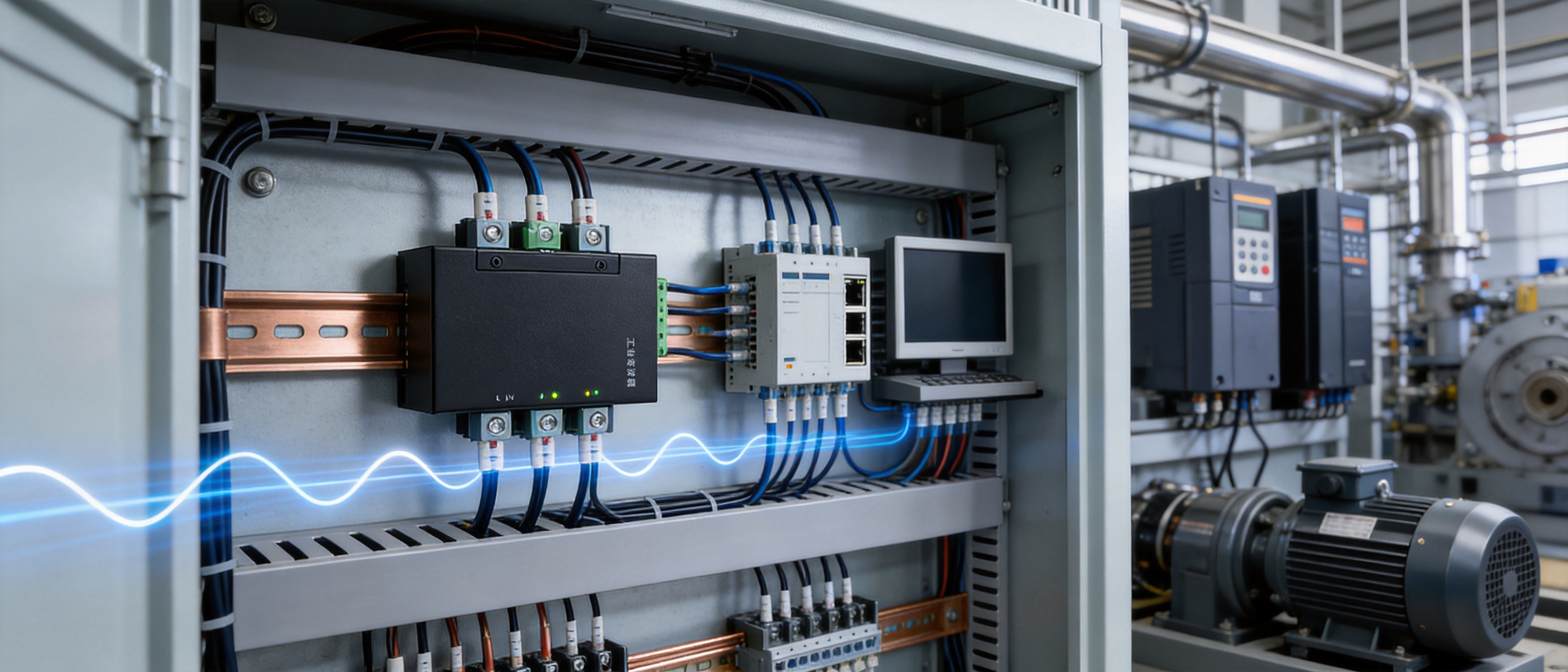
Automated warehouses use conveyors, stacker cranes, elevators, barcode readers, scanners, motors, sensors, and warehouse-management terminals. Many of these devices are distributed along long routes and may be installed in locations where new network cabling is difficult to access.
The KS910L can use existing power lines to connect remote equipment with control cabinets and supervisory systems. Ethernet devices can exchange data with warehouse-management or manufacturing-execution systems, while RS485 instruments can provide data from established sensors and meters. The result is a communication architecture that supports both new and legacy equipment.
7.2 Three-Dimensional Parking Systems
Automated parking garages contain lifting platforms, horizontal transfer mechanisms, positioning sensors, safety devices, and drive systems. Their equipment may move vertically or horizontally, and communication lines may need to pass through constrained mechanical structures. Power-line communication can simplify the connection between moving units and fixed control systems when the electrical design provides a suitable transmission path.
The product’s support for slip-contact communication is particularly relevant to systems in which power is transferred through moving contacts. The communication network can follow the same infrastructure as the equipment’s power supply, reducing the complexity of separate data-cable arrangements.
7.3 Logistics Sorting Systems
Sorting systems require timely communication between identification devices, actuators, programmable controllers, and central scheduling software. A communication interruption can cause product accumulation, misrouting, and downtime. High-speed Ethernet transport, low stated delay, and error-correction features make broadband power-line communication a candidate for selected sorting-system architectures.
Because the KS910L supports automatic networking and relay expansion, it can be used in systems with multiple sorting zones. Integrators can divide a long system into manageable communication sections and evaluate each section according to actual cable and electrical conditions.
7.4 Intelligent Overhead Cranes
Overhead cranes often combine long travel distances, moving machinery, high-power motors, and slip-contact assemblies. Communication must support control commands, position information, safety-related status, diagnostics, and sometimes video or maintenance data. Conventional cables may require specialized energy chains or flexible cable systems, while wireless links can be affected by metal structures and radio interference.
A power-line carrier can use the crane’s existing electrical path where the system has been engineered for compatible communication. The KS910L’s wide voltage capability, industrial temperature range, and support for slip-contact lines provide useful design options. Final suitability must be established through a site test that considers motor noise, contact quality, grounding, line length, and safety requirements.
7.5 Inspection Robots
Inspection robots are increasingly used in industrial plants, utility areas, warehouses, tunnels, and equipment rooms. They may need to transmit sensor measurements, images, alarms, and control information while operating over energized infrastructure. In some applications, a power-line communication channel can provide a stable wired path without installing a new dedicated communication cable along the inspection route.
Ethernet support can carry high-level data from cameras or edge computers, while RS485 can connect local instruments. The modular design of the communication system allows the robot or remote station to be integrated into broader monitoring and control networks.
7.6 New Energy and Power Exchange Equipment
New energy equipment, battery systems, charging systems, and power-exchange machinery often contain distributed controllers, meters, relays, and environmental sensors. These systems may use both high-voltage DC and industrial AC circuits. The KS910L supports DC channel voltages from 100 V to 700 V and AC channel voltages from 85 V to 500 V, providing a broad platform for selected power-electronic applications.
Electrical safety, isolation, coupling, and regulatory requirements must be carefully assessed in high-voltage systems. The device should be incorporated by qualified professionals using an appropriate system design. When correctly integrated, power-line communication can reduce separate wiring and support real-time equipment data exchange.
7.7 Industrial Automation and PLC Control
Programmable logic controllers and distributed automation equipment frequently use Ethernet, Profinet, Modbus-TCP, RS485, and Modbus-RTU. The KS910L is designed to transport these communication types through a power-line carrier network. This makes it useful for extending control and monitoring links across machine sections, production cells, or remote cabinets.
It is important to separate ordinary monitoring traffic from safety-critical communication unless the complete system has been designed, tested, and certified for the required safety function. The device can serve as an industrial data-communication component, but the system integrator remains responsible for functional safety architecture and validation.
8. Manufacturing Strengths and Engineering Approach
A communication device intended for industrial deployment must be supported by more than a list of electrical specifications. Its value depends on product consistency, engineering discipline, quality control, application knowledge, and the ability to adapt hardware and software to real industrial conditions. ASY Electronics is positioned as a high-tech industrial connectivity manufacturer focused on smart-factory applications, data sensing, and intelligent communication.
The company’s product portfolio includes broadband power-line carriers, wireless temperature monitoring systems, industrial transmitters, thermal gas mass flow meters, and automatic door controllers. This range demonstrates an emphasis on industrial data acquisition and equipment connectivity rather than consumer networking alone. Experience across sensing, measurement, control, and communication can help the manufacturer understand how a communication product must perform within a complete automation solution.
8.1 Application-Oriented Product Development
Industrial networking products are often deployed in specialized environments. A communication unit for an automated warehouse may have different requirements from one used in a crane, parking system, or new-energy installation. The KS910L is available in multiple hardware and software configurations, including standard, high-bandwidth, long-distance, and broadcast versions, together with high-performance, relay, and slip-contact-oriented software options.
This product-family approach allows engineering resources to be aligned with application requirements. Instead of treating every project as an identical network installation, the manufacturer can support different performance priorities, such as greater transmission distance, additional relay capability, higher throughput, or compatibility with specialized moving-contact systems.
8.2 Hardware and Software Coordination
Reliable power-line communication depends on the interaction between analog front-end design, signal processing, networking firmware, error correction, security, and interface management. A well-engineered product must manage changing channel conditions while also maintaining stable Ethernet and serial communication.
The KS910L combines OFDM processing, LDPC coding, AES-128-bit encryption, automatic routing, automatic networking, and transparent data transmission. The integration of these functions into one industrial device simplifies deployment for system integrators. It also reflects the importance of coordinated hardware and software development in broadband carrier products.
8.3 Industrial-Grade Design Priorities
The product is specified for -40°C to 85°C operation, 20%–95% relative humidity without condensation, and continuous 7-day, 24-hour operation. These specifications indicate that the design is intended for industrial duty rather than occasional or office use.
Industrial-grade manufacturing must consider component selection, thermal behavior, mechanical stability, electrical protection, connector reliability, enclosure design, and long-term operating consistency. The KS910L uses a compact enclosure measuring approximately 90 × 35 × 130 millimeters and supports TS35 or TS35-compatible rail installation. DIN-rail mounting helps secure the device inside control cabinets and makes it easier to integrate with circuit protection, terminal blocks, PLCs, and other cabinet equipment.
8.4 Manufacturing and Quality-Control Considerations
For a power-line communication product, manufacturing quality is closely linked to communication performance. Variations in component characteristics, soldering quality, connector assembly, shielding, and enclosure construction can affect long-term reliability. A professional manufacturing process should therefore include controlled material sourcing, automated or carefully monitored board assembly, inspection of solder joints, firmware verification, interface testing, power-consumption checks, and final functional testing.
Environmental and electrical tests are also important for equipment intended for harsh industrial conditions. Temperature testing helps verify operation across the specified range. Communication tests can evaluate Ethernet throughput, RS485 performance, network formation, relay operation, packet handling, and recovery behavior. Insulation, withstand, grounding, and protection checks help confirm that the device is ready for integration into an industrial electrical system.
The available product information does not define every factory test or certification procedure. Therefore, purchasers should request the current quality documentation, inspection records, compliance declarations, and project-specific test reports when a deployment has strict regulatory or contractual requirements. Even so, the stated industrial specifications and application-oriented product variants provide a strong basis for evaluating the device as part of a professional industrial communication solution.
8.5 Customization and Solution Integration
Smart-factory projects frequently require more than an off-the-shelf data link. A customer may need a particular relay configuration, serial communication arrangement, mechanical mounting method, network topology, environmental enclosure, or integration with existing control software. A manufacturer that develops both hardware and industrial data solutions is better positioned to discuss these requirements at the system level.
ASY Electronics describes its core capabilities as including data sensing, edge-layer hardware, and industrial data integration. These capabilities are relevant to projects where power-line communication is only one part of a wider architecture. The same engineering perspective can support condition monitoring, energy management, production-process optimization, and equipment connectivity.
9. Installation and Network Planning
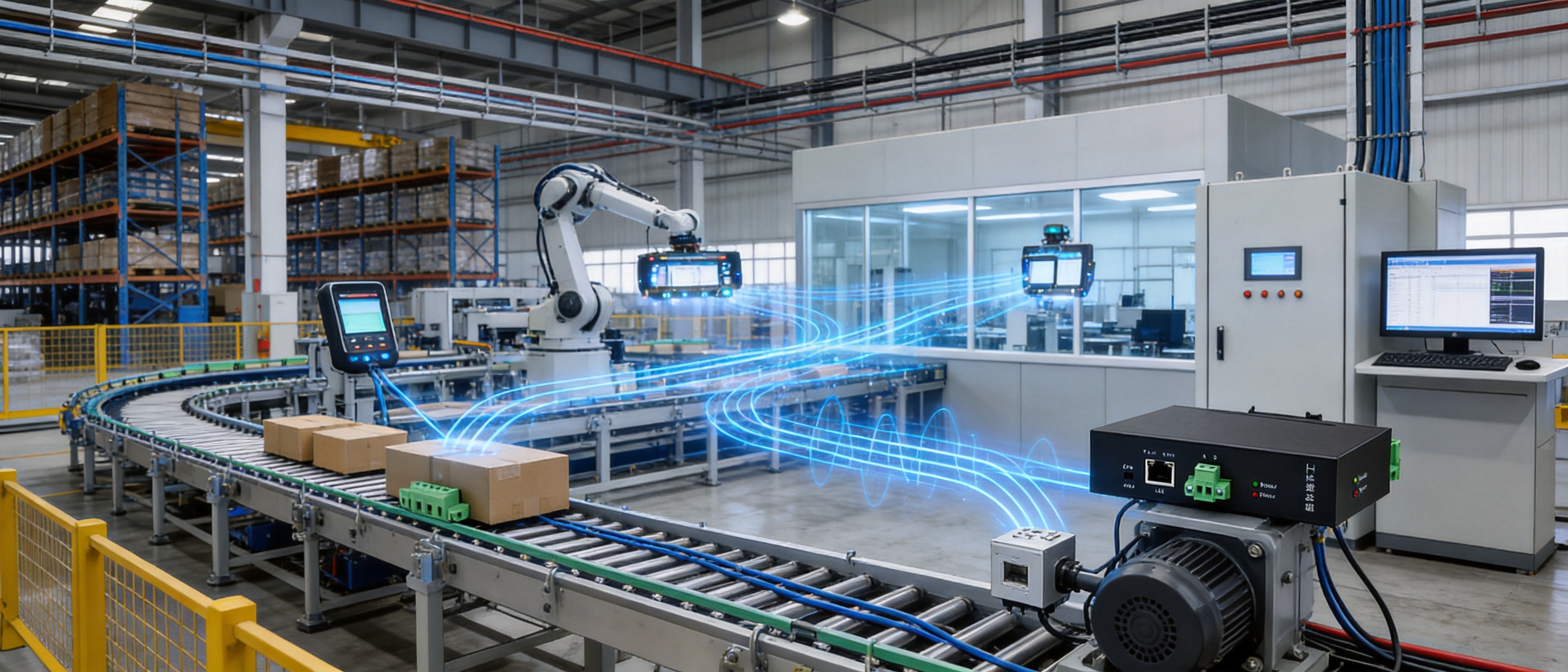
Although the KS910L is designed to simplify installation, successful deployment still requires careful engineering. Power-line communication performance depends heavily on the characteristics of the electrical network. Before installation, the system designer should document the voltage type, line voltage, cable length, phase arrangement, branching structure, connected loads, switching equipment, grounding method, and expected sources of interference.
The communication path should be evaluated under normal operating conditions, including motors starting and stopping, variable-frequency drives changing speed, contactors switching, chargers operating, and other equipment entering high-load states. A network that performs well when machines are idle may behave differently during production. Field testing should therefore represent the actual duty cycle as closely as possible.
The device can obtain power from the connected power line, which reduces the need for an independent supply. However, the installation must ensure that the power-line voltage is within the specified range and that the connection method is appropriate for the electrical system. Qualified personnel should handle circuits that may contain hazardous AC or DC voltages. Proper isolation, fusing, protective grounding, clearance, and enclosure practices are essential.
Network topology should be selected according to the physical and electrical structure of the facility. Shorter branches and fewer unnecessary junctions generally make communication planning easier. Where long distances are unavoidable, relay units can be positioned at practical intermediate points. The system designer should also consider how a relay failure would affect downstream equipment and whether redundancy or bypass arrangements are needed.
Ethernet and RS485 wiring should be installed and terminated according to the requirements of the connected equipment. RS485 networks require attention to polarity, termination, cable characteristics, node addressing, and baud rate. Modbus-RTU devices should be configured with consistent communication parameters and unique addresses. Ethernet equipment should be assessed for IP addressing, protocol compatibility, multicast behavior, and network segmentation.
10. Comparison with Alternative Technologies
10.1 Compared with New Ethernet Cabling
Dedicated Ethernet cabling can provide predictable performance and is often the preferred option in new facilities designed around structured networks. However, installing new cables in an existing factory can be expensive and disruptive. Power-line communication can reduce construction work by using existing conductors. It is particularly attractive where the power route already reaches every required device and where the communication bandwidth is compatible with the application.
The choice should not be treated as an absolute replacement of Ethernet. Instead, the KS910L can extend Ethernet connectivity into areas where new cable installation is impractical. It can also serve as a bridge between a structured Ethernet backbone and remote industrial machines.
10.2 Compared with Wireless Networking
Wireless networks avoid physical data cables, but industrial radio performance can be affected by metal structures, moving machinery, reflections, electromagnetic interference, and changing line-of-sight conditions. Wireless networks also require careful site surveys, access-point placement, channel planning, and security management.
Power-line communication provides a physical communication path through existing conductors. This can offer greater consistency in areas where radio propagation is difficult. On the other hand, wireless remains highly useful for mobile devices and locations without suitable electrical conductors. A hybrid architecture can use both technologies, selecting the most appropriate medium for each section of the facility.
10.3 Compared with Narrowband Power Line Communication
Narrowband power-line technologies are often optimized for lower data rates, long-range metering, or simple control messages. Broadband power-line communication generally provides greater bandwidth for Ethernet traffic, industrial data, monitoring information, and more demanding applications. The KS910L’s 10/100 Mbps adaptive Ethernet interface and OFDM carrier technology position it for applications requiring more than low-rate telemetry.
10.4 Compared with Point-to-Point Serial Links
Serial links can be reliable and economical, but they may require separate cabling and often support limited network structures. The KS910L can transport RS485 data while also providing Ethernet connectivity. This allows a project to preserve serial devices while creating a broader IP-based communication system.
11. Security, Reliability, and Maintenance
Industrial communication security should be considered at several levels. AES-128-bit encryption helps protect the data transmitted through the power-line carrier. However, encryption is only one part of a complete security strategy. System operators should also control physical access to cabinets, apply network segmentation, manage user permissions, protect supervisory computers, and maintain secure firmware and configuration procedures.
Reliability also depends on network design. Automatic routing and relay capability can simplify communication across complex layouts, but each additional node introduces another device that should be powered, installed, and maintained. Critical systems should document the role of every unit and identify the effect of a failure at each point in the network.
Routine maintenance should include checking terminal tightness, enclosure condition, operating temperature, communication status, error counters, and unexpected packet retransmissions. In applications with moving slip contacts, contact wear and contamination should be monitored because the physical condition of the contact path can directly influence communication quality.
Firmware and configuration management should be controlled through documented procedures. Before making changes to a live production network, the integrator should record the current configuration and verify the effect of the change in a controlled test environment. This is especially important where the network carries control data or supports equipment that must operate continuously.
12. Technical Specification Table
| Item | Specification |
|---|---|
| Product type | Industrial broadband power line carrier |
| Communication technology | IEEE P1901-based broadband power line communication |
| Modulation | OFDM |
| Carrier frequency | Approximately 2–28 MHz |
| Power-line media | Single-phase, three-phase, DC power lines, and suitable slip-contact lines |
| AC channel voltage | 85–500 V AC |
| DC channel voltage | 100–700 V DC |
| Ethernet interface | Network port with 10/100 Mbps adaptive bandwidth |
| Serial interface | RS485 |
| Serial protocol | Modbus-RTU |
| Serial baud rate | 1,200–115,200 bps |
| Point-to-point distance | Up to approximately 500 meters under suitable conditions |
| Relay extension | Up to 10 relay levels in the stated configuration |
| Extended distance | Approximately 3–5 kilometers with suitable relay networking |
| Data delay | Within 10 milliseconds under specified conditions |
| Packet-loss probability | Less than 0.1 per mille under specified conditions |
| Security | AES-128-bit encryption |
| Error correction | Built-in LDPC error-correction coding |
| Multicast | IGMP multicast support; maximum stated node count of 128 |
| Power consumption | No more than 3 W |
| Operating temperature | -40°C to 85°C |
| Operating humidity | 20%–95%, without condensation |
| Storage temperature | -40°C to 85°C |
| Installation | TS35 or TS35-compatible DIN rail |
| Dimensions | Approximately 90 × 35 × 130 mm |
| Weight | Approximately 400 g |
| Operating schedule | Industrial continuous operation, 24 hours per day and 7 days per week |
13. Practical Benefits for System Integrators
System integrators must balance technical performance, installation time, project cost, maintainability, and future expansion. The KS910L supports this balancing process in several ways. First, it reduces the amount of new communication wiring required in suitable projects. Second, it combines Ethernet and RS485 interfaces, reducing the number of separate communication products required. Third, its automatic networking and routing features can reduce configuration effort in multi-node systems.
The product’s compact rail-mounted form factor also supports clean control-cabinet construction. A width of approximately 35 millimeters allows the device to be installed alongside PLCs, terminal blocks, circuit breakers, relays, and industrial switches. Its low power consumption helps limit cabinet heat generation, which is especially useful where many communication devices operate together.
Multiple hardware and software versions provide a path for application-specific selection. A standard version may be adequate for a compact machine, while a high-bandwidth or long-distance version may better suit a larger facility. A relay-oriented version can support a distributed topology, and a specialized slip-contact version can address moving equipment.
Another advantage is the possibility of phased deployment. A factory can begin by connecting one production line or remote machine group, validate performance, and then expand the network to additional zones. Because the communication medium is the existing power infrastructure, expansion may require less physical construction than a completely new cable-based system.
14. Limitations and Engineering Boundaries
Power-line communication is not automatically suitable for every electrical network. The communication signal can be affected by filters, transformers, circuit breakers, converters, long cable sections, heavily loaded branches, and equipment that presents a low impedance at the carrier frequency. Some industrial loads may generate significant interference or absorb the communication signal.
Transmission distance figures should therefore be treated as design references rather than universal guarantees. Cable construction, line voltage, phase coupling, branch configuration, noise level, and network loading all influence actual performance. A pre-installation survey and pilot test are recommended for important projects.
High-voltage AC and DC systems create safety risks. Installation must be performed by trained personnel following applicable electrical codes and site procedures. The communication function must not compromise protective devices, isolation requirements, emergency-stop systems, or other safety functions.
Finally, a communication device should not be used as the only safeguard for a hazardous machine. Safety functions should use an architecture appropriate to the required risk level, including dedicated safety components where necessary. The KS910L is best understood as an industrial data-communication platform that can support monitoring, control, and integration when incorporated into a properly engineered system.
15. Why the Product Is Suitable for Smart-Factory Modernization
Smart-factory modernization is often constrained by legacy infrastructure. Factories may have reliable power distribution and functioning equipment but lack a unified data network. Replacing all field devices and installing new communication cables can delay digital transformation. A broadband power-line carrier provides a way to use existing infrastructure as a foundation for gradual modernization.
The KS910L can connect older RS485 instruments to newer Ethernet-based systems, allowing data from meters, transmitters, controllers, and sensors to reach industrial computers or supervisory software. This supports condition monitoring, energy analysis, preventive maintenance, and production optimization without requiring immediate replacement of every field device.
Its support for transparent transmission is also important. A transparent link allows upper-level applications to communicate with remote equipment using familiar industrial protocols. Integrators can preserve established Modbus-RTU or Modbus-TCP architectures while using power-line communication as the physical transport layer.
The device’s wide environmental range, compact mounting format, encryption, error correction, and automatic network functions further support long-term industrial deployment. Together, these features make it a practical component for connecting physical equipment to the digital systems that manage modern production.
16. Frequently Asked Questions
Q1: What is the KS910L used for?
The KS910L is used to transmit industrial Ethernet and RS485 data over existing AC, DC, or suitable slip-contact power lines. It is intended for applications such as smart factories, automated warehouses, logistics sorting systems, parking equipment, overhead cranes, inspection robots, power-exchange equipment, and industrial control networks.
Q2: Can it operate on three-phase power lines?
Yes. The product is designed for single-phase and three-phase power-line applications, as well as suitable DC and slip-contact systems. The actual connection arrangement must be selected according to the electrical design and installation requirements.
Q3: Does it need a separate power supply?
The device is designed for online power supply, meaning it can obtain operating power from the connected power line. A separate power supply is normally not required when the device is installed within its specified voltage range and according to the approved connection method.
Q4: What Ethernet speed does it support?
The Ethernet interface supports automatic adaptation between 10 Mbps and 100 Mbps. Actual application throughput depends on the power-line channel, network topology, interference, protocol overhead, and traffic conditions.
Q5: Can it connect to Modbus-RTU equipment?
Yes. The RS485 interface supports Modbus-RTU and baud rates from 1,200 to 115,200 bps. This allows the product to communicate with many industrial meters, sensors, transmitters, drives, and controllers.
Q6: How far can data travel through the power line?
The stated point-to-point transmission distance is up to approximately 500 meters over suitable power lines. Relay networking can extend the overall communication distance to approximately 3–5 kilometers in appropriate conditions, with up to 10 relay levels in the stated configuration.
Q7: Can it be used in a high-temperature factory?
The specified operating temperature range is -40°C to 85°C. This supports many harsh industrial environments. The installation should still provide suitable cabinet ventilation, protection from condensation, and compliance with the relevant electrical and environmental requirements.
Q8: Is the communication encrypted?
Yes. The product supports AES-128-bit encryption. Customers should also apply broader industrial cybersecurity measures, including physical access control, network segmentation, configuration management, and secure operation of connected systems.
Q9: What network topologies are supported?
The product supports bus, star, tree, and hybrid network topologies. Automatic networking and routing help the devices form communication paths across different industrial layouts.
Q10: Can it support moving equipment?
It can support suitable slip-contact communication applications. This makes it a candidate for certain overhead cranes, automated parking mechanisms, moving platforms, and other equipment where communication follows a slip-contact power path. A site-specific test is recommended before final deployment.
Q11: Is it a replacement for every Ethernet network?
No. Dedicated Ethernet cabling remains highly appropriate for many new facilities and high-performance backbones. The KS910L is most valuable where existing power lines can provide a practical communication path, where rewiring is costly, or where remote and moving equipment needs connectivity.
Q12: What should be checked before ordering?
Customers should confirm the power-line voltage, AC or DC operating condition, cable length, phase arrangement, slip-contact requirements, number of nodes, expected bandwidth, RS485 parameters, environmental conditions, relay requirements, and protocol compatibility. A pilot test may be appropriate for large or electrically complex systems.
17. Recommended Evaluation Process
A structured evaluation can help determine whether the KS910L is suitable for a specific project. The first step is to define the communication objectives. These may include PLC data exchange, remote monitoring, camera transport, Modbus collection, equipment diagnostics, or connection of a moving machine.
The second step is to map the electrical and physical network. Record the distance between endpoints, cable types, branches, distribution cabinets, transformers, filters, motors, drives, and slip-contact sections. Identify areas with high electrical noise and note whether the network will operate continuously or intermittently.
The third step is to select the interface architecture. Ethernet should be used for IP-based equipment, while RS485 is appropriate for compatible serial devices. If both types are present, define how they will be integrated into the control system and how addresses, protocols, and data ownership will be managed.
The fourth step is to conduct a representative pilot test. Test the network with the machines operating in their normal states. Measure throughput, delay, packet loss, connection recovery, and behavior during switching events. If relays are required, test the complete relay path rather than only a short direct link.
The final step is to document the installation. The documentation should include device locations, power-line connection points, network addresses, serial parameters, relay relationships, maintenance procedures, security settings, and test results. Good documentation reduces future troubleshooting time and supports scalable factory expansion.
18. Conclusion
The KS910L Three-Phase Broadband Power Line Carrier provides a practical communication option for industrial environments where conventional network cabling is expensive, difficult to install, or unsuitable for moving equipment. By using existing AC, DC, or slip-contact power lines, it can reduce rewiring requirements while supporting high-speed Ethernet and industrial RS485 communication.
Its main technical strengths include OFDM broadband transmission, a 2–28 MHz carrier-frequency range, adaptive 10/100 Mbps Ethernet, Modbus-RTU support, LDPC error correction, AES-128-bit encryption, automatic networking, routing, multicast support, relay-based distance extension, and operation from -40°C to 85°C. The compact DIN-rail enclosure and low power consumption further support integration into industrial control cabinets.
Compared with purely wireless or newly cabled solutions, power-line communication can provide a useful balance of installation efficiency, network flexibility, and industrial data capability. Its value is especially clear in intelligent warehousing, logistics sorting, automated parking, overhead cranes, inspection robots, new-energy equipment, and PLC control systems.
The manufacturer’s broader focus on industrial sensing, edge hardware, data integration, transmitters, flow measurement, temperature monitoring, and automatic control strengthens its ability to address complete smart-factory requirements. Its multiple hardware and software versions also provide flexibility for standard, high-bandwidth, long-distance, broadcast, relay, and slip-contact applications.
As with any industrial communication technology, the final result depends on proper electrical analysis, installation quality, system testing, and ongoing maintenance. When these factors are managed correctly, the KS910L can serve as a reliable bridge between existing power infrastructure and the connected, data-driven factory of the future.
References
1. IEEE P1901, Broadband Power Line Networks: Medium Access Control and Physical Layer Specifications.
2. IEEE 802.3, Ethernet Standards for Local and Metropolitan Area Networks.
3. IEEE 1905.1, Convergent Digital Home Network Specification.
4. European Union EN 50561, Power Line Communication Apparatus for Use in Low-Voltage Installations.
5. Modbus Organization, Modbus Application Protocol and Modbus Serial Line Implementation Guidance.
6. Industrial Ethernet and Power-Line Communication Design Practices, Technical Engineering Reference.
7. Smart Manufacturing Communication Architecture and Industrial Internet of Things Integration Principles.
8. Product Technical Data Sheet: Industrial Broadband Power Line Carrier, KS910L.