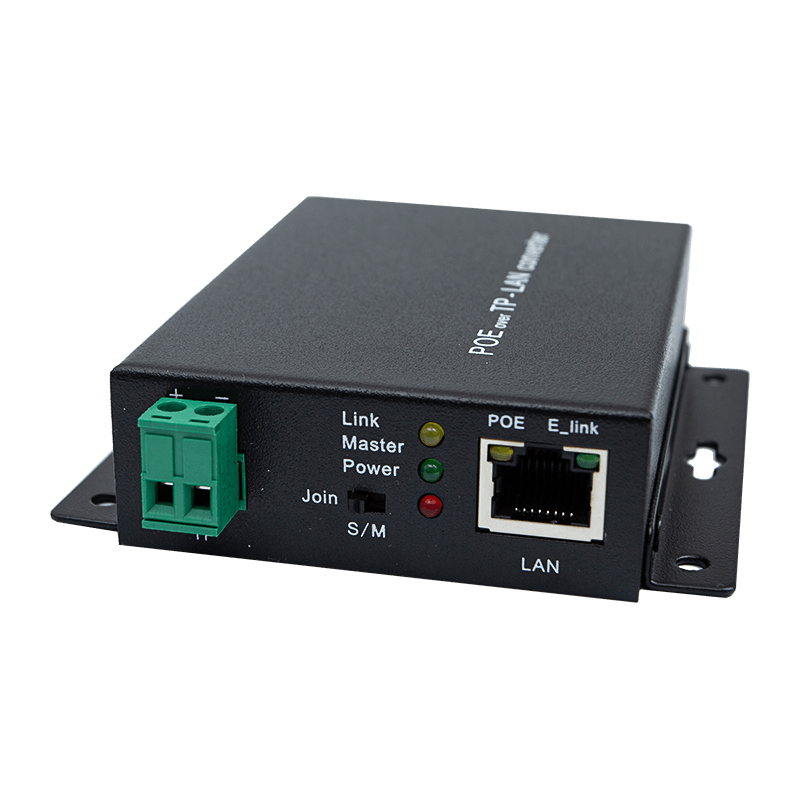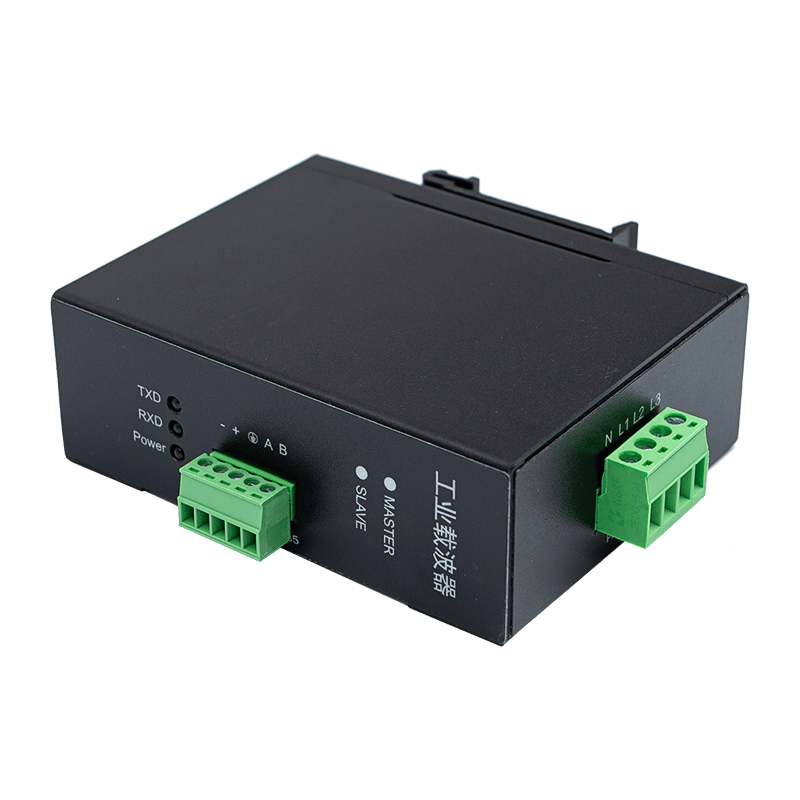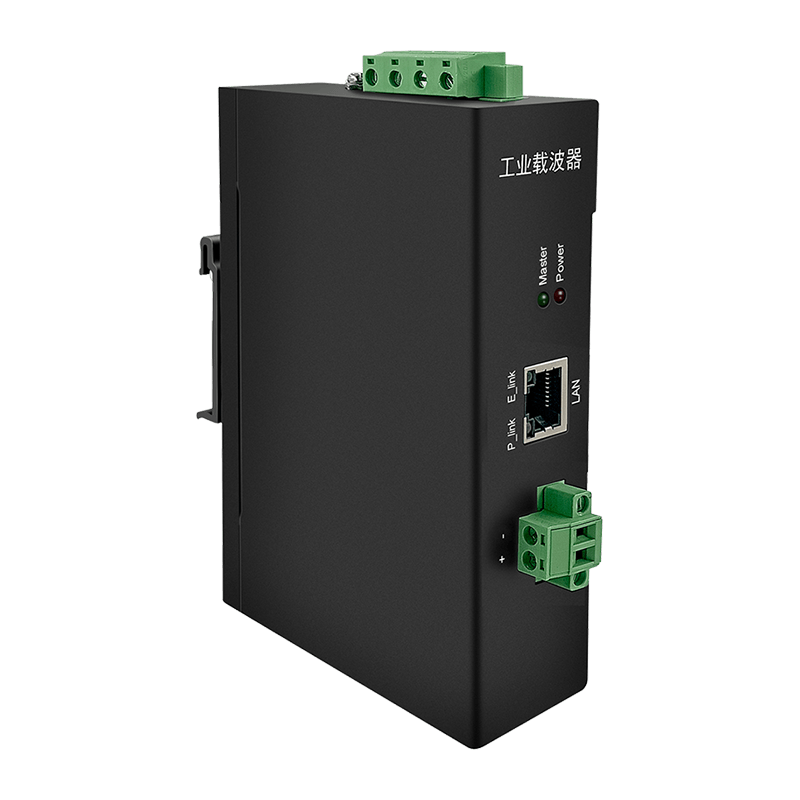


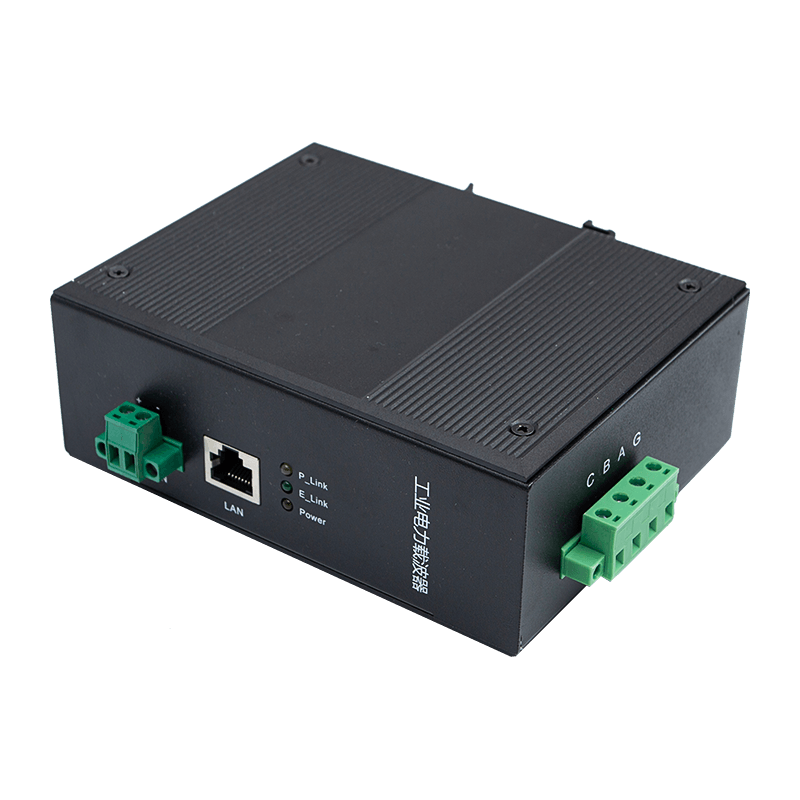
Industrial organizations are under growing pressure to connect machines, sensors, controllers, robots, energy systems, and monitoring platforms without introducing excessive cabling, complicated commissioning, or fragile communication links. In many facilities, power cables already reach the places where data must be collected or exchanged. The challenge is to use that existing infrastructure safely and efficiently while maintaining dependable data transmission in electrically noisy environments. The Compact PLC Broadband Transceiver KS802N addresses this challenge by combining industrial-grade power line communication, Ethernet connectivity, flexible networking, encryption, and a highly compact mechanical design.
Designed for high-speed and long-distance communication over suitable power or two-core cable networks, the KS802N supports a physical-layer carrier rate of up to 1000 Mbps and provides data communication through Ethernet interfaces at 10/100 Mbps auto-negotiation. It uses OFDM modulation and demodulation, built-in LDPC error correction, AES-128-bit encryption, automatic networking, and transparent data transmission. These capabilities allow the device to serve as a communication foundation for industrial robots, intelligent charging piles, street lighting, traffic monitoring, pipeline inspection systems, underwater equipment, and other distributed applications.
Unlike conventional communication equipment that may require a dedicated Ethernet cable, complex master-slave configuration, or separate network infrastructure, the KS802N can use existing power lines or other compatible two-core cables as the communication medium. This reduces deployment complexity and can make connectivity possible in locations where installing new data cables would be expensive, disruptive, or technically difficult.
Industrial Connectivity Without Unnecessary Cabling
Modern industrial systems often contain equipment distributed across long distances, multiple floors, outdoor areas, utility corridors, production lines, and mobile platforms. Installing a separate Ethernet cable for every device may require construction work, cable trays, signal repeaters, protective conduits, and additional maintenance. Wireless communication can be useful, but metal structures, electromagnetic interference, water, moving machinery, and other environmental factors may reduce consistency.
Power line communication offers another path. The same conductors that provide electrical power can also carry high-frequency communication signals. With suitable coupling and system design, data can travel over existing electrical wiring without requiring an independent communication cable. This approach can simplify the physical architecture of an industrial network and reduce the number of installation tasks.
The KS802N is developed for this type of environment. It supports communication through power lines, parallel cables, twisted-pair cables, coaxial cables, and other suitable two-core conductors. Its broad cable compatibility gives system designers more flexibility when adapting the transceiver to existing equipment and site conditions.
Two versions are available for different power and signal arrangements. The general-purpose KS802NT uses a separate DC power supply from 12 to 48 V and is designed for carrier communication over AC 0 to 220 V or DC 0 to 400 V power lines. The DC KS802NS is intended for 12 to 48 V DC power line communication and supports online power pickup through the PLC channel, eliminating the need for a separate power input in suitable installations.
This distinction is important because industrial equipment does not use one universal electrical architecture. Some systems have a low-voltage DC bus, while others communicate through AC power, high-voltage DC distribution, or a dedicated two-core cable. Offering two power supply configurations allows integrators to select a more suitable version instead of redesigning the entire electrical system around the communication product.
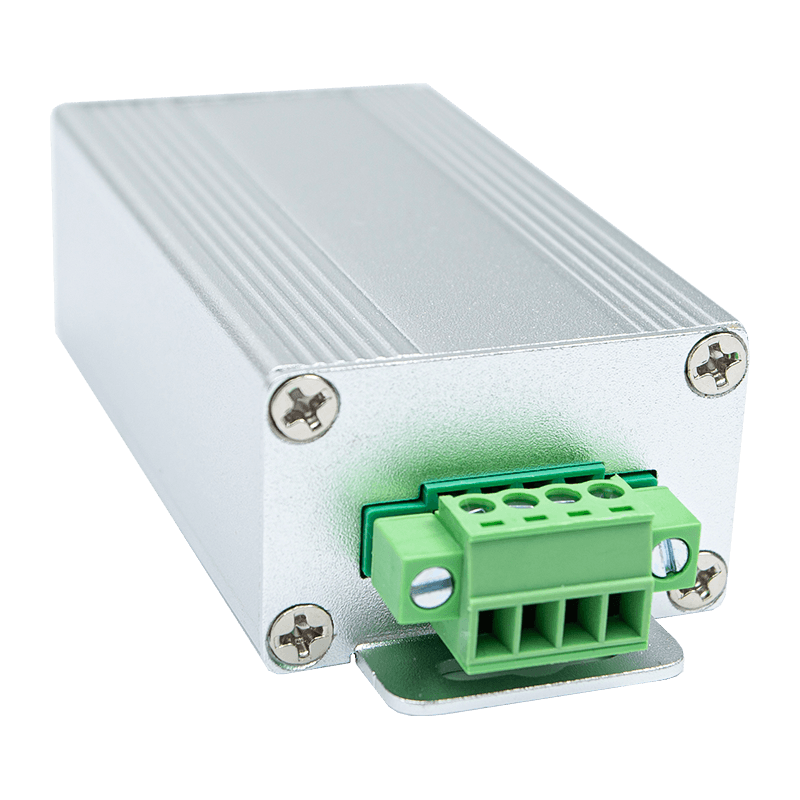
Compact PLC Broadband Transceiver
Core Product Advantages
High-Speed Carrier Performance
The KS802N provides a carrier-rate physical-layer bandwidth of up to 1000 Mbps. Actual application throughput depends on cable quality, distance, electrical noise, network topology, and other installation factors, but the high carrier capacity gives the system a strong foundation for industrial data transmission. It is suitable for Ethernet-based communication involving equipment status, control commands, video-related data, sensor information, logs, and other operational traffic.
Many low-cost power line communication products are intended primarily for home networking or simple data access. Industrial applications often require more than basic connectivity. They may need stable bidirectional transmission, fast control response, protocol transparency, multicast support, and the ability to operate continuously in demanding conditions. The KS802N is positioned for this more rigorous category of use.
The device supports 10/100 Mbps self-adaptive Ethernet communication. This allows the Ethernet port to negotiate an appropriate operating rate with connected equipment, reducing manual configuration during installation. For typical industrial devices, controllers, gateways, cameras, sensors, and embedded computers, this provides a practical interface between standard network equipment and the power line communication channel.
Long-Distance Communication on Ordinary Power Lines
Under ordinary power line conditions, the stated transmission distance is up to approximately 300 meters. The usable distance in a particular project will depend on conductor type, impedance, noise, branching, load characteristics, coupling arrangement, and local electrical conditions. Even so, a 300-meter reference distance can be valuable for industrial facilities, infrastructure corridors, street-lighting networks, equipment yards, and distributed monitoring installations.
Long-distance communication over existing conductors can reduce the need for additional network cabinets and intermediate switches. It can also simplify the connection of remote devices that are already powered from the same electrical distribution system. In applications such as intelligent lighting or charging infrastructure, this may significantly reduce civil engineering and cabling work.
Automatic Networking and Flexible Topologies
The KS802N includes built-in networking algorithms and does not require a traditional master-slave arrangement. Devices can automatically identify and organize themselves into a communication network. Automatic routing and automatic networking can reduce commissioning effort, especially in installations involving multiple nodes or changing physical layouts.
The device supports bus, star, tree, and hybrid network topologies. This flexibility is important because industrial sites rarely conform to a single ideal layout. A production line may use a bus arrangement, while a building automation system may favor a star configuration. A street-lighting system may follow a long linear route, and an inspection robot may use a point-to-point or mobile connection. Hybrid topologies can combine these structures when the application requires it.
Automatic networking does not remove the need for proper network planning. Engineers should still evaluate cable routes, coupling points, electrical isolation, expected traffic, node density, and electromagnetic conditions. However, the built-in network functions can make the deployment more adaptable and reduce dependence on manual address or role assignments at the physical communication layer.
Transparent Ethernet Data Transmission
Transparent transmission enables the power line communication link to function as a communication bridge for standard Ethernet traffic. This is valuable because many industrial applications already use TCP/IP, UDP, Profinet, and other familiar protocols. Rather than requiring a proprietary application architecture, system developers can integrate the transceiver into existing network designs.
Transparent communication can support PLCs, industrial PCs, remote I/O units, cameras, embedded controllers, gateways, and monitoring servers. It also makes future expansion easier because the communication infrastructure is not tied to one specific sensor or software platform.
Error Correction and Interference Resistance
Industrial electrical environments may include motors, relays, variable-frequency drives, switching power supplies, contactors, chargers, welding equipment, and other sources of electromagnetic interference. Signal attenuation and transient noise can affect communication quality. The KS802N uses OFDM modulation and includes an LDPC error correction codec to improve communication robustness under challenging channel conditions.
OFDM divides a high-speed data stream across multiple subcarriers. This approach can help the communication system adapt to frequency-selective attenuation and make more effective use of available spectrum. LDPC coding adds forward error correction, allowing the receiver to recover certain data errors without requesting every damaged packet again.
The specified packet loss probability is less than 0.1 percent under applicable test or operating conditions. Actual results will vary with the installation, but this specification demonstrates the product’s focus on dependable industrial communication rather than only peak speed.
Data Protection Through AES-128 Encryption
Industrial network traffic may include production data, equipment commands, process parameters, access information, and operational status. The KS802N supports AES-128-bit data encryption to help protect communication over the carrier network. Encryption is particularly relevant when power lines extend beyond a single machine or when several devices share a common electrical distribution area.
Encryption should be considered one layer of a complete industrial cybersecurity strategy. Network segmentation, access control, credential management, software maintenance, physical protection, and monitoring remain important. Nevertheless, built-in AES encryption provides a meaningful security function at the communication-device level and reduces the need to rely entirely on external protection equipment.
Multicast Support for Distributed Applications
The device supports IGMP multicast protocols and allows up to 128 nodes. Multicast can be useful when one data source must deliver information to multiple receivers. Examples include distributing status information to several controllers, transmitting selected video or sensor streams, coordinating lighting nodes, or sending common commands across a group of devices.
Without suitable multicast handling, repeated unicast transmissions may consume additional bandwidth and increase network load. IGMP support allows compatible network equipment to manage group membership more effectively. The maximum node figure provides a useful reference for planning larger installations, although the final network capacity will depend on traffic patterns, topology, distance, and channel conditions.
Compact Mechanical Form
The KS802N measures approximately 92 by 40 by 25 millimeters and weighs about 200 grams. This ultra-small form factor makes it easier to install inside control cabinets, equipment housings, robotic platforms, charging systems, junction boxes, and other space-constrained assemblies.
Compact size is not merely a cosmetic advantage. Industrial designers often face strict limits on cabinet depth, available DIN-rail space, robotic payload, enclosure volume, and thermal management. A small communication device can provide more freedom in mechanical layout and reduce the need for a larger enclosure.
The product uses an ear-hook installation method. Depending on the equipment structure, this can support convenient attachment to a panel, bracket, enclosure, or machine frame. Integrators can combine the device with appropriate protective housing and electrical coupling components according to the requirements of the target environment.
Technical Specifications
Item | Specification |
Product | Compact PLC Broadband Transceiver KS802N |
Communication technology | High-definition power line communication based on OFDM |
Physical-layer carrier rate | Up to 1000 Mbps |
Ethernet interface bandwidth | 10/100 Mbps auto-adaptive |
Carrier frequency | 1.8 to 86 MHz |
Power supply | DC 12 to 48 V |
PLC signal port, NS type | DC 12 to 48 V |
PLC signal port, NT type | AC 0 to 220 V or DC 0 to 400 V |
Compatible conductors | Suitable two-core cable, power cable, parallel cable, twisted pair, coaxial cable, and similar conductors |
Typical transmission distance | Up to approximately 300 meters on ordinary power lines |
Data delay | Within 10 ms |
Packet loss probability | Less than 0.1 percent under specified conditions |
Encryption | AES-128-bit |
Multicast | IGMP multicast support; up to 128 nodes |
Power consumption | Not more than 3 W |
Dimensions | 92 × 40 × 25 mm |
Weight | Approximately 200 g |
Installation | Ear-hook mounting |
Operating temperature | -40°C to 85°C |
Operating humidity | 20% to 95%, non-condensing |
Storage temperature | -40°C to 85°C |
Operating mode | Industrial-grade, suitable for continuous 24-hour operation, seven days per week |
The specifications show a balance between bandwidth, environmental durability, power efficiency, and compactness. The low power consumption of no more than 3 W helps reduce heat generation and makes the product easier to integrate into systems where energy budgets are limited. Continuous operation at industrial temperature ranges also supports deployment in equipment rooms, outdoor cabinets, transportation infrastructure, and machine enclosures, provided the complete installation is designed for the local environment.
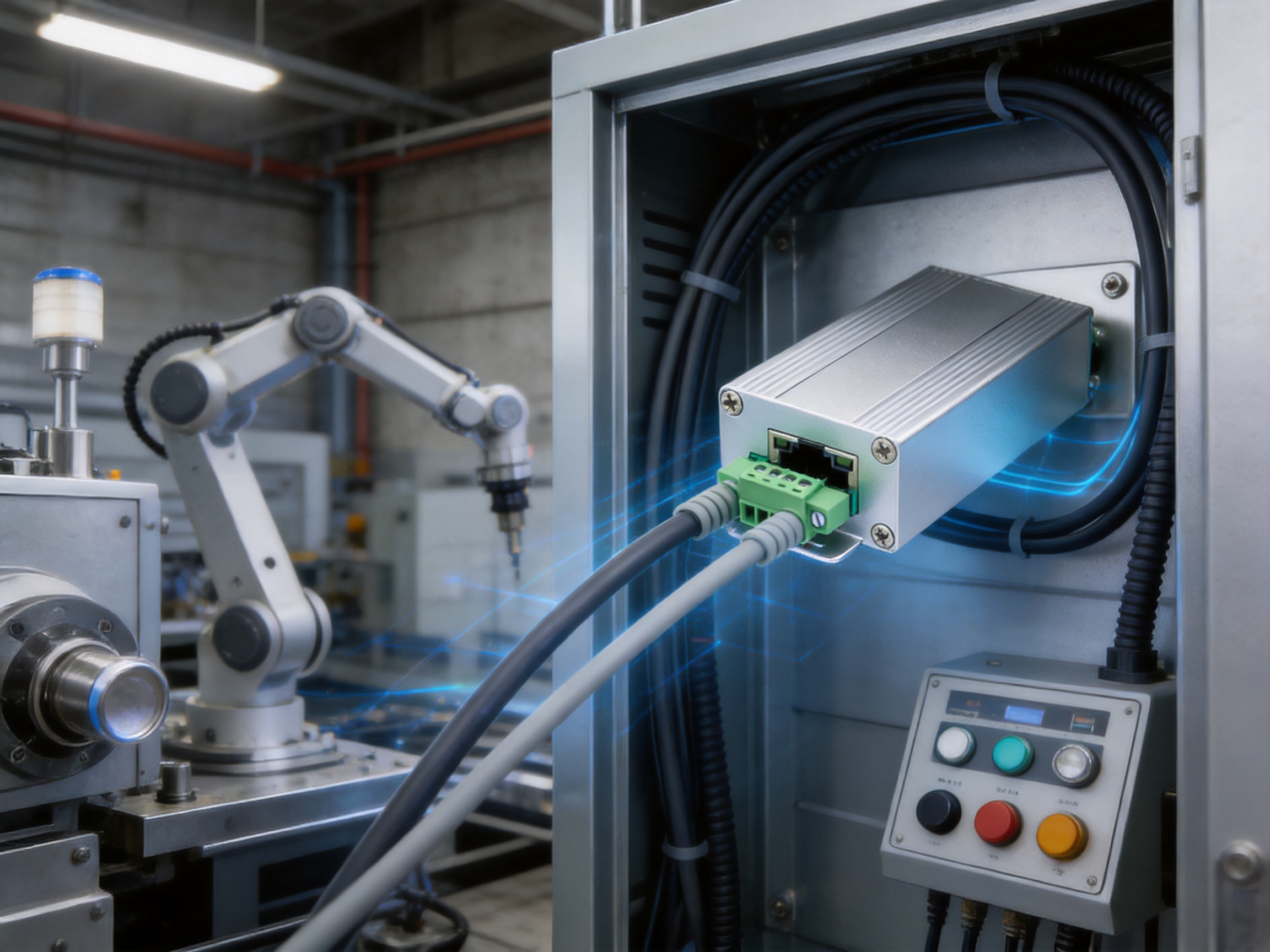
Comparison with Conventional Connectivity Options
Compared with New Ethernet Cabling
Dedicated Ethernet cable generally offers predictable performance and is often the preferred choice in new construction. However, installing Ethernet cable in an existing factory or outdoor infrastructure can require conduit, cable trays, drilling, shutdowns, and labor-intensive routing. In some locations, the distance between power and data endpoints is difficult to access.
The KS802N can use an existing power-line route for communication, reducing the need to install a separate data cable. This can be especially advantageous when both endpoints already receive power through the same route. It does not make Ethernet cabling obsolete; rather, it provides an alternative for retrofit projects, remote assets, and applications where new cable installation is impractical.
Compared with Wireless Links
Wireless communication reduces physical cabling but can be affected by radio interference, obstructions, reflections, attenuation through metal structures, antenna placement, and changing environmental conditions. Security configuration and radio-frequency planning may also add complexity.
Power line communication can offer a more physically contained path because the signal travels over a conductor. This may be useful in steel-framed facilities, underground systems, enclosed machinery, or areas where wireless coverage is inconsistent. At the same time, the electrical network must be evaluated carefully because noise, filtering devices, transformers, circuit separation, and cable characteristics influence performance.
Compared with Traditional Low-Speed Power Line Products
Some legacy power line communication devices are designed for low-rate telemetry, simple meter reading, or narrow command channels. Such products may not provide the bandwidth, protocol transparency, error correction, multicast handling, or security required by modern Industrial Internet of Things applications.
The KS802N is positioned as a broadband industrial transceiver. Its high carrier capacity, Ethernet interface, 10 ms or less stated data delay, automatic network formation, and support for multiple industrial and Internet protocols make it more suitable for converged networks carrying both monitoring and operational data.
Compared with Proprietary Point-to-Point Systems
Point-to-point communication can be simple but may become difficult to expand. When additional sensors, controllers, or monitoring devices are added, the system may require new hardware, new wiring, or a complete topology redesign.
The KS802N supports bus, star, tree, and hybrid network structures, allowing a communication system to grow with the application. Automatic networking and routing can further simplify the addition of nodes. This scalability is valuable for factories and infrastructure projects that are expected to expand over time.
Industrial Applications
Inspection Robots and Pipeline Robots
Inspection robots often operate in locations where communication cables are difficult to install or where the robot must use an existing power or tether line. A compact PLC transceiver can help transport control commands, sensor measurements, diagnostic information, and video-related Ethernet traffic through a suitable two-core connection.
Pipeline robots may travel through long, enclosed, or hazardous routes. In these environments, maintaining a separate wireless link can be difficult, while running a dedicated high-speed communication cable may increase the size and mechanical complexity of the tether. Power line communication can help combine energy delivery and data transfer into a more efficient connection architecture.
For underwater robots and related equipment, communication design must account for water resistance, pressure, connector reliability, and the physical characteristics of the tether. The transceiver itself does not replace environmental protection or specialized underwater coupling, but its compact size and Ethernet transparency can support the communication subsystem when integrated into an appropriate enclosure and cable assembly.
Intelligent Charging Infrastructure
Charging piles and distributed charging equipment require communication for status reporting, energy management, fault alarms, user interfaces, and coordination with supervisory platforms. In parking areas, depots, industrial campuses, and transport facilities, charging units may be spread across large areas where power cables are already installed.
A power line communication solution can reduce dependence on separate communication cables between charging points and control equipment. The KS802N’s encryption, multicast support, automatic networking, and industrial temperature range are relevant to charging networks that must operate continuously and exchange data among multiple nodes.
System designers should distinguish between the communication channel and the power conversion function of the charger. Proper isolation, surge protection, electromagnetic compatibility design, and safety compliance remain essential. The transceiver provides the data link; the complete charging system must satisfy all applicable electrical and operational requirements.
Intelligent Street Lighting
Street-lighting systems are naturally distributed along power lines. Each lamp, controller, sensor, or cabinet may be separated by substantial distance, while the lighting circuit already provides electrical power. Power line communication can therefore be an efficient way to connect lighting controllers, energy meters, ambient sensors, fault detectors, and management gateways.
The KS802N can support bus or tree-like layouts and can help deliver control and monitoring data through existing lighting conductors. Network operators may use this architecture for scheduled dimming, energy analysis, fault alerts, maintenance planning, and coordinated lighting scenes.
Outdoor installations require careful attention to lightning protection, moisture, temperature, enclosure design, and surge transients. The transceiver’s operating temperature specification is useful, but the final system should also include appropriate protection components and a correctly designed cabinet or luminaire housing.
Intelligent Traffic Monitoring
Traffic monitoring equipment may include cameras, vehicle detectors, environmental sensors, variable message signs, and roadside controllers. These devices are frequently positioned along roads, bridges, tunnels, and intersections where communications infrastructure can be difficult to extend.
Where a compatible power distribution route is available, the KS802N can provide a practical Ethernet bridge for selected monitoring and control traffic. Its multicast capability may be useful in systems where information must be distributed to multiple monitoring or management nodes. Its compact housing also allows installation inside roadside cabinets and control boxes.
Factory Automation and Equipment Monitoring
Factories often contain legacy machinery that has reliable power wiring but limited network connectivity. Retrofitting Ethernet communication through power lines can provide a way to connect equipment condition sensors, remote I/O, production counters, maintenance terminals, and edge computing devices without reconstructing the entire cable system.
Manufacturers can use the transceiver as part of an equipment monitoring architecture. Data from vibration sensors, temperature transmitters, pressure devices, flow meters, and machine controllers can be delivered to an industrial gateway or supervisory platform. This supports predictive maintenance, energy management, process optimization, and production visibility.
The product’s transparent Ethernet function also allows companies to preserve existing software and protocol structures. Instead of replacing every local device, an integrator may be able to add communication hardware at suitable points in the network and connect the data to an existing industrial platform.
Energy and Utility Systems
Power distribution environments naturally offer conductors that may serve as communication paths. Applications can include cabinet monitoring, distributed metering, equipment alarms, substation auxiliary systems, and energy-management networks. The NT and NS variants provide options for different AC and DC power arrangements.
Utility applications require detailed engineering because voltage levels, isolation requirements, transient exposure, and regulatory obligations vary considerably. The stated signal-port ranges provide design guidance, but engineers must verify compatibility, insulation, coupling, protection, and installation procedures before deployment.

Advanced Manufacturing and Product Development Strengths
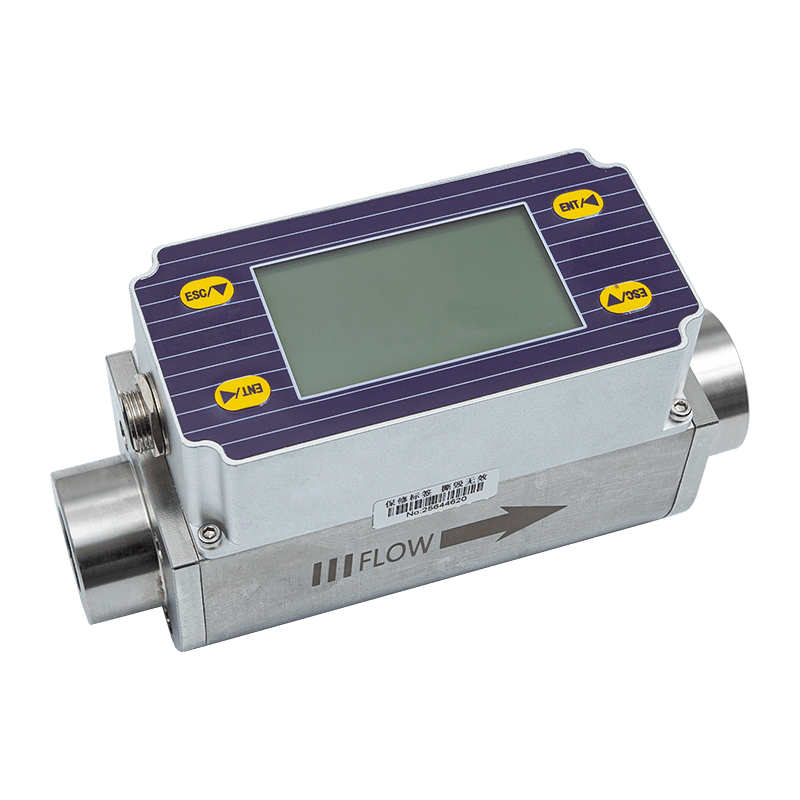
The KS802N is supplied by ASY Electronics (JiaXing) Co., Ltd., a high-tech enterprise focused on smart-factory technologies, industrial data sensing, and intelligent connectivity. Its product portfolio includes broadband power line carriers, wireless temperature monitoring systems, industrial transmitters, thermal gas mass flow meters, and automatic door controllers. This combination of communication, sensing, measurement, and control products provides a strong foundation for developing integrated industrial solutions rather than isolated components.
Application-Oriented Engineering
A major strength of an industrial communication manufacturer is the ability to understand the complete application environment. Communication hardware must work with electrical systems, sensors, controllers, mechanical structures, enclosures, software platforms, and maintenance procedures. Experience across transmitters, flow meters, temperature monitoring, and automatic control can help a supplier evaluate the relationship between data generation and data transport.
For example, a factory may require temperature sensors on motors, flow meters on utility lines, power monitoring at distribution cabinets, and a central platform for analysis. A supplier with capabilities in both sensing and connectivity can help create a more coherent architecture. The KS802N can act as the broadband link that joins these field devices to gateways or management systems.
Hardware Designed for Industrial Integration
The product’s compact dimensions, low power consumption, broad operating temperature range, and ear-hook installation reflect the practical requirements of industrial integration. These design choices indicate attention to the constraints faced by equipment manufacturers and system integrators: limited panel space, continuous operation, heat management, and mechanical mounting.
Industrial hardware development also requires attention to connector placement, signal separation, thermal pathways, grounding, protection, and assembly consistency. While individual project requirements differ, a compact standardized transceiver can simplify the creation of repeatable equipment designs and reduce variations between installations.
Embedded Communication Algorithms
Automatic networking, routing, LDPC error correction, multicast support, transparent transmission, and encryption are built into the product architecture. Integrators do not need to develop these fundamental communication functions from the beginning. This can shorten development time, reduce software risk, and allow engineering teams to focus on application-level functions.
Built-in algorithms are particularly useful for equipment manufacturers that want to add communication capabilities without becoming specialists in carrier networking. A standard Ethernet interface creates a familiar boundary between the device and the application system, while the transceiver handles the underlying power line communication process.
Manufacturing Quality and Process Control
Reliable industrial communication depends not only on circuit design but also on stable manufacturing. A robust production process normally includes controlled component sourcing, incoming inspection, printed circuit board assembly controls, soldering and reflow-process management, firmware loading, functional testing, communication verification, enclosure inspection, and final quality checks.
For a broadband power line transceiver, manufacturing control is especially important because high-frequency performance can be affected by component tolerances, layout consistency, coupling circuits, connector quality, shielding, and assembly variation. Consistent process control helps ensure that products perform within their intended design range from batch to batch.
Testing should address both basic operation and application-relevant behavior. Typical evaluation areas may include power-on performance, Ethernet negotiation, carrier communication, network formation, data throughput, latency, packet integrity, encryption operation, multicast behavior, temperature performance, and long-duration operation. The exact test plan should be aligned with the customer’s application and applicable standards.
Support for Custom Industrial Solutions
Industrial projects frequently require customization. A customer may need a particular power input, cable interface, enclosure arrangement, mounting method, communication configuration, or integration approach. A manufacturer with in-house product development and industrial solution experience can evaluate these requirements more efficiently than a general-purpose networking vendor.
Customization may include adapting the transceiver to an existing control cabinet, creating a communication module for a robot, integrating a power pickup function into a DC system, or coordinating the PLC device with temperature, flow, or energy monitoring products. The ability to combine standard products with engineering services can reduce the gap between laboratory prototypes and field-ready systems.
Smart Factory Expertise
ASY Electronics describes its mission as helping build efficient, reliable, and green smart factories. Its capabilities in data sensing and intelligent connectivity are directed toward equipment condition monitoring, refined energy management, and production-process optimization. These objectives are directly related to the role of the KS802N in an Industrial Internet of Things architecture.
Efficient smart factories require dependable data collection. If devices cannot communicate consistently, condition monitoring becomes incomplete, energy analysis loses accuracy, and production optimization is delayed. By providing a communication link that can use existing power infrastructure, the KS802N can help organizations extend digital monitoring to assets that might otherwise remain disconnected.
Deployment and Engineering Considerations
Choosing Between the NT and NS Versions
The first selection decision is the relationship between the power supply and the PLC signal path. The general-purpose KS802NT requires DC 12 to 48 V for its own power and supports carrier communication over AC 0 to 220 V or DC 0 to 400 V power lines. This version is suitable when the communication line and the device power input are treated as separate functions.
The DC KS802NS is intended for DC 12 to 48 V power line carrier communication and supports online power pickup through the PLC channel. It is suitable for systems where the same DC line can provide both power and communication. The power port does not require a separate supply in an appropriate design.
Before selecting a model, engineers should document the operating voltage, conductor arrangement, expected current, isolation requirements, line topology, and installation environment. The selected device should never be connected outside the applicable electrical limits.
Evaluating the Cable Environment
Power line communication performance depends strongly on the channel. Engineers should consider cable length, conductor cross-section, branching, shielding, insulation, connectors, transformers, filters, circuit breakers, motor drives, and connected loads. Some devices may attenuate or block high-frequency communication signals, while others may introduce noise.
A site survey or pilot test is recommended for complex installations. Testing should include the longest cable route, the highest expected electrical load, typical switching events, and representative network traffic. The goal is to verify not only whether devices can connect, but also whether latency, packet loss, and throughput remain acceptable during normal operation.
Topology Planning
The support for bus, star, tree, and hybrid topologies provides design freedom, but each topology has different implications. A bus may reduce cable branching but can expose the network to the effect of a single route problem. A star may simplify node isolation but require a central point. A tree can follow the physical structure of a facility, while a hybrid design may be best for large and irregular installations.
Network planners should document node locations, cable routes, expected traffic, maintenance access, and failure scenarios. Where possible, critical equipment should have alternative communication paths or local control functions so that a temporary communication interruption does not create an unsafe condition.
Thermal and Enclosure Design
Although the transceiver consumes no more than 3 W, the enclosure and surrounding equipment still influence operating temperature. Installers should provide adequate ventilation or thermal conduction and avoid placing the device next to high-heat components without evaluation. Outdoor installations should use enclosures suitable for rain, dust, condensation, sunlight, and temperature cycling.
The humidity specification is 20 to 95 percent without condensation. This means that condensation control remains important in environments with rapid temperature changes. Enclosure heaters, breathers, desiccants, conformal protection, or controlled cabinet ventilation may be appropriate depending on the installation.
Cybersecurity and Network Segmentation
AES-128-bit encryption helps protect the PLC communication channel, but it should be combined with broader cybersecurity measures. Industrial networks should be segmented according to function, and access between control, monitoring, enterprise, and remote-maintenance zones should be controlled.
Administrators should maintain an inventory of connected nodes, restrict unnecessary services, protect configuration interfaces, use strong credentials, and establish procedures for firmware and equipment maintenance. Where the communication system carries safety-related or critical control data, the design should include independent protective mechanisms and fail-safe behavior.
Integration with Industrial IoT Architectures
The KS802N can occupy the edge-connectivity layer of an Industrial Internet of Things system. At the field level, sensors, meters, actuators, controllers, and machines generate operational data. The transceiver transports Ethernet traffic through the existing power or cable infrastructure. An edge gateway can then aggregate, filter, analyze, and forward the information to a local server or cloud platform.
This architecture can support condition monitoring by collecting temperature, vibration, current, pressure, flow, and operating-state information. It can support energy management by connecting meters and power equipment. It can support production optimization by linking machines to scheduling, quality, and manufacturing-execution systems.
Because the transceiver provides transparent data transmission, the communication layer can remain relatively independent of the application software. A project may begin with a few monitoring points and later add controllers, cameras, or additional sensor groups without replacing the basic communication technology, provided the channel capacity and topology remain suitable.
For distributed equipment, the combination of low latency, error correction, encryption, and multicast can help create a more responsive and coordinated network. Engineers should still establish traffic priorities and confirm that the actual data load is compatible with the selected topology.
Why Compactness Matters in Competitive Industrial Projects
Industrial customers often compare communication products based on more than headline bandwidth. Installation time, cabinet space, power consumption, temperature range, configuration effort, network scalability, security, and protocol compatibility can determine the total cost of ownership.
The KS802N competes by combining several of these characteristics in one compact device. Its high carrier-rate capability supports broadband communication. Its 92 × 40 × 25 mm form factor simplifies mechanical integration. Its 12 to 48 V DC supply aligns with common industrial control voltages. Its automatic networking reduces configuration effort. Its encryption and error correction address security and reliability. Its topology flexibility supports a range of field layouts.
Another competitive advantage is the choice between the NT and NS versions. A single fixed electrical design may force users to purchase additional power supplies, couplers, converters, or interface devices. The two-version approach allows the product family to address both separate-supply installations and DC power-line communication systems.
The product also supports a broad set of standards and protocols, including TCP/IP, UDP, Profinet, HomePlug, HomePlug AV, IEEE 802.3, IEEE 802.3u, IEEE 802.3ab, IEEE 1905.1, IEEE 1900, and IEEE 1901. Protocol support does not guarantee compatibility with every implementation, so project-level verification remains necessary, but the range indicates an effort to bridge industrial and mainstream Ethernet environments.

Recommended Selection Checklist
Before ordering or deploying the KS802N, a project team should review the following questions:
First, what voltage is present on the intended PLC signal line? Confirm whether the application requires the NT or NS version and verify that the line remains within the specified range.
Second, is the cable route suitable for high-frequency carrier communication? Record the cable type, length, branches, filters, transformers, and major loads connected to the circuit.
Third, what traffic will the network carry? Estimate the number of nodes, data rates, burst traffic, multicast groups, control messages, sensor updates, and video streams.
Fourth, what topology best matches the physical site? Select bus, star, tree, or hybrid architecture and identify possible single points of failure.
Fifth, what environmental protection is required? Review temperature, humidity, dust, water, vibration, shock, chemical exposure, electromagnetic interference, and surge conditions.
Sixth, how will the equipment be maintained? Provide access for inspection, replacement, troubleshooting, configuration, and testing without unnecessary production interruption.
Seventh, how will cybersecurity be managed? Define encryption settings, network segmentation, credentials, monitoring, firmware procedures, and access responsibilities.
This checklist helps prevent a common mistake in industrial networking: selecting equipment based only on maximum bandwidth while overlooking electrical compatibility, environmental conditions, or serviceability.
Questions and Answers
What is the KS802N?
The KS802N is a compact industrial broadband power line communication transceiver. It transfers Ethernet data over suitable power lines or two-core cables and is designed for high-speed, long-distance industrial communication.
What is the maximum physical-layer carrier rate?
The specified physical-layer carrier rate is up to 1000 Mbps. The actual application throughput will depend on cable conditions, distance, interference, topology, node count, and traffic patterns.
What Ethernet speed does the device support?
The Ethernet interface supports 10 Mbps and 100 Mbps auto-adaptive communication. This allows the device to connect with standard Ethernet equipment and negotiate a suitable interface rate.
How far can the communication signal travel?
The stated transmission distance on ordinary power lines is approximately 300 meters. The achievable distance in a specific project must be verified through technical evaluation because cable and electrical conditions have a major effect on performance.
Does the device require a master-slave configuration?
The product includes built-in networking algorithms and does not require a conventional master-slave arrangement. It supports automatic networking and routing, which can simplify installation and expansion.
Which network topologies are supported?
The KS802N supports bus, star, tree, and hybrid network topologies. The best choice depends on the physical layout, cable routes, node distribution, traffic requirements, and redundancy objectives.
What is the difference between KS802NT and KS802NS?
The KS802NT uses a separate DC 12 to 48 V power supply and supports carrier communication over AC 0 to 220 V or DC 0 to 400 V power lines. The KS802NS is designed for DC 12 to 48 V power line carrier communication and supports online power pickup through the PLC channel in suitable systems.
Does the product support data encryption?
Yes. The KS802N supports AES-128-bit encryption for data communication. Users should combine this function with network segmentation, access control, secure credentials, and other industrial cybersecurity practices.
Can it transmit multicast traffic?
Yes. The device supports IGMP multicast protocols and allows a maximum of 128 nodes according to the stated product information. Application traffic and channel conditions should be evaluated before designing a large multicast network.
What operating temperatures are supported?
The operating temperature range is -40°C to 85°C. The storage temperature range is also -40°C to 85°C. The complete system must still include suitable enclosure, ventilation, condensation, and surge protection measures.
What types of cable can be used?
The product information identifies suitable two-core cables, power cables, parallel cables, twisted-pair cables, coaxial cables, and similar conductors. Compatibility should be verified through testing because cable impedance, length, shielding, branching, and connected equipment affect communication performance.
Is the transceiver suitable for continuous operation?
It is specified as an industrial-grade product supporting seven-days-per-week, 24-hour operation. Proper installation, power quality, thermal management, and environmental protection are necessary for reliable long-term service.
Can it be used in a smart-factory system?
Yes. It can connect distributed machines, sensors, controllers, monitoring devices, and gateways through existing power or cable infrastructure. It is especially relevant to equipment condition monitoring, energy management, and production-process optimization.
Does using power line communication eliminate the need for an engineering survey?
No. A survey remains important. Electrical loads, filters, cable branches, distance, noise, isolation, voltage levels, and topology should be evaluated before full deployment. A pilot test can confirm throughput, latency, and packet reliability under realistic operating conditions.
Conclusion
The Compact PLC Broadband Transceiver KS802N provides a practical way to extend high-speed Ethernet communication through existing power lines and compatible two-core cables. Its combination of up to 1000 Mbps physical-layer carrier capability, 10/100 Mbps Ethernet, approximately 300-meter ordinary power-line transmission, automatic networking, flexible topology support, OFDM modulation, LDPC error correction, AES-128-bit encryption, IGMP multicast, and industrial environmental performance gives it a strong position in modern industrial connectivity projects.
Its advantages are particularly relevant where new data cabling is expensive, wireless communication is unreliable, or distributed equipment already shares an electrical route. The compact 92 × 40 × 25 mm enclosure and low power consumption make integration easier in cabinets, robots, charging systems, lighting equipment, traffic infrastructure, and monitoring installations.
Behind the product is a company focused on smart-factory development, data sensing, intelligent connectivity, equipment condition monitoring, energy management, and production optimization. Its broader product portfolio in communication, temperature monitoring, transmitters, flow measurement, and automatic door control supports an application-oriented approach to industrial automation.
For system integrators, equipment manufacturers, and industrial end users, the KS802N offers more than a communication interface. It provides a compact connectivity layer that can help transform existing electrical infrastructure into a platform for monitoring, control, and digital productivity. With proper electrical evaluation, network planning, cybersecurity, and environmental protection, it can serve as a dependable building block for scalable Industrial Internet of Things and smart-infrastructure deployments.
References
1. Product technical information for the KS802N compact PLC broadband transceiver.
2. IEEE 1901, Broadband Power Line Networks: Medium Access Control and Physical Layer Specifications.
3. IEEE 802.3, Ethernet Standards for Local and Metropolitan Area Networks.
4. IEEE 802.3u, Fast Ethernet Specification.
5. IEEE 802.3ab, Gigabit Ethernet Specification.
6. IEEE 1905.1, Convergent Digital Home Network Architecture.
7. HomePlug AV technical framework for broadband power line communication.
8. European EN 50561 series, Power line communication apparatus for use in low-voltage installations.
9. General principles of OFDM communication and LDPC forward error correction.
10. Industrial Internet of Things architecture and smart-factory connectivity practices.