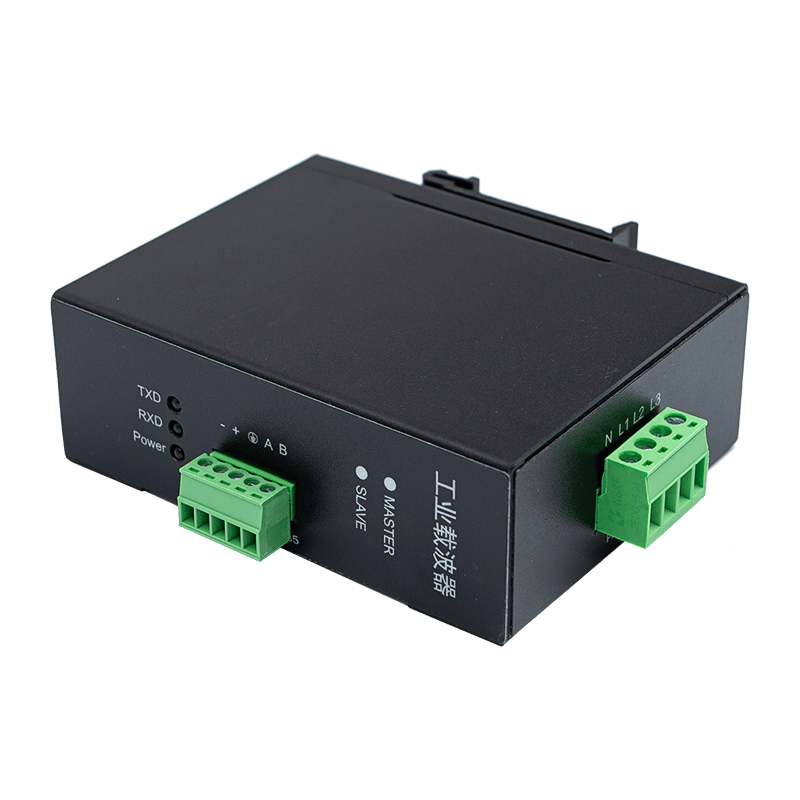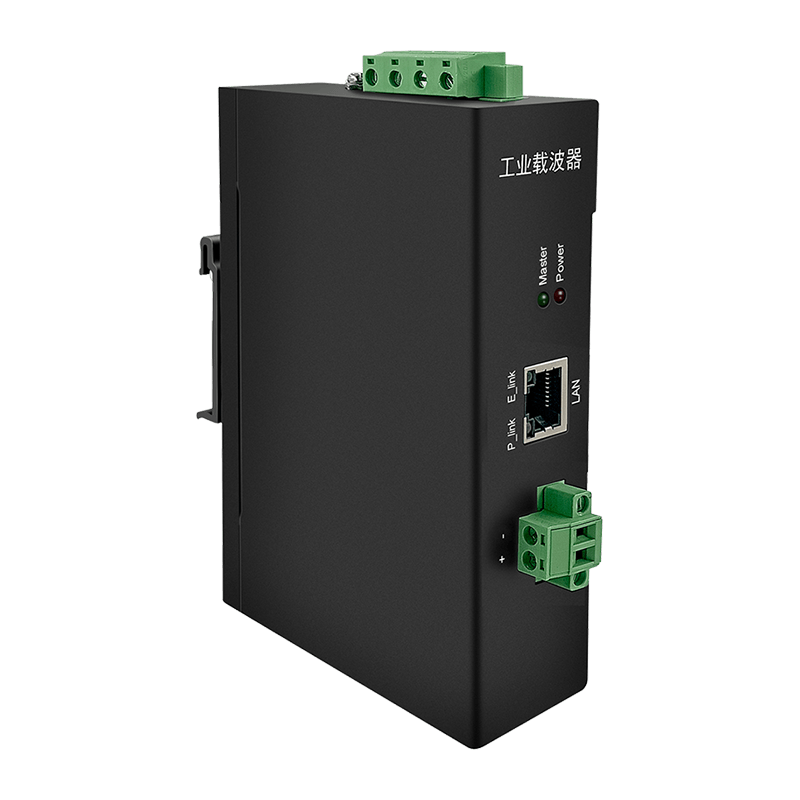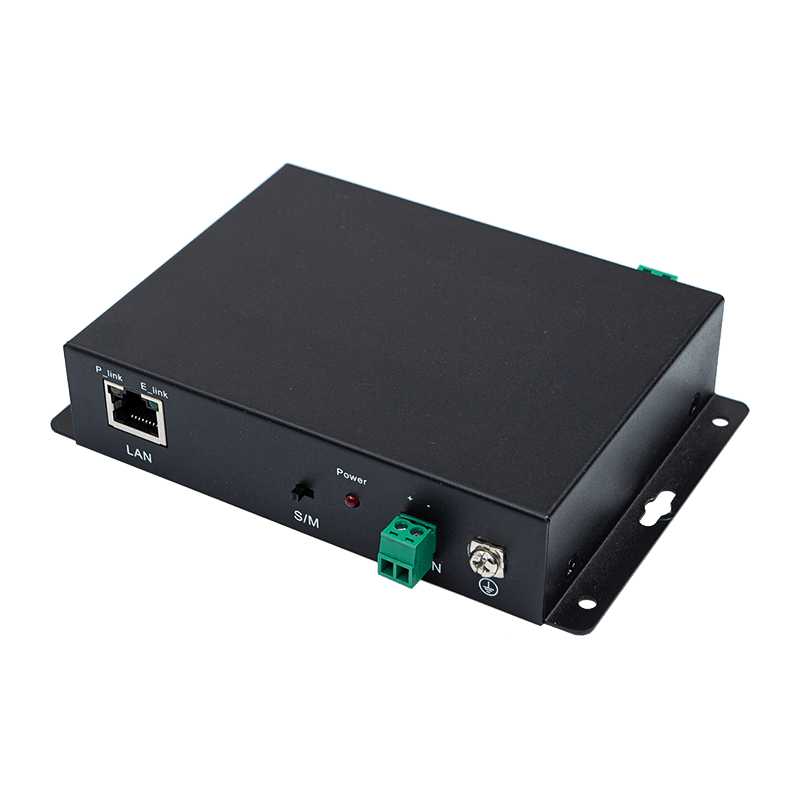


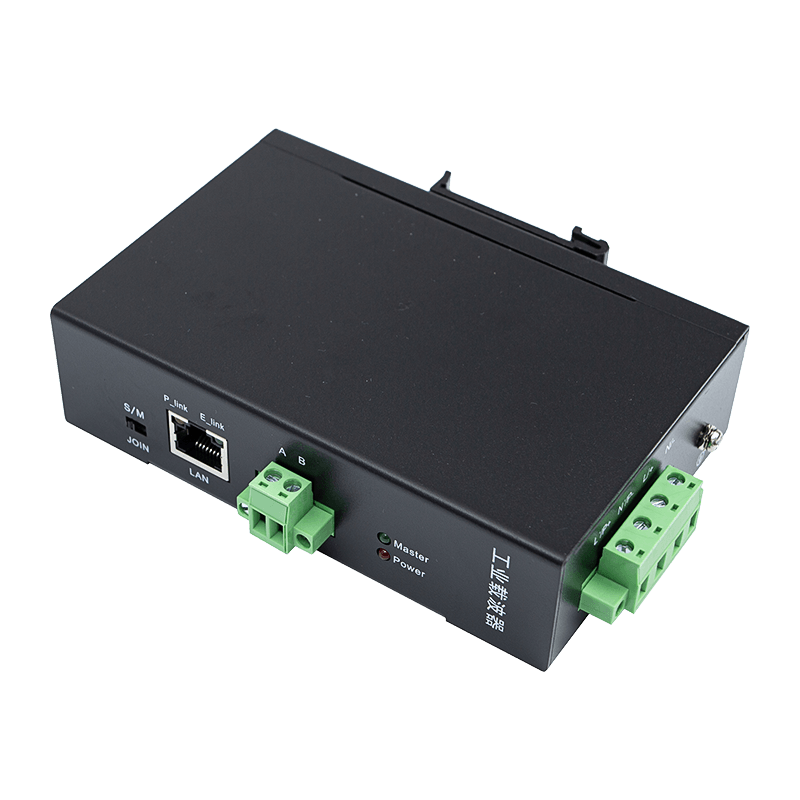
Industrial networks are changing rapidly. Factories, logistics systems, rail transit facilities, mines, parking structures, energy sites, and automated production lines all depend on stable data transmission, yet many of these environments were not originally designed for modern Ethernet cabling. The Three-Phase Gigabit Broadband Power Line Communication Device, model KS1000M, provides a practical answer: it transmits industrial Ethernet data through existing power lines, slip contact lines, or suitable carrier media, turning installed electrical infrastructure into a high-speed communication channel.
This product belongs to the High-Definition Power Line Communication category, often known as HD-PLC. It is designed for industrial Ethernet transparent transmission, with a maximum transmission bandwidth of 480 Mbps, long-distance communication of up to 800 meters over power lines, and up to 3000 meters over coaxial cable in suitable applications. It supports harsh industrial conditions, with an operating temperature range from minus 40 Celsius to 85 Celsius, rail-mounted installation, low power consumption, and strong anti-interference performance.
For many industrial users, the most important value of the device is not only speed. The real advantage is the ability to build a reliable data network without major rewiring, cable trenching, shutdowns, or expensive infrastructure reconstruction. By using existing power conductors or slip contact systems, the device helps reduce deployment time, project cost, maintenance complexity, and operational disruption.
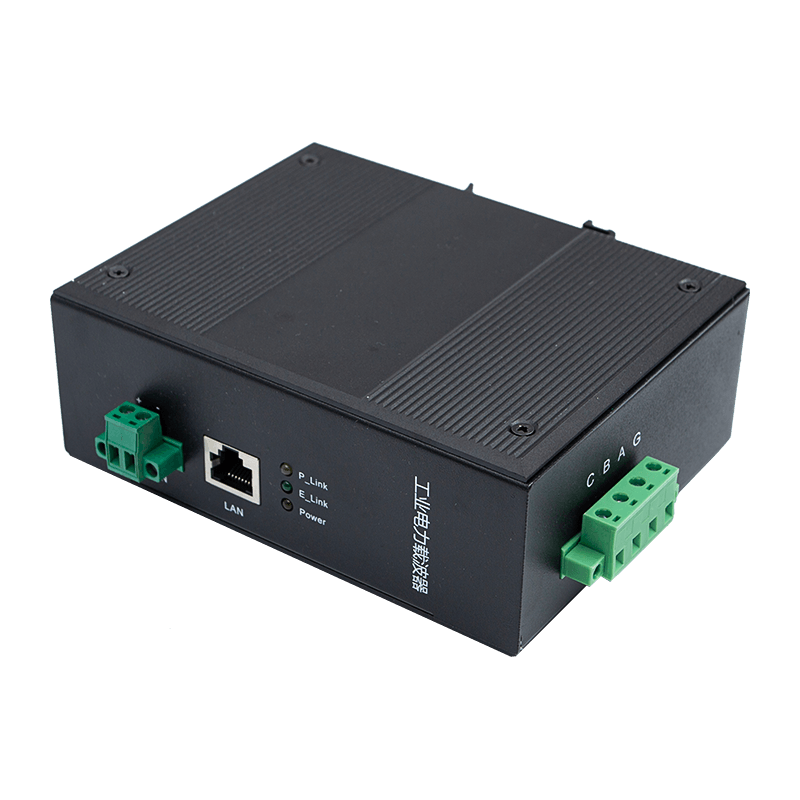
Three-Phase Gigabit Broadband Power Line Communication (PLC) Device
Product Overview
The KS1000M is an industrial-grade gigabit bandwidth power line carrier communication device based on IEEE 1901 technology. It uses OFDM modulation and demodulation, supports HomePlug AV and HomePlug AV2 standards, and conforms to the communication principles associated with high-definition power line communication. It is engineered for two-way, real-time, high-speed transmission through power lines or slip contact conductors, making it suitable for industrial environments where ordinary communication wiring is difficult, costly, or unreliable.
The device is designed for transparent Ethernet transmission. In practical terms, this means that existing Ethernet data can pass through the power line communication link without requiring the user to redesign the upper-layer network architecture. Industrial protocols such as TCP/IP, UDP, Modbus-TCP, Profinet, and other Ethernet-based systems can be transmitted through the link, depending on the application environment and system configuration.
The product supports multiple network topologies, including bus, star, tree, and hybrid structures. This flexibility is important in industrial applications because physical layouts are rarely simple. A warehouse sorting line, for example, may have long linear sections, branch conveyors, moving equipment, and control cabinets installed at different locations. A parking garage may include vertical lifting systems, distributed controllers, and mobile carriers. A rail or metro communication scenario may require long-distance transmission along continuous electrical paths. The KS1000M is built to support these diverse configurations.
Security is also part of the design. The device uses AES-128 bit encryption, providing a secure data transmission mechanism for industrial networks where unauthorized access, interference, or data manipulation can cause production losses or safety risks. In addition, the self-contained routing algorithm, self-routing capability, and self-organized networking design help improve deployment flexibility and network resilience.
Core Technical Strengths
The KS1000M combines several characteristics that are especially valuable for industrial communication. These include high bandwidth, long-distance transmission, industrial temperature tolerance, strong anti-interference capability, low packet loss, low latency, multiple power supply options, wide PLC channel voltage compatibility, and rail-type installation.
Its maximum transmission bandwidth reaches 480 Mbps. While actual throughput in any PLC system depends on line quality, noise environment, conductor type, distance, and installation structure, this bandwidth level gives the device a strong foundation for modern industrial applications. Many competitor power line communication devices are designed for basic metering, low-rate data acquisition, or simple control signaling. In contrast, the KS1000M is positioned for broadband industrial Ethernet transparency, allowing it to support higher data volumes and more demanding network functions.
The power line transmission distance can reach up to 800 meters, while coaxial cable transmission can reach up to 3000 meters. This long-distance capability is particularly useful where Ethernet cable limitations, fiber installation costs, mechanical movement, or safety constraints make conventional networking difficult. In many factories, extending a standard Ethernet link over long routes may require switches, repeaters, fiber converters, cabinets, or new cable trays. A power line communication solution can greatly simplify this structure when the installation environment is suitable.
The carrier frequency range of 2 MHz to 68 MHz allows the device to use broadband carrier technology while operating over existing conductors. OFDM modulation helps improve reliability by dividing data across multiple subcarriers, allowing the system to adapt better to channel conditions and interference. This is one reason the product can achieve strong stability in complex industrial electrical environments.
Technical Specification Table
Item |
Specification |
Industrial Value |
Product Type |
Industrial HD-PLC communication device |
Uses existing power lines or slip contact conductors for Ethernet data transmission |
Model |
KS1000M |
Designed for gigabit-class industrial power line communication applications |
Modulation |
OFDM |
Improves anti-interference performance and channel adaptability |
Ethernet Interface |
10 Mbps, 100 Mbps, and 1000 Mbps auto-adaptive |
Compatible with common industrial Ethernet equipment |
Maximum Transmission Bandwidth |
480 Mbps |
Supports broadband data transmission beyond basic low-speed control |
Transmission Distance |
Up to 800 meters over power line, up to 3000 meters over coaxial cable |
Reduces the need for additional repeaters or extensive rewiring |
Carrier Frequency |
2 MHz to 68 MHz |
Provides broadband PLC transmission capability |
Data Delay |
Within 10 ms |
Suitable for many real-time industrial communication scenarios |
Packet Loss Probability |
Less than 0.1 per mille |
Improves communication reliability for industrial systems |
Encryption |
AES-128 bit |
Protects data transmission against unauthorized access |
Operating Temperature |
Minus 40 Celsius to 85 Celsius |
Suitable for harsh industrial environments |
Power Consumption |
No more than 5 W |
Supports energy-efficient continuous operation |
Installation |
TS35 rail mounting |
Easy installation in industrial cabinets and control panels |
Advantages Over Conventional Communication Methods
Compared with traditional Ethernet cabling, the KS1000M can significantly reduce installation complexity. Running new network cables across a factory or logistics site often requires cable trays, conduit, drilling, trenching, electrical safety reviews, shutdown planning, and additional labor. In moving systems, such as sliding contacts, cranes, shuttles, and automated parking carriers, cable movement and wear can become serious issues. The power line communication approach allows data to travel through conductors that already exist for power delivery or contact transmission.
Compared with wireless communication, power line communication can offer more predictable behavior in certain industrial environments. Wireless systems may suffer from metal shielding, multipath reflection, signal blockage, electromagnetic interference, spectrum congestion, and security concerns. While wireless solutions are useful in many cases, they are not always ideal in mines, steel structures, underground facilities, dense warehousing systems, or equipment rooms with heavy electrical noise. A properly engineered PLC link can provide a more stable physical transmission path.
Compared with low-speed power line carrier devices, the KS1000M provides broadband capability. Many PLC products are designed primarily for simple meter reading, lighting control, or narrowband automation signals. These devices may not be suitable for industrial Ethernet transparency or higher data loads. The KS1000M addresses applications requiring higher bandwidth, lower delay, and support for modern Ethernet communication.
Compared with fiber optic solutions, the device may reduce cost and complexity in applications where power conductors are already available. Fiber is excellent for long-distance and high-noise environments, but it requires optical cables, termination work, transceivers, protective routing, and skilled installation. In moving or retrofit applications, fiber installation can be difficult. The KS1000M does not replace fiber in every scenario, but it provides a strong alternative when reuse of existing conductors is the priority.
Compared with ordinary commercial PLC adapters, the KS1000M is designed for industrial deployment. Commercial adapters are often intended for offices or residential environments, with moderate temperature ranges, less demanding electrical protection, and installation styles unsuitable for control cabinets. The KS1000M supports rail mounting, wide operating temperature, industrial-grade continuous operation, and voltage conditions associated with industrial power lines and slip contact systems.
Industrial Ethernet Transparency
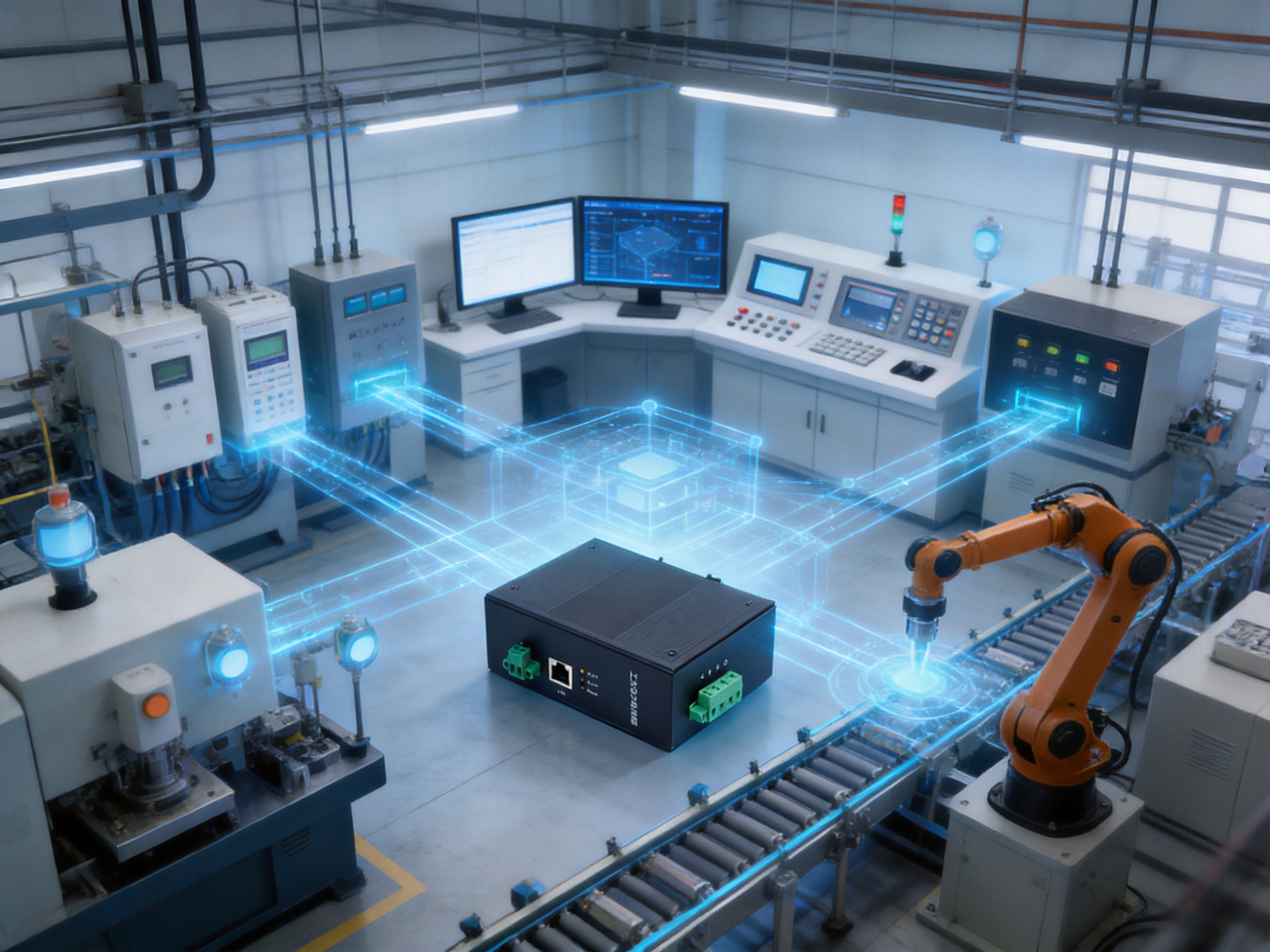
Transparent transmission is one of the most important features of this product. Industrial users usually prefer communication equipment that does not force them to rewrite software, redesign control logic, or replace existing Ethernet devices. The KS1000M is intended to act as a communication bridge, allowing Ethernet data to pass through the power line communication channel while preserving the usability of upper-layer protocols.
This transparent design is valuable for PLC controllers, industrial computers, sensors, gateways, HMIs, remote I/O devices, video monitoring equipment, energy management terminals, and distributed control systems. When a machine builder or system integrator needs to connect two Ethernet points but cannot easily install a dedicated data cable, the KS1000M can become the communication extension over the available conductor path.
Industrial Ethernet transparency also improves scalability. A factory may begin with a few connected devices and later add more equipment, monitoring points, or control cabinets. Because the product supports multiple topologies and a maximum node count of 64 for IGMP multicast management, it can support expansion in distributed networks. For applications such as logistics sorting, where equipment lines may expand or change layout, this flexibility can reduce future upgrade costs.
High Bandwidth and Low Latency for Practical Industrial Data
The maximum bandwidth of 480 Mbps gives the KS1000M a strong advantage in applications where conventional low-speed links are not enough. Industrial communication increasingly includes not only control commands but also diagnostic data, sensor records, condition monitoring, energy consumption data, maintenance information, and sometimes image or video data. A narrowband system can quickly become a bottleneck when multiple devices share the same communication path.
The product specification indicates data delay within 10 ms. This latency level is suitable for many industrial applications requiring near real-time communication, monitoring, or command transmission. It is important to note that deterministic motion control with extremely strict timing requirements should always be evaluated carefully in the actual application environment. However, for a large number of industrial networking scenarios, including equipment monitoring, distributed control, remote operation, logistics automation, and energy management, the combination of broadband throughput and low delay provides strong practical value.
The packet loss probability of less than 0.1 per mille further supports stable data flow. In industrial systems, even small communication interruptions can cause alarms, production delays, or maintenance interventions. A reliable link reduces the burden on operators and improves the overall availability of the production system.
Long-Distance Communication Without Major Infrastructure Changes
Distance is a major challenge in industrial networking. Standard copper Ethernet has length limitations and may require intermediate switches or repeaters. Installing fiber can solve distance problems but may require engineering work, new cable routes, and specialized tools. The KS1000M can transmit up to 800 meters over power lines and up to 3000 meters over coaxial cable in suitable conditions, making it highly attractive for large facilities.
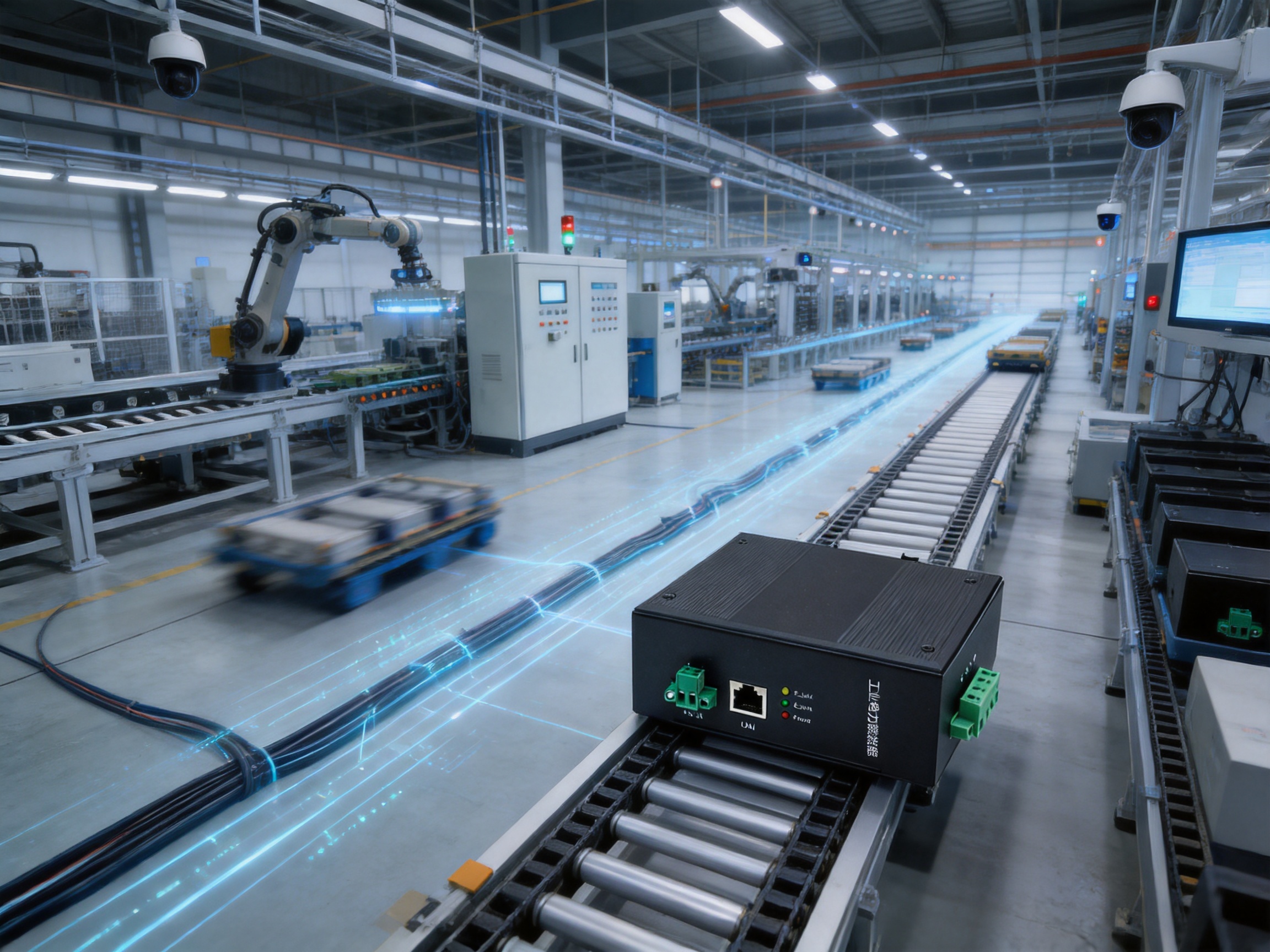
In mining applications, long tunnels and distributed equipment locations make communication infrastructure difficult. In oilfields, equipment may be spread across large areas where cable installation and maintenance are expensive. In warehouses and logistics sorting centers, conveyor lines and transfer points may extend across long distances. In three-dimensional parking garages, moving mechanisms and distributed controllers require reliable communication across vertical and horizontal paths. In rail and metro systems, long linear infrastructure creates continuous demand for stable data transmission. The KS1000M is designed for these difficult environments.
The ability to communicate through slip contact conductors is particularly valuable for moving equipment. Slip contact systems are commonly used where machines need power while moving along a rail or guide path. If data can be transmitted through the same or related conductor system, the user may avoid additional moving cables, cable reels, drag chains, or wireless links. This improves mechanical reliability and reduces maintenance work.
Power Supply Flexibility
The product supports a dual power supply design depending on the model configuration. The MStype can be powered through a DC 12 V to 48 V power supply port or can take power from the PLC port line. The MTtype supports DC 12 V to 48 V power supply. This flexibility gives system designers more options for cabinet wiring and field installation.
The PLC channel supports a wide range of electrical conditions. For the MStype AC configuration, the PLC channel interface is AC 85 V to 528 V at 50 Hz or 60 Hz. For DC, the range is DC 100 V to 745 V. For the MTtype AC configuration, the PLC channel supports 0 V to 500 V. These broad ranges help adapt the device to diverse industrial power environments.
When the voltage of the power line or slip contact conductor is within the supported range, the device can receive power through the PLC channel port in the applicable configuration. This reduces the need for separate local power supplies in certain installations, simplifying wiring and saving cabinet space.
Industrial Reliability in Harsh Environments
Industrial electronics must survive conditions that ordinary commercial devices cannot tolerate. Temperature extremes, vibration, electrical transients, humidity, dust, and continuous operation can all affect reliability. The KS1000M is designed for industrial use, with an operating temperature range from minus 40 Celsius to 85 Celsius and operating humidity from 10 percent to 95 percent without condensation.
The product supports 7 by 24 hour all-weather operation. This matters because industrial systems often run continuously. Warehouses operate around the clock, mines may require continuous monitoring, rail systems demand high availability, and automated production lines cannot tolerate frequent communication failures. A device designed only for occasional or office use would not be suitable for these demands.
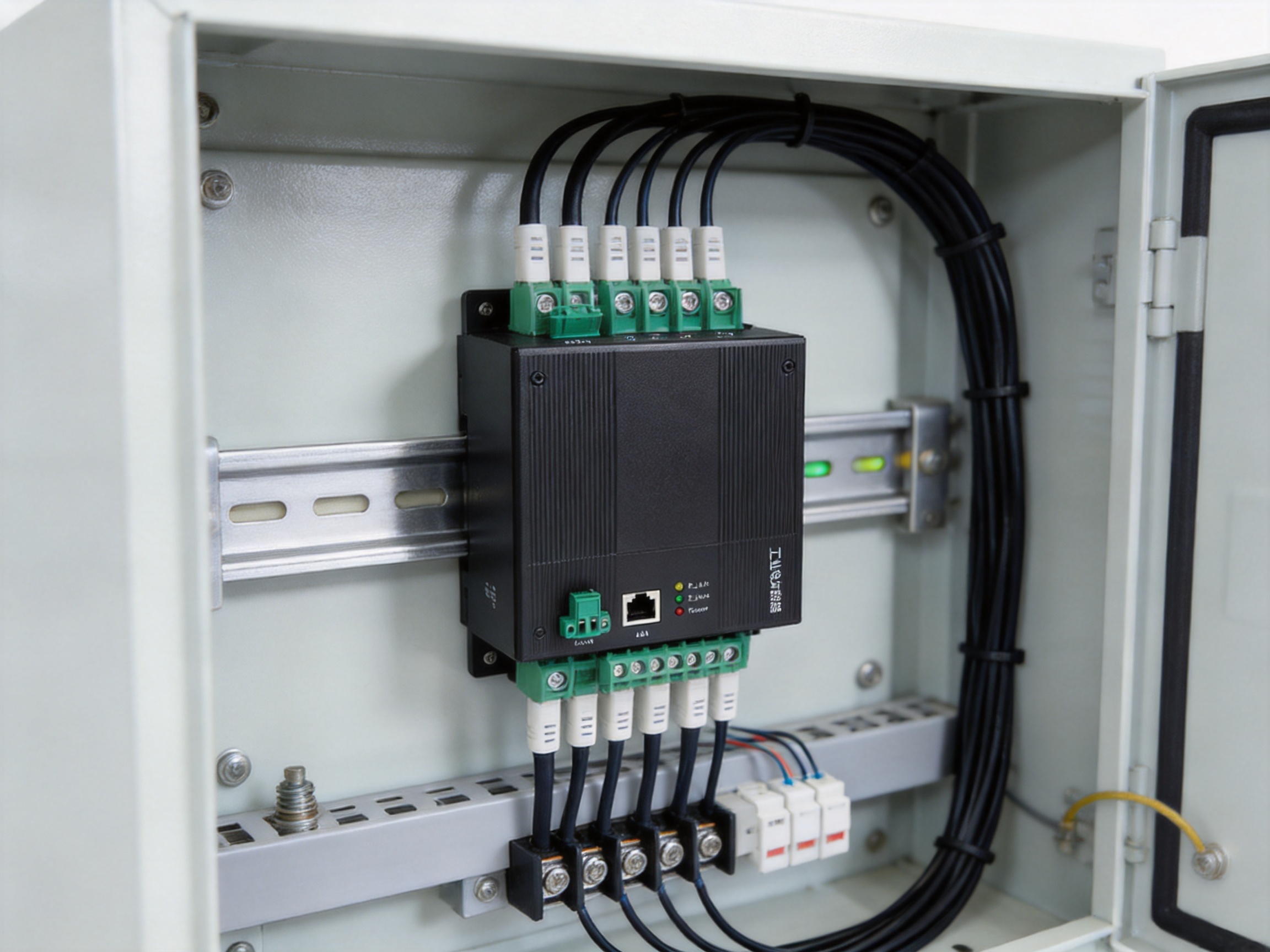
The rail-type TS35 installation method makes the product easy to mount inside standard industrial control cabinets. Rail mounting improves mechanical stability, simplifies installation, and supports neat wiring. For system integrators, this means faster commissioning and a professional cabinet layout.
Strong anti-interference performance is supported by OFDM technology, industrial design, and communication algorithms. Industrial power lines are noisy channels. Motors, inverters, switching power supplies, contactors, welding equipment, and other electrical loads can introduce interference. A successful industrial PLC device must be designed not only for ideal laboratory conditions but also for real factory environments. The KS1000M is positioned for this challenge.
Safety, Security, and Network Management
Security is increasingly important in industrial communication. As factories become more connected, communication links carry operational data, control signals, and maintenance information. Unauthorized access can cause production disruption or safety problems. The KS1000M uses AES-128 bit encryption to protect data transmission.
The product supports IGMP multicast protocols, with a maximum number of nodes of 64. Multicast management is useful in industrial networks where data needs to be distributed efficiently to multiple devices. For example, monitoring systems, update systems, or group communication functions can benefit from controlled multicast behavior.
The supported protocol and standards list includes IEEE 1901, IEEE 1905.1, IEEE 802.3, IEEE 802.3u, IEEE 802.3ab, HomePlug 1.0, HomePlug AV, HomePlug AV2, TCP/IP, UDP, Profinet, Modbus-TCP, QAM, QPSK, BPSK, ROBO, HS-ROBO, and Mini-ROBO. This broad compatibility helps the device integrate into different industrial Ethernet environments and communication systems.
The inclusion of multiple modulation and robustness modes reflects the practical need to adapt to changing line conditions. In a real electrical system, the communication path may not remain constant. Loads switch on and off, line impedance changes, equipment moves, and interference varies. A well-designed PLC device must maintain communication under these variations.
Manufacturing Strengths Behind the Product
ASY Electronics (JiaXing) Co., Ltd. is a high-tech enterprise focused on smart factory development. Its core capabilities include data sensing, intelligent connectivity, self-developed edge-layer hardware, and industrial data integration solutions. This background is important because a product such as the KS1000M is not a simple communication adapter. It is part of a broader industrial digitalization ecosystem that includes equipment condition monitoring, energy management, production optimization, wireless temperature monitoring, transmitters, flow meters, and automatic door control technologies.
A strong manufacturer does more than assemble components. It must understand industrial sites, communication protocols, electrical safety, enclosure design, thermal management, signal integrity, firmware stability, and quality control. In the case of industrial power line communication, the manufacturing challenge is especially demanding because the product must handle high-speed data while connected to noisy and sometimes high-voltage electrical environments.
Advanced manufacturing begins with engineering design. The device must be designed for electromagnetic compatibility, surge resistance, power isolation, thermal performance, and stable Ethernet communication. PCB layout is critical because high-frequency carrier signals from 2 MHz to 68 MHz require careful impedance control, grounding strategy, filtering, and separation between power and communication sections. Poor layout can lead to signal loss, unstable connection, overheating, or susceptibility to interference.
Component selection is another major strength. Industrial-grade components must be chosen for temperature range, reliability, tolerance, and long-term availability. A low-cost commercial component may pass a basic function test but fail after months of operation in a hot cabinet or cold outdoor installation. By using industrial design principles and strict component control, the manufacturer helps ensure that the device can support continuous service.
Manufacturing process control is equally important. A reliable industrial communication device benefits from controlled soldering processes, inspection, firmware programming, functional testing, communication performance verification, burn-in testing, and final quality checks. For rail-mounted equipment used in industrial panels, mechanical consistency also matters. Terminal blocks, housing fit, rail clips, labels, grounding points, and port alignment must be accurate to simplify installation and reduce field errors.
Testing is especially important for PLC products. Unlike ordinary Ethernet devices, a power line communication device must operate over a carrier channel that may include line noise, attenuation, impedance variation, and voltage conditions. Factory testing should verify Ethernet interface operation, PLC link establishment, bandwidth performance, power supply behavior, temperature-related stability, and electrical protection. A manufacturer with experience in industrial IoT hardware is better positioned to build repeatable test procedures and maintain product consistency.
ASY Electronics also provides industrial data integration solutions. This system-level understanding helps the company design communication products that fit real automation architectures rather than isolated laboratory demonstrations. Customers often need not only a device but also guidance on topology selection, power line condition evaluation, node placement, cabinet wiring, grounding, and integration with control systems. A manufacturer with solution experience can support better project outcomes.
Why the Device Stands Out Against Competitors
The KS1000M stands out because it combines broadband speed, industrial durability, flexible topology, wide operating temperature, secure transmission, and long-distance capability in one rail-mounted device. Many competing products focus on only one or two of these requirements. Some offer broadband speed but are designed for commercial environments. Some are industrial but only support low data rates. Some require dedicated cables or limited topology structures. Some lack robust security or flexible power options.
The first competitive advantage is bandwidth. With up to 480 Mbps transmission bandwidth, the product is suitable for more demanding data applications than ordinary narrowband PLC devices. This allows users to move beyond basic control signals and support richer industrial data flows.
The second advantage is distance. Up to 800 meters over power lines provides practical value in large industrial facilities. In many retrofit projects, the cost of distance is not only the cable itself but also labor, installation time, downtime, and future maintenance. Reusing power infrastructure can offer a major advantage.
The third advantage is industrial-grade environmental tolerance. Operation from minus 40 Celsius to 85 Celsius makes the product suitable for demanding sites. A device with a narrow temperature range may fail in outdoor cabinets, unheated facilities, hot electrical rooms, or enclosed industrial panels.
The fourth advantage is networking flexibility. Bus, star, tree, and hybrid topologies allow the system to fit physical reality instead of forcing the site to fit the communication product. This is especially important for logistics, parking, rail, and industrial automation projects where equipment is distributed across nonstandard paths.
The fifth advantage is transparent Ethernet support. The product is not limited to a proprietary communication format. It supports common Ethernet-related standards and protocols, making it easier to integrate with controllers, gateways, monitoring platforms, and industrial computers.
The sixth advantage is security. AES-128 bit encryption helps protect data transmission. In the age of connected factories, security cannot be treated as an optional feature.
The seventh advantage is installation convenience. TS35 rail mounting, compact dimensions of 105.2 mm by 53.5 mm by 136 mm, and low power consumption of no more than 5 W make the device suitable for control cabinet integration.
Application Scenario: Mines
Mines present severe communication challenges. Long distances, complex underground structures, high humidity, dust, vibration, and safety requirements all complicate network construction. Wireless signals may be limited by tunnel geometry and rock structures, while new cable installation can be expensive and difficult to maintain. Power line communication can be attractive when suitable electrical conductors already run through the site.
The KS1000M can help connect monitoring devices, control terminals, cameras, environmental sensors, and equipment controllers through existing power infrastructure. Its wide temperature tolerance and industrial design support operation in harsh conditions. Its long transmission distance reduces the need for repeated communication cabinets along the route.
Application Scenario: Oilfields and Energy Sites
Oilfields and energy facilities often include distributed equipment spread across large areas. Communication networks must support pumps, control units, monitoring terminals, metering systems, and safety equipment. Installing new data cables over long distances can be costly and time-consuming. Wireless communication may be affected by distance, terrain, metal equipment, or electromagnetic interference.
With long-distance power line communication, the KS1000M can support industrial Ethernet transmission where power conductors are already present. Its low power consumption and industrial reliability make it suitable for continuous monitoring and automation applications.
Application Scenario: Warehousing and Logistics Sorting
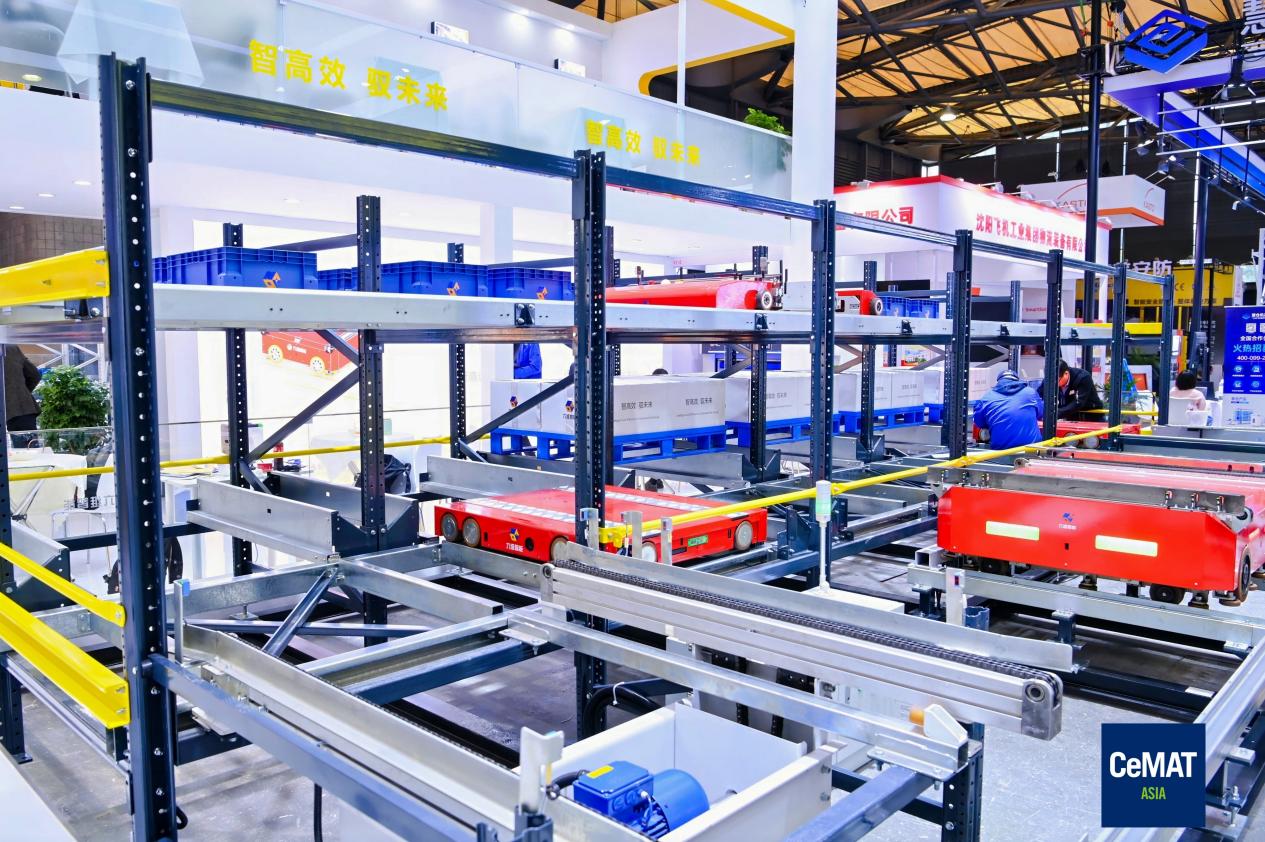
Modern warehouses rely on conveyors, sorters, transfer stations, barcode readers, controllers, sensors, and monitoring systems. These systems are often installed across large facilities and may change as operations expand. Communication cabling can become complicated, especially where equipment moves or where conveyor lines are modified.
The KS1000M supports bus, star, tree, and hybrid topologies, making it suitable for logistics layouts. It can reduce cabling work and support broadband data requirements for distributed control and monitoring. In retrofit projects, the ability to use existing power lines can shorten implementation time and reduce production interruption.
Application Scenario: Three-Dimensional Parking Garages
Automated parking systems include lifting platforms, moving carriers, sensors, safety interlocks, controllers, and management terminals. Communication may need to pass through moving sections, vertical structures, and distributed control points. Traditional cabling can suffer from mechanical wear, while wireless links may face shielding and interference from steel structures.
Power line or slip contact carrier communication can help deliver data to moving or distributed components. The KS1000M is therefore well matched to intelligent parking equipment where reliable control and monitoring are required.
Application Scenario: Railway and Metro Communication
Railway and metro systems are long linear environments with demanding reliability requirements. Communication infrastructure must support monitoring, control, safety, maintenance, and operational data. In some applications, existing conductors or suitable carrier media may be available for data transmission. The KS1000M offers long-distance communication and industrial stability, making it relevant to rail and metro supporting systems.
Its wide temperature range is especially important for rail-related infrastructure that may experience outdoor or semi-outdoor conditions. Its robust communication design helps address electrically noisy environments where trains, power systems, and control equipment operate together.
Application Scenario: Industrial Automation Control
In factories, the need for communication often grows faster than the original cable infrastructure. A production line may add new machines, sensors, gateways, energy meters, or condition monitoring devices. Installing additional Ethernet cable may be difficult if the line is already operating, if cable trays are full, or if the equipment layout is complex.
The KS1000M enables Ethernet data to move across existing power paths, helping factories expand digital connectivity. It supports the smart factory objective of collecting more data from equipment, managing energy more accurately, and improving process visibility. For manufacturing enterprises pursuing digital transformation, this type of communication technology can reduce barriers to implementation.
Design Considerations for Successful Deployment
Although the KS1000M offers strong performance, successful PLC deployment still requires correct engineering. Power line communication performance depends on line structure, conductor quality, distance, impedance, noise sources, grounding, load conditions, and the number of nodes. A professional site evaluation helps confirm that the communication channel is suitable for the intended application.
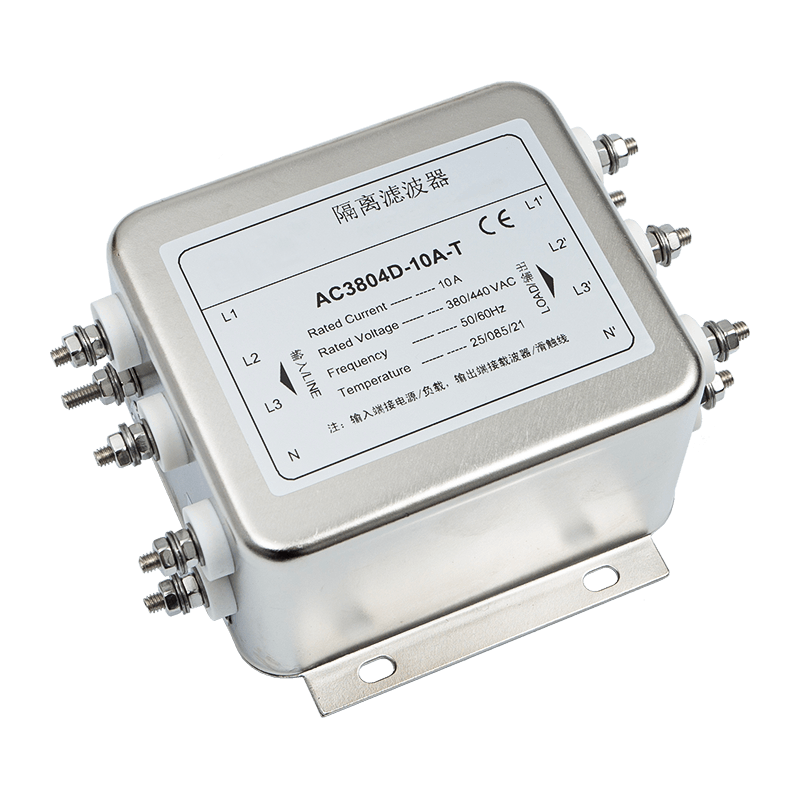
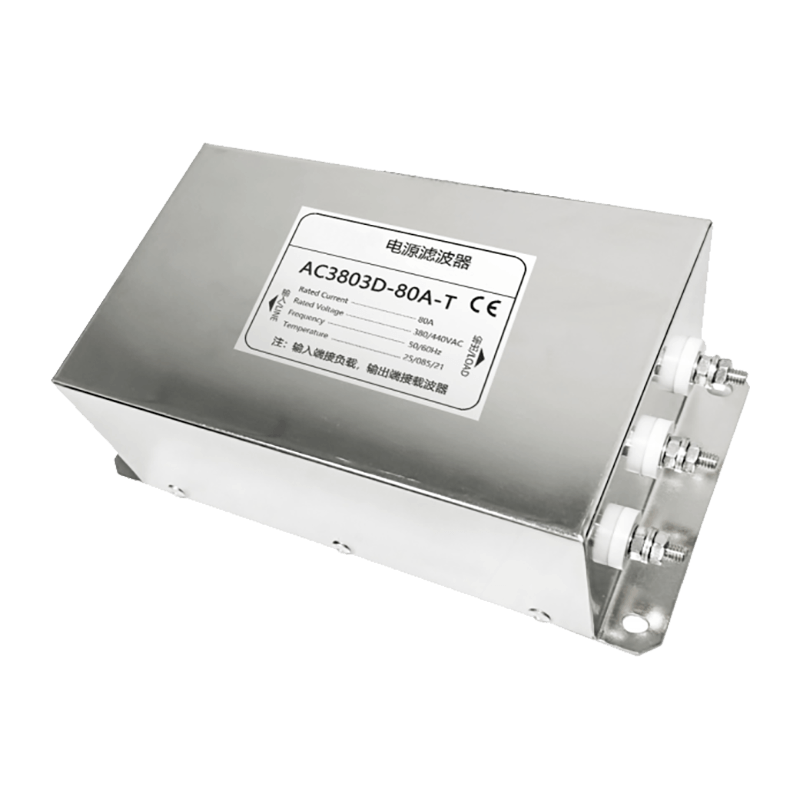
System designers should identify the transmission path, voltage level, conductor type, expected distance, electrical loads, and required data performance. They should also determine the topology, node positions, power supply method, grounding approach, and cabinet installation layout. For high-noise environments, filtering, isolation, or separation from severe interference sources may be required.
Because the device supports multiple topologies, users should select the structure that best matches the site. A bus topology may be appropriate for a long conveyor line. A star topology may be suitable for a central cabinet communicating with distributed branches. A tree topology may fit multi-level systems, while a hybrid structure can support complex layouts.
Network security planning should also be included. AES-128 bit encryption provides a strong foundation, but users should still apply good industrial cybersecurity practices, such as network segmentation, controlled access, strong device management, and secure configuration procedures.
Role in Smart Factory Development
Smart factories depend on data. Machines must report their status, energy consumption must be measured, production processes must be optimized, and maintenance decisions must be based on real operating conditions. However, data cannot create value unless it can move reliably from equipment to control systems, edge gateways, and management platforms.
The KS1000M supports this transformation by making industrial connectivity easier in existing facilities. Many factories contain older machines and infrastructure that were not designed for modern digital systems. Rewiring an entire plant can be expensive and disruptive. Power line communication provides a way to add connectivity without completely rebuilding communication infrastructure.
ASY Electronics, as an industrial IoT communication solution provider, combines hardware development with application understanding. Its product range, including broadband power line carriers, wireless temperature monitoring systems, transmitters, flow meters, and automatic door controllers, reflects a broad approach to industrial digitalization. The KS1000M fits this strategy by providing the intelligent connectivity layer needed for equipment monitoring, refined energy management, and production process optimization.
Energy Efficiency and Sustainability
The device consumes no more than 5 W, supporting efficient continuous operation. In a single installation, this may seem small, but in large industrial networks with many communication nodes, power consumption matters. Low-power communication equipment reduces operating cost, heat generation, and cabinet cooling requirements.
More importantly, the product can support sustainability by enabling better energy management. When industrial equipment is connected, factories can collect more accurate energy data, identify inefficient processes, monitor abnormal consumption, and optimize production. Communication infrastructure is therefore a foundation for green manufacturing.
Reusing existing power lines also reduces material consumption. Instead of installing large amounts of new cable, conduit, tray, and accessories, users can often make use of conductors already present in the facility. This can reduce waste, construction impact, and installation-related downtime.
Maintenance Benefits
Maintenance teams benefit from communication systems that are stable, easy to install, and easy to inspect. Rail-mounted devices in control cabinets are more accessible than hidden cables or distributed wireless nodes. LED indicators and network monitoring methods can help technicians identify communication conditions and troubleshoot issues.
Because the KS1000M supports transparent Ethernet, maintenance teams can often use familiar network tools and industrial communication methods. This reduces training burden and helps integrate the device into existing maintenance workflows.
Long-distance PLC transmission can also reduce the number of intermediate network devices. Fewer switches, repeaters, power supplies, and cable junctions may mean fewer failure points. In harsh environments, reducing device count can improve system reliability.
Q&A Section
What is the main purpose of the KS1000M?
The KS1000M is designed to transmit industrial Ethernet data through existing power lines, slip contact conductors, or suitable carrier media. It allows users to build high-speed communication links without installing dedicated data cables in many applications.
What makes this product different from ordinary PLC adapters?
Ordinary PLC adapters are often designed for homes or offices. The KS1000M is an industrial-grade device with rail mounting, wide temperature tolerance from minus 40 Celsius to 85 Celsius, long-distance capability, Ethernet transparency, AES-128 bit encryption, and support for industrial communication environments.
What is the maximum bandwidth of the device?
The maximum transmission bandwidth is 480 Mbps. Actual performance depends on the power line condition, distance, interference, topology, and installation environment.
How far can the device transmit data?
The device can transmit up to 800 meters over power lines and up to 3000 meters over coaxial cable in suitable application conditions.
Does the product support industrial Ethernet protocols?
Yes. It supports transparent Ethernet transmission and is compatible with common Ethernet-related standards and protocols, including TCP/IP, UDP, Profinet, and Modbus-TCP, depending on system requirements and configuration.
Can the device work in harsh environments?
Yes. It is designed for industrial environments and supports operation from minus 40 Celsius to 85 Celsius, with operating humidity from 10 percent to 95 percent without condensation.
What installation method does it use?
The product uses TS35 rail mounting, which is suitable for industrial control cabinets and electrical panels.
Is the communication secure?
Yes. The device supports AES-128 bit encryption, helping protect transmitted data from unauthorized access.
Which topologies are supported?
The device supports bus, star, tree, and hybrid network topologies, giving engineers flexibility for different industrial layouts.
Why is OFDM important?
OFDM divides data across multiple subcarriers, helping improve communication stability and resistance to interference in complex electrical environments.
Can it reduce project cost?
In many retrofit or long-distance applications, it can reduce cost by using existing power lines or slip contact conductors instead of requiring new Ethernet or fiber cabling. Savings may include lower labor cost, less downtime, and fewer infrastructure changes.
Is it suitable for smart factory projects?
Yes. The device supports the connectivity layer required for smart factory applications such as equipment monitoring, energy management, production optimization, and distributed industrial data collection.
Conclusion
The Three-Phase Gigabit Broadband Power Line Communication Device KS1000M provides a powerful and practical solution for industrial Ethernet transmission over existing electrical infrastructure. It combines 480 Mbps maximum bandwidth, up to 800 meters of power line transmission, up to 3000 meters over coaxial cable, OFDM modulation, AES-128 bit encryption, low latency, low packet loss, and industrial-grade environmental performance.
Its value is especially clear in environments where traditional cabling is difficult, wireless communication is unstable, or retrofit cost is high. Mines, oilfields, warehouses, logistics sorting systems, automated parking garages, railway and metro facilities, and industrial automation projects can all benefit from the ability to transmit data through existing power or slip contact lines.
Compared with many competitors, the KS1000M stands out through its combination of broadband performance, industrial durability, flexible topology, secure communication, rail-mounted installation, and system-level applicability. Supported by the manufacturing and engineering strengths of ASY Electronics, the product is more than a communication device; it is an enabling technology for industrial digital transformation.
For enterprises pursuing reliable smart factory connectivity, refined energy management, equipment condition monitoring, and production process optimization, the KS1000M offers a practical path toward stronger, faster, and more scalable industrial communication.
References
IEEE Standard 1901, Broadband over Power Line Networks: Medium Access Control and Physical Layer Specifications.
IEEE Standard 802.3, Ethernet Working Group Standards for Local and Metropolitan Area Networks.
IEEE Standard 1905.1, Convergent Digital Home Network for Heterogeneous Technologies.
HomePlug Powerline Alliance, HomePlug AV and HomePlug AV2 Technical Specifications.
European Standard EN 50561, Power Line Communication Apparatus Used in Low-Voltage Installations.
Industrial Ethernet Application Guidelines for Automation Systems.
OFDM Communication Principles for Broadband Carrier Transmission.
Industrial IoT Connectivity and Edge Hardware Design Practices.