

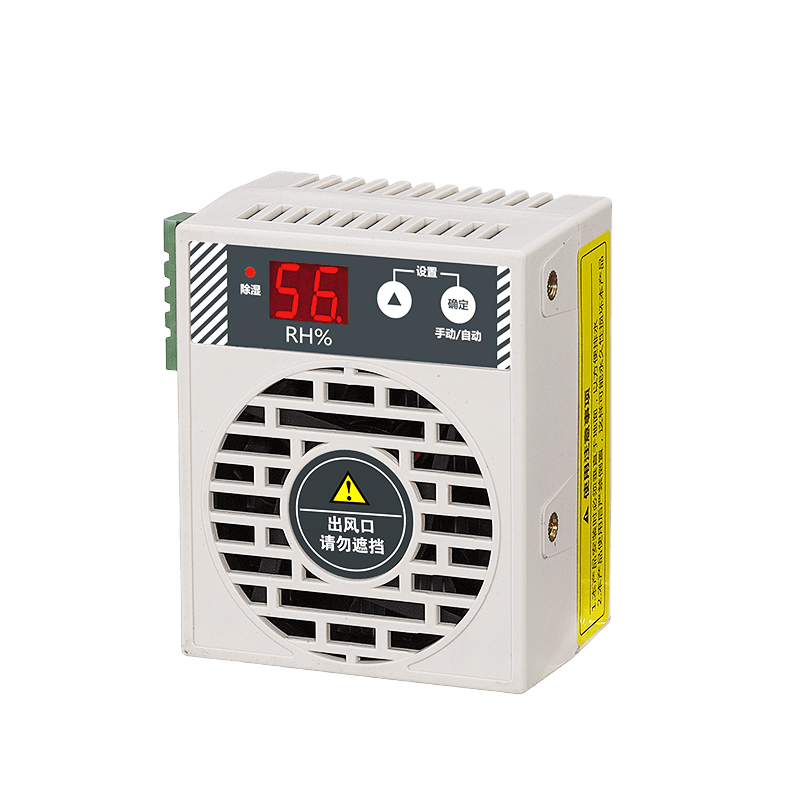
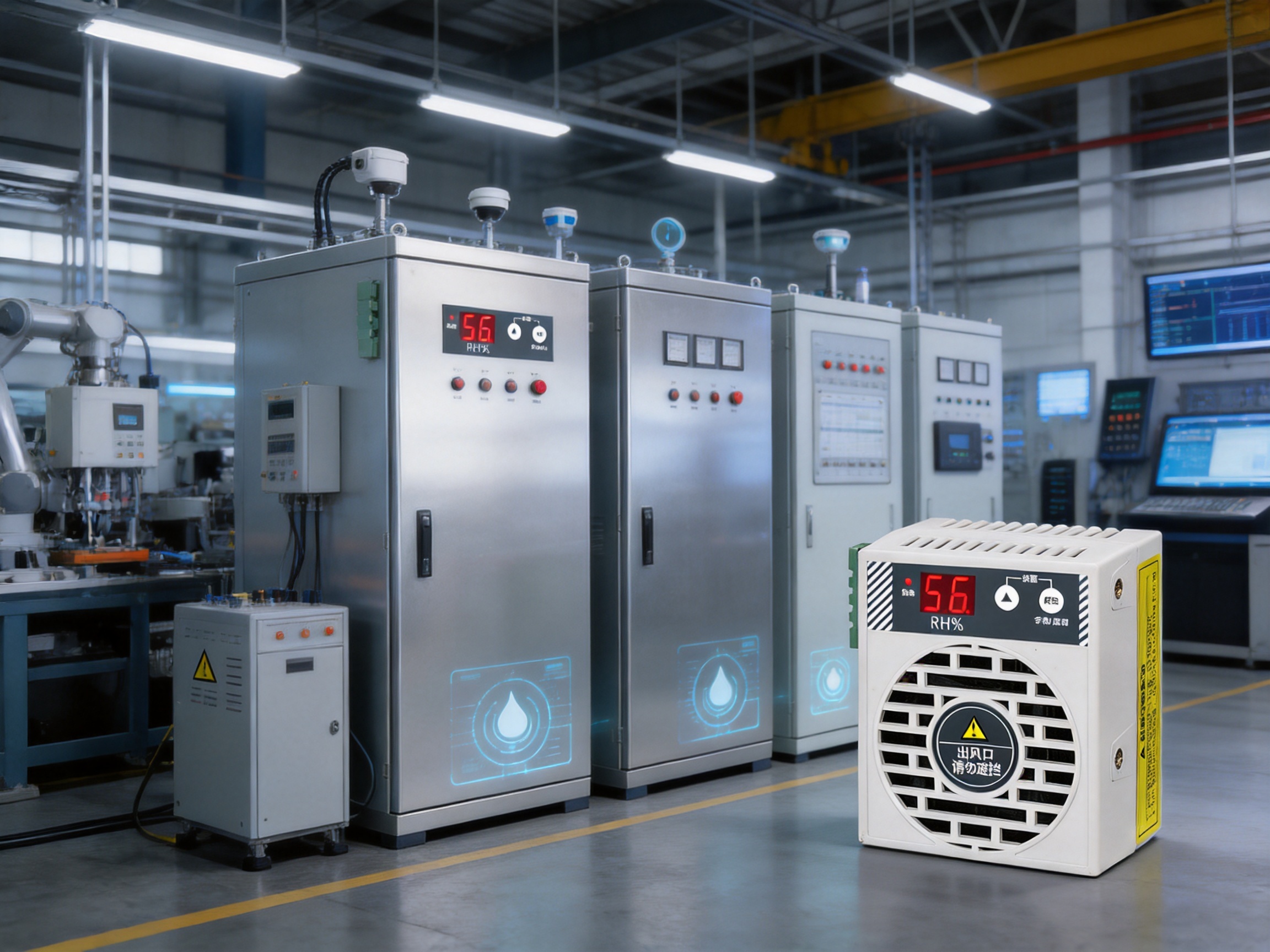
In modern industrial environments, humidity is not a minor comfort parameter; it is a critical operating condition that directly affects electrical safety, sensor accuracy, equipment service life, production continuity, and the total cost of ownership of automation systems. The Mini Dehumidifier, model KL-CS15W, is designed for closed industrial spaces where moisture control must be reliable, compact, energy-conscious, and easy to integrate. Using semiconductor refrigeration dehumidification, intelligent humidity thresholds, and a wide AC/DC power supply range, this product provides practical and stable protection for cabinets, control panels, distribution boxes, measurement compartments, and other enclosed industrial installations.
Unlike large room dehumidifiers that are often oversized for electrical cabinets, or passive desiccant packs that provide limited and inconsistent protection, the KL-CS15W Mini Dehumidifier actively draws humid air through a controlled dehumidification duct, condenses water vapor, and discharges the collected water through a pipe outside the cabinet. This active design supports continuous, targeted humidity management where sensitive components need protection most. For facilities pursuing intelligent manufacturing, refined energy management, and equipment condition monitoring, a compact dehumidifier such as this can become an important part of a broader reliability strategy.
ASY Electronics (JiaXing) Co.,Ltd. develops industrial IoT communication and sensing solutions with a focus on data sensing, intelligent connectivity, and industrial-grade edge-layer hardware. The company’s portfolio includes broadband power line carrier solutions, wireless temperature monitoring systems, industrial transmitters, thermal gas mass flow meters, and automatic door controllers. Within this wider ecosystem, the KL-CS15W Mini Dehumidifier supports the same industrial objective: helping equipment operate in a more stable, safe, and measurable environment.
Product Overview
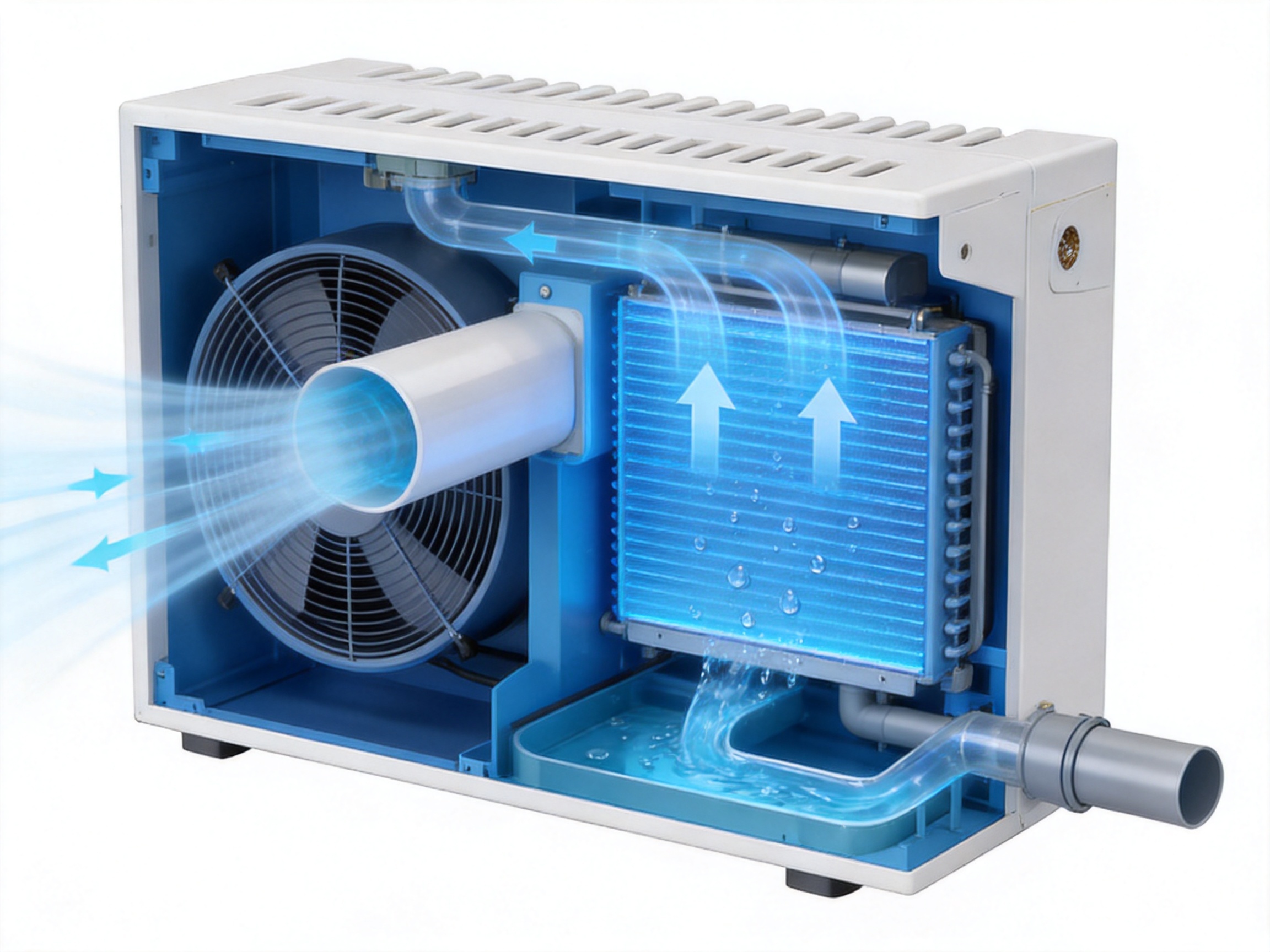
The KL-CS15W Mini Dehumidifier is an intelligent semiconductor refrigeration dehumidifier for closed spaces. Its operating principle is straightforward but effective. A fan actively draws humid air from the enclosed space into the dehumidification duct. As the humid air passes through the semiconductor refrigeration mechanism, water vapor condenses into liquid water. The condensed water is then guided out of the cabinet through a water pipe, reducing the humidity inside the enclosure and helping prevent moisture-related failures.
The product is designed around practical industrial requirements. It supports a working power supply of AC/DC 85 to 260 V, enabling use in many types of control cabinets and electrical installations without requiring a narrow or specialized power source. It provides one channel of temperature and humidity input, with a temperature range from -9 to +80 degrees Celsius and a humidity measurement range from 5% RH to 95% RH. Its humidity resolution is 1% RH, and it offers a product power level of 15 W when starting, making it suitable for applications where space and energy consumption must be managed carefully.
The dehumidifier provides two operating concepts: automatic humidity-controlled operation and manual continuous dehumidification. In automatic mode, when the dehumidification function is not manually activated, the unit starts dehumidifying when ambient humidity rises above the maximum humidity value, defined as the humidity setting value plus the humidity hysteresis value. It stops dehumidifying when ambient humidity drops below the minimum humidity value, defined as the humidity setting value minus the humidity hysteresis value. This hysteresis-based logic helps prevent frequent start-stop cycling and supports stable control. In manual mode, once dehumidification is turned on manually, the unit continues to dehumidify until the function is manually turned off.
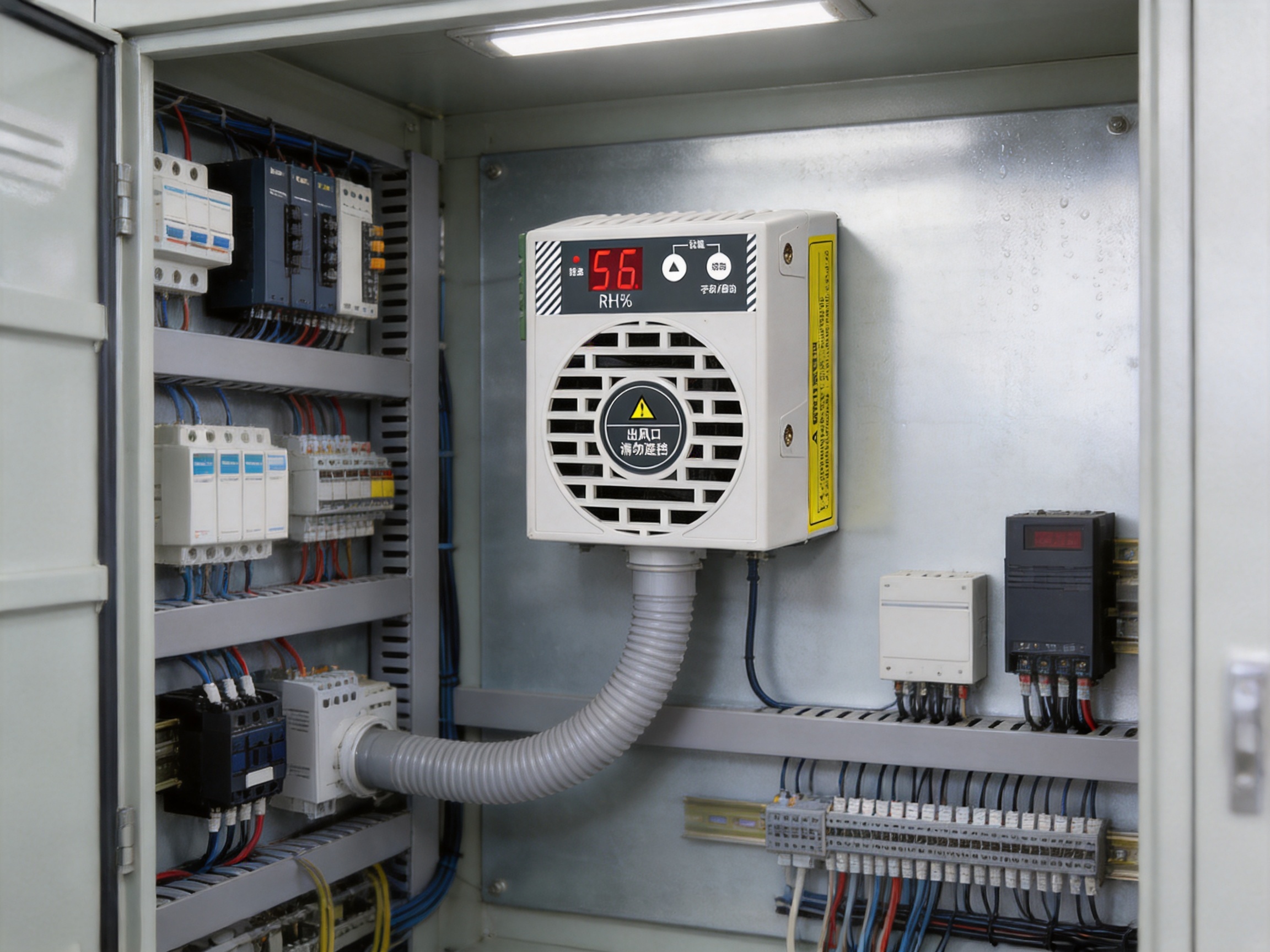
The product is especially relevant for closed electrical cabinets, power distribution panels, communication enclosures, industrial control boxes, environmental monitoring compartments, and automation equipment housings. These spaces often experience condensation caused by temperature variation, seasonal humidity, rain exposure, underground installation, or poor ventilation. Even when the external environment appears acceptable, internal temperature gradients may create condensation points on metal plates, terminal blocks, circuit boards, and wiring interfaces. The KL-CS15W is designed to address this type of localized moisture risk.
Why Humidity Control Matters in Industrial Enclosures
Humidity inside an enclosure can lead to multiple forms of degradation. The most visible is condensation, where water droplets form on cold surfaces when moist air reaches its dew point. In electrical equipment, condensation can cause leakage currents, insulation resistance reduction, corrosion, short circuits, and intermittent faults that are difficult to diagnose. Even without visible droplets, sustained high relative humidity accelerates oxidation of metal contacts, aging of insulation materials, and degradation of electronic components.
For industrial operators, moisture-related failures can be costly because they often appear randomly. A circuit board may pass inspection during daytime operation but fail during early morning temperature drops. A terminal may corrode slowly over months before causing signal instability. A sensor reading may drift because moisture affects its internal electronics or cable junction. The result can be unplanned downtime, service labor, spare parts consumption, and reduced confidence in the automation system.
In smart factories, reliable data is essential. Equipment condition monitoring, energy management, and production process optimization all depend on stable sensing, communication, and control. If humidity compromises measurement accuracy or communication hardware, the entire digital productivity strategy becomes weaker. Therefore, enclosure-level humidity control is not merely a protective accessory; it is part of the foundation of reliable industrial data.
Traditional approaches include ventilation, heaters, desiccant packs, and large cabinet air conditioners. Each can be useful in some situations, but each also has limitations. Ventilation may introduce dust, corrosive gases, or more humid air. Heaters reduce relative humidity by raising temperature but do not remove water from the enclosure. Desiccant packs must be replaced or regenerated and may lose effectiveness quickly in high humidity. Large air conditioning systems may be expensive, bulky, and unnecessary for small enclosures. The KL-CS15W provides an active moisture removal method in a compact format, making it well suited for cabinets where direct dehumidification is preferred over indirect temperature-only control.
Core Working Principle
The KL-CS15W uses semiconductor refrigeration to remove moisture from air. Semiconductor refrigeration is based on the thermoelectric effect, where heat is transferred from one side of a module to another when electric current passes through it. In a dehumidification device, the cold side creates a surface below the dew point of the incoming humid air. When humid air contacts or passes near the cold surface, water vapor condenses. The collected water is then discharged through a pipe.
This principle offers several advantages for compact industrial dehumidifiers. First, it avoids the need for a traditional compressor system, which can be larger, heavier, and mechanically more complex. Second, it supports a compact structure suitable for enclosures. Third, it can be controlled electronically, allowing integration with humidity sensing and threshold logic. Fourth, it provides targeted moisture removal rather than simply heating air.
The fan-assisted air path is important. Passive condensation surfaces are limited by slow natural airflow, but the KL-CS15W actively draws humid air into the dehumidification duct. This improves the contact between humid air and the cooling mechanism and allows the unit to process air inside the enclosure more consistently. The discharge pipe then removes condensed water from the cabinet, helping ensure that the moisture is not simply relocated inside the enclosure.
The control method is position control, and the automatic operation logic is designed with humidity hysteresis. Hysteresis is a practical feature because humidity readings naturally fluctuate. Without hysteresis, a dehumidifier might repeatedly switch on and off near the target setpoint, reducing component life and creating unstable control. By using an upper threshold for starting and a lower threshold for stopping, the KL-CS15W supports more stable and efficient operation.
Technical Parameters
The following table summarizes the key technical parameters of the KL-CS15W Mini Dehumidifier.
Parameter |
Specification |
Practical Meaning |
Input specifications |
1-channel temperature and humidity input module |
Supports integrated monitoring of the enclosed environment. |
Working power supply |
AC/DC 85-260 V |
Compatible with a wide range of industrial power conditions. |
Temperature range |
-9 to +80 degrees Celsius |
Allows monitoring across broad cabinet temperature variations. |
Control method |
Position control |
Provides practical threshold-based operation. |
Humidity measurement range |
5% RH to 95% RH |
Covers common enclosure humidity conditions. |
Product power |
15 W when the dehumidifier starts |
Suitable for low-power industrial cabinet applications. |
Humidity resolution |
1% RH |
Enables clear humidity indication and control decisions. |
Temperature resolution |
1 degree Celsius |
Provides practical temperature monitoring granularity. |
Working environment |
0-50 degrees Celsius, non-corrosive environment, humidity not higher than 85% RH |
Defines appropriate operating conditions for reliable use. |
Basic error |
Humidity: plus or minus 3% RH from 10% RH to 90% RH; plus or minus 5% RH from 0% RH to 99% RH |
Provides industrially useful accuracy for humidity management. |
Key Product Advantages
Active Moisture Removal Rather Than Passive Absorption
One of the strongest advantages of the KL-CS15W is that it actively removes moisture. Passive desiccant products only absorb water until they become saturated. They may be suitable for shipping, temporary storage, or very small sealed compartments, but they often require frequent replacement in operating industrial cabinets. The KL-CS15W, by contrast, condenses water vapor and discharges liquid water through a pipe. This makes it more appropriate for continuous use in cabinets exposed to recurring humidity.
Compact Semiconductor Refrigeration Design
Compared with compressor-based systems, semiconductor refrigeration supports a more compact device structure. This is important because control cabinets are often crowded with breakers, PLCs, relays, communication modules, terminal blocks, power supplies, meters, and cable ducts. A compact dehumidifier must fit without disrupting wiring layout or maintenance access. The KL-CS15W is designed for such enclosed applications, offering targeted dehumidification without the space demand of larger climate control equipment.
Wide Power Supply Compatibility
The AC/DC 85-260 V working power supply range is a practical advantage over products with narrow power requirements. Industrial sites may use different control voltages, and equipment may be installed in different regions or cabinet standards. Wide power compatibility reduces engineering complexity, simplifies inventory, and supports easier replacement across multiple systems. For system integrators, this can reduce the need for additional power conversion devices.
Intelligent Automatic Control With Hysteresis
The humidity setting value and hysteresis logic help the product operate only when needed in automatic mode. This is an advantage over simple always-on devices that consume unnecessary energy or over basic switches that chatter around a setpoint. By starting above the maximum humidity threshold and stopping below the minimum humidity threshold, the unit helps stabilize humidity while reducing frequent switching. This is particularly useful in environments where humidity changes gradually over daily temperature cycles.
Manual Continuous Dehumidification Option
There are times when an operator may want continuous dehumidification, such as after cabinet maintenance during rainy weather, after water exposure, during commissioning, or before restarting equipment after long shutdown periods. The manual mode gives users direct control. Once manually turned on, the dehumidifier continues operating until manually turned off. This dual-mode approach gives the product flexibility for both routine automatic protection and special maintenance situations.
Useful Measurement Range and Resolution
With a humidity measurement range of 5% RH to 95% RH and 1% RH resolution, the KL-CS15W provides practical environmental visibility. Operators can understand whether the enclosure is in a safe range, whether humidity is rising due to external conditions, and whether dehumidification is reducing risk. The temperature range from -9 to +80 degrees Celsius also supports awareness of cabinet conditions that can contribute to condensation.
Advantages Over Common Competing Solutions
Compared With Desiccant Bags
Desiccant bags are inexpensive and simple, but their performance depends on capacity, sealing quality, and replacement discipline. In many industrial facilities, desiccants are installed and then forgotten. Once saturated, they no longer protect the equipment. They also do not provide active air circulation or controlled humidity thresholds. The KL-CS15W offers a more engineered solution by actively drawing air, condensing moisture, and discharging water outside the cabinet. For equipment that must operate continuously, this active approach can be more reliable than relying on consumable absorption material.
Compared With Cabinet Heaters
Cabinet heaters are widely used to reduce condensation risk. However, a heater does not remove water from the enclosure; it only increases air temperature, thereby reducing relative humidity temporarily. When the heater is off or when surfaces cool, moisture may still condense. Heating can also increase thermal stress on sensitive components and may waste energy if used continuously. The KL-CS15W directly removes water vapor, making it a more suitable solution when the objective is true dehumidification rather than temperature compensation alone.
Compared With Ventilation Fans
Ventilation fans exchange air between the cabinet and the external environment. This can help when external air is cooler or drier, but it can be harmful in dusty, humid, polluted, or corrosive environments. Ventilation may also compromise enclosure protection levels. The KL-CS15W works within a closed space and removes moisture through condensation and drainage, making it useful where operators want to limit air exchange with the external environment.
Compared With Large Industrial Dehumidifiers
Large industrial dehumidifiers are designed for rooms, warehouses, basements, or production areas. They are not optimized for small control cabinets. They may require floor space, ducting, higher power, and more maintenance. The KL-CS15W addresses the problem at the enclosure level, where moisture affects components directly. This localized approach can be more efficient because it treats the small volume that needs protection instead of conditioning an entire room.
Compared With Compressor-Based Cabinet Climate Systems
Compressor-based systems can provide cooling and dehumidification, but they are often larger, heavier, and more expensive. They may be necessary in high-heat applications, yet many cabinets do not need full air conditioning. When the primary risk is humidity and condensation rather than excessive heat load, a semiconductor mini dehumidifier can be a more economical and compact choice. The KL-CS15W provides focused humidity control with a simpler structure suitable for many cabinet protection scenarios.
Application Scenarios
Electrical Control Cabinets
Electrical control cabinets frequently contain PLC modules, relays, signal conditioners, power supplies, and terminal blocks. These components are vulnerable to moisture, especially at terminals and circuit boards. The KL-CS15W helps reduce moisture accumulation in the cabinet, supporting stable signal transmission and reducing the risk of corrosion-related faults.
Power Distribution Cabinets
Power distribution cabinets may experience condensation due to outdoor installation, underground cable rooms, seasonal temperature changes, or nighttime cooling. Moisture can reduce insulation performance and increase safety risk. A mini dehumidifier provides active protection in the enclosed space and helps maintain safer operating conditions for electrical distribution equipment.
Communication and Industrial IoT Enclosures
Industrial communication devices, including edge gateways, power line communication modules, wireless monitoring receivers, and data acquisition units, require stable environmental conditions. Moisture can affect connectors, antennas, circuit boards, and signal integrity. The KL-CS15W can help protect communication enclosures that support smart factory data infrastructure.
Sensor and Monitoring Cabinets
Wireless temperature monitoring systems, transmitters, and flow measurement systems often depend on precise electronics. Enclosures used for sensor hubs or signal processing units should avoid high humidity that may lead to drift or malfunction. By helping maintain a controlled humidity environment, the mini dehumidifier supports measurement reliability.
Outdoor Equipment Boxes
Outdoor boxes are exposed to sun, rain, wind, and large temperature swings. Even sealed boxes can trap humid air during installation or maintenance. As temperatures fall, condensation can form inside. The KL-CS15W is suitable for closed spaces where active dehumidification and drainage are required, provided the specified working environment requirements are met.
Automation Systems and Machine Cabinets
Automated production equipment often includes local control cabinets mounted near machines. These cabinets may be exposed to washdown areas, humid workshops, compressed air exhaust, or temperature variation. Moisture protection can improve the stability of drives, controllers, sensors, and network modules inside the cabinet.
Design Philosophy: Practical Intelligence for Industrial Use
The KL-CS15W reflects a practical industrial design philosophy. Instead of adding unnecessary complexity, the product focuses on the functions that matter most: air circulation, semiconductor condensation, water discharge, humidity sensing, automatic threshold operation, and manual control. This balance supports reliability and ease of use.
Industrial users often prefer devices that are simple to understand, easy to install, and stable over long periods. The dehumidifier’s automatic logic can be explained clearly to maintenance technicians: when humidity rises above the upper threshold, the device starts; when humidity falls below the lower threshold, it stops. This transparent behavior helps build confidence during commissioning and troubleshooting.
The wide working power supply range also reflects field practicality. A product installed in multiple cabinet types must tolerate different power arrangements. By supporting AC/DC 85-260 V, the unit can be used across various systems with less adaptation. This reduces wiring changes and simplifies equipment standardization.
The product’s low starting power of 15 W supports energy-conscious operation. In large factories with many cabinets, even small power savings per cabinet can matter. When combined with automatic humidity control, the product can support a more efficient cabinet protection strategy than continuous heating or oversized climate control.
Manufacturing Strengths Behind the Product
ASY Electronics (JiaXing) Co.,Ltd. is positioned as a high-tech enterprise serving the development of future smart factories. Its core mission emphasizes efficient, reliable, and green industrial systems. This background is important because a dehumidifier for industrial cabinets is not merely a plastic housing and a fan; it is part of an industrial reliability chain. The company’s experience in data sensing, intelligent connectivity, and edge-layer hardware supports the development of products that must operate dependably in real industrial environments.
Advanced manufacturing for this type of product requires attention to component selection, assembly consistency, electrical safety, sensor calibration, environmental verification, and functional testing. The semiconductor refrigeration mechanism must be assembled to ensure efficient heat transfer and stable condensation performance. The fan path must be consistent so humid air is effectively drawn through the dehumidification duct. The water drainage path must be designed to guide condensed water out of the enclosure. The control electronics must reliably interpret temperature and humidity signals and activate dehumidification according to defined logic.
The company’s broader product lines also demonstrate manufacturing capability across multiple industrial technologies. Broadband power line carriers require expertise in communication performance, electromagnetic compatibility, and stable operation over power networks. Wireless temperature monitoring systems require sensing accuracy, wireless reliability, and low-power design. Industrial transmitters and thermal gas mass flow meters require measurement stability and process compatibility. Automatic door controllers require motion control and safety logic. These capabilities contribute to a manufacturing culture focused on precision, repeatability, and practical reliability.
For customers, this matters because the quality of a mini dehumidifier is not judged only on the day it is installed. It is judged after months and years of operation inside a cabinet, often without constant supervision. A manufacturer with industrial IoT and sensing experience is better equipped to understand long-term field requirements, including environmental stress, power supply variation, signal stability, and maintenance needs.
Process Control and Quality Assurance
Reliable production begins with controlled incoming materials. Semiconductor refrigeration components, fans, sensors, power modules, wiring terminals, housings, and drainage parts must meet defined specifications. Variations in any of these parts can affect final performance. For example, a fan with insufficient airflow could reduce dehumidification efficiency; a sensor with poor stability could cause inaccurate operation; a poor drainage connection could allow water to remain inside the cabinet. Effective material inspection helps reduce these risks.
During assembly, process consistency is essential. The contact between refrigeration components and heat transfer structures must be managed carefully. The air duct path should remain unobstructed. Electrical wiring should be secure and organized. The housing should provide mechanical protection and support the intended installation method. Each production step should be performed according to standardized work instructions so that the final product is repeatable rather than dependent on individual operator habits.
Functional testing is equally important. A finished unit should be checked for power-on behavior, fan operation, sensor response, control logic, and dehumidification activation. For humidity control products, the manufacturer should verify that the device responds correctly to humidity threshold conditions. Water discharge design should be inspected to ensure condensation can be guided out as intended. Electrical safety checks help confirm that the unit is suitable for industrial power conditions.
In addition to product-level testing, a company serving industrial customers must support traceability. Traceability allows production batches, component sources, and test records to be reviewed if a field issue occurs. This is valuable for continuous improvement and customer support. When manufacturers combine traceable production with engineering feedback, products can improve over time based on real operating experience.
Integration With Smart Factory Strategies
Smart factories rely on connected devices, but connectivity alone is not enough. The physical environment around those devices must also be stable. Humidity control is one of the practical measures that helps protect the edge-layer infrastructure used for industrial digitalization. The KL-CS15W supports this goal by protecting cabinets that may contain communication modules, monitoring devices, transmitters, and controllers.
For example, a factory may use broadband power line communication to connect distributed equipment. It may use wireless temperature monitoring sensors to monitor electrical joints or busbars. It may use industrial transmitters and flow meters to support energy management and process optimization. All these systems require reliable enclosures. If moisture causes connector corrosion or circuit instability, the data layer becomes unreliable. A compact dehumidifier helps preserve the operating environment for these intelligent systems.
The product also supports refined maintenance practices. Instead of waiting for moisture-related failures, operators can implement preventive humidity control. Cabinets in high-risk areas can be equipped with active dehumidification. Maintenance personnel can set humidity thresholds based on site conditions and use manual mode after service work or during high-humidity events. This approach aligns with condition-based maintenance and reliability-centered maintenance principles.
In energy management, localized solutions are often more efficient than broad environmental conditioning. Instead of dehumidifying an entire room to protect a few cabinets, a facility can install targeted cabinet dehumidifiers where risk is highest. This reduces unnecessary energy use and supports green manufacturing objectives. The KL-CS15W’s compact design and automatic operation make it suitable for this targeted strategy.
Installation and Usage Considerations
Successful performance depends not only on the product itself but also on correct application. The enclosure should be evaluated for volume, sealing condition, heat sources, cable entries, external exposure, and drainage path. The KL-CS15W is intended for closed spaces, so excessive air leakage may reduce performance by allowing humid air to enter continuously. Cable glands, door seals, and panel penetrations should be maintained properly.
The water discharge pipe must be routed so condensed water exits the cabinet safely. The pipe should avoid kinks, upward loops that trap water, or positions where water can flow back into the enclosure. Proper drainage is essential because the purpose of dehumidification is to remove water from the protected space. Maintenance personnel should periodically check that the drain path remains clear.
The dehumidifier should be installed where airflow is not blocked. Components, wiring ducts, or documents should not obstruct the air inlet or outlet. Good internal air circulation helps the device process humid air more effectively. In larger cabinets, placement should consider where condensation is most likely to occur, such as near cold metal surfaces or cable entry points.
The working environment should also match the product specification. The stated working environment is 0-50 degrees Celsius in non-corrosive environments with humidity not higher than 85% RH. If the cabinet is exposed to corrosive gas, conductive dust, extreme temperature, or direct water ingress, additional protective measures may be required. A dehumidifier is one part of an enclosure protection system and should be applied together with proper cabinet design.
When setting automatic humidity thresholds, users should consider the sensitivity of installed components and the normal humidity profile of the site. A very low setpoint may cause unnecessary operation, while a very high setpoint may not provide adequate protection. Hysteresis should be selected to avoid frequent switching while maintaining safe humidity levels. During commissioning, technicians can monitor performance across several days to confirm that the settings are appropriate.
Maintenance and Long-Term Reliability
The KL-CS15W is designed for practical use, but any industrial device benefits from periodic inspection. Maintenance should include checking the air path, fan operation, drainage pipe, electrical connections, and cabinet sealing. If dust accumulates around the air duct, airflow may decline. If the drainage pipe is blocked, condensed water may not discharge properly. If cabinet seals are damaged, humid air may enter faster than the dehumidifier can remove moisture.
Maintenance intervals should be determined by site conditions. A clean indoor control room may require only occasional inspection, while an outdoor cabinet or humid workshop may require more frequent checks. Maintenance personnel should pay special attention after storms, washdown operations, cabinet relocation, or major wiring changes. Any event that introduces moist air into the cabinet may justify manual dehumidification.
Long-term reliability also depends on correct electrical installation. Power connections should match the specified AC/DC 85-260 V range and follow site electrical standards. Wiring should be secured to avoid vibration-related loosening. If the cabinet contains high electromagnetic noise sources, such as variable frequency drives or switching power equipment, wiring layout should follow good industrial practice to reduce interference with sensing and control circuits.
Because the product includes humidity measurement, calibration awareness is important. The specified humidity basic error is suitable for industrial control, but users should understand that humidity sensors can be affected by contamination, aging, or extreme exposure. If a cabinet is part of a critical system, periodic comparison with a reference instrument may be useful.
Economic Value and Total Cost of Ownership
The value of a mini dehumidifier should be considered in relation to the cost of the equipment it protects. A control cabinet may contain expensive controllers, drives, communication modules, sensors, and safety components. The cost of downtime can exceed the cost of hardware replacement, especially in continuous production. Moisture-related failures may also be difficult to trace, causing repeated maintenance visits and hidden productivity losses.
By reducing humidity risk, the KL-CS15W can help lower the probability of corrosion, insulation degradation, and intermittent electrical faults. This can contribute to longer component life and fewer emergency repairs. The product’s automatic operation also helps avoid unnecessary energy consumption compared with continuous heating or oversized climate conditioning. Its wide power supply compatibility can reduce engineering costs and spare inventory complexity.
For original equipment manufacturers and system integrators, using a compact intelligent dehumidifier can improve the perceived reliability of their cabinets. Customers increasingly expect automation systems to operate in diverse environments, not only in ideal factory rooms. Integrating active humidity control can differentiate a cabinet design from lower-cost alternatives that rely only on passive protection.
For end users, the product supports preventive maintenance. Instead of reacting to moisture damage after failures occur, operators can address the environmental cause. This is often more economical than replacing corroded terminals, troubleshooting random alarms, or losing production time due to cabinet faults.
How the Product Supports Green and Reliable Manufacturing
Green manufacturing is not only about reducing direct energy consumption; it is also about extending equipment life, reducing waste, and improving system efficiency. Moisture-related failures create waste through damaged electronics, replacement parts, service travel, and production interruptions. A product that helps prevent such failures contributes indirectly to sustainability.
The KL-CS15W’s low-power and localized dehumidification approach supports efficient protection. Rather than conditioning large spaces unnecessarily, it focuses on the cabinet volume where protection is needed. Automatic threshold control further supports efficient operation by activating dehumidification only when humidity conditions require it in automatic mode.
Reliable manufacturing also depends on stable automation. If sensors, communication devices, and controllers remain protected, production data becomes more trustworthy. Better data supports better energy management, process optimization, and predictive maintenance. In this sense, a mini dehumidifier can support the larger digital and sustainable transformation of industrial facilities.
Customer Support and Industrial Solution Capability
ASY Electronics (JiaXing) Co.,Ltd. provides more than individual products; it serves industrial customers with solutions related to equipment condition monitoring, refined energy management, and production process optimization. This solution-oriented background benefits customers selecting the KL-CS15W because humidity control is often connected to broader equipment reliability concerns.
Customers may need guidance on where to apply dehumidification, how to protect communication enclosures, how to improve sensing reliability, or how to standardize cabinet environmental management. A manufacturer experienced in industrial IoT communication and sensing can better understand these use cases. The company’s product range across power line communication, wireless monitoring, transmitters, flow meters, and automatic controllers demonstrates familiarity with real industrial systems rather than isolated consumer-style devices.
The company is located in Jiaxing City, Zhejiang Province, and can be contacted by phone at +86-18157343325 or by email at [email protected] for product inquiries. This direct industrial sales and engineering communication channel is important for customers who need technical clarification, project support, or product selection assistance.
Frequently Asked Questions
What is the main purpose of the KL-CS15W Mini Dehumidifier?
The main purpose is to reduce humidity inside closed industrial spaces such as electrical cabinets, control boxes, communication enclosures, and monitoring compartments. It actively condenses water vapor and discharges the collected water outside the cabinet through a pipe.
How does the dehumidifier work?
It uses a fan to draw humid air into a dehumidification duct. The air passes through a semiconductor refrigeration mechanism, where water vapor condenses into liquid water. The water is then discharged from the cabinet through a drainage pipe.
What is the difference between automatic mode and manual mode?
In automatic mode, the product starts when ambient humidity is above the upper threshold and stops when humidity falls below the lower threshold. In manual mode, the product continues dehumidifying until the user manually turns it off.
Why is humidity hysteresis important?
Humidity hysteresis prevents frequent on-off cycling near the setpoint. It creates a start threshold and a stop threshold, helping the product operate more smoothly and improving control stability.
Can this product replace a cabinet heater?
In many humidity-focused applications, it can provide advantages over a heater because it removes water from the cabinet rather than only warming the air. However, the best choice depends on the cabinet environment, temperature conditions, and condensation risk.
What power supply does the product support?
The KL-CS15W supports a working power supply of AC/DC 85-260 V, making it suitable for many industrial electrical systems.
What humidity range can it measure?
The humidity measurement range is 5% RH to 95% RH, with a humidity resolution of 1% RH.
What temperature range is supported?
The temperature range is -9 to +80 degrees Celsius for measurement. The specified working environment is 0-50 degrees Celsius in non-corrosive environments with humidity not higher than 85% RH.
Where should the drainage pipe be routed?
The drainage pipe should be routed outside the cabinet in a way that prevents blockage, backflow, or water accumulation. It should remain clear so condensed water can leave the protected enclosure.
Is the product suitable for outdoor cabinets?
It can be used in closed spaces such as outdoor equipment boxes if the application meets the product’s working environment requirements and the cabinet is properly designed. Outdoor use should consider sealing, drainage, temperature, corrosion, and direct water ingress protection.
How does it compare with desiccant packs?
Desiccant packs absorb moisture passively and become saturated over time. The KL-CS15W actively removes moisture through condensation and drainage, making it more suitable for continuous or recurring humidity conditions.
Why choose this product from an industrial IoT solution manufacturer?
A manufacturer with experience in sensing, communication, and industrial edge hardware better understands the environmental challenges faced by cabinets containing smart factory devices. This background supports practical design, manufacturing control, and application guidance.
Conclusion
The KL-CS15W Mini Dehumidifier offers a focused, intelligent, and compact solution for humidity control in industrial enclosures. By using semiconductor refrigeration, fan-assisted airflow, water discharge, and automatic hysteresis-based control, it provides active moisture removal where sensitive electrical and electronic equipment needs protection. Its AC/DC 85-260 V power compatibility, 1-channel temperature and humidity input, broad measurement range, and manual operating option make it practical for many cabinet-level applications.
Compared with passive desiccants, heaters, ventilation fans, and oversized room dehumidifiers, the KL-CS15W provides a balanced solution for enclosed spaces. It removes moisture directly, avoids unnecessary air exchange, supports controlled operation, and fits into compact industrial environments. For factories, system integrators, equipment manufacturers, and maintenance teams, it can help reduce moisture-related failures and support more reliable digital infrastructure.
Behind the product is the broader industrial capability of ASY Electronics (JiaXing) Co.,Ltd., a high-tech enterprise focused on smart factory development, industrial IoT communication, data sensing, and intelligent connectivity. The company’s manufacturing strengths, experience across industrial hardware categories, and solution-oriented approach provide customers with confidence that the dehumidifier is designed not as an isolated accessory but as part of a larger reliability and smart manufacturing ecosystem.
In an era when industrial productivity depends on stable equipment, accurate data, and sustainable operation, cabinet humidity control deserves serious attention. The KL-CS15W Mini Dehumidifier helps address this need with practical intelligence, compact engineering, and industrial-purpose design.
References
1. ASY Electronics product technical material for KL-CS15W Mini Dehumidifier.
2. Industrial control cabinet environmental protection practices, electrical equipment maintenance guidelines.
3. Thermoelectric refrigeration principles and applications in compact dehumidification systems.
4. Reliability-centered maintenance concepts for automation and electrical control systems.
5. Industrial humidity control and condensation prevention references for enclosed electrical equipment.