

Industrial digitalization depends on a simple promise: data must move reliably wherever machines, sensors, controllers, cameras, and edge devices are installed. In many factories, mines, robotics systems, mobile platforms, and automated production lines, the physical reality is far from simple. Equipment may rotate, travel, submerge, vibrate, or operate in high-electromagnetic-noise environments. Installing a dedicated Ethernet cable in addition to a power cable can be expensive, fragile, or even impossible. A DC four-port broadband powerline transceiver solves this problem by carrying Ethernet data and DC power over the same two-core conductor, enabling long-distance industrial networking without complicated rewiring.
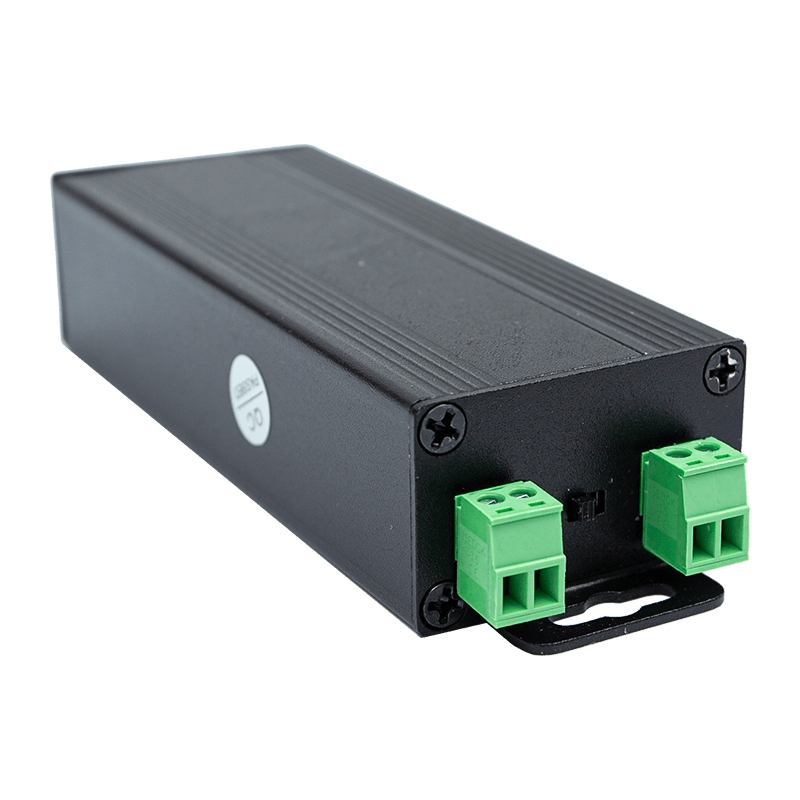
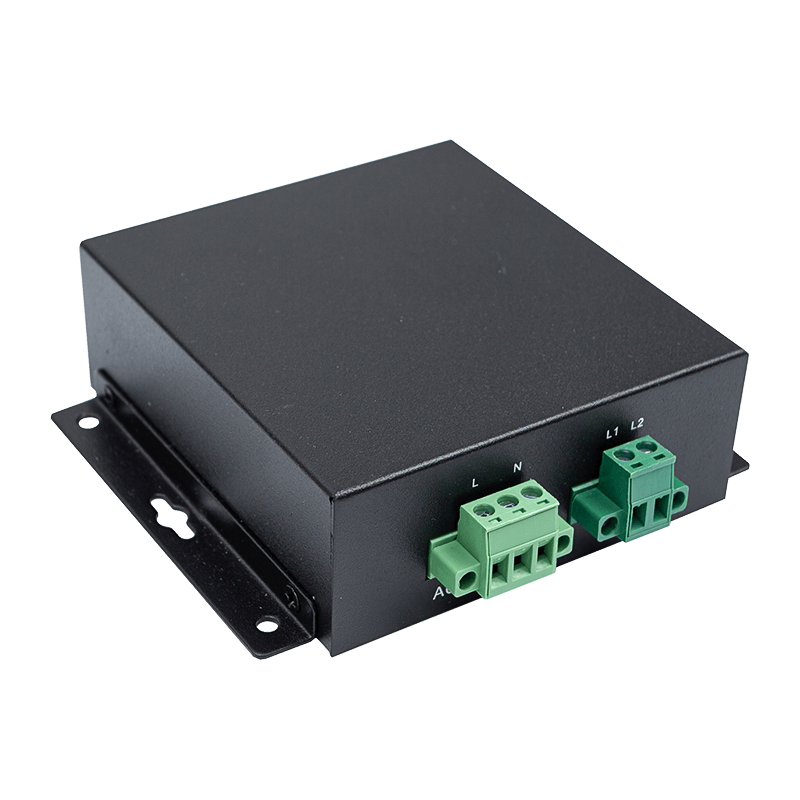
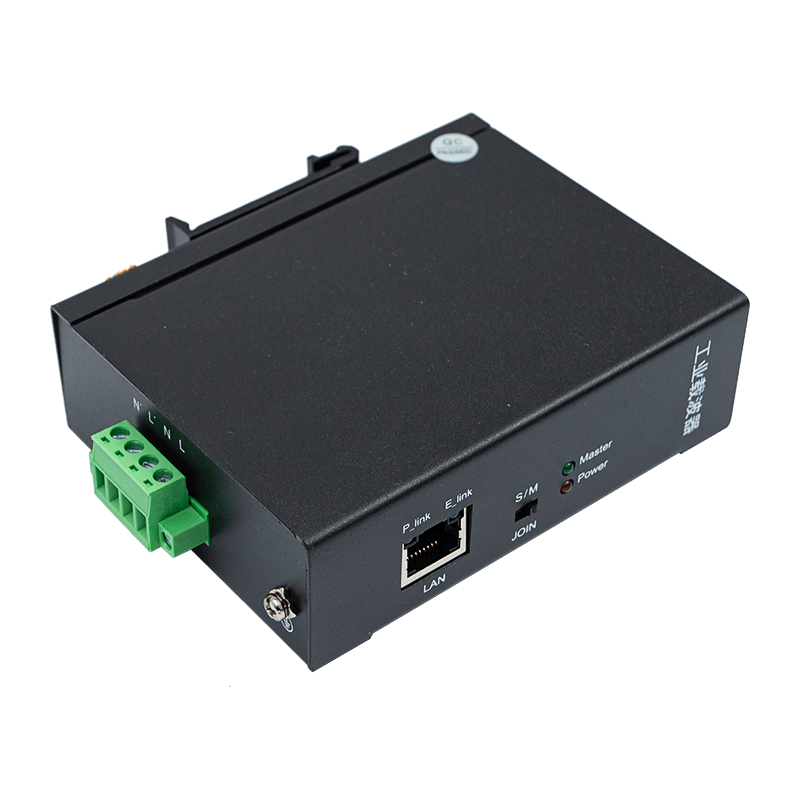
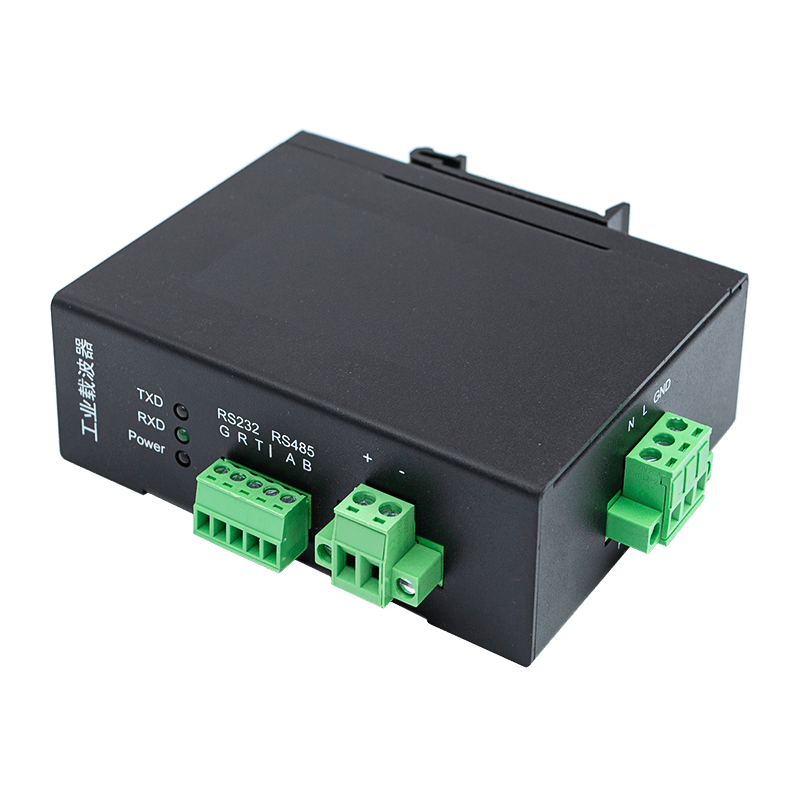
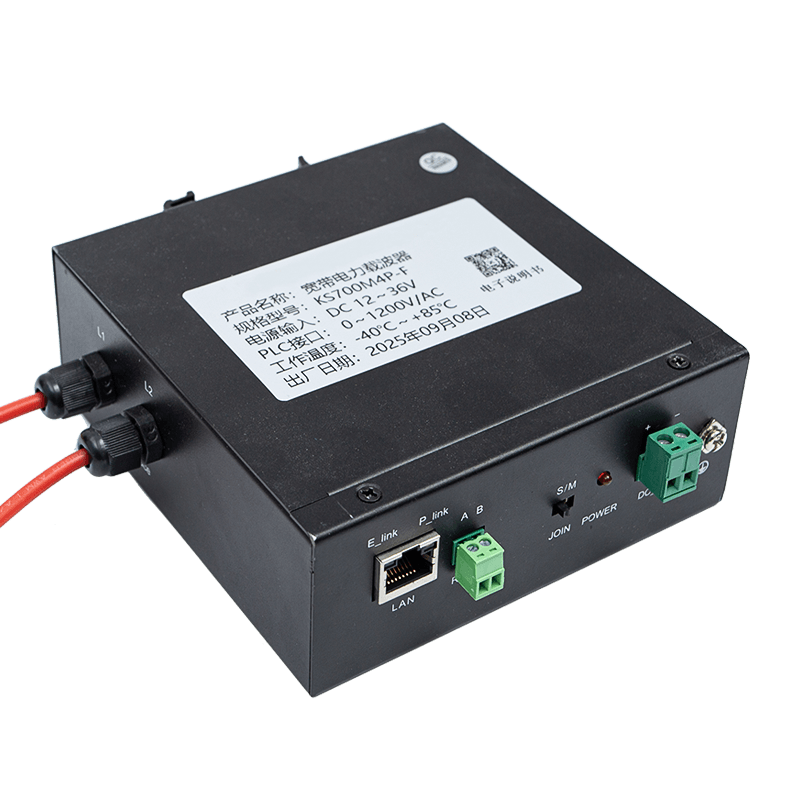
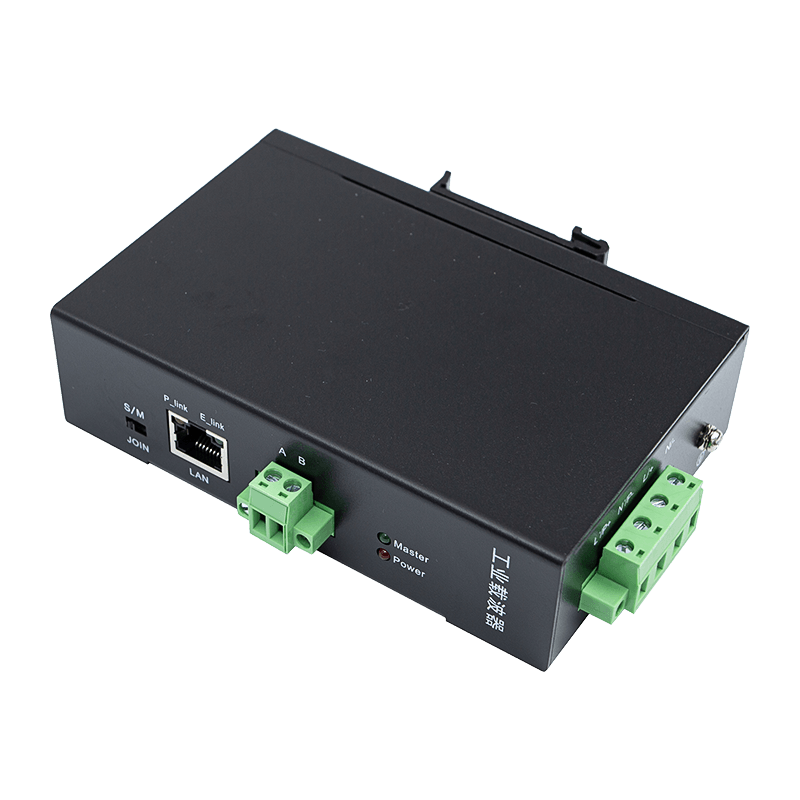
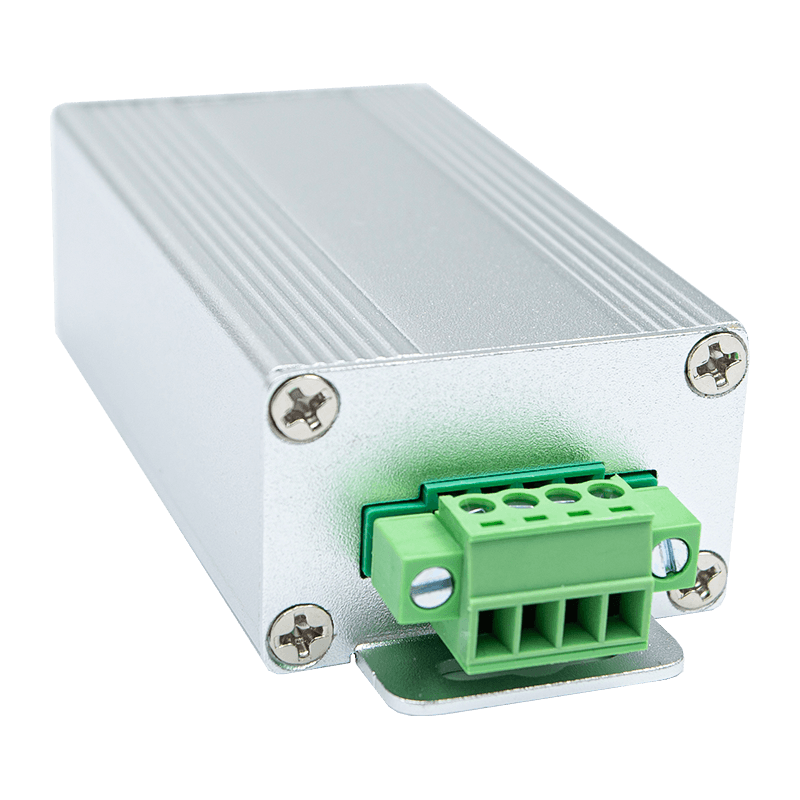
The KS704Q DC Four-Port Broadband Powerline Transceiver is designed for high-speed power line communication applications where stability, distance, flexible topology, and industrial-grade durability are essential. It supports synchronous 100 Mbps data transmission and power delivery through a DC power line under 56 V, using common conductors such as parallel wires, twisted pair, slip ring wires, conductor rails, or coaxial cable. With four standard RJ45 Ethernet ports, it can connect multiple network terminal devices directly, reducing the need for additional switches in compact installations. For industrial users seeking plug-and-play Ethernet over existing DC wiring, it offers a practical and robust path toward intelligent connectivity.
DC Four-Port Broadband Powerline Transceiver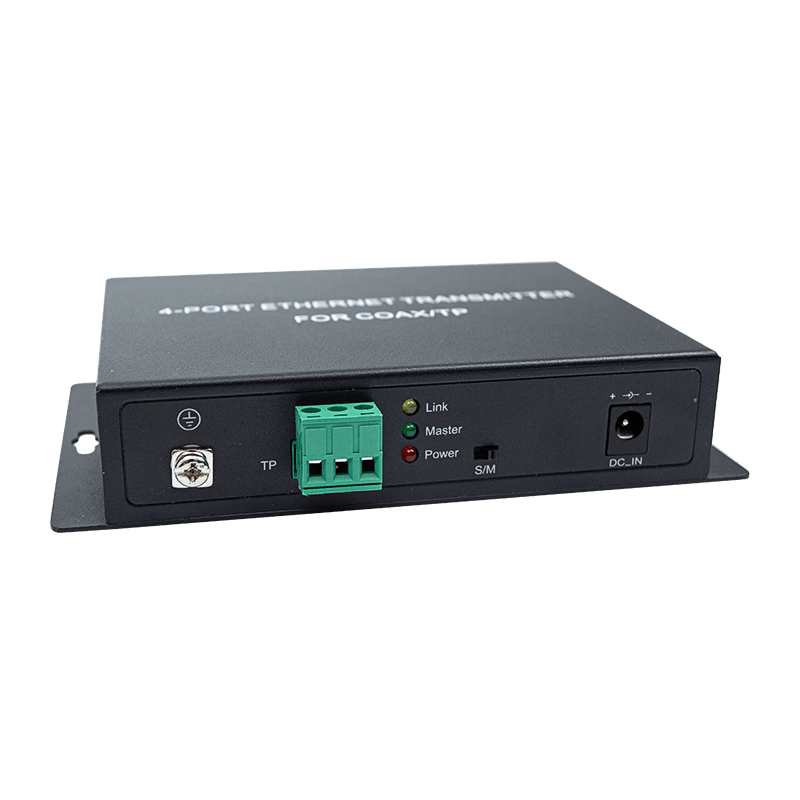
Why Ethernet over DC Power Lines Matters in Modern Industry
Traditional industrial networking often separates power wiring and communication wiring. This arrangement is straightforward in a clean control cabinet, but it becomes difficult in distributed, mobile, and harsh environments. In inspection robots, underwater robots, moving platforms, mining video systems, automated guided vehicles, crane equipment, and rotating machinery, the available physical path may be limited to a two-core power line or a slip ring. Adding another cable may increase weight, maintenance difficulty, friction, failure points, and installation time.
Broadband power line communication changes this design model. Instead of treating a power line as only an energy channel, it uses advanced modulation technology to transmit data over that same conductor. The KS704Q adopts OFDM modulation, which is well suited for complex channels because it divides data into multiple subcarriers and improves resistance to interference, attenuation, and unstable impedance. In industrial applications, where noise and cable conditions often vary, this capability is essential for maintaining communication continuity.
For equipment builders and plant operators, the value is not only technical; it is economic. Reusing an existing conductor reduces installation cost, shortens commissioning time, and simplifies spare parts management. Maintenance teams can diagnose network issues with familiar Ethernet tools while avoiding extensive cable replacement. System integrators can design more compact machines and deploy communication links across conductors that are already present for power distribution. The result is a cleaner, more efficient, and more scalable industrial network architecture.
Product Overview
The KS704Q is a DC broadband powerline transceiver built for industrial high-speed communication. It integrates power and data transmission over one DC power line, supporting operating conditions below 56 V DC. In point-to-point applications, transmission distance can reach up to 1000 meters over shielded twisted pair, up to 500 meters over a standard power line, and up to 300 meters over slip ring line or conductor rail. These distances allow the device to support demanding industrial layouts where conventional Ethernet cabling may be limited by distance, motion, or installation complexity.
The device features four standard RJ45 Ethernet ports with 10/100 Mbps self-adaptation. This means up to four Ethernet terminal devices can connect at the same location without requiring a separate Ethernet switch in many scenarios. Cameras, PLCs, edge gateways, human-machine interfaces, sensors, and remote I/O devices can share the broadband powerline link. The transceiver supports data transparency, allowing multiple protocols to pass through without protocol conversion. This is especially valuable in industrial automation, where different devices may use TCP/IP, UDP, Profinet, Modbus-TCP, and standard IEEE Ethernet protocols.
A master/slave DIP switch enables fast configuration. Users can set up one-to-one or one-to-many communication modes and deploy bus, star, tree, or hybrid network topologies. The built-in intelligent routing algorithm supports automatic network construction, reducing the engineering burden during installation and expansion. For applications with multiple nodes, the system supports IGMP multicast protocols, with a maximum number of nodes up to eight. Data encryption is provided through AES-128bit, helping improve privacy and communication security.
Core Technical Specifications
The following table summarizes the main technical indicators of the DC four-port broadband powerline transceiver. These specifications show why the device is suitable for long-distance, high-reliability industrial communication over power conductors.
Classification |
Technical Indicator |
Power Supply Port |
DC 12-56 V |
PLC Signal Port |
DC 0-56 V, any two-core conductor, power line, slip touch cord, slip ring cable, or similar conductor |
Modulation Type |
OFDM modulation |
Network Interface |
4 standard RJ45 ports |
Ethernet Bandwidth |
10 Mbps / 100 Mbps self-adaptation |
Transmission Distance |
Shielded twisted pair up to 1000 m; standard power line up to 500 m; slip ring line or conductor rail up to 300 m |
Data Delay |
Within 10 ms |
Packet Loss Probability |
Less than 0.1 per mille |
Overall Power Consumption |
Not more than 3 W |
Supported Protocols |
TCP/IP, UDP, Profinet, HomePlug, Modbus-TCP, IEEE802.3, IEEE802.3U, IEEE802.3ab, IEEE1905.1, IEEE1900, IEEE1901, and related protocols |
Encryption |
AES-128bit |
Multicast |
Supports IGMP multicast protocols; maximum node number is 8 |
Dimensions |
147 mm x 94.4 mm x 29 mm; weight 350 g; bracket mounting type |
Operating Environment |
Operating temperature from -40℃ to 85℃; operating humidity 20%-95%, non-condensing; storage temperature from -40℃ to 85℃ |
Working Time |
Industrial grade, supports 7 x 24 hours all-weather operation |
Integrated Power and Data over One Cable
One of the strongest advantages of the KS704Q is its ability to transmit data and power over the same DC line. This is more than a convenience feature; it is a system-level simplification. In many projects, the cost of cable routing, cable protection, connectors, drag chains, slip rings, and installation labor can exceed the cost of the communication device itself. By eliminating additional signal cables, the transceiver reduces mechanical complexity and lowers the risk of cable fatigue or connector failure.
In robotics, for example, the available wiring path is often limited. Underwater robots require sealed cable paths and must minimize penetrations to protect against leakage. Inspection robots operating in pipelines, tunnels, mines, or industrial plants need lightweight and durable connections. Rotating equipment may depend on slip rings, where the number of available channels is limited and each additional channel increases cost and failure risk. A powerline transceiver that communicates through the existing DC conductors becomes a practical engineering solution.
The device supports any two-core conductor, making it adaptable to different physical media. Parallel wires, twisted pairs, slip ring wires, conductor rails, and coaxial cable can serve as the transmission path when the electrical conditions meet application requirements. This flexibility gives system integrators freedom to design around the mechanical constraints of their equipment rather than forcing the machine to accommodate a separate data cable.
Four Ethernet Ports for Compact Edge Connectivity
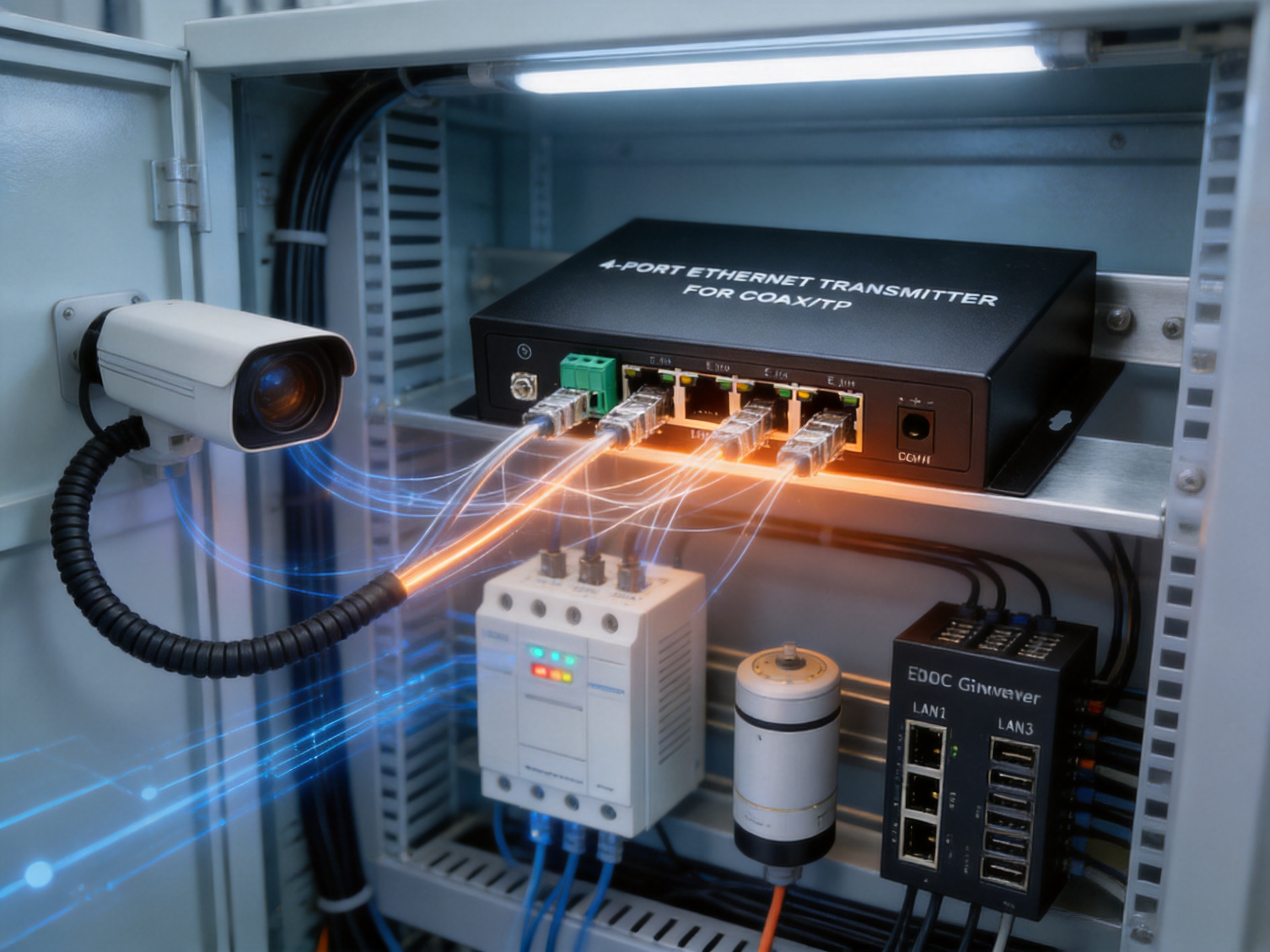
Many powerline communication devices provide only one Ethernet interface. In contrast, the KS704Q integrates four parallel Ethernet ports, allowing multiple terminal devices to connect simultaneously. This is a significant advantage in distributed industrial systems. A remote point may need to support a camera, a PLC, an HMI, and an edge sensor gateway at the same time. With four RJ45 ports, these devices can connect directly, reducing cabinet space, wiring, and the need for an external switch.
This design also improves project reliability. Every additional network device introduces another power supply requirement, another failure point, and another configuration item. By integrating four Ethernet ports into the transceiver, the solution becomes cleaner and more dependable. The 10/100 Mbps self-adaptive Ethernet interface enables compatibility with common industrial and commercial network devices, supporting smooth integration into existing automation systems.
For machine builders, the four-port design can reduce bill-of-material complexity. A compact system can be shipped with fewer components, faster assembly, and fewer configuration steps. For end users, it can simplify maintenance because fewer devices need to be inspected, powered, labeled, and replaced. In environments where space is limited, such as robot compartments, outdoor junction boxes, rail equipment, and small control enclosures, this integration is especially valuable.
Long-Distance Transmission for Demanding Layouts
Standard Ethernet over copper has a well-known distance limitation of approximately 100 meters per segment. Industrial sites often require much longer communication paths. A surveillance camera in a mine, a sensor on a long conveyor, a remote controller on a traveling crane, or a device at the end of a large production line may exceed conventional Ethernet distance limits. The KS704Q helps overcome this limitation by enabling transmission up to 1000 meters over shielded twisted pair under suitable conditions.
The ability to reach up to 500 meters over a standard power line and up to 300 meters over slip ring lines or conductor rails expands deployment possibilities. These distances are particularly useful in systems where fiber optic cabling is impractical or where power conductors already exist. Fiber is excellent for long-distance and high-immunity communication, but it can be costly, requires specialized termination skills, and may not be ideal across moving or rotating interfaces. The broadband powerline approach provides a more installation-friendly alternative in many industrial projects.
Low delay is another important characteristic. The device specifies data delay within 10 ms, supporting real-time or near-real-time monitoring and control requirements. While the exact performance in a project depends on line conditions and network design, this delay level is suitable for many industrial applications such as video monitoring, equipment data collection, remote access, and automation communication. The packet loss probability of less than 0.1 per mille also supports dependable data transfer.
Intelligent Networking and Flexible Topology
Industrial networks rarely stay static. Production lines expand, monitoring points increase, and new devices are added during upgrades. A communication product must therefore support flexible topology. The KS704Q includes master/slave DIP switch configuration, allowing quick setup without complex software procedures. This simple hardware configuration method is practical for field technicians who need to install or replace devices quickly.
The product supports one-to-one and one-to-many communication modes. Its built-in intelligent routing algorithm can automatically construct bus, star, tree, and hybrid networks. This is important because different industrial sites have different wiring realities. A conveyor system may resemble a bus topology, while a monitoring system may resemble a star. A large machine or distributed facility may require a tree or hybrid structure. Rather than forcing a fixed architecture, the transceiver adapts to practical site conditions.
Plug-and-play smart networking reduces commissioning risk. In industrial projects, time spent on network configuration directly affects downtime and labor cost. A device that can quickly join a network and establish communication helps shorten installation schedules. It also supports easier troubleshooting because the network can be built around physical wiring that is already understandable to the maintenance team.
Data Transparency and Protocol Compatibility
Industrial communication is diverse. Some devices communicate using standard TCP/IP, while others use UDP, Modbus-TCP, Profinet, or related Ethernet-based protocols. In a mixed automation environment, protocol conversion can create integration problems, latency, and maintenance burden. The KS704Q is designed for data transparency, allowing Ethernet data to pass through without requiring protocol conversion. This helps preserve the behavior of connected devices and simplifies integration.
Support for protocols such as TCP/IP, UDP, Profinet, HomePlug, Modbus-TCP, IEEE802.3, IEEE802.3U, IEEE802.3ab, IEEE1905.1, IEEE1900, and IEEE1901 makes the transceiver suitable for a broad range of industrial networking tasks. For example, a remote I/O station can use Modbus-TCP, a camera can stream over IP, and a PLC-related device can use Profinet-style communication in the same installation, depending on the system architecture and bandwidth requirements.
Data transparency is also important for future scalability. When an industrial site changes its devices or software platform, a transparent Ethernet link is less likely to become obsolete. Instead of being limited to one proprietary communication method, the powerline link acts like an extension of the Ethernet network. This helps protect investment and makes the product suitable for long-life industrial assets.
Security through AES-128bit Encryption
As industrial networks become more connected, communication security becomes increasingly important. The KS704Q supports AES-128bit encrypted data transmission, helping protect communication privacy and reduce the risk of unauthorized data exposure. While encryption is only one layer of a complete cybersecurity strategy, it is an important foundation for industrial communication links, especially when network data travels through shared or accessible wiring paths.
In applications such as mine video monitoring, remote automation equipment, energy management systems, and mobile inspection devices, data may include operational status, alarms, video streams, and control-related information. Protecting this data supports safer and more reliable operations. AES-128bit encryption gives users an added layer of confidence compared with simple unencrypted transmission systems.
Security must also include stable communication. In industrial terms, availability is a major part of security. A communication system that frequently drops packets, fails under interference, or requires manual reconnection can create operational risk. The device’s low packet loss probability, industrial temperature range, and anti-interference capability contribute to the availability side of secure industrial networking.
Industrial-Grade Reliability in Harsh Environments
The KS704Q is built for industrial environments, with an operating temperature range from -40℃ to 85℃. This wide range is critical for outdoor installations, unheated industrial sites, mining environments, robotic systems, and equipment that experiences seasonal or process-related temperature changes. Consumer-grade communication equipment may fail or degrade under these conditions, but an industrial-grade transceiver must maintain stable performance across temperature extremes.
The device supports 20%-95% operating humidity in non-condensing conditions and storage temperature from -40℃ to 85℃. It is designed for 7 x 24 hours all-weather operation, which aligns with the needs of factories, utilities, logistics systems, and continuous production lines. Downtime in these environments can be expensive, so communication equipment must be selected for durability rather than only initial purchase cost.
Strong anti-interference capability is another essential feature. Industrial sites may include motors, variable frequency drives, contactors, welding equipment, high-current conductors, and switching power supplies. These can create electromagnetic interference that affects communication. OFDM modulation, industrial-grade circuit design, careful manufacturing, and proper installation practices help the transceiver maintain stable communication in these complex electromagnetic environments.
Advantages over Conventional Communication Alternatives
Compared with traditional Ethernet cabling, the most obvious advantage is distance and wiring simplicity. Standard copper Ethernet requires dedicated data cable and is usually limited to 100 meters without switches or extenders. The KS704Q can use existing DC power conductors and reach much longer distances under suitable conditions. This reduces infrastructure requirements and enables communication in places where Ethernet cable installation is difficult.
Compared with wireless communication, broadband powerline communication offers a more physically contained transmission medium. Wireless systems may be affected by signal blockage, metal structures, radio interference, regulatory constraints, and cybersecurity concerns. In underground mines, underwater systems, dense steel factories, and enclosed machinery, wireless links may be unstable or unavailable. A powerline-based system uses the conductor path already connecting the equipment, providing a practical alternative when wireless is unreliable.
Compared with fiber optic systems, the KS704Q can be easier to install and maintain in applications that already have DC wiring. Fiber offers excellent distance and immunity, but it requires fiber termination tools, optical modules, careful bend-radius management, and protection against mechanical damage. Across moving parts or slip rings, fiber may be complicated. The powerline transceiver reduces these installation barriers while still offering sufficient performance for many industrial Ethernet applications.
Compared with single-port PLC devices, the KS704Q’s four Ethernet ports provide a clear integration advantage. It can connect multiple local devices without an external switch, reducing cost, space, power consumption, and maintenance workload. Its overall power consumption of not more than 3 W also helps support efficient designs, especially in distributed systems where every watt matters.
Application Scenario: Underwater Robots
Underwater robots require reliable communication through limited cable paths. The tether often must carry power and data while remaining strong, waterproof, and flexible. Adding separate data conductors can increase cable size, reduce mobility, and complicate sealing. By transmitting Ethernet data and power over the same DC line, the KS704Q supports a simpler tether design for suitable underwater robotic systems.
Video cameras, sonar processors, control boards, and sensor modules can produce data that must be transmitted to an operator station or onboard controller. The four Ethernet ports allow several networked devices to connect at the robot end. Low data delay within 10 ms supports responsive monitoring and control, while encrypted transmission helps protect operational data.
The industrial-grade temperature range and robust design also support harsh deployment conditions. Although underwater systems require complete environmental protection at the enclosure level, the communication electronics must still handle vibration, power fluctuations, and extended operation. The compact bracket-mounted form factor helps equipment designers integrate the transceiver inside sealed compartments.
Application Scenario: Inspection Robots and Mobile Platforms
Inspection robots are increasingly used in power plants, chemical facilities, pipelines, tunnels, warehouses, and industrial parks. These robots may carry cameras, thermal sensors, gas detectors, acoustic sensors, and edge computing units. They often need stable Ethernet connectivity inside the robot or between a moving platform and a fixed base. A broadband powerline transceiver helps simplify internal and external wiring.
For robots moving along rails or conductor systems, the ability to communicate over conductor rails or slip ring lines is valuable. The KS704Q supports up to 300 meters over slip ring line or conductor rail under suitable conditions, making it useful for moving inspection systems. Its intelligent networking capability supports multiple nodes, which can be helpful when several monitoring points or robot stations share a line.
Inspection robots operate in unpredictable environments where wireless performance may vary. Metal structures, concrete walls, underground spaces, and electromagnetic noise can reduce wireless reliability. Using a power conductor for communication gives designers another dependable option. The four Ethernet ports support direct connection of cameras and controllers, simplifying robot network architecture.
Application Scenario: Mine Video Surveillance
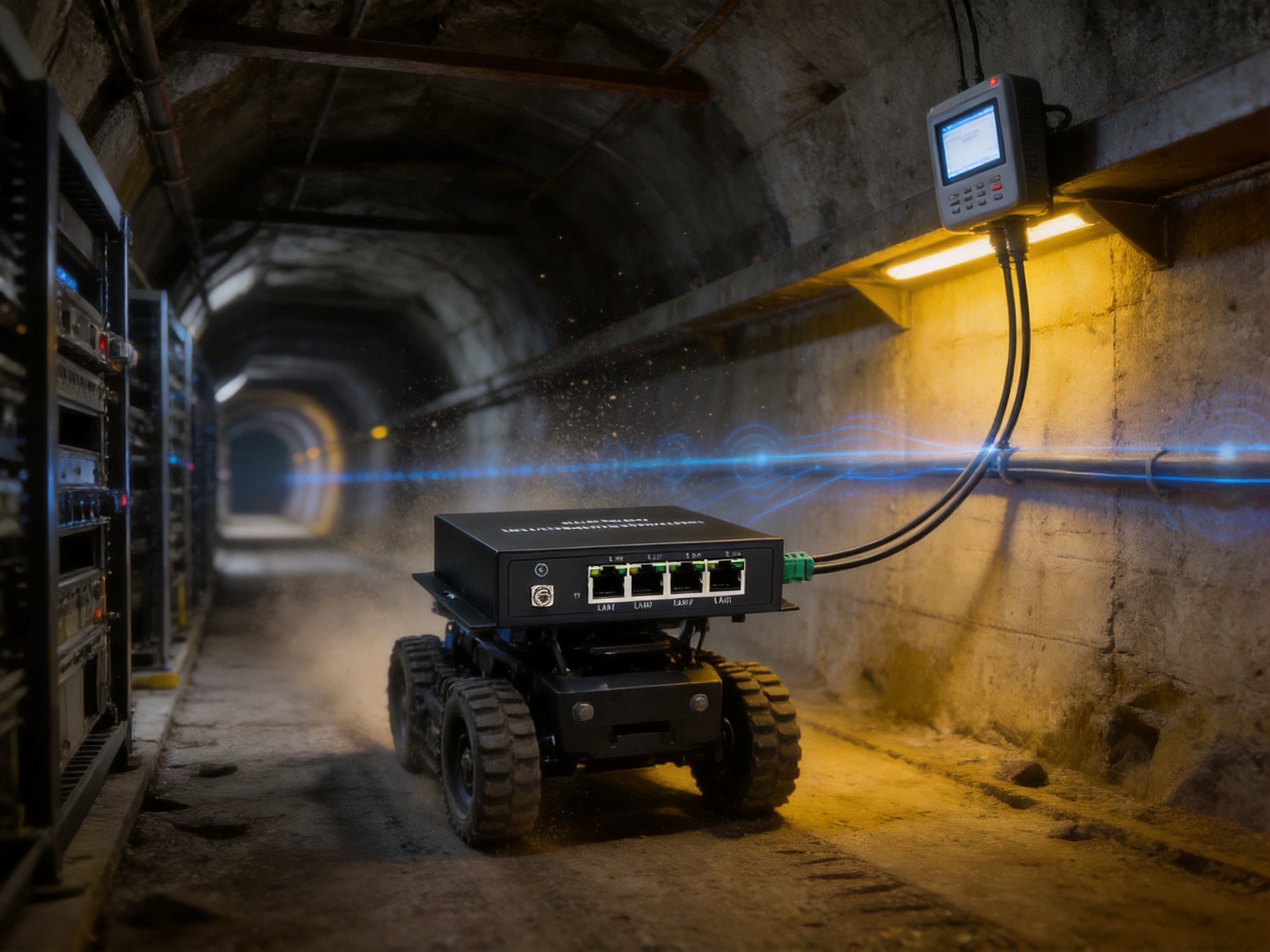
Mines present some of the toughest conditions for communication infrastructure. Long distances, tunnels, dust, humidity, vibration, power limitations, and safety requirements make cabling difficult. Video surveillance systems require stable bandwidth and low packet loss to deliver useful images. The KS704Q can support mine video monitoring by using available DC power lines for Ethernet data transmission.
Long-distance support is especially important underground. A shielded twisted pair can reach up to 1000 meters under suitable conditions, while standard power line transmission can reach up to 500 meters. This can reduce the number of intermediate communication devices and simplify deployment. Fewer active devices in harsh underground environments can mean fewer maintenance points and better long-term reliability.
Four Ethernet ports can connect multiple cameras or related network devices at a remote monitoring point. AES-128bit encryption helps protect video and operational data. The wide temperature range and 7 x 24 hours industrial operation capability align with the continuous monitoring requirements of mine safety systems.
Application Scenario: Industrial Automation and Smart Factories
Smart factories depend on data from machines, sensors, energy meters, controllers, and production systems. However, older factories may not have modern network cabling in every required location. Retrofitting Ethernet can be costly and disruptive. A DC broadband powerline transceiver enables industrial IoT communication over existing power conductors, allowing factories to upgrade connectivity with less rewiring.
In production process optimization, equipment condition monitoring, and refined energy management, data must be collected from many points. The KS704Q can connect edge devices and transmit data back to supervisory systems. Its protocol transparency helps integrate diverse equipment without requiring extensive protocol conversion. Its support for Modbus-TCP, TCP/IP, UDP, and industrial Ethernet-related standards gives system integrators flexibility.
For smart factory projects, scalable topology is crucial. A production line may start with a few monitoring nodes and later expand. The device’s one-to-one and one-to-many communication modes, master/slave DIP switch, and intelligent routing algorithm support practical expansion. This helps manufacturers build digital productivity step by step instead of replacing entire communication systems at once.
Manufacturing Strength behind the Product
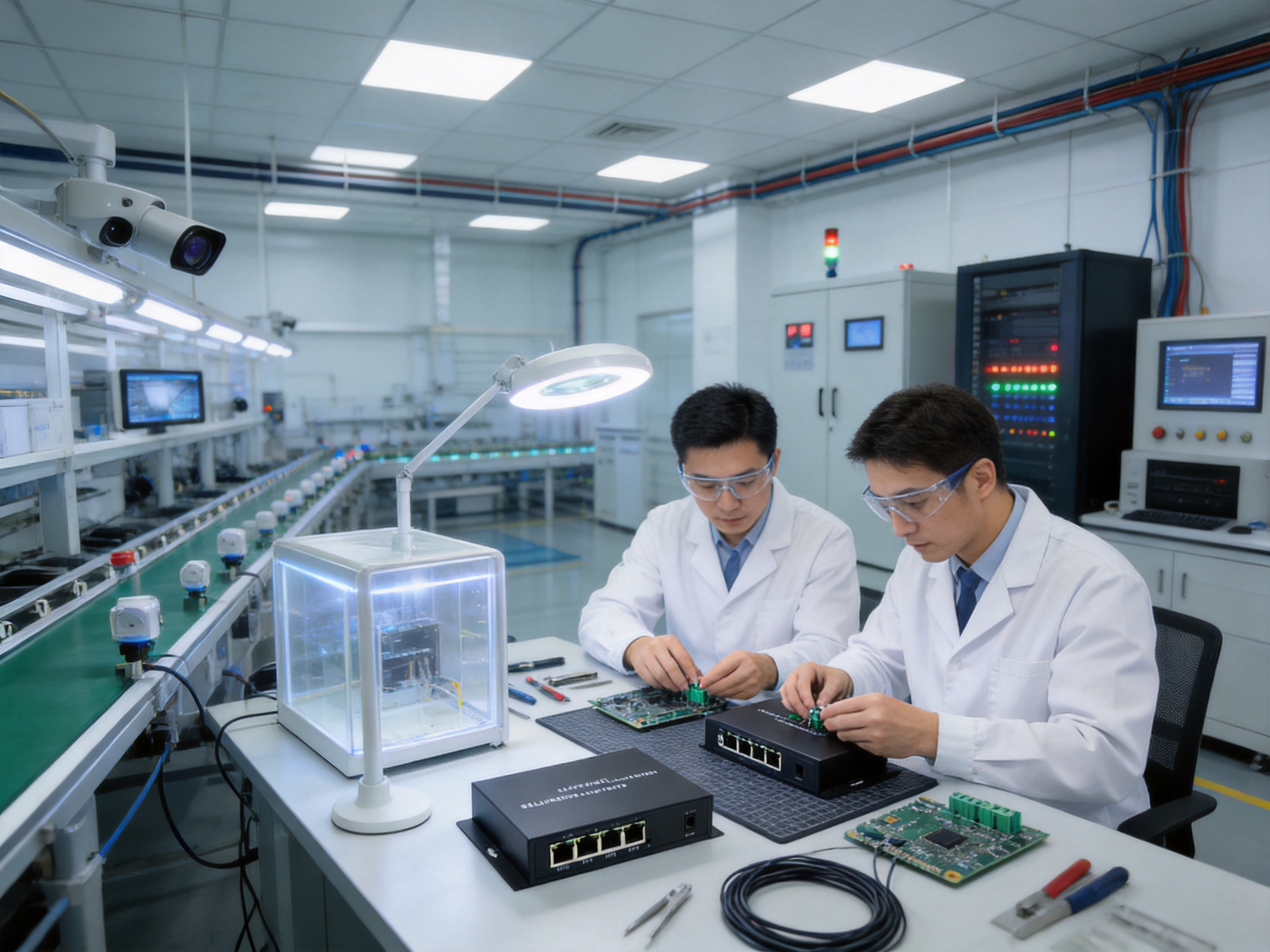
ASY Electronics (JiaXing) Co., Ltd. is a high-tech enterprise focused on industrial data sensing and intelligent connectivity. Its product portfolio includes broadband power line carriers, wireless temperature monitoring systems, transmitters, flow meters, and automatic door controllers. This broad industrial background gives the company a practical understanding of field conditions, not just laboratory communication theory. The KS704Q benefits from this experience because it is designed for real industrial deployment where power quality, cable type, installation skill, and environmental stress vary widely.
Advanced manufacturing strength begins with product architecture. The device must combine power electronics, communication modulation, Ethernet switching, signal coupling, protection circuitry, and industrial mechanical design in a compact enclosure. Achieving stable performance requires careful component selection, layout optimization, thermal management, and electromagnetic compatibility control. In a broadband powerline product, the quality of analog front-end design and signal coupling has a direct effect on transmission distance and reliability.
The company’s manufacturing process emphasizes industrial-grade reliability. This includes strict material selection, controlled assembly procedures, functional testing, aging verification, and performance inspection. Products intended for -40℃ to 85℃ operation must be designed with components that can tolerate temperature stress. Soldering quality, connector reliability, enclosure structure, and mounting strength must support long-term operation in vibration and high-duty-cycle applications.
Engineering Process and Quality Control
A reliable industrial communication product is the result of disciplined engineering. During development, the circuit design must account for conducted noise, impedance variation, DC voltage range, surge events, signal attenuation, and Ethernet compatibility. The KS704Q’s ability to operate on DC 12-56 V power and communicate over DC 0-56 V conductors requires a design that balances power delivery and high-frequency communication without compromising safety or stability.
Quality control should cover each stage from incoming material inspection to final product testing. Critical components such as communication chipsets, magnetic components, connectors, power modules, protection devices, and printed circuit boards need verification against specifications. Assembly processes must maintain consistency because small variations in high-frequency signal paths can affect performance. Controlled soldering and inspection reduce the risk of intermittent failures.
Functional testing is especially important. Each unit should be evaluated for Ethernet port operation, power supply behavior, PLC communication performance, master/slave configuration, encryption function, and network stability. Long-distance simulation or representative line testing helps confirm real-world performance. Environmental testing and aging tests support confidence in 7 x 24 hours industrial operation. This kind of manufacturing discipline differentiates an industrial-grade product from low-cost communication adapters built for benign environments.
Design for Installation and Maintenance
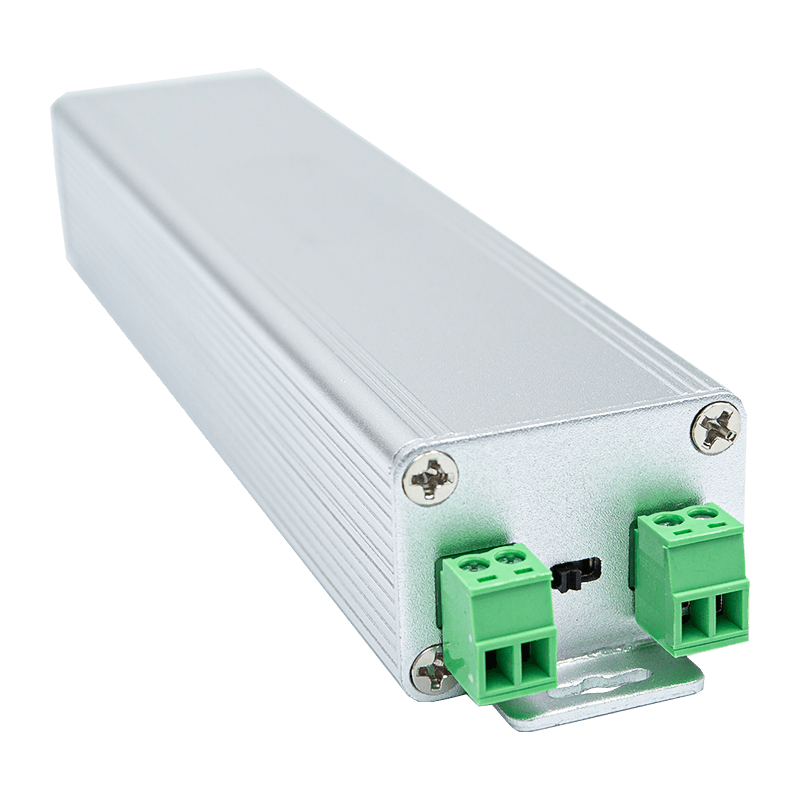
Industrial products must be easy to install because field conditions are often time-sensitive. The KS704Q uses bracket mounting, with dimensions of 147 mm x 94.4 mm x 29 mm and a weight of approximately 350 g. This compact form factor allows installation in control cabinets, machine compartments, junction boxes, robotic housings, and monitoring stations. Easy lug or bracket mounting supports straightforward mechanical integration.
The master/slave DIP switch is a practical feature for maintenance teams. Field technicians can identify and configure device roles without requiring complex software tools. This reduces the chance of configuration errors and makes replacement faster. In remote or harsh sites, reducing the need for laptops, specialized software, or advanced network knowledge can save significant maintenance time.
Four RJ45 ports also improve maintainability. Devices can be connected with standard Ethernet patch cables, and technicians can use familiar diagnostic tools to check network activity. Because the transceiver supports data transparency, existing device configurations often require fewer changes. This supports smoother upgrades and easier troubleshooting.
Energy Efficiency and Low Power Consumption
The KS704Q has an overall power consumption of not more than 3 W. In distributed industrial systems, low power consumption is valuable for several reasons. It reduces heat generation inside enclosures, improves reliability, and lowers the load on power supplies. In mobile robots or remote monitoring stations, every watt saved can support longer operation or smaller power system design.
Low power consumption also contributes to environmental efficiency. Smart factories aim not only to increase productivity but also to improve energy management and sustainability. Communication infrastructure is part of this equation. A compact device that combines powerline communication and four Ethernet ports can reduce the need for additional switches and power supplies, indirectly lowering total system energy use.
Thermal performance is linked to power consumption. Less heat inside the enclosure supports operation across the wide temperature range. In hot industrial environments approaching 85℃, reducing internal heat rise is critical. Efficient electronics design helps maintain communication stability and prolong component life.
Competitive Differentiation
The industrial communication market includes many products that claim to extend Ethernet, convert protocols, or transmit data over nontraditional media. The KS704Q stands out because it combines multiple practical advantages in one device. It supports power and data over one DC line, offers four Ethernet ports, reaches long transmission distances, supports flexible networking, provides encrypted transparent communication, and operates across a broad industrial temperature range.
Some competing solutions solve only one part of the problem. A simple Ethernet extender may still require dedicated data wires. A wireless bridge may fail in metal-heavy environments. A fiber converter may require new fiber installation and specialized maintenance. A single-port powerline adapter may need an added switch at the remote end. The KS704Q addresses these limitations with a more integrated and application-ready approach.
Its support for multiple physical conductor types is another differentiator. Industrial users often cannot choose ideal cables; they must work with what the machine or site already provides. The ability to use parallel wires, twisted pair, slip ring cables, conductor rails, or coaxial cable gives the device strong adaptability. Combined with intelligent topology support, it is suitable for both new machines and retrofit projects.
How to Select the Right Deployment Method
Although the KS704Q is designed for plug-and-play use, good engineering practice improves results. Users should evaluate cable type, distance, load current, electromagnetic noise, grounding, connectors, and topology before deployment. Shielded twisted pair generally provides the best long-distance performance, reaching up to 1000 meters under suitable conditions. Standard power lines and slip ring conductors may have different attenuation and noise characteristics, so actual performance should be confirmed in the target environment.
For high-reliability systems, it is wise to separate extremely noisy power loads from communication paths when possible, use proper grounding and shielding, and avoid poor-quality connectors. If slip rings are used, their contact quality and current rating should be considered. In conductor rail systems, mechanical wear and contact stability can affect communication. The transceiver is robust, but the physical conductor remains part of the communication channel.
Network planning is also important. The device supports up to eight nodes with IGMP multicast protocols. Users should design node count, bandwidth use, and traffic type according to application needs. Video streams, for example, can consume more bandwidth than sensor data. Proper camera compression settings and network segmentation can improve stability. For control applications, latency requirements should be evaluated with real equipment.
Role in Industrial IoT Communication Solutions
Industrial IoT requires continuous data flow from the edge to higher-level systems. Sensors collect temperature, vibration, pressure, flow, and electrical data. Controllers exchange status with supervisory systems. Cameras and inspection devices provide visual information. Energy management platforms require meter data. Production optimization depends on accurate, timely information. The KS704Q serves as an intelligent connectivity layer for environments where power conductors are easier to access than dedicated network cabling.
ASY Electronics positions its solutions around efficient, reliable, and green smart factories. Broadband powerline communication fits this mission because it reduces redundant wiring, supports digital upgrades, and enables data collection from hard-to-reach equipment. When combined with wireless temperature monitoring sensors, transmitters, flow meters, and other industrial devices, powerline communication can become part of a broader factory data infrastructure.
In many modernization projects, the barrier to digital transformation is not the lack of sensors but the difficulty of connecting them. A powerline transceiver helps bridge that gap. It makes the electrical infrastructure part of the communication infrastructure, allowing companies to implement condition monitoring, energy management, and process optimization with less disruption.
Q&A Section
What is the main function of the DC four-port broadband powerline transceiver?
Its main function is to transmit Ethernet data and DC power over the same two-core conductor. It allows industrial devices such as cameras, PLCs, sensors, gateways, and controllers to communicate through existing DC power wiring instead of requiring separate Ethernet cables.
What transmission speed does the device support?
The device supports 10 Mbps / 100 Mbps self-adaptive Ethernet bandwidth through its RJ45 network interfaces. It is suitable for many industrial data, monitoring, and video communication applications.
How many Ethernet devices can connect directly to one transceiver?
One unit provides four standard RJ45 Ethernet ports, allowing up to four local Ethernet terminal devices to connect directly in many applications. This can reduce the need for an additional Ethernet switch at the remote site.
What types of conductors can be used for transmission?
The transceiver can use any suitable two-core conductor, including parallel wires, shielded twisted pair, standard power lines, slip ring cables, slip touch cords, conductor rails, and coaxial cable, depending on the application conditions.
What is the maximum transmission distance?
Under suitable conditions, transmission can reach up to 1000 meters over shielded twisted pair, up to 500 meters over standard power line, and up to 300 meters over slip ring line or conductor rail.
Does it support industrial protocols?
Yes. The device is designed for data transparency and supports common Ethernet-based protocols such as TCP/IP, UDP, Profinet, Modbus-TCP, HomePlug, and several IEEE Ethernet-related standards.
Is the product suitable for harsh environments?
Yes. It is an industrial-grade device with an operating temperature range from -40℃ to 85℃ and supports 7 x 24 hours all-weather operation. It is intended for demanding industrial communication environments.
How does the product improve installation efficiency?
It reduces or eliminates the need for separate signal cables, supports plug-and-play networking, includes a master/slave DIP switch for quick configuration, and integrates four Ethernet ports. These features simplify wiring, commissioning, and maintenance.
What security feature is included?
The device supports AES-128bit encrypted data transmission, helping improve communication privacy and data security.
Which applications are especially suitable?
Typical applications include underwater robots, inspection robots, mine video surveillance, industrial automation, moving platforms, smart factory upgrades, remote monitoring systems, slip ring communication, and long-distance Ethernet extension over DC power lines.
Conclusion
The DC Four-Port Broadband Powerline Transceiver provides a practical solution for industrial Ethernet communication where conventional cabling is difficult, costly, or unreliable. By integrating power and data over one DC conductor, it simplifies system architecture and reduces installation complexity. Its four RJ45 ports, long-distance transmission capability, OFDM modulation, protocol transparency, AES-128bit encryption, intelligent topology support, and industrial-grade operating range make it suitable for demanding applications in robotics, mining, automation, surveillance, and smart factory connectivity.
Compared with many competing alternatives, the product offers a stronger combination of distance, flexibility, integration, and field practicality. It avoids the limitations of standard Ethernet distance, reduces dependence on wireless signals, simplifies installations compared with fiber in certain applications, and improves convenience over single-port powerline adapters. For manufacturers and system integrators, it provides a reliable way to extend industrial IoT communication using existing DC wiring.
Behind the device is the manufacturing and engineering strength of ASY Electronics (JiaXing) Co., Ltd., a company focused on data sensing and intelligent connectivity for future smart factories. Through industrial-grade design, careful component selection, quality control, and practical application experience, the company delivers communication hardware intended for real production environments. As industrial facilities continue to pursue efficient, reliable, and sustainable digital productivity, broadband powerline communication products like the KS704Q will play an important role in connecting the machines, sensors, and systems that power intelligent industry.
References
1. IEEE Standards Association. IEEE 802.3 Ethernet Working Group Standards.
2. IEEE Standards Association. IEEE 1901 Standard for Broadband over Power Line Networks.
3. HomePlug Powerline Alliance. Technical Overview of Broadband Power Line Communication Principles.
4. International Electrotechnical Commission. Industrial Communication Networks and Electromagnetic Compatibility Guidelines.
5. National Institute of Standards and Technology. Industrial Control System Security Guidance.
6. Industrial Ethernet Book. Practical Considerations for Ethernet Deployment in Harsh Industrial Environments.
7. Automation Industry Technical Literature. Modbus-TCP, Profinet, and Industrial Ethernet Integration Practices.