

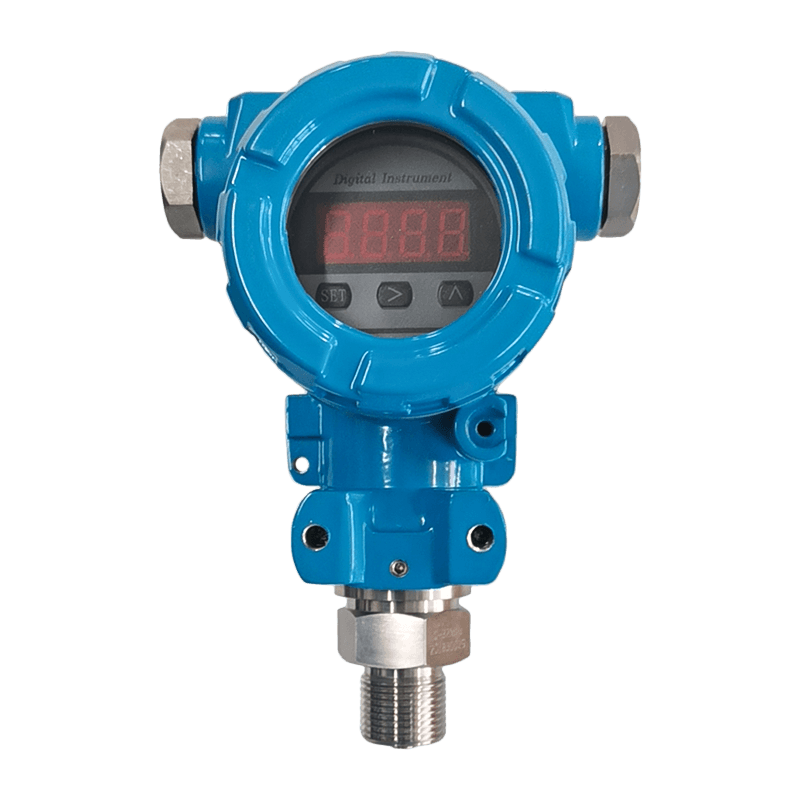
In modern industrial automation, pressure measurement is no longer a simple auxiliary function. It is a core part of process safety, equipment protection, energy efficiency, and intelligent control. A compact pressure transmitter must deliver accurate measurement in harsh environments, maintain long-term stability, connect easily with control systems, and fit into installations where space is limited. The Compact Pressure Transmitter AI-TS is designed for these practical industrial needs, combining a stainless steel structure, a diffused silicon pressure sensing element, stable transmitter circuitry, multiple signal output options, and carefully managed temperature compensation.
This product is positioned for users who need dependable pressure detection and control in petroleum, chemical processing, power systems, urban water supply, hydrological monitoring, geological exploration, and general fluid pressure applications. Its value lies not only in its technical specifications, but also in the manufacturing philosophy behind it: stable sensor selection, robust structural design, controlled compensation, aging screening, circuit protection, and practical interface flexibility. Compared with many conventional pressure transmitters that focus on only one advantage, such as low cost or simple output, this compact model aims to balance accuracy, reliability, environmental adaptability, and installation convenience.
For industrial buyers, a pressure transmitter is rarely judged by one parameter alone. A high accuracy value is useful, but not sufficient if the device drifts after months of operation. A low price may be attractive, but not if the enclosure corrodes, the output becomes unstable, or the wiring options do not match the control system. The AI-TS compact pressure transmitter addresses these real purchasing concerns through a design that emphasizes stainless steel durability, reliable pressure transmission through a 316L stainless steel diaphragm, stable piezoresistive sensing, and circuit-level protection that supports EMC requirements.
Product Overview
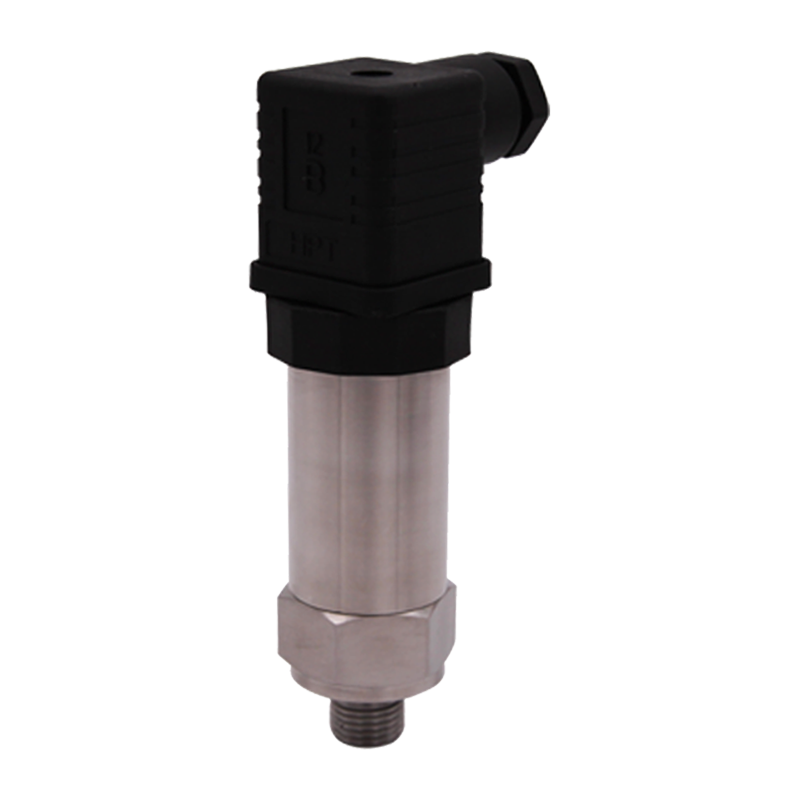
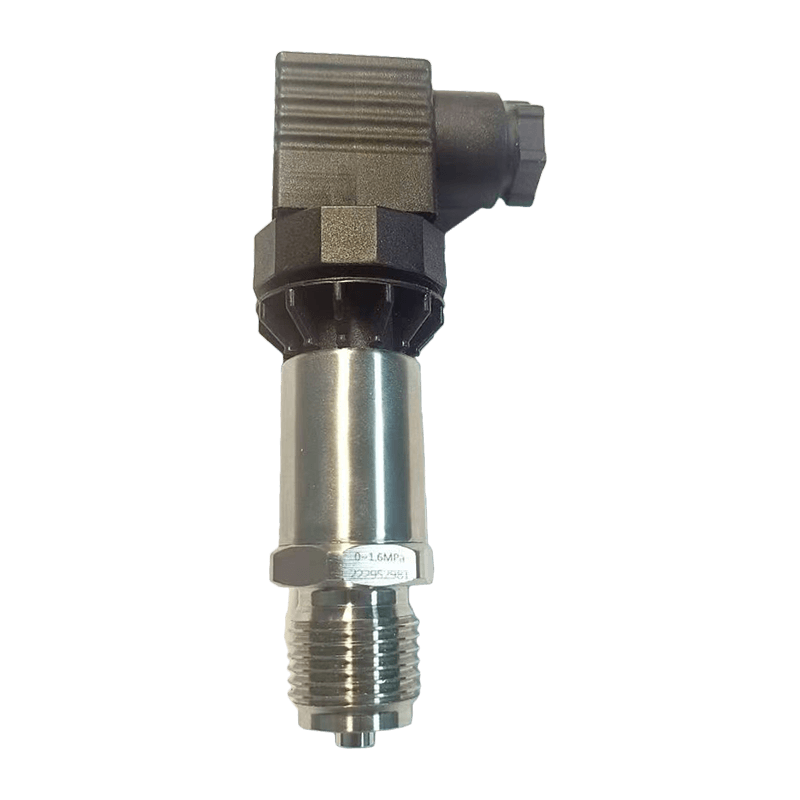
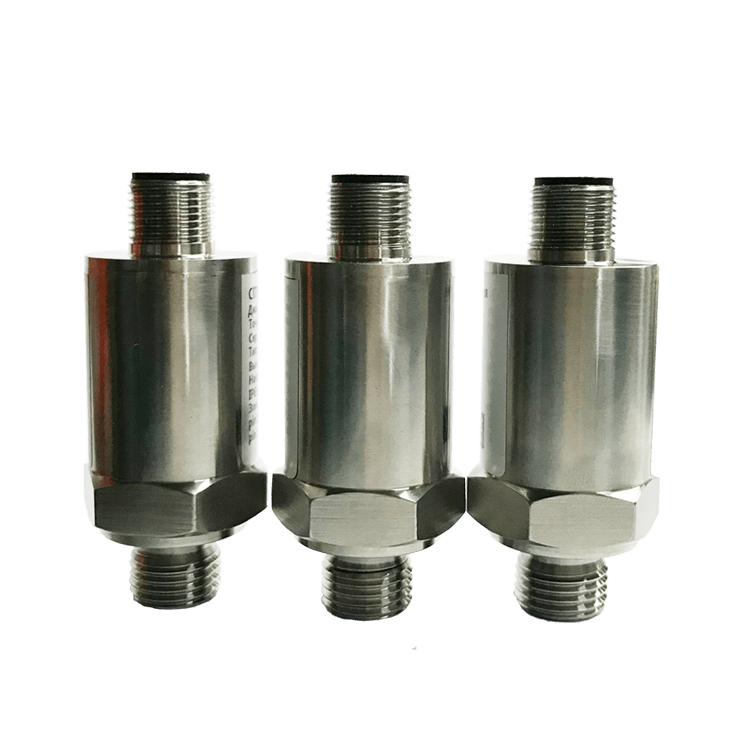
The AI-TS is a compact piezoresistive pressure transmitter developed for stable pressure measurement across a broad range of industrial applications. It uses a highly stable and reliable piezoresistive pressure sensor with high-performance dedicated transmitter circuitry. This combination enables the transmitter to convert pressure signals into standardized electrical signals that can be read by programmable logic controllers, data acquisition systems, meters, industrial computers, and other automation equipment.
The product supports multiple pressure ranges, from 0 MPa to 10 MPa and up to 40 MPa depending on configuration. It is suitable for gauge pressure, absolute pressure, and sealed gauge pressure measurement. This flexibility makes it useful for many installation conditions, whether the user needs to monitor pipeline pressure, hydraulic pressure, pump outlet pressure, tank-related pressure, or process pressure in industrial fluid systems.
The transmitter offers both current and voltage output types. The current output option provides 4 mA to 20 mA DC in a two-wire system, a widely used standard in industrial control because of its strong resistance to signal attenuation over longer cable distances. The voltage output options include 0.5 V to 4.5 V and 0 V to 10 V DC in a three-wire system, giving users compatibility with many types of controllers and acquisition modules. Power supply options include 6.5 V to 32 V DC for current output and 5 V DC or 24 V for voltage output, depending on the configuration.
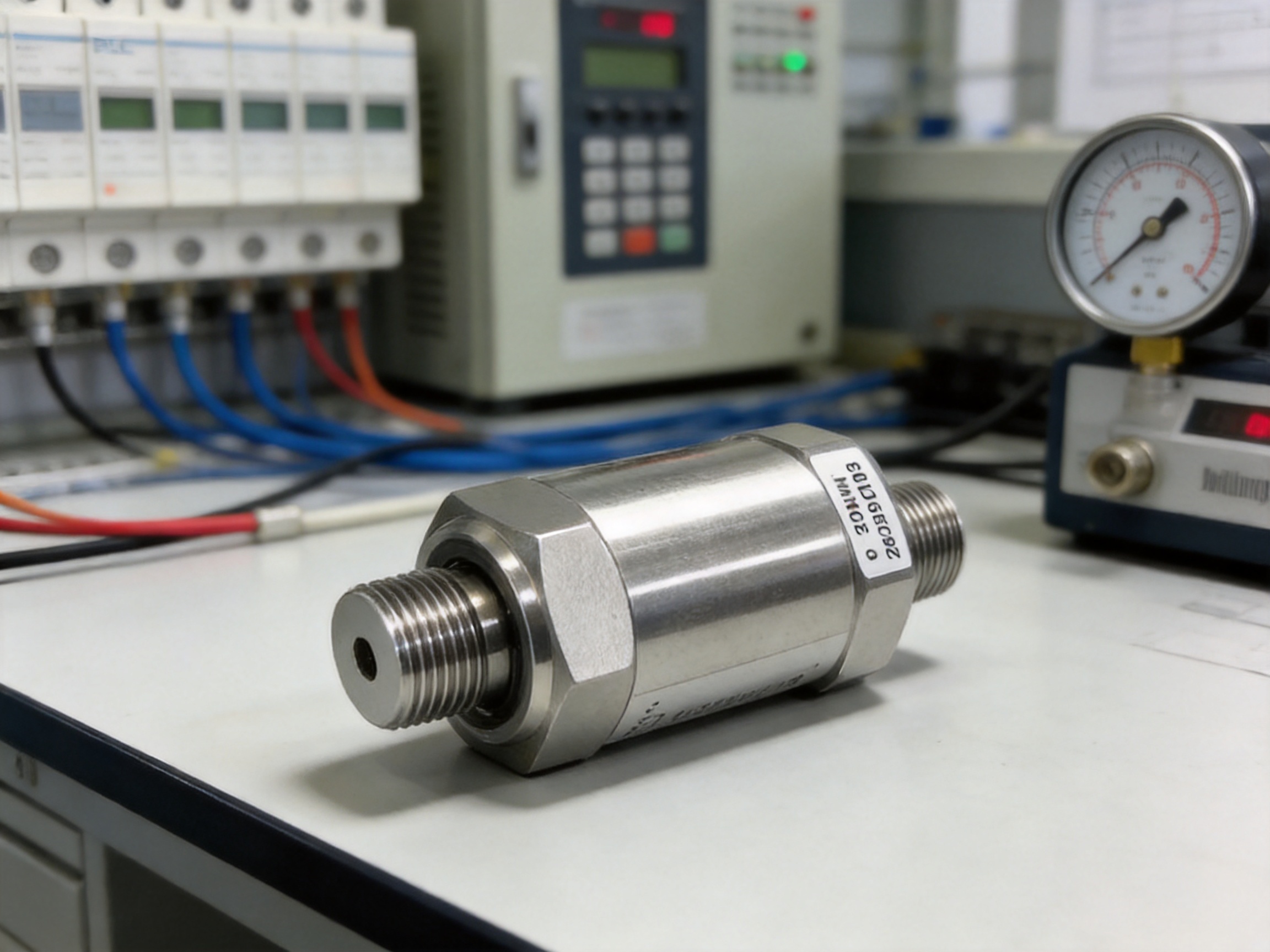
The enclosure is made from stainless steel, and the pressure-sensing diaphragm is 316L stainless steel. This all-stainless design improves mechanical strength, corrosion resistance against compatible media, and long-term stability in industrial environments. With an IP65 protection level, the device is suitable for many factory and field conditions where dust and water spray may be present. Its compact size and lightweight construction make installation easier in control cabinets, machinery, hydraulic equipment, pipelines, and compact process skids.
Why Compact Pressure Measurement Matters
Industrial equipment is becoming more integrated, more automated, and more space-efficient. Sensors are often installed in narrow locations, close to actuators, pumps, valves, manifolds, or control blocks. Large transmitters may interfere with mechanical assemblies or increase installation complexity. A compact transmitter provides the advantage of easier mounting, reduced mechanical burden on the pressure port, and improved suitability for distributed measurement points.
Compact design is especially valuable when multiple pressure points must be monitored across a production line or energy system. Instead of relying on a few large instruments, plant operators can deploy smaller transmitters near critical points and collect more detailed data. This supports predictive maintenance, process optimization, pressure alarm management, and efficient energy use. The AI-TS transmitter is designed to support this trend by combining small size with industrial-grade construction rather than sacrificing durability for miniaturization.
In many applications, pressure measurement protects expensive equipment. Pumps can be damaged by overpressure, cavitation, blockage, or abnormal load conditions. Hydraulic systems require stable pressure monitoring to maintain movement accuracy and protect seals. Water supply networks need pressure feedback to detect leakage, unstable supply, and pump control issues. Chemical and petroleum processes require stable measurement for safety and process consistency. In all these cases, a compact transmitter can provide essential real-time pressure data without occupying excessive space.
Core Structural Advantages
The AI-TS compact pressure transmitter uses an all-stainless steel design, which is a significant advantage over many low-end transmitters that use mixed materials, thin housings, or less durable connections. Stainless steel improves structural integrity and provides better resistance to many industrial operating conditions. It also helps maintain a professional and hygienic appearance in applications where equipment cleanliness and corrosion resistance are important.
The sensor uses a diffused silicon pressure sensor with a 316L stainless steel diaphragm. Diffused silicon sensing technology is widely recognized for sensitivity, repeatability, and suitability for pressure signal conversion. The 316L stainless steel diaphragm separates the measured medium from the sensitive internal sensing structure, improving durability when the medium is compatible with stainless steel. This structure is well suited for various media that do not corrode stainless steel.
The device is designed to be compact and lightweight. In practical installation, this reduces stress on fittings and pressure ports. It also helps technicians install the transmitter in crowded machinery spaces. Lightweight sensors are easier to handle, easier to position, and less likely to require additional mechanical support. This can reduce installation time and improve service convenience.
Another structural benefit is the availability of different connectors and pressure interfaces. Industrial sites often have existing mechanical and electrical standards. A transmitter that supports interface flexibility reduces the need for adapters, special wiring, or custom mechanical modifications. This makes the AI-TS more adaptable for both new equipment design and replacement projects.
Electrical Output Flexibility
One of the most practical advantages of the AI-TS transmitter is the choice of current output or voltage output. Many competitor products offer only a narrow output selection, which forces users to change controller modules or add signal converters. The AI-TS supports commonly used industrial output forms, allowing it to fit into more automation architectures.
The 4 mA to 20 mA DC two-wire output is highly valuable in industrial environments. Current loop signals are less sensitive to voltage drops along long cables and are widely accepted by PLC analog input modules, industrial recorders, and distributed control systems. The lower limit of 4 mA also helps distinguish a live zero from a broken wire or power failure in many control systems.
The voltage output options, including 0.5 V to 4.5 V and 0 V to 10 V DC, are useful in applications with shorter cable runs, embedded controllers, machinery control systems, and data acquisition units. The 0.5 V to 4.5 V type is often preferred in systems where the power supply is 5 V DC and where the output range avoids exact rail-to-rail limits. The 0 V to 10 V type is widely used in industrial control and building-related automation systems.
The transmitter’s electrical parameters also show attention to compatibility. Current output can operate with a 6.5 V to 32 V DC supply, providing flexibility for different field power conditions. Load resistance for the current output is specified as less than or equal to (U-9)/0.02, helping users calculate proper loop resistance based on supply voltage. Voltage output requires a load resistance of at least 10 kΩ, a practical standard for stable signal acquisition.
Technical Specifications
The following table summarizes the main technical characteristics of the compact pressure transmitter. These parameters help engineers evaluate whether the product is suitable for a specific application, control system, and environmental condition.
Parameter Category |
Specification |
Value or Description |
Pressure Parameters |
Range |
0 MPa to 10 MPa, up to 40 MPa depending on configuration |
Pressure Parameters |
Overload |
2 times full scale |
Pressure Parameters |
Pressure Type |
Gauge pressure, absolute pressure, sealed gauge pressure |
Electrical Parameters |
Current Output |
4 mA to 20 mA DC, two-wire system |
Electrical Parameters |
Voltage Output |
0.5 V to 4.5 V or 0 V to 10 V DC, three-wire system |
Electrical Parameters |
Power Supply |
6.5 V to 32 V DC for current output; 5 V DC or 24 V for voltage output |
Electrical Parameters |
Insulation Resistance |
100 MΩ at 100 V DC |
Structure |
Enclosure |
Stainless steel |
Structure |
Protection Level |
IP65 |
Environmental Conditions |
Media Suitability |
Various media that do not corrode stainless steel |
Environmental Conditions |
Compensation Temperature |
-10°C to 80°C |
Environmental Conditions |
Operating Temperature |
-30°C to +80°C |
Environmental Conditions |
Storage Temperature |
-40°C to 125°C |
Performance |
Accuracy |
±0.5%FS maximum, ±0.25%FS minimum depending on option |
Performance |
Zero-Point Temperature Coefficient |
0.03%FS/°C at 100 kPa or below; 0.02%FS/°C above 100 kPa |
Performance |
Full-Scale Temperature Coefficient |
0.03%FS/°C at 100 kPa or below; 0.02%FS/°C above 100 kPa |
Performance |
Long-Term Stability |
±0.3%FS per year maximum |
Accuracy and Stability in Real Industrial Use
Accuracy is one of the most visible parameters in a pressure transmitter specification, but long-term stability is equally important. A transmitter that is accurate during factory calibration but unstable in operation can create hidden process risks. The AI-TS provides accuracy options down to ±0.25%FS depending on configuration, while the maximum accuracy specification is ±0.5%FS. This performance level is suitable for a wide range of industrial monitoring and control tasks.
The product’s long-term stability is specified as ±0.3%FS per year maximum. This is important because many pressure transmitters are installed in locations that are not checked frequently. In water supply stations, power industry equipment, chemical pipelines, or geological monitoring systems, technicians may not be able to recalibrate instruments often. A transmitter with better stability helps reduce maintenance frequency and improves confidence in collected data.
Temperature effects are another common source of pressure measurement error. The AI-TS is designed with temperature compensation from -10°C to 80°C. Its operating temperature range is -30°C to +80°C, and its storage temperature range is -40°C to 125°C. These ratings allow the device to tolerate diverse storage, installation, and operating environments. The zero-point and full-scale temperature coefficients are specified to help engineers estimate performance variation under changing temperatures.
Compared with many basic transmitters that provide only a room-temperature accuracy value, the AI-TS gives users a clearer view of temperature-related performance. This is especially helpful in outdoor systems, pump stations, energy facilities, and factories where temperature changes occur between day and night or between operating and shutdown conditions.
Advantages Over Typical Competing Products
The compact pressure transmitter market includes a wide range of products, from low-cost general sensors to high-end process instruments. The AI-TS stands out by providing a balanced combination of compact size, stainless steel construction, stable sensing technology, output flexibility, circuit protection, and industrial applicability. This balance is often more valuable than an isolated premium feature.
Many competing low-cost transmitters use less robust housings or limited diaphragm materials. Such designs may work in simple laboratory or light-duty applications, but they can become unreliable when exposed to vibration, temperature shifts, industrial media, or field installation stress. The AI-TS uses stainless steel construction and a 316L stainless steel diaphragm, improving confidence in mechanical durability and media compatibility where stainless steel is suitable.
Some competitors offer compact dimensions but reduce performance by using simplified electronics with limited protection. The AI-TS circuit design includes multiple layers of protection and is developed to meet EMC requirements. In industrial environments, electrical noise from motors, variable-frequency drives, switching power supplies, welding machines, and heavy equipment can affect signal quality. Better protection and EMC-oriented design help maintain stable measurement and reduce unexplained signal disturbance.
Other pressure transmitters may provide only one output form. This can create purchasing and integration limitations. The AI-TS supports both current and voltage outputs, including 4 mA to 20 mA, 0.5 V to 4.5 V, and 0 V to 10 V. This allows users to select the model that matches their system without redesigning signal acquisition. For equipment manufacturers, this flexibility also supports product platform standardization because one transmitter family can serve multiple controller versions.
Another advantage is the combination of pressure type options. Gauge pressure, absolute pressure, and sealed gauge pressure are available, making the transmitter suitable for varied measurement needs. Competitor products with fewer pressure reference options may require separate sourcing from different suppliers, which increases inventory complexity. The AI-TS simplifies selection and supports consistent design across different applications.
The product also benefits from temperature compensation and aging screening. In comparison, many inexpensive sensors may skip rigorous aging screening to reduce cost, increasing the risk of early drift or unstable output. Aging screening helps identify unstable components before delivery, improving field reliability and reducing failure-related downtime.
Manufacturing Philosophy and Process Strengths
The quality of a pressure transmitter depends heavily on manufacturing control. Even a good sensor design can perform poorly if assembly, compensation, testing, and inspection are inconsistent. The manufacturing approach behind the AI-TS focuses on stable component selection, stainless steel mechanical design, dedicated transmitter circuitry, temperature compensation, aging screening, and quality verification.
One of the key strengths is the use of a highly stable piezoresistive pressure sensor. Sensor selection is critical because pressure measurement begins at the sensing element. A stable sensing element helps reduce drift, improve repeatability, and support reliable signal conversion. The use of a 316L stainless steel diaphragm further supports consistent pressure transmission while protecting the sensing structure from direct exposure to compatible media.
The transmitter circuitry is another important manufacturing strength. The device uses high-performance dedicated transmitter circuitry rather than a generic signal conversion design. Dedicated circuitry helps optimize signal conditioning, output stability, protection behavior, and compatibility with industrial power supplies. Multiple layers of circuit protection improve reliability under field electrical conditions.
Temperature compensation is a process that directly improves measurement performance. Pressure sensor output can change with temperature because mechanical and electronic properties shift as temperature changes. Compensation helps correct these changes within the specified compensation temperature range. This process requires controlled test conditions, parameter recording, and calibration discipline. A manufacturer with strong compensation capability can deliver more consistent transmitters across production batches.
Aging screening is another strength. Electronic and sensing components can show early-life instability. By aging and screening the product before delivery, unstable units can be identified and removed from the supply chain. This improves customer experience because fewer problems appear after installation. It also reflects a manufacturing culture focused on long-term reliability rather than only final appearance or basic function.
Mechanical processing quality also matters. The stainless steel enclosure must support proper sealing, pressure connection strength, and long-term structural integrity. Good manufacturing control helps ensure that dimensions, threads, connectors, and pressure interfaces remain consistent. For industrial users and equipment manufacturers, consistent mechanical quality reduces installation problems and improves interchangeability.
Company Strengths Behind the Product
ASY Electronics (JiaXing) Co., Ltd. is a high-tech enterprise focused on enabling future smart factories through data sensing and intelligent connectivity. The company’s product portfolio includes broadband power line carrier products, wireless temperature monitoring systems, industrial transmitters, thermal gas mass flow meters, and automatic door controllers. This broader technology background gives the company an advantage when developing pressure transmitters for intelligent industrial systems.
Unlike suppliers that produce only isolated sensor components, the company works across industrial sensing, communication, and data integration. This allows pressure transmitters to be understood not just as stand-alone instruments, but as part of an industrial data chain. In smart factories, pressure data may feed equipment condition monitoring, refined energy management, and production process optimization. A manufacturer with experience in industrial IoT and connectivity is better positioned to design transmitters that fit real digital production environments.
The company’s core capabilities include data sensing and intelligent connectivity. This is important because modern industrial measurement is increasingly connected. Pressure transmitters must provide stable signals that can be collected, transmitted, analyzed, and integrated into monitoring platforms. The AI-TS transmitter supports this direction by offering standard analog outputs that are easy to integrate into existing industrial control systems.
The company also emphasizes efficient, reliable, and green smart factories. Pressure measurement contributes to these goals by helping operators detect abnormal energy use, optimize pump and compressor performance, monitor hydraulic and fluid systems, and reduce leakage or process instability. A compact and reliable pressure transmitter therefore becomes a practical building block for sustainable industrial productivity.
The location in Jiaxing, Zhejiang Province, places the company within one of China’s active manufacturing and industrial technology regions. Access to industrial supply chains, engineering talent, and manufacturing resources supports product development and production efficiency. For international buyers seeking a China factory with industrial IoT and sensing capabilities, this combination of technical focus and manufacturing environment provides a meaningful sourcing advantage.
Applications in Petroleum and Chemical Industries
Petroleum and chemical applications require pressure measurement that is stable, durable, and compatible with the selected medium. Pressure transmitters may be used to monitor pipeline pressure, storage system pressure, pump discharge pressure, filtration pressure, and process control points. In such environments, measurement reliability can affect safety, production stability, and equipment protection.
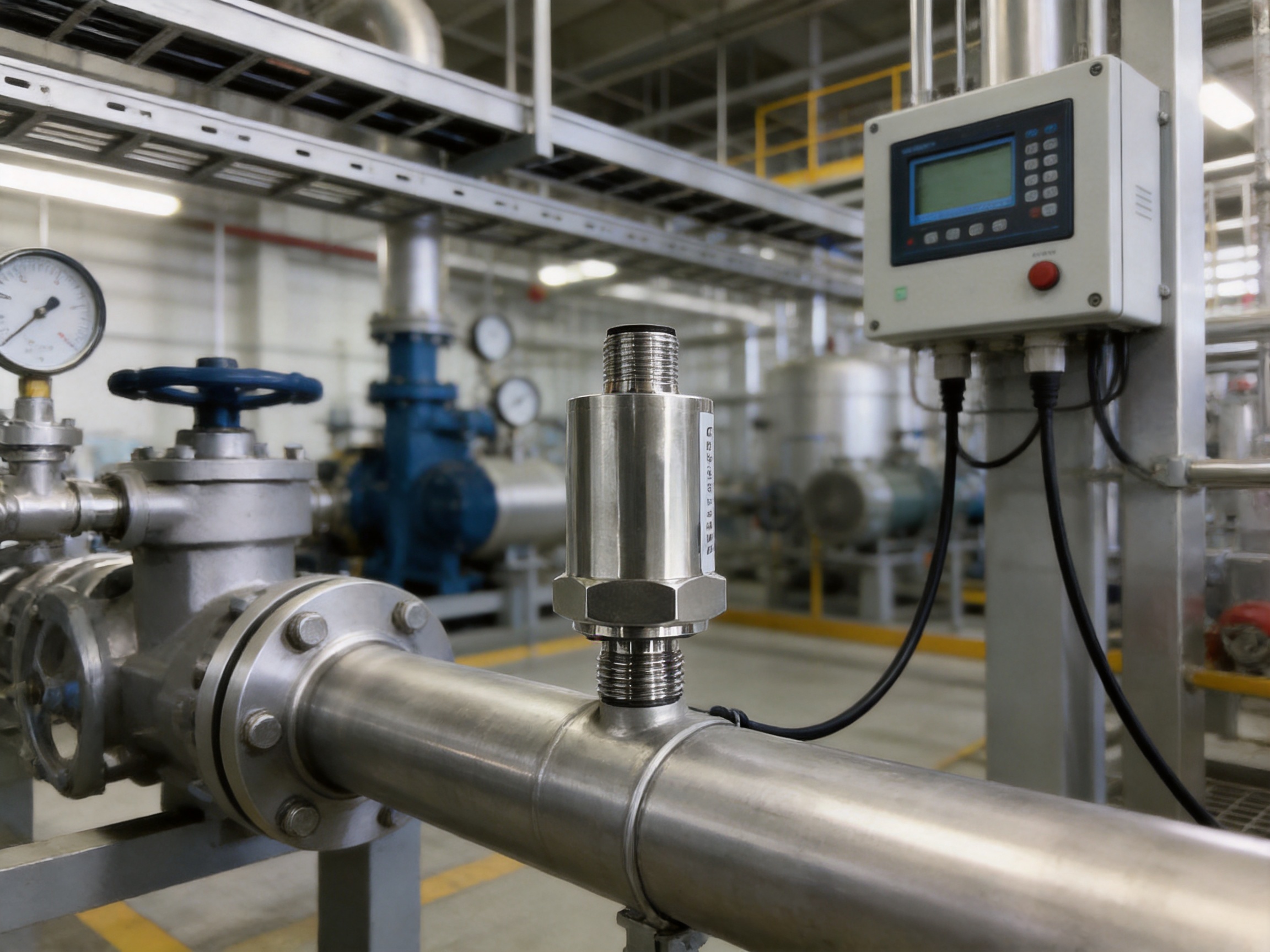
The AI-TS transmitter offers important advantages for these industries. Its stainless steel enclosure and 316L stainless steel diaphragm support use with various media that do not corrode stainless steel. Its compact form helps installation in pipeline skids, pump systems, and equipment packages where space is limited. Its current output option is suitable for longer cable runs common in plant environments.
Chemical processes often experience temperature changes and electrical noise from nearby equipment. The transmitter’s compensation temperature range, operating temperature capability, circuit protection, and EMC-oriented design support stable operation in such conditions. While careful material compatibility review is always required before selecting any pressure instrument, the AI-TS provides a strong baseline for many industrial fluid pressure applications.
Applications in Power Industry Systems
Power industry systems rely on pressure monitoring in auxiliary systems, water treatment systems, hydraulic controls, lubrication systems, cooling systems, and other process support equipment. Pressure instability can indicate pump failure, blockage, leakage, abnormal flow, or equipment wear. Timely measurement helps maintenance teams respond before faults become serious.
The AI-TS compact pressure transmitter can support these needs by providing standardized analog signals for monitoring and control. Its 4 mA to 20 mA output is especially useful in industrial power facilities because current loops are widely used and robust over distance. Its stainless steel structure and IP65 protection level help it withstand many power plant auxiliary environments.
Because power systems often require long service life and predictable maintenance, long-term stability is valuable. The specified ±0.3%FS per year maximum stability helps reduce unexpected drift and supports maintenance planning. Aging screening before delivery further improves confidence in installed performance.
Applications in Urban Water Supply
Urban water supply systems depend on pressure measurement to maintain stable supply, detect abnormal pressure, protect pumps, and support network control. Pressure transmitters may be installed in pump stations, distribution pipelines, water treatment equipment, storage-related systems, and monitoring points. Compact sensors are particularly useful when retrofitting existing facilities where installation space is limited.
The AI-TS transmitter is well suited for water supply applications where the medium does not corrode stainless steel. Its compact structure simplifies installation in pressure manifolds and pipe-mounted assemblies. Its current output can transmit data reliably to control cabinets or remote monitoring units. Its operating temperature range supports many indoor and outdoor utility environments.
Pressure monitoring also contributes to energy efficiency in water supply. Pumps consume significant energy, and pressure data can help control pump operation more precisely. By maintaining appropriate pressure rather than excessive pressure, operators can reduce energy waste and equipment wear. A reliable pressure transmitter is therefore not only a measurement device but also a tool for refined energy management.
Applications in Hydrological Exploration and Geology
Hydrological exploration and geological applications often require pressure monitoring in field conditions. Instruments may be exposed to changing temperature, moisture, transportation stress, and installation constraints. Measurement data may be used to understand water pressure, fluid behavior, or related environmental conditions.
The compact size of the AI-TS transmitter is beneficial for portable and field-mounted systems. Its stainless steel enclosure provides durability, while the IP65 protection level supports use in conditions where dust or water spray may be present. Its storage temperature range from -40°C to 125°C is useful for transportation and storage in varying climates.
For exploration and monitoring projects, stable output reduces uncertainty in collected data. Because field visits can be costly, a transmitter with stable performance and robust construction can reduce maintenance burden and improve project continuity. The AI-TS achieves this through compensated sensor performance, stainless steel construction, and aging-screened reliability.
Role in Fluid Pressure Detection and Control
Fluid pressure detection and control is a broad category that includes hydraulics, pneumatics, pumps, compressors, process lines, filtration systems, cooling systems, and test equipment. The AI-TS transmitter can be used wherever pressure feedback is required and the measured medium is compatible with stainless steel.
In hydraulic systems, pressure measurement helps control force, motion, and safety. Excessive pressure can damage seals or components, while insufficient pressure may cause poor machine performance. A compact transmitter can be installed close to critical hydraulic points, improving response and control accuracy.
In pump systems, pressure transmitters help identify blockage, dry-running conditions, abnormal load, and pressure fluctuation. When connected to a PLC or controller, the signal can trigger alarms, adjust pump speed, or shut down equipment for protection. The availability of current and voltage output options makes the AI-TS adaptable to both industrial control cabinets and machine-level controllers.
In filtration systems, pressure measurement before and after a filter can indicate filter clogging. Compact transmitters make it easier to install differential monitoring arrangements using separate sensors. Stable long-term performance is important because slow pressure changes over time may be used to schedule maintenance.
Installation and Integration Considerations
When selecting and installing a compact pressure transmitter, engineers should consider pressure range, pressure type, output signal, power supply, media compatibility, temperature conditions, connector type, pressure interface, and protection requirements. The AI-TS provides flexibility in many of these areas, but correct configuration remains essential for best performance.
The pressure range should be selected based on normal operating pressure and expected pressure peaks. Because the transmitter supports overload up to 2 times full scale, it can tolerate temporary overload conditions within specification. However, users should still choose a range that avoids frequent overload and provides sufficient resolution for control needs.
The pressure type must match the measurement task. Gauge pressure is commonly used when measuring pressure relative to atmospheric pressure. Absolute pressure is used when measuring relative to vacuum. Sealed gauge pressure is useful in certain higher-pressure or environmental conditions. Selecting the wrong pressure reference can cause systematic measurement errors.
The output signal should match the control system. For long cable runs and industrial environments, 4 mA to 20 mA is often preferred. For embedded systems or controller modules designed for voltage input, 0.5 V to 4.5 V or 0 V to 10 V may be appropriate. Power supply and load resistance should be checked to ensure stable operation.
Media compatibility is also important. The transmitter is suitable for various media that do not corrode stainless steel. If the medium contains corrosive chemicals, abrasive particles, high viscosity substances, or special contamination risks, users should review compatibility before installation. Proper sealing and thread connection are also necessary to prevent leakage and mechanical stress.
Reliability Through Circuit Protection and EMC Design
Industrial sensors often operate near electrical disturbances. Motors start and stop, relays switch, variable-frequency drives generate electromagnetic noise, and long cables may pick up interference. Without adequate circuit design, these disturbances can create unstable output, false alarms, or premature failure.
The AI-TS transmitter uses circuitry with multiple layers of protection and high reliability, meeting EMC requirements. This is a significant practical advantage because electromagnetic compatibility is not always visible in basic product comparisons. Two transmitters may have similar pressure range and accuracy specifications, but their field behavior may differ greatly when installed near noisy equipment.
Protection-oriented circuit design improves confidence in the analog signal. A stable signal helps control systems make correct decisions. In automated equipment, unstable sensor signals can cause unnecessary shutdowns, incorrect control actions, or difficult troubleshooting. By emphasizing circuit protection, the AI-TS helps reduce these risks.
Insulation resistance of 100 MΩ at 100 V DC also supports electrical reliability. Good insulation helps prevent leakage currents and supports stable operation in industrial environments. Together with proper installation and wiring practices, these electrical features contribute to dependable long-term measurement.
Temperature Performance and Environmental Durability
Temperature changes affect both mechanical and electronic parts of pressure transmitters. The AI-TS is designed with a compensation temperature range from -10°C to 80°C, allowing its output to be corrected within a broad practical range. Its operating temperature range from -30°C to +80°C supports use in many industrial and field environments, while its storage range from -40°C to 125°C supports transportation and storage resilience.
The zero-point temperature coefficient and full-scale temperature coefficient are both specified. For ranges at or below 100 kPa, the coefficient is 0.03%FS/°C. For ranges above 100 kPa, the coefficient is 0.02%FS/°C. These details help engineers understand how the transmitter may behave when temperatures change. In comparison, some lower-grade products provide limited or unclear temperature data, making system error estimation difficult.
The IP65 protection level indicates protection against dust ingress and water jets under defined conditions. This makes the transmitter suitable for many industrial sites where equipment may be exposed to dust, splashing, or cleaning-related moisture. While IP65 does not mean the device is designed for permanent immersion, it provides meaningful protection for common industrial environments.
Why Stainless Steel Construction Is Important
Stainless steel construction is more than a cosmetic feature. It affects mechanical strength, corrosion resistance, hygiene, and service life. In pressure measurement, the housing and wetted parts must tolerate mechanical stress and environmental exposure. Weak construction can lead to deformation, leakage, thread damage, or premature failure.
The AI-TS transmitter’s stainless steel enclosure supports rugged installation. The 316L stainless steel diaphragm is especially important because it is part of the pressure transfer path. 316L stainless steel is widely used in industrial sensing because of its corrosion resistance in many environments and its suitability for precision diaphragm applications.
Compared with transmitters that use lower-grade materials or mixed metal structures, an all-stainless approach improves confidence in demanding installations. It also supports cleaner equipment design, which is valuable in water systems, process machinery, and industrial environments where contamination or surface degradation is a concern.
Benefits for Equipment Manufacturers
Original equipment manufacturers need components that are reliable, easy to integrate, and available in configurations that match different machine models. The AI-TS compact pressure transmitter supports these needs through multiple output signals, multiple pressure ranges, pressure type options, compact structure, and connector flexibility.
For equipment manufacturers, compact size can reduce design constraints. A smaller transmitter can fit into machine panels, hydraulic blocks, pump assemblies, and test systems without requiring large mounting spaces. This supports cleaner machine design and easier service access.
Output flexibility also helps OEMs standardize. One machine line may use a PLC with 4 mA to 20 mA inputs, while another may use a controller with 0 V to 10 V inputs. By selecting different AI-TS output configurations, the OEM can maintain a consistent sensor platform while adapting to different control architectures.
Reliability is especially important for OEMs because field failures affect not only sensor replacement cost but also the reputation of the entire machine. The AI-TS manufacturing process, including compensation and aging screening, supports lower risk of early failure and more stable customer experience.
Benefits for System Integrators and End Users
System integrators value components that are technically clear, easy to wire, and compatible with standard industrial controls. The AI-TS provides familiar signal types and a clear technical parameter set. This simplifies design documentation, panel wiring, PLC configuration, and commissioning.
End users benefit from stable pressure data, reduced maintenance burden, and improved process awareness. In many plants, pressure trends can reveal equipment wear, process blockage, leakage, pump performance changes, or abnormal operating conditions. A reliable transmitter supports better decisions and helps reduce downtime.
The transmitter’s compact and stainless steel design also reduces practical installation concerns. It is easier to mount in tight spaces, and the robust enclosure supports long service in industrial settings. When a sensor is easy to install and dependable in use, it lowers the total cost of ownership beyond the initial purchase price.
Contribution to Smart Factory Development
Smart factories depend on accurate and continuous data from machines, utilities, and production processes. Pressure is one of the fundamental data types in industrial systems. Without pressure data, it is difficult to understand fluid transport, hydraulic force, pump behavior, filtration status, and many other process conditions.
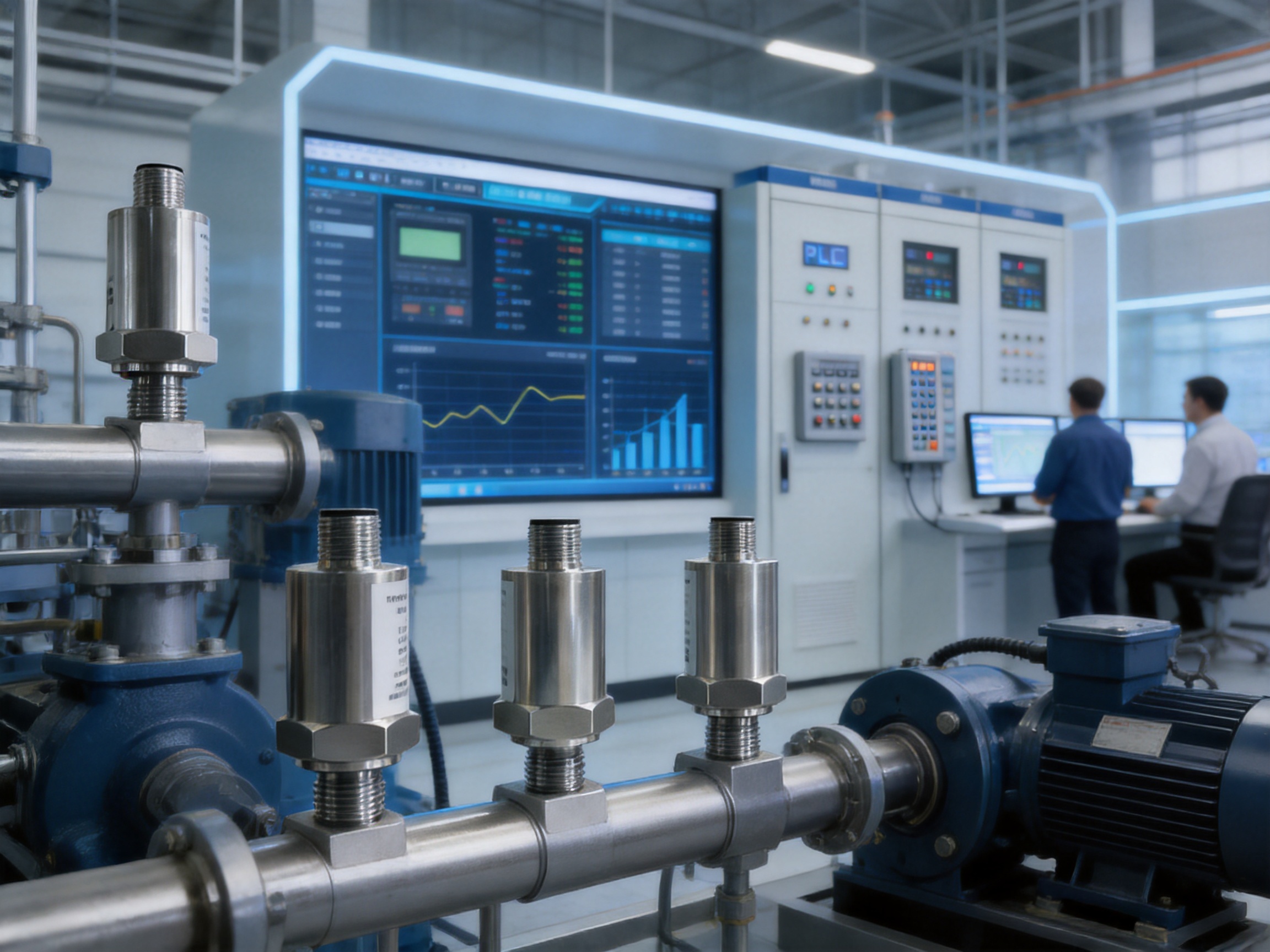
The AI-TS compact pressure transmitter contributes to smart factory development by providing reliable analog pressure signals that can be integrated into industrial control and monitoring systems. When pressure data is collected over time, it can support equipment condition monitoring, energy management, predictive maintenance, and process optimization.
For example, pressure changes in a pump system can indicate reduced efficiency or blockage. Pressure fluctuation in a hydraulic system can reveal valve problems or leakage. Pressure trends in water supply can show demand changes or network issues. By installing compact transmitters at key points, factories can convert physical pressure behavior into actionable digital information.
This aligns with the company’s broader mission of supporting efficient, reliable, and green smart factories. Sensors such as the AI-TS are foundational components in that mission because they create the data layer needed for intelligent decision-making.
Selection Guide
To choose the right configuration of the compact pressure transmitter, users should begin by defining the measured medium and confirming stainless steel compatibility. If the medium is water, oil, air, or another fluid that does not corrode stainless steel, the transmitter may be suitable. If the medium is chemically aggressive, compatibility must be carefully reviewed.
Next, the pressure range should be selected. A range too low may expose the transmitter to frequent overload, while a range too high may reduce measurement resolution. Engineers should consider normal operating pressure, maximum expected pressure, pressure spikes, and safety margins. The AI-TS overload rating of 2 times full scale provides useful protection against temporary pressure peaks, but good engineering practice still requires proper range selection.
The output signal should be selected according to system needs. Use 4 mA to 20 mA for standard industrial current loops, longer cable runs, and high-noise environments. Use voltage output for systems with compatible voltage input modules, short wiring distances, or embedded control designs. Confirm power supply requirements before ordering.
Temperature conditions should also be evaluated. If the transmitter will operate within -30°C to +80°C and the compensation requirements match the application, it can provide stable measurement. Storage and transport conditions should remain within the specified -40°C to 125°C range.
Finally, review mechanical connection and electrical connector requirements. The transmitter supports various connectors and pressure interfaces, including an M12 electrical connection option. Correct interface selection reduces installation time and avoids unnecessary adapters.
Maintenance and Operational Best Practices
Although the AI-TS is designed for stable and reliable performance, proper installation and maintenance help maximize service life. Users should avoid applying pressure beyond specified limits, prevent mechanical impact during installation, and use proper sealing methods for the pressure connection.
Electrical wiring should follow the selected output type. For two-wire current output, loop power and load resistance must be calculated correctly. For voltage output, the load resistance should meet the specified requirement of at least 10 kΩ. Shielded cable may be useful in electrically noisy environments, and grounding should follow system design standards.
The pressure port should be protected from clogging when the medium contains particles or sediment. If used in water, oil, or process fluid systems, users should consider filtration or installation orientation where necessary. In systems with strong pressure pulses, damping or mechanical protection may be considered based on engineering judgment.
Periodic verification can help ensure long-term performance. The transmitter has a maximum long-term stability specification of ±0.3%FS per year, but actual maintenance intervals depend on industry requirements, process criticality, and operating conditions. Critical applications may require more frequent inspection than general monitoring points.
Quality Value Beyond the Initial Price
When comparing pressure transmitters, purchase price is only one part of total value. A low-cost transmitter that fails early, drifts frequently, or causes process downtime may become much more expensive than a higher-quality option. The AI-TS provides value through stable sensing, stainless steel durability, output flexibility, temperature compensation, aging screening, and circuit protection.
Reduced installation complexity also has economic value. Compact size, multiple output options, and interface flexibility can reduce engineering time and field modification. Stable operation reduces troubleshooting. Long-term stability reduces recalibration pressure. These factors all contribute to lower lifecycle cost.
For factories building digital monitoring systems, reliable sensor data is essential. Poor-quality pressure data can lead to wrong decisions, false alarms, or missed faults. Investing in a robust transmitter helps protect the quality of the entire monitoring system.
Q&A Section
What is the AI-TS compact pressure transmitter used for?
The AI-TS compact pressure transmitter is used to measure fluid pressure and convert it into standard electrical signals for industrial control, monitoring, and data acquisition. It is suitable for petroleum, chemical, power, urban water supply, hydrological exploration, geology, and general fluid pressure detection and control applications.
What pressure ranges are available?
The transmitter supports ranges from 0 MPa to 10 MPa and up to 40 MPa depending on configuration. Users should select the range according to normal operating pressure, maximum expected pressure, and required measurement resolution.
What output signals does the transmitter support?
It supports 4 mA to 20 mA DC two-wire current output and voltage outputs including 0.5 V to 4.5 V and 0 V to 10 V DC in a three-wire system. This allows compatibility with many PLCs, controllers, meters, and data acquisition systems.
Why is the stainless steel structure important?
The stainless steel structure improves mechanical strength, durability, and corrosion resistance for compatible media. The 316L stainless steel diaphragm helps protect the sensing element while transmitting pressure accurately.
How does the product compare with many competing transmitters?
Compared with many basic transmitters, the AI-TS offers a stronger balance of compact size, stainless steel construction, diffused silicon sensing, temperature compensation, aging screening, multiple output options, circuit protection, EMC-oriented reliability, and long-term stability.
What is the operating temperature range?
The operating temperature range is -30°C to +80°C. The compensation temperature range is -10°C to 80°C, and the storage temperature range is -40°C to 125°C.
Is the transmitter suitable for corrosive media?
The transmitter is suitable for various media that do not corrode stainless steel. For corrosive or special media, users should confirm material compatibility before selection and installation.
What does IP65 protection mean for this product?
IP65 protection means the transmitter is protected against dust ingress and water jets under defined conditions. It is suitable for many industrial environments, but it is not intended for permanent immersion unless separately specified.
Why is aging screening valuable?
Aging screening helps identify early-life instability before products are delivered. This improves field reliability, reduces the risk of early failure, and supports stable long-term operation.
How does the transmitter support smart factory development?
It provides stable pressure data that can be integrated into control systems and monitoring platforms. This data supports equipment condition monitoring, refined energy management, predictive maintenance, and production process optimization.
Conclusion
The Compact Pressure Transmitter AI-TS is a practical and reliable solution for industrial pressure measurement. It combines a compact stainless steel structure, a diffused silicon pressure sensor, a 316L stainless steel diaphragm, multiple output signal options, temperature compensation, aging screening, circuit protection, and broad application suitability. These characteristics make it valuable for petroleum, chemical, power, water supply, hydrological, geological, and general fluid control applications.
Its advantages over many competing products come from balance and integration. It is compact but still robust. It is flexible but still technically disciplined. It offers industrial-standard output signals while maintaining stable sensing performance. It supports reliable operation through stainless steel construction, EMC-oriented circuitry, and controlled manufacturing processes.
Behind the product is a manufacturer focused on smart factory development, data sensing, intelligent connectivity, and industrial data integration. This background strengthens the product’s relevance in modern automation environments, where pressure transmitters are no longer isolated devices but essential data sources for intelligent production systems.
For engineers, equipment manufacturers, system integrators, and industrial end users seeking a compact pressure transmitter with reliable performance and practical integration value, the AI-TS offers a strong combination of durability, stability, flexibility, and manufacturing quality.
References
1. Industrial Pressure Measurement Handbook, Process Instrumentation Technical Series.
2. Piezoresistive Pressure Sensor Design and Application Notes, Industrial Sensor Engineering Reference.
3. Electromagnetic Compatibility in Industrial Measurement Systems, Automation Engineering Guide.
4. Stainless Steel Materials in Pressure Instrumentation, Materials Selection Manual for Industrial Sensors.
5. Practical Guide to 4 mA to 20 mA Current Loop Instrumentation, Control System Integration Reference.
6. Temperature Compensation Methods for Pressure Transmitters, Sensor Calibration Technical Review.
7. Smart Factory Data Acquisition and Condition Monitoring, Industrial IoT Application Handbook.