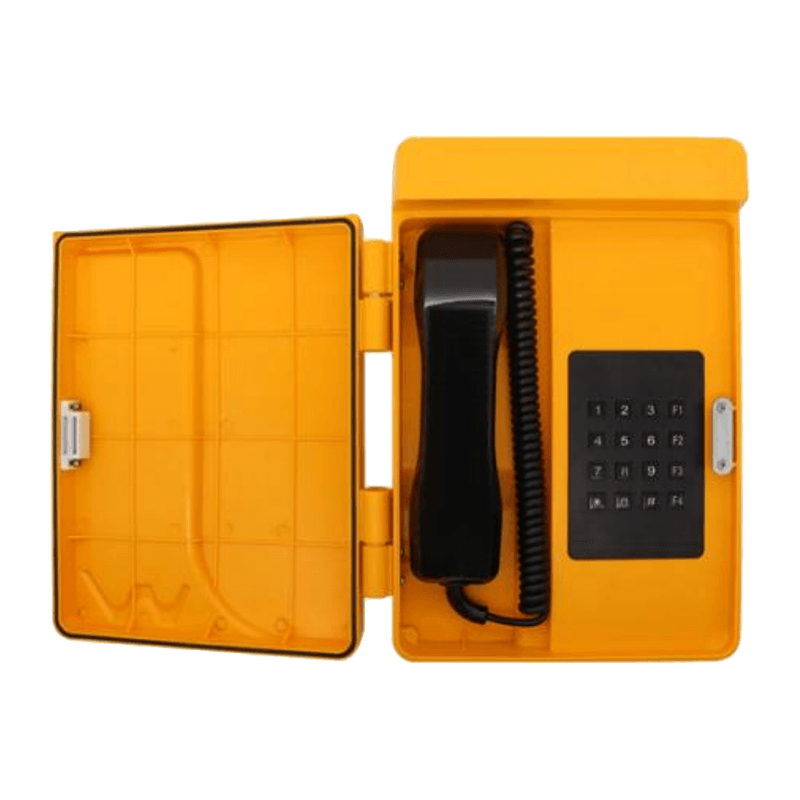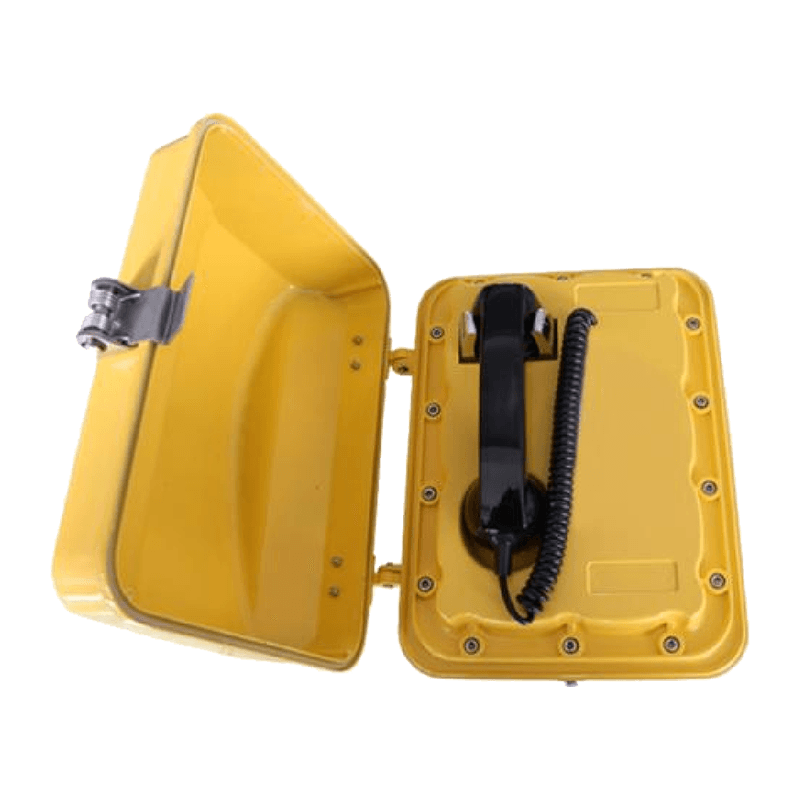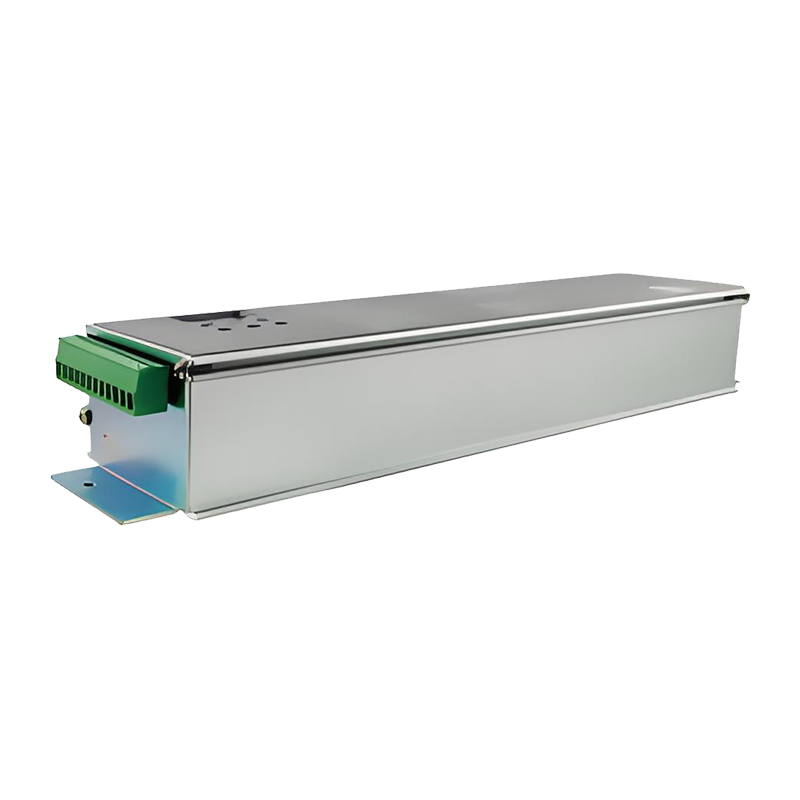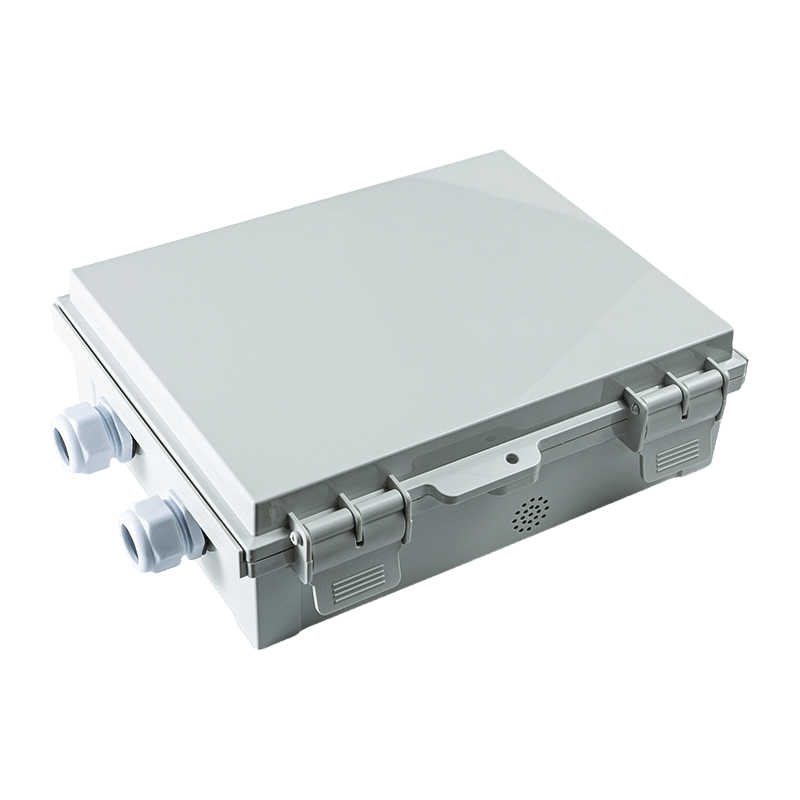


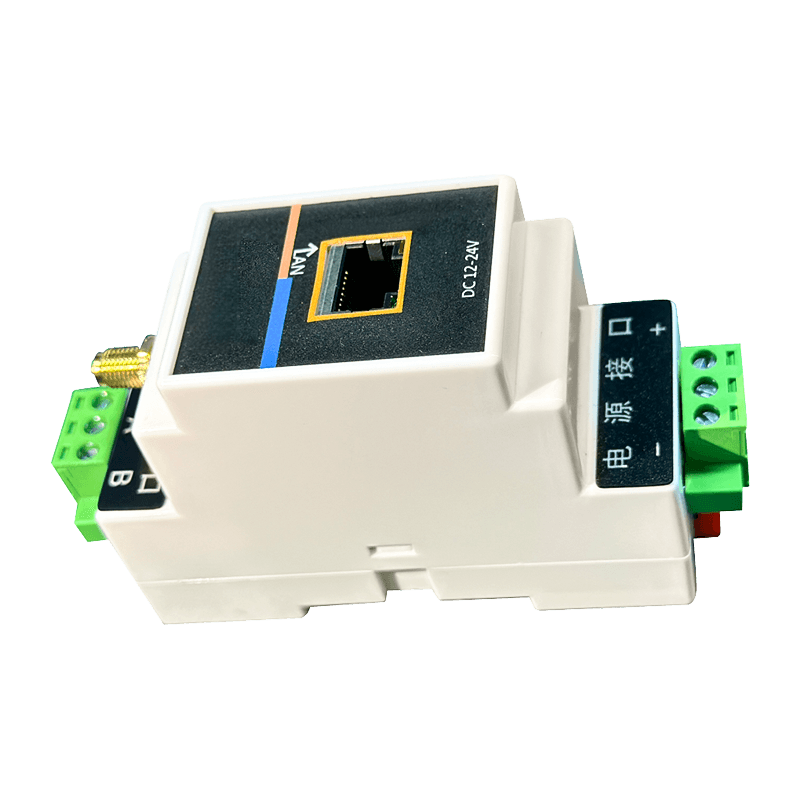
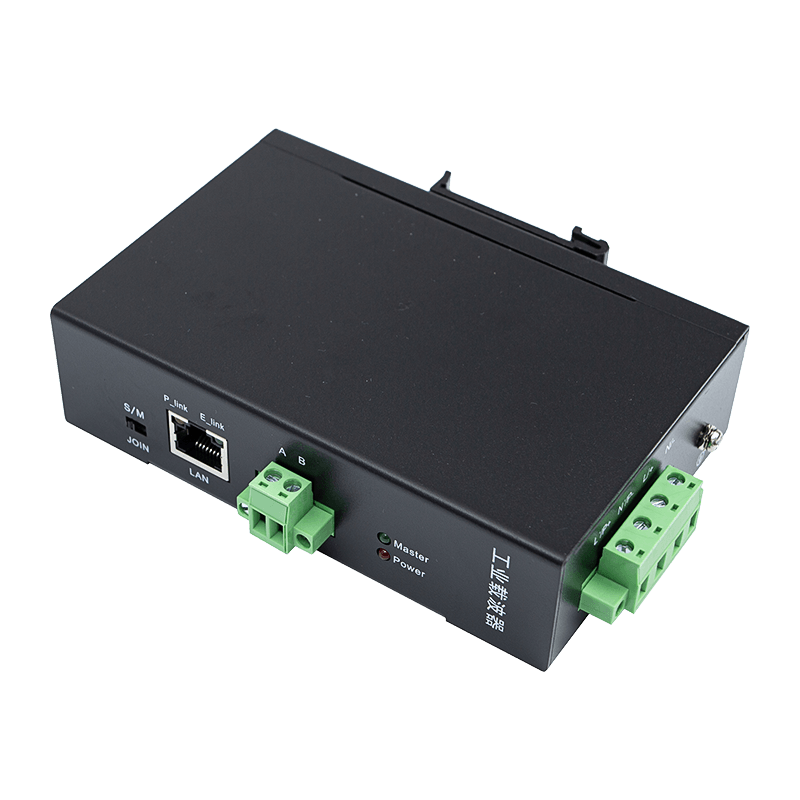
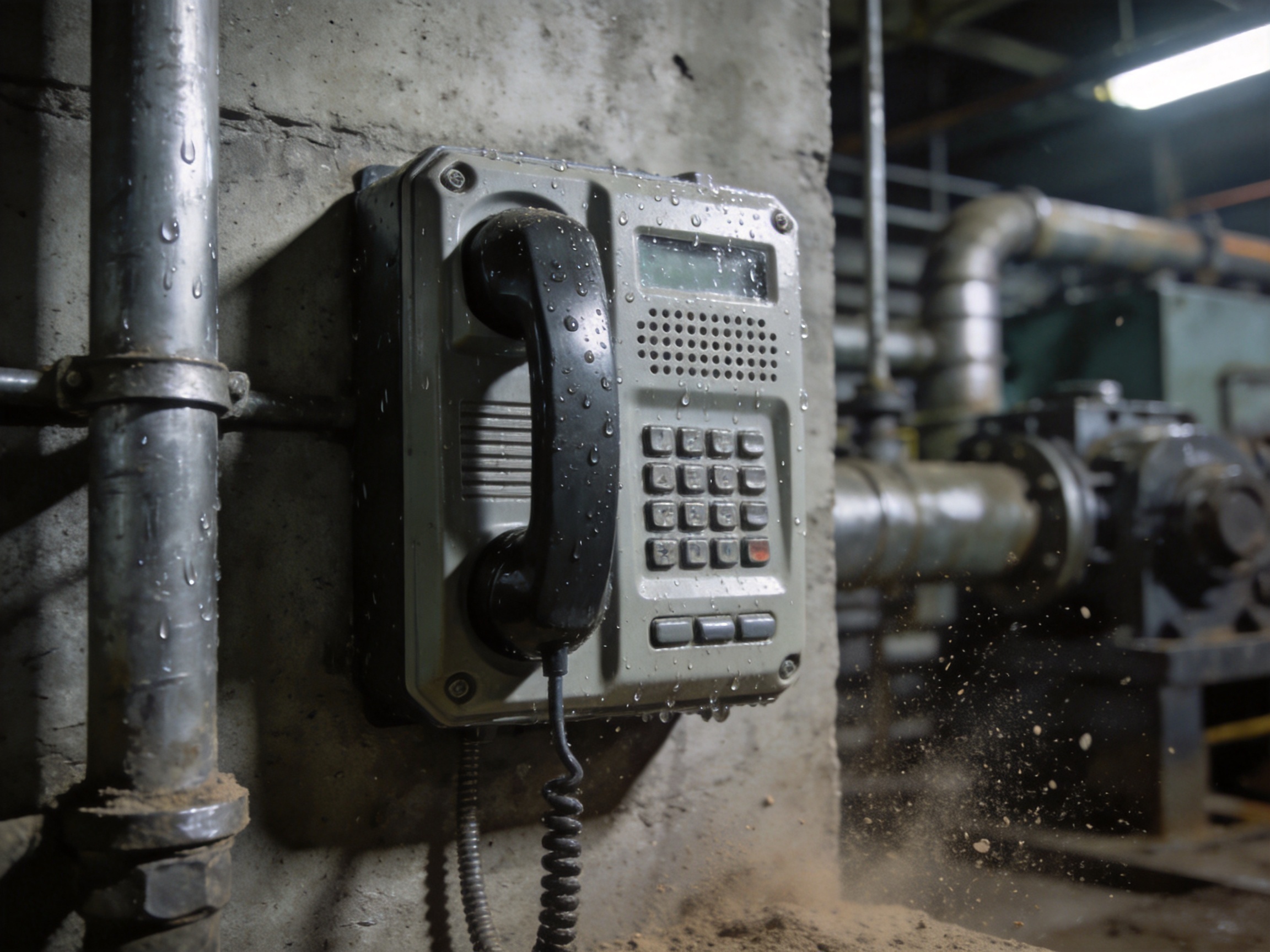
Industrial communication is most valuable when it is immediate, dependable, and simple to deploy. The CS618L-FS24 DC Waterproof Digital Telephone is designed for exactly that purpose: a robust, wall-mounted communication terminal for wet, dusty, and demanding industrial environments where teams need multi-party intercom, broadcast, and alarm functions without the complexity of conventional network installation.
Product Overview
The CS618L-FS24 is a PLC digital telephone built for industrial voice communication over a wideband power carrier system. It uses a DC 24 V architecture in which power and signal share the same two-core cable. This design allows communication terminals to form a self-organizing network with automatic IP assignment, reducing commissioning time and lowering installation difficulty.
In many factories, tunnels, energy facilities, warehouses, processing plants, and outdoor industrial zones, communication systems face three common obstacles: difficult wiring, harsh environmental exposure, and complex network configuration. This product addresses all three. Its IP66 waterproof enclosure protects the unit in wet or dusty locations, its ABS engineering plastic housing keeps weight manageable, and its power-line communication method eliminates the need for separate communication cabling in many applications.
The product is intended for wet or dusty industrial environments that do not specifically require explosion-proof certification. This distinction is important. It is a strong fit for general industrial protection requirements, but projects that require certified explosion-proof equipment should select a model designed and certified for that purpose.
Core Value for Industrial Users
The main value of the CS618L-FS24 is that it combines voice intercom, broadcast, and alarm functions in one integrated device. In an industrial site, a communication terminal is not merely a phone. It is a tool for dispatching work, coordinating maintenance, notifying operators, responding to faults, and supporting emergency communication. By integrating several communication functions, the device helps reduce separate equipment purchases and simplifies field operation.
The product supports multi-party intercom, making it suitable for teams distributed across different areas of a facility. It can also support broadcast-style communication, allowing messages to be delivered quickly across connected units. Alarm functionality adds another layer of practical value by supporting urgent notification scenarios.
Compared with many conventional industrial telephones, the CS618L-FS24 emphasizes easier deployment. Automatic IP allocation and self-organizing networking reduce the need for manual address planning, server configuration, or specialized network debugging. For projects with many terminals, this can significantly reduce commissioning workload.
Technical Specification Summary
Parameter |
Specification |
Product Type |
PLC Digital Telephone |
Model |
CS618L-FS24 |
Enclosure Type |
DC waterproof type |
Supply Voltage |
DC 24 V |
Signal Line Voltage |
DC 24 V |
Communication Method |
Wideband power carrier communication |
Networking Mode |
Automatic IP assignment and self-organizing network |
Protection Grade |
IP66 waterproof protection |
Material |
ABS engineering plastic |
Speaker Output |
8 ohm, 25 W |
Additional Audio Output |
8 ohm, 5 W |
Power Consumption |
5 W standby, 25 W full load |
Working Temperature |
-40 to 85 degrees Celsius |
Relative Humidity |
10 percent to 95 percent, non-condensing |
Barometric Pressure |
80 to 110 kPa |
Corrosion Protection Grade |
WF1 |
Dimensions |
322 mm x 260 mm x 142 mm |
Weight |
6 kg |
Installation Method |
Wall mounting |
Why Wideband Power Carrier Communication Matters
Wideband power carrier communication is one of the most important features of this product. Instead of relying on separate Ethernet communication cables or dedicated analog voice pairs, the system can transmit communication signals over the same two-core cable that carries DC 24 V power. This integrated power-and-signal approach offers a practical advantage in industrial sites where cable routes are long, cable trays are crowded, and installation work must be completed quickly.
Traditional Ethernet-based intercom systems can provide digital voice quality, but they often require switches, routers, network planning, power adapters, or Power over Ethernet infrastructure. In harsh industrial environments, every additional network device adds another point of potential failure. By comparison, a wideband power carrier architecture can simplify the topology and reduce dependency on external network equipment.
Analog industrial telephones can be simple, but they may lack the flexibility needed for modern multi-party intercom and broadcast functions. They can also require dedicated cabling schemes and may become inconvenient when expanding the system. The CS618L-FS24 provides a more modern digital communication approach while preserving installation simplicity.
Wireless intercoms may appear convenient, but industrial sites often contain metallic structures, heavy machinery, electromagnetic interference, walls, pipelines, and moving equipment that can weaken wireless performance. Wireless devices may also require battery maintenance or careful channel planning. The CS618L-FS24 avoids many of those issues by using a wired PLC communication path while still reducing wiring complexity.
Automatic IP Assignment and Self-Organizing Networking
One of the biggest practical advantages of the CS618L-FS24 is that the system can automatically assign IP addresses and form a self-organizing network. In many industrial communication projects, engineering time is consumed by network configuration: assigning static IP addresses, recording device locations, troubleshooting conflicts, configuring switches, and coordinating with information technology departments. This product is designed to reduce that burden.
With automatic IP allocation, field technicians can install devices more efficiently. The system does not require a network server for self-organizing communication. This is particularly useful for facilities where communication terminals are added in phases or where maintenance teams need a practical solution that does not depend on complex infrastructure.
Self-organizing networking also improves scalability. When a production area is expanded, new terminals can be added with less configuration effort. For industrial users, this means lower lifecycle cost and reduced downtime during expansion projects.

Waterproof Protection for Harsh Environments
The CS618L-FS24 is rated IP66, making it suitable for wet and dusty industrial environments. An IP66 rating indicates strong protection against dust ingress and powerful water jets. This is important in facilities where washdown, rain exposure, dust accumulation, humid air, or splashing may affect communication equipment.
Industrial telephones often fail not because of electronic design alone, but because environmental protection is insufficient. Moisture can corrode terminals, dust can affect switches and acoustic components, and water ingress can damage internal circuits. The CS618L-FS24 addresses these concerns with a waterproof enclosure and practical industrial construction.
The ABS engineering plastic housing contributes to the product’s usability. Compared with heavier metal enclosures, ABS can reduce installation difficulty while maintaining suitable durability for many non-explosion-proof industrial environments. At 6 kg, the device is sturdy enough for fixed wall mounting yet manageable for installation crews.
Wide Temperature Operating Range
The operating temperature range of -40 to 85 degrees Celsius supports use in demanding environments. This range is valuable for outdoor installations, unheated industrial spaces, equipment corridors, production workshops, and facilities that experience seasonal temperature extremes.
Many commercial communication devices are not designed for such temperature variation. Consumer or office-grade products may work well in controlled indoor environments, but they can become unreliable in freezing or high-temperature conditions. Industrial users need equipment that continues operating when the environment is not comfortable for people. The CS618L-FS24 is designed with this requirement in mind.
The wide temperature tolerance also helps reduce maintenance risk. A communication terminal that fails during a weather event or production emergency can create operational delays. By selecting a device designed for industrial temperature conditions, facility managers can improve the dependability of their communication infrastructure.
Audio Performance for Industrial Conditions
The product includes a 25 W speaker output, providing the audio strength needed for industrial areas where background noise may be present. In a quiet office, a low-power speaker may be sufficient. In a factory, workshop, pump room, tunnel, or machinery area, stronger audio output can make the difference between a message being heard and a message being missed.
Clear communication supports safety and efficiency. Operators need to hear instructions without leaving their work position. Maintenance personnel need to coordinate during troubleshooting. Supervisors need to broadcast updates quickly. The 25 W speaker output supports these use cases by improving message audibility.
The device also has a standby power consumption of 5 W and full-load consumption of 25 W. This balance supports continuous availability while keeping normal power use controlled. In large systems with many terminals, standby consumption matters because all devices may remain powered throughout the day.
Integrated Intercom, Broadcast, and Alarm Functionality
Industrial communication systems often grow in fragmented ways. A site may install telephones for point-to-point communication, separate loudspeakers for public address, and separate alarm devices for urgent notification. This can create overlapping wiring, multiple maintenance procedures, and operator confusion. The CS618L-FS24 reduces fragmentation by integrating multi-party intercom, broadcast, and alarm capabilities in one machine.
Multi-party intercom is useful when multiple stations must coordinate at the same time. For example, a production line supervisor, control room operator, and maintenance technician may need to discuss a machine fault simultaneously. A multi-party function shortens the communication chain and reduces misunderstanding.
Broadcast capability supports one-to-many announcements. This is valuable for shift changes, production updates, safety reminders, maintenance notifications, and emergency coordination. Broadcast messages can improve response speed because information reaches multiple points at once.
Alarm capability supports urgent communication. In industrial environments, alarms must be noticed quickly. A device that combines voice and alarm functions can help operators understand not only that an event has occurred, but also what action is required.
Advantages Over Ethernet-Based Competitors
Ethernet-based industrial intercom systems are common, but they often depend on network switches, structured cabling, device configuration, and network management. These requirements are manageable in some facilities, but they can become costly in distributed industrial sites. The CS618L-FS24 offers a different value proposition by using wideband power carrier communication over a two-core DC 24 V cable.
First, installation can be simpler. Where a suitable two-core line is available, communication and power can be integrated, reducing the need to pull separate data cables. This is particularly advantageous in retrofit projects where installing new network cabling may require shutdowns, cable tray modification, or complex routing.
Second, commissioning is faster. Automatic IP assignment and self-organizing networking reduce the need for manual configuration. Competitor systems may require skilled network technicians to configure addresses, VLANs, switches, or server settings. The CS618L-FS24 is designed to be more field-friendly.
Third, system dependency can be lower. Many Ethernet intercom systems require centralized servers or controllers. If a central component fails, communication may be affected. The self-organizing approach of this product can reduce reliance on a separate network server for basic operation.
Fourth, maintenance can be easier. Fewer external network components can mean fewer devices to inspect, power, configure, and replace. In remote or harsh industrial sites, this simplicity has real economic value.
Advantages Over Analog Industrial Telephones
Analog industrial telephones remain useful in some basic applications, but they may not provide the digital networking flexibility expected in modern industrial communication. The CS618L-FS24 is designed as a digital PLC telephone, allowing more intelligent networking and more integrated functions than many traditional analog systems.
Analog systems can require dedicated wiring and may become difficult to expand. They may also lack automatic network organization, broadcast integration, or advanced group communication capabilities. By contrast, the CS618L-FS24 supports automatic IP assignment and multi-party communication in a digital system architecture.
Analog audio quality can also be affected by line conditions, distance, and interference. Wideband power carrier technology is designed to support communication over industrial cable routes while enabling digital processing and networked functions. For facilities that need a more modern communication backbone, the CS618L-FS24 provides a stronger platform.
Advantages Over Wireless Intercom Devices
Wireless devices are attractive because they reduce cable installation, but industrial wireless communication can be unpredictable. Metallic structures, motors, variable frequency drives, thick walls, moving vehicles, and electromagnetic noise can all affect signal stability. Wireless coverage surveys and access point planning may be required, and battery-powered devices add maintenance tasks.
The CS618L-FS24 avoids these disadvantages by using a wired communication path through power carrier technology. It still reduces wiring complexity because power and signal share the same two-core cable, but it does not depend on radio coverage. This makes it suitable for sites where wireless reliability is uncertain or where communication must remain stable in challenging physical environments.
For industrial managers, predictability is often more valuable than theoretical convenience. A wired PLC digital telephone can provide a stable communication foundation while still offering easier deployment than traditional separated power and communication wiring.

Applications in Industrial Facilities
The CS618L-FS24 is suitable for a wide range of general industrial environments that require waterproof, dust-resistant, and dependable communication. Potential applications include manufacturing workshops, equipment rooms, power distribution areas, water treatment facilities, warehouses, logistics corridors, tunnels, outdoor production zones, and heavy-duty plant areas.
In manufacturing workshops, the device can help operators communicate with maintenance teams, control rooms, and supervisors. When a machine fault occurs, fast voice communication can reduce downtime. Instead of searching for a mobile phone or walking across the plant, the operator can use a fixed industrial terminal.
In water treatment and pumping stations, waterproof protection is especially valuable. Moisture, spray, and condensation can damage ordinary communication devices. The IP66 enclosure of the CS618L-FS24 supports reliable operation in such environments.
In warehouses and logistics facilities, broadcast capability can support operational coordination. Messages about loading, dispatching, safety, or urgent tasks can be distributed through connected terminals. The 25 W speaker output supports audibility in large spaces.
In tunnels and long corridors, communication distance is important. The product is designed for talking distances up to 1000 meters, making it useful in extended industrial layouts where operators are far apart. The wideband power carrier method also fits environments where pulling complex network infrastructure may be difficult.
Design for Plug-and-Play Deployment
A major selling point of the CS618L-FS24 is plug-and-play deployment without complicated wiring or debugging. In practice, industrial projects benefit greatly from products that reduce field uncertainty. Every hour spent troubleshooting wiring, addressing, or network configuration increases project cost.
Plug-and-play design is especially useful for contractors and maintenance departments. Installation teams can focus on mounting the device, connecting the two-core cable, and verifying operation, rather than spending extensive time on network engineering. This reduces dependence on specialized labor and improves project predictability.
For end users, easier deployment also means faster replacement. If a terminal is damaged or must be relocated, maintenance personnel can complete the work more quickly. Over the lifecycle of an industrial facility, this maintainability can be as important as the initial purchase price.
Manufacturing Strength Behind the Product
ASY Electronics is a high-tech enterprise focused on smart factory infrastructure, data sensing, and intelligent connectivity. Its product portfolio includes broadband power line carrier products, wireless temperature monitoring systems, transmitters, flow meters, and automatic door controllers. This broad industrial background supports the development of communication devices that are practical, robust, and aligned with real factory requirements.
The company’s strength is not limited to producing a single device. It develops edge-layer hardware products and industrial data integration solutions, allowing it to understand how field equipment, communication channels, and industrial data systems interact. This system-level understanding is important when designing a PLC digital telephone because the device must function as part of a larger industrial communication network.
Advanced manufacturing strength is reflected in controlled component selection, enclosure processing, assembly consistency, electrical verification, and environmental reliability checks. For a waterproof industrial telephone, the manufacturing process must pay close attention to sealing surfaces, cable entry points, terminal connections, speaker integration, and housing assembly. A small inconsistency in these areas can compromise long-term reliability.
Industrial communication products also require stable electronic performance. Power input, signal coupling, audio output, communication stability, and temperature tolerance must be validated carefully. By combining hardware development knowledge with production process control, the manufacturer can deliver products suited for demanding installations.
Quality Control and Reliability Engineering
Reliability begins before assembly. Incoming materials should be checked for consistency, including enclosure parts, circuit boards, connectors, seals, wiring components, and acoustic elements. For a product that may be installed in wet or dusty environments, material quality directly affects service life.
During production, process control is essential. Circuit boards must be assembled accurately, housing parts must fit properly, and sealing components must be positioned correctly. Electrical tests help confirm that the device receives DC 24 V power correctly, communicates through the power carrier system, and provides expected audio output.
Functional testing is equally important. Each unit should be evaluated for intercom operation, broadcast response, alarm function, speaker output, and networking behavior. Automatic IP assignment and self-organizing networking are core product advantages, so these functions must be verified before delivery.
Environmental reliability considerations are also important. The product is designed for -40 to 85 degrees Celsius operation and non-condensing humidity from 10 percent to 95 percent. Industrial customers need confidence that the device can withstand demanding conditions, and the manufacturing process must support that requirement through design validation and quality checks.
Industrial Design Choices That Improve Practical Use
The CS618L-FS24 uses a wall-mounted installation method. Wall mounting is practical in industrial environments because it keeps the terminal visible, accessible, and protected from floor-level impact or contamination. Operators can locate the unit quickly during routine communication or urgent events.
The overall dimensions of 322 mm x 260 mm x 142 mm provide a balance between visibility and compactness. The unit is large enough to house industrial audio components and waterproof structure, but compact enough for installation in corridors, equipment rooms, or work areas.
The 6 kg weight also supports practical installation. Heavy metal devices may require stronger supports and more labor, while lightweight devices may lack durability. The ABS engineering plastic enclosure provides an appropriate balance for many industrial applications.
The WF1 corrosion protection grade supports use in general industrial atmospheres where corrosion resistance is required. While the product is not described as suitable for highly corrosive or explosion-proof environments, it is well positioned for many wet, dusty, and moderately challenging industrial sites.
How the Product Supports Smart Factory Development
Smart factories rely on data, automation, and connectivity, but human communication remains essential. Operators, maintenance technicians, safety personnel, and supervisors must still coordinate decisions. A smart factory is not only a collection of sensors and software; it is an operational environment where people and machines must work together efficiently.
The CS618L-FS24 supports smart factory development by providing reliable edge communication. Because it uses wideband power carrier communication, it fits the broader idea of intelligent connectivity through existing or simplified infrastructure. Its self-organizing network design aligns with smart factory goals: lower configuration burden, easier expansion, and more resilient field communication.
In equipment condition monitoring, refined energy management, and production process optimization, timely communication is valuable. When monitoring systems identify abnormal equipment behavior, staff must coordinate inspection and response. When energy management requires operational adjustment, instructions must be distributed. When production optimization changes workflows, teams must be informed. A dependable industrial intercom system supports these processes.
Economic Benefits for Project Owners
The economic benefits of the CS618L-FS24 come from installation savings, reduced commissioning time, simplified maintenance, and improved operational response. While hardware price is always a consideration, total cost of ownership is often more important in industrial projects.
Installation savings may come from integrated power and signal transmission over a two-core cable. Reducing separate cabling requirements can reduce material cost, labor cost, cable tray usage, and installation time. In retrofit projects, avoiding major cable changes can be especially valuable.
Commissioning savings come from automatic IP assignment and self-organizing networking. Fewer configuration steps mean fewer opportunities for error. Project teams can complete installation more quickly and hand over the system with greater confidence.
Maintenance savings come from system simplicity. Devices that do not rely heavily on external network infrastructure may be easier to troubleshoot. If a communication problem occurs, technicians can focus on the terminal, power line, and local wiring instead of a complex network chain.
Operational benefits may be even larger. Fast communication reduces downtime, supports safety response, and improves coordination. In a production environment, even a short reduction in downtime can justify investment in reliable communication infrastructure.
Comparison with Common Alternatives
Comparison Area |
CS618L-FS24 |
Typical Ethernet Intercom |
Typical Wireless Intercom |
Typical Analog Telephone |
Communication Medium |
Wideband power carrier over two-core DC line |
Ethernet cable and network devices |
Radio signal |
Dedicated analog line |
Configuration |
Automatic IP assignment and self-organizing network |
Often requires network configuration |
May require pairing or wireless planning |
Usually simple but less flexible |
Infrastructure Dependency |
No network server required for self-organizing operation |
May depend on switches, routers, or servers |
Depends on wireless coverage and interference conditions |
Depends on analog wiring scheme |
Environmental Protection |
IP66 waterproof enclosure |
Varies by model |
Varies by model |
Varies by model |
Industrial Audio |
25 W speaker output |
Varies by model |
Often limited by size and power |
Usually limited unless paired with external PA equipment |
Expansion |
Designed for easier expansion with self-organizing networking |
Requires network planning |
May be limited by coverage |
May require additional dedicated wiring |
Installation and Deployment Considerations
Although the CS618L-FS24 is designed for simplified deployment, proper installation remains important. The unit should be mounted securely on a suitable wall or structural surface. Installers should ensure that the mounting location is accessible to operators and protected from unnecessary mechanical impact.
The cable route should be planned according to the facility layout and electrical requirements. Because power and signal share the same two-core cable, attention should be given to cable quality, connection integrity, and route protection. Good wiring practice supports stable communication and long service life.
The IP66 protection rating depends on correct enclosure assembly and cable entry sealing. During installation, technicians should avoid damaging seals or leaving openings that could allow water or dust ingress. After wiring, the enclosure should be closed and secured properly.
System testing should include voice communication, broadcast function, alarm function, speaker output, and networking behavior. Testing under realistic site conditions is recommended, especially in noisy environments where speaker audibility must be confirmed.
Maintenance Recommendations
Routine maintenance can help preserve long-term reliability. Operators should periodically inspect the enclosure for damage, check that mounting hardware remains secure, and verify that cable entries remain sealed. In dusty or wet environments, the exterior should be cleaned according to site procedures without damaging the unit.
Functional checks should be performed at regular intervals. These checks may include intercom testing, broadcast testing, alarm testing, and audio output verification. Because the product may be used for urgent communication, it should not be ignored until an emergency occurs.
If communication issues occur, technicians should check the DC 24 V supply, cable continuity, terminal connections, and local environmental conditions. The self-organizing network design can simplify troubleshooting compared with systems that depend on multiple network devices.
Replacement or relocation should follow the same installation principles as the original deployment. The device’s plug-and-play design helps reduce service time, but proper sealing and functional verification remain necessary.

Why Choose This Product from a Specialized Industrial Manufacturer
Selecting industrial communication equipment is not only about comparing specifications. It is also about choosing a manufacturer that understands industrial environments, field deployment, and long-term reliability. ASY Electronics provides industrial IoT communication solutions and has experience in smart grid, power line carrier, sensing, monitoring, and automation-related products.
This background matters because PLC communication is not a generic consumer technology. It requires knowledge of signal transmission, industrial power conditions, device networking, electromagnetic environments, and edge hardware reliability. A manufacturer with a broader industrial IoT portfolio is better positioned to understand how communication terminals fit into real production systems.
The company’s focus on efficient, reliable, and green smart factories also aligns with the product’s purpose. By simplifying wiring, supporting stable communication, and reducing infrastructure complexity, the CS618L-FS24 contributes to efficient industrial operations. Its low standby power consumption also supports practical energy awareness in large installations.
Customization capability is another important strength. Industrial sites differ widely in layout, operating conditions, communication requirements, and integration needs. A supplier experienced in industrial data integration and edge hardware can better support project-specific requirements than a generic telephone supplier.
Safety and Operational Clarity
In industrial environments, communication equipment often plays a safety-supporting role. While the CS618L-FS24 should be considered part of a broader communication and safety system rather than a standalone safety device, its ability to deliver intercom, broadcast, and alarm communication can help improve situational awareness.
Clear communication reduces confusion. During maintenance, operators can confirm equipment status before restarting machinery. During abnormal events, supervisors can broadcast instructions. During routine operations, teams can coordinate movements, deliveries, and inspections. These daily improvements contribute to a safer and more efficient workplace.
The fixed location of a wall-mounted telephone is also useful. Mobile phones can be misplaced, lose battery power, or have poor signal coverage. A fixed industrial communication terminal is always in a known location and connected to the facility communication system.
Long-Distance Communication Capability
The product supports talking distances up to 1000 meters, making it suitable for extended industrial layouts. Many facilities are not compact. A single plant may include long production lines, storage areas, utility rooms, pump stations, corridors, and outdoor sections. Communication equipment must cover these distances without becoming overly complex.
Long-distance communication helps reduce walking time and improves response speed. When maintenance personnel are located far from a control room, direct voice communication can accelerate troubleshooting. When operators in different zones need coordination, multi-party intercom can reduce delays.
For long layouts, cable infrastructure is often a major cost factor. The ability to use a two-core cable for both power and signal supports efficient deployment across distance. This is one of the reasons the CS618L-FS24 is attractive for industrial facilities with distributed communication points.
Environmental Suitability and Limitations
The product is suitable for wet and dusty industrial environments, but users should select equipment according to the exact site requirements. The CS618L-FS24 does not specifically require explosion-proof certification and is not presented as an explosion-proof device. Therefore, it should not be used as a substitute for certified explosion-proof communication equipment in hazardous gas, dust explosion, or classified environments.
For general industrial environments, however, its IP66 waterproof protection, wide temperature range, and ABS engineering plastic enclosure provide strong practical value. It is a good match for facilities where water, dust, temperature variation, and outdoor exposure are concerns, but where explosion-proof certification is not mandatory.
Proper application selection is part of professional engineering. By matching the device to the right environment, users can maximize reliability and avoid unnecessary risk.
Role in Industrial IoT Communication Solutions
Industrial IoT communication is often associated with sensors, gateways, cloud platforms, and analytics, but voice communication remains part of the industrial connectivity ecosystem. A smart factory must connect machines, data, and people. The CS618L-FS24 supports the human communication layer within this ecosystem.
Power line carrier technology is especially relevant to industrial IoT because it can use simplified wiring infrastructure to transmit information. This approach can be valuable where wireless communication is difficult and where new data cabling is expensive. By applying PLC technology to digital telephone communication, the product extends the practical value of power carrier solutions.
When combined with other industrial monitoring and control systems, reliable voice communication helps close the loop between detection and action. A sensor may identify a temperature abnormality, a transmitter may report a process change, or a flow meter may indicate irregular operation. Once data identifies a problem, people must respond. Industrial intercom systems help coordinate that response.
Procurement Considerations
When evaluating the CS618L-FS24 for a project, buyers should consider environmental conditions, installation distance, required number of terminals, power supply design, audio coverage requirements, and whether explosion-proof certification is needed. If the application is wet or dusty but not classified as hazardous, this product may be a strong candidate.
Buyers should also consider lifecycle cost. A product that reduces installation complexity and commissioning time may offer better total value than a lower-cost device that requires additional network infrastructure. Maintenance accessibility, spare parts strategy, and supplier support should also be considered.
For multi-site projects, standardizing on a robust PLC digital telephone can simplify training and maintenance. Operators become familiar with one device type, technicians learn one installation method, and procurement teams manage fewer product variations.
Frequently Asked Questions
What is the CS618L-FS24?
The CS618L-FS24 is a DC 24 V waterproof PLC digital telephone designed for industrial intercom, broadcast, and alarm communication. It uses wideband power carrier communication and supports automatic IP assignment and self-organizing networking.
What environments is it suitable for?
It is suitable for wet or dusty industrial environments that require IP66 waterproof protection. It is designed for general industrial use and is not intended as an explosion-proof certified device.
How does it reduce wiring complexity?
The product integrates power and signal transmission on the same two-core DC 24 V cable. This can reduce the need for separate communication cabling and simplify installation in many industrial projects.
Does it require a network server?
The device supports self-organizing networking without requiring a network server for basic network formation. It also supports automatic IP assignment, which reduces manual configuration work.
What is the maximum talking distance?
The product is designed for talking distances up to 1000 meters, making it suitable for extended industrial layouts and distributed work areas.
What is the protection rating?
The device has an IP66 waterproof protection rating, supporting use in environments with dust and water exposure.
What is the operating temperature range?
The operating temperature range is -40 to 85 degrees Celsius, making the device suitable for demanding indoor and outdoor industrial conditions.
How does it compare with wireless intercoms?
Wireless intercoms can be affected by interference, metallic structures, coverage gaps, and battery maintenance. The CS618L-FS24 uses a wired power carrier communication method, providing a more predictable communication path in many industrial environments.
How does it compare with Ethernet intercoms?
Ethernet intercom systems often require switches, network configuration, and separate cabling. The CS618L-FS24 can reduce infrastructure complexity by using wideband power carrier communication and automatic self-organizing networking.
Can it be used in explosive atmospheres?
No. The product information indicates that it is intended for wet or dusty industrial environments that do not specifically require explosion-proof certification. Hazardous areas requiring explosion-proof equipment should use certified explosion-proof models.
Conclusion
The CS618L-FS24 DC Waterproof Digital Telephone is a practical industrial communication solution for facilities that need reliable voice intercom, broadcast, and alarm functions in wet or dusty environments. Its wideband power carrier communication, integrated power-and-signal two-core cable design, automatic IP assignment, and self-organizing networking provide clear advantages over many Ethernet, wireless, and analog alternatives.
Its IP66 waterproof enclosure, ABS engineering plastic housing, 25 W speaker output, wide operating temperature range, and wall-mounted design make it well suited for demanding industrial use. For project owners, the product offers value through simplified installation, reduced commissioning effort, easier expansion, and dependable daily operation.
Backed by an industrial manufacturer focused on smart factory connectivity, edge hardware, and power line carrier solutions, the CS618L-FS24 is more than a rugged telephone. It is a field-ready communication terminal designed to support efficient, reliable, and intelligent industrial operations.
References
IEC 60529, Degrees of Protection Provided by Enclosures.
IEC 60068, Environmental Testing Standards for Electrical and Electronic Products.
IEEE Communications Society, Power Line Communications: Principles, Standards, and Applications.
Industrial Network Engineering Handbook, Field Communication and Reliability Practices.
Industrial Audio and Public Address System Design Guide, Voice Communication in High-Noise Environments.
Smart Manufacturing Systems Reference Architecture, Industrial Connectivity and Edge Device Integration.