

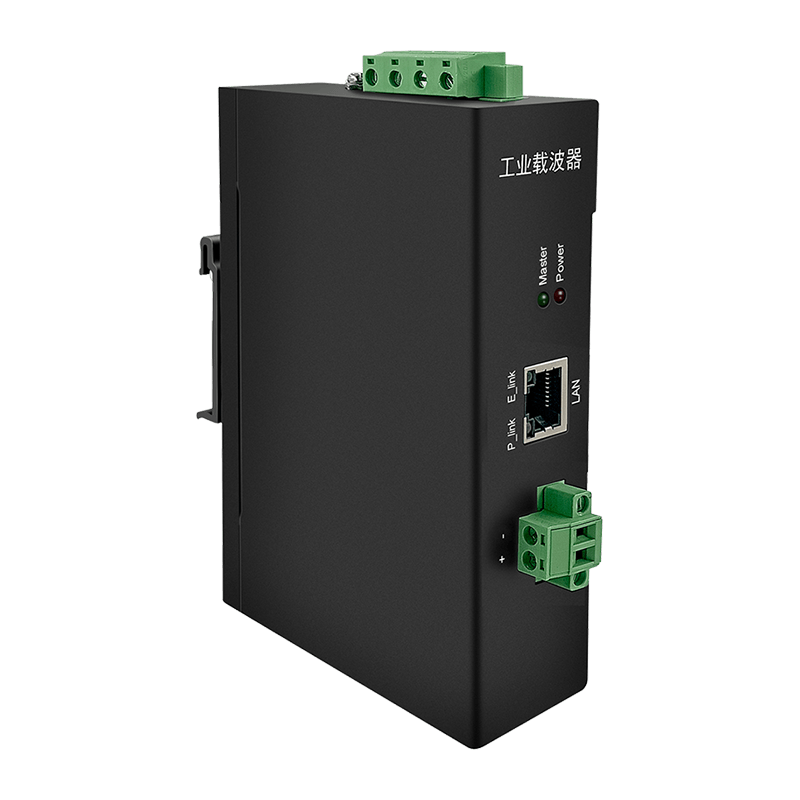
Industrial communication networks are under increasing pressure to deliver higher bandwidth, stronger reliability, longer transmission distance, and easier deployment in complex environments. In factories, mines, warehouses, parking systems, rail transit facilities, renewable energy sites, and mobile equipment, communication cables are often difficult to install, expensive to maintain, or vulnerable to interference. The 2P General Power Line Communication Broadband Gateway is designed to solve these problems by turning existing power lines, DC cables, AC cables, slip touch cords, coaxial cables, parallel wires, twisted pairs, and slip ring cables into stable high-speed data channels.
This product belongs to the field of high-speed power line communication, also known as HD-PLC or H-PLC. It is an industrial-grade broadband gateway based on IEEE P1901 technology and OFDM modulation. It supports transparent Ethernet data transmission over common electrical wiring, making it possible to transmit industrial control signals, video streams, monitoring data, and network traffic without laying dedicated communication lines. With a carrier rate up to the hundred-megabit level, AES-128-bit encryption, LDPC error correction, automatic networking, and strong surge protection, it is engineered for demanding industrial IoT applications.
The gateway is especially valuable in environments where machinery moves, power distribution is complex, or cabling space is limited. It can be used on single-phase power lines, three-phase power lines, DC power lines, slip touch cords, and other two-core conductors with a PLC signal port voltage range of 0 to 500 V. Its point-to-point transmission distance can reach up to 500 meters on ordinary power lines, while coaxial cable applications can extend to approximately 2 to 3 kilometers. With relay support, the total transmission distance can reach 3 to 5 kilometers depending on the site conditions.
For industrial users, the product offers more than a communication bridge. It provides a practical way to reduce installation cost, simplify system architecture, increase operational flexibility, and improve the stability of data transmission in harsh electrical environments. Compared with conventional wireless networks, the gateway is less affected by metal barriers, electromagnetic shielding, and line-of-sight limitations. Compared with dedicated Ethernet cabling, it greatly reduces engineering workload. Compared with ordinary low-end power line adapters, it is built with industrial-grade protection, wider operating temperature tolerance, enhanced isolation, and a stronger anti-interference design.
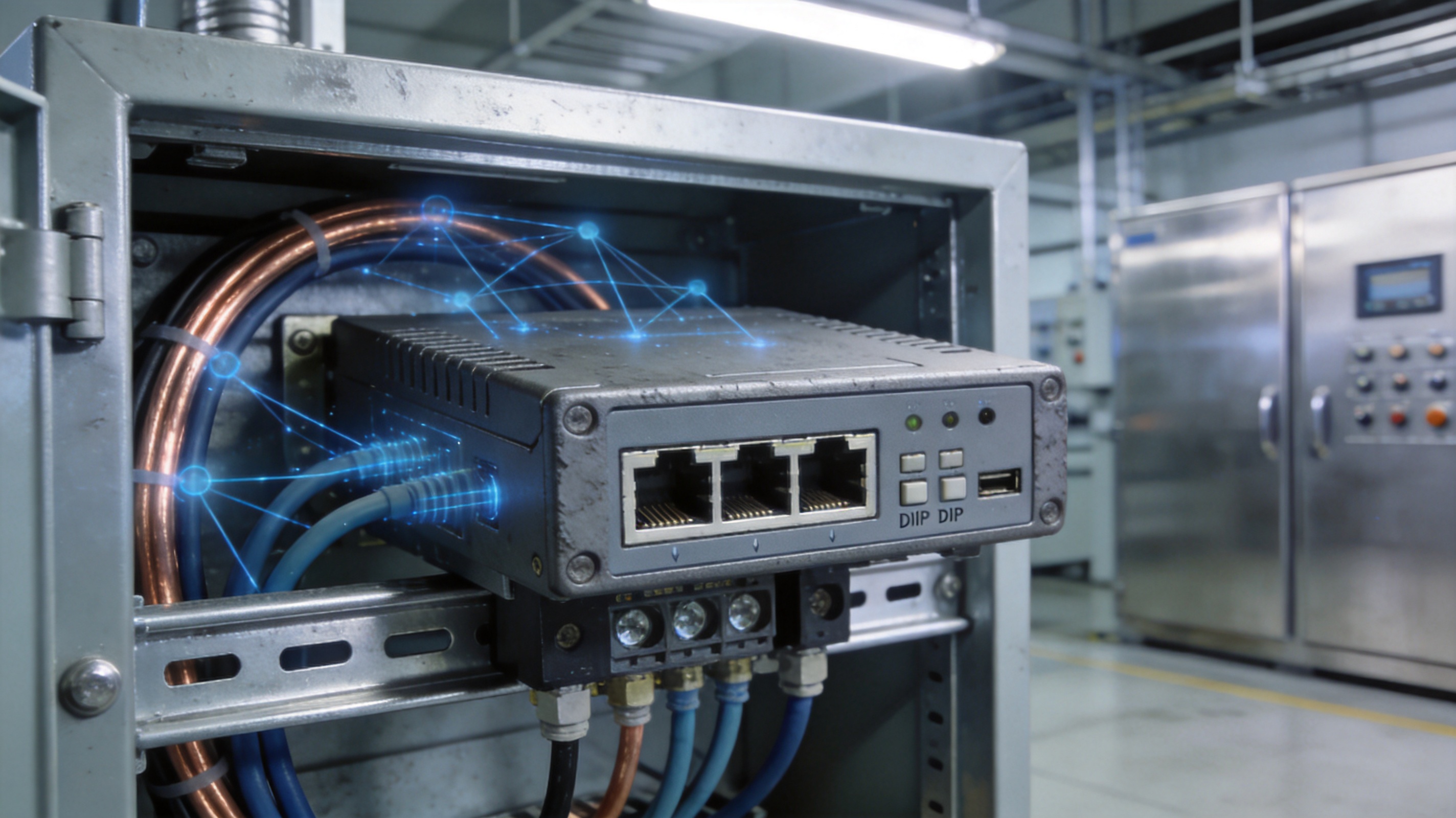
Product Overview
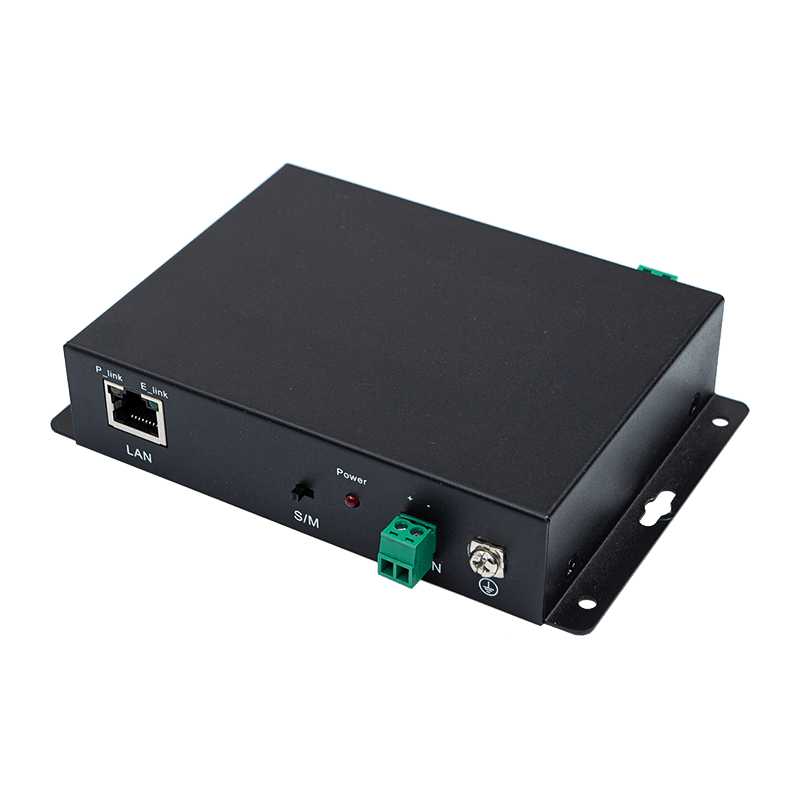
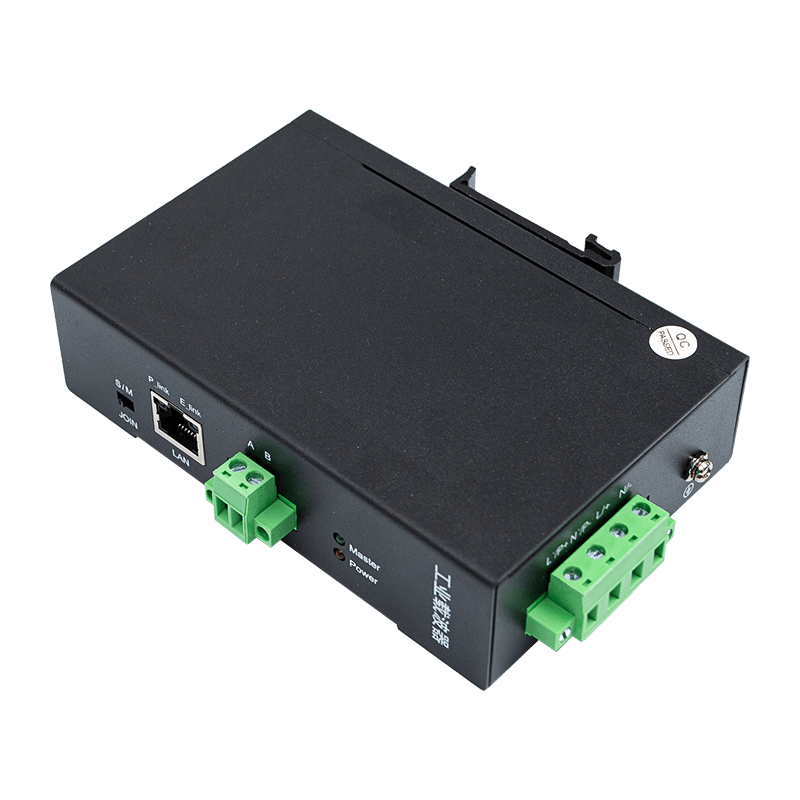
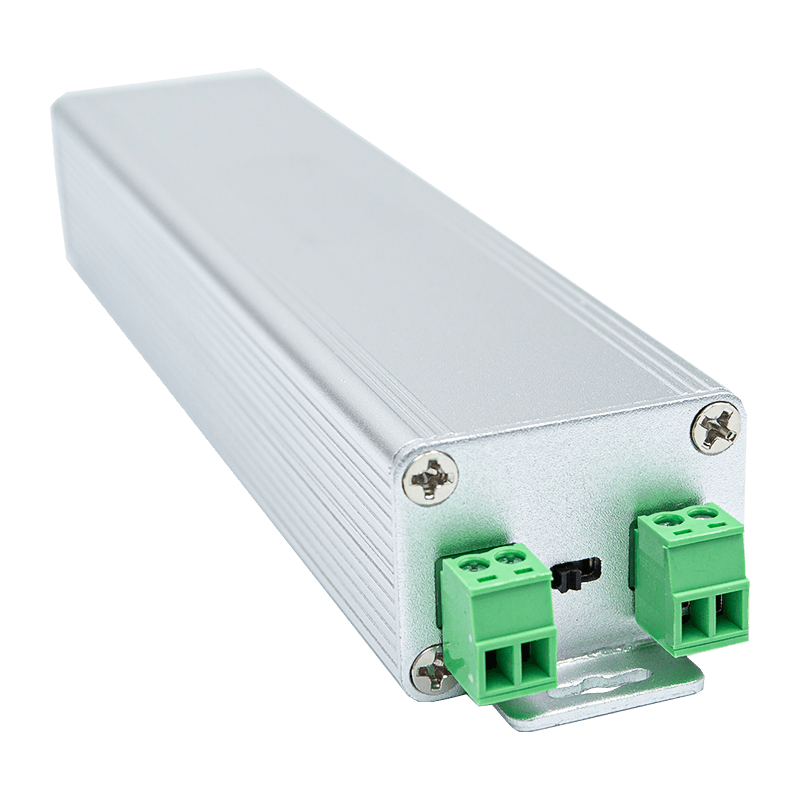
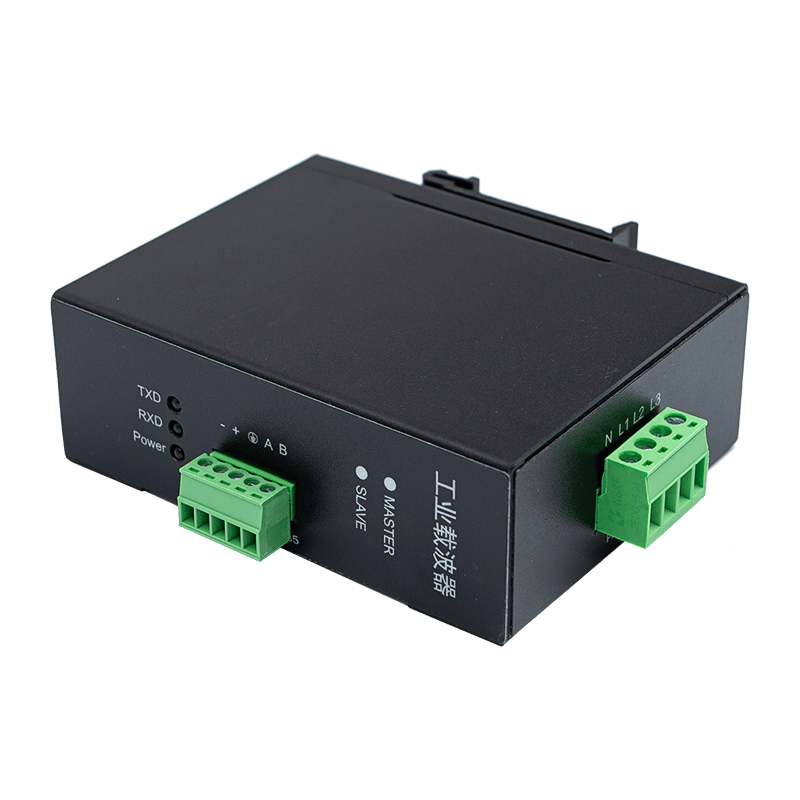
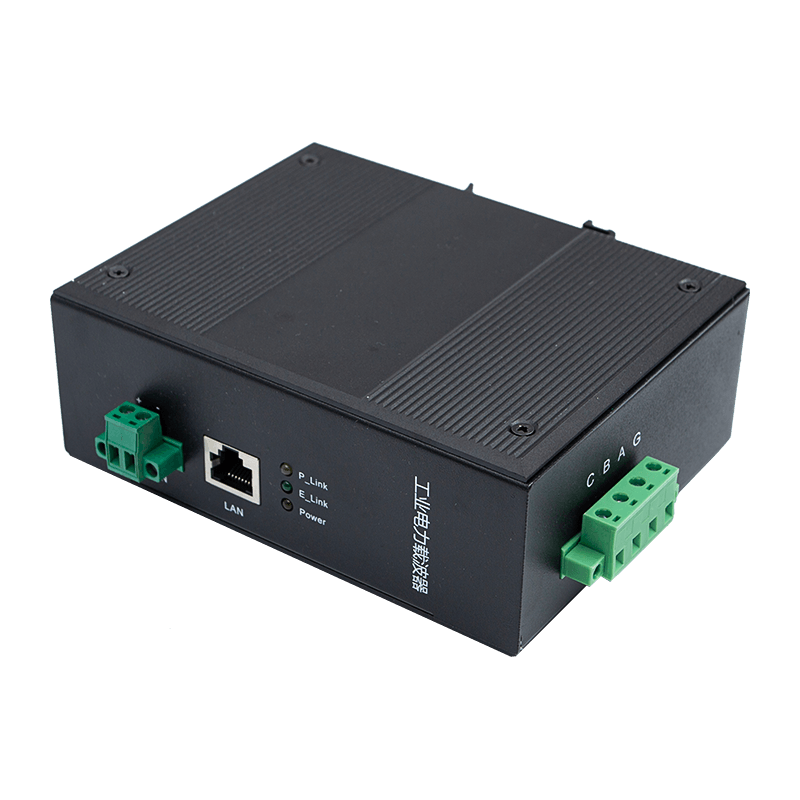
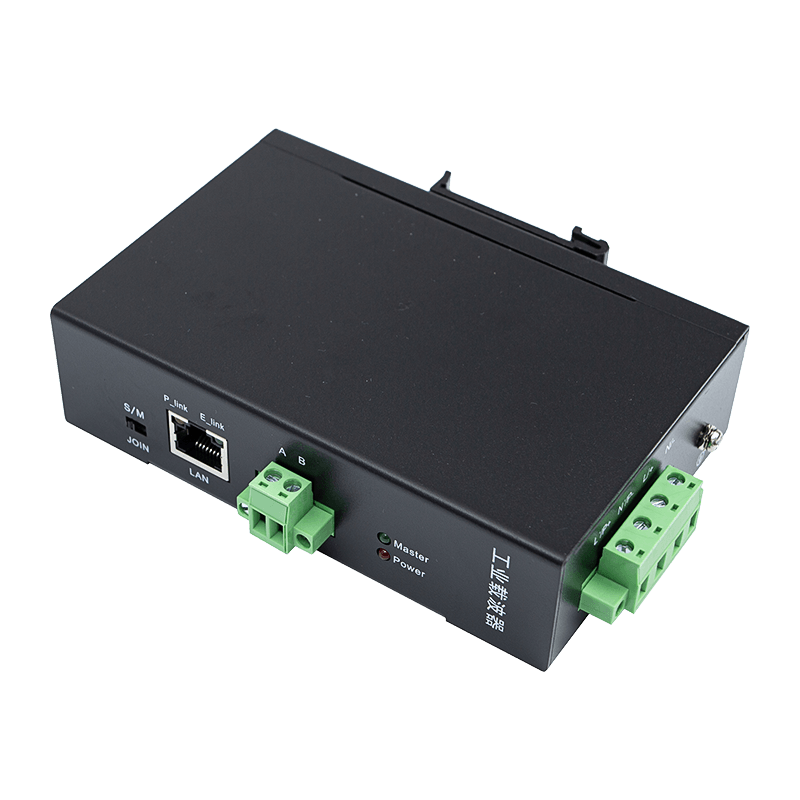
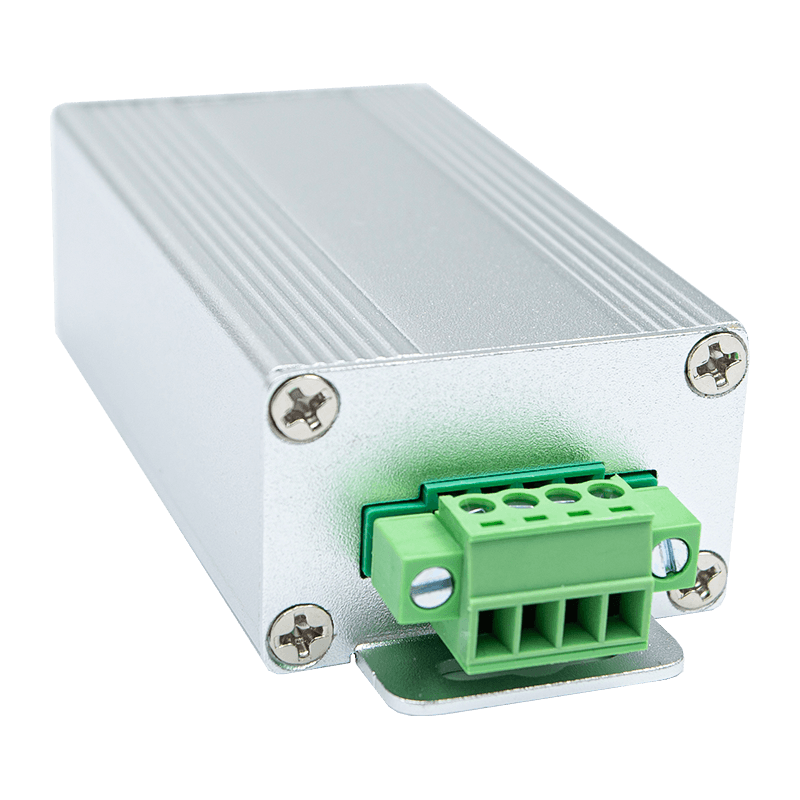
The 2P General Power Line Communication Broadband Gateway is a compact industrial communication device that converts Ethernet network data into high-frequency carrier signals transmitted over existing conductors. The product integrates coupling circuitry, high-voltage isolation, surge protection, data encryption, routing algorithms, and industrial communication interfaces into one robust gateway. It supports both one-to-one and one-to-multipoint networking, making it suitable for point communication, distributed device access, and multi-node industrial networks.
The product operates with a DC 12 to 48 V power supply and consumes no more than 3 W, which allows it to be integrated easily into control cabinets, equipment panels, embedded industrial systems, or remote field stations. It supports 10 Mbps and 100 Mbps adaptive Ethernet and can carry common industrial communication protocols such as TCP/IP, UDP, Profinet, Modbus-TCP, HomePlug-related communication, IEEE 802.3, IEEE 802.3U, IEEE 802.3ab, IEEE 1905.1, IEEE 1900, and IEEE 1901-related standards.
Its operating temperature range of -40°C to 85°C makes it suitable for industrial environments with extreme seasonal variations, outdoor equipment rooms, high-temperature mechanical areas, and cold regional installations. The device is designed for continuous 7 x 24-hour operation, supporting long-term deployment in production environments where downtime is unacceptable.
A key design feature is its simple master-slave configuration. The product uses master-slave DIP switches, allowing users to set one unit as the host and another as the slave. The M side acts as the master, while the S side functions as the slave. This one-touch configuration reduces engineering complexity and enables faster installation by technicians who may not need advanced network programming skills.
The gateway also supports hot swapping and plug-and-play operation. In many industrial scenarios, this is an important advantage because maintenance teams need to replace or add communication devices quickly without complicated configuration steps. For production lines, warehouses, automated parking systems, and mobile equipment, reduced commissioning time directly contributes to lower maintenance cost and shorter downtime.
Core Technical Strengths
The product’s performance is supported by a combination of broadband carrier technology, industrial hardware design, software routing capability, and safety protection. Its OFDM modulation technology divides the communication signal into multiple sub-carriers, improving resistance to frequency-selective fading and power line noise. This is important because industrial power lines are not clean communication media. They can contain noise from motors, inverters, welding machines, switching power supplies, relays, contactors, and high-power electrical loads.
LDPC error correction further improves communication reliability. In noisy transmission channels, packets may be affected by random interference, attenuation, or distortion. LDPC coding helps correct transmission errors and maintain stable data flow. Combined with AES-128-bit encryption, the gateway provides both reliability and data security for industrial networks.
The product’s carrier frequency range of 2 to 28 MHz allows efficient broadband communication over power lines while maintaining compatibility with industrial deployment requirements. Its latency is within 10 ms, which is suitable for many industrial monitoring, control, and video transmission applications. Its packet loss probability is less than 0.1‰ under appropriate application conditions, demonstrating strong stability for real-time data communication.
The device is compliant with industrial-grade design requirements and refers to standards such as IEEE P1901 and EN-50561. These technology foundations help ensure that the product is not merely a consumer-grade adapter repackaged for industry, but a gateway designed for professional application environments where reliability, distance, and electrical robustness matter.
Technical Specification Table
Item |
Technical Data |
Industrial Value |
Power Supply |
DC 12-48 V |
Compatible with common industrial control power systems |
PLC Signal Port |
0-500 V, any two-core cable, power line, slip touch cord, slip ring cable, and similar conductors |
Flexible installation using existing wiring resources |
Modulation Type |
OFDM |
Improves anti-interference performance and broadband transmission stability |
Carrier Frequency |
2-28 MHz |
Supports high-speed data transmission over power line media |
Ethernet Bandwidth |
10 Mbps / 100 Mbps adaptive |
Supports video, monitoring, and industrial Ethernet data |
Transmission Distance |
Up to 500 m point-to-point on ordinary power lines; 3-5 km with relay; 2-3 km possible on coaxial cable |
Suitable for wide-area industrial equipment and long-distance field networks |
Data Delay |
Within 10 ms |
Supports time-sensitive monitoring and control applications |
Packet Loss Probability |
Less than 0.1‰ |
Enhances communication stability in demanding environments |
Power Consumption |
≤3 W |
Low energy consumption for distributed deployment |
Encryption |
AES-128-bit |
Protects transmitted industrial data |
Multicast |
IGMP multicast support, maximum 128 nodes |
Useful for video transmission and multi-node network distribution |
Dimensions |
93 x 144.6 x 30 mm, approximately 350 g |
Compact structure for cabinet and equipment installation |
Operating Temperature |
-40°C to 85°C |
Suitable for harsh industrial environments |
Working Time |
Industrial-grade 7 x 24-hour continuous operation |
Reliable long-term service for mission-critical systems |
Advantages Over Conventional Communication Solutions
Many industrial communication projects still depend on dedicated network cables, optical fiber, wireless bridges, or low-speed serial communication. Each method has value, but each also has limitations. Ethernet cabling provides high bandwidth, but laying cables across moving equipment, long conveyor lines, underground facilities, or existing buildings can be expensive and disruptive. Optical fiber offers excellent speed and immunity to electromagnetic interference, but it requires specialized installation, fragile bending management, and additional conversion equipment. Wireless communication is convenient but may suffer from signal obstruction, interference, security risks, and unstable performance in metal-intensive environments.
The 2P General Power Line Communication Broadband Gateway provides a strong alternative by using the wiring that already exists. In many applications, power lines are already available wherever equipment is installed. By carrying data on those lines, the gateway avoids the need for new communication wiring. This can significantly shorten project delivery time, reduce cable tray congestion, lower labor cost, and simplify future expansion.
Compared with ordinary consumer-grade power line adapters, this gateway is clearly positioned for industrial use. Consumer adapters are typically designed for indoor household networks with stable low-voltage AC power and limited environmental stress. They are rarely suitable for power lines affected by high-voltage transients, industrial motors, three-phase power distribution, slip contact systems, or extreme temperatures. The industrial gateway, by contrast, supports wide operating voltage, enhanced surge impact resistance up to 2 kV, improved isolation, and continuous operation in temperatures from -40°C to 85°C.
Another competitive advantage is topology flexibility. The gateway supports bus, star, tree, and hybrid network structures. This allows system integrators to select an architecture that matches the actual site rather than forcing the site to adapt to a rigid communication system. A parking garage can use one topology, a warehouse shuttle system another, and a mine monitoring network another. Flexible topology design helps reduce installation risk and supports staged expansion.
The product also supports one-to-one and one-to-multipoint networking. In a simple installation, two devices can create a transparent Ethernet link. In a larger installation, a master device can communicate with multiple slave devices, enabling distributed monitoring or control. With IGMP multicast support and up to 128 nodes, the gateway is especially useful in video surveillance or multi-terminal data distribution scenarios.

Performance in Harsh Electrical Environments
Industrial power lines often contain severe interference. Variable-frequency drives, servo systems, high-current motors, switching power supplies, charging stations, welding equipment, and relay switching operations can introduce noise and surges. A communication product that works in a clean laboratory may fail in such environments unless it has strong anti-interference design and sufficient protection.
The 2P General Power Line Communication Broadband Gateway addresses this challenge through several design layers. OFDM modulation helps maintain communication by distributing data across multiple carriers. LDPC error correction reduces the effect of bit errors. AES encryption protects data integrity and confidentiality. Internal coupling circuits are engineered to interface communication signals with power conductors safely and efficiently. Enhanced high-voltage isolation protects the communication electronics from electrical stress. Surge protection improves resistance to transient voltage events.
The result is a communication gateway that supports stable transmission even where traditional wireless signals may be blocked and where ordinary data cables are difficult to route. This is especially relevant for industrial video systems, automated storage, rail monitoring, mining systems, wind energy equipment, new energy power stations, and moving machinery using slip touch cords.
The product’s low delay within 10 ms makes it practical for monitoring and control applications requiring timely communication. While it is not intended to replace every deterministic real-time fieldbus in all motion-control use cases, it provides excellent practical performance for Ethernet-based industrial communication, remote monitoring, surveillance video, equipment condition data, and distributed control data.
Long-Distance Transmission Capability
Transmission distance is one of the most important indicators for industrial communication. In many real projects, the communication path may extend across multiple floors, long rails, underground sections, distributed equipment rooms, or large-area energy facilities. Traditional Ethernet over copper is generally limited to approximately 100 meters between active devices, requiring additional switches, repeaters, or fiber conversion for longer distances.
This gateway extends communication possibilities by transmitting over power lines and supporting relay configurations. On ordinary power lines, the point-to-point distance can reach up to 500 meters under suitable conditions. On coaxial cable, the distance may reach 2 to 3 kilometers. With relay versions supporting up to 10 levels of relay, the total communication distance can extend to 3 to 5 kilometers depending on line quality, topology, interference, and installation design.
This capability gives the product a significant advantage in applications such as mines, rail communication monitoring, long conveyor systems, outdoor renewable energy sites, large logistics centers, and distributed security systems. Instead of repeatedly converting signals between Ethernet and fiber or adding many intermediate switches, users can build a practical broadband carrier network using available conductors.
Application Scenario: Three-Dimensional Parking Garages
Automated three-dimensional parking garages involve moving platforms, lifting mechanisms, electrical control cabinets, sensors, cameras, and safety devices. Communication must remain stable while equipment moves vertically or horizontally. Installing traditional Ethernet cables on moving structures can create wear, bending stress, and maintenance problems. Wireless communication may be affected by metal structures, reflections, and electromagnetic interference.
The power line communication gateway can use existing power supply lines or slip touch cords to transmit data to moving parking equipment. This reduces the need for additional drag-chain communication cables and provides a more integrated wiring solution. Video monitoring, control signals, sensor data, and equipment status information can be transmitted through the same conductor system used for power distribution, simplifying mechanical design and improving system maintainability.
For parking equipment manufacturers and system integrators, this can reduce installation time and improve product competitiveness. For property operators, it can reduce failure points and maintenance workload. The gateway’s industrial temperature range and 7 x 24-hour operating capability are important because parking garages often operate continuously and may be exposed to varying environmental conditions.
Application Scenario: Warehousing and Stereoscopic Storage
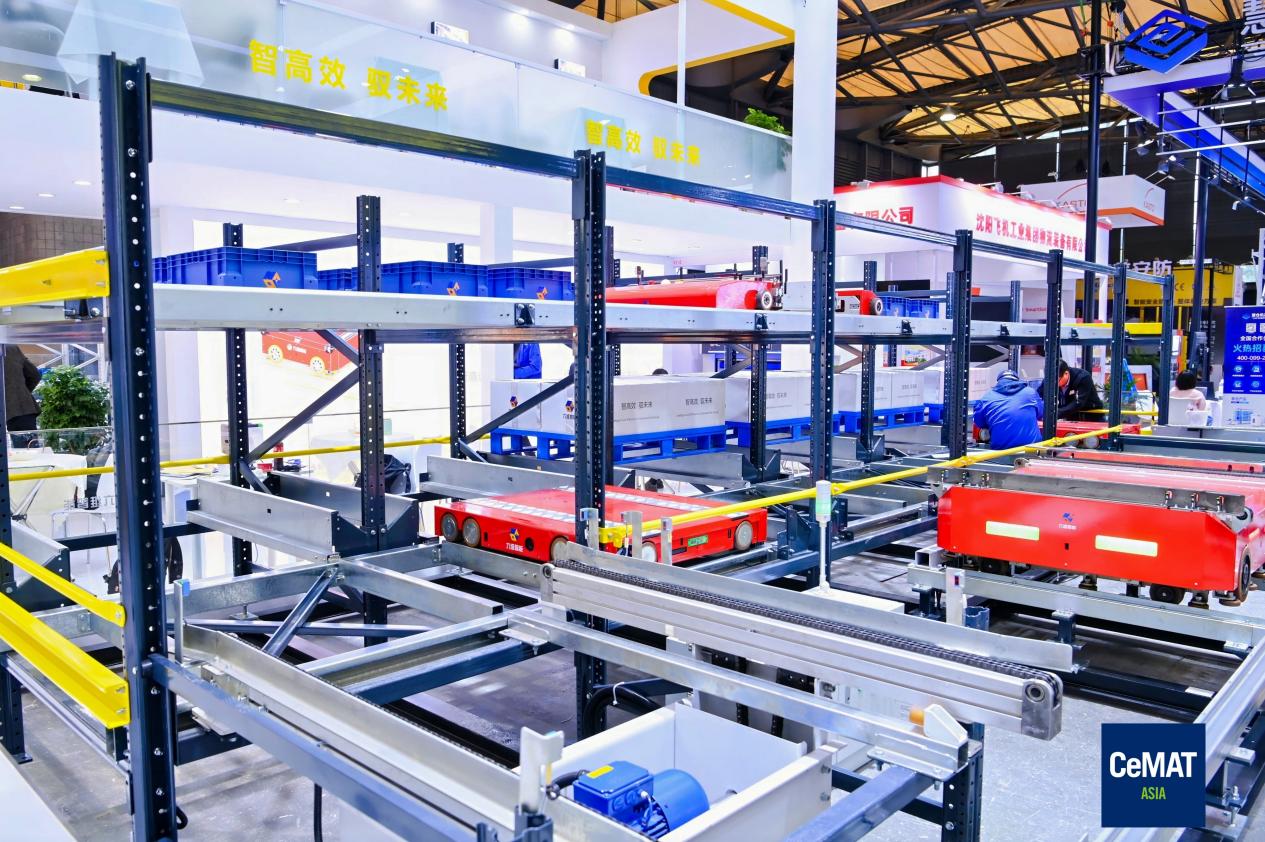
Modern warehouses increasingly depend on automated storage and retrieval systems, shuttle cars, stackers, elevators, conveyors, and intelligent control systems. These devices require stable communication for scheduling, positioning, monitoring, and safety management. As warehouses become denser and more automated, communication infrastructure must support both fixed and mobile equipment.
The broadband power line communication gateway enables network data transmission through conductors already connected to equipment. For shuttle cars or mobile devices using slip contact power supply, the gateway can provide broadband communication over the same electrical path. This helps avoid complex wireless planning and reduces signal dead zones caused by dense racks, metal structures, or moving loads.
Because the product supports one-to-multipoint communication and multiple topologies, it can be adapted to different warehouse layouts. Large storage systems can be divided into zones, with gateways placed according to equipment groups and control requirements. The low power consumption also makes it practical for distributed installation in multiple control cabinets or local equipment stations.
Application Scenario: Rail Communication Monitoring
Rail systems require reliable communication for monitoring, security, equipment status, and operational safety. Some rail-related applications involve long distances, harsh outdoor environments, high electromagnetic interference, and limited cable routes. The gateway’s ability to transmit over power lines or other conductor pairs makes it suitable for monitoring networks where new communication cable installation is difficult.
Railway communication monitoring may include video surveillance, sensor data acquisition, power equipment monitoring, and environmental monitoring. The gateway supports Ethernet-based data and can carry multiple common industrial protocols. Its support for long-distance transmission and relay networking makes it practical for distributed monitoring points along rail corridors or within rail facilities.
The industrial-grade temperature range and anti-surge design are particularly valuable for rail environments, where equipment may face high electrical stress and weather variations. The device’s compact structure also supports installation in limited cabinet space.
Application Scenario: Mining and Underground Monitoring
Mines and underground facilities present some of the most challenging communication conditions. Long tunnels, dense rock, high humidity, electrical noise, and safety requirements make wireless communication unreliable or expensive. Installing dedicated communication cables can also be difficult and costly.
The power line communication gateway can support monitoring systems by using existing power distribution lines where appropriate. It can transmit video, sensor, and control data over long distances, especially when relay configurations are applied. For mine monitoring systems, stable data transmission is essential for safety management, environmental monitoring, equipment operation, and emergency response.
The product’s wide operating temperature range, strong anti-interference capability, and low packet loss probability help improve communication reliability in these demanding conditions. Its encrypted data transmission also helps protect operational information in critical infrastructure environments.
Application Scenario: Wind Energy and New Energy Power Stations
Renewable energy sites often cover wide areas and include multiple distributed devices such as turbines, inverters, combiner boxes, monitoring stations, environmental sensors, and security cameras. Communication infrastructure must be reliable, scalable, and resistant to electrical disturbance. Wind energy systems also include rotating structures and high-power electrical equipment, making communication cable design more complex.
The broadband power line communication gateway can support data transmission over existing power-related conductors, helping reduce additional cabling requirements. In new energy power stations, it can be used for monitoring equipment status, collecting sensor data, supporting video transmission, and connecting distributed control points. Long-distance capability and relay support are particularly useful in wide-area energy applications.
The product’s low power consumption and industrial-grade durability align well with the sustainability goals of renewable energy projects. By using existing wiring resources more efficiently, the gateway contributes to a greener and more economical communication architecture.

Manufacturing Strength and Quality Philosophy
A high-performance industrial communication product depends not only on its design concept but also on manufacturing discipline. ASY Electronics focuses on industrial IoT communication solutions, data sensing, and intelligent connectivity. Its product portfolio includes broadband power line carriers, wireless temperature monitoring systems, transmitters, flow meters, and automatic door controllers. This broader technical foundation supports a deeper understanding of real industrial environments, where communication, sensing, control, and energy management must work together.
The company’s manufacturing philosophy emphasizes efficiency, reliability, and green smart factory development. For the 2P General Power Line Communication Broadband Gateway, this means that product design and production are aligned with practical industrial requirements rather than only laboratory specifications. Component selection, PCB layout, coupling circuit design, isolation structure, enclosure arrangement, and testing procedures all contribute to final stability.
Advanced manufacturing processes are especially important for power line communication equipment because the product must handle both data communication and electrical coupling. Poor layout can increase noise sensitivity. Weak isolation can reduce safety. Inconsistent assembly can affect high-frequency performance. Inadequate testing can allow unstable products to enter the field. A mature manufacturer must therefore combine electronic design capability with strict process control.
In professional production, incoming material inspection helps ensure that critical components meet specifications. Surface-mount technology assembly must maintain accurate placement and soldering quality. Through-hole components, connectors, isolation components, and protection devices must be assembled with mechanical strength and electrical reliability. Functional testing should verify power input, Ethernet communication, carrier communication, master-slave configuration, encryption function, networking behavior, and operating stability.
Environmental and reliability testing are also essential. Industrial gateways may be exposed to high temperature, low temperature, humidity, vibration, electrical transients, and long-term load. Testing products across these conditions helps identify weaknesses before deployment. The goal is not merely to make the device operate once, but to ensure that it performs consistently over years of industrial service.
Engineering Advantages from an Industrial IoT Solution Provider
One of the company’s important strengths is its focus on complete industrial IoT communication solutions rather than isolated hardware. Industrial customers often need more than a device; they need guidance on network topology, site interference evaluation, cabling selection, relay placement, power architecture, monitoring integration, and long-term maintenance. A supplier with experience in smart factories and industrial data integration can provide more practical support than a supplier that only sells standard adapters.
Because ASY Electronics works across broadband power line communication, wireless temperature monitoring, industrial transmitters, flow meters, and automatic door control systems, it understands multiple layers of industrial automation. This makes it better positioned to support integrated solutions for equipment condition monitoring, refined energy management, and production process optimization.
For example, a factory may use the gateway to connect remote monitoring cameras, while also collecting temperature data from electrical cabinets and flow data from gas systems. A smart warehouse may use power line communication for shuttle control and wireless sensors for temperature monitoring. A new energy site may combine power line communication with transmitters and energy management systems. The company’s broader product base creates opportunities for system-level optimization.
Compared with competitors that focus narrowly on low-cost communication adapters, a solution-oriented manufacturer can deliver better value through customization, application support, and product matching. Industrial users benefit from faster commissioning, reduced risk, and clearer upgrade paths.
Product Versions and Customization Potential
The gateway platform supports several hardware and software variations for different applications. Hardware versions may include standard versions, high-bandwidth versions, long-distance editions, and broadcast versions. Software options may include high-performance editions, relay versions, and versions specialized for slip touch cord applications. This flexibility helps match the product to specific industrial scenarios rather than forcing one configuration into every project.
Customization is important because power line communication performance depends on the transmission medium, distance, power environment, load characteristics, and topology. A factory conveyor system, a parking garage, a mine tunnel, and a wind power site all have different line conditions. By offering multiple versions and engineering support, the manufacturer can help customers select an optimized configuration.
In competitive terms, this flexibility is a major advantage. Many generic communication products are fixed-function devices. They may work in simple applications but struggle when the site requires longer distance, relay networking, slip contact communication, multicast support, or stronger interference resistance. A modular product strategy helps the gateway serve a wider range of industrial projects.
Security and Data Protection
Industrial communication security is increasingly important as factories and infrastructure become more connected. Unauthorized access, data interception, and communication tampering can create operational risks. The gateway integrates AES-128-bit encryption, helping protect data transmitted across the power line medium. While communication security should always include system-level measures such as network segmentation, access control, firewall policies, and device management, built-in encryption adds an important protection layer.
Transparent transmission allows the gateway to carry Ethernet data without requiring major changes to upper-level applications. This is valuable because industrial networks often include existing PLCs, cameras, gateways, HMIs, sensors, and monitoring platforms. A transparent communication bridge helps preserve compatibility and reduce software redevelopment.
For applications such as rail monitoring, mining, renewable energy, and industrial video surveillance, secure and stable transmission can protect both operational efficiency and safety information. The combination of encryption, anti-interference design, and industrial reliability makes the gateway suitable for modern industrial IoT networks.
Ease of Installation and Maintenance
Installation efficiency is one of the product’s strongest practical benefits. The gateway can use any two suitable conductors for data transmission, including AC lines, DC lines, twisted pairs, parallel wires, coaxial cables, slip touch cords, and slip ring cables. This gives engineers freedom to design communication links based on existing site conditions.
The master-slave DIP switch configuration simplifies setup. Instead of complicated software configuration for basic networking, technicians can identify the host and extension units through hardware switches. This reduces commissioning time and helps avoid configuration errors. Plug-and-play operation further supports fast deployment and replacement.
Hot-swapping support is helpful for maintenance. In industrial sites, equipment replacement often needs to be done quickly to restore production. A device that can be replaced without extensive reconfiguration reduces downtime and supports more efficient maintenance procedures.
The product’s compact size of 93 x 144.6 x 30 mm and weight of about 350 g make it easy to install in cabinets or equipment spaces. Earhook installation provides practical mounting convenience. Low power consumption reduces heat generation and supports dense installation where multiple communication devices may be deployed.
Why Industrial Users Choose This Gateway
Industrial users choose communication products based on reliability, total cost, installation feasibility, and long-term support. The 2P General Power Line Communication Broadband Gateway performs strongly across these factors. It reduces cabling cost by using existing power lines. It improves deployment flexibility by supporting many conductor types. It provides high-speed Ethernet transmission with hundred-megabit carrier capability. It supports long-distance communication and relay expansion. It is designed for industrial temperature, surge, and interference conditions.
Compared with wireless solutions, it avoids many problems caused by metal shielding, signal reflection, and crowded radio environments. Compared with new Ethernet cabling, it reduces installation labor and structural modification. Compared with ordinary PLC adapters, it offers industrial-grade design, broader voltage compatibility, stronger isolation, enhanced surge resistance, and more application-oriented versions. Compared with rigid communication systems, it supports flexible network topology and transparent protocol transmission.
These advantages are especially valuable in retrofit projects. Many factories and facilities need digital transformation but cannot easily stop production or rebuild infrastructure. Power line communication allows digital connectivity to be added with less disruption. This supports the broader trend toward smart factories, industrial IoT, predictive maintenance, energy management, and production optimization.

Q&A Section
Q1: What is the main function of the 2P General Power Line Communication Broadband Gateway?
It transmits Ethernet network data over existing conductors such as power lines, DC cables, AC cables, slip touch cords, coaxial cables, twisted pairs, and other two-core cables. It allows industrial users to build high-speed communication networks without installing separate data cables.
Q2: What makes this product different from ordinary power line adapters?
Ordinary power line adapters are usually designed for home or office use. This gateway is built for industrial environments, with wide operating temperature support, enhanced high-voltage isolation, 2 kV surge impact resistance, OFDM modulation, LDPC error correction, AES-128-bit encryption, flexible topology support, and long-distance transmission capability.
Q3: Can it work on both single-phase and three-phase power lines?
Yes. The gateway is suitable for carrier communication on single-phase power lines, three-phase power lines, DC power lines, and slip touch cords. It can transmit network data over any suitable two-core conductor within the specified application conditions.
Q4: What is the maximum transmission distance?
On ordinary power lines, point-to-point transmission can reach up to approximately 500 meters under suitable conditions. On coaxial cable, the distance may reach 2 to 3 kilometers. With relay versions and proper site design, the total transmission distance can reach approximately 3 to 5 kilometers.
Q5: Does the product support industrial Ethernet protocols?
Yes. It supports transparent transmission of common Ethernet-based protocols including TCP/IP, UDP, Profinet, Modbus-TCP, and other IEEE Ethernet-related communication standards. This makes it compatible with many industrial control and monitoring systems.
Q6: Is the product suitable for video transmission?
Yes. With 10 Mbps / 100 Mbps adaptive Ethernet, hundred-megabit carrier capability, low delay, multicast support, and stable broadband communication, it is suitable for many industrial video surveillance and monitoring applications.
Q7: How is the master and slave relationship configured?
The device uses master-slave DIP switches. The M side is set as the host, and the S side is set as the slave. This hardware-based setting simplifies installation and reduces configuration difficulty.
Q8: Can it be used in moving equipment?
Yes. It is suitable for applications using slip touch cords, slip ring cables, and similar conductors. This makes it useful for moving equipment such as automated parking systems, shuttle cars, lifting devices, warehouse systems, and mobile industrial machinery.
Q9: Is data encrypted during transmission?
Yes. The gateway supports AES-128-bit encryption, helping protect data transmitted over the power line communication channel.
Q10: What industries commonly use this type of gateway?
Typical applications include three-dimensional parking garages, stereoscopic warehouses, intelligent air-car systems, railway communication monitoring, mine monitoring, wind energy, new energy power stations, industrial video surveillance, and industrial control systems.
Conclusion
The 2P General Power Line Communication Broadband Gateway offers a practical and powerful approach to industrial connectivity. By transforming existing conductors into broadband communication channels, it helps users avoid costly cabling, overcome wireless limitations, and extend Ethernet connectivity into difficult environments. Its industrial-grade design, OFDM modulation, LDPC error correction, AES-128-bit encryption, 2 kV surge resistance, long-distance capability, flexible topology support, and wide temperature range make it a strong choice for demanding industrial IoT projects.
Its value is not limited to technical specifications. The product is supported by a manufacturer focused on smart factory development, industrial data integration, equipment condition monitoring, energy management, and intelligent connectivity. This combination of product performance and manufacturing strength gives customers a reliable foundation for digital transformation.
For system integrators, machine builders, automation companies, and industrial facility operators, the gateway provides a way to build high-speed, stable, and cost-effective communication networks using existing infrastructure. Whether applied in automated parking, warehousing, mining, rail monitoring, renewable energy, or video surveillance, it delivers the flexibility and resilience required by modern industrial communication systems.
References
IEEE Standards Association. IEEE 1901 Standard for Broadband over Power Line Networks.
IEEE Standards Association. IEEE 802.3 Ethernet Working Group Standards.
European Committee for Electrotechnical Standardization. EN 50561 Power Line Communication Apparatus Used in Low-Voltage Installations.
HomePlug Powerline Alliance. Technical Principles of Power Line Communication Systems.
Industrial Ethernet Handbook. Practical Design Considerations for Factory Communication Networks.
Power Line Communication Systems for Smart Grid Applications. Engineering and Industrial Communication Reference.