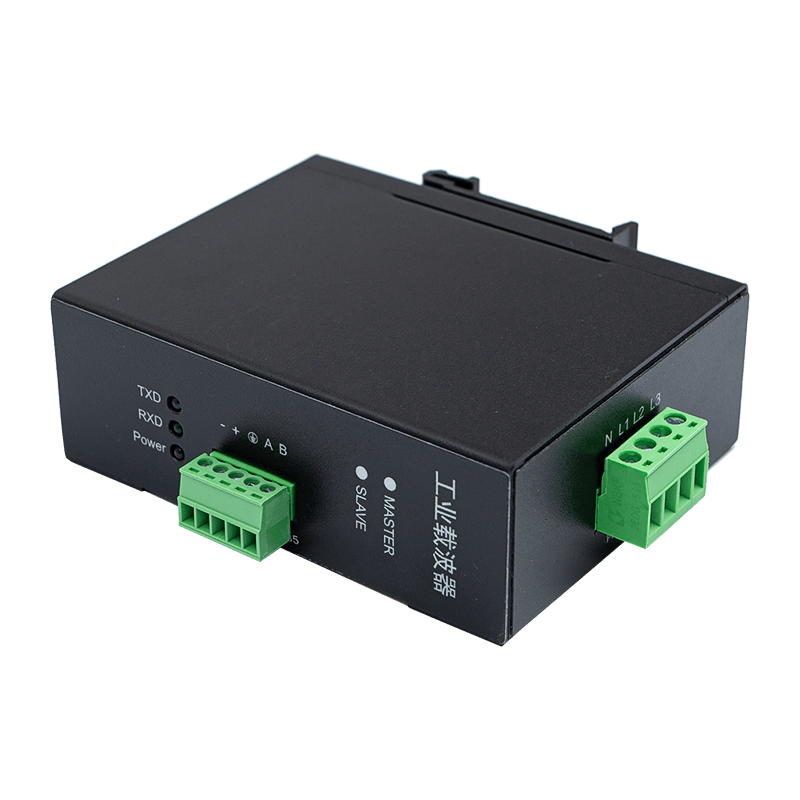


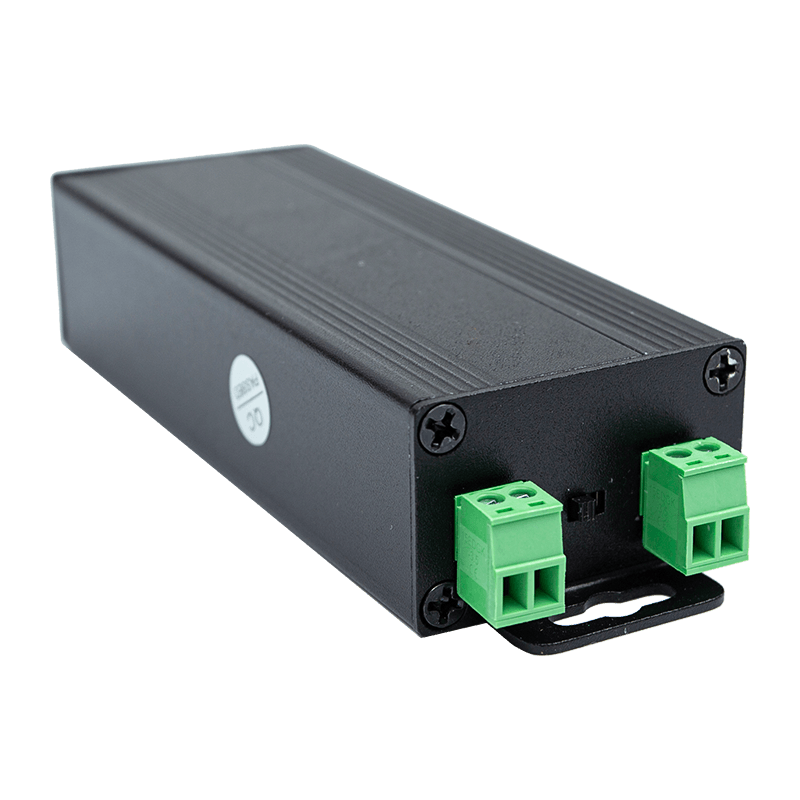
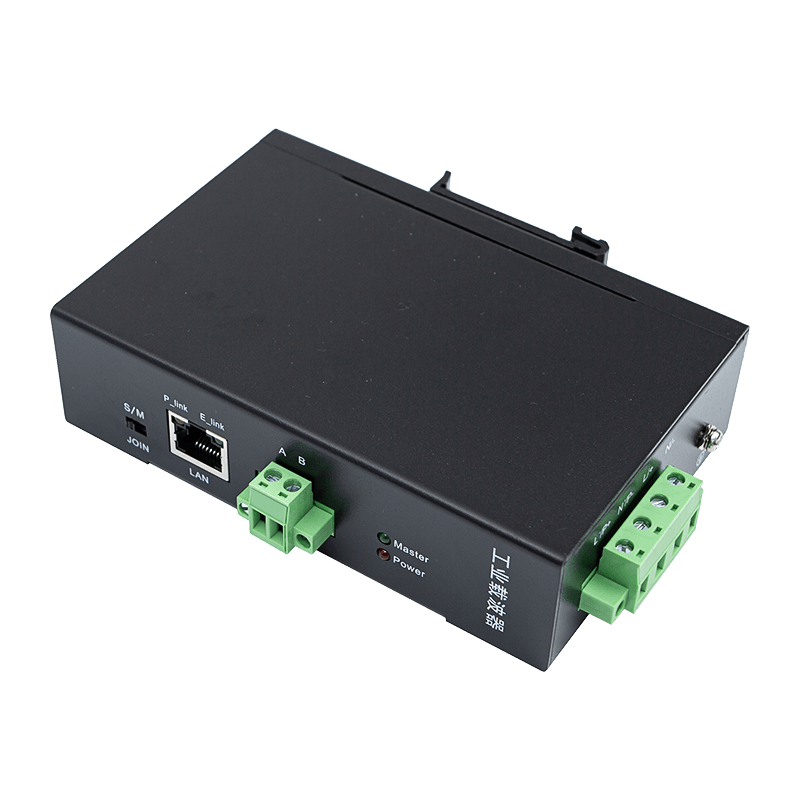

Industrial automation depends on dependable communication. Machines, sensors, controllers, gateways, and supervisory platforms must exchange data continuously, often in environments where conventional networking methods are expensive, difficult to install, or vulnerable to electrical interference. DC broadband power line communication offers a practical alternative by carrying high-speed data over existing DC power conductors. It can reduce cabling requirements, simplify deployment, and connect distributed industrial equipment without requiring a separate Ethernet cable for every device.
The KS810NS is a DC broadband power line communication carrier designed for industrial and commercial applications using DC12–48V power lines. It combines broadband Ethernet communication, RS485 support, industrial environmental performance, and flexible network topology in a compact enclosure. With a claimed Ethernet rate of up to 100 Mbps, OFDM modulation, a 2–28 MHz carrier-frequency range, AES-128-bit encryption, and support for bus, star, tree, and hybrid structures, it is designed to serve as a communication backbone for industrial IoT systems.
Unlike a basic power-line modem intended for residential use, this product is designed around the requirements of industrial connectivity. It supports continuous operation, broad operating temperatures, long transmission distances, configurable RS485 communication, and integration with common industrial and networking protocols. These capabilities make it suitable for equipment condition monitoring, smart energy management, production-line communication, industrial control, and remote data acquisition.
Why DC Power Line Communication Matters in Industrial Automation
Many industrial machines already distribute low-voltage DC power to sensors, actuators, controllers, lighting systems, mobile equipment, or embedded subsystems. In a conventional installation, a separate communication cable must be routed alongside the power wiring. This can increase material costs and installation time, create additional points of failure, and make network expansion more difficult.
DC power line communication uses the same physical infrastructure for two functions: supplying power and transmitting digital information. The DC voltage provides energy to connected equipment, while a high-frequency communication signal is coupled onto the conductors. The carrier module separates the power and data components internally so that Ethernet or RS485 information can travel through the existing line.
This approach is especially valuable when communication devices are distributed over long machine structures, moving systems, production equipment, remote cabinets, or locations where installing new data cables would require substantial mechanical work. A power line may already pass through these areas, making it a natural communication path.
The technology also supports modernization projects. An existing DC-powered installation may not have been designed with network cabling in mind. Replacing or extending the entire wiring system can interrupt production and consume considerable resources. A DC broadband carrier can provide a communication layer while preserving much of the existing power architecture.
For industrial IoT, this is important because digital transformation depends on connecting more assets. Temperature sensors, flow meters, drives, PLCs, gateways, inspection systems, and energy meters all generate data. A communication method that can be deployed over existing conductors helps organizations scale monitoring without redesigning every machine network.
Product Overview
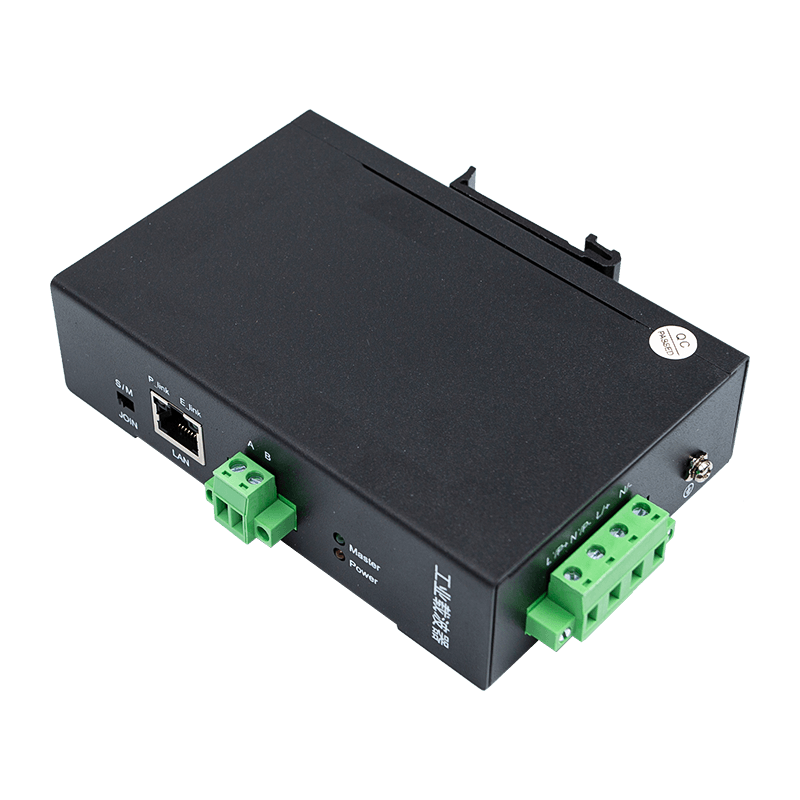
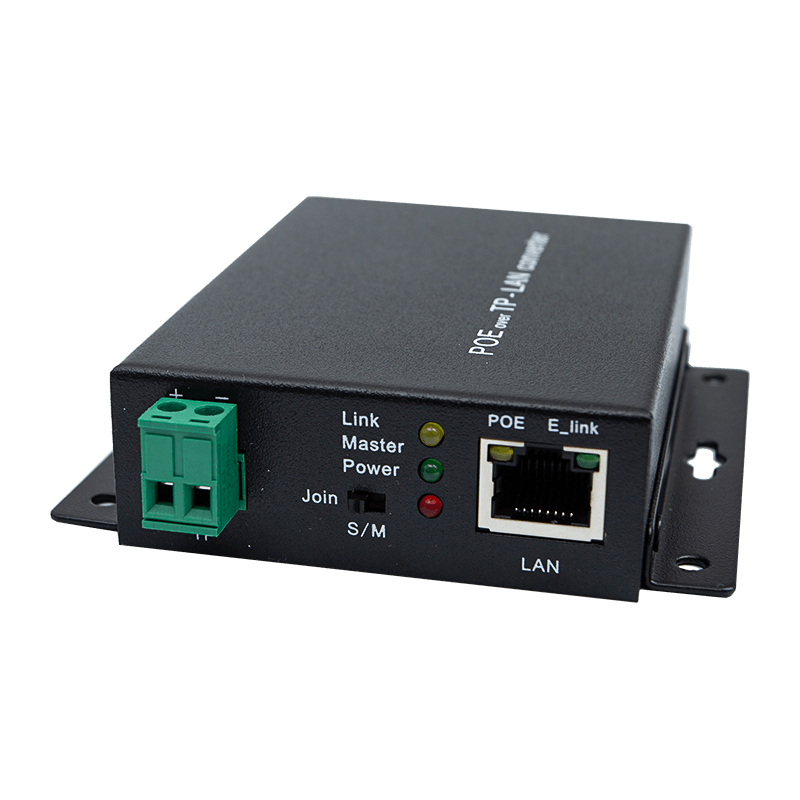
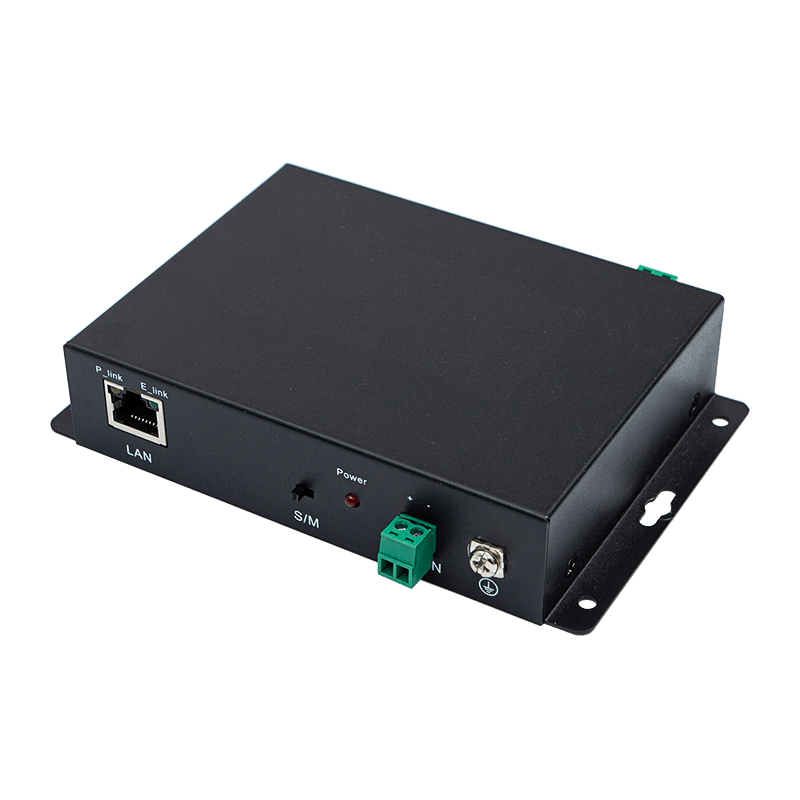
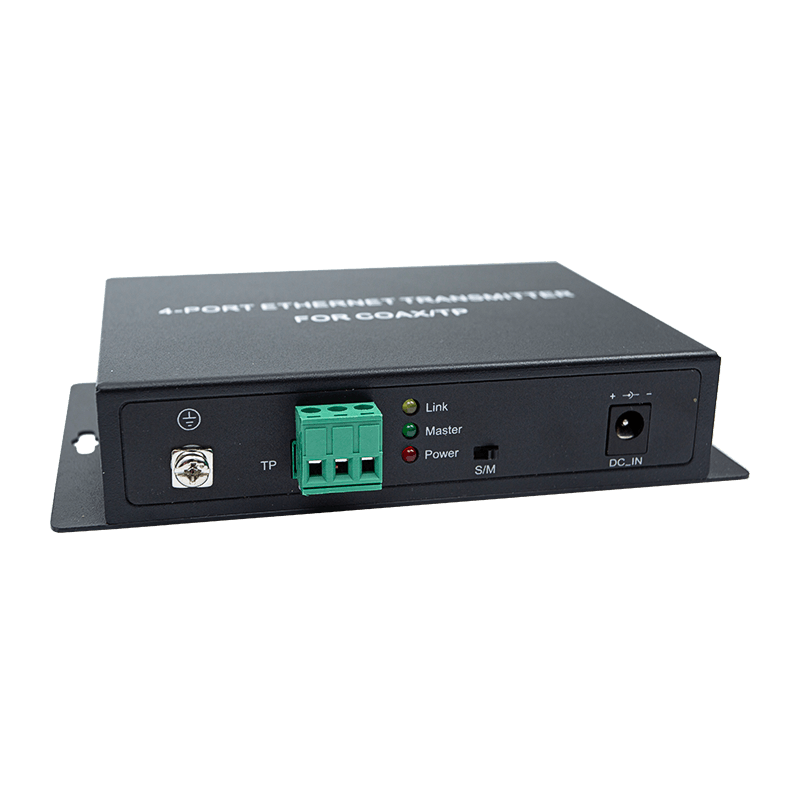
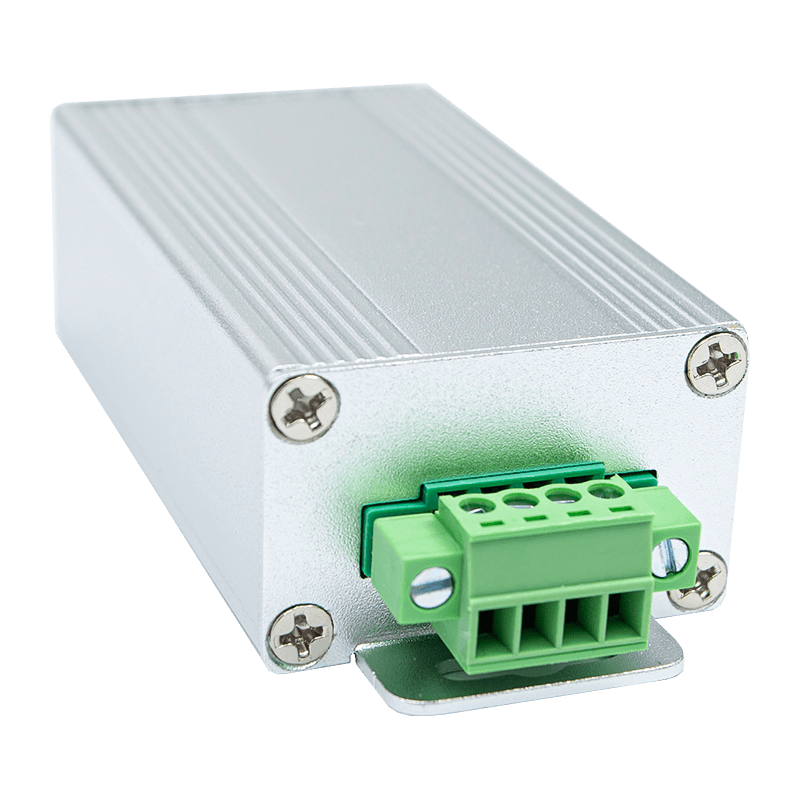
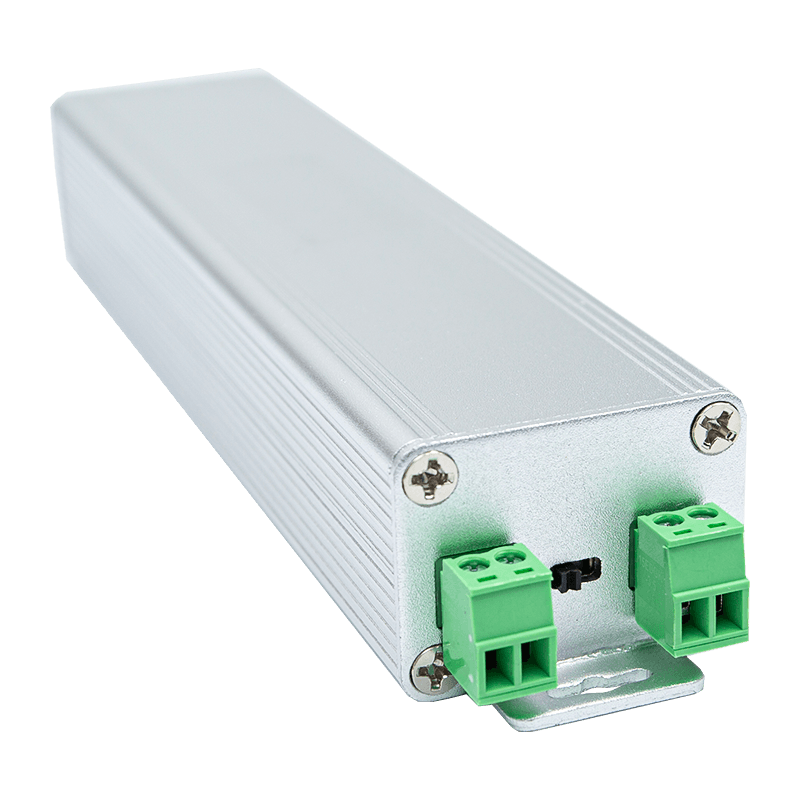
The KS810NS is the DC version of a broader KS810N carrier family. The DC model is intended for DC12–48V carrier communication over power lines. Its compact enclosure measures approximately 160 × 35 × 26 millimeters and weighs about 250 grams. The narrow body is suitable for control cabinets, equipment panels, compact electrical boxes, and machine-side installations where space is limited.
The product is described as having a hundred-megabit bandwidth, high versatility, ultra-small width, independent dual-channel capability, and industrial-grade design. Its Ethernet interface supports 10/100 Mbps auto-negotiation. In addition, the product provides RS485 communication and supports Modbus RTU with configurable baud rates from 1,200 to 115,200 bps.
From a network-planning perspective, the KS810NS can operate in bus, star, tree, and hybrid topologies. This flexibility helps engineers adapt the carrier network to the physical layout of a factory, warehouse, machine line, transport system, or energy-management installation.
The system can communicate through various two-core cable arrangements, including ordinary power lines, slip-contact cords, and slip-ring cables. This characteristic is useful for rotating or moving equipment, where a traditional Ethernet cable may be difficult to route or maintain.
Its stated data delay is within 10 milliseconds, and the stated packet-loss probability is less than 0.1 per mille under suitable operating conditions. These characteristics are relevant to monitoring, supervisory control, industrial data collection, and other applications where predictable communication is more valuable than maximum consumer-network throughput.
DC Broadband Power Line Communication
Core Technical Architecture
OFDM Broadband Modulation
The product uses orthogonal frequency-division multiplexing, commonly known as OFDM. OFDM divides a broadband communication channel into multiple closely spaced subcarriers. Data is distributed across these subcarriers, allowing the system to maintain communication even when some frequencies experience attenuation, noise, or interference.
Industrial power lines are rarely ideal communication channels. They may contain switching power supplies, variable-frequency drives, motors, relays, contactors, chargers, and other sources of electrical noise. The condition of the line can also change when machines start, stop, or alter their load. A broadband modulation method can use the available spectrum more efficiently and adapt communication across a changing electrical environment.
The stated carrier-frequency range is 2–28 MHz. This frequency band provides a broad channel for high-speed data while allowing the communication system to coexist with the low-frequency DC power supply. Proper filtering, grounding, installation, and electromagnetic compatibility practices remain important, but the broadband architecture gives the system a stronger foundation than narrowband low-speed signaling.
Ethernet Communication
The KS810NS supports 10/100 Mbps self-adaptive Ethernet. Auto-negotiation allows the connected Ethernet equipment to establish an appropriate link speed. This makes the carrier compatible with common industrial switches, computers, embedded controllers, edge gateways, and network devices.
Ethernet support also simplifies software integration. Industrial applications can use TCP/IP and UDP-based communication without requiring a proprietary application layer. The listed protocol support includes TCP/IP, UDP, Profinet, HomePlug, HomePlugAV, Modbus TCP, IEEE 802.3, IEEE 802.3u, IEEE 802.3ab, IEEE 1905.1, and other related standards or protocols.
Protocol compatibility is a major advantage in factory environments. Different machines may use different control platforms, and a communication carrier should not force an organization to replace its existing software architecture. By providing Ethernet transport, the product can participate in standard industrial network designs and connect legacy equipment through suitable gateways.
RS485 and Modbus RTU Support
Many industrial devices still rely on RS485 because of its simplicity, multi-drop capability, and suitability for electrically challenging environments. Temperature transmitters, energy meters, flow instruments, motor controllers, programmable devices, and remote I/O modules frequently use RS485-based protocols.
The KS810NS supports RS485 and Modbus RTU, with configurable baud rates from 1,200 to 115,200 bps. This allows the carrier to connect serial field devices to a broader Ethernet or IP network. A control room or industrial server can obtain data from distributed instruments without installing a dedicated serial cable over the entire distance.
RS485 integration also supports gradual modernization. A plant can retain existing Modbus RTU instruments while adding Ethernet-based monitoring and data analysis. This avoids the cost and risk of replacing every field device merely to achieve network connectivity.
Independent Dual-Channel Capability
The product description highlights independent dual-channel operation. In practical terms, independent communication channels can help separate data paths, organize different segments, or support multiple communication functions within a single installation. The exact implementation should be confirmed against the final product manual and wiring configuration, but the feature is valuable for system designers seeking greater flexibility than a single undifferentiated channel.
Dual-channel architecture may support better network organization, equipment grouping, or the separation of control and monitoring traffic. In installations with multiple machine sections, it can help simplify the design of logical communication paths and reduce the need for additional hardware.
Electrical Configuration and Wiring Principles
The DC12–48V operating range covers many common industrial power arrangements. Twelve-volt systems are frequently found in mobile equipment, compact control systems, and embedded machinery. Twenty-four-volt systems are widely used in industrial automation. Forty-eight-volt systems are used in selected communication, transport, energy, and industrial applications.
The installation method depends on whether the DC power line has a load connected to it. This distinction is essential because the electrical behavior of a loaded power line differs from that of a dedicated communication line.
DC Power Lines With Loads
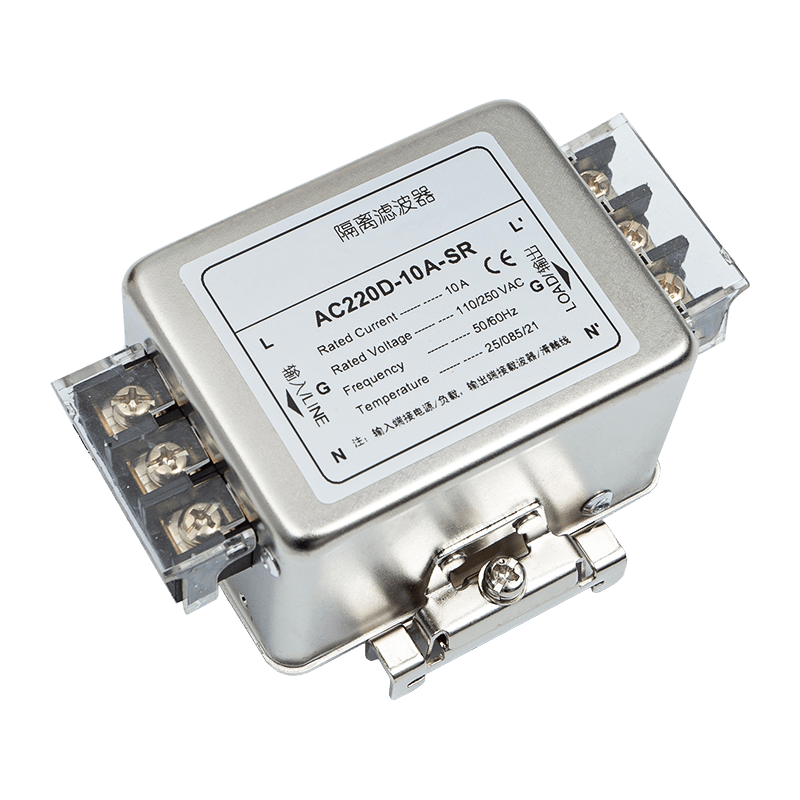
When the DC power line supplies loads, the DC-type carrier should be used with a filter as specified by the product application guidance. The power-supply port of the carrier is suspended and not connected in this arrangement. The PLC channel port is connected in parallel to the DC power line.
Positive and negative polarity must be identified correctly. Reversing the polarity may prevent normal operation or cause equipment damage, depending on the protection design of the installation. Engineers should verify the product wiring diagram, power-supply ratings, grounding requirements, fuse arrangement, and filter specifications before commissioning the network.
The filter helps manage the relationship between the carrier signal and the connected electrical load. Industrial loads can absorb, reflect, or distort high-frequency signals. A correctly selected filter can improve communication stability and help isolate the communication path from unwanted electrical effects.
Dedicated DC Power Lines Without Loads
When the power line is a dedicated two-core communication line without connected loads, the power port of the carrier on the power-supply side is connected to a DC12–48V supply. The power ports of other carriers are suspended and not connected. The channel ports of all carriers are connected in parallel to the DC power line.
Again, the positive and negative conductors must be distinguished. The design creates a dedicated communication bus powered from one defined supply point. Before operation, installers should confirm that the power supply can provide the required current, that the line voltage remains within range at the farthest device, and that the cable is suitable for the mechanical and environmental conditions.
The two wiring modes demonstrate that power line communication is not a “connect anywhere” technology. Its reliability depends on understanding the circuit, identifying loads, using the recommended filter where required, and following the correct carrier-port arrangement. Careful installation converts the product’s flexibility into predictable performance.
Advantages Over Conventional Communication Approaches
Reduced Cabling Requirements
The most obvious advantage is the ability to use existing DC conductors for data communication. In a new installation, this can reduce the number of cables that must be routed. In an existing installation, it can avoid extensive cable replacement.
Less cabling can reduce tray occupancy, connector count, installation labor, and maintenance complexity. It can also make machine design more compact. On moving equipment, reducing cable bundles may improve flexibility and decrease mechanical stress on cable carriers, slip rings, or flexible conduits.
Faster Deployment in Difficult Locations
Some industrial locations are difficult to reach with new communication cables. Equipment may be enclosed, mobile, elevated, rotating, or separated by mechanical structures. If a DC power line already reaches the location, the carrier can provide a practical communication route.
This is particularly useful for transport systems, rotating machinery, mobile platforms, warehouse equipment, process skids, and distributed production modules. The use of existing conductors can shorten installation work and reduce production interruptions.
Broader Topology Options
Some communication solutions are limited to a simple point-to-point connection or a single linear bus. The KS810NS supports bus, star, tree, and hybrid topologies. This gives network designers more freedom to match the communications architecture to the physical plant.
A bus structure may be suitable for a line of devices along a machine. A star arrangement may be appropriate around a central cabinet. A tree structure can connect several production areas through branching sections. A hybrid design can combine these arrangements in a larger facility.
Industrial Environmental Range
The stated operating temperature range is –40°C to 85°C, with the same range specified for storage. Operating humidity is listed as 20% to 95% without condensation. These specifications support use in demanding environments, including equipment rooms, outdoor cabinets with suitable protection, industrial workshops, transport systems, and areas with significant seasonal temperature changes.
The product is also specified for industrial-grade, 7-day, 24-hour operation. Continuous availability is important in factories that operate around the clock. However, the complete installation should still include appropriate enclosure protection, surge protection, ventilation, grounding, and power-quality management according to the site conditions.
Security and Network Management
AES-128-bit encryption is listed as the supported encryption method. Encryption helps protect data from unauthorized access when the communication network passes through shared or physically accessible infrastructure. It is especially relevant when industrial networks carry production data, equipment status, energy information, or control-related messages.
The product also supports IGMP multicast protocols, with a maximum node number stated as 128. Multicast capability can be valuable in applications where the same data stream must reach multiple receivers, such as coordinated monitoring, distributed visualization, or selected industrial control architectures.
Transmission Distance and Network Planning
The stated transmission distance for ordinary power lines is up to 500 meters. Coaxial cable transmission is listed at up to 2 kilometers, while using up to ten relays can extend the total distance to approximately 3–5 kilometers. Actual distance depends on cable construction, impedance, attenuation, connected loads, interference, branch structure, coupling conditions, and the quality of the installation.
These figures should therefore be treated as application references rather than universal guarantees. A professional network design should include a site survey or pilot test, particularly when the cable route contains multiple branches, motors, switching supplies, or unknown loads.
Relay planning can extend coverage in long industrial facilities. A relay divides the overall route into shorter communication segments and can restore signal strength or improve the link budget. The design should consider cabinet locations, power availability, accessibility for maintenance, and the effect of each branch on overall network performance.
Coaxial cable may be useful where a controlled cable environment is available. Its defined shielding and transmission characteristics can help support longer distances. However, the selection of cable type must be matched to the carrier interface, connectors, mechanical requirements, and local electrical regulations.
For an ordinary DC power line, engineers should document the cable length, conductor size, voltage drop, load distribution, branch points, and equipment connected to the line. These details influence both power delivery and high-frequency communication. A line that is acceptable for DC power may not automatically be ideal for broadband signaling.
Industrial Applications
Smart Factory Equipment Networking
Smart factories require data from machines, tools, sensors, and controllers. The KS810NS can provide a communication path between distributed DC-powered equipment and an industrial Ethernet network. Production data can be sent to edge computers, monitoring platforms, manufacturing execution systems, or maintenance applications.
Because the product supports both Ethernet and RS485, it can serve mixed environments. New Ethernet devices and existing serial instruments can coexist within the same broader communication strategy.
Equipment Condition Monitoring
Condition monitoring systems collect vibration, temperature, current, pressure, operating hours, and fault information. Sensors and transmitters may be installed far from the primary control cabinet. If they are powered by a DC line, power line communication can reduce the need for additional communication wiring.
Collected data can support early fault detection and predictive maintenance. Maintenance teams can identify abnormal conditions before they develop into unplanned downtime. The communication carrier does not replace the sensing or analytics system; it provides the infrastructure needed to move data reliably to that system.
Energy Management
Factories increasingly need detailed energy data by machine, process, production area, or operating shift. Smart meters and energy-monitoring devices commonly use serial communication or Ethernet. The KS810NS can connect distributed meters over DC infrastructure and transport their information to a central energy-management platform.
More granular data allows operators to identify idle consumption, abnormal equipment demand, peak-load patterns, and opportunities for efficiency improvement. This supports the development of greener and more cost-effective manufacturing operations.
Industrial Transmitters and Flow Measurement
Pressure, temperature, level, and flow transmitters are often located near process equipment. A carrier network can transport measurement data from these instruments to a PLC, supervisory system, or industrial database. The RS485 and Modbus RTU capability is particularly relevant when instruments use serial communication.
Thermal gas mass flow meters and other process instruments can benefit from a structured data network that connects field measurements with control and analysis software. Engineers should confirm protocol mapping, electrical isolation, addressing, and timing requirements for each instrument before deployment.
Automatic Door and Access Systems
Automatic doors in factories, warehouses, clean areas, logistics centers, and controlled environments may require communication between door controllers, safety sensors, supervisory systems, and access-management equipment. Where DC power is already distributed along a facility, power line communication can simplify the connection of controllers and monitoring devices.
Safety-critical functions must always remain compliant with the applicable safety architecture. The communication carrier can support monitoring and coordination, but it should not be treated as a substitute for dedicated safety circuits where regulations require them.
Mobile and Rotating Machinery
Slip rings, slip-contact cords, and other moving electrical interfaces can make conventional Ethernet installation difficult. The product’s compatibility with slip-contact and slip-ring cable arrangements creates opportunities for communication on rotating platforms, moving machinery, and transport systems.
Mechanical design remains essential. The cable and contact system must be rated for the movement, speed, current, wear, and environmental exposure. A communication test should be performed across the full operating range of the equipment.
Product Advantages for System Integrators
System integrators often need to combine different hardware types and communication protocols. A carrier that supports Ethernet, RS485, Modbus RTU, Modbus TCP, and industrial networking standards can reduce the number of protocol converters required in a project.
The product’s compact dimensions can also simplify panel layout. A narrow, 35-millimeter-wide enclosure may fit efficiently in control cabinets where DIN-rail and side-by-side space is limited. The listed ear-hook installation method provides a practical mounting approach, while the low weight reduces mechanical loading on the mounting surface.
Another advantage is the combination of communication functions in one industrial device. Instead of deploying separate power-line modems, serial servers, and protocol adapters, an integrator may be able to consolidate part of the communication architecture. The final design depends on the application, but consolidation can reduce wiring, cabinet space, and commissioning work.
The product’s support for AES-128-bit encryption and IGMP multicast also gives integrators more options when designing networks that carry sensitive data or distribute information to multiple endpoints. Network segmentation, firewalling, user authentication, and industrial cybersecurity procedures should still be implemented at the system level.
Manufacturing Strengths and Quality-Oriented Design
A reliable industrial communication device begins with a manufacturing process that treats electrical performance, mechanical construction, software behavior, and environmental durability as one integrated product-development task. The available company information describes a high-tech enterprise focused on smart-factory technologies, data sensing, intelligent connectivity, industrial hardware, and industrial data integration solutions.
These capabilities are relevant to the KS810NS because a power line carrier is not simply a circuit board. It must function as part of a larger industrial system. Its design must account for power input, high-frequency coupling, Ethernet communication, serial interfaces, mechanical installation, thermal behavior, and network management.
Application-Oriented Product Development
A strong manufacturing organization begins with actual industrial requirements. The KS810NS addresses common field conditions: limited cabinet space, long cable routes, existing DC power infrastructure, mixed Ethernet and serial equipment, continuous operation, variable temperatures, and the need for flexible topology.
This application-oriented approach helps prevent a product from being optimized only for laboratory conditions. Features such as 7-by-24-hour operation, wide temperature support, configurable RS485 speed, encryption, multicast, and compatibility with moving cable arrangements demonstrate attention to practical deployment needs.
Integrated Hardware and Software Capability
Industrial communication equipment requires coordination between hardware and software. The physical layer must transmit data over a noisy power line, while firmware must manage network protocols, serial communication, packet handling, encryption, multicast, and fault recovery.
A company focused on edge-layer hardware and industrial data integration is positioned to understand both sides of this challenge. This can support more efficient troubleshooting, better product customization, and closer alignment between the carrier and the industrial application in which it operates.
Process Control and Inspection
Although detailed factory procedures are not specified in the supplied material, industrial-grade production normally requires controlled component sourcing, assembly inspection, firmware management, electrical testing, communication testing, and final functional verification. These practices are especially important for power line communication products because small variations in coupling components, connectors, power circuits, or shielding can affect performance.
Quality-oriented manufacturing should verify power consumption, Ethernet negotiation, RS485 operation, carrier communication, encryption functions, thermal behavior, and port integrity. It should also confirm mechanical dimensions, mounting features, labeling, and traceability.
For a product specified at up to 100 Mbps and intended for continuous industrial operation, production consistency is essential. A communication device must provide repeatable performance from unit to unit, not merely demonstrate a successful prototype.
Industrial Reliability Focus
The stated operating range of –40°C to 85°C and non-condensing humidity range of 20% to 95% indicate that environmental reliability is a central design consideration. Component selection, thermal layout, enclosure design, connector quality, and manufacturing workmanship all contribute to achieving dependable field operation.
Industrial customers also value long-term support. A supplier that understands smart factories, equipment monitoring, energy management, transmitters, flow meters, and automatic control equipment can better respond to application questions than a general-purpose networking vendor with no industrial focus.
Customization and System Integration
Industrial projects often require adaptations to cable type, interface configuration, housing, firmware, protocol behavior, mounting method, or network topology. A manufacturer with experience in industrial data integration can work with system integrators to evaluate such requirements.
Customization should be managed through controlled engineering procedures. Requirements should be documented, prototypes evaluated, compatibility verified, and production changes tracked. This is particularly important when a customized carrier is used in a critical production process.
Comparison with Competing Communication Methods
Traditional Ethernet remains an excellent choice where dedicated network cabling can be installed easily. It offers mature infrastructure, broad equipment availability, and predictable point-to-point connections. However, pulling new Ethernet cables through existing machinery or long industrial structures can be costly and disruptive.
Wireless communication provides flexibility and eliminates some cabling, but radio performance can be affected by metal structures, interference, obstacles, security policies, and changing propagation conditions. Some industrial applications also require deterministic or physically contained communication paths.
RS485 is robust and economical for serial networks, but its data rate and topology may not meet the needs of broadband industrial applications. It can also require a separate communication cable unless it is integrated with a carrier system.
Fiber optic communication provides excellent immunity to electromagnetic interference and supports long distances, but it may require specialized installation, termination, conversion equipment, and maintenance skills. It is not always practical for short machine-level connections or systems that already have DC wiring.
DC power line communication occupies a useful middle position. It combines the physical reuse of power wiring with broadband Ethernet transport, while also supporting RS485 integration. It is not a universal replacement for Ethernet, wireless, fiber, or fieldbus systems. Its advantage is that it solves a specific problem efficiently: transmitting data through suitable DC power infrastructure where additional communication cabling is undesirable or difficult.
Recommended Deployment Method
Step One: Survey the Electrical Network
Document the DC voltage, cable type, cable length, branch points, connected loads, switching devices, motors, converters, and protective equipment. Identify whether the line is loaded or dedicated. Confirm that the voltage remains within the DC12–48V operating range under normal and transient conditions.
Step Two: Define the Communication Architecture
Choose a bus, star, tree, or hybrid topology according to the physical layout. Determine the number of nodes, expected traffic, required relay points, Ethernet devices, RS485 devices, and multicast requirements. Establish IP addressing, Modbus addressing, network segmentation, and cybersecurity controls.
Step Three: Select Filters and Protection
For DC power lines with loads, use the recommended filter arrangement. Evaluate surge protection, fusing, grounding, shielding, and cabinet protection. Protection should be coordinated with the power system and local electrical standards.
Step Four: Install with Correct Polarity
Verify positive and negative conductors before connecting the channel ports. Follow the applicable wiring arrangement for loaded and unloaded lines. Ensure that unused power ports are suspended where the product instructions require them to remain unconnected.
Step Five: Commission the Network
Test link establishment, throughput, latency, packet loss, RS485 communication, Modbus transactions, and operation under representative electrical loads. Test the network when motors, converters, and other equipment are operating, not only when the system is idle.
Step Six: Document and Maintain
Record device locations, cable routes, addresses, firmware versions, filter positions, power supplies, and test results. During maintenance, check connectors, mounting, thermal conditions, power quality, and communication statistics. A documented baseline makes it easier to identify gradual changes in performance.
Technical Specification Summary
| Product type | DC broadband power line communication carrier |
| Model | KS810NS |
| Power supply | DC12–48V |
| DC PLC signal range | DC12–48V |
| Modulation | OFDM |
| Carrier frequency | 2–28 MHz |
| Ethernet bandwidth | 10/100 Mbps auto-adaptive |
| Typical stated distance | Up to 500 meters on ordinary power lines |
| Coaxial cable distance | Up to 2 kilometers |
| Extended distance | Approximately 3–5 kilometers with up to ten relays |
| Serial interface | RS485 |
| Serial protocol | Modbus RTU |
| Configurable baud rate | 1,200–115,200 bps |
| Data delay | Within 10 ms, according to supplied specifications |
| Packet loss probability | Less than 0.1 per mille, according to supplied specifications |
| Power consumption | Not more than 3 W |
| Encryption | AES-128-bit |
| Multicast | IGMP multicast support; maximum stated node count of 128 |
| Dimensions | Approximately 160 × 35 × 26 mm |
| Weight | Approximately 250 g |
| Installation | Ear-hook mounting |
| Operating temperature | –40°C to 85°C |
| Operating humidity | 20%–95%, non-condensing |
| Storage temperature | –40°C to 85°C |
| Operating mode | Industrial-grade continuous operation, 7 days by 24 hours |
Q&A
What is the KS810NS used for?
The KS810NS is used to transmit broadband network data over DC12–48V power lines. It can connect industrial Ethernet equipment, RS485 instruments, controllers, sensors, gateways, and monitoring systems without requiring a separate communication cable in suitable installations.
Can it work on a 24V industrial power line?
Yes. The specified power range is DC12–48V, which includes 24V systems commonly used in industrial automation. The actual installation must still comply with the product wiring requirements and provide stable voltage within the permitted range.
Does the product support RS485 equipment?
Yes. It supports RS485 and Modbus RTU, with configurable baud rates from 1,200 to 115,200 bps. This allows many existing serial instruments and controllers to participate in a broader industrial communication network.
What network topologies are supported?
The product supports bus, star, tree, and hybrid topologies. The best topology depends on cable routing, node locations, branch structure, distance, and the communication requirements of the application.
Is a filter required?
For DC power lines with loads, the supplied application information specifies that the DC-type carrier should be used with a filter. Dedicated DC power lines without loads use a different wiring arrangement. Installers should follow the final product manual and wiring diagram for the specific system.
What is the maximum transmission distance?
The supplied specifications state up to 500 meters on ordinary power lines, up to 2 kilometers over coaxial cable, and approximately 3–5 kilometers with up to ten relays. Actual performance depends on the cable, loads, interference, branches, and installation quality.
Can it be used with moving or rotating equipment?
It is specified for use with two-core cables, power lines, slip-contact cords, and slip-ring cables. This makes it suitable for evaluating communication on selected moving or rotating systems. The mechanical and electrical characteristics of the moving interface must be verified for the application.
Does it support encryption?
Yes. AES-128-bit encryption is listed as a supported security feature. System-level cybersecurity measures, including network segmentation, access control, secure configuration, and monitoring, should also be applied.
What are the environmental specifications?
The stated operating temperature is –40°C to 85°C, operating humidity is 20%–95% without condensation, and storage temperature is –40°C to 85°C. Protective enclosures and suitable installation practices may still be required for dust, water, corrosive substances, vibration, and condensation.
Is it a replacement for every Ethernet or wireless network?
No. It is a specialized communication solution for suitable DC power-line environments. Dedicated Ethernet, fiber, wireless, or fieldbus networks may be better in other applications. The product’s main advantage is the ability to use existing DC conductors for broadband industrial communication.
How does it support smart-factory development?
It provides a communication path for equipment data, energy meters, transmitters, flow instruments, sensors, controllers, and industrial gateways. By simplifying connectivity, it can support equipment condition monitoring, energy management, process optimization, and broader industrial IoT integration.
Conclusion
DC broadband power line communication provides a practical route to industrial connectivity where conventional cabling is difficult, costly, or disruptive. The KS810NS combines DC12–48V operation, 10/100 Mbps Ethernet, OFDM modulation, RS485 and Modbus RTU support, flexible network topology, encryption, multicast capability, compact construction, and industrial environmental specifications.
Its strongest competitive advantage is not simply a high data rate. It is the combination of broadband communication and infrastructure reuse. By transmitting data through suitable DC power lines, it can reduce cabling, simplify installation, connect legacy serial equipment, and support distributed industrial IoT applications.
The product is particularly relevant to smart factories, equipment monitoring, energy-management systems, industrial transmitters, flow measurement, automatic door controllers, mobile machinery, and installations using slip-contact or slip-ring connections. Its value increases when it is deployed as part of a carefully engineered system that includes correct filtering, polarity management, topology planning, power protection, cybersecurity, and commissioning tests.
The manufacturer’s focus on data sensing, intelligent connectivity, industrial hardware, and integrated smart-factory solutions provides a relevant foundation for developing and supporting this type of product. A combination of application knowledge, integrated hardware and software capability, industrial-grade design, and controlled production can help system integrators build communication networks that are reliable, maintainable, and ready for future expansion.
References
1. KS810NS Product Technical Information, supplied product specifications and application notes.
2. IEEE 802.3, Ethernet Standards and Related Physical-Layer Practices.
3. IEEE 1901, Broadband Power Line Communication Standards.
4. Modbus Application Protocol Specification and Modbus Serial Line Implementation Guide.
5. Industrial Ethernet Network Design Principles for Automation and Control Systems.
6. Fundamentals of Orthogonal Frequency-Division Multiplexing in Broadband Communication.
7. Industrial Internet of Things Architecture, Edge Connectivity, and Data Integration Practices.