

Introduction
Industrial automation increasingly depends on reliable data communication between machines, sensors, controllers, robots, inspection systems, and management platforms. In many facilities, however, installing a new communication cable is expensive, time-consuming, or technically impractical. Equipment may be mobile, installed in narrow spaces, distributed across long production lines, or separated by mechanical structures that make conventional Ethernet deployment difficult. In these environments, a communication system that can use existing power conductors as both an energy and data pathway offers an important engineering advantage.
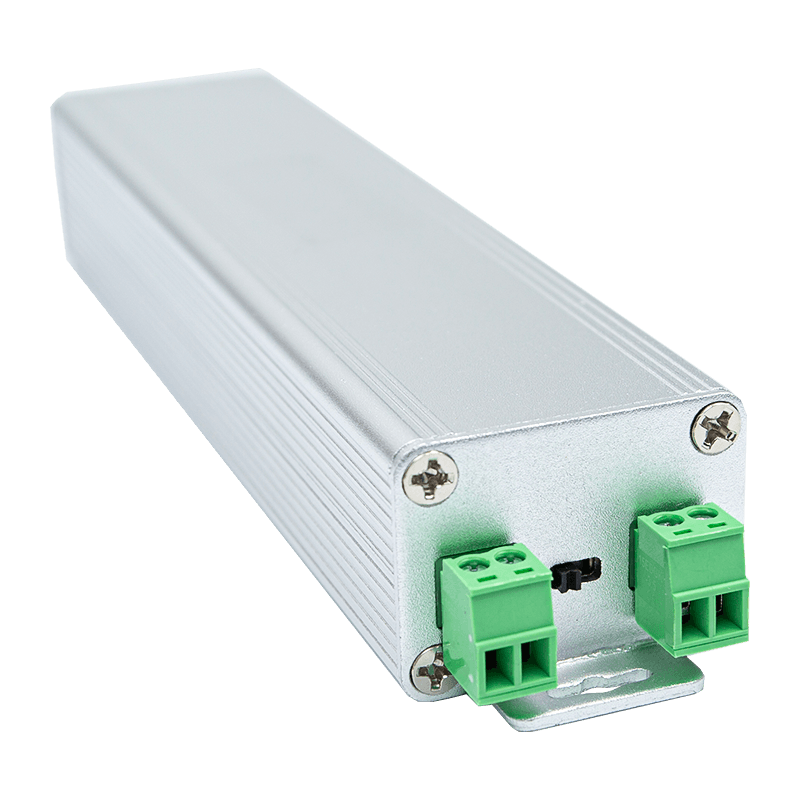
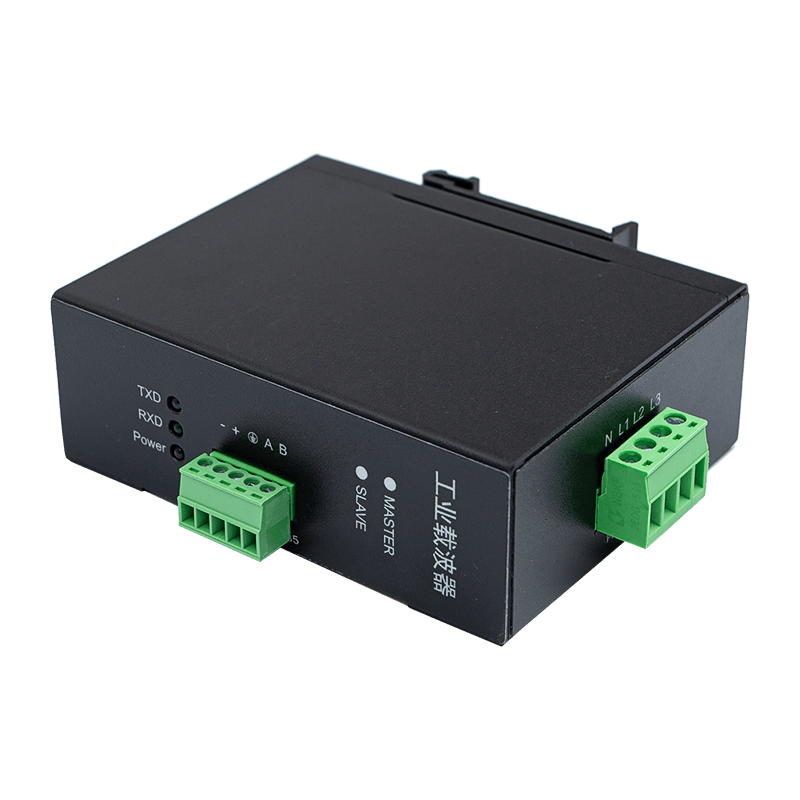
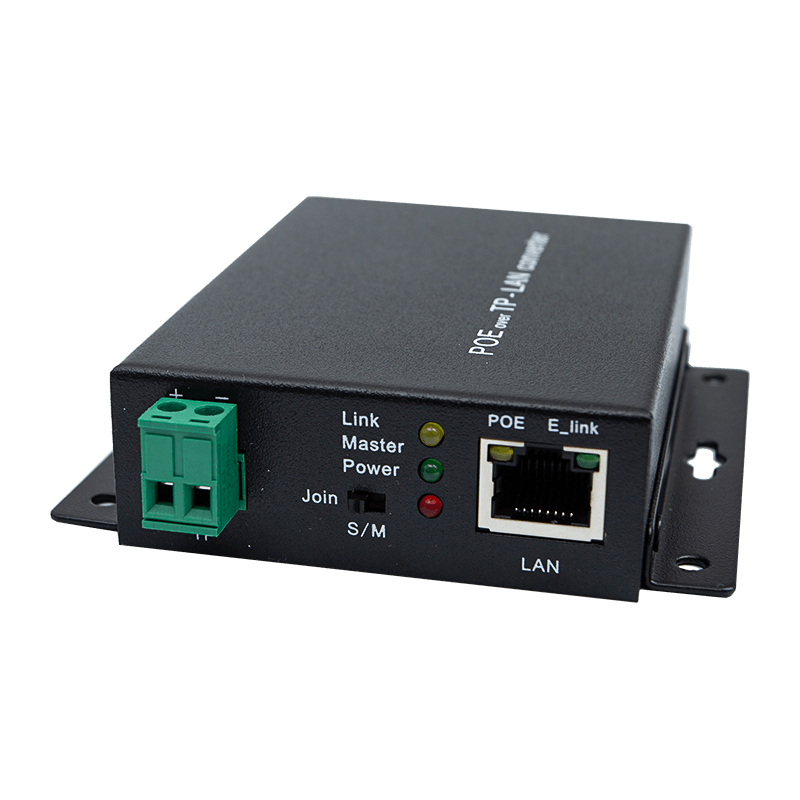
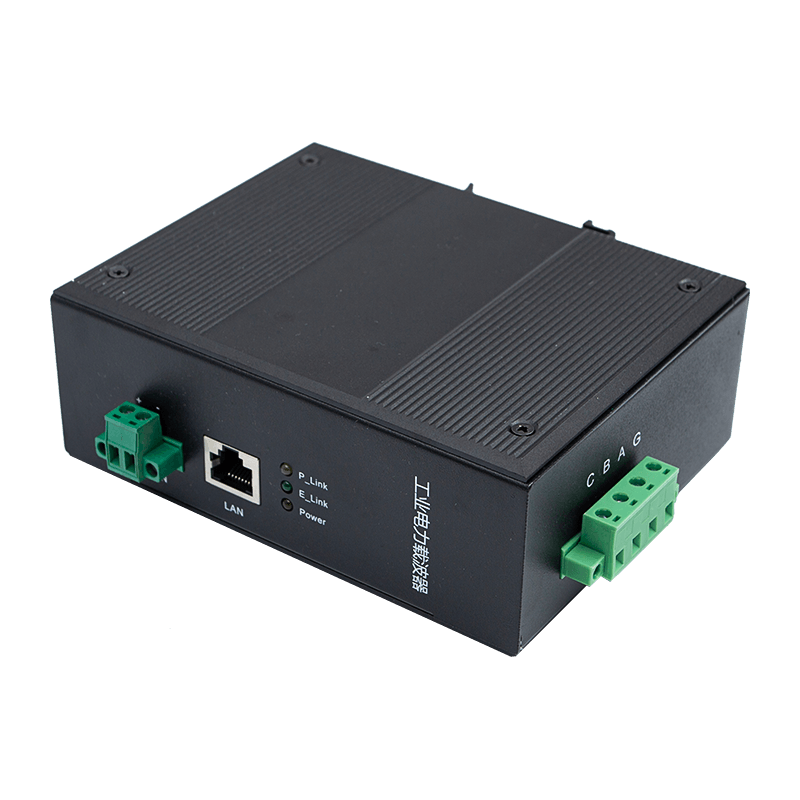
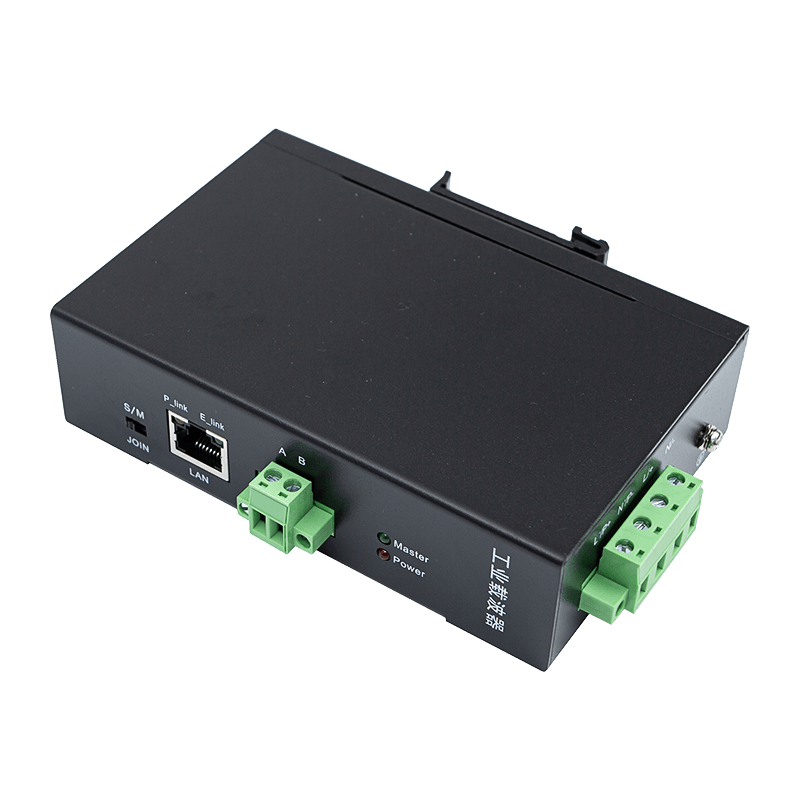
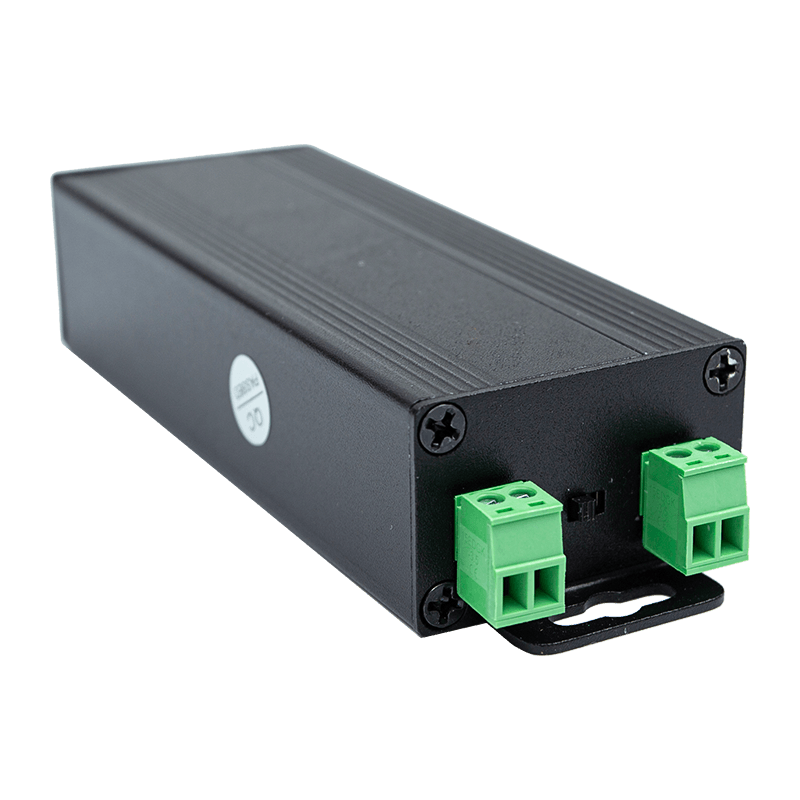
The KS800N DC Broadband Powerline Transceiver is designed for this purpose. It provides transparent Ethernet data transmission over power lines, two-core cables, conductor rails, slip-ring cables, and related industrial wiring systems. Based on the IEEE P1901 standard and OFDM modulation technology, the device supports carrier communication speeds of up to 100 Mbps, transmission distances of up to 500 meters over ordinary power lines, and extended distances of approximately 3 to 5 kilometers when repeaters are used in a properly designed network.
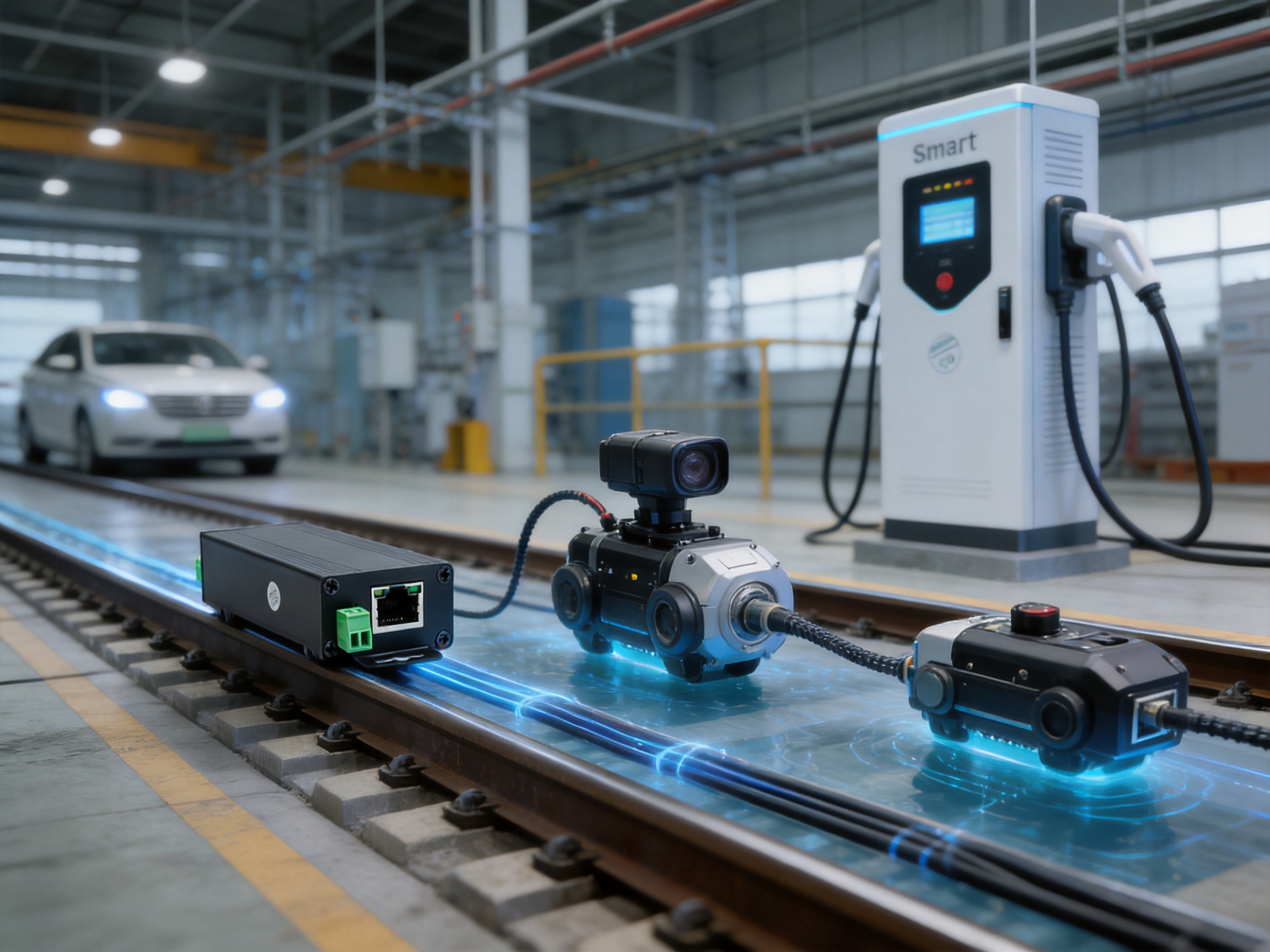
Unlike many conventional powerline communication products intended primarily for residential networking, the KS800N is designed around industrial requirements. Its compact enclosure, broad operating temperature range, low power consumption, encryption capability, Ethernet compatibility, and support for continuous operation make it suitable for demanding applications such as inspection robots, rail-guided robots, pipeline robots, underwater robots, and smart charging stations.
The product is developed and supplied by ASY Electronics (JiaXing) Co., Ltd., a high-tech enterprise focused on smart-factory technologies, industrial data sensing, edge-layer hardware, intelligent connectivity, and industrial data integration. Its broader product portfolio includes broadband powerline carriers, wireless temperature monitoring systems, industrial transmitters, thermal gas mass flow meters, and automatic door controllers. This combination of communication hardware and industrial sensing expertise enables the company to approach connectivity as part of a complete industrial IoT architecture rather than as an isolated networking component.
DC Broadband Powerline Transceiver
What Is Industrial Broadband Powerline Communication?
Broadband powerline communication uses existing electrical conductors to transmit digital data. Instead of installing a separate data cable between every device, a communication signal is coupled onto a suitable power line or two-core conductor. A receiving transceiver extracts the signal and converts it into Ethernet data for connection to a controller, switch, computer, robot, or other networked device.
Traditional narrowband powerline communication generally focuses on low data rates, long-distance signaling, or simple monitoring functions. Broadband powerline communication uses a wider frequency range and more advanced modulation methods to support significantly higher throughput. This makes it more suitable for industrial video streams, robot control data, inspection information, configuration traffic, and multiple simultaneous Ethernet services.
The KS800N uses OFDM, or Orthogonal Frequency Division Multiplexing. OFDM divides the available communication spectrum into multiple subcarriers. This approach allows the system to adapt more effectively to frequency-selective attenuation, interference, and variations in the characteristics of the powerline channel. In industrial environments, where cables may have different lengths, loads, connectors, and electromagnetic conditions, this flexibility is important for maintaining usable communication performance.
The communication system is based on the IEEE P1901 standard and is described as compliant with the EU EN50561 specification. It also supports a range of common networking protocols and interfaces, including TCP/IP, UDP, Profinet, Modbus-TCP, Ethernet, and related standards. This allows the transceiver to function as a transparent communication bridge rather than forcing users to redesign their application software.
For the end user, the operating concept is straightforward. Ethernet data enters the device through its Ethernet interface, is converted into a broadband carrier signal, and travels through the connected powerline medium. A second KS800N receives the signal and presents the recovered data through Ethernet. The powerline therefore becomes the physical communication path, while Ethernet remains the familiar application-side interface.
Core Product Advantages
High-Speed Data Transmission
The KS800N supports carrier communication speeds of up to 100 Mbps and Ethernet auto-negotiation at 10M/100 Mbps. This bandwidth is considerably higher than that of many conventional narrowband powerline systems. It allows a single network to carry more than basic status information, including control data, diagnostic records, configuration traffic, and selected monitoring data.
High bandwidth is particularly valuable for mobile industrial systems. A rail-guided robot may need to exchange motion commands, position information, equipment status, and inspection images while traveling along a conductor rail. A pipeline robot may need to transmit sensor measurements and diagnostic information while moving through an extended route. A higher-throughput connection gives the application designer more flexibility and reduces the risk that communication limitations will restrict system functionality.
Use of Existing Conductors
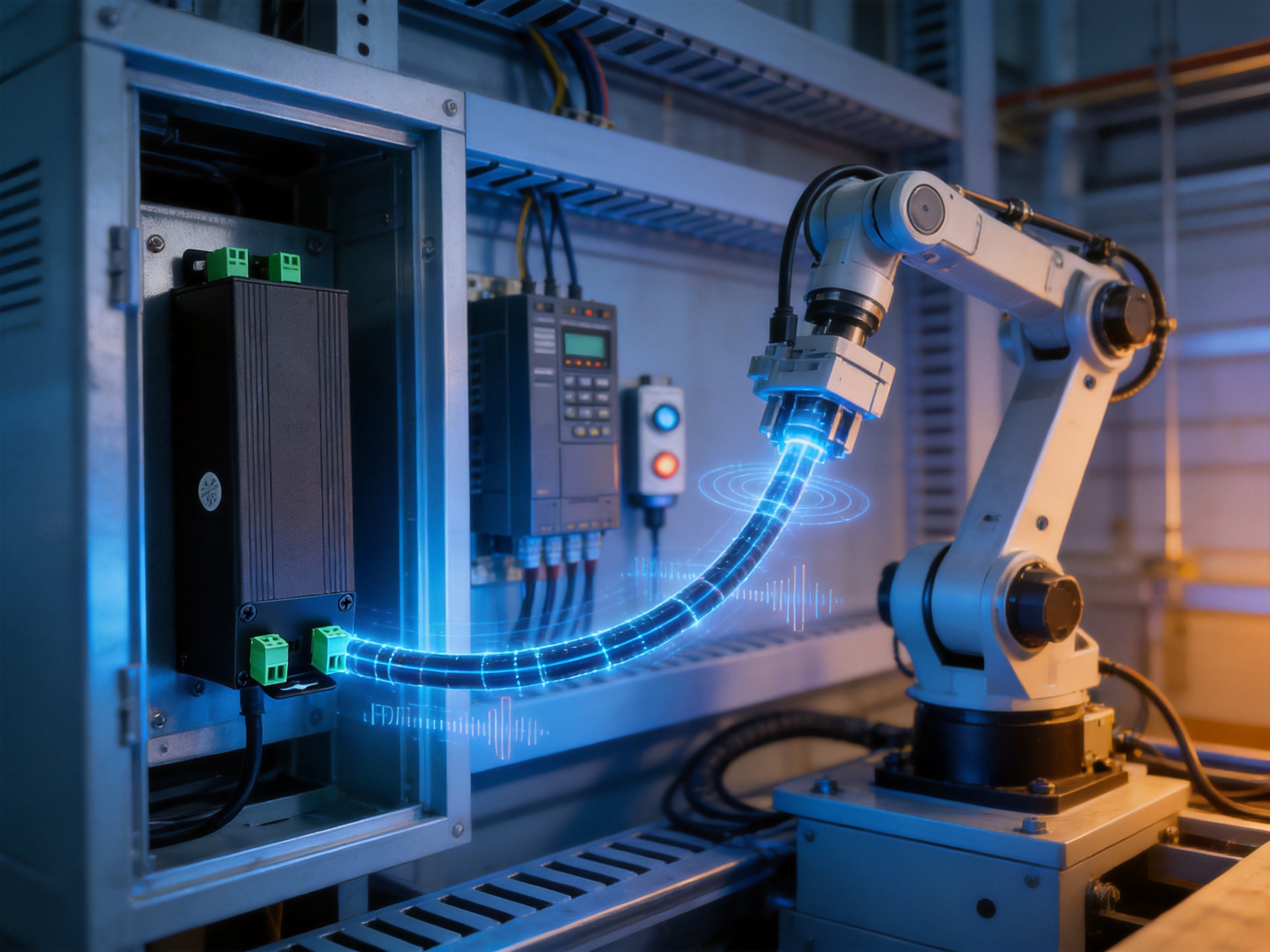
The most significant advantage of a powerline transceiver is that it can use infrastructure already present in the machine or facility. The KS800N supports DC powerline communication from 0 to 300 V on the signal side and can operate with various two-core cables, power lines, slip-touch cords, and slip-ring cables. This is especially useful when a moving mechanism already receives power through a conductor rail, cable chain, rotary connection, or slip ring.
By carrying data through the existing electrical path, the system can reduce the need for separate trailing Ethernet cables, additional fiber routes, or complex wireless coverage planning. The result may be a simpler mechanical design, fewer installation constraints, and lower infrastructure complexity. In applications where equipment moves continuously, eliminating a separate data cable can also reduce cable wear and maintenance requirements.
Long Transmission Distance
On an ordinary powerline, the maximum stated transmission distance is approximately 500 meters, depending on cable characteristics, electrical noise, connected loads, and installation conditions. For longer routes, the repeater version can support multiple daisy-chained repeaters. The supplied product information indicates that up to ten levels of repeaters may be used, extending the effective network distance to approximately 3 to 5 kilometers under suitable conditions.
This combination of direct and repeated transmission gives system designers several options. A compact point-to-point installation may require only two transceivers. A long production line may use several repeaters at carefully selected locations. A distributed industrial network may combine master, slave, and repeater devices to balance coverage, reliability, and installation cost.
Industrial Temperature Range
The KS800N is specified for an operating temperature range of -40°C to 85°C and a storage temperature range of -40°C to 85°C. Its operating humidity range is 20% to 95% without condensation. These specifications make the product suitable for industrial environments that experience large temperature changes, cold outdoor installations, equipment rooms, transportation systems, and machinery exposed to demanding ambient conditions.
Temperature tolerance is not only a matter of component survival. It also supports more predictable network behavior across seasons and operating cycles. Industrial equipment may be installed close to motors, power supplies, charging systems, outdoor machinery, or process equipment. A wide temperature range helps reduce the need for additional environmental enclosures in applications where the surrounding conditions remain within the specified limits.
Compact Mechanical Design
The device measures approximately 120 × 40 × 25 millimeters and weighs about 200 grams. Its compact form factor helps simplify installation in control cabinets, robot bodies, rail-guided mechanisms, inspection equipment, and other space-constrained systems. The product uses an ear-hook installation method, allowing it to be mounted without occupying excessive panel space.
A small enclosure is especially valuable in mobile equipment. Robots and moving platforms must manage weight, vibration, cable routing, and available internal volume. A communication device that provides 100 Mbps performance without requiring a large enclosure can be integrated more easily into the overall mechanical design.
Low Power Consumption
The stated overall power consumption is no more than 3 W. Low consumption reduces the load placed on the machine’s power supply and limits heat generation within an enclosed cabinet. It is also useful in battery-supported or power-limited applications, including mobile robots, remote equipment, and smart charging systems.
Lower heat generation can support longer component life and more stable operation. In compact enclosures, every watt contributes to the thermal design. A low-power transceiver gives system integrators greater freedom when selecting power supplies, ventilation methods, and enclosure sizes.
Built-In Security and Error Correction
Industrial networks carry operational information that may influence production, equipment movement, energy management, or maintenance decisions. The KS800N integrates AES-128 encryption for data protection and LDPC error correction codec technology to improve communication reliability.
AES-128 helps protect transmitted information from unauthorized access when the communication system is deployed in a shared or physically accessible environment. LDPC error correction supports the recovery of data affected by transmission noise or channel impairments. Together with OFDM modulation, these technologies provide a stronger communication foundation than a simple unprotected carrier link.
The product information specifies a data delay of within 10 milliseconds and a packet loss probability of less than 0.1 percent under applicable test and operating conditions. Actual performance depends on cable quality, network topology, electrical noise, connected equipment, and installation practices. Nevertheless, these specifications demonstrate that the device is designed for more than basic low-speed telemetry.
Technical Specifications
| Item | Specification |
|---|---|
| Product type | Industrial DC broadband powerline transceiver |
| Communication standard | IEEE P1901-based broadband powerline communication |
| Modulation | OFDM |
| Power supply | DC 12–48 V |
| PLC signal range | DC 0–300 V |
| Supported transmission media | Two-core cables, power lines, slip-touch cords, slip-ring cables, and related conductors |
| Carrier frequency | 2–28 MHz |
| Ethernet bandwidth | 10/100 Mbps auto-adaptive |
| Direct transmission distance | Up to approximately 500 meters on ordinary power lines |
| Extended transmission distance | Approximately 3–5 kilometers with a suitable repeater arrangement |
| Repeater capability | Up to ten levels of daisy-chained repeaters, depending on configuration |
| Typical data delay | Within 10 milliseconds |
| Packet loss probability | Less than 0.1 percent under specified conditions |
| Encryption | AES-128 |
| Multicast | IGMP multicast support, with up to 128 nodes stated |
| Power consumption | ≤3 W |
| Operating temperature | -40°C to 85°C |
| Storage temperature | -40°C to 85°C |
| Operating humidity | 20%–95%, non-condensing |
| Dimensions | 120 × 40 × 25 mm |
| Weight | Approximately 200 g |
| Installation | Ear-hook mounting |
| Operating mode | Master or slave selected by DIP switch |
| Duty cycle | Industrial-grade, designed for 7 × 24 operation |
Simple Master and Slave Configuration
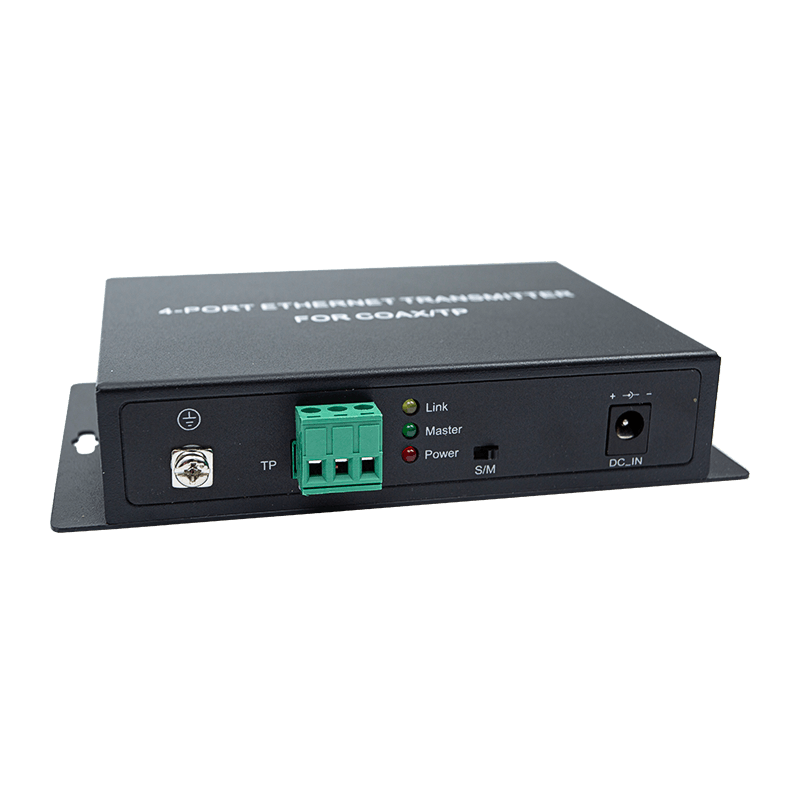
The KS800N uses a straightforward DIP-switch configuration for basic network role selection. When the switch is set to “M,” the unit operates as the master. When the switch is set to “S,” it operates as a slave. Each network must have one and only one master, while the master can communicate with one slave or multiple slaves according to the selected network architecture.
This approach reduces commissioning complexity. Installers do not need to rely on a complicated software discovery process for the fundamental operating role. A clear hardware setting can make initial deployment easier, especially in field installations where technicians need to identify the network role quickly.
At the same time, simple role selection does not prevent the product from supporting more advanced network functions. The transceiver is designed for transparent Ethernet transmission and supports common industrial protocols. This means the device can form part of a broader Ethernet architecture while retaining a simple physical-layer configuration.
For larger systems, the network designer should define the master location, slave locations, repeater positions, cable routes, grounding arrangements, and expected traffic patterns before installation. A network with multiple nodes should also consider multicast behavior, network addressing, electromagnetic noise, and the electrical isolation or coupling requirements of the application.
Product Versions for Different Applications
The KS800N platform is available in multiple hardware and software versions. Hardware options include Standard, High-Bandwidth, Long-Distance, and Broadcast versions. Software options include High-Performance, Repeater, and versions dedicated to slip-rail or conductor-rail systems.
This product-family approach is an important advantage over one-size-fits-all communication products. Industrial applications differ substantially. A short fixed connection may prioritize cost and simplicity. A robot traveling along a long rail may require repeater capability and conductor-rail optimization. A system distributing similar information to multiple nodes may need broadcast-oriented behavior. Offering variants allows the communication solution to be matched to the application rather than forcing every customer to accept the same configuration.
The correct version should be selected according to required bandwidth, distance, network topology, electrical medium, node quantity, and application protocol. Technical evaluation should include the cable type, voltage level, noise environment, expected attenuation, and the presence of switching power supplies or high-power motors.
Applications in Industrial Automation
Inspection Robots
Inspection robots often operate in locations that are difficult or dangerous for personnel. They may travel through factories, substations, storage areas, tunnels, or process facilities while collecting images, temperature measurements, vibration information, and equipment status. A powerline communication link can provide both a practical physical communication path and a high-speed Ethernet connection.
When an inspection robot already receives DC power through a cable or conductor system, the KS800N can reduce the need for a separate communication cable. The robot can transmit inspection data while moving, and the control system can send commands through the same communication infrastructure. The result is a more integrated connection between the mobile platform and the supervisory network.
Rail-Guided Robots
Rail-guided robots commonly move along fixed paths in warehouses, workshops, manufacturing lines, and specialized industrial facilities. Their travel distance may exceed the practical range of a single wireless access point, while a conventional Ethernet cable may introduce mechanical wear or interfere with movement.
When the rail or conductor system also carries power, broadband powerline communication can be an efficient alternative. The KS800N supports communication through conductor rails and slip-touch arrangements, while repeater versions can extend coverage along longer routes. The 10/100 Mbps Ethernet interface also allows the robot controller to communicate with standard industrial network equipment.
Pipeline Robots
Pipeline inspection and maintenance systems require reliable communication in confined routes. Depending on the pipeline structure and operating method, a robot may use a tether, conductive path, or specialized cable system. Wireless signals may be difficult to propagate through metal structures, underground routes, or long enclosed passages.
A powerline-based link can be integrated into the robot’s power and tether arrangement. The communication method reduces dependence on open-air radio propagation and can support a direct connection between the mobile unit and an external controller. The rugged operating temperature range is also useful where pipeline systems are exposed to outdoor or process-related temperature variations.
Underwater Robots
Underwater robots require careful communication design because ordinary wireless radio communication is strongly limited in water. Many systems therefore rely on tethered power and data connections. Where a suitable two-core electrical path is available, the KS800N can provide broadband data transmission over the existing conductive route.
Possible uses include underwater inspection platforms, industrial water facilities, reservoirs, and specialized maintenance equipment. The final suitability depends on the complete electrical design, cable construction, sealing, isolation, and safety requirements of the underwater system. The transceiver serves as the communication component within that larger engineered platform.
Smart Charging Stations
Smart charging stations may include power conversion equipment, metering systems, safety sensors, access control, and remote management functions. These systems need dependable communication between local controllers and supervisory platforms while operating near high-current switching equipment.
Using an industrial powerline communication device can simplify communication between distributed modules when suitable conductors are already available. AES-128 encryption, Ethernet compatibility, and support for common networking protocols are useful for integrating the charging station into a wider industrial IoT environment.
Energy and Equipment Monitoring
Modern factories increasingly monitor equipment condition, energy consumption, process performance, and maintenance status. ASY Electronics’ broader product portfolio includes wireless temperature monitoring systems, industrial transmitters, and thermal gas mass flow meters. The KS800N can provide a communication foundation for connecting controllers, gateways, and edge devices in areas where traditional network cabling is inconvenient.
For example, a factory may use temperature sensors to monitor electrical cabinets, transmitters to measure process conditions, and flow meters to evaluate gas consumption. The powerline transceiver can connect local Ethernet-enabled collection units to a central industrial network without requiring a new dedicated data cable for every installation zone.
Advantages Compared with Alternative Communication Methods
Compared with Conventional Ethernet Cabling
Conventional Ethernet remains an excellent solution where dedicated data cables can be installed easily. However, cable deployment can become complicated in moving systems, long routes, rotating equipment, or areas with limited access. A separate Ethernet cable may require cable chains, drag-rated components, additional connectors, and periodic mechanical inspection.
The KS800N offers an alternative by using the existing power conductors. This can reduce the number of physical cables and simplify integration in mobile systems. It does not eliminate the need for proper electrical design, but it can make the overall installation more compact and adaptable.
Compared with Wireless Communication
Wireless communication can be convenient, but industrial radio performance is influenced by metal structures, interference, obstructions, access-point placement, roaming behavior, and changing site conditions. In a robot route or enclosed industrial structure, maintaining consistent wireless coverage may require multiple access points and careful radio planning.
Powerline communication avoids dependence on open-air radio propagation. The signal follows the electrical medium, making it particularly attractive where the robot or machine already moves along a powered path. The solution can also reduce concerns about wireless dead zones and roaming handovers. However, the powerline channel must still be evaluated for noise, attenuation, coupling, and connected loads.
Compared with Narrowband PLC
Narrowband PLC can be effective for low-speed metering, simple control, and long-distance low-data-rate applications. It may not provide enough capacity for Ethernet services, inspection data, or multiple simultaneous industrial applications.
The KS800N is positioned as a broadband solution with up to 100 Mbps carrier communication and support for transparent Ethernet transmission. This higher capacity allows it to serve more demanding industrial networking requirements while retaining the infrastructure benefits of PLC technology.
Compared with Fiber Optic Networks
Fiber optics provide excellent immunity to electromagnetic interference, high bandwidth, and long-distance performance. They remain highly suitable for backbone networks and electrically isolated connections. However, fiber installation can require specialized termination, converters, protective routing, and additional hardware.
The KS800N is not intended to replace fiber in every situation. Its advantage is greatest where a suitable DC powerline or two-core conductor already exists and where the user wants to add Ethernet communication without deploying a separate fiber route. It can complement fiber by serving mobile, local, or difficult-to-cable sections of a larger network.
Manufacturing and Engineering Strengths
The company describes itself as a high-tech enterprise dedicated to building smart factories of the future. Its core mission focuses on efficient, reliable, and green manufacturing through data sensing and intelligent connectivity. This strategic focus is directly relevant to the KS800N because the product is not simply a general-purpose communications accessory; it is an industrial edge-layer device intended to connect real equipment in demanding environments.
The company’s strengths include self-developed edge hardware, industrial data integration, and experience across several related product categories. Developing communication modules alongside sensors, transmitters, flow meters, and automatic door controllers provides a practical understanding of how industrial devices are installed, powered, monitored, and maintained.
Industrial-Oriented Product Development
Product development for industrial communication equipment must consider more than maximum throughput. Engineers must evaluate power input, thermal behavior, physical dimensions, electromagnetic conditions, protocol compatibility, service life, mounting, installation time, and field maintenance. The KS800N’s combination of a -40°C to 85°C operating range, ≤3 W consumption, compact enclosure, encryption, error correction, and continuous-duty design reflects this industrial product orientation.
The available hardware and software versions also indicate a development process organized around application requirements. Standard, high-bandwidth, long-distance, broadcast, repeater, and conductor-rail versions address different use cases rather than treating every customer as having identical needs.
Integration of Hardware and Software
Reliable industrial connectivity requires coordination between physical hardware and embedded communication software. OFDM modulation, LDPC error correction, AES-128 encryption, Ethernet transparency, multicast support, and repeater operation must work together as a complete system. The availability of software variants suggests that the product can be adapted to different network roles and application environments.
The DIP-switch master/slave arrangement also reflects attention to field usability. A technically advanced product should not become difficult to commission. Clear operating modes, standardized Ethernet interfaces, and familiar protocols reduce the learning curve for integrators and maintenance personnel.
Manufacturing Quality Considerations
Although detailed factory process parameters are not provided, an industrial-grade communication module requires controlled manufacturing practices. These normally include component traceability, printed circuit board assembly inspection, firmware loading verification, enclosure inspection, connector testing, power-input verification, communication performance checks, and environmental validation.
For a product intended for 7 × 24 operation, quality control should also address thermal performance, long-duration communication stability, startup behavior, voltage tolerance, signal integrity, and repeatable network pairing. The company’s positioning as an industrial IoT hardware provider supports a product-development approach centered on repeatability and field reliability.
Manufacturing strength is also reflected in the ability to provide product variants for different deployment conditions. A company that can manage standard, high-bandwidth, long-distance, broadcast, repeater, and conductor-rail configurations must coordinate hardware design, firmware configuration, assembly, testing, documentation, and customer support across a broader product family.
Application-Driven Customization
Industrial customers often require more than a catalog item. Their systems may have unusual voltage levels, special mechanical constraints, extended cable routes, mobile equipment, or protocol integration requirements. ASY Electronics’ focus on industrial data integration and custom powerline carrier solutions enables it to engage with these application factors.
Customization may involve selecting the correct hardware version, adjusting the repeater arrangement, defining master and slave locations, evaluating the electrical path, integrating with Profinet or Modbus-TCP equipment, or coordinating the transceiver with other sensing devices. The objective is to create a complete and practical communication solution rather than merely supply an isolated module.
Recommended Network Design Practices
Before installation, engineers should identify the voltage carried by the communication conductors, the cable length, the cable material, the number of branches, the connected loads, and the expected electromagnetic environment. Although the PLC signal side supports DC values from 0 to 300 V, the complete installation must comply with the electrical safety requirements of the machine and facility.
The master should be placed where it can connect efficiently to the principal Ethernet network. Slave units should be positioned near the devices they serve. On long routes, repeaters should be installed where the signal remains sufficiently strong and where maintenance access is available. Excessive branching, uncontrolled impedance changes, and high-noise equipment may reduce performance.
System designers should also separate communication planning from assumptions about theoretical distance. The stated 500-meter direct range and 3-to-5-kilometer repeater range are reference capabilities. Actual results depend on conductor quality, interference, voltage, network topology, coupling conditions, and the electrical equipment connected to the line. A site test or engineering validation is recommended for critical installations.
Network security should be planned together with physical communication. AES-128 encryption protects the transmitted data at the product level, while the wider industrial network should also use appropriate access control, segmentation, credential management, firewall policies, and monitoring procedures.
Finally, integrators should document DIP-switch settings, device addresses, cable routes, repeater locations, power connections, and maintenance procedures. Clear documentation reduces commissioning errors and makes future troubleshooting faster.
Role in Smart Factory Transformation
Smart factories depend on the continuous movement of data from physical assets to edge systems, control platforms, maintenance applications, and management dashboards. The quality of this data flow affects equipment utilization, energy analysis, production optimization, and predictive maintenance.
The KS800N contributes at the connectivity layer. It makes it possible to connect Ethernet-enabled equipment through existing industrial conductors, allowing older or physically constrained equipment to participate in a modern data architecture. This can support phased digital transformation, where companies upgrade connectivity without replacing every machine or rebuilding the entire facility network.
For equipment condition monitoring, powerline communication can connect local data collectors to a central system. For refined energy management, it can link meters and controllers across equipment zones. For production optimization, it can provide communication between machines, edge gateways, robots, and supervisory systems.
Because the company also develops sensing and measurement products, it can address both sides of the industrial IoT chain: collecting information from the physical process and transporting that information through a suitable communication network. This integrated capability can simplify supplier coordination and encourage more consistent system design.

Frequently Asked Questions
What is the primary function of the KS800N?
The KS800N is an industrial DC broadband powerline transceiver. It converts Ethernet data into a broadband carrier signal that travels through suitable power lines or two-core conductors and then converts the signal back into Ethernet at the receiving end.
What communication speed does it support?
It supports 10/100 Mbps auto-adaptive Ethernet and carrier communication speeds of up to 100 Mbps, depending on the network and operating conditions.
Can it communicate through a normal power cable?
It is designed to communicate through suitable DC power lines, two-core cables, slip-touch cords, slip-ring cables, conductor rails, and related industrial conductors. The cable and electrical environment should be evaluated before deployment.
What voltage range is supported?
The product information specifies a DC 12–48 V power supply and a PLC signal range of DC 0–300 V. These are separate specifications: the first concerns the device’s own power input, while the second concerns the supported signal-carrying electrical path.
How far can the signal travel?
The stated direct transmission distance is up to approximately 500 meters on an ordinary powerline. With repeater devices and suitable network planning, the distance can be extended to approximately 3 to 5 kilometers.
How many repeaters can be used?
The product information indicates support for up to ten levels of daisy-chained repeaters. The practical number should be confirmed for the selected version, topology, cable environment, and required performance.
Does the product support encryption?
Yes. The KS800N supports AES-128 data encryption. Industrial network security should also include suitable access control and network segmentation measures.
Does it support multicast communication?
Yes. The device supports IGMP multicast protocols, with a stated maximum of 128 nodes.
What is the operating temperature range?
The specified operating temperature range is -40°C to 85°C. The storage temperature range is also -40°C to 85°C.
How is the master or slave mode configured?
A DIP switch is used for basic role selection. Setting the switch to “M” selects master mode, while setting it to “S” selects slave mode. A network must contain one master, while one or multiple slaves may be connected according to the design.
Which industrial applications are suitable?
Typical applications include inspection robots, rail-guided robots, pipeline robots, underwater robots, smart charging stations, equipment monitoring systems, and other industrial systems that need Ethernet communication over an existing conductive path.
How does it compare with wireless communication?
It does not depend on radio coverage, roaming, or wireless propagation through open space. This can be beneficial in metal structures, enclosed routes, and mobile systems powered through conductor rails or cables. The powerline channel must still be evaluated for electrical noise and attenuation.
How does the company support industrial customers?
ASY Electronics develops industrial IoT products covering broadband powerline communication, wireless temperature monitoring, industrial transmitters, thermal gas mass flow meters, and automatic door controllers. Its capabilities in edge hardware and industrial data integration support application-oriented communication solutions.
Conclusion
The KS800N DC Broadband Powerline Transceiver provides a practical way to extend Ethernet connectivity through existing industrial power conductors. Its combination of up to 100 Mbps communication, OFDM modulation, LDPC error correction, AES-128 encryption, 500-meter direct transmission, repeater-based kilometer-scale extension, compact construction, low power consumption, and wide operating temperature range makes it suitable for demanding industrial applications.
Its strongest advantage is the ability to connect communication and power infrastructure in a single industrial pathway. This is valuable for robots, conductor-rail systems, pipeline platforms, underwater equipment, smart charging stations, and equipment monitoring networks where conventional Ethernet cabling or wireless communication may be difficult to deploy.
The product is supported by a company focused on smart-factory technologies, industrial sensing, edge-layer hardware, and intelligent connectivity. Its broader product portfolio and application-driven product variants provide a foundation for developing complete industrial IoT solutions rather than isolated communication links.
For customers seeking to modernize equipment, reduce cabling complexity, extend connectivity across mobile systems, or integrate legacy electrical infrastructure into a digital factory, the KS800N represents a flexible industrial communication option. Successful deployment depends on proper cable evaluation, network planning, electrical safety, and application-specific testing, but the underlying architecture offers a strong balance between bandwidth, installation simplicity, environmental tolerance, and industrial usability.
References
IEEE P1901, Broadband Powerline Communication Network Standard.
EN 50561, Powerline Communication Apparatus Used in Low-Voltage Installations.
IEEE 802.3, Ethernet Standards.
IEEE 802.3u, Fast Ethernet Standard.
IEEE 1905.1, Heterogeneous Network Device Convergence Standard.
Industrial Ethernet and TCP/IP networking principles.
OFDM communication and LDPC error-correction engineering principles.
Product technical information for the KS800N DC Broadband Powerline Transceiver.
Industrial IoT architecture and smart-factory connectivity practices.