

Cold storage facilities place unusual demands on automatic door systems. A sliding door in a refrigerated warehouse is not simply a moving barrier; it is a thermal boundary, a safety device, an energy-saving component, and a key part of daily logistics. When forklifts, pallet traffic, high humidity, frost, and rapid temperature changes are present, a door controller must do far more than open and close a panel. It must coordinate motor torque, speed, braking, safety signals, heating wires, air curtains, access devices, emergency stops, and commissioning procedures with dependable precision.
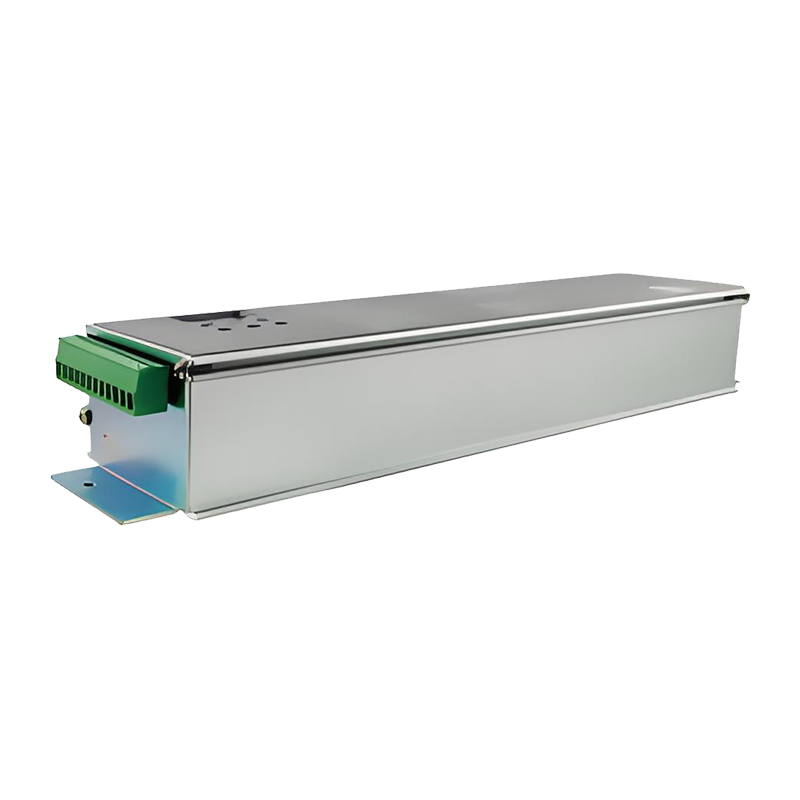
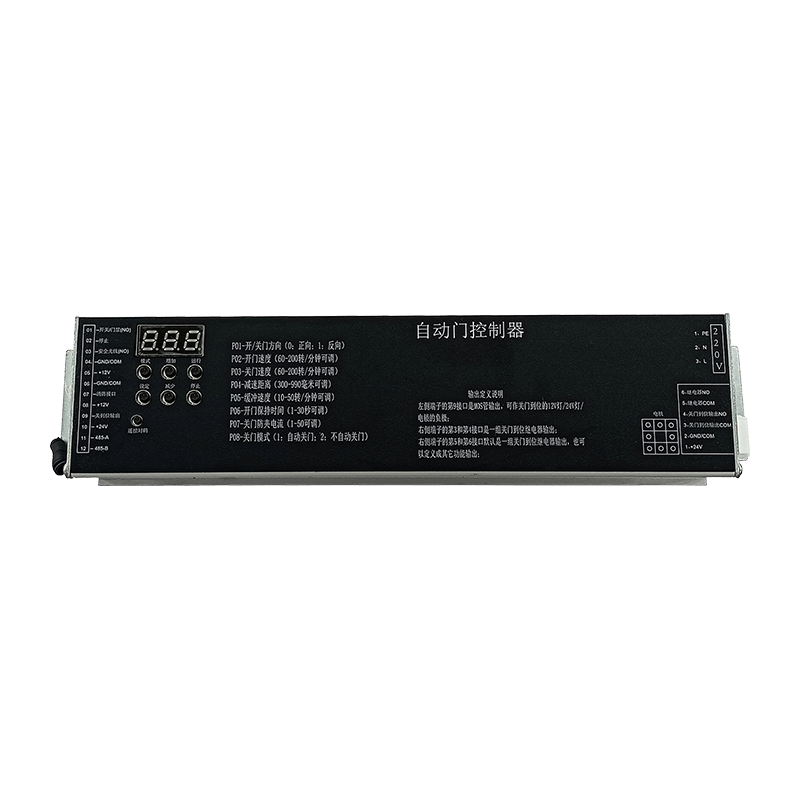
The Gear Motor Controller for Cold Storage Sliding Doors, model AIG-750L-03, is designed for this demanding environment. It provides intelligent control for heavy sliding refrigerator doors, integrates with a high-torque three-phase permanent magnet gear motor, and supports practical peripheral equipment such as heating elements and air curtains. With rated power of 0.75 kW, 220 V rated voltage operation, flexible input and output terminals, voice-guided commissioning, programmable parameters, and RS485 communication, the controller gives cold chain operators a robust platform for improving door reliability, reducing energy waste, and simplifying maintenance.
This article examines the product in detail, including its operating principles, application value, competitive advantages, integration capabilities, safety functions, manufacturing background, and the strengths of ASY Electronics (JiaXing) Co., Ltd. as a high-tech industrial solution provider. It is written for cold storage facility owners, industrial automation integrators, equipment manufacturers, maintenance engineers, and purchasing teams who need to evaluate a controller that can perform reliably in low-temperature, high-humidity industrial environments.
Gear Motor Controller for Cold Storage Sliding Doors
Product Overview
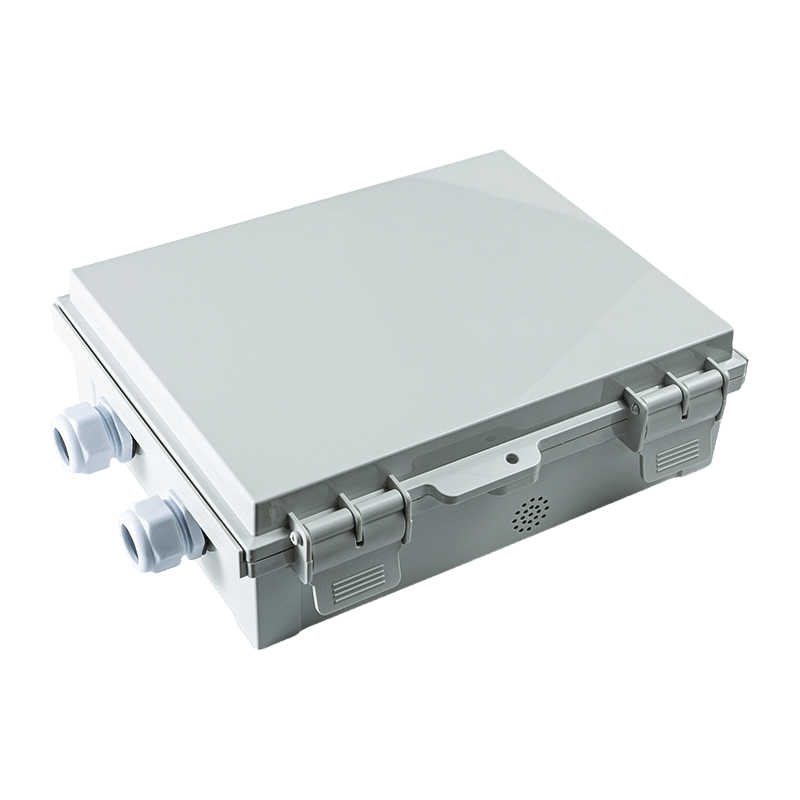
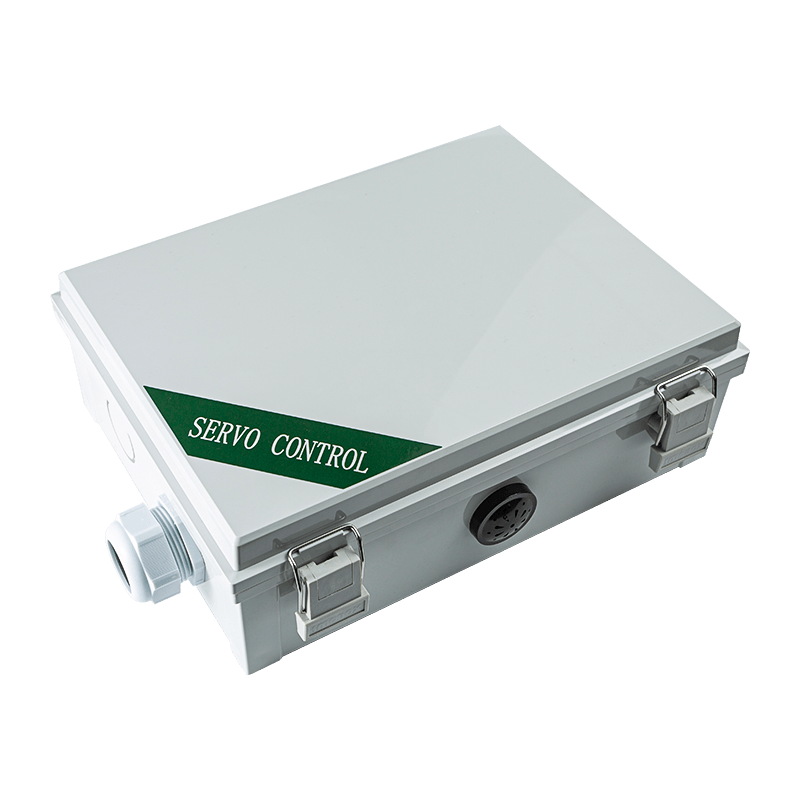
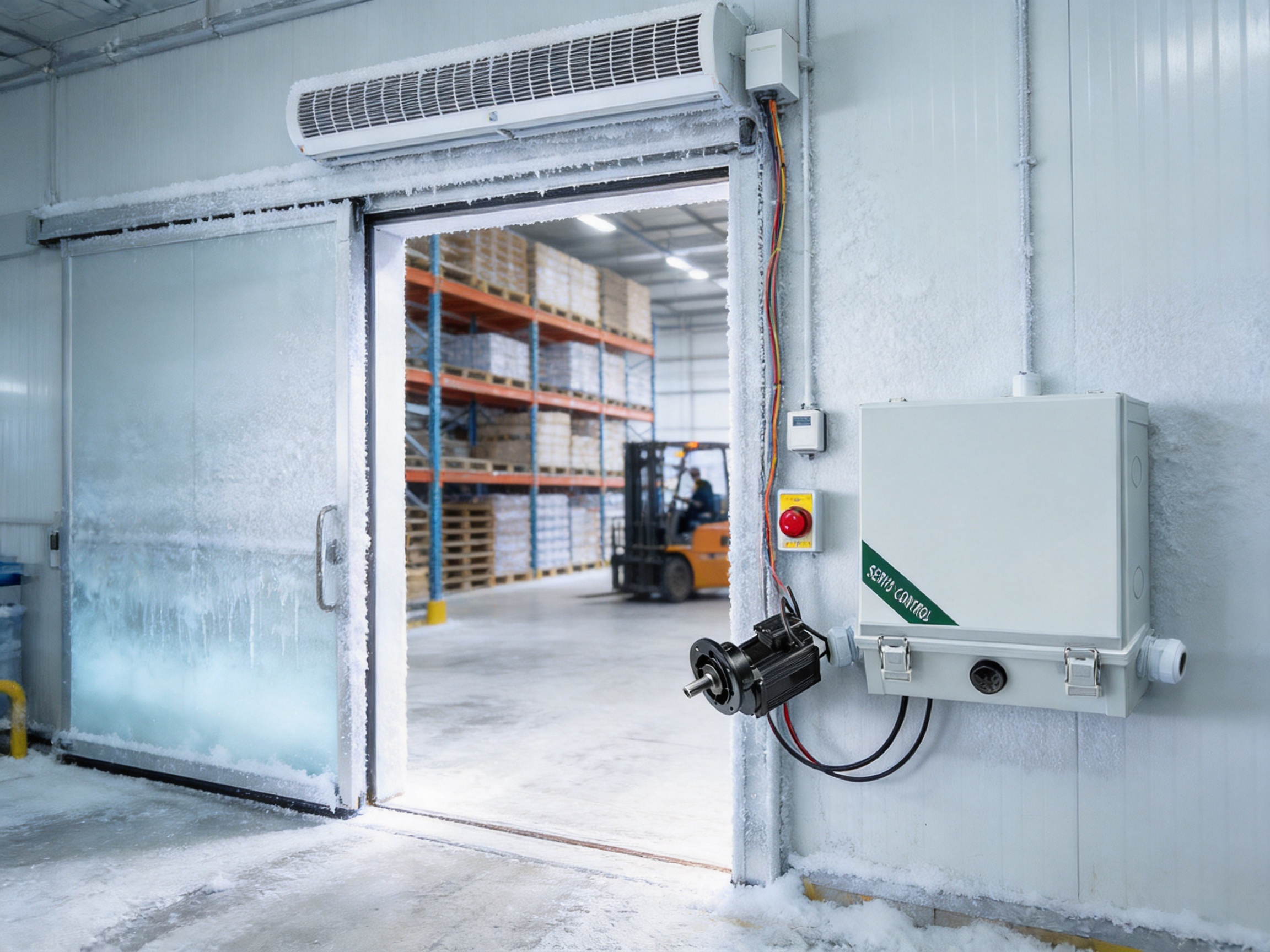
The AIG-750L-03 is an automatic door controller developed for cold storage sliding doors that require stable, high-torque operation. It is typically housed within the AIG-1500L-01J refrigerator door control box and works with the MT01-JS-45N, also known as DLG-56S-45, three-phase permanent magnet gear motor. This motor provides 45 N.m rated torque and uses a reduction ratio of 1:6.45, allowing the system to move heavy insulated sliding doors with controlled force and accurate positioning.
Cold storage doors are often thicker and heavier than normal industrial doors because they must reduce heat transfer, prevent air leakage, and withstand repeated impact from daily logistics activity. As a result, a standard door opener may not provide sufficient torque, braking performance, thermal protection, or safety integration. The AIG-750L-03 addresses these challenges with high-voltage servo geared motor control, adjustable speed settings, tunable starting current, programmable tightening torque, external heating control, and air curtain support.
The controller accepts an input voltage range of 176 to 264 VAC at 50 or 60 Hz, making it suitable for common industrial power environments. Its motor control capacity supports a controllable high-voltage servo geared motor with maximum output power up to 1500 W. Although the product description highlights a rated power of 0.75 kW for the controller application, the broader output capacity provides useful design margin for demanding installations.
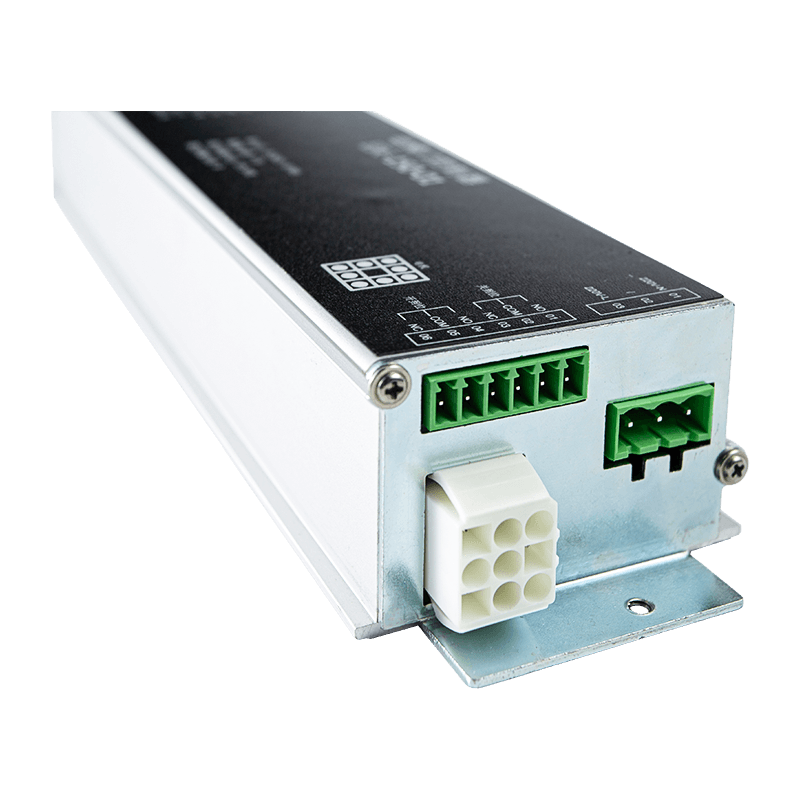
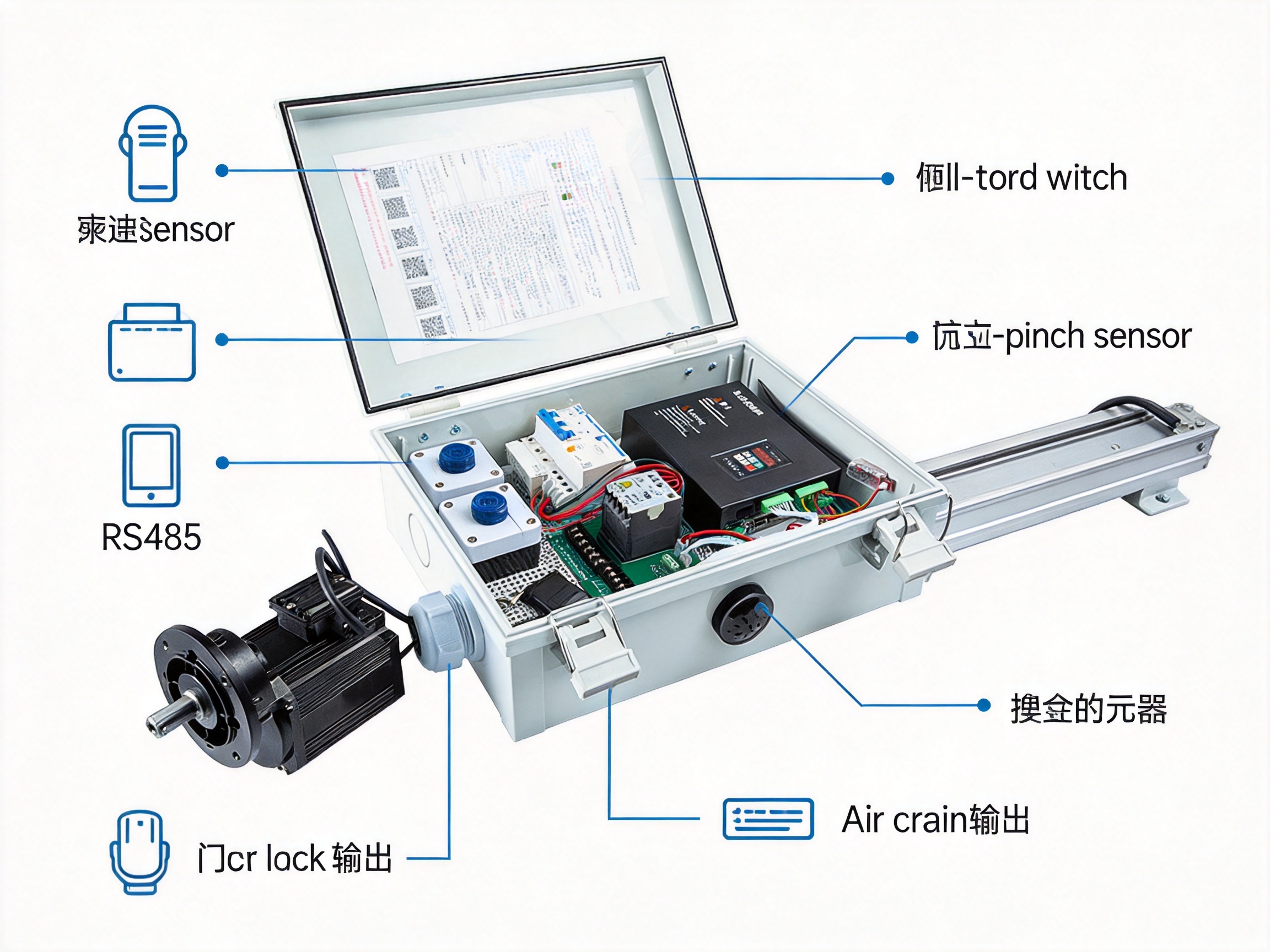
Its input signals include open, close, stop, anti-pinch or fire protection, door lock, radar, pull-cord, emergency stop, and related external commands. Its outputs include functions for a 380 VAC air curtain motor, a 220 VAC heating element, a buzzer, an open-position signal, and a close-position signal. One RS485 communication interface enables networked control and integration into broader facility automation systems.
In practice, the controller is not only a motor drive device; it is an integrated door management unit. It helps the facility manage traffic flow, temperature preservation, frost prevention, safety response, and remote operation. This combined functionality gives it a strong advantage over simpler control boxes that require multiple external modules to perform the same tasks.
Why Cold Storage Sliding Doors Require Specialized Control
Cold rooms, freezer warehouses, food processing sites, pharmaceutical storage areas, and refrigerated logistics centers face a unique combination of mechanical and environmental pressures. The door may operate hundreds or thousands of times per day. Each opening allows warm humid air to enter, leading to condensation, frost, ice accumulation, and higher refrigeration load. A controller that opens too slowly delays logistics; one that opens too aggressively increases mechanical stress; one that closes unreliably wastes energy and can create safety risks.
Cold storage doors also face sealing resistance. As gaskets press against the frame, the motor must generate sufficient final torque to close the door firmly without crushing the sealing material or overloading the mechanism. At the fully open and fully closed positions, the controller must manage tightening torque carefully. Too little torque can cause incomplete sealing, while too much torque can damage components, deform the door structure, or shorten motor life.
Humidity is another major challenge. Even when equipment is installed outside the coldest chamber, moisture can migrate, condense, and freeze near mechanical interfaces. Heating wires are often used to prevent door frames, tracks, or seals from freezing. The AIG-750L-03 supports external heating wires up to 1 kW at 220 V, allowing the controller system to coordinate antifreeze support as part of the door operation environment.
Air curtains are also common in cold storage facilities. They help reduce the exchange of warm and cold air when the door is open. The controller provides support for external air curtains up to 2.2 kW, enabling the door system to trigger climate-control assistance in a coordinated manner. This integration reduces dependence on separate switching circuits and helps improve operational consistency.
Safety is equally important. Heavy sliding doors can create pinch, impact, and entrapment risks. The controller provides terminals for anti-pinch sensors, emergency stop, radar, door locks, and other safety-related signals. These interfaces allow the system designer to build a comprehensive door control scheme that considers personnel, vehicles, cargo, and fire protection requirements.
Core Technical Specifications
The following table summarizes key performance and system parameters for the controller and its associated application environment.
Parameter |
Specification |
Application Value |
Rated Power |
0.75 kW |
Suitable for heavy cold storage sliding door control applications requiring stable motor output. |
Rated Voltage |
220 V |
Compatible with common industrial and commercial electrical systems. |
Input Voltage Range |
176 to 264 VAC, 50 or 60 Hz |
Provides tolerance for voltage fluctuation in real-world industrial sites. |
Motor Control Capacity |
Controllable high-voltage servo geared motor, maximum output power 1500 W |
Offers strong driving capability and useful performance margin. |
Compatible Motor |
MT01-JS-45N or DLG-56S-45 three-phase permanent magnet gear motor |
Delivers high torque and precise motion for insulated sliding doors. |
Rated Motor Torque |
45 N.m |
Supports movement of heavy doors and reliable final closing force. |
Reduction Ratio |
1:6.45 |
Balances torque multiplication and controlled door speed. |
Heating Wire Output |
Up to 1 kW at 220 V |
Helps prevent freezing around door frames, seals, and related components. |
Air Curtain Support |
Up to 2.2 kW |
Assists climate control and reduces cold air loss when the door is open. |
Input Signals |
Open, close, stop, anti-pinch, fire protection, door lock, radar, pull-cord, emergency stop |
Allows flexible integration with safety devices, access controls, and automation systems. |
Outputs |
Air curtain motor, heating element, buzzer, open position signal, close position signal |
Coordinates peripheral equipment and status feedback. |
Communication |
One RS485 interface |
Enables networked control and monitoring. |
Motor Environmental Rating |
Ambient temperature from -25°C to +50°C, relative humidity up to 95% |
Supports operation in harsh refrigerated and industrial environments. |
High-Torque Motor Control for Heavy Insulated Doors
The heart of a cold storage sliding door system is the relationship between the controller and the motor. The AIG-750L-03 is designed to control a three-phase permanent magnet gear motor with strong torque output. Permanent magnet motors are valued for high efficiency, responsive torque, compact structure, and smooth operation. When paired with a suitable gear reduction system, they can deliver the force needed to move insulated sliding doors without excessive size or mechanical complexity.
The compatible MT01-JS-45N or DLG-56S-45 motor has a rated torque of 45 N.m. This matters because cold storage doors often include dense insulation materials, reinforced frames, heavy seals, and robust hardware. During opening, the motor must overcome inertia, track resistance, gasket adhesion, and possible frost-related friction. During closing, it must move the door smoothly while applying enough final force to ensure sealing.
Many conventional controllers use basic start-stop logic or simple inverter functions. They can move a door, but they may not provide the precise torque and speed control required for long-term reliability. The AIG-750L-03 improves this situation through customizable parameterization, including adjustable speed gears, motor starting current, and tightening torques for fully open and fully closed positions. These settings allow installers to match the controller to the actual door size, weight, track condition, sealing pressure, and site requirements.
The ability to adjust nine speed gears is particularly useful. A lightweight door in a small cold room may benefit from faster movement, while a larger freezer door may require slower, smoother travel. Similarly, a high-traffic logistics door may need optimized opening speed to reduce waiting time, while a door near a pedestrian area may require gentler movement for safety. Instead of forcing all installations to use the same motion profile, the controller allows tailored performance.
Starting current adjustment helps reduce mechanical shock. If a motor starts too aggressively, the chain, belt, gear mechanism, door hanger, and guide rail can experience sudden stress. Over time, this causes wear, noise, and possible misalignment. By allowing control over motor starting behavior, the AIG-750L-03 supports smoother acceleration and longer service life.
Tightening torque adjustment is equally valuable. At the end of travel, the door must settle into its open or closed position. For a cold room, the closed position is especially critical because sealing affects energy efficiency. Adjustable torque helps the system close firmly without damaging the seal. This is an advantage over controllers with fixed final-force settings that may be too weak for one door and too strong for another.
Voice-Guided Commissioning for Faster Installation
One of the product’s distinctive features is voice-guided commissioning. The controller uses a speaker to provide countdowns and voice prompts that guide the user through automated debugging, door self-test, and width measurement. This feature is especially useful because automatic sliding doors in cold storage environments require accurate initialization. The controller must learn travel distance, direction, limits, and operating behavior before reliable daily use can begin.
Traditional commissioning can be time-consuming. Installers may need to interpret indicator lights, parameter codes, wiring diagrams, and manual instructions while working in a busy facility. In some cases, a small setup error can lead to incomplete opening, excessive closing force, false alarms, or repeated troubleshooting. Voice prompts reduce uncertainty by guiding the commissioning sequence in a more intuitive way.
The voice-guided process also supports consistency across installations. When different technicians install multiple doors, variation in setup quality can become a problem. A controller that provides step-by-step prompts helps standardize commissioning and reduces dependence on individual experience. This can lower installation time, reduce service calls, and improve customer satisfaction.
Compared with competitor products that rely only on display codes or manual button sequences, voice-guided commissioning offers a more user-friendly experience. It can be especially helpful in cold storage facilities where the working environment may be noisy, cold, humid, or time-sensitive. The ability to complete setup efficiently minimizes disruption to warehouse operations and allows the door system to enter service more quickly.
Flexible Input and Output Architecture
The AIG-750L-03 provides a flexible I/O interface for external signals such as pull-cords, radar, door locks, emergency stops, and anti-pinch sensors. This flexibility is important because every cold storage site is different. A food warehouse may prioritize forklift access and air curtain coordination. A pharmaceutical facility may require strict access control and status monitoring. A logistics center may need radar sensors, remote control, and networked operation. A processing plant may need emergency stop circuits and fire protection linkage.
Open, close, and stop inputs support standard control stations. Pull-cords allow drivers or workers to open the door without leaving vehicles or handling wall buttons. Radar inputs enable automatic detection of approaching traffic. Door lock inputs help coordinate secure access and prevent motor operation when locking hardware is engaged. Emergency stop inputs provide immediate interruption in hazardous situations. Anti-pinch or fire protection inputs help the system respond to safety events and regulatory needs.
The output side is similarly practical. Heating wire output helps prevent freezing. Air curtain output helps preserve temperature. Buzzer output provides audible status or warning signals. Open-position and close-position signals allow the controller to communicate door status to other equipment. These signals can be used by warehouse management systems, refrigeration controls, safety interlocks, alarms, or remote monitoring platforms.
Three programmable relay outputs can be assigned to various functions, such as air curtain switching, occupied-room signals, or alarm outputs. This reduces the need for separate relay modules and makes the control panel cleaner. For system integrators, programmable relays are valuable because they allow one controller model to serve multiple project types. For facility owners, they improve future adaptability when operating requirements change.
Peripheral Support for Energy Efficiency
Energy efficiency is a major economic driver in cold storage operations. Every time a door opens, warm air enters and cold air escapes. The refrigeration system then consumes energy to restore the desired temperature. In humid environments, moisture can also create frost, which reduces thermal performance and increases maintenance.
The AIG-750L-03 supports two important peripheral systems: heating wires and air curtains. The external heating wire output supports up to 1 kW at 220 V. Heating wires are commonly used around door frames, thresholds, and sealing areas to prevent condensation and ice formation. If ice builds around the seal or track, the door may fail to close properly, increasing energy loss and risking product temperature deviation. Integrated heating support helps the door system maintain reliable operation under low-temperature conditions.
The external air curtain output supports up to 2.2 kW. Air curtains create a controlled airflow barrier at the doorway, reducing air exchange when the door is open. While an air curtain cannot replace a closed insulated door, it can reduce the thermal penalty of necessary traffic. Coordinating the air curtain through the door controller helps ensure that it runs when useful and stops when unnecessary, reducing wasted energy.
Compared with systems that require independent heating and air curtain control, the integrated support of the AIG-750L-03 simplifies wiring and improves coordination. A competitor’s basic door controller may require the facility to purchase additional contactors, timers, thermostats, or programmable devices. By integrating relevant outputs, this controller reduces engineering complexity and improves functional coherence.
Remote Management and Wireless Convenience
The controller includes a remote control receiver module with simple code pairing and clearing procedures for wireless operation. This feature supports convenient access in facilities where wall-mounted switches are not ideal. Forklift operators, supervisors, or authorized personnel can operate the door remotely, depending on site policy and safety design.
Wireless control can reduce unnecessary walking and improve workflow efficiency. In a high-traffic cold storage warehouse, seconds matter. If operators must stop, leave vehicles, press a button, wait for the door, and return to vehicles, productivity declines and door-open time increases. Remote operation can allow the door to begin opening as the vehicle approaches, reducing waiting and minimizing cold air loss.
The pairing and clearing procedures are important for access management. If a remote control is lost, replaced, or reassigned, the facility can manage codes without replacing the controller. This supports practical daily administration and reduces maintenance burden.
Remote operation should always be implemented with appropriate safety sensors and site rules. The controller’s flexible interface helps support this by allowing remote command to work alongside radar, anti-pinch, emergency stop, and other protective devices.
RS485 Communication for Networked Control
The AIG-750L-03 includes one RS485 interface, enabling networked control. RS485 is widely used in industrial environments because it supports reliable communication over longer distances than many simple signal methods and performs well in electrically noisy conditions when properly installed. It is commonly used for device networking, monitoring, and integration into control systems.
For cold storage operators, networked control can provide several advantages. Door status can be monitored from a control room. Open and close events can be logged. Alarms can be integrated into building management or supervisory systems. Maintenance teams can identify abnormal door behavior more quickly. Energy management teams can correlate door usage with refrigeration load and optimize operating procedures.
As industrial facilities move toward digitalization, door systems are becoming part of the broader industrial IoT ecosystem. ASY Electronics has a company focus on data sensing, intelligent connectivity, and industrial data integration solutions. The RS485 interface in this controller aligns with that direction by making the door controller not merely a local device but a network-capable component within a smart facility.
Environmental Resilience in Harsh Conditions
The motor associated with the controller is rated for ambient temperatures from -25°C to +50°C and relative humidity up to 95%. These ratings are highly relevant to cold storage use. Even if the controller itself is installed in a protected control box, the door system must operate near cold chambers, humid loading zones, washdown-adjacent areas, or transitional spaces where condensation is frequent.
Low temperature affects lubricants, seals, electronic components, cables, and mechanical clearances. High humidity increases the risk of corrosion, condensation, insulation degradation, and electrical leakage. Repeated thermal cycling can loosen fasteners and stress materials. Therefore, a cold storage door control system must be designed with both electrical and mechanical resilience in mind.
The AIG-750L-03 is engineered for this environment through its application-specific design. It supports heating wires to reduce freezing, controls a robust geared motor, provides adjustable torque for changing mechanical resistance, and integrates safety and status signals. This combination allows the system to adapt to real cold storage conditions rather than assuming a clean, warm, dry factory environment.
Competitor products designed for general automatic doors may perform acceptably in ordinary commercial spaces but struggle in freezer or refrigerated warehouse environments. Their outputs may not support heating wires or air curtains, their torque settings may be limited, their motor pairing may not be optimized for heavy insulated panels, and their commissioning process may not account for wide, heavy doors. The AIG-750L-03 has a clearer fit for cold storage sliding door use.
Advantages Over Conventional Competitor Solutions
When evaluating automatic door controllers, buyers often compare purchase price, motor compatibility, input options, output functions, reliability, and serviceability. The AIG-750L-03 offers several advantages over conventional competitor solutions, especially those designed for general-purpose sliding doors rather than cold storage applications.
Application-Specific Design
Many competitor controllers are adapted from commercial door automation systems. They may work for glass doors, lightweight industrial panels, or indoor partitions, but cold storage sliding doors require higher torque, better peripheral coordination, and stronger resistance to harsh conditions. The AIG-750L-03 is engineered specifically for refrigerated sliding door control, making it better aligned with the real application.
Integrated Heating and Air Curtain Support
A basic controller often requires external electrical design to manage heating wires and air curtains. This increases panel complexity and creates more possible points of failure. The AIG-750L-03 supports external heating wires up to 1 kW at 220 V and air curtains up to 2.2 kW, helping users build a complete cold storage entrance solution with less external hardware.
High-Torque Motor Pairing
The specified permanent magnet gear motor provides 45 N.m rated torque and a reduction ratio of 1:6.45. This pairing is appropriate for heavy insulated sliding doors. Competitor systems may provide a controller without a clearly optimized motor package, leaving integrators to solve torque and motion issues themselves.
Voice-Guided Commissioning
Voice prompts and countdowns simplify debugging, door self-test, and width measurement. This reduces setup errors and speeds installation. Many competing products require technicians to rely only on parameter codes, light indicators, or printed manuals, which can slow commissioning and increase inconsistency.
Flexible Parameterization
The ability to adjust nine speed gears, starting current, and final tightening torque gives the installer more control over motion behavior. In contrast, lower-end controllers may have limited speed settings or fixed torque logic, making them harder to adapt to different door sizes, weights, and mechanical conditions.
Programmable Relay Outputs
Three programmable relays allow the controller to support air curtain switching, occupied-room signals, alarm outputs, and other functions. This improves versatility and reduces the need for additional control modules. It also gives system integrators more freedom when designing customized solutions.
Network-Ready Interface
The RS485 interface supports networked control and monitoring. Competitors that offer only local button control may not fit modern smart warehouse requirements. With RS485, the controller can participate in data-driven operation, remote supervision, and facility automation.
Strong Industrial Suitability
The controller is backed by a company whose broader product portfolio includes high-speed power line communication, wireless temperature monitoring sensors, thermal gas mass flow meters, industrial transmitters, and automatic door controllers. This industrial background supports better understanding of sensing, connectivity, and control requirements across factory environments.
Manufacturing Strengths Behind the Product
Product performance depends not only on design but also on manufacturing discipline. ASY Electronics (JiaXing) Co., Ltd. is a high-tech enterprise dedicated to smart factory development. Its mission centers on efficient, reliable, and green smart factories, supported by capabilities in data sensing and intelligent connectivity. Through self-developed edge-layer hardware products and industrial data integration solutions, the company serves manufacturing enterprises in equipment condition monitoring, refined energy management, and production process optimization.
This background matters because an automatic door controller is an industrial edge device. It receives field signals, controls power output, coordinates peripheral equipment, and may communicate with higher-level systems. It must be manufactured with stable electronics, consistent wiring interfaces, reliable firmware, and strong quality inspection. A company experienced in industrial IoT and edge-layer hardware is better positioned to create controllers that meet practical factory requirements.
Advanced manufacturing for such a controller typically includes controlled component sourcing, printed circuit board process management, electronic assembly, firmware programming, functional testing, burn-in or stability verification, enclosure integration, wiring terminal inspection, and final quality review. For cold storage applications, additional attention is given to electrical insulation, vibration resistance, thermal stress, and long-term reliability.
ASY Electronics’ wider product range demonstrates cross-disciplinary industrial capability. High-speed power line communication products require knowledge of signal transmission in electrically challenging environments. Wireless temperature monitoring sensors require low-power sensing, wireless communication, and reliable data acquisition. Thermal gas mass flow meters and industrial transmitters require precision measurement, calibration discipline, and stable output signals. Automatic door controllers require power electronics, motor control, safety logic, and field integration. The combination of these product categories indicates a manufacturing and engineering culture built around real industrial use rather than narrow single-product assembly.
Engineering Approach and Quality Control
A reliable door controller must be engineered as a complete system. It should not be treated as a simple relay board. It must handle voltage fluctuation, motor load changes, electromagnetic interference, sensor inputs, remote commands, relay outputs, and human interaction. This requires coordinated hardware and firmware design.
At the hardware level, the controller must include robust power input design, suitable motor output circuitry, protected signal terminals, relay output capacity, communication interface stability, and clear installation structure. The stated input voltage range of 176 to 264 VAC indicates tolerance for power variation, which is common in industrial facilities where motors, compressors, heaters, and other loads operate simultaneously.
At the firmware level, the controller must manage logic sequences for opening, closing, stopping, self-test, width measurement, safety interruption, torque control, remote pairing, relay assignment, and fault response. Voice-guided commissioning adds another layer of user-interface programming. The firmware must be clear, predictable, and resistant to accidental misuse.
Quality control should verify every major function. A complete inspection process may include input voltage testing, motor output testing, relay activation testing, heating and air curtain output verification, sensor input simulation, RS485 communication check, remote control pairing test, emergency stop test, anti-pinch response test, and voice prompt confirmation. Mechanical assembly and terminal labeling must also be checked because installation errors can occur when field wiring is unclear.
For cold storage customers, consistency is crucial. A facility may purchase multiple controllers for several doors. If each unit behaves differently, maintenance becomes difficult. Strong manufacturing control ensures repeatability, reducing troubleshooting time and improving trust.
Role in Smart Factory and Industrial IoT Strategies
Cold storage warehouses are increasingly becoming digital, connected facilities. Temperature, humidity, door status, compressor performance, energy use, personnel movement, and product logistics can all be monitored. The door controller plays a direct role in this ecosystem because door opening time affects energy consumption, product temperature stability, and traffic efficiency.
With RS485 communication, the AIG-750L-03 can be connected to a networked control architecture. Door open duration can be recorded. Frequent door use can be analyzed. Abnormal conditions, such as a door failing to close or remaining open too long, can trigger alarms. Maintenance teams can use data to identify worn tracks, increased closing resistance, or sensor problems before they become failures.
ASY Electronics’ company focus on equipment condition monitoring, energy management, and production process optimization supports this direction. The controller can be part of an integrated cold chain management system where door automation contributes to energy reduction and operational transparency.
For example, if door usage data shows frequent short openings during peak loading hours, managers can optimize traffic routes or staging processes. If a door remains open longer than necessary, staff training or automatic closing parameters can be adjusted. If refrigeration energy consumption spikes in correlation with door activity, air curtain timing or door speed settings can be optimized. These improvements depend on reliable control and communication at the device level.
Installation and Integration Considerations
Although the controller is designed for practical installation, proper integration is essential for best performance. The door structure should be mechanically sound before commissioning. Tracks should be aligned, rollers should move freely, seals should be installed correctly, and the door panel should not bind. A controller cannot compensate permanently for poor mechanical installation; it can only manage motor behavior within reasonable limits.
Electrical installation should follow applicable standards and qualified practices. Input voltage must be verified. Motor wiring must match the system requirements. Heating wires and air curtains must not exceed supported power ratings. Signal terminals should be wired according to the intended control scheme. Emergency stop and anti-pinch devices should be tested under real operating conditions.
During commissioning, the voice-guided self-test and width measurement process should be completed carefully. The installer should observe door travel, listen for abnormal mechanical noise, and confirm that fully open and fully closed positions are correct. Speed gear, starting current, and tightening torque should be adjusted according to door weight, site traffic, and safety needs.
For remote control operation, authorized remotes should be paired and unnecessary codes should be cleared. Facility policy should define who may operate the door remotely. If radar or pull-cord inputs are used, their placement should suit actual traffic patterns. Radar should detect approaching vehicles reliably without causing unnecessary false openings. Pull-cords should be accessible but not positioned where they can be accidentally triggered.
RS485 communication should be wired with proper industrial practices, including suitable cable, correct polarity, termination where needed, and separation from high-power cables where possible. Network addressing and higher-level system integration should be planned by qualified automation personnel.
Operational Benefits for Cold Storage Facilities
The most immediate benefit of the AIG-750L-03 is reliable door movement. Heavy insulated doors must open when needed and close securely afterward. Downtime can interrupt logistics, compromise temperature stability, and create safety risks. A controller designed for cold storage helps reduce these problems.
Another benefit is energy management. Faster, more reliable door cycles reduce unnecessary open time. Air curtain support helps limit thermal exchange. Heating wire support helps maintain seal and frame function, reducing air leakage caused by ice obstruction. Adjustable tightening torque helps ensure a firm final close. Together, these features can help reduce refrigeration load and improve temperature control.
Safety is also improved through flexible input support. Anti-pinch sensors, emergency stops, radar, locks, and related signals allow the system to respond to people and equipment. Audible buzzer output and status signals improve awareness. Programmable relays allow alarms or occupied-room signals to be implemented according to site needs.
Maintenance becomes more manageable because the controller allows parameter tuning. If door movement changes over time due to wear, lubrication condition, or seasonal temperature variation, settings can be adjusted rather than replacing major hardware immediately. Networked monitoring through RS485 can further support preventive maintenance.
Productivity improves when operators can use pull-cords, radar, or remote controls for convenient access. Reducing waiting time at cold storage doors helps forklifts move more efficiently and reduces the duration of door openings. In busy warehouses, these small improvements accumulate into meaningful operational gains.
Suitable Application Scenarios
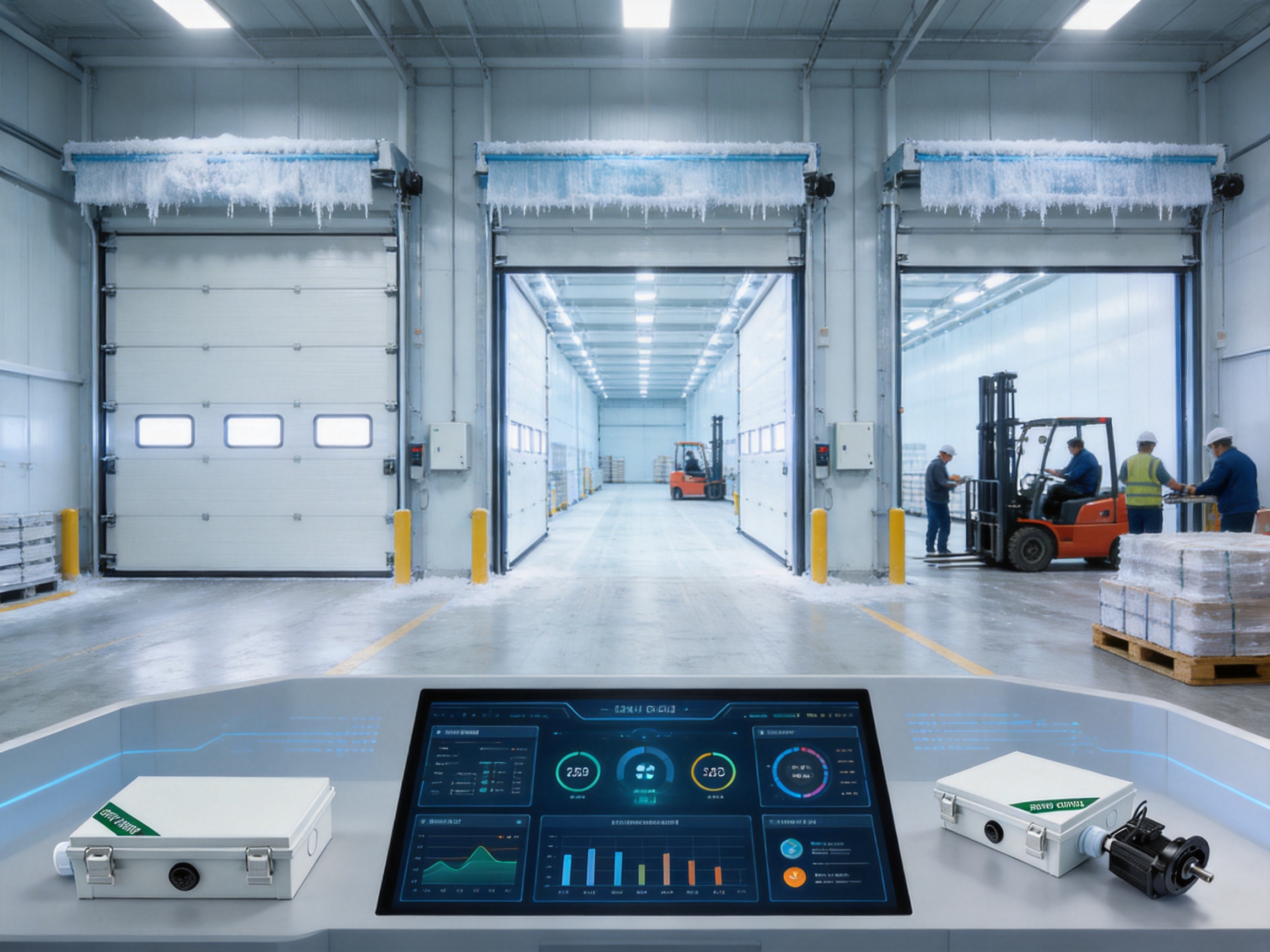
The controller is suitable for a wide range of cold storage and industrial door applications. In frozen food warehouses, it can manage heavy sliding doors separating freezer zones from loading or processing areas. In refrigerated distribution centers, it can coordinate rapid traffic flow while supporting air curtains to preserve temperature. In pharmaceutical cold chain facilities, it can help maintain controlled environments where temperature excursions may be costly. In meat, seafood, dairy, and produce processing plants, it can provide reliable operation in humid, low-temperature conditions.
The controller is also suitable for industrial sites where sliding doors require high torque and controlled movement even outside traditional cold storage. Any application involving heavy panels, frequent access, safety sensors, and peripheral equipment can benefit from its design. However, its greatest value appears where low temperature, humidity, sealing pressure, and energy loss are key concerns.
Detailed Feature Discussion
Nine Speed Gears
Nine adjustable speed gears provide a practical balance between simplicity and flexibility. Instead of forcing technicians to configure complex motion curves, the controller gives a range of selectable speeds. This allows fast commissioning while still adapting to different door weights and safety requirements.
Motor Starting Current Adjustment
Adjustable starting current helps the door begin movement smoothly. This reduces mechanical shock, improves user perception, and protects transmission components. It is especially useful for doors that may experience increased resistance due to cold, frost, or seal adhesion.
Opening and Closing Tightening Torque
Separate torque behavior at fully open and fully closed positions allows the door to settle securely. The closed position can be optimized for sealing, while the open position can be optimized for stability and clearance. This is superior to a single fixed end-force value.
Programmable Relays
Programmable relays make the controller adaptable. A facility may use one relay for air curtain activation, another for alarm output, and another for room occupied status. Another facility may use different assignments. This flexibility reduces customization cost.
Voice Prompt System
The voice prompt system improves commissioning usability. It helps technicians follow the correct sequence and reduces dependence on memorizing parameter codes. This can be especially valuable for distributors, installation teams, and maintenance staff who work across multiple sites.
Remote Receiver Module
The remote receiver module allows wireless operation with code pairing and clearing. This supports operational convenience while maintaining manageable control over authorized remote devices.
RS485 Interface
The RS485 interface gives the product a path into industrial networks. It supports monitoring and control strategies that are increasingly important in modern facilities.
Comparison With Basic Control Panels
A basic cold storage door panel may consist of contactors, limit switches, buttons, and a simple motor starter. Such a system can be inexpensive initially, but it usually lacks precise speed control, torque adjustment, automatic commissioning, remote code management, programmable outputs, and communication. It may also require separate circuits for heating wires and air curtains.
The AIG-750L-03 offers a more integrated and intelligent approach. It reduces the need for multiple independent components and provides a unified control logic. This can lower total system complexity and improve maintainability. While the purchase cost of an intelligent controller may be higher than a basic contactor panel, the long-term value can be stronger when energy savings, reduced downtime, faster installation, safety integration, and lower maintenance effort are considered.
Basic panels also depend heavily on mechanical limit switches. Limit switch drift, ice interference, or wiring faults can cause unreliable operation. An intelligent controller with self-test and width measurement can provide a more refined approach to door travel management. It can still work with necessary position feedback and safety devices, but its control behavior is more adaptable.
Competitor controllers that offer partial intelligence may still lack application-specific cold storage outputs. If heating wires, air curtains, and network communication must be added externally, the final system may become more expensive and less elegant. The AIG-750L-03’s integrated functions provide a more complete solution.
Company Capabilities and Industrial Foundation
ASY Electronics (JiaXing) Co., Ltd. is located in Jiaxing City, Zhejiang Province, China. The company is positioned as a provider of industrial IoT communication solutions, smart grid-related technology, power line carrier solutions, sensing products, transmitters, flow meters, and automatic door controllers. Its product categories include high-speed power line communication, wireless temperature monitoring sensors, thermal gas mass flow meters, industrial transmitters, and automatic door controllers.
This broad industrial foundation strengthens the development of the AIG-750L-03. Motor control is only one part of modern automation. Industrial devices must also sense conditions, communicate data, withstand interference, and integrate into complex systems. ASY Electronics’ work in connectivity and sensing supports a deeper understanding of these requirements.
The company’s emphasis on smart factories is relevant to cold storage automation. A smart factory is not only a place with robots and software; it is a facility where edge devices generate reliable data and execute precise control. Doors, sensors, meters, transmitters, and communication modules all contribute to operational intelligence. By developing these device categories, the company can support customers beyond a single component.
Manufacturing strength also depends on the ability to customize and support industrial customers. Cold storage projects vary by door size, temperature zone, traffic pattern, safety standard, and communication requirement. A supplier with engineering experience across industrial IoT and automation is better equipped to provide technical support, product adaptation, and system-level guidance.
Reliability Through Integrated Design
Reliability in cold storage is achieved through integrated design. A door may fail because of mechanical resistance, frozen seals, incorrect torque, poor sensor wiring, power fluctuation, operator misuse, or communication gaps. The AIG-750L-03 addresses multiple failure points through coordinated functions.
Heating output helps prevent freeze-related obstruction. Adjustable torque helps compensate for door and seal variation. Speed settings help reduce mechanical stress. Safety inputs help prevent dangerous operation. Remote management improves convenience. Programmable relays reduce external complexity. RS485 communication supports monitoring. Voice-guided commissioning reduces setup error. Each function contributes to reliability in a different way.
This integrated design philosophy is a key advantage over products that solve only one aspect of door operation. A motor drive alone cannot manage frost. A relay panel alone cannot optimize torque. A separate air curtain switch alone cannot reduce door commissioning errors. By combining relevant functions, the controller provides a stronger platform for real-world cold storage doors.
Purchasing Considerations
When selecting a controller for cold storage sliding doors, buyers should evaluate not only price but also total lifecycle cost. Important questions include whether the controller can support the door’s weight, whether it works with a suitable high-torque motor, whether it supports heating wires and air curtains, whether it can integrate safety devices, whether commissioning is simple, whether parameters can be adjusted, and whether communication is available.
The AIG-750L-03 performs strongly in these categories. It is designed for heavy cold storage sliding doors, pairs with a 45 N.m permanent magnet gear motor, supports heating wires and air curtains, includes flexible inputs and programmable outputs, provides voice-guided commissioning, allows parameter customization, and includes RS485 communication.
Buyers should also consider supplier capability. ASY Electronics’ industrial product portfolio and smart factory orientation indicate that the company understands automation environments beyond a single door controller. This can be valuable for customers who need technical discussion, project support, or integration with broader industrial systems.
Q&A Section
What is the main application of this gear motor controller?
It is mainly used for cold storage sliding doors, especially heavy insulated doors in refrigerated warehouses, freezer rooms, food processing plants, pharmaceutical cold chain facilities, and logistics centers.
What motor is compatible with the controller?
The system uses the MT01-JS-45N, also known as DLG-56S-45, three-phase permanent magnet gear motor. The motor has 45 N.m rated torque and a reduction ratio of 1:6.45.
Why is high torque important for cold storage doors?
Cold storage doors are heavy and must overcome track resistance, gasket pressure, frost-related friction, and sealing force. High torque helps the door open reliably and close securely.
Does the controller support heating wires?
Yes. It includes dedicated output for external heating wires up to 1 kW at 220 V. This helps prevent freezing around seals, frames, and related door areas.
Can it control an air curtain?
Yes. The controller supports an external air curtain up to 2.2 kW. This helps reduce cold air loss and supports climate control when the door is open.
What makes commissioning easier?
The controller provides voice-guided commissioning. A speaker gives countdowns and voice prompts to guide the technician through self-test and door width measurement.
What safety signals can be connected?
The controller supports external signals such as emergency stop, anti-pinch or fire protection, door lock, radar, pull-cord, open, close, and stop commands.
Can the controller be connected to a network?
Yes. It includes one RS485 interface for networked control and monitoring.
How does it compare with a basic control panel?
Compared with a basic control panel, it offers more advanced motor control, adjustable parameters, voice-guided setup, heating and air curtain support, programmable relays, remote operation, and RS485 communication.
Why choose this controller instead of a general automatic door controller?
General automatic door controllers may not be designed for cold storage conditions. This controller is application-specific, supports heavy doors, provides antifreeze and climate-control outputs, and allows torque and speed tuning for demanding environments.
Conclusion
The Gear Motor Controller for Cold Storage Sliding Doors, model AIG-750L-03, is a specialized solution for one of the most demanding door automation applications in industrial facilities. It combines high-torque motor control, flexible I/O integration, heating wire support, air curtain coordination, voice-guided commissioning, programmable relays, remote management, and RS485 communication in one practical platform.
Its advantages are especially clear when compared with general-purpose automatic door controllers or basic relay panels. Cold storage doors need more than movement; they need controlled sealing, frost prevention, safety integration, energy-aware operation, and reliable commissioning. The AIG-750L-03 addresses these needs directly.
Backed by the industrial strengths of ASY Electronics (JiaXing) Co., Ltd., including experience in smart factory technologies, industrial IoT communication, sensing, transmitters, flow meters, and automatic door controllers, the product reflects a broader capability in intelligent industrial hardware. For cold storage operators seeking reliability, energy efficiency, integration flexibility, and long-term maintainability, this controller provides a strong and competitive choice.
References
1. Industrial Door Automation Engineering Handbook, Cold Storage Door Control Principles and Safety Integration.
2. Refrigerated Warehousing Design Guide, Energy Management and Air Infiltration Control in Cold Rooms.
3. Electric Motor Control Systems, Permanent Magnet Motor Applications in Industrial Automation.
4. Industrial Communication Interfaces, RS485 Network Design and Field Device Integration.
5. Cold Chain Facility Maintenance Manual, Door Sealing, Heating Wire Use, and Frost Prevention Practices.
6. Smart Factory Edge Device Architecture, Sensing, Control, and Connectivity for Industrial Digitalization.