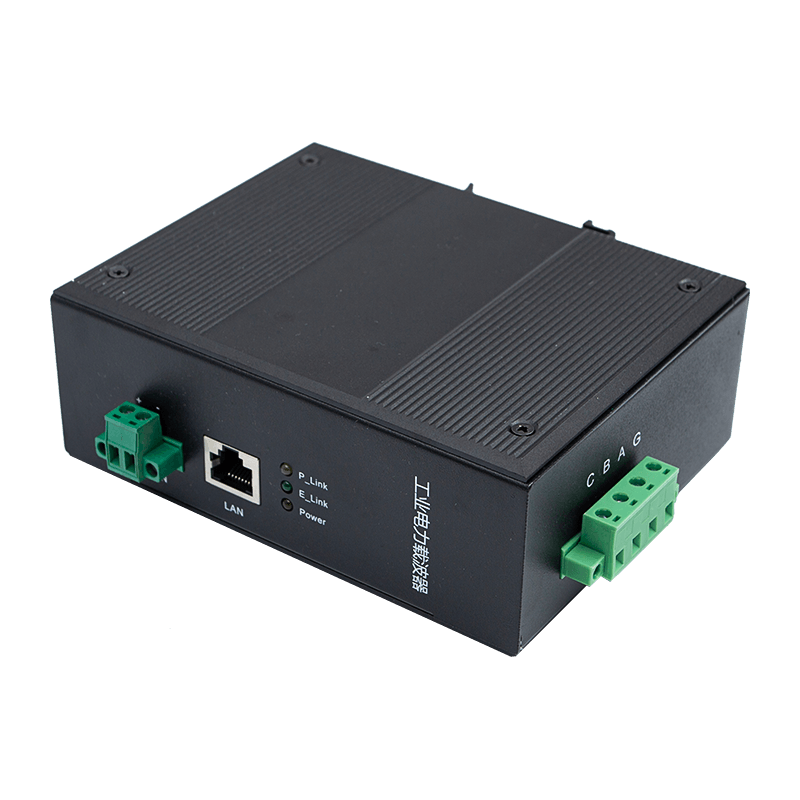


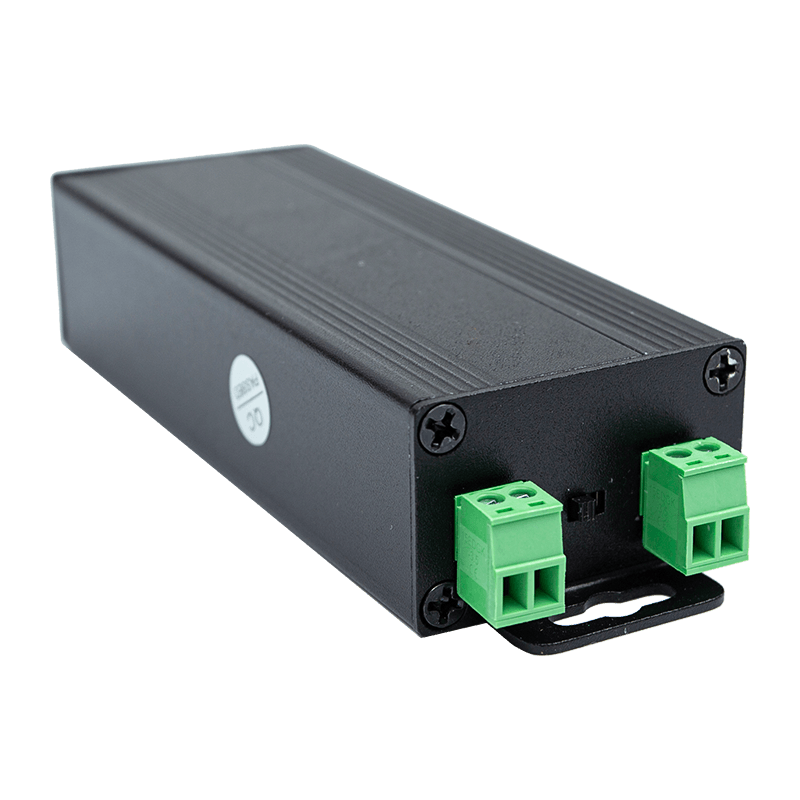
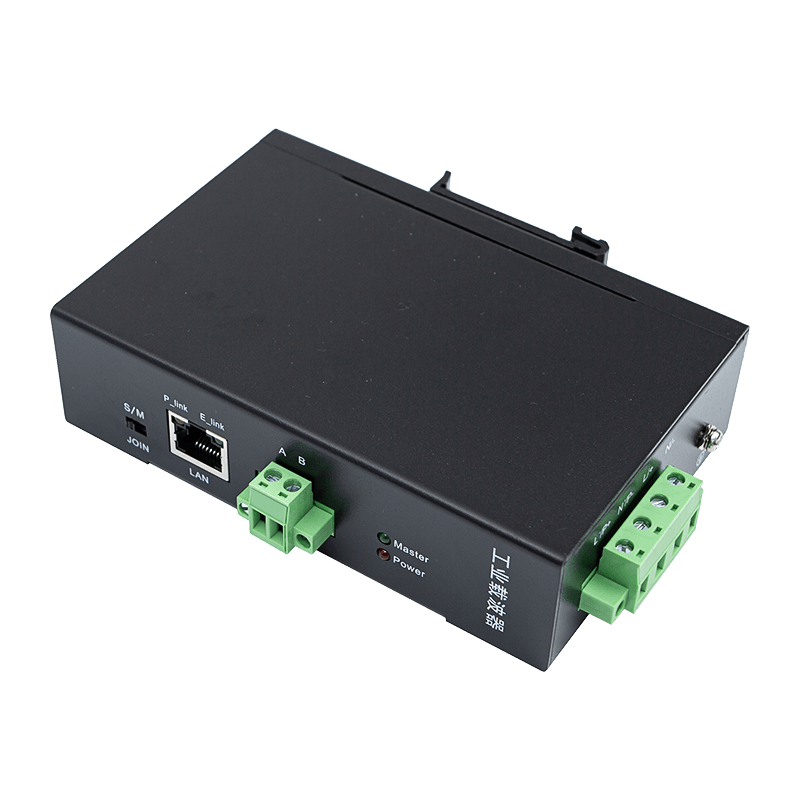
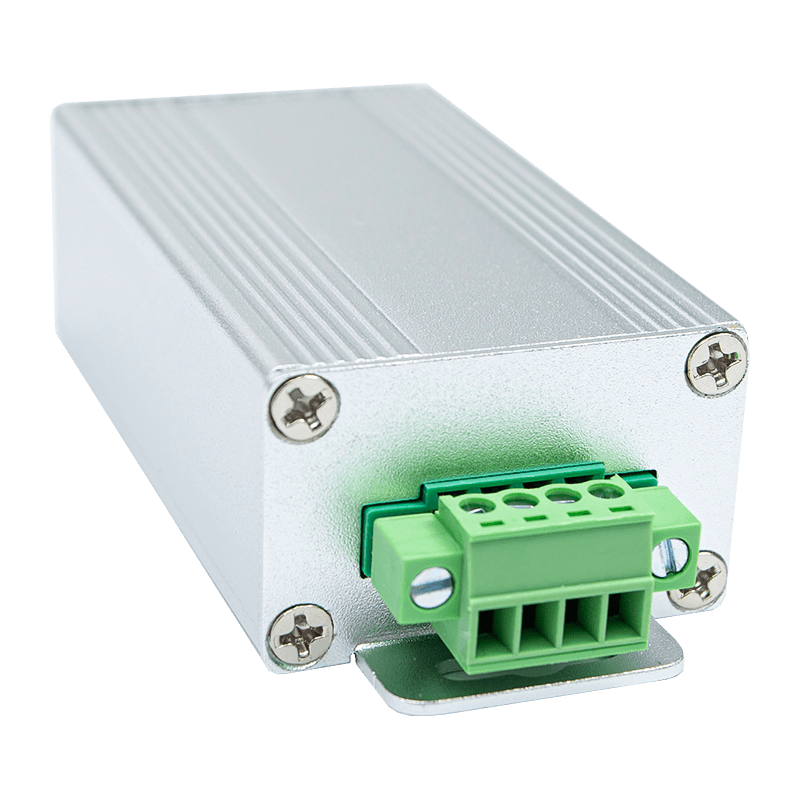
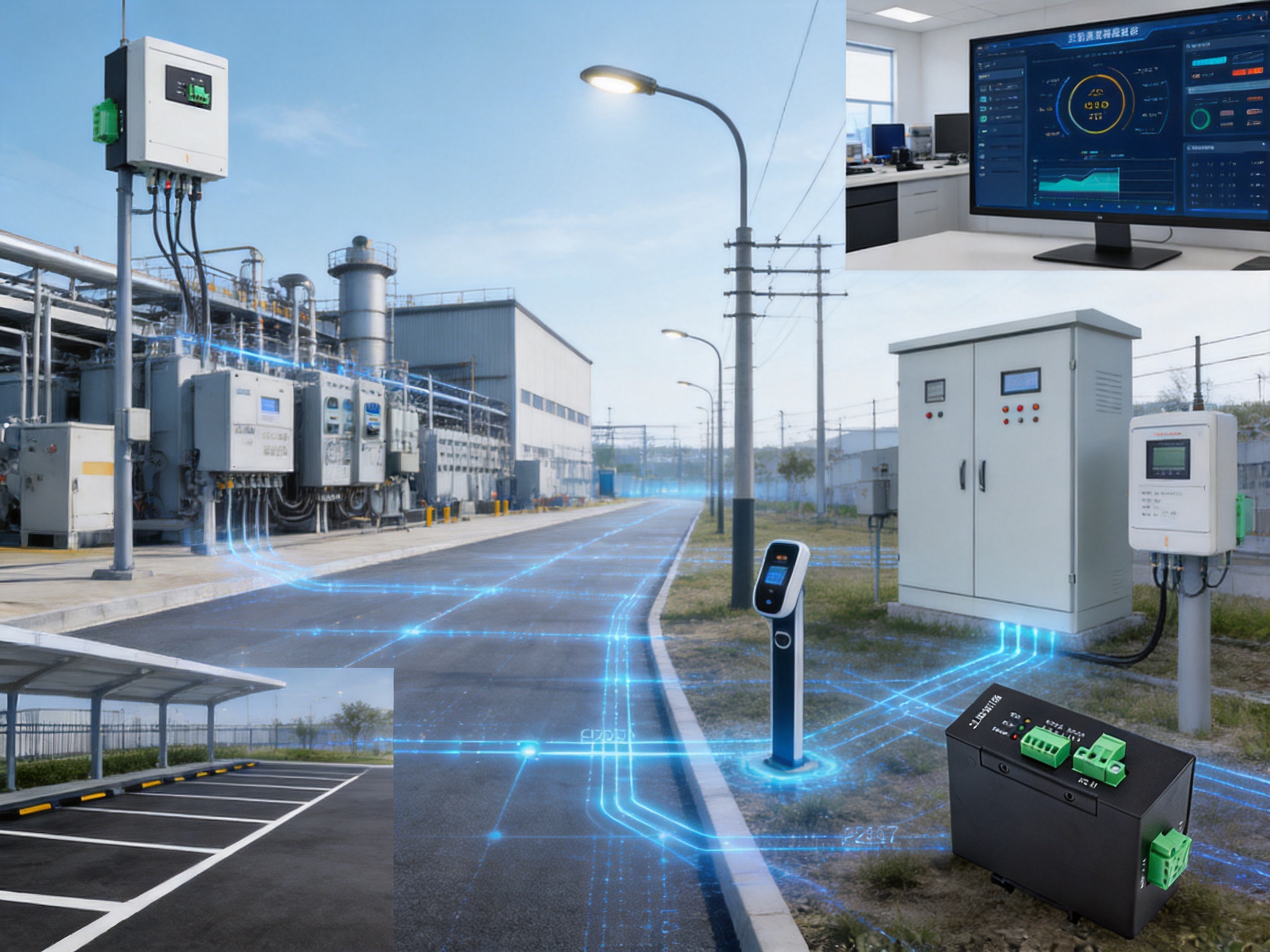
Modern industrial facilities increasingly depend on reliable communication between meters, controllers, sensors, instruments, gateways, and intelligent field devices. As factories, utility networks, parking systems, and street-lighting infrastructure become more connected, the communication network must deliver stable data transmission without creating excessive installation complexity. In many existing facilities, power cables are already installed throughout the site, while dedicated communication cables are difficult or expensive to add. A power line communication system can solve this challenge by using the existing electrical network as both an energy source and a data transmission medium.
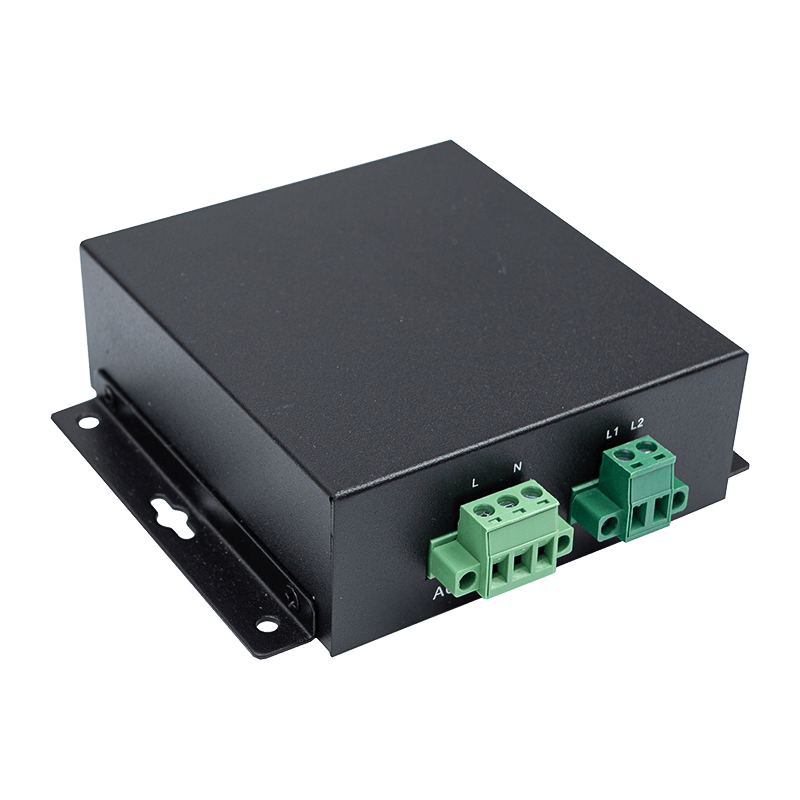
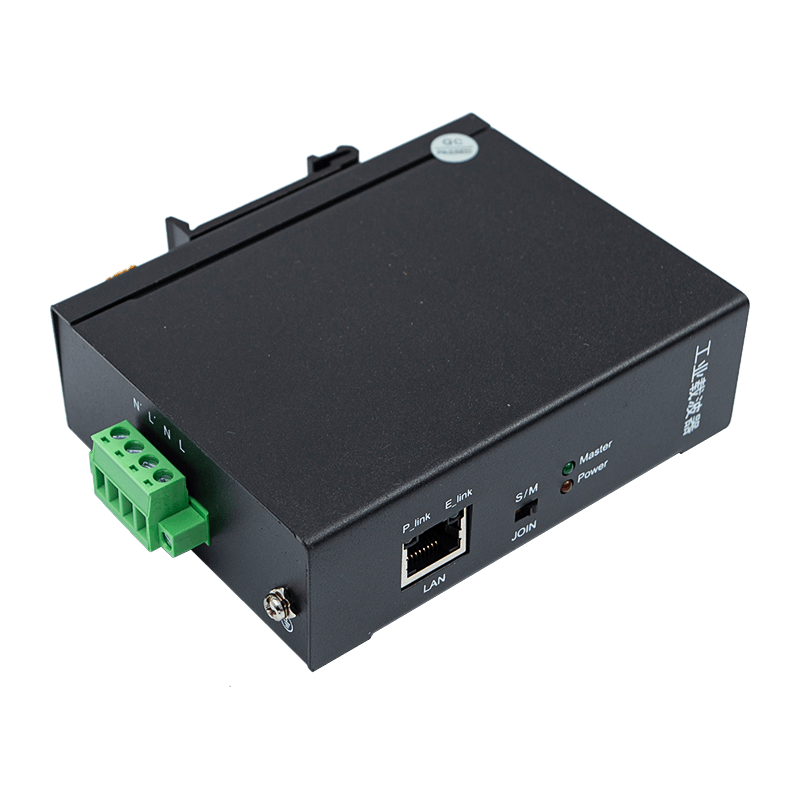
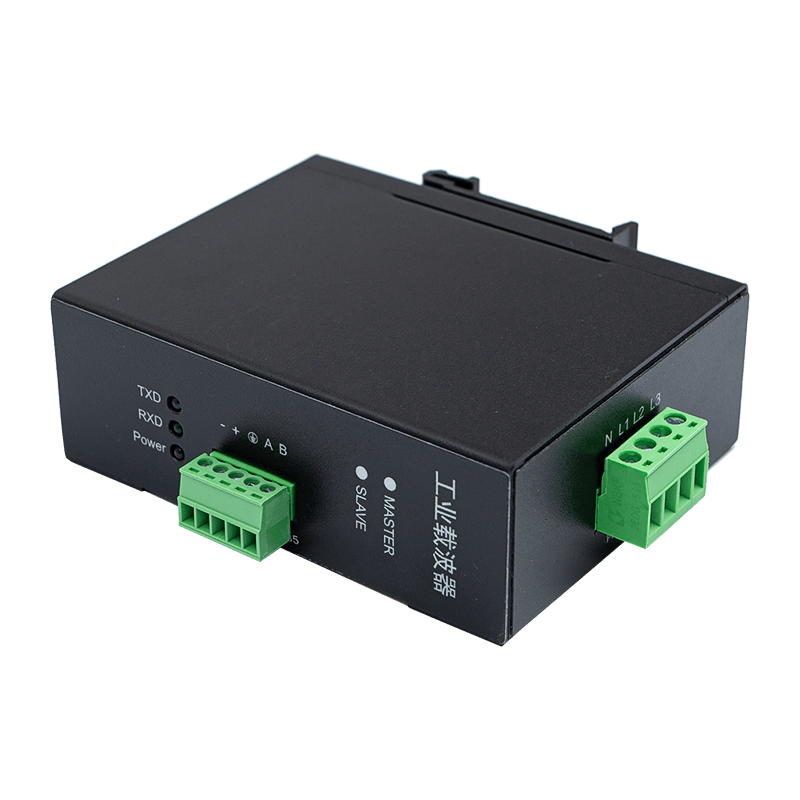
The KS500L Single-Phase Serial Port Powerline Transceiver is designed for this industrial communication environment. It provides transparent transmission of RS232 and RS485 serial data over single-phase AC or DC power lines. With a communication distance of up to 3,000 meters in point-to-point applications, support for networks containing up to 1,000 nodes, and an operating temperature range from -40°C to 85°C, the device is intended for demanding applications that require long-term stability.
Unlike many short-distance communication products designed primarily for office, residential, or light commercial use, the KS500L combines industrial-grade power compatibility, broadband carrier communication, routing capability, error correction, encryption, and serial-port transparency in one compact unit. This approach allows system integrators to modernize existing infrastructure without installing a completely separate communication cable network.
Industrial Communication Without Extensive Rewiring
Traditional industrial communication projects often require separate data cables, cable trays, switches, repeaters, connectors, and protective conduits. In a newly constructed facility, this additional infrastructure may be planned in advance. In an operating factory, utility site, parking structure, or street-lighting network, however, installing new communication wiring can interrupt production and increase project costs.
Power line communication addresses this limitation by transmitting data through power conductors that are already present. The KS500L connects to an AC85-300V or DC70-430V power line and uses a high-frequency carrier to transmit serial data. This makes it suitable for installations where electrical power is available at each field device but a dedicated communications cable is not.
The system can support equipment such as smart meters, industrial controllers, monitoring instruments, street-lighting controllers, parking-management devices, and other serial-interface equipment. The host device communicates with the KS500L through RS232 or RS485, while the transceiver carries the data over the power network to another transceiver or a larger network of transceivers.
Because the data is transmitted transparently, the connected host equipment does not necessarily need a major software redesign. The transceiver operates as a communication bridge, allowing existing serial devices to communicate over a substantially longer distance than a conventional direct serial connection would normally permit.
Core Product Capabilities
The KS500L is built around several capabilities that directly address common industrial networking requirements: long-range communication, broad power-input compatibility, flexible serial interfaces, network scalability, interference resilience, and continuous operation.
Feature |
Specification or Capability |
Industrial Value |
Communication medium |
Existing AC or DC power line |
Reduces the need for dedicated communication cabling |
Power-line input |
AC85-300V or DC70-430V |
Supports varied industrial electrical environments |
Serial interfaces |
RS232 and RS485 |
Connects with meters, controllers, instruments, and legacy equipment |
Modulation |
OFDM with BPSK, QPSK, and 16QAM |
Improves flexibility and communication robustness |
Carrier frequency |
700kHz to 2MHz |
Provides a broadband power-line communication channel |
Communication speed |
2,400bps to 1Mbps |
Supports both low-rate control and higher-bandwidth data transmission |
Point-to-point distance |
Up to 3,000 meters over power line |
Suitable for distributed industrial and infrastructure sites |
Network capacity |
Up to 1,000 nodes |
Allows expansion from small systems to large field networks |
Security |
AES-128-bit encryption |
Helps protect transmitted industrial data |
Operating temperature |
-40°C to 85°C |
Supports harsh indoor and outdoor industrial locations |
Power consumption |
2W or less |
Limits the additional energy burden of the communication system |
Broadband Communication Through OFDM
The KS500L uses Orthogonal Frequency Division Multiplexing, commonly known as OFDM. OFDM divides the communication channel into multiple subcarriers, allowing data to be distributed across a broad frequency range. This architecture is valuable in power-line communication because industrial power networks can contain electrical noise, impedance changes, reflections, and frequency-selective attenuation.
The device supports BPSK, QPSK, and 16QAM modulation on its subcarriers. These modulation modes provide different trade-offs between transmission speed and communication robustness. Under favorable channel conditions, higher-order modulation can carry more data. When the channel becomes more challenging, a more robust modulation mode can help maintain reliable communication.
This flexibility is an important advantage over simpler fixed-modulation communication products. A fixed modulation scheme may perform well in one installation but become unreliable when the power network includes long cable runs, motors, switching equipment, variable loads, or other sources of interference. The combination of OFDM and multiple modulation options gives system designers a broader operating margin.
The stated carrier frequency range is 700kHz to 2MHz. This broadband operating range allows the communication system to use a suitable portion of the power-line channel while avoiding or reducing the effect of unfavorable frequency areas. The practical performance of any power-line communication network will depend on cable length, electrical topology, connected loads, noise, filtering, phase arrangement, and installation conditions. Nevertheless, the underlying communication architecture is designed for complex industrial power environments rather than ideal laboratory cabling alone.
Long-Distance Transmission for Distributed Equipment
One of the most significant advantages of the KS500L is its stated point-to-point transmission distance of up to 3,000 meters over a power line. This capability is particularly valuable in applications where equipment is distributed across a large site. Examples include industrial campuses, utility corridors, street-lighting routes, parking areas, pumping facilities, and large workshops.
In a conventional serial system, RS232 is normally intended for relatively short connections, while RS485 offers greater distance and multidrop capability but still requires an appropriate dedicated cable and careful installation. The KS500L extends the practical reach of these interfaces by transporting the serial data over an existing power network.
Long-distance power-line communication can reduce the number of intermediate communication cabinets, repeaters, and cable sections required by a project. It can also make it easier to connect remote equipment that already has local electrical power. This does not eliminate the need for correct electrical design, surge protection, grounding, filtering, or network testing, but it can significantly simplify the communication portion of an installation.
The 3,000-meter figure is a stated maximum point-to-point capability, not a universal guarantee for every site. Engineers should evaluate actual cable characteristics, distribution equipment, electrical noise, branch connections, and load conditions before final deployment. Even with this qualification, the distance capability places the KS500L in a useful category for industrial and infrastructure projects that exceed the practical reach of ordinary serial cabling.
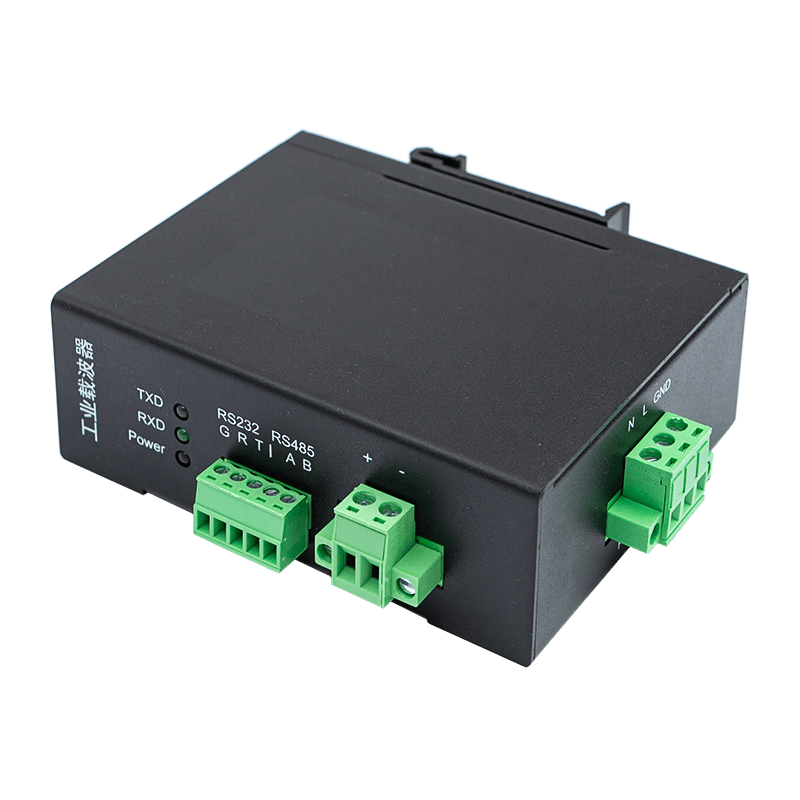
Single-Phase Serial Port Powerline Transceiver
RS232 and RS485 Compatibility
Many industrial facilities continue to use RS232 and RS485 because these interfaces are widely supported by meters, PLC accessories, controllers, sensors, inverters, instrumentation, and embedded devices. Replacing all existing serial equipment simply to adopt a newer network architecture can be costly and disruptive. The KS500L protects the value of this existing equipment by providing a power-line communication path for standard serial data.
RS232 Integration
RS232 is often used for point-to-point connections, configuration ports, instrument interfaces, and local controllers. By connecting an RS232 device to the transceiver, the data can be carried through the power-line network to another compatible communication endpoint. This is useful when the controlled device is located far from the supervisory computer or when a dedicated serial cable would be difficult to install.
RS485 Integration
RS485 is common in industrial automation because it supports multidrop networks and performs well over longer cable runs than RS232. The KS500L can carry RS485 data over the power line, enabling distributed serial devices to communicate through the facility’s existing electrical infrastructure.
RS485 is frequently associated with protocols such as Modbus RTU, although the transceiver itself is described as providing transparent data transmission rather than protocol conversion. This means the application protocol remains the responsibility of the connected devices and control software. Such transparency is advantageous because it allows system integrators to retain familiar communication protocols and existing software architectures.
Network Scalability and Topology Flexibility
The KS500L supports up to 1,000 nodes, providing a foundation for systems that may expand over time. A small installation might begin with only a few devices, while a larger smart-grid or industrial monitoring project could gradually add meters, controllers, sensors, and gateways. A high node capacity helps avoid replacing the communication architecture when the application grows.
The product supports bus, star, tree, and hybrid network topologies. This flexibility allows the network structure to follow the physical layout of the facility. A long production line may benefit from a bus arrangement. A central equipment room with multiple remote areas may use a star-like structure. A multi-building site may require a tree or hybrid arrangement that combines several branches.
The built-in routing algorithm supports automatic networking. Automated network formation can reduce configuration effort and help the system adapt to the actual electrical layout. It is especially useful in projects where field devices are installed in stages or where the communication path is not a simple point-to-point connection.
Although automatic networking simplifies deployment, professional commissioning remains important. Each node should be identified, addressed, documented, and tested. Network planners should also consider how electrical branches, transformers, filters, circuit breakers, and power-quality equipment affect high-frequency communication. The product’s routing and network capabilities provide a strong foundation, but good system engineering is still essential for reliable results.
Error Correction and Data Protection
Industrial communication networks can experience transient interference, switching noise, attenuation, and signal distortion. The KS500L incorporates LDPC error-correction coding. Low-Density Parity-Check coding is a powerful forward error-correction method that adds structured redundancy to transmitted data. The receiving side can use this information to detect and correct certain errors without requiring every corrupted packet to be retransmitted.
Error correction can improve effective communication reliability, particularly in power networks that contain variable loads and electrical disturbances. It may also help maintain stable operation when the signal-to-noise ratio changes over time. For industrial monitoring and control systems, consistent data delivery is often more valuable than a high peak data rate that cannot be sustained under real operating conditions.
The transceiver also supports AES-128-bit encryption. Industrial data may include energy consumption information, equipment status, production-related parameters, or control commands. Encryption helps reduce the risk of unauthorized observation or manipulation during transmission. It is one layer of a broader cybersecurity strategy that should also include access control, secure configuration, network segmentation, credential management, and system monitoring.
The combination of error correction and encryption demonstrates that the device is designed not merely as a physical signal converter, but as a more complete industrial communication component. Reliability protects the continuity of data transmission, while encryption contributes to the protection of the information carried across the network.
Industrial-Grade Electrical and Environmental Design
Industrial sites do not always provide a uniform electrical environment. The KS500L supports AC85-300V or DC70-430V power-line input, covering a broad range of possible applications. This input flexibility can simplify product selection for system integrators working with different power architectures or equipment groups.
The product is specified for operation from -40°C to 85°C. This range supports many indoor and outdoor industrial applications, including unconditioned electrical cabinets, remote monitoring stations, utility installations, parking facilities, and street-lighting control points. The stated storage temperature is also -40°C to 85°C, while operating humidity is specified as 20% to 95% non-condensing.
Temperature performance is particularly important in cabinets exposed to sunlight, seasonal weather, or heat generated by neighboring equipment. A transceiver that operates reliably across a wide temperature range can reduce the need for additional environmental-control equipment and can improve the expected service life of the communication installation.
The device is designed for industrial-grade, all-weather operation over a 7-by-24-hour schedule. Continuous operation is essential for applications such as power metering, process monitoring, intelligent lighting, security-related access systems, and infrastructure management. In these applications, communication availability is not limited to office hours and may be required during nights, weekends, holidays, and emergency conditions.
For final installation, environmental requirements should still be reviewed carefully. The non-condensing humidity specification means that direct condensation should be prevented. Enclosures, ventilation, drainage, surge protection, and appropriate mounting practices should be selected according to the site conditions.
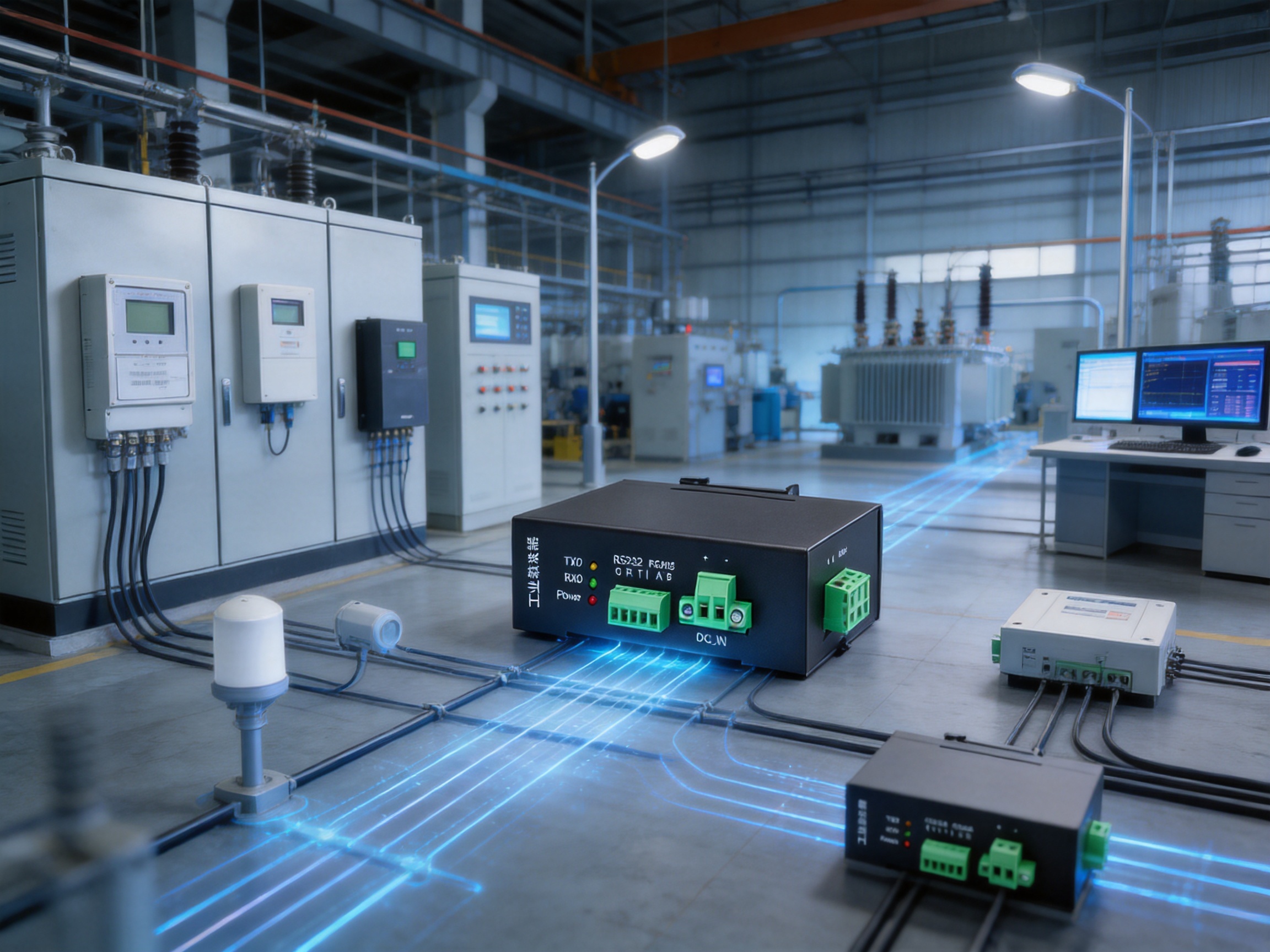
Compact Mechanical Design and Efficient Operation
The KS500L measures 79.3 by 35 by 100 millimeters and weighs approximately 280 grams. Its compact dimensions make it suitable for control cabinets, electrical enclosures, distribution boxes, equipment panels, and other installations where available space is limited.
A compact communication module can reduce cabinet size and simplify equipment arrangement. It also gives system designers more flexibility when retrofitting communication into existing installations. The lower space requirement may be especially useful when the project involves many nodes distributed across multiple cabinets or field locations.
Power consumption is specified at 2W or less. Low consumption is beneficial in large networks because the cumulative energy requirement of hundreds or thousands of communication nodes can otherwise become significant. Efficient operation also reduces heat generation inside enclosed cabinets, which can support better thermal management.
The combination of small dimensions, low power consumption, and broad electrical compatibility makes the transceiver suitable for decentralized deployment. It can be installed close to the equipment being monitored or controlled, reducing the need for long local serial cables between the field device and the communication point.
Advantages Compared with Conventional Communication Approaches
Compared with Dedicated Serial Cabling
A dedicated RS232 or RS485 cable network can provide dependable communication when correctly designed, but installation may require new cable routes, conduits, trays, termination points, and protective measures. In an existing facility, these changes may involve construction work, production interruptions, or difficult access to walls and underground pathways.
The KS500L uses the existing power network, which can reduce the physical work required to add communication. The result is not necessarily a replacement for all dedicated cabling; rather, it is an alternative for sites where power cables are already available and new communication cables are impractical.
Compared with Short-Range Wireless Links
Wireless communication can be convenient, but industrial environments may include metal structures, reinforced concrete, electromagnetic interference, obstructions, and changing radio conditions. Battery-powered wireless devices also require maintenance and periodic battery replacement.
Power-line communication can provide a physically connected path through existing electrical infrastructure. It may be especially suitable for fixed devices that already require a permanent power supply. The choice between wireless and power-line communication depends on the site, but the KS500L offers an effective option where stable wired-infrastructure connectivity is preferred without adding a separate data cable.
Compared with Basic Power-Line Modems
Basic power-line modems may provide simple data transmission but lack features required in larger industrial networks. The KS500L combines OFDM, multiple modulation modes, LDPC error correction, AES-128-bit encryption, automatic networking, routing, long-distance capability, and support for up to 1,000 nodes.
This integrated feature set can reduce the need to combine several separate communication functions. It also gives project developers a more consistent platform for different applications, from small serial bridges to large distributed monitoring networks.
Compared with Consumer-Oriented PLC Products
Consumer-oriented power-line products are often optimized for household networking and may not be designed for wide industrial voltage ranges, extended temperature conditions, continuous operation, or integration with RS232 and RS485 devices. The KS500L is positioned for industrial use, with specifications directed toward industrial power systems, field equipment, and long-duration operation.
Manufacturing and Engineering Strengths
The performance of an industrial communication product depends not only on its component specifications but also on the engineering and manufacturing discipline behind it. ASY Electronics is a high-tech enterprise focused on smart-factory development, data sensing, and intelligent connectivity. Its product portfolio includes broadband power-line carriers, wireless temperature monitoring systems, industrial transmitters, flow meters, and automatic door controllers.
This portfolio indicates an engineering focus that spans sensing, measurement, communication, and control. Such breadth is valuable because industrial IoT projects rarely consist of communication hardware alone. A complete application may require data acquisition, environmental monitoring, energy measurement, edge connectivity, control logic, and integration with higher-level management systems.
The company’s stated mission is to support efficient, reliable, and green smart factories. Its solutions address equipment condition monitoring, refined energy management, and production-process optimization. The KS500L fits naturally within this strategy because reliable connectivity is the foundation for collecting field data and making that data available to supervisory systems.
Application-Oriented Product Development
A product developed for industrial use must be evaluated according to real application requirements rather than only laboratory communication speed. Important factors include temperature range, power compatibility, long-term operation, interface support, network scalability, installation complexity, data protection, and serviceability.
The KS500L reflects this application-oriented approach through its industrial voltage range, RS232 and RS485 support, broad operating temperature range, compact form factor, low power consumption, encryption, error correction, and multiple network topologies. These features address the practical concerns of engineers who must deploy communication equipment in real factories and infrastructure sites.
Integration of Hardware and Communication Technology
The transceiver is based on an SOC processor and uses integrated communication functions such as OFDM modulation, routing, LDPC coding, and encryption. Integrating these functions into a dedicated industrial device can help reduce system complexity and provide a more consistent operating platform.
Hardware integration also supports more efficient product packaging. Instead of requiring a separate modem, serial converter, router, and security module, the project can use a single industrial transceiver for the power-line communication endpoint. This can simplify cabinet design, reduce connection points, and make troubleshooting more straightforward.
Support for Smart-Factory Modernization
Smart-factory modernization often occurs in stages. Existing machines may remain in service while new monitoring and management functions are added. A communication device that supports established serial interfaces can help connect older instruments and controllers to newer data platforms.
The KS500L supports this gradual modernization model. It can serve as an edge communication component that links serial field equipment to a power-line network. From there, data can be collected by gateways, industrial computers, supervisory systems, or management platforms, depending on the overall project architecture.
Typical Application Scenarios
Power Grid Meter Reading
Meter-reading systems may contain large numbers of distributed electrical meters. In many locations, the meters are already connected to the power network but may not have a convenient dedicated data cable. The KS500L can transport serial meter data through the same electrical infrastructure, helping create a scalable reading and monitoring network.
The support for up to 1,000 nodes is relevant to larger installations, while encryption can help protect consumption data. Network topology flexibility allows the communication structure to follow the layout of the distribution system.
Industrial Control
Industrial control systems often include PLC-related equipment, remote I/O, drives, instruments, and auxiliary controllers. When a separate communication cable is difficult to install, power-line communication can connect remote serial equipment while preserving existing interfaces.
Control-system designers should assess latency, update frequency, redundancy, and the consequences of communication interruption before using any power-line solution for critical control loops. The KS500L is especially suitable for monitoring, supervisory communication, configuration, and non-safety-critical control functions when the network has been properly tested.
Instruments and Apparatus
Industrial instruments may be spread across production areas, laboratories, utility rooms, and remote equipment stations. RS232 and RS485 compatibility allows the KS500L to connect a broad range of measurement devices without requiring each instrument to be replaced.
The transparent data function is useful when instruments already use established communication formats. The transceiver carries the data while the existing application software remains responsible for interpreting measurements and managing the instrument.
Intelligent Street Lighting
Street-lighting networks are distributed by nature. Light poles may be separated by long distances, and each location already requires electrical power. A power-line communication system can therefore be a practical way to connect lighting controllers, monitor operating status, and support centralized management.
The wide temperature range and all-weather industrial operating capability are important for outdoor applications. Designers should combine the transceiver with suitable weatherproof enclosures, surge protection, and electrical isolation practices appropriate for outdoor infrastructure.
Intelligent Parking Facilities
Parking facilities may use distributed lighting, access controls, occupancy equipment, payment devices, and environmental monitors. Existing power circuits can provide a communication path between these devices and a central management system.
The KS500L can be considered where serial interfaces are present and where a dedicated Ethernet or serial cable network would be difficult to install. Its compact size also supports integration into local control boxes and equipment cabinets.
Energy and Equipment Monitoring
Smart-factory programs depend on timely information about equipment condition, energy consumption, and production processes. The company’s broader focus on condition monitoring and refined energy management creates opportunities for the KS500L to serve as the connectivity layer between field instruments and industrial data systems.
By allowing existing serial devices to communicate across the power network, the transceiver can help organizations gather more data from legacy equipment. This can support energy analysis, maintenance planning, process optimization, and the identification of abnormal operating conditions.
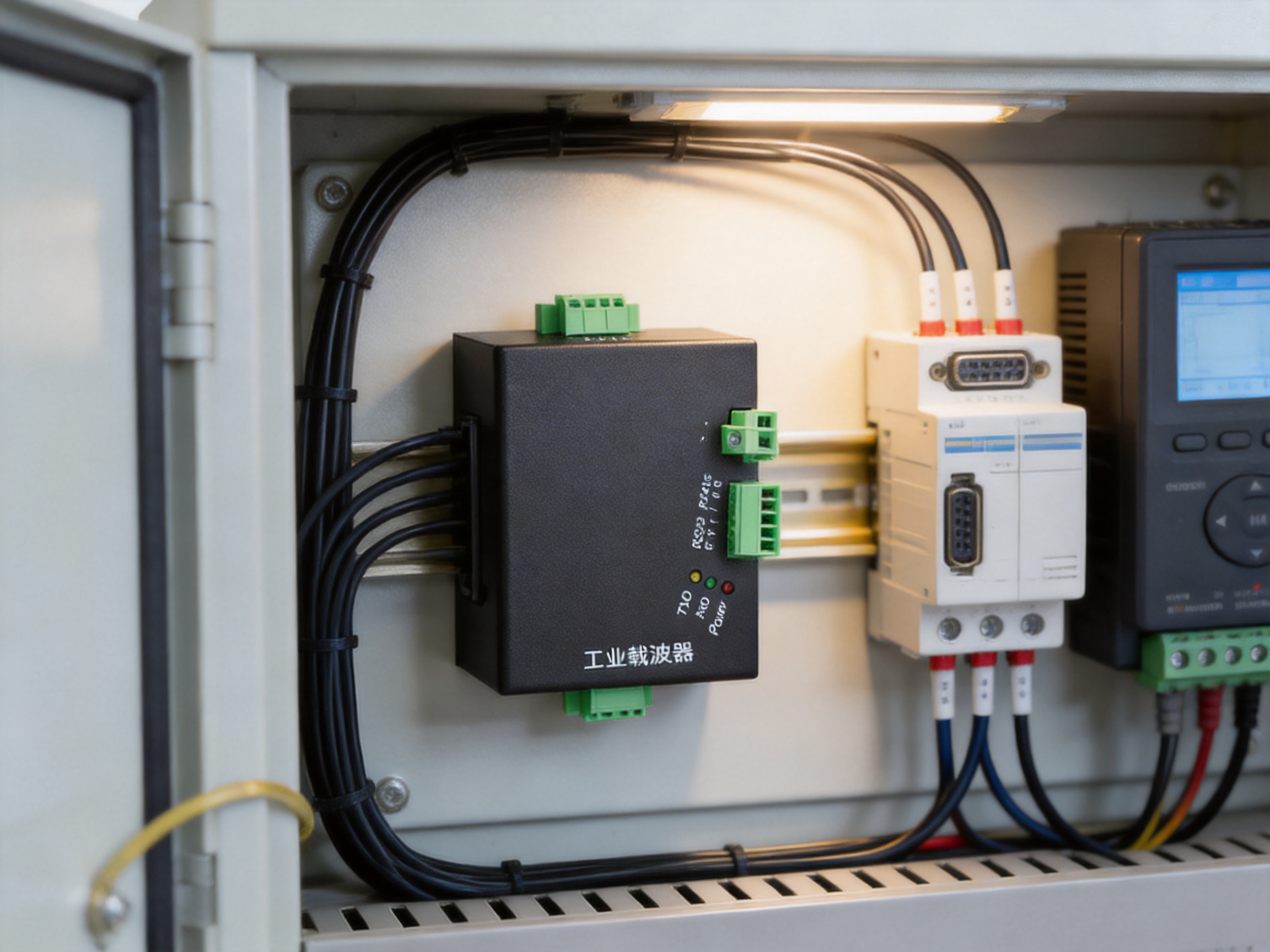
Recommended Deployment Method
A successful deployment begins with a clear inventory of all devices, power circuits, serial interfaces, communication protocols, and required data rates. Engineers should identify which equipment will act as a data source, which equipment will receive the data, and whether the system requires point-to-point, bus, star, tree, or hybrid networking.
The next step is an electrical-path assessment. The communication signal may pass through a variety of circuit elements, including breakers, distribution panels, filters, transformers, and branch circuits. The actual performance should be validated on the intended power network rather than assumed solely from theoretical distance.
Serial-interface parameters must also be documented. For RS232 and RS485 systems, baud rate, data bits, parity, stop bits, addressing, termination, biasing, and protocol timing should be checked. The transceiver provides the transmission path, but correct serial configuration remains necessary for the connected devices to communicate.
After installation, technicians should verify node discovery, routing, data integrity, communication speed, and response time. A commissioning report should record node locations, electrical circuits, serial settings, encryption configuration, and test results. This documentation helps future maintenance teams troubleshoot the network more efficiently.
Installation and Maintenance Considerations
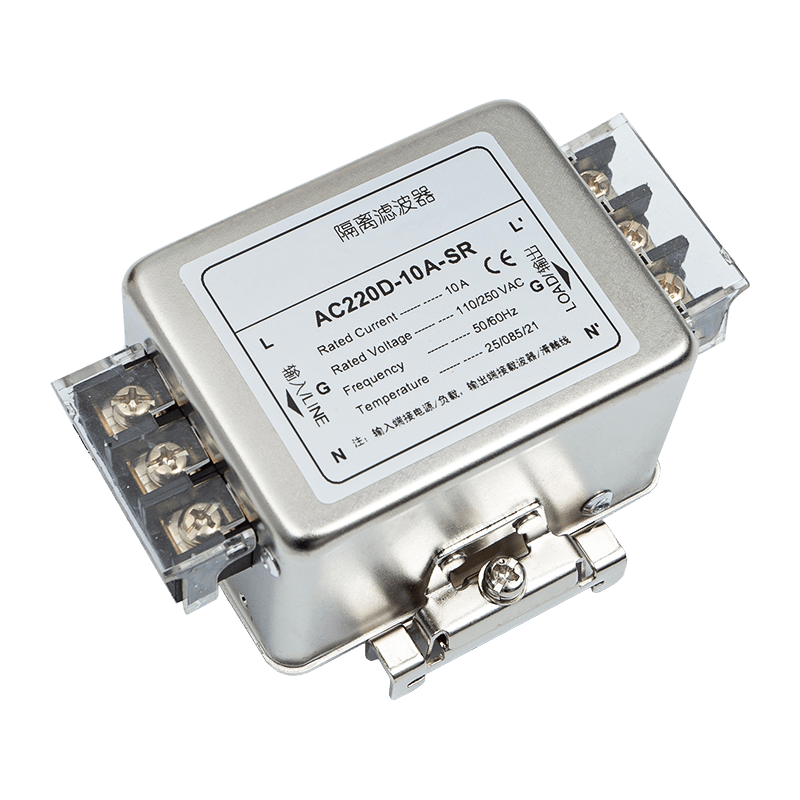
Power-line communication performance can be influenced by electrical noise from motors, variable-frequency drives, switching power supplies, welding equipment, and other industrial loads. A site survey should identify significant noise sources and determine whether filters or other mitigation measures are required.
Surge protection is also important, especially in outdoor installations and facilities exposed to lightning or switching transients. The transceiver should be installed in accordance with the project’s electrical protection design. Grounding, insulation, clearance, and enclosure requirements should be reviewed by qualified personnel.
For RS485 networks, proper cable polarity, termination, and biasing remain important on the local serial side. Even though the long-distance path uses the power line, the device connected directly to the transceiver must still comply with RS485 installation practices.
Routine maintenance can include checking power-line quality, reviewing node status, confirming communication logs, inspecting connectors, and verifying enclosure conditions. Firmware, security settings, and network documentation should be managed as part of the facility’s broader industrial asset-management program.
Why the KS500L Is a Practical Industrial IoT Building Block
The value of the KS500L comes from the way multiple functions are combined for industrial deployment. It is not limited to one interface, one topology, or one type of installation. It supports both AC and DC power-line environments, RS232 and RS485 serial equipment, point-to-point and multidrop communication, and a range of network structures.
Its long-distance capability can reduce infrastructure requirements, while its node capacity supports expansion. OFDM and selectable modulation provide a technical basis for communication in complex power environments. LDPC error correction supports data integrity, and AES-128-bit encryption contributes to data protection. The industrial temperature range, low power consumption, and compact enclosure further improve suitability for field installation.
Compared with a conventional approach that combines separate communication cables, converters, repeaters, and security modules, the KS500L can provide a more integrated path to industrial connectivity. Compared with short-range or consumer-focused networking products, it is more closely aligned with the electrical, environmental, and operational conditions of industrial sites.
For organizations developing smart factories, smart-grid infrastructure, intelligent street lighting, and distributed monitoring systems, the product can support a gradual transition from isolated serial equipment to connected industrial assets. It allows existing devices to remain useful while providing a communication foundation for broader data integration.
Questions and Answers
What is the KS500L used for?
The KS500L is used to transmit RS232 and RS485 serial data through an existing AC or DC power line. Typical applications include power meter reading, industrial control, instrument communication, intelligent street lighting, intelligent parking facilities, and industrial monitoring.
How far can the communication signal travel?
The stated point-to-point transmission distance is up to 3,000 meters over a power line. Actual performance depends on the electrical network, cable conditions, interference, branches, loads, and other site-specific factors.
How many nodes can the network support?
The product supports up to 1,000 nodes according to the provided technical specifications. The practical design should also consider data traffic, topology, polling intervals, application protocols, and required response times.
Does the product support both AC and DC power lines?
Yes. The specified power-line input is AC85-300V or DC70-430V, allowing use in a variety of industrial electrical environments.
Which serial interfaces are available?
The KS500L supports RS232 and RS485 serial data. It is intended to provide transparent transmission, so the connected equipment and application software continue to manage the relevant communication protocol.
What modulation technology does it use?
The transceiver uses OFDM and supports BPSK, QPSK, and 16QAM modulation on its subcarriers. These modes provide flexibility between communication robustness and data throughput.
What is the communication speed?
The specified communication speed range is 2,400bps to 1Mbps. The achievable speed in a particular application depends on the power-line conditions, noise level, network topology, and communication requirements.
Does the transceiver provide encryption?
Yes. The product supports AES-128-bit encryption. Encryption should be used together with appropriate access control, secure configuration, and industrial network-management practices.
Can the transceiver operate outdoors?
The product is specified for an operating temperature range of -40°C to 85°C and industrial-grade continuous operation. Outdoor installations should still use suitable enclosures, surge protection, moisture control, and electrical safety measures.
What network topologies are supported?
The product supports bus, star, tree, and hybrid network topologies. This allows the communication architecture to be adapted to different facility layouts and electrical distribution structures.
Does it require a new communication cable?
The primary purpose of the product is to use an existing power line as the communication medium. A separate communication cable is therefore not necessarily required, although local serial connections and appropriate electrical installation components are still needed.
Is the product suitable for replacing every industrial network?
The KS500L is a flexible power-line communication solution, but no single communication technology is ideal for every application. Critical control loops, safety systems, high-determinism applications, and networks with unsuitable electrical conditions should be evaluated carefully before deployment. A site survey and application-specific testing are recommended.
What makes the product suitable for smart-factory projects?
It supports legacy RS232 and RS485 equipment, long-distance data transmission, large node counts, automatic networking, error correction, encryption, and industrial environmental conditions. These capabilities can help connect existing field equipment to broader industrial data and management systems.
Conclusion
The KS500L Single-Phase Serial Port Powerline Transceiver provides a practical route to industrial connectivity by combining serial-interface compatibility with broadband power-line communication. Its ability to use existing AC or DC power infrastructure can reduce the need for extensive rewiring, while its 3,000-meter point-to-point distance and support for up to 1,000 nodes make it suitable for distributed applications.
OFDM modulation, BPSK, QPSK, and 16QAM support provide communication flexibility. LDPC error correction helps address the challenges of noisy industrial power networks, while AES-128-bit encryption contributes to data protection. RS232 and RS485 compatibility supports a wide range of existing instruments, meters, controllers, and industrial devices.
The product’s industrial voltage range, -40°C to 85°C operating temperature specification, low power consumption, compact dimensions, and continuous-operation design further strengthen its suitability for field deployment. Supported bus, star, tree, and hybrid topologies allow the network to grow according to the physical and operational needs of a facility.
Backed by a company focused on smart-factory technology, data sensing, intelligent connectivity, and industrial data integration, the KS500L can serve as more than a standalone modem. It can function as a foundational communication component for smart-grid projects, equipment monitoring, energy-management systems, intelligent lighting, parking infrastructure, and industrial IoT modernization.
For organizations seeking to connect distributed serial equipment without undertaking a complete communication-cable replacement project, the KS500L offers a strong balance of distance, scalability, environmental durability, data protection, and installation flexibility.
References
1. Product technical information for the KS500L Single-Phase Serial Port Powerline Transceiver, including electrical, communication, environmental, and mechanical specifications.
2. EN 50561, Information technology equipment characteristics of powerline communication apparatus for use in low-voltage electrical installations.
3. General engineering references on Orthogonal Frequency Division Multiplexing and multicarrier communication systems.
4. General engineering references on Low-Density Parity-Check error-correction coding.
5. General technical references on RS232 and RS485 serial communication interface design.
6. General cybersecurity references on Advanced Encryption Standard and AES-128-bit data protection.
7. Industrial IoT and smart-factory application principles for equipment monitoring, energy management, and production-process optimization.