

Modern industrial production depends increasingly on accurate gas measurement, stable process control, and reliable digital communication. In applications such as laboratory gas supply, semiconductor auxiliary systems, environmental testing, industrial automation, combustion support, leak monitoring, pneumatic equipment, and small-flow gas distribution, a flow meter is no longer a simple indicating instrument. It has become a sensing node that supports safety, efficiency, traceability, and intelligent manufacturing.
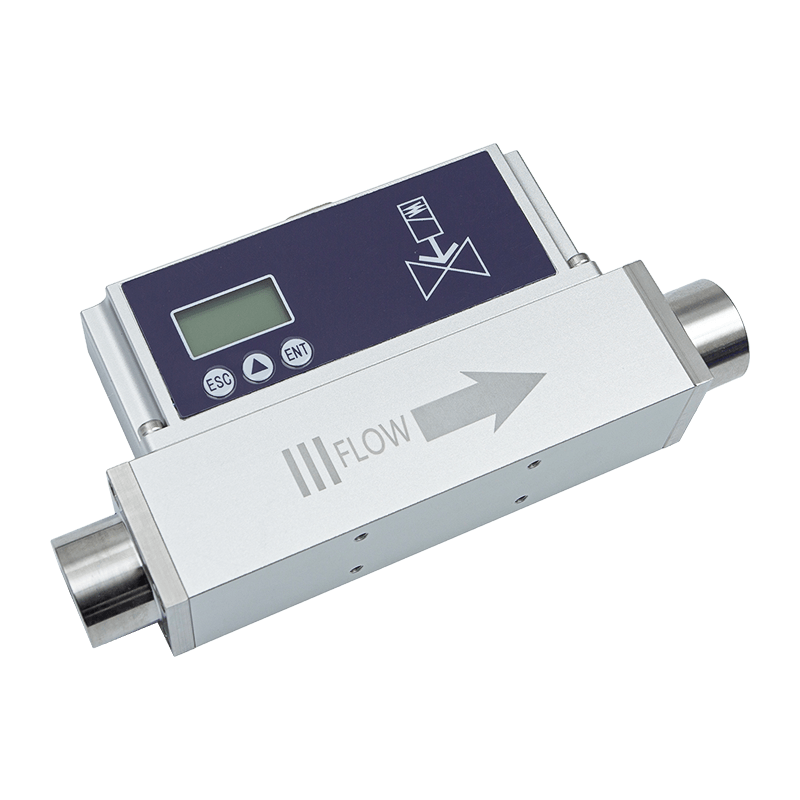
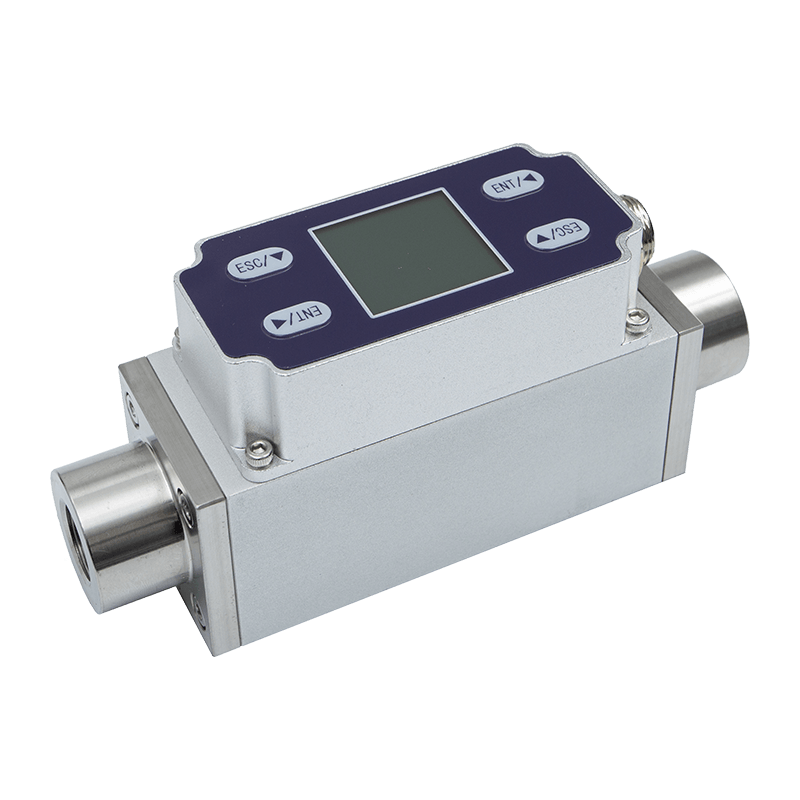
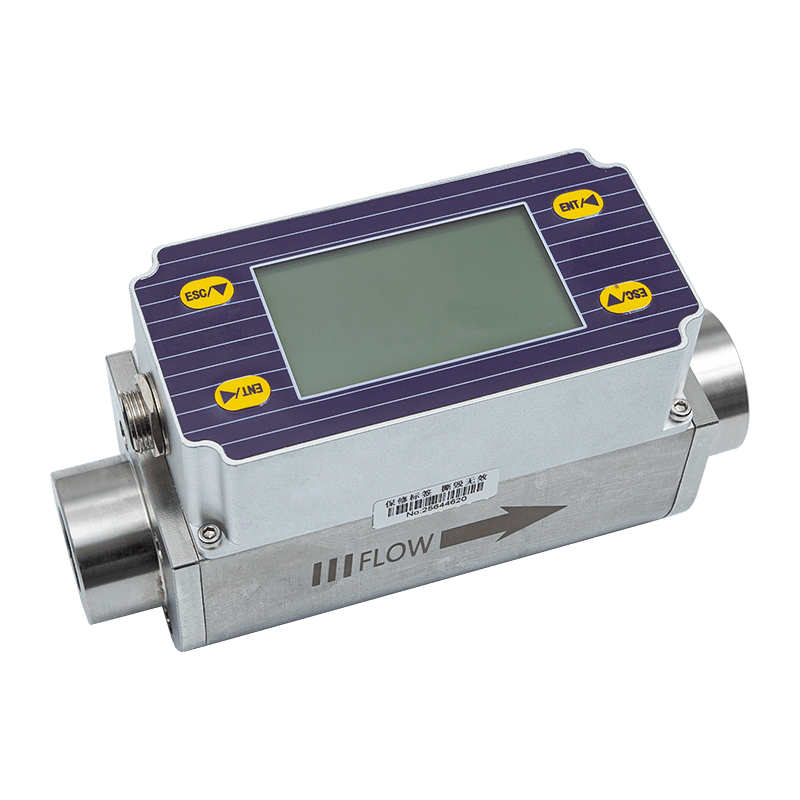
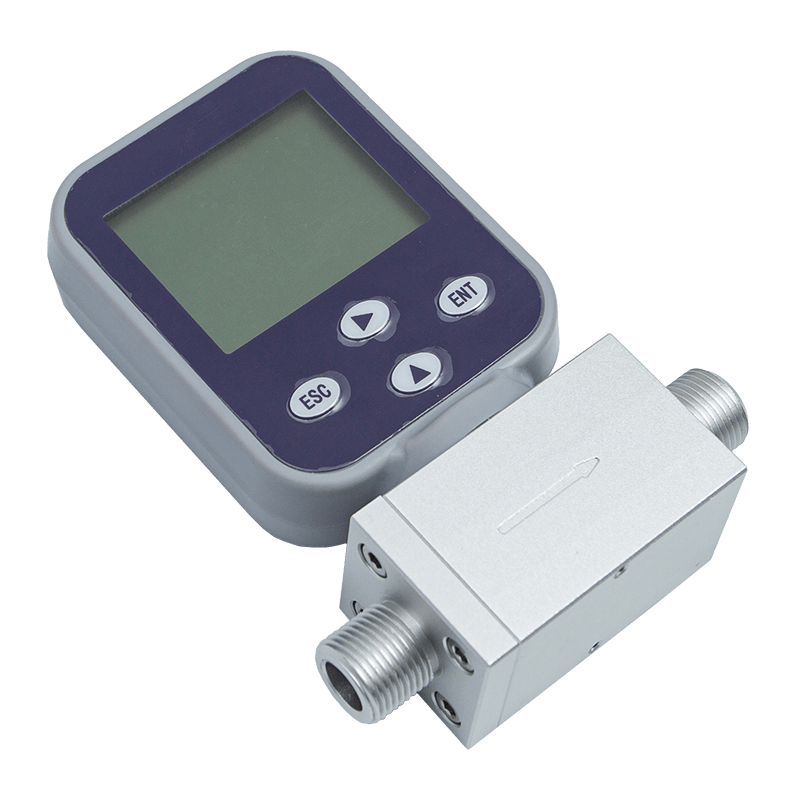
The high-precision thermal gas mass flow meter introduced here is designed for clean gas measurement where accuracy, response speed, repeatability, and installation convenience are essential. Built around a microelectromechanical system, or MEMS, flow sensing chip, the instrument provides high sensitivity, strong anti-interference performance, stable zero point, and direct mass flow measurement without the need for separate temperature or pressure compensation in typical use conditions. It supports local display, analog output, RS485 communication, and standard MODBUS RTU protocol, making it suitable for both stand-alone measurement and industrial IoT integration.
Unlike many traditional volumetric flow meters or differential pressure flow meters, this thermal gas mass flow meter measures gas mass flow directly by detecting heat transfer caused by gas movement across the MEMS sensing element. This principle makes it especially effective for low-flow and small-pipe-diameter applications where mechanical moving parts, pressure loss, complicated installation, or poor low-end sensitivity can limit conventional instruments. With a minimum measurable flow rate down to 0.3 NmL/min and a maximum measurable flow rate up to 1000 NL/min, it covers a wide span of clean gas applications while maintaining a range ratio of 1:100.
ASY Electronics (JiaXing) Co., Ltd. develops and manufactures industrial sensing and intelligent connectivity products for smart factories. The company’s product portfolio includes high-speed power line communication devices, wireless temperature monitoring systems, industrial transmitters, thermal gas mass flow meters, and automatic door controllers. This background gives the company a distinct advantage: the flow meter is not treated as an isolated instrument, but as part of a broader industrial data collection and connectivity ecosystem. From edge-layer hardware design to industrial data integration, the company focuses on reliable sensing, robust communication, and practical deployment in demanding production environments.
High-Precision Type Thermal Gas Mass Flowmete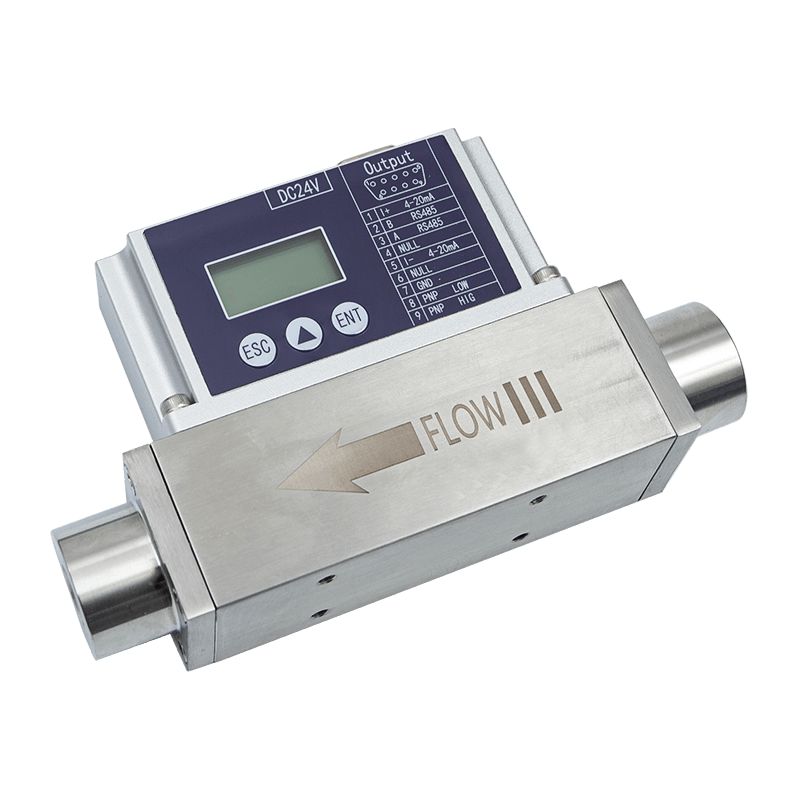
Product Overview
The high-precision thermal gas mass flow meter is a compact, intelligent gas flow instrument designed for clean gases such as air, nitrogen, oxygen, methane, argon, carbon dioxide, helium, hydrogen, and propane. Other gases can be supported through consultation and configuration according to application requirements. The product is suitable for environments where small flow rates must be measured with high confidence, where fast response is valuable, and where the user needs both instantaneous flow and cumulative flow data.
At the core of the instrument is an advanced MEMS flow sensing chip. MEMS technology enables miniature sensing structures to detect very small changes in thermal distribution caused by gas flow. Because the sensing component is highly sensitive and precisely manufactured, the meter can achieve stable measurement performance in low-flow ranges that are often difficult for traditional meters. The instrument provides an accuracy of ±1.0% full scale, with good repeatability across its measurement range.
The working power supply is DC 24 V, with power consumption of approximately 2.5 W. This is suitable for industrial control cabinets, automation systems, testing equipment, and distributed monitoring nodes. The medium temperature range is -10°C to 55°C, while storage temperature is -10°C to 65°C. Operating humidity is below 95% RH, with no frost, no ice, and no condensation. The standard working pressure is up to 1.5 MPa, while 3 MPa can be customized for specific requirements.
The flow meter includes an LCD display that shows instantaneous flow and cumulative flow. This local display improves usability during installation, commissioning, maintenance, and troubleshooting. In many production environments, technicians need to verify flow conditions directly at the equipment without connecting a laptop or remote HMI. A clear and intuitive display reduces commissioning time and helps prevent wiring or communication errors.
For signal integration, the product offers selectable analog output options including 4–20 mA, 1–5 V, 0–5 V, and 0–10 V. It also supports RS485 communication using the standard MODBUS RTU protocol. This combination is valuable because it allows the same instrument to be used in legacy analog control loops, PLC systems, data acquisition systems, and modern digital monitoring platforms. Optional PNP output can also be selected where switching output is needed.
Key Specifications
Parameter |
Specification |
Application Value |
Working power supply |
DC 24 V / 2.5 W |
Compatible with common industrial control power systems |
Accuracy |
±1.0% FS |
Supports precise measurement and process control |
Medium temperature |
-10°C to 55°C |
Suitable for many indoor industrial and laboratory environments |
Humidity |
<95% RH, no frost, no ice, no condensation |
Reliable operation in controlled industrial environments |
Working pressure |
≤1.5 MPa; 3 MPa customizable |
Supports a wide range of gas supply and process pipelines |
Response time |
50 ms |
Enables fast detection of flow changes |
Output method |
4–20 mA, 1–5 V, 0–5 V, or 0–10 V selectable |
Flexible integration with PLCs, controllers, and data acquisition systems |
Communication |
RS485, MODBUS RTU protocol |
Supports digital networking and industrial IoT systems |
Display |
Instantaneous flow and cumulative flow |
Convenient local monitoring and commissioning |
Range ratio |
1:100 |
Provides broad measurement coverage in one device |
Preheating time |
3–4 minutes recommended |
Helps achieve optimal measurement stability |
Selectable standard temperature conditions |
0°C, 20°C, and 25°C user-adjustable; 25°C default |
Allows flexible standardization for different reporting practices |
Selectable gases |
Air, N2, O2, CH4, Ar, CO2, He, H2, C3H8, and others by consultation |
Suitable for many clean gas applications |
Protection level |
IP40 |
Appropriate for protected equipment and indoor installations |
Pipe diameter |
DN8 and DN15 available |
Optimized for small-flow and compact gas systems |
Mechanical connection |
PT1/2 or G1/4 internal threads available; other thread interfaces customizable |
Easy installation into common piping and equipment layouts |
Minimum measurable flow |
0.3 NmL/min |
Excellent low-flow sensitivity |
Maximum measurable flow |
1000 NL/min |
Covers a broad range of clean gas measurement needs |
MEMS Thermal Sensing Principle
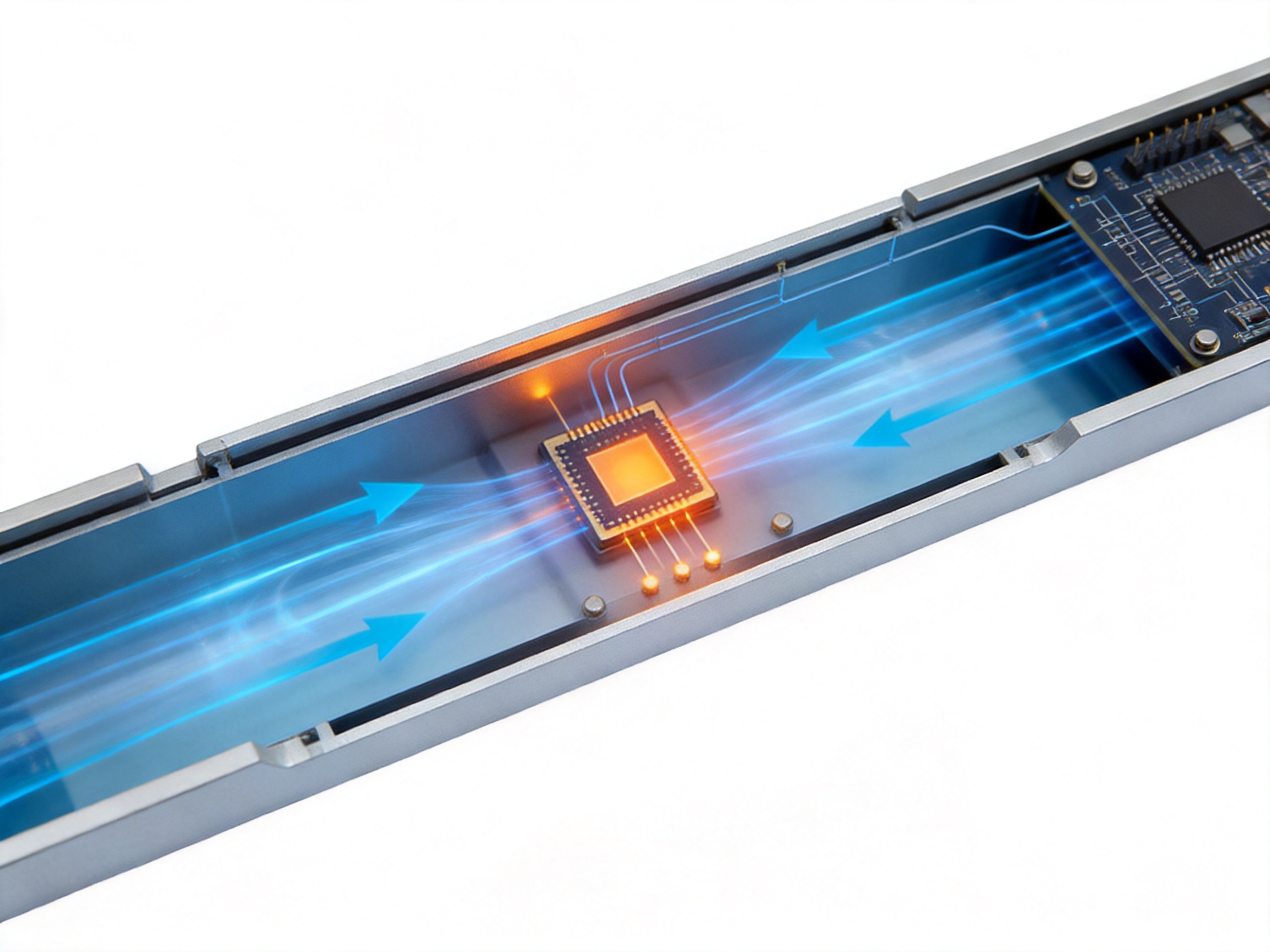
The performance of this flow meter comes from the thermal mass flow measurement principle and the MEMS sensor structure. In thermal mass flow measurement, a controlled heating element and temperature sensing elements are arranged so that gas movement changes the heat distribution around the sensing area. When gas flow increases, it carries heat downstream and modifies the temperature field. The sensor detects this change and converts it into a flow signal.
Because the relationship between heat transfer and gas mass flow can be characterized precisely, the instrument can measure mass flow directly. This is a major benefit compared with volumetric flow meters, which may require compensation for temperature and pressure to calculate mass flow. In applications where gas density changes affect process results, direct mass flow measurement gives users a more meaningful and stable variable.
MEMS technology offers several advantages over larger traditional thermal sensors. First, the sensing structure is small, which reduces thermal mass and improves response speed. The specified response time of 50 ms allows the instrument to detect rapid flow changes and support dynamic process control. Second, MEMS manufacturing supports consistency and miniaturization, helping the meter maintain stable performance across production batches. Third, the small sensing structure can be optimized for low-flow detection, enabling measurement down to very small flow rates.
The product’s zero-point stability is especially important. In low-flow measurement, even a small zero drift can create significant uncertainty. A stable zero point helps ensure that the meter does not falsely indicate flow when the line is closed or under no-flow conditions. It also improves confidence when measuring low-end flow rates, where the signal magnitude is small.
Strong anti-interference capability is another practical advantage. Industrial environments may include electromagnetic noise, vibration, temperature variation, valve actuation, compressor pulsation, and communication interference. A well-designed sensing circuit, stable power design, intelligent signal processing, and robust communication architecture all contribute to reliable operation. For users, this means fewer false readings, less downtime, and easier troubleshooting.
Advantages Over Conventional Flow Meter Technologies
Many industrial users still rely on traditional technologies such as rotameters, differential pressure meters, turbine meters, vortex meters, and volumetric meters. Each technology has its place, but small-flow clean gas applications create specific challenges. The high-precision thermal gas mass flow meter addresses many of these limitations.
Compared with Rotameters
Rotameters are simple and economical, but they are typically read manually and depend heavily on installation orientation, gas density, pressure, and temperature. Their accuracy can be limited, especially at low flow rates, and they are not ideal for automated data acquisition unless equipped with additional transmitters. The thermal gas mass flow meter offers digital and analog outputs, local LCD display, and direct integration with PLCs or monitoring systems. It provides cumulative flow, not just instantaneous indication, and supports more precise industrial control.
Compared with Differential Pressure Flow Meters
Differential pressure meters often require a primary element such as an orifice plate, nozzle, or laminar flow element. These systems may introduce pressure loss and require careful straight pipe conditions, pressure taps, and compensation. At small flow rates, the differential pressure signal can be weak and vulnerable to noise. The MEMS thermal mass flow meter provides high sensitivity at low flow, compact installation, and no separate pressure or temperature compensation in typical use. This simplifies system design and reduces installation cost.
Compared with Turbine Flow Meters
Turbine meters can provide good accuracy in certain ranges, but they include moving parts that may wear, accumulate contamination, or suffer from bearing friction. At low flows, the turbine may not rotate reliably, and response can be affected by gas cleanliness and mechanical wear. The thermal gas mass flow meter has no mechanical rotating parts in the flow measurement principle, improving long-term stability and reducing maintenance concerns in clean gas service.
Compared with Vortex Flow Meters
Vortex meters are widely used for larger industrial pipelines, but they often require a minimum Reynolds number and may not be suitable for very small flow rates or small pipe diameters. They also require appropriate straight pipe runs and stable flow profiles. The high-precision thermal gas mass flow meter is designed for DN8 and DN15 pipe sizes and clean gas low-flow applications, making it more suitable for compact equipment and precision gas delivery systems.
Compared with Lower-Grade Thermal Sensors
Not all thermal flow meters provide the same level of performance. Lower-grade devices may suffer from poor zero stability, limited communication options, slow response, insufficient calibration, or weak anti-interference design. This product combines MEMS sensing, stable zero point, 50 ms response, selectable analog outputs, RS485 MODBUS RTU communication, local LCD display, and intrinsic safety explosion-proof certification. The combination of sensing performance and integration capability provides a stronger solution for industrial users who need dependable measurement rather than a basic indicator.
Why Direct Mass Flow Measurement Matters
In gas systems, volumetric flow alone can be misleading because gas volume changes with pressure and temperature. A volume of gas at one pressure and temperature contains a different mass than the same volume at another condition. Many processes, however, depend on the actual amount of gas molecules delivered. Combustion quality, reaction stoichiometry, purging efficiency, dilution ratio, carrier gas delivery, and leak testing all depend on mass flow.
By measuring mass flow directly, the thermal gas mass flow meter gives users a value more closely related to the physical process. This reduces the need for external correction calculations and makes the measurement easier to use in control logic. The product also allows selectable standard temperature conditions of 0°C, 20°C, and 25°C, with 25°C as the default. This is helpful when different industries or customers use different reference conditions for normalized flow reporting.
Cumulative flow measurement is also valuable. In many applications, the total amount of gas consumed over time is as important as the instantaneous flow rate. Cumulative flow can help monitor gas usage, detect abnormal consumption, estimate process cost, verify batch conditions, and support preventive maintenance. With both instantaneous and cumulative flow displayed locally, operators can understand both real-time behavior and longer-term consumption patterns.
Industrial Integration and Communication Flexibility
One of the product’s strongest advantages is integration flexibility. Industrial plants often contain mixed generations of equipment. Some machines use analog 4–20 mA input cards, others accept voltage signals, and newer systems rely on RS485 digital communication. A flow meter that supports multiple signal types reduces engineering complexity and inventory burden.
The 4–20 mA output remains one of the most trusted industrial signal standards. It provides good noise immunity over long distances and makes fault detection easier because a zero-current condition can indicate a wiring problem. Voltage outputs such as 1–5 V, 0–5 V, and 0–10 V are useful for data acquisition modules, testing equipment, and compact controllers. RS485 with MODBUS RTU supports multi-device networking, addressable instruments, digital parameter reading, and integration into supervisory systems.
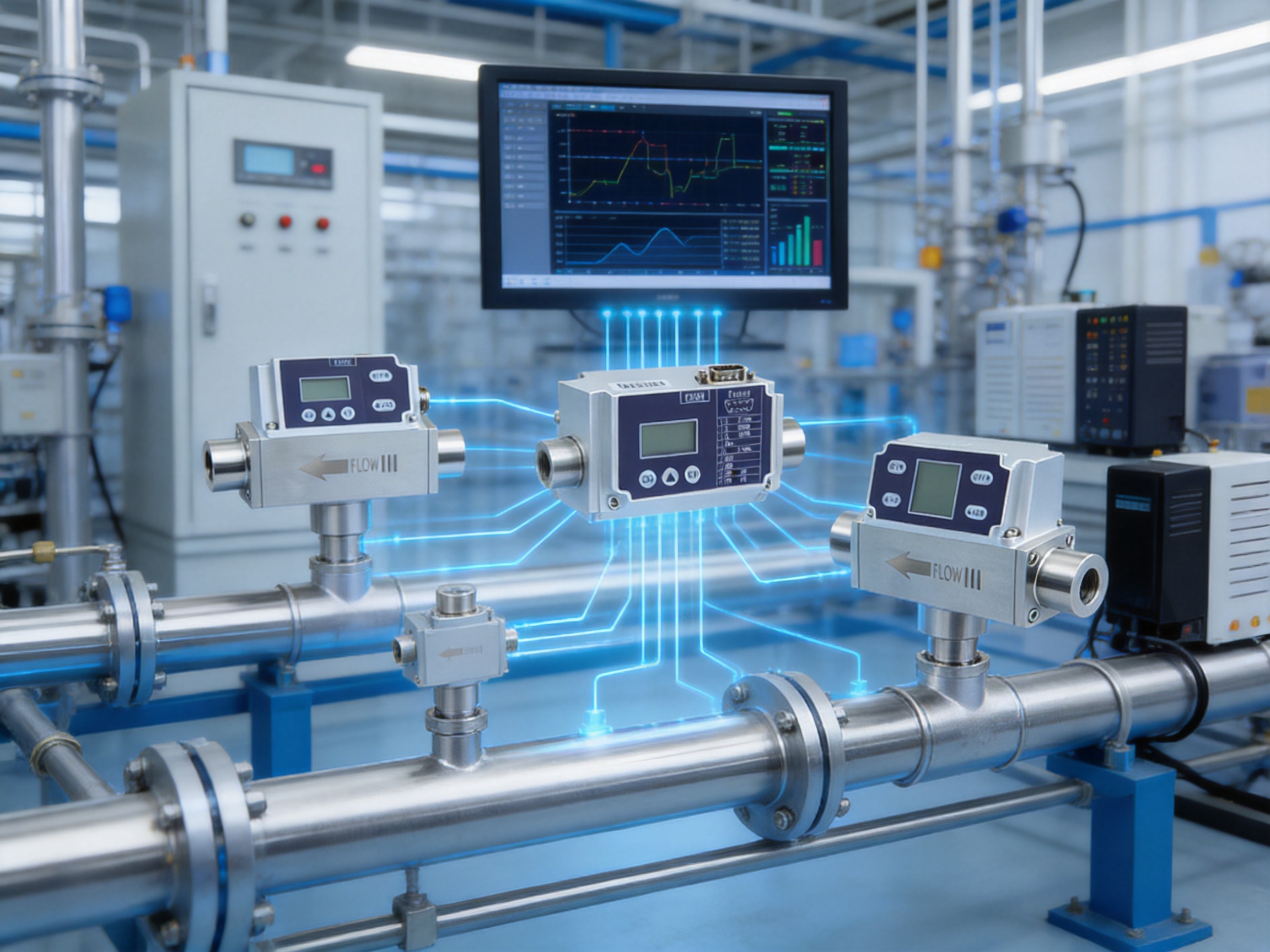
In smart factory environments, RS485 communication allows the flow meter to become part of an edge-layer data system. Flow data can be collected along with temperature, pressure, vibration, energy consumption, and equipment status. When integrated into industrial IoT platforms, the data can support analytics such as gas consumption benchmarking, abnormal flow detection, equipment utilization analysis, and maintenance alerts.
ASY Electronics’ broader expertise in industrial communication and data sensing strengthens the product’s value. The company is not limited to manufacturing a single measurement device. It develops hardware and industrial data integration solutions that support equipment condition monitoring, refined energy management, and production process optimization. This system-level understanding helps ensure that the flow meter is designed for practical field deployment, not just laboratory specifications.
Mechanical Design and Installation Convenience
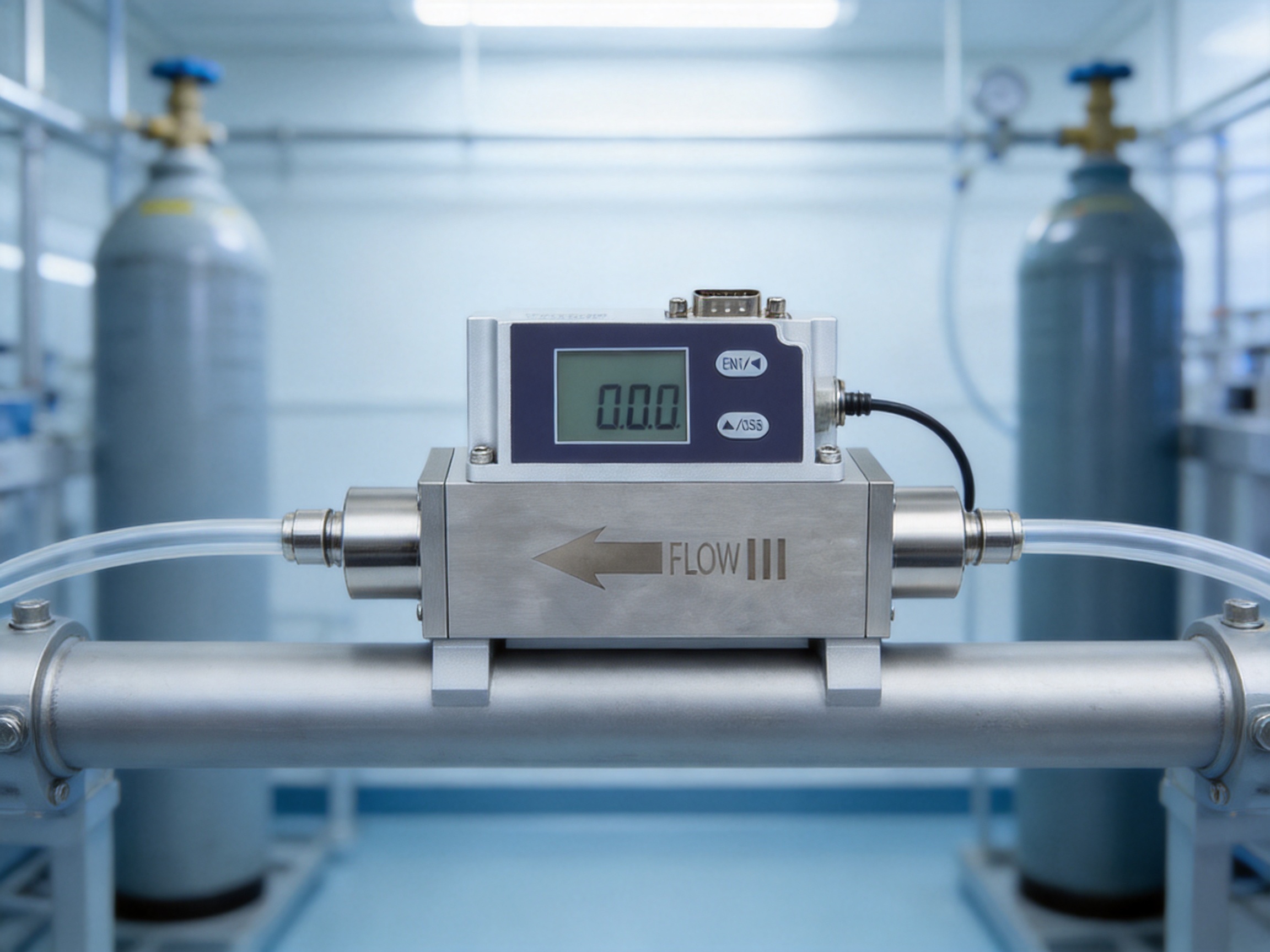
Installation is often one of the most underestimated costs in industrial instrumentation. A flow meter that is difficult to mount, requires special fittings, or needs long straight pipe runs may increase project cost and delay commissioning. This product is designed with standard mechanical interfaces, including PT1/2 or G1/4 internal threads. Other thread interfaces can be customized, allowing the instrument to fit different equipment designs and regional piping practices.
DN8 and DN15 pipe diameter options are available, making the product suitable for compact gas delivery systems, analyzer cabinets, laboratory gas lines, and small process equipment. The compact form factor and standard connection design help users integrate the instrument into existing systems with minimal modification.
The recommended preheating time is 3–4 minutes for best results. This is a practical requirement for thermal measurement devices, as temperature equilibrium improves stability and accuracy. During commissioning, users should power the instrument, allow the recommended warm-up time, confirm zero conditions where applicable, and verify the output signal or communication data before starting process operation.
Because the product has a protection level of IP40, it is best suited for indoor, protected, and controlled environments rather than exposed outdoor installations or locations subject to water spray, heavy dust, or condensation. Proper installation should ensure that the environment remains free of frost, ice, and condensation. Clean gases should be used, and filtration may be considered where particles, oil mist, or moisture could be present.
Intrinsic Safety and Application Confidence
The product has intrinsically safe explosion-proof certification, which is a significant advantage in industries where flammable gases or hazardous areas may be present. Intrinsic safety focuses on limiting electrical and thermal energy so that the instrument cannot ignite a hazardous atmosphere under specified fault conditions. This is particularly important when measuring gases such as methane, hydrogen, or propane, depending on the installation environment and local regulations.
For users, intrinsic safety certification provides confidence and simplifies selection for applications requiring high accuracy and safety. However, proper hazardous area installation still requires correct system design, compatible barriers or isolators where needed, appropriate wiring practices, and compliance with applicable standards. The certification should be considered part of a complete safety strategy rather than a substitute for engineering review.
In addition to hazardous area considerations, accurate flow measurement itself supports safety. Gas over-supply, under-supply, leakage, purge failure, or abnormal consumption can all create process risks. A responsive flow meter can help detect deviations quickly, allowing control systems to trigger alarms or corrective actions. With a response time of 50 ms, this product is capable of capturing fast flow changes that slower instruments may miss.
Manufacturing Strengths Behind the Product
A high-performance instrument is only as reliable as the manufacturing system behind it. ASY Electronics operates as a high-tech enterprise focused on smart factory development, industrial sensing, and intelligent connectivity. This manufacturing philosophy is important because flow meters require precision assembly, calibration discipline, electronic reliability, and quality control throughout production.
The company’s strengths begin with product architecture. By combining MEMS sensing, signal conditioning, digital communication, local display, and multiple output options, the engineering team creates a product that meets real industrial requirements. The design is not limited to a single measurement function; it considers installation, communication, user interface, safety, and long-term maintainability.
Advanced manufacturing processes are essential for consistent sensor performance. MEMS-based flow sensing requires careful handling of miniature sensing chips, stable electronic assembly, and protection from contamination. During production, precise assembly processes help maintain alignment, sealing quality, electrical connection integrity, and mechanical robustness. Controlled process conditions reduce variation between units and improve repeatability.
Calibration is another critical manufacturing strength. Flow measurement accuracy depends on the relationship between sensor output and actual flow under known conditions. A disciplined calibration process uses controlled gas, stable pressure and temperature conditions, traceable flow references, and systematic data recording. The product specifications note that measurements are based on conditions of 25°C, 101.32 kPa, and dry air. Clear reference conditions help users interpret performance and support consistent production calibration.
Electronic manufacturing quality also matters. Industrial flow meters must withstand power supply variation, electromagnetic disturbance, communication loading, and long-term operation. Reliable PCB assembly, component selection, soldering quality, firmware validation, and final testing all contribute to field stability. ASY Electronics’ experience with industrial IoT communication solutions and power line communication products supports a strong understanding of signal integrity, communication reliability, and industrial electronics design.
The company’s broader product lines reinforce its manufacturing capabilities. Wireless temperature monitoring sensors require stable sensing, low-power design, and dependable communication. Industrial transmitters require accurate signal conditioning and robust output performance. High-speed power line communication products require advanced communication design and noise-resistant operation. Automatic door controllers require control reliability and field durability. These competencies support the development of a flow meter that is accurate, connectable, and suitable for automation environments.
Quality Control and Testing Philosophy
Quality control for a thermal gas mass flow meter should cover incoming materials, sensor assembly, electronics testing, calibration, communication verification, output signal testing, display inspection, pressure integrity, and final functional validation. A strong manufacturing process reduces the possibility of drift, signal instability, leakage, incorrect parameter configuration, or communication failure.
Incoming inspection helps ensure that mechanical parts, connectors, electronic components, displays, and sensing elements meet defined standards. Mechanical components must support proper sealing and thread quality. Electronic components must meet performance and reliability requirements. The sensing chip must be protected from contamination and physical damage.
During assembly, process control helps ensure that the flow path, sensing module, sealing elements, and circuit boards are installed correctly. Because small-flow measurement is sensitive, even minor mechanical inconsistencies can influence flow characteristics. Consistent assembly contributes to consistent calibration and repeatability.
Electrical testing verifies power consumption, output signal behavior, communication response, display function, and firmware operation. Analog outputs must correspond correctly to flow values. RS485 communication must respond reliably according to MODBUS RTU protocol. The LCD must display instantaneous and cumulative flow clearly. Optional outputs such as PNP should be checked according to configuration.
Calibration and final verification are the most important steps for measurement confidence. The instrument should be tested across relevant flow points to confirm accuracy and linearity within its specified range. Zero-point stability should be verified because zero drift is a critical issue for low-flow applications. Response behavior may also be checked where fast process control is required.
Finally, packaging and documentation help protect quality after production. Proper packaging prevents damage during shipment, while clear documentation supports correct installation and configuration. Users should receive guidance on power supply, wiring, communication, gas selection, operating environment, pressure limits, warm-up time, and measurement range protection.
Application Scenarios
Precision Gas Delivery
Precision gas delivery systems require stable and repeatable flow measurement. Examples include laboratory gas panels, analyzer gas lines, calibration gas supply, and small process gas control. The meter’s low-flow sensitivity, local display, and digital communication make it suitable for these applications. Users can monitor both instantaneous delivery and total gas consumption.
Industrial Automation Equipment
Automated machines often use compressed air, nitrogen, or other gases for purging, actuation assistance, cooling, or process support. A compact thermal gas mass flow meter can help identify abnormal consumption, blocked lines, leaks, or process deviations. The 24 V DC power supply and selectable analog outputs are compatible with common automation systems.
Environmental and Testing Systems
Gas flow control is essential in environmental chambers, emission testing, material testing, and sensor evaluation equipment. The meter’s fast response and repeatability support dynamic testing. RS485 communication allows test systems to log flow data automatically.
Energy and Consumption Monitoring
Refined energy management is an important part of smart factory operation. Although gases are not always treated as energy streams, compressed air and process gases represent significant operating costs. Measuring flow and cumulative consumption helps factories identify waste, compare equipment efficiency, and detect leaks. When integrated into industrial IoT systems, gas flow data becomes part of a broader energy and resource management strategy.
Combustion and Reaction Support
In applications where gas flow influences combustion quality or reaction conditions, mass flow measurement can improve process consistency. Stable gas supply supports repeatable results and can reduce waste or quality variation. Users should select appropriate gas configuration and confirm compatibility for the specific process gas.
Hydrogen and Specialty Gas Monitoring
The product supports selectable gases including hydrogen and helium. These gases have different thermal properties from air and require appropriate calibration or configuration. In hydrogen-related applications, intrinsic safety certification and accurate flow monitoring are valuable, but users must ensure the complete installation meets all safety requirements.
Competitor Comparison from a User Perspective
When users compare flow meters, they often focus only on price or nominal accuracy. However, the total value of a flow meter includes measurement stability, communication flexibility, installation cost, maintenance requirements, safety certification, supplier capability, and long-term support. This product offers a balanced combination of performance and practicality.
Compared with low-cost mechanical indicators, it provides electrical outputs, communication, cumulative flow, and higher automation value. Compared with complicated differential pressure systems, it reduces installation complexity and eliminates the need for external compensation in many clean gas applications. Compared with meters that offer only one output type, it supports multiple analog options and RS485 MODBUS RTU. Compared with products without local indication, its LCD display improves commissioning and maintenance. Compared with suppliers focused only on single instruments, ASY Electronics brings broader industrial IoT and smart factory expertise.
Another competitive advantage is customization potential. Mechanical interfaces can be customized, working pressure up to 3 MPa can be customized, and additional gases can be supported by contacting the manufacturer. In industrial projects, customization can be decisive. Standard products may not fit every equipment layout, pressure condition, or gas requirement. A manufacturer with engineering capability can support better project adaptation.
The product’s range ratio of 1:100 also helps reduce the need for multiple instruments across different flow conditions. A wide turndown ratio gives users more flexibility when process flow varies. This can reduce inventory, simplify system design, and improve equipment standardization.
Finally, the combination of MEMS sensing and industrial communication makes the instrument suitable for both present and future needs. A user may initially connect the meter using 4–20 mA output, then later integrate RS485 data into a digital monitoring platform. This future-ready capability protects investment and supports gradual digital transformation.
Best Practices for Selection and Use
To obtain the best performance, users should first confirm the gas type, flow range, pressure, temperature, humidity, pipe size, output requirements, and installation environment. The selected range should match the normal operating flow, with attention to both minimum and maximum expected values. The note that users should not exceed the measurement range is important because over-range conditions may damage the sensor.
Gas cleanliness should be considered carefully. Thermal MEMS sensors are intended for clean gases. Particles, oil mist, liquid droplets, corrosive contaminants, or condensation can affect sensor performance and may cause damage. Where gas cleanliness is uncertain, suitable filtration or conditioning should be used.
Power supply quality also affects performance. A stable DC 24 V supply should be used, with proper grounding and wiring practices. Signal cables should be routed away from high-power switching equipment where possible. For RS485 communication, users should follow correct bus wiring, termination, shielding, and addressing practices.
Preheating should not be ignored. The recommended 3–4 minute warm-up period helps the thermal sensor reach stable operation. In precision applications, users may incorporate warm-up time into standard operating procedures.
For analog output integration, scaling should be configured correctly in the PLC, controller, or data acquisition system. For digital communication, MODBUS register mapping, baud rate, parity, address, and data format should be verified during commissioning. The local LCD display can be used as a reference to confirm that the remote system is reading values correctly.
Users should also consider periodic verification, especially in critical applications. Verification intervals depend on process requirements, gas cleanliness, operating conditions, and quality standards. Even stable instruments benefit from scheduled checks to confirm measurement confidence.
Role in Smart Factory Development
Smart factories depend on accurate data from the field. Without reliable sensing, digital platforms cannot provide meaningful insight. Gas flow data is especially useful because it connects directly to process performance, energy consumption, safety, and equipment health. A high-precision thermal gas mass flow meter can therefore serve as an important edge-layer sensing device in digital manufacturing.
ASY Electronics’ mission is to support efficient, reliable, and green smart factories. The company builds products and solutions around data sensing and intelligent connectivity. This product aligns with that mission by turning gas flow into measurable, communicable, and analyzable data. When connected through RS485 or analog signals, the meter can feed PLCs, SCADA systems, data gateways, or industrial IoT platforms.
In refined energy management, gas flow meters can reveal waste that would otherwise remain hidden. Compressed air leakage, excessive purge flow, unstable gas consumption, and abnormal equipment demand can all be detected through flow monitoring. In equipment condition monitoring, changes in gas flow may indicate clogged filters, valve wear, line blockage, actuator leakage, or process drift. In production process optimization, stable gas flow supports consistent quality and reduced variation.
The product also supports sustainability goals. Accurate gas measurement helps reduce unnecessary consumption, improve process efficiency, and support data-driven decision-making. Green manufacturing is not achieved only through large energy projects; it also depends on thousands of reliable measurements across the factory floor.
Q&A Section
Q1: What type of gases can this thermal gas mass flow meter measure?
It can be configured for clean gases including air, nitrogen, oxygen, methane, argon, carbon dioxide, helium, hydrogen, and propane. Other gases may be supported by consulting the manufacturer. Because thermal properties differ among gases, correct gas selection and configuration are important for accurate measurement.
Q2: Does the flow meter require temperature or pressure compensation?
The instrument directly measures thermal mass flow and is designed to provide accurate measurement without separate temperature or pressure compensation in typical clean gas applications. However, users should still operate the product within the specified pressure, temperature, and environmental ranges and should understand the reference conditions used for normalized flow values.
Q3: What is the accuracy of the product?
The stated accuracy is ±1.0% full scale. The product also offers good repeatability and zero-point stability, which are especially important for low-flow measurement.
Q4: What outputs are available?
Selectable outputs include 4–20 mA, 1–5 V, 0–5 V, and 0–10 V. RS485 communication with standard MODBUS RTU protocol is also supported. Optional PNP output can be selected for applications requiring switching output.
Q5: Why is MEMS technology beneficial for this product?
MEMS technology enables a miniature flow sensing chip with high sensitivity, fast thermal response, and stable performance. This supports low-flow measurement, a 50 ms response time, good repeatability, and compact instrument design.
Q6: What applications are most suitable for this flow meter?
The product is suitable for clean gas measurement in precision gas delivery, industrial automation equipment, laboratory systems, environmental testing, analyzer gas lines, gas consumption monitoring, process control, and smart factory data collection.
Q7: Can it measure very small flow rates?
Yes. The minimum measurable flow rate is 0.3 NmL/min, making it suitable for small-flow clean gas applications where many traditional meters have limited sensitivity.
Q8: What is the maximum measurable flow rate?
The maximum measurable flow rate is 1000 NL/min. Users must select the appropriate range for their application and avoid exceeding the measurement range, as over-range operation may damage the sensor.
Q9: Is the product suitable for hazardous environments?
The product has intrinsically safe explosion-proof certification, making it suitable for environments requiring high accuracy and intrinsic safety when installed according to applicable safety requirements. Users should ensure the complete system design complies with relevant hazardous area standards.
Q10: What mechanical connections are available?
PT1/2 and G1/4 internal threads are available as standard options. Other thread interfaces can be customized according to application requirements.
Q11: Why does the instrument need preheating?
Thermal flow measurement benefits from thermal stability. A preheating time of 3–4 minutes is recommended for best results, allowing the sensor and electronics to reach stable operating conditions.
Q12: How does the LCD display help users?
The LCD displays instantaneous flow and cumulative flow, allowing technicians to verify operation directly at the installation site. This simplifies commissioning, troubleshooting, and routine inspection.
Q13: How does this product support smart factory systems?
With RS485 MODBUS RTU communication and analog output options, the flow meter can connect to PLCs, data acquisition systems, SCADA platforms, and industrial IoT gateways. It provides real-time gas flow data for energy management, equipment monitoring, and process optimization.
Q14: What makes this product competitive?
Its competitiveness comes from the combination of MEMS high-sensitivity sensing, ±1.0% FS accuracy, stable zero point, fast response, wide range ratio, local display, multiple output options, RS485 communication, intrinsic safety certification, easy installation, and manufacturer support for customization.
Conclusion
The high-precision thermal gas mass flow meter is a strong solution for clean gas measurement and control in modern industrial environments. By using an advanced MEMS flow sensing chip, it provides high precision, high sensitivity, stable zero point, good repeatability, and fast response. Its ability to measure mass flow directly reduces the complexity associated with traditional volumetric or differential pressure measurement, especially in small-flow applications.
The product’s practical value extends beyond sensing performance. Its LCD display, selectable analog outputs, RS485 MODBUS RTU communication, standard mechanical interfaces, customizable options, and intrinsic safety certification make it suitable for real-world industrial deployment. It can serve as a stand-alone flow meter, a PLC-connected transmitter, or an intelligent data node in a smart factory system.
Compared with many conventional and lower-grade competing solutions, this instrument offers a better balance of accuracy, integration flexibility, installation convenience, safety, and long-term automation value. It is particularly well suited for users who need dependable clean gas measurement, low-flow sensitivity, and compatibility with modern industrial data systems.
Behind the product is ASY Electronics (JiaXing) Co., Ltd., a high-tech enterprise focused on smart factory development, industrial sensing, and intelligent connectivity. The company’s experience in power line communication, wireless temperature monitoring, industrial transmitters, flow meters, and automatic control products supports a strong manufacturing and engineering foundation. Through advanced manufacturing processes, disciplined quality control, and system-level industrial IoT understanding, the company delivers a flow meter designed not only to measure gas, but also to help factories become more efficient, reliable, and sustainable.
References
1. Baker, R. C. Flow Measurement Handbook: Industrial Designs, Operating Principles, Performance, and Applications.
2. Miller, R. W. Flow Measurement Engineering Handbook.
3. Liptak, B. G. Instrument Engineers’ Handbook: Process Measurement and Analysis.
4. ISO 14511. Measurement of Fluid Flow in Closed Conduits: Thermal Mass Flowmeters.
5. IEC 60079 Series. Explosive Atmospheres and Intrinsic Safety Requirements.
6. MODBUS Organization. MODBUS Application Protocol Specification.
7. Nguyen, N. T. Micromachined Flow Sensors: A Review.
8. ASY Electronics Product Technical Materials for High-Precision Thermal Gas Mass Flow Meter.