


Three-Axis Wireless Temperature and Vibration Sensor
Industrial equipment rarely fails without warning. Before a motor stops, a pump loses efficiency, a fan becomes unbalanced, or a gearbox suffers serious damage, the machine often produces measurable changes in temperature, vibration, acceleration, velocity, or displacement. The challenge for maintenance teams is to capture these changes continuously, accurately, and economically without adding complex wiring to every machine.
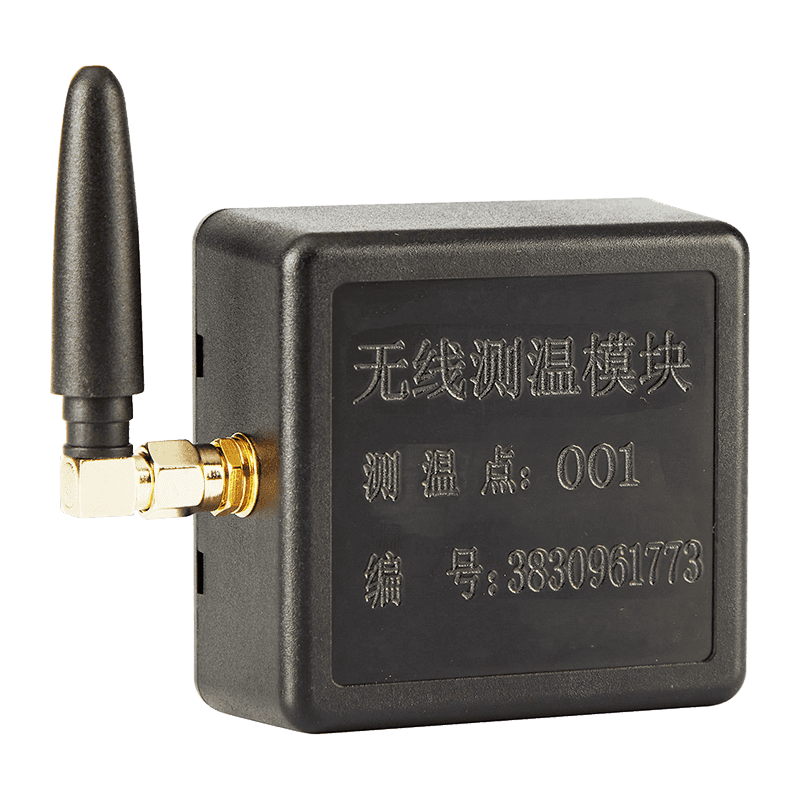
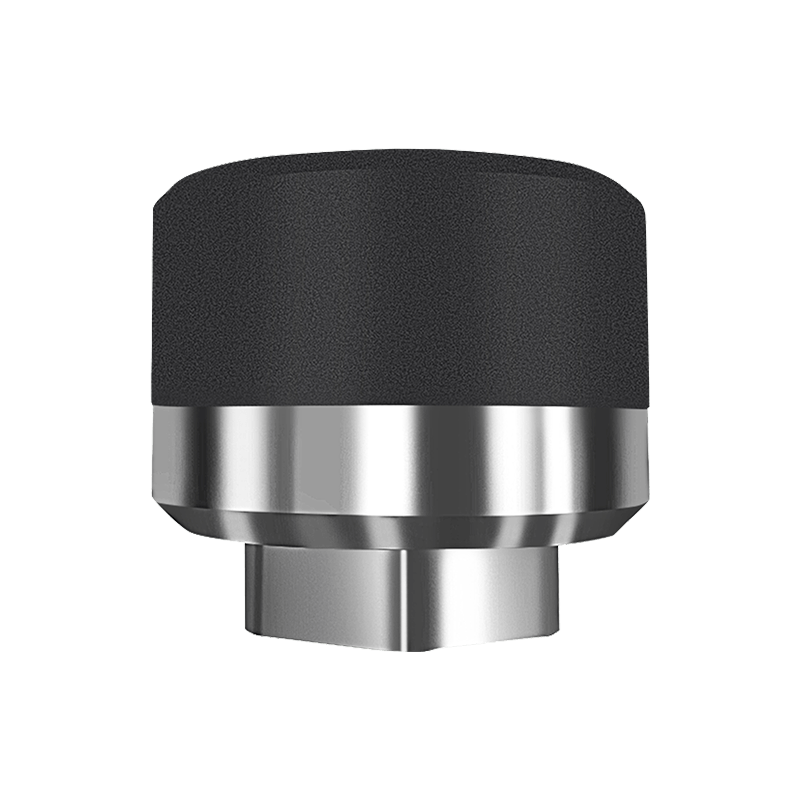
The KL-WZ35LQ three-axis wireless temperature and vibration sensor is designed to address this challenge. It combines wireless communication, temperature measurement, and triaxial vibration analysis in a compact industrial device. By collecting data from three vibration axes and transmitting measurements through LoRa communication, the sensor supports condition monitoring for rotating equipment and other assets operating in demanding industrial environments.
Its integrated design enables users to monitor multiple equipment health indicators with one sensor platform. The device can measure peak acceleration, RMS velocity, and peak-to-peak displacement on three axes, while also recording temperature from a range of -40 to 125 degrees Celsius at the sensing element. An intelligent FFT spectrum analysis algorithm processes vibration information and helps calculate useful condition-monitoring parameters from raw acceleration data.
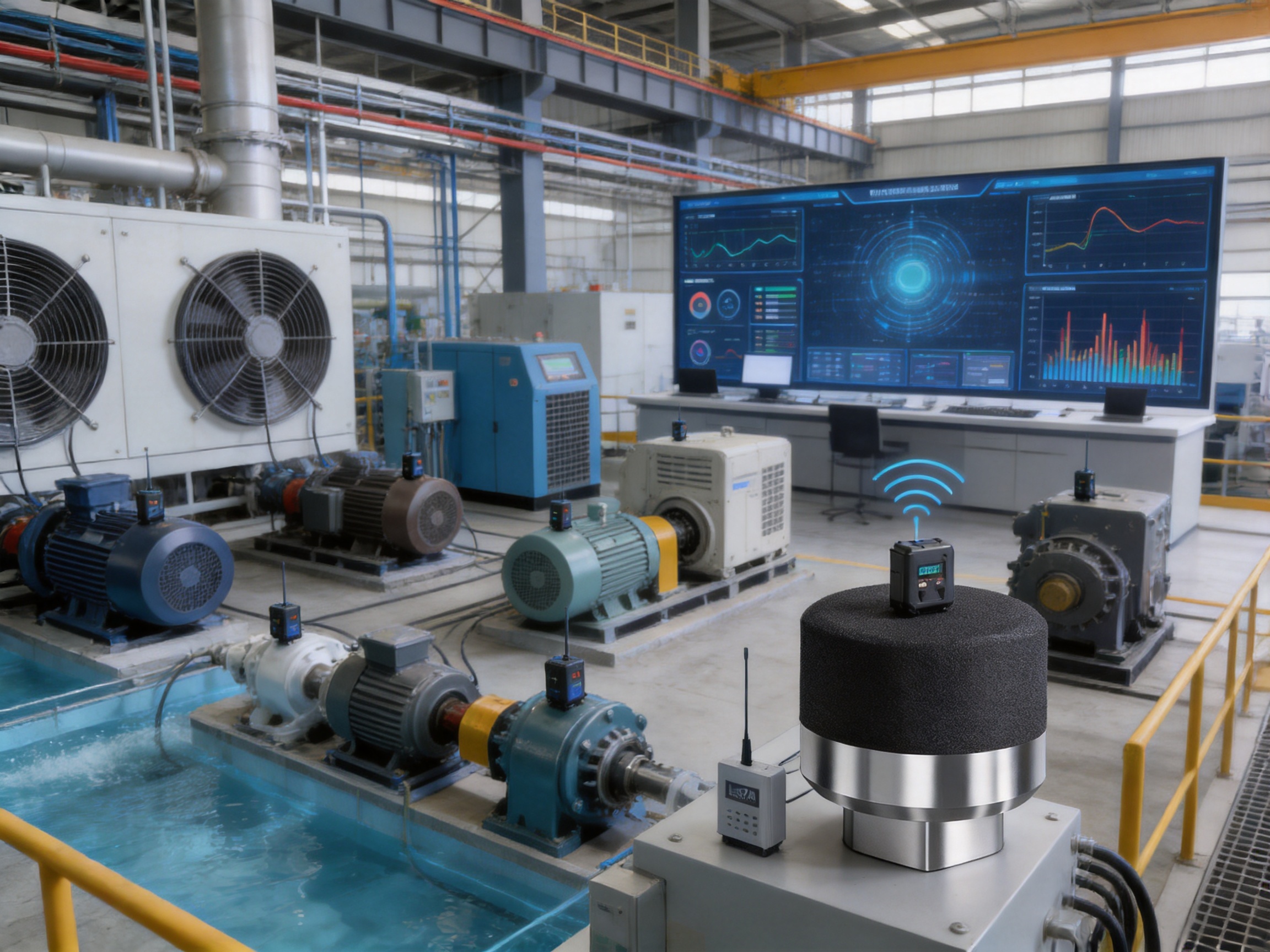
For companies developing smart factories, the sensor provides an important edge-layer data source. It can be installed on motors, reducers, fans, generators, air compressors, centrifuges, water pumps, and similar machinery. Wireless deployment reduces the need for long signal cables and makes it easier to expand monitoring coverage as production lines change.
Why Wireless Temperature and Vibration Monitoring Matters
Traditional preventive maintenance relies on fixed schedules. Equipment is inspected at predetermined intervals, regardless of its actual condition. This approach can result in unnecessary maintenance on healthy assets, while developing faults may appear between inspection visits. A continuous or regularly scheduled monitoring system provides a more responsive alternative.
Temperature and vibration are especially valuable indicators because they reveal different aspects of equipment health. Temperature changes may indicate bearing friction, poor lubrication, overload, blocked ventilation, electrical problems, or abnormal process conditions. Vibration changes may reveal imbalance, misalignment, looseness, bearing wear, gear damage, resonance, or foundation problems.
When both types of information are collected together, maintenance personnel gain a broader view of machine condition. A rising temperature accompanied by increasing vibration may indicate mechanical friction or bearing deterioration. A vibration increase without a significant temperature change may point toward imbalance or structural looseness. Repeated temperature changes associated with production cycles may indicate process-related loading rather than an immediate mechanical fault.
Wired monitoring systems can provide excellent performance, but installation may be difficult in large facilities, rotating equipment areas, hazardous access zones, or locations where cable routing would interfere with production. The KL-WZ35LQ addresses this limitation through LoRa wireless transmission, a low-power communication architecture, and a long-life lithium-ion battery.
Wireless sensing is also useful for temporary surveys, pilot projects, rented machinery, remote equipment, and assets that were not originally designed for instrumentation. Instead of redesigning an entire electrical or control system, a maintenance team can install sensors at important measurement points and begin collecting data with limited disruption.
Integrated Design for Industrial Condition Monitoring
The KL-WZ35LQ combines several functions that are often provided by separate devices. Its core architecture includes a triaxial acceleration sensor, temperature sensing, embedded processing, FFT-based analysis, LoRa communication, and battery power management. This integration reduces the number of components required at the equipment level and simplifies deployment.
The vibration processing chip is an ADXL357 device from Analog Devices. The sensor is specified for three-axis monitoring, allowing vibration to be evaluated in multiple directions rather than along only one measurement axis. This is important because faults do not always generate their strongest signal in a single predictable direction.
Each axis can provide peak acceleration, RMS velocity, and peak-to-peak displacement. These parameters offer different perspectives on machine behavior. Acceleration is useful for detecting high-frequency or impulsive events. Velocity is widely used for evaluating overall machine vibration severity. Displacement can help identify lower-frequency movement, structural motion, or large oscillation amplitudes.
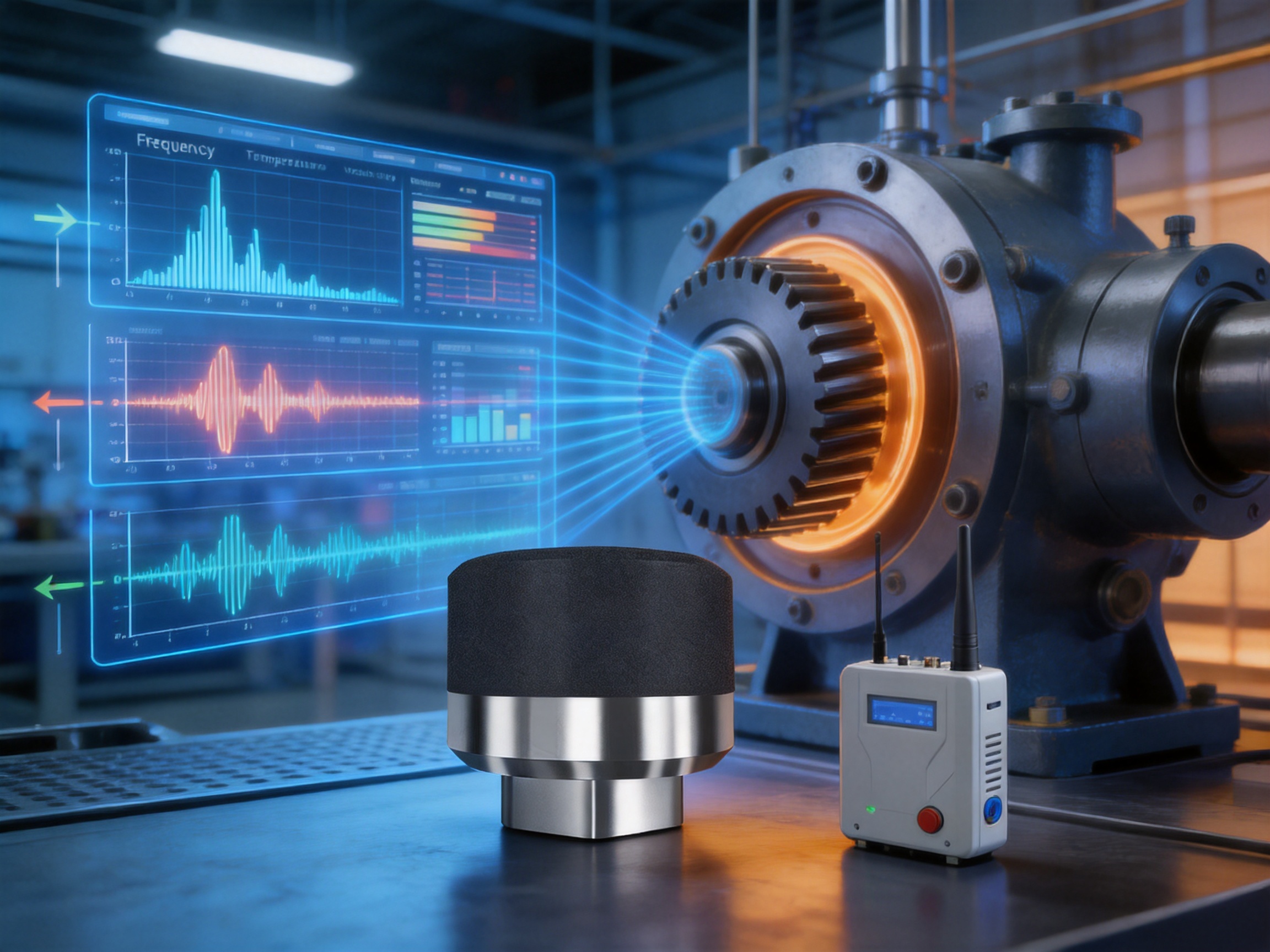
The embedded processing system uses an intelligent FFT spectrum analysis algorithm. Fast Fourier Transform analysis converts time-domain acceleration signals into frequency-domain information. This allows vibration energy to be associated with particular frequency regions and makes it easier to identify patterns related to rotating speed, harmonics, bearings, gears, or structural resonance.
FFT processing at the sensor level can reduce the quantity of raw information that must be transmitted. Instead of sending every sample continuously, the sensor can calculate relevant parameters locally and transmit selected results at a defined interval. This contributes to lower communication traffic and lower power consumption while still providing practical information for condition monitoring.
Key Technical Specifications
The following table summarizes the main technical characteristics supplied for the product. Application engineers should confirm final configuration details, regional radio requirements, measurement settings, and installation conditions before placing the sensor into a production monitoring system.
| Category | Parameter | Specification |
|---|---|---|
| Vibration | Processing sensor | ADXL357, Analog Devices |
| Vibration | Measurement axes | Three axes |
| Vibration | Measured parameters | Peak acceleration, RMS velocity, peak-to-peak displacement for each axis |
| Vibration | Velocity range | 0.1 to 199.9 mm/s |
| Vibration | Acceleration range | 0.001 to 156.800 m/s², corresponding to approximately ±16 g |
| Vibration | Displacement range | 0.01 to 1.99, as listed in the supplied product specification |
| Vibration | Accuracy | ±10% at 100 Hz |
| Vibration | Frequency response | Below 1000 Hz |
| Temperature | Measurement range | -40 to 125 degrees Celsius at the sensing element |
| Temperature | Resolution | 0.1 degrees Celsius |
| Temperature | Accuracy | ±1 degree Celsius under stable temperature conditions |
| Wireless | Communication standard | LoRa |
| Wireless | Frequency band | 470 to 510 MHz |
| Wireless | Outdoor line-of-sight range | Up to 300 meters in open, unobstructed conditions |
| Wireless | Transmit power | 17 dBm |
| Wireless | Transmission interval | One transmission per minute |
| Power | Supply | 3.6-volt lithium-ion battery |
| Power | Battery capacity | 8500 mAh at 3.6 volts |
| Power | Standby current | Less than 10 microamperes |
| Power | Operating current | Less than 80 milliamperes |
| Mechanical | Housing | Engineering plastics and alloy materials |
| Mechanical | Dimensions | 66 x 66 x 55.6 millimeters |
| Mechanical | Installation options | Bolts, magnets, base, or adhesive |
| Mechanical | Ingress protection | IP65 |
| Environment | Ambient operating temperature | -40 to 85 degrees Celsius |
Three-Axis Measurement Compared with Single-Axis Monitoring
A single-axis sensor can be effective when the dominant vibration direction is already known and remains stable. However, industrial machinery often produces complex movement. A motor may vibrate radially and axially at the same time. A pump may transmit vibration through its housing, coupling, and mounting structure. A gearbox may generate different vibration patterns across horizontal, vertical, and axial directions.
Triaxial measurement provides a more complete representation of these conditions. It reduces the risk of overlooking a fault simply because the sensor was installed in a direction that did not capture the strongest signal. It also helps engineers compare directional behavior and determine whether a problem is localized or affecting the overall equipment structure.
The three-axis design can be particularly valuable during commissioning. By observing all three directions, technicians can establish a clearer baseline after installation, alignment, balancing, or repair. Later measurements can be compared with that baseline to identify changes in machine behavior.
Another advantage is installation flexibility. Although correct orientation remains important for accurate analysis, a triaxial sensor does not require the installer to predict the single most informative direction before collecting data. This can save time in crowded equipment areas and reduce the need to install multiple single-axis devices.
Compared with basic wireless temperature sensors, the KL-WZ35LQ provides substantially more mechanical information. Compared with a single-axis vibration sensor, it provides greater directional coverage. Compared with a wired monitoring channel, it can be installed with less cabling and lower infrastructure disruption.
Temperature Measurement for Mechanical and Process Health
The temperature sensing element supports a measurement range from -40 to 125 degrees Celsius, with a resolution of 0.1 degrees Celsius. The specified accuracy is ±1 degree Celsius under stable temperature conditions. This combination is suitable for identifying gradual thermal changes and abnormal temperature trends on many industrial assets.
Temperature data can support several maintenance decisions. A bearing that gradually becomes hotter than comparable bearings may require lubrication inspection or replacement planning. An electric motor with an increasing housing temperature may be operating under excessive load or experiencing cooling obstruction. A pump with abnormal heat near a bearing or seal may indicate friction, misalignment, or insufficient lubrication.
Temperature should not be interpreted in isolation. Ambient conditions, equipment load, operating speed, airflow, installation contact, and surface emissivity can all affect readings. For this reason, the most effective monitoring strategy combines temperature trends with vibration data and equipment operating context.
The sensor’s industrial temperature capability also supports applications where equipment is exposed to cold outdoor conditions or elevated process-area temperatures. The ambient operating range is specified as -40 to 85 degrees Celsius, while the temperature sensing element is specified up to 125 degrees Celsius. Engineers should distinguish between the sensing element range and the complete device ambient range when selecting installation locations.
FFT Spectrum Analysis at the Edge
Raw acceleration data contains valuable information, but transmitting and storing large volumes of raw data can increase bandwidth usage, energy consumption, and system complexity. Edge processing provides a practical way to extract useful information close to the machine.
The KL-WZ35LQ incorporates an intelligent FFT spectrum analysis algorithm. The algorithm can process acceleration signals and calculate parameters such as velocity and displacement. This enables the sensor to perform more than simple threshold detection. It can provide engineering values that maintenance teams already use for vibration assessment.
Frequency-domain analysis is useful because many machine faults have characteristic frequency relationships. Rotational imbalance may appear strongly near running speed. Misalignment may create running-speed harmonics. Gear problems can be related to gear mesh frequencies and their sidebands. Bearing defects may create repetitive high-frequency or modulated signals. While a sensor alone does not replace professional diagnostic analysis, its spectral processing can support earlier investigation and better prioritization.
Edge analysis also supports scalable industrial IoT deployments. A factory may contain hundreds or thousands of measurement points. Sending only useful parameters at a defined interval helps control network loading and reduces the amount of data that must be handled by gateways or cloud systems.
The one-minute transmission interval listed for the sensor is suitable for many slowly developing machine faults and asset health trends. Applications requiring faster event capture, transient analysis, or emergency protection should be evaluated separately. The sensor is primarily intended for online condition monitoring and trend observation rather than a replacement for high-speed protective control systems.
LoRa Wireless Communication for Industrial Sites
LoRa communication is designed for low-power, long-distance wireless data transmission. The KL-WZ35LQ operates in the specified 470 to 510 MHz frequency band and provides a transmit power of 17 dBm. In open and unobstructed outdoor conditions, the stated communication range is up to 300 meters.
Actual range in a factory depends on building materials, metal structures, machinery density, antenna orientation, electromagnetic conditions, gateway placement, and local regulations. Concrete walls, steel enclosures, underground areas, and large production halls can reduce range compared with open-air line-of-sight conditions. A proper site survey remains important before final deployment.
For industrial users, the value of LoRa is not limited to distance. Low-power communication supports battery-operated devices that may be installed where mains power is unavailable. The wireless architecture also makes it possible to add sensors in phases rather than completing a major cabling project before the first measurements are collected.
A LoRa-based network can connect field sensors with gateways and higher-level software. The resulting system may support dashboards, alarms, historical trend views, maintenance records, and integration with broader industrial data platforms. The sensor acts as an edge data collection point within that larger architecture.
When deploying multiple devices, system designers should consider radio planning, channel use, transmission intervals, gateway capacity, data security, device addressing, battery replacement strategy, and local spectrum requirements. These considerations are part of a complete monitoring solution and should be defined during project engineering.
Low-Power Architecture and Battery Operation
The sensor uses a 3.6-volt, 8500 mAh lithium-ion battery. Its specified standby current is below 10 microamperes, while operating current is below 80 milliamperes. These characteristics support long-term deployment when combined with an appropriate measurement and transmission schedule.
Battery life depends on more than nominal capacity. Transmission frequency, radio conditions, signal strength, measurement processing, operating temperature, sensor wake-up behavior, retransmissions, and battery self-discharge all influence actual service life. A one-minute transmission schedule may produce a different result from a less frequent schedule, and cold environments can affect available battery performance.
The low-power design is valuable in locations where changing batteries is inconvenient or where electrical wiring would be expensive. Examples include elevated fan housings, remote pumps, large material-handling systems, outdoor equipment, and machines distributed across a large plant.
Maintenance teams should establish a battery management plan during deployment. The plan can include battery health monitoring, scheduled inspections, spare device availability, replacement procedures, and safe handling requirements for lithium-ion batteries. The company can also support customers by defining deployment strategies based on the selected transmission interval and operating environment.
Industrial Housing and Installation Flexibility
The housing combines engineering plastics and alloy materials. This design approach balances structural strength, weight, insulation, manufacturability, and resistance to demanding industrial conditions. The product dimensions are 66 x 66 x 55.6 millimeters, making it compact enough for many machine housings while still accommodating the battery, processing electronics, wireless circuitry, and sensing elements.
The specified IP65 protection level helps protect the enclosure against dust ingress and water jets from different directions. IP65 does not mean that the device is suitable for immersion, and installation teams should prevent exposure beyond the stated environmental conditions. Correct sealing, mounting, and cable-free positioning remain important for maintaining protection performance over time.
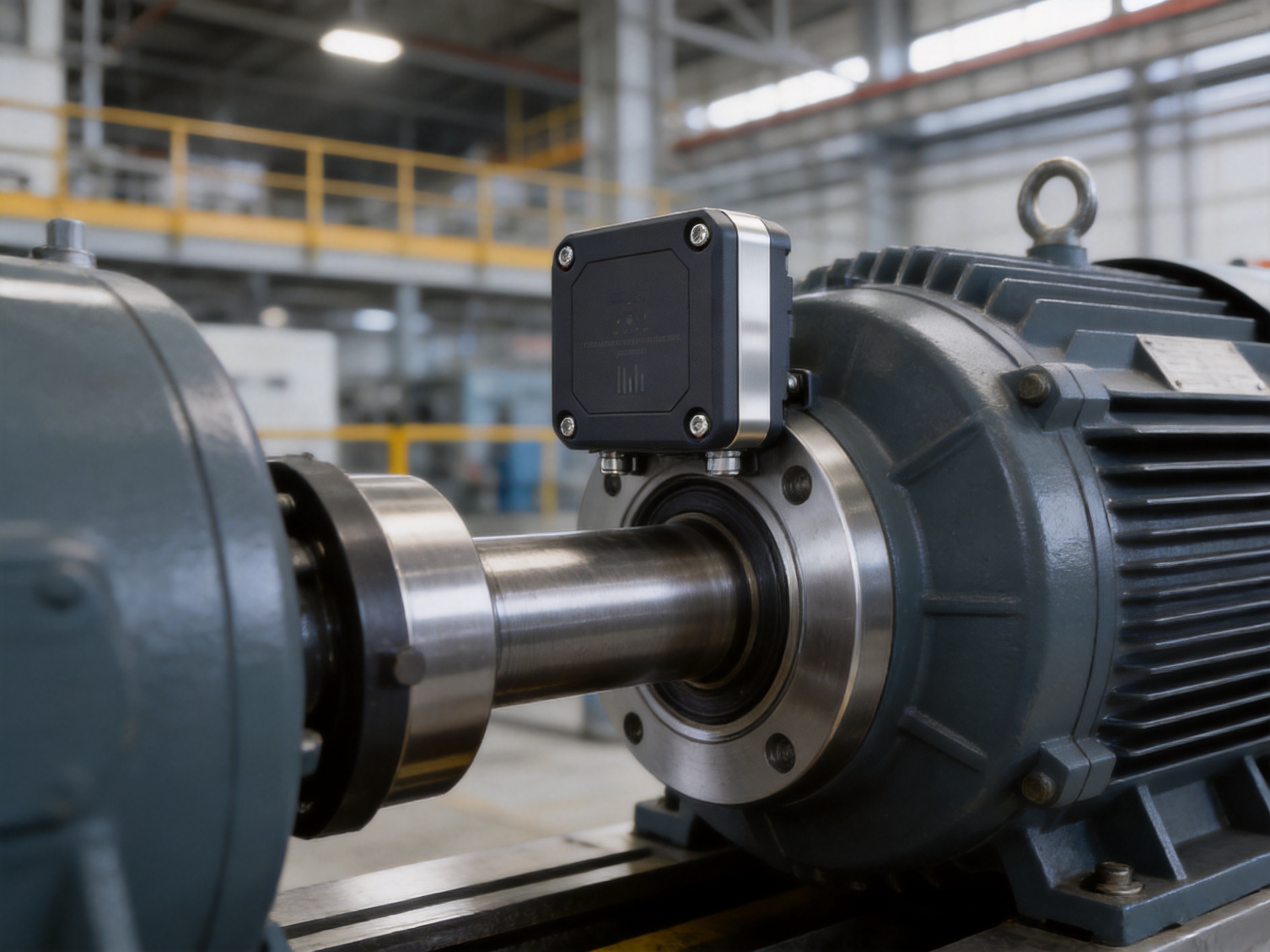
Several installation methods are supported, including bolts, magnets, bases, and adhesive. Bolted installation is often preferred for permanent deployments where a rigid mechanical connection is available. Magnetic mounting can accelerate installation on suitable ferromagnetic surfaces and is useful for temporary surveys or pilot projects. Adhesive mounting may be appropriate where drilling is undesirable, provided that surface preparation, adhesive selection, temperature, and vibration conditions are carefully evaluated.
A rigid installation is essential for meaningful vibration measurement. The contact surface should be clean, flat, and mechanically stable. Loose mounting, soft coatings, excessive adhesive thickness, or poorly tightened fasteners can introduce measurement errors or attenuate vibration signals. Installation direction should be recorded so that data from the three axes can be interpreted consistently.
Applications Across Industrial Sectors
Motors and Gearboxes
Motors and reducers are common targets for wireless condition monitoring. Vibration and temperature measurements can help maintenance personnel identify changes associated with bearings, couplings, lubrication, misalignment, looseness, or overload. A sensor may be installed on the drive-end bearing housing, non-drive-end housing, gearbox casing, or another approved measurement location.
Fans and Blowers
Fans can develop imbalance from dust accumulation, blade damage, corrosion, or uneven wear. They may also suffer from bearing deterioration or structural looseness. Triaxial vibration measurements can help identify directional changes, while temperature monitoring provides additional information about bearing and motor condition.
Pumps and Compressors
Pumps and air compressors often operate continuously and may be distributed throughout a plant. Wireless sensors can simplify monitoring where existing control systems do not provide vibration channels. Trend data may support maintenance planning before a pump failure causes process interruption or before compressor performance declines significantly.
Generators and Power Equipment
Generators and related rotating equipment can benefit from continuous observation of vibration and temperature. Monitoring can be used during normal operation, after overhaul, or during commissioning. Engineers can compare equipment behavior under different loads and identify changes that deserve inspection.
Mining, Metallurgy, and Building Materials
Coal mining, metallurgy, cement, aggregate processing, and building-material production often involve dust, vibration, temperature variation, and physically demanding machinery. A robust wireless sensing approach can help monitor conveyors, crushers, fans, pumps, mills, and other rotating systems while reducing the need to install long sensor cables across harsh environments.
Chemical and Process Industries
Chemical plants and process facilities require careful consideration of environmental, electrical, and hazardous-area requirements. The sensor may be useful for condition monitoring in suitable non-hazardous locations or within an approved system design. Before installation in a classified area, users must verify all relevant certifications and compliance requirements. The supplied product information does not state hazardous-area certification, so this point should be confirmed before use.
Automotive and Machinery Manufacturing
Automotive factories and machinery plants contain large numbers of motors, pumps, fans, conveyors, machining systems, and auxiliary units. Wireless monitoring makes it practical to begin with critical assets, prove value, and then expand. The sensor can contribute to a plant-wide equipment health program linked with maintenance work orders and production performance data.
Advantages over Conventional Monitoring Approaches
The first advantage is measurement integration. A basic temperature transmitter may identify thermal changes but cannot reveal vibration-related mechanical faults. A simple vibration switch may detect an amplitude threshold but cannot provide the richer combination of acceleration, velocity, displacement, temperature, and three-axis information. The KL-WZ35LQ combines these functions in one compact device.
The second advantage is directional coverage. Single-axis devices may miss important information when the strongest vibration occurs in another direction. Three-axis monitoring provides broader visibility and can reduce the number of devices needed at a measurement point.
The third advantage is wireless deployment. Compared with wired sensors, the device can reduce cable installation, conduit work, termination points, and commissioning effort. This is particularly beneficial for retrofit projects where equipment was not designed for condition monitoring.
The fourth advantage is local signal processing. FFT analysis and parameter calculation at the edge can reduce the need to transmit raw high-volume data continuously. This supports a practical balance between useful information, network capacity, and battery life.
The fifth advantage is installation flexibility. Bolts, magnets, bases, and adhesive provide options for permanent, temporary, or pilot deployments. Maintenance teams can select the method that best matches the surface, equipment criticality, access conditions, and project duration.
The sixth advantage is industrial construction. The combination of alloy and engineering plastic materials, IP65 protection, a wide ambient operating range, and a compact enclosure helps the sensor fit demanding factory environments. Users should still evaluate environmental compatibility for each specific application rather than assuming that every location is suitable.
Advanced Manufacturing and Product Development Strengths
The manufacturer’s broader focus is industrial IoT, smart-factory infrastructure, data sensing, and intelligent connectivity. This background is important because a condition-monitoring sensor is most valuable when it functions as part of a complete industrial information system rather than as an isolated instrument.
Product development begins with the integration of sensing, processing, communication, power management, and mechanical protection. Each subsystem must be designed to work with the others. For example, a high-performance accelerometer is not sufficient if the mounting structure is unstable. A powerful wireless radio is not sufficient if battery life is too short. A durable enclosure is not sufficient if the temperature measurement is poorly calibrated.
A capable manufacturing process therefore requires controlled electronic assembly, component verification, firmware loading, sensor calibration, wireless testing, battery inspection, enclosure assembly, and final functional testing. These stages help ensure that the finished product performs consistently across multiple production batches.
Electronic manufacturing quality begins with incoming inspection. Critical components such as acceleration sensors, processors, radio devices, batteries, connectors, and protection components should be checked against approved specifications. Part identification and batch traceability help reduce the risk of unauthorized substitutions or inconsistent materials.
Printed circuit board assembly requires accurate component placement, controlled soldering profiles, inspection of solder joints, and protection against electrostatic discharge. Automated assembly can improve repeatability, while optical inspection and electrical testing can identify defects before the board is integrated into the final housing.
Firmware and embedded algorithm management are equally important. Each device must receive the correct software version, configuration parameters, wireless settings, measurement options, and transmission schedule. Production programming should be controlled and documented so that every unit can be associated with its firmware and test results.
Sensor calibration is a central manufacturing strength for a product that measures vibration and temperature. Temperature channels can be checked against calibrated references at selected points. Vibration channels can be evaluated using controlled excitation, reference instruments, and known frequencies or amplitudes. Calibration data can be retained for quality records and service analysis.
Mechanical assembly also influences measurement quality. The acceleration sensor must be securely integrated into the housing, and the housing must maintain the intended relationship between the sensing element and the mounting surface. Fastener torque, sealing components, battery placement, and enclosure fit should be controlled to support repeatable performance.
Wireless testing can verify transmit power, frequency configuration, packet integrity, communication stability, and basic range behavior under controlled conditions. While laboratory testing cannot reproduce every factory environment, it helps identify device-level faults before shipment. Site-specific radio planning remains necessary for the final installation.
Final inspection can include visual examination, dimensional checks, power consumption verification, sensor data validation, communication tests, and confirmation of enclosure assembly. A structured quality process allows the manufacturer to identify trends, investigate failures, and improve future production.
From Sensor Manufacturing to Smart-Factory Integration
The company’s product portfolio includes broadband power line carriers, wireless temperature monitoring systems, industrial transmitters, thermal gas mass flow meters, and automatic door controllers. This range reflects a broader capability in industrial communication and field-level data acquisition.
A smart factory requires more than individual sensors. It needs reliable communication between field devices, gateways, control systems, databases, dashboards, and maintenance platforms. The company’s experience in power line communication and wireless systems can help customers address the connectivity layer that links equipment data to business and production decisions.
For example, wireless vibration and temperature data may be combined with power consumption from a smart-grid or power-line communication system. A motor that shows increasing vibration while drawing abnormal current may require urgent inspection. A pump with stable vibration but increasing energy consumption may indicate hydraulic or process inefficiency. Combining multiple data sources can produce more meaningful conclusions than examining any single measurement alone.
Industrial transmitters and flow meters can provide process context. Temperature and vibration data describe equipment condition, while pressure, flow, level, or gas measurements describe process performance. Together, these data streams support more complete digital models of industrial assets.
Recommended Deployment Method
Step One: Select Critical Assets
Begin with equipment whose failure would cause safety concerns, production interruption, high repair costs, quality problems, or significant energy loss. Critical motors, pumps, fans, compressors, reducers, and generators are typical starting points.
Step Two: Establish a Baseline
Record the equipment identity, location, operating speed, load, normal temperature, installation position, and normal vibration values. Baseline data should be collected during stable operation and, where possible, under more than one normal load condition.
Step Three: Prepare the Mounting Surface
Clean the surface and remove loose paint, oil, rust, and debris. Select a mounting point with good mechanical coupling to the bearing housing or equipment structure. Avoid thin covers, flexible guards, or surfaces that move independently from the machine component being evaluated.
Step Four: Choose the Installation Method
Use bolts for permanent, high-confidence installation where drilling and tapping are acceptable. Use magnets for suitable metal surfaces and temporary monitoring. Use adhesive only after verifying temperature, vibration, surface condition, and long-term bonding performance.
Step Five: Confirm Wireless Coverage
Install or position the gateway so that radio paths are practical. Check communication quality with the machinery operating and doors or access panels in their normal position. Metal structures and reinforced concrete may require a different gateway location or additional network planning.
Step Six: Configure Data and Alarms
Set the transmission interval, device identity, asset name, measurement units, and alert thresholds. Thresholds should reflect the equipment type and baseline rather than using identical limits for every machine. Trend alarms, rate-of-change alarms, and combined temperature-vibration rules can be considered.
Step Seven: Review Trends
Use the first weeks of operation to refine baselines and understand normal variability. A single high reading should be investigated, but a persistent trend often provides stronger evidence of developing deterioration. Maintenance staff should connect sensor events with inspections, repairs, lubrication, process changes, and operating conditions.
Maintenance and Data Interpretation Considerations
Wireless condition monitoring is most effective when it is connected to a defined maintenance workflow. Alerts should be assigned to responsible personnel, reviewed within an agreed time, and linked to an inspection or work order when appropriate. Without a response process, even accurate sensor data may not prevent failure.
Data quality should be reviewed regularly. Sudden changes may represent real equipment behavior, but they may also result from a loose mounting point, a changed operating mode, a communication problem, or a sensor relocation. Asset records should include photographs, mounting details, axis orientation, installation date, and any changes made during maintenance.
Temperature readings should be compared with similar equipment, historical values, and operating load. Vibration readings should be interpreted according to machine speed, construction, mounting stiffness, and process conditions. The listed accuracy of ±10% at 100 Hz provides an important specification reference, but diagnostic decisions should consider the overall measurement system.
The displacement specification in the supplied technical data is presented as 0.01 to 1.99 mm/s. Because displacement is commonly expressed in millimeters rather than millimeters per second, users should confirm the intended unit and calculation definition with the manufacturer before using this parameter for formal acceptance criteria or alarm settings.
Likewise, the stated environmental entry of 100 g under work environment conditions should be clarified in the final technical documentation. It may refer to a shock or mechanical limit, but the supplied information does not define the test duration or condition. Proper application engineering depends on resolving such details before deployment in severe environments.
Safety, Compliance, and Engineering Boundaries
The IP65 rating indicates protection against dust and water jets under defined test conditions. It does not establish suitability for immersion, high-pressure cleaning, corrosive chemicals, explosive atmospheres, or every outdoor installation. Users should evaluate the complete environmental profile, including humidity, chemical exposure, salt, dust type, mechanical shock, and temperature cycling.
The product information identifies a LoRa frequency band of 470 to 510 MHz. Radio operation must comply with the regulations applicable in the country or region of use. Frequency allocation, transmit power limits, antenna requirements, and certification obligations can differ between markets.
The supplied information does not state explosive-atmosphere certification, functional safety certification, or safety-instrumented-system approval. The sensor should therefore not be treated as a certified protective device unless the manufacturer provides the relevant documentation. It is primarily a condition-monitoring instrument, and critical protection functions should use systems designed and approved for those purposes.
Lithium-ion batteries require appropriate storage, transportation, installation, and disposal procedures. Maintenance teams should follow the manufacturer’s instructions and applicable battery safety rules. Batteries should not be exposed to temperatures or mechanical conditions outside the approved range.
How the Product Supports Sustainable Industrial Operations
Condition monitoring can support sustainability by extending equipment life, reducing unnecessary replacement, lowering emergency repair waste, and improving maintenance efficiency. Early detection may prevent secondary damage in connected systems. A bearing replaced during a planned shutdown usually requires fewer resources than a catastrophic failure that damages a shaft, coupling, housing, and surrounding components.
Better equipment health information can also support energy optimization. Machines that operate with misalignment, friction, imbalance, or poor lubrication may consume more energy than necessary. Combining vibration and temperature trends with energy or process measurements helps organizations identify opportunities for improved efficiency.
Wireless installation can reduce the material and labor associated with extensive signal cabling. This does not eliminate the need for careful network design, but it can make monitoring feasible for more assets and reduce the physical disruption of retrofit projects.
Frequently Asked Questions
What does the sensor measure?
It measures temperature and three-axis vibration. For each vibration axis, the specified outputs include peak acceleration, RMS velocity, and peak-to-peak displacement. The device also supports FFT-based processing and parameter calculation.
Which equipment can be monitored?
Typical applications include motors, reducers, fans, generators, air compressors, centrifuges, water pumps, and other rotating machinery. The product may also be used on equipment in mining, chemical processing, metallurgy, power generation, building materials, automotive manufacturing, machinery production, and research environments, subject to application suitability.
What is the wireless communication method?
The sensor uses LoRa communication and is specified for the 470 to 510 MHz band. The listed outdoor line-of-sight range is up to 300 meters in open and unobstructed conditions.
How frequently does it transmit data?
The supplied specification lists one transmission per minute. The final transmission schedule should be confirmed according to the application, gateway design, required response time, and battery-life objectives.
How long will the battery last?
The sensor uses an 8500 mAh, 3.6-volt lithium-ion battery and has a low-power design. Actual battery life depends on transmission frequency, radio conditions, ambient temperature, measurement processing, retransmissions, and other operating factors. A guaranteed service life should be confirmed for the specific configuration.
Can the sensor replace a wired vibration protection system?
It is designed for wireless condition monitoring and trend analysis. It should not automatically be considered a replacement for high-speed protective systems, emergency shutdown systems, or certified safety instruments. Those functions require separate engineering and approvals.
Can it be installed with a magnet?
Yes. Magnetic installation is one of the listed options when the equipment surface is suitable. For permanent or highly demanding applications, bolted installation may provide stronger mechanical coupling and better long-term repeatability.
Is the sensor waterproof?
The enclosure is specified as IP65. This indicates dust protection and protection against water jets under defined test conditions. It does not indicate suitability for immersion or every washing, chemical, or outdoor condition.
What is the operating temperature range?
The stated ambient operating range is -40 to 85 degrees Celsius. The temperature sensing element has a measurement range of -40 to 125 degrees Celsius. These are different specifications and should be considered separately during installation planning.
Does the product support raw acceleration data?
The product overview states that the intelligent FFT spectrum analysis algorithm enables acquisition of raw acceleration data and calculation of velocity and displacement parameters. The exact data-access method, storage behavior, and communication format should be confirmed for the selected system configuration.
How does the company add value beyond the sensor itself?
The company focuses on industrial IoT, sensing, intelligent connectivity, power line communication, transmitters, flow measurement, and automatic door control. This broader capability can support customers that need to connect field measurements with smart-factory, energy-management, and industrial data-integration projects.
What should be confirmed before ordering?
Users should confirm the final radio configuration, regional compliance, gateway compatibility, data protocol, battery-life expectations, displacement units, mechanical shock specifications, calibration documentation, enclosure details, and any required environmental or hazardous-area approvals.
Conclusion
The KL-WZ35LQ three-axis wireless temperature and vibration sensor provides a practical foundation for industrial equipment condition monitoring. Its combination of triaxial acceleration measurement, temperature sensing, FFT spectrum analysis, LoRa communication, low-power battery operation, and flexible installation gives maintenance teams a broader set of tools for observing machine health.
Its advantages are especially clear when compared with basic temperature-only devices, single-axis sensors, vibration switches, and monitoring systems that require extensive new cabling. The product can collect multiple mechanical indicators from one compact field device and transmit useful information to an industrial IoT platform at a controlled interval.
The manufacturer’s strengths in data sensing, intelligent connectivity, wireless systems, and industrial communication support a broader smart-factory approach. Controlled electronics assembly, embedded software management, calibration, wireless testing, mechanical integration, and final inspection are important elements in producing a reliable industrial sensor.
Successful deployment still depends on correct installation, realistic radio planning, appropriate alarm configuration, environmental evaluation, and a disciplined maintenance response process. When these factors are addressed, the sensor can help organizations move from periodic inspection toward more informed, data-driven, and sustainable equipment management.
References
Analog Devices. ADXL357 High Resolution, Low Noise, Low Power, Three-Axis Digital Accelerometer Technical Information.
International Electrotechnical Commission. Degrees of Protection Provided by Enclosures, IP Code Classification Principles.
International Organization for Standardization. Mechanical Vibration: Evaluation of Machine Vibration by Measurements on Non-Rotating Parts.
International Organization for Standardization. Condition Monitoring and Diagnostics of Machines: General Guidelines for Vibration Monitoring.
LoRa Alliance. LoRaWAN Technology and Low-Power Wide-Area Network Principles.
Product technical information supplied for the KL-WZ35LQ three-axis wireless temperature and vibration sensor.
Industrial IoT and smart-factory engineering practices for equipment condition monitoring, edge processing, and wireless sensor deployment.