


Introduction
Industrial communication networks are becoming increasingly important as factories, substations, mines, oilfield facilities, photovoltaic installations, and transportation systems add more sensors, controllers, meters, and intelligent devices. These applications require reliable data transmission in environments where conventional Ethernet cabling may be difficult, expensive, or vulnerable to electrical interference. Installing new communication cables across high-voltage equipment, moving machinery, elevators, slip rings, or widely distributed industrial assets can involve considerable construction work and extended downtime.
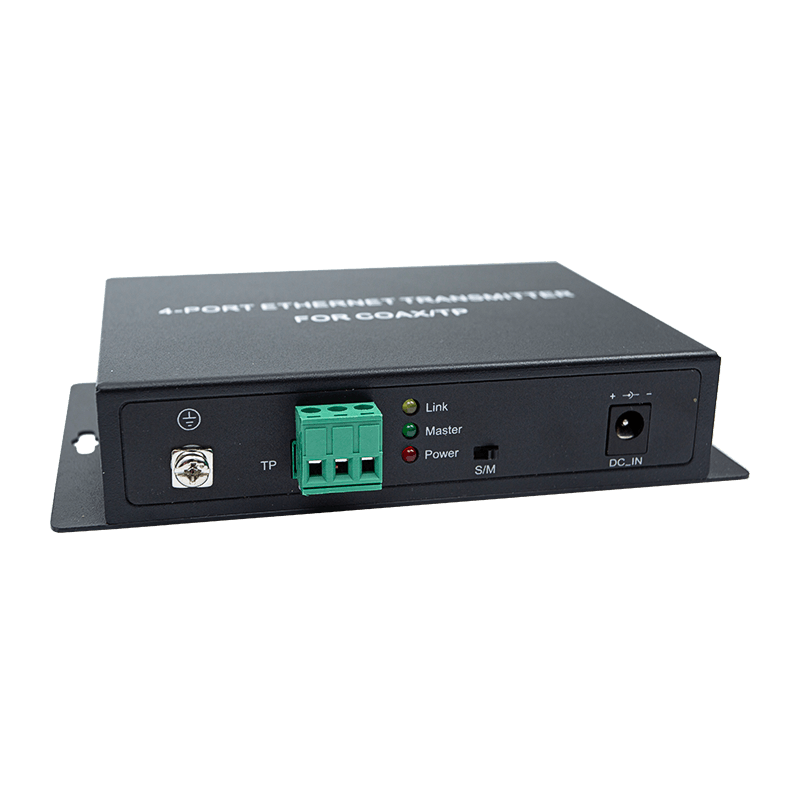
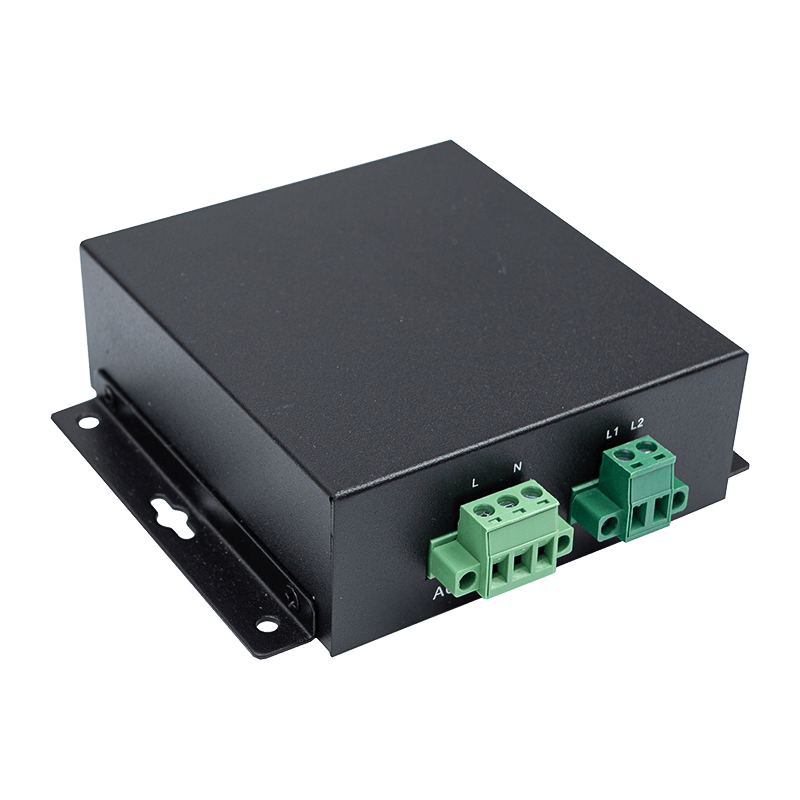
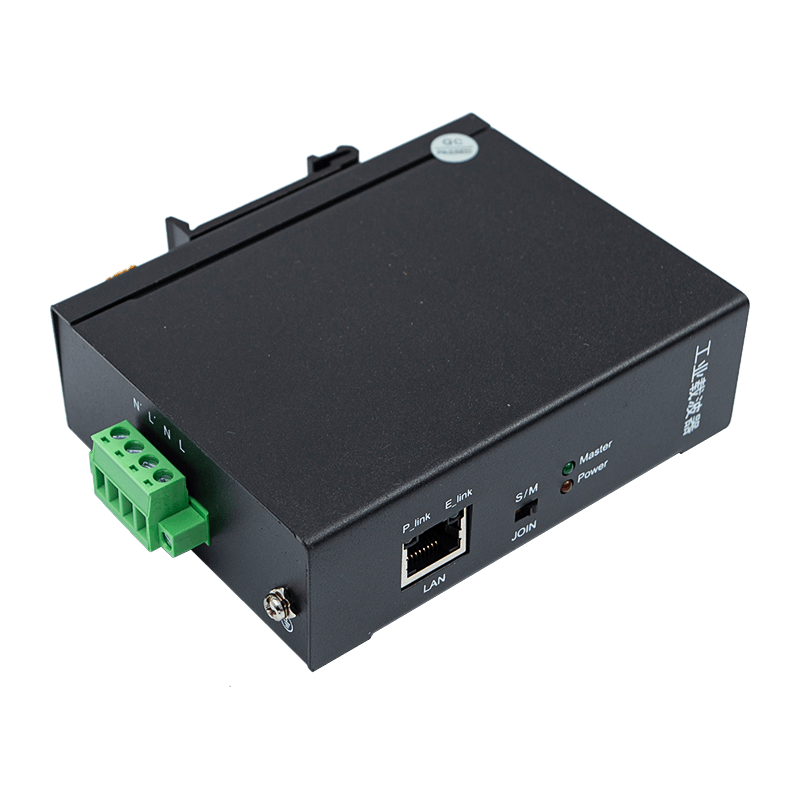
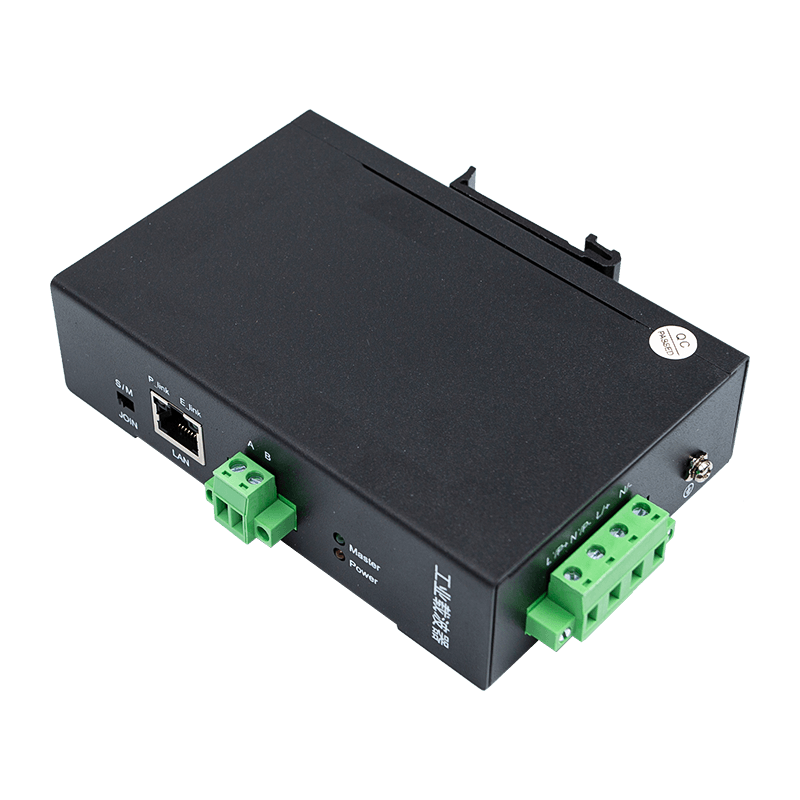
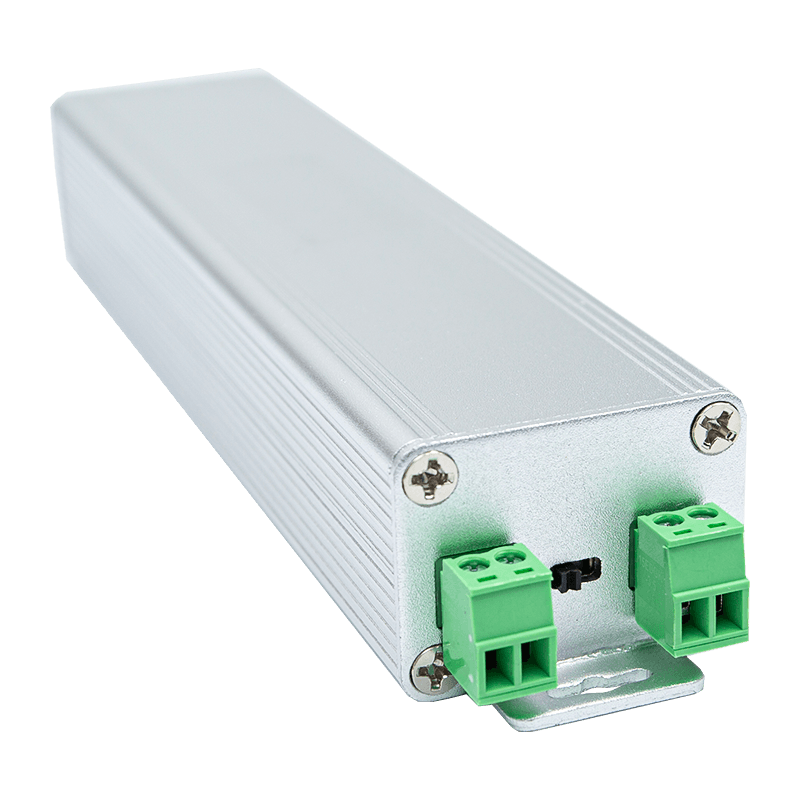
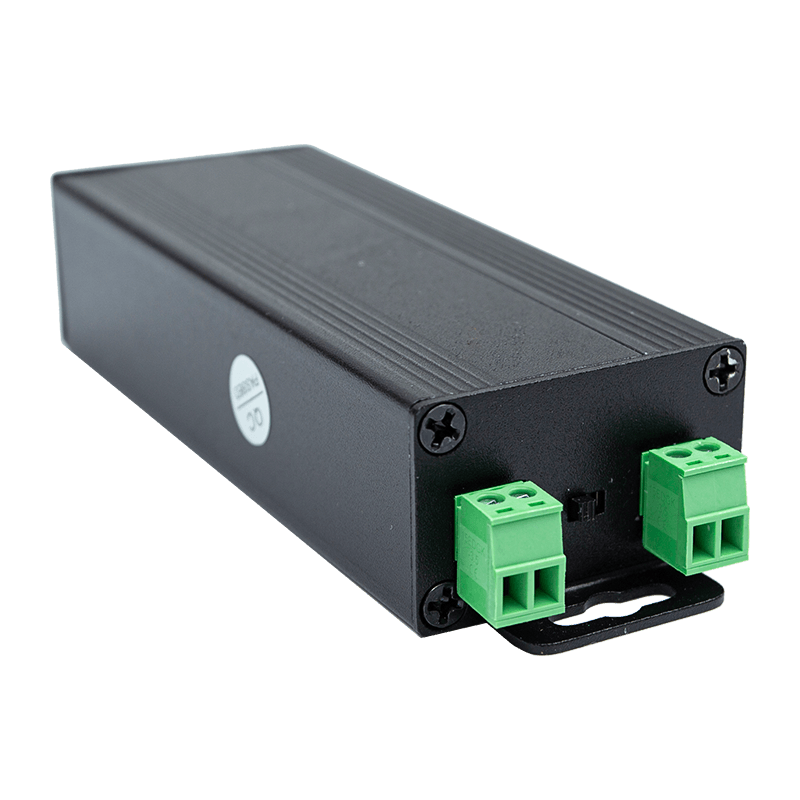
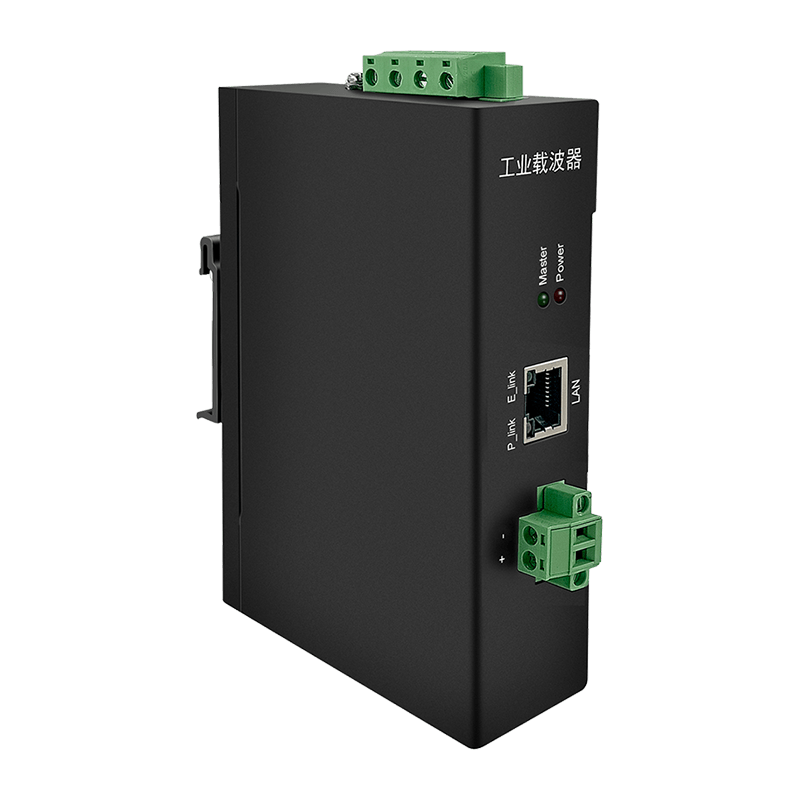
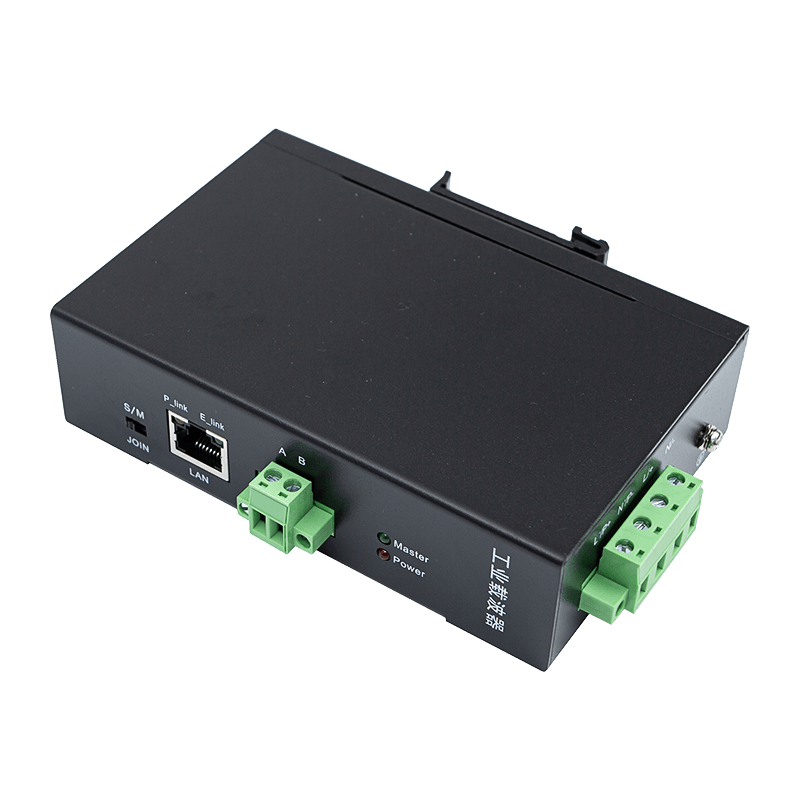
The KS700M4P high-voltage broadband powerline transceiver provides an alternative approach. It uses existing two-core conductors as a communication medium, allowing Ethernet and RS485 data to travel through power lines, twisted pairs, coaxial cables, DC wires, AC wires, parallel conductors, elevator cables, and slip touch cords. Designed for industrial applications, the device combines broadband power line communication, automatic networking, routing, surge protection, multiple protocol capabilities, and industrial temperature performance in one compact DIN-rail-mounted unit.
Its principal value is the ability to add high-speed communication without requiring a completely new cable infrastructure. In suitable applications, the same conductors that provide power or connect moving equipment can also carry digital information. This can shorten installation time, reduce wiring complexity, and make it easier to connect equipment located in electrically demanding or physically inaccessible areas.
Developed by ASY Electronics (JiaXing) Co., Ltd., the KS700M4P is positioned as an industrial-grade communication product for high-voltage power carrier applications. It supports communication on lines with voltages of up to 1200 V, provides an operating temperature range of -40°C to 85°C, and incorporates protection against surge interference up to ±4 kV. These characteristics make it suitable for continuous industrial operation rather than occasional laboratory or office networking.
High-Voltage Broadband Powerline Transceiver
Product Overview
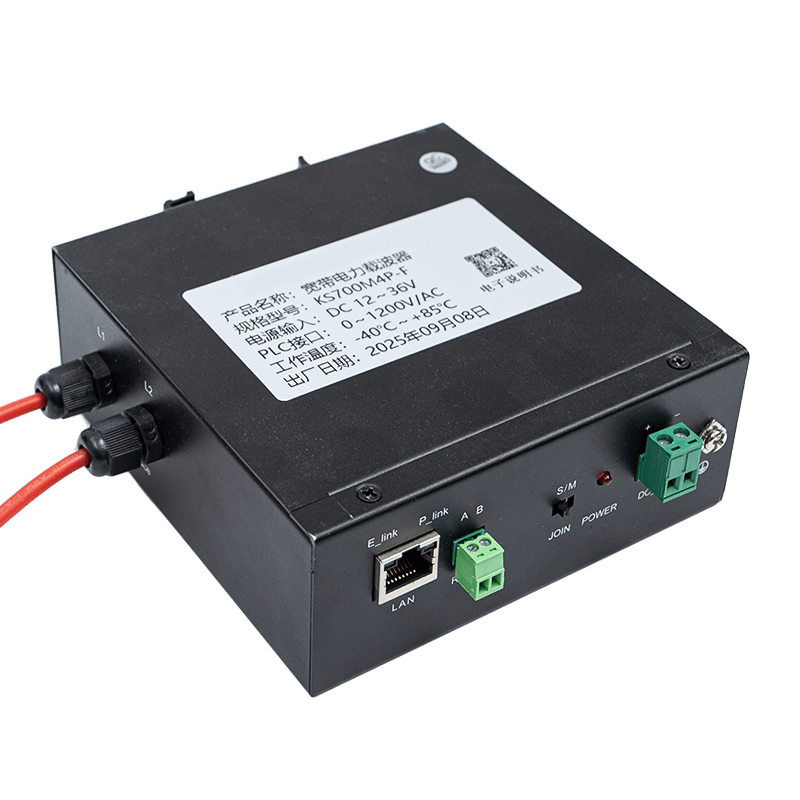
The KS700M4P is a high-voltage broadband powerline transceiver designed to transmit digital data over two-core wires. Its PLC signal port is intended for any suitable two-core cable or conductor system carrying voltages from 0 to 1200 V. The unit includes a coupled circuit and protection design that separates the communication function from the high-voltage environment while enabling data transmission over the connected line.
The device supports an Ethernet port with 10/100 Mbps auto-negotiation and an RS485 serial interface for Modbus RTU communication. This combination allows it to connect modern network equipment and traditional industrial instruments through a single communication platform. Ethernet devices may include industrial computers, programmable logic controllers, gateways, monitoring servers, cameras, and edge controllers. RS485 devices may include meters, sensors, variable-frequency drives, protection equipment, and instruments using Modbus RTU.
Broadband communication is based on OFDM modulation over a carrier-frequency range of 2 to 28 MHz. OFDM is well suited to complex industrial channels because it divides the available bandwidth into multiple subcarriers. Depending on line conditions, the communication system can use the available subcarriers efficiently and maintain a reliable connection when portions of the spectrum experience attenuation or interference.
The transceiver supports automatic networking and transparent data transmission. In practical terms, connected equipment can communicate without requiring the user to redesign every data packet or develop a special application-layer conversion system. The device can function as part of bus, star, tree, or hybrid network topologies, giving system designers flexibility when adapting the communication network to the physical layout of a site.
A master-slave DIP-switch arrangement provides a straightforward method of configuring the host and extension units. The M-side is used as the host and the S-side as the slave. One host can communicate with one slave or with multiple slave units, depending on the network architecture and application requirements. This makes the product suitable for point-to-point links as well as distributed communication systems.
Core Product Specifications
| Item | Specification |
| Product type | High-voltage broadband powerline transceiver |
| Model | KS700M4P |
| Power supply | DC 12–36 V |
| PLC signal line | Any suitable two-core cable, power line, slip touch cord, or slip-ring cable |
| Supported line voltage | 0–1200 V on the communication line |
| Modulation | OFDM |
| Carrier frequency | 2–28 MHz |
| Ethernet interface | 10/100 Mbps auto-adaptive |
| Serial interface | RS485, Modbus RTU |
| RS485 baud rate | Adjustable from 1200 to 115200 bps |
| Data delay | Within 10 ms |
| Packet loss probability | Less than 0.1‰ under specified operating conditions |
| Power consumption | Not more than 3 W |
| Encryption | AES-128 bit |
| Operating temperature | -40°C to 85°C |
| Operating humidity | 20%–95%, non-condensing |
| Installation | TS35/TS35 DIN rail |
| Dimensions | 129 × 126 × 50 mm |
| Weight | Approximately 610 g |
Communication over Existing Industrial Conductors
The most important advantage of powerline communication is that it can use infrastructure already present in the facility. In many industrial systems, the physical path between two devices already contains a pair of conductors, but those conductors were originally installed only for power delivery or equipment connection. Replacing them with shielded Ethernet cable or fiber optic cable may require machine shutdowns, new cable trays, additional conduits, or mechanical modifications.
The KS700M4P makes it possible to evaluate the existing conductors as a potential communication channel. The product can be used with AC wires, DC wires, twisted pairs, coaxial cables, parallel lines, elevator cables, slip touch cords, and slip-ring cable systems. This broad compatibility is particularly valuable where cables move, rotate, pass through narrow mechanical assemblies, or operate in areas that are difficult to access.
For example, an elevator communication system may need to exchange data between a fixed controller and equipment mounted on a moving car. A conventional fixed network cable may not tolerate continuous movement, while an elevator traveling cable already provides a practical physical path. Similarly, a rotating machine or crane may use a slip ring or slip touch cord to transfer power. The same conductor system can potentially support communication through a suitable PLC link.
In substations and renewable-energy facilities, equipment can be distributed over large areas with high electrical noise and challenging environmental conditions. Powerline communication may reduce the need to install separate data cables alongside power cables. In mining and oilfield environments, the use of existing conductors can simplify deployment in tunnels, platforms, collection stations, and remote equipment areas.
Use of existing wiring does not eliminate the need for engineering verification. Cable length, conductor construction, grounding, load characteristics, electrical noise, switching equipment, insulation condition, and line topology all influence communication performance. A professional installation should include a site survey, insulation and safety assessment, communication testing, and appropriate high-voltage installation procedures.
High-Voltage Industrial Design
Many commercial powerline communication products are intended for residential or low-voltage environments. Industrial applications introduce additional requirements, including greater voltage separation, stronger surge protection, wider temperature tolerance, mechanical durability, and stable operation over long periods. The KS700M4P is designed around these industrial conditions rather than treating them as secondary use cases.
The product documentation identifies support for communication on power lines up to AC 1200 V and indicates that the integrated coupled circuit and protection structure meet the requirements associated with 1140 V safety certification specifications. This design orientation allows the transceiver to be considered for high-voltage industrial communication scenarios where ordinary networking devices would not be appropriate.
The device has a nominal DC power supply range of 12–36 V, while its PLC signal port is designed for the high-voltage communication line. Separating the low-voltage electronic supply from the high-voltage signal environment is a central aspect of safe system design. Correct installation still requires suitable enclosures, wiring distances, insulation coordination, grounding practices, disconnecting procedures, and compliance with all applicable local electrical regulations.
Surge and transient events are common in industrial systems. Motors, contactors, inverters, transformers, switching power supplies, and long outdoor cable runs can introduce sudden voltage changes. The KS700M4P is specified with a surge interference resistance level of ±4 kV. This does not mean that every installation can disregard external protection. Instead, it indicates that the product includes an industrial-oriented protection capability that can contribute to network stability when combined with an appropriate system-level protection design.
The wide operating temperature range of -40°C to 85°C supports deployment in equipment rooms, outdoor cabinets, substations, industrial production areas, mining installations, and renewable-energy facilities. The specified humidity range is 20%–95% without condensation. Where condensation, dust, corrosive gases, or water exposure may occur, the transceiver should be installed inside a suitably rated cabinet or enclosure.
Broadband OFDM Performance
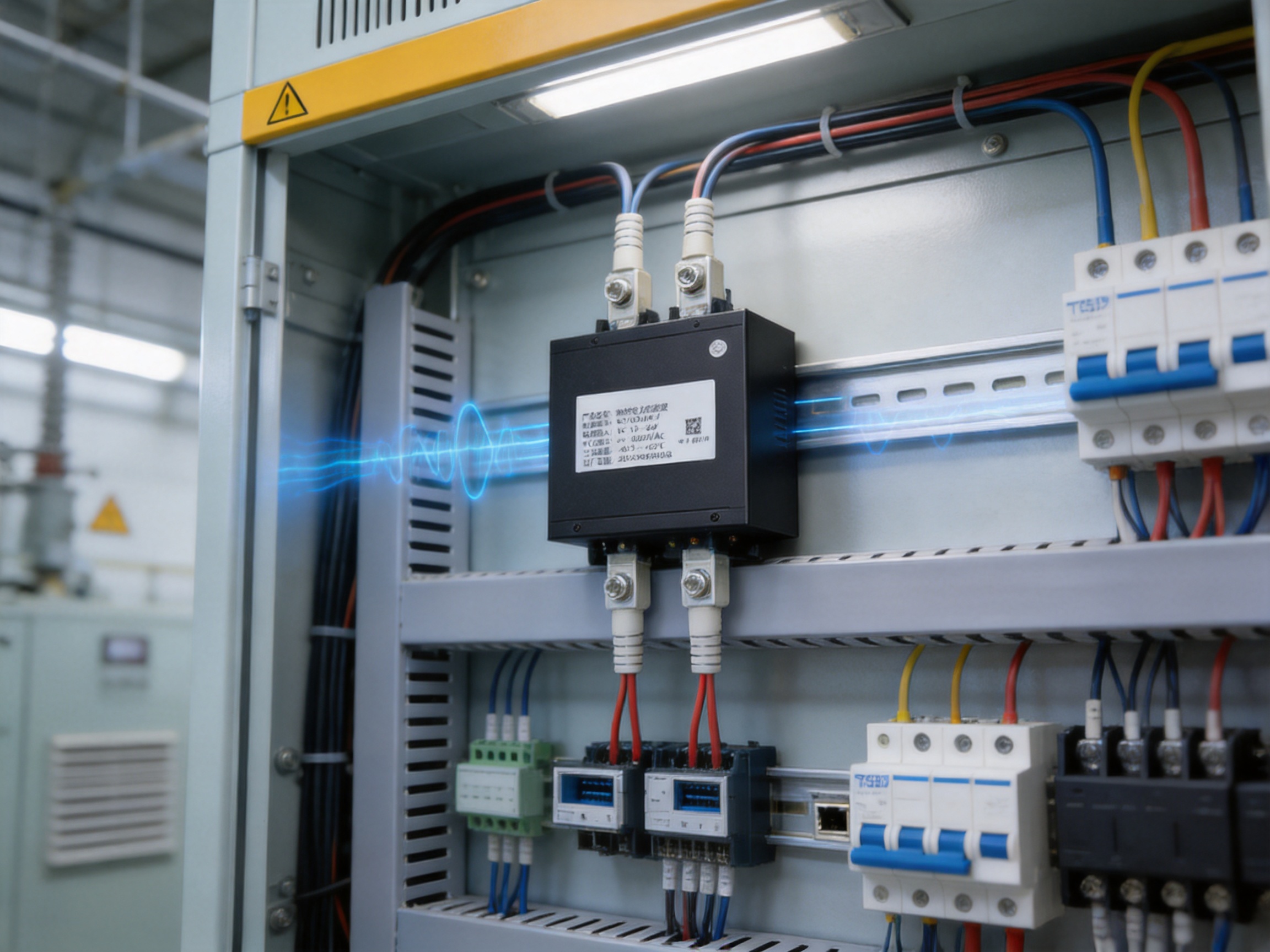
The KS700M4P uses OFDM modulation within the 2–28 MHz carrier-frequency range. OFDM is widely used in broadband communication because it divides a high-speed data stream across many closely spaced subcarriers. This structure can improve resilience in channels affected by frequency-selective attenuation, reflections, impedance variation, and localized interference.
Industrial power lines rarely behave like ideal communication cables. Their electrical characteristics can change according to connected loads, cable length, branch connections, motor states, switching conditions, and equipment operating cycles. A broadband multicarrier system can adapt more effectively to these changing conditions than a narrowband design that depends on a small frequency window.
The product supports a maximum communication speed of up to 1000 Mbps in the broader product description, while the technical interface specification identifies 10/100 Mbps Ethernet auto-adaptation. These figures should be understood in context. The available PLC physical-layer rate, the Ethernet interface rate, the selected hardware and software version, network topology, cable conditions, and protocol overhead all affect usable application throughput. System integrators should confirm the exact ordered configuration and conduct a performance test on the target cable system.
Data delay is specified as within 10 ms, and packet loss probability is specified as less than 0.1‰ under stated conditions. These characteristics are valuable for industrial monitoring, control, equipment status collection, and data integration. The product is not merely intended to provide a nominal link light; it is designed to carry operational information with predictable behavior in an industrial network.
The maximum transmission distance also depends on the installation. Product information describes point-to-point distances reaching several hundred meters and, under suitable conditions, up to approximately 1000 meters. The technical data lists a maximum point-to-point distance of 500 meters and identifies a relay configuration capable of reaching 3–5 kilometers through up to 10 relay levels. The difference reflects the influence of product versions, line conditions, and network configuration. Before final deployment, the required distance should be confirmed against the exact model variant and tested on the actual cable path.
Network Topology and Flexible Expansion
Industrial facilities rarely have a simple straight-line layout. One production line may contain several machines, a central control cabinet, remote sensors, a measurement station, and a gateway to the enterprise network. A communication solution that supports only a single point-to-point link may require additional converters and complex wiring. The KS700M4P supports multiple network structures, including bus, star, tree, and hybrid topologies.
A bus topology can be useful when multiple devices are arranged along a production line or power distribution route. A star structure can centralize several links around a cabinet or control room. A tree arrangement can connect a main control point to several branches serving separate production areas. Hybrid networks combine these structures to match the physical and electrical layout of a site.
The built-in routing algorithm helps the units organize communication automatically. Automatic networking can reduce commissioning work and make it easier to add nodes to a distributed system. The relay version can extend communication through multiple stages, with product information indicating support for up to 10 relay levels and an overall transmission range of approximately 3–5 kilometers under appropriate conditions.
Automatic networking does not remove the need for network planning. Engineers should consider broadcast traffic, multicast behavior, bandwidth allocation, redundancy, node placement, and the effect of branch lines. Nevertheless, the integrated routing function reduces the amount of specialized networking equipment required at each point and can simplify the design of a distributed industrial communication system.
The product supports IGMP multicast protocols and up to 128 nodes according to the technical information. This can benefit applications in which multiple endpoints need the same information, such as synchronized monitoring, distributed display systems, coordinated control messages, or video and status distribution. Multicast should be planned carefully, particularly on networks carrying both control traffic and high-volume data.
Ethernet and RS485 Integration
One of the product's practical strengths is its support for both Ethernet and RS485. Many industrial sites contain a mixture of newer Ethernet-based devices and established serial instruments. Replacing all existing devices is often uneconomical and may create unnecessary project risk. A transceiver that supports both communication types can serve as a bridge between current infrastructure and future digital expansion.
The Ethernet interface supports 10/100 Mbps auto-adaptation and is compatible with common industrial and information-technology protocols. The listed standards and protocols include TCP/IP, UDP, Profinet, HomePlug, Modbus TCP, IEEE 802.3, IEEE 802.3u, IEEE 802.3ab, IEEE 1905.1, IEEE 1900, and IEEE 1901. Actual application compatibility should be verified according to the device firmware, network architecture, and protocol implementation.
The RS485 interface supports Modbus RTU, with an adjustable baud rate from 1200 to 115200 bps. This allows the transceiver to connect to energy meters, temperature instruments, flow instruments, transmitters, programmable controllers, and other serial devices. Modbus RTU remains widely used because of its simple structure, broad equipment availability, and suitability for multidrop industrial networks.
Transparent transmission is especially useful when the transceiver is placed between an existing device and a remote supervisory system. The communication link can transport the original application data without requiring a major redesign of the field device. This reduces software changes and can help organizations modernize their networks in stages.
For a typical project, Ethernet equipment may be connected at one end of a PLC link and a remote PLC, industrial computer, or gateway at the other end. Alternatively, a control system may communicate with a remote Modbus RTU instrument through the RS485 interface. A mixed installation can use Ethernet for the backbone and RS485 for field-level equipment, depending on the requirements of each zone.
Security and Data Reliability
Industrial communication networks increasingly connect to enterprise systems, cloud platforms, maintenance tools, and remote monitoring applications. Protecting data against unauthorized observation or unintended access is therefore an important consideration. The KS700M4P specifies AES-128-bit encryption, providing a layer of protection for communication transmitted across the powerline network.
Encryption should be viewed as one component of a broader cybersecurity strategy. Network segmentation, controlled access, secure credentials, firewall policies, firmware management, logging, and physical protection remain important. However, having encryption integrated into the communication solution is an advantage compared with simple unmanaged links that transmit data without a dedicated security mechanism.
Data reliability also depends on the communication environment. The stated data delay of within 10 ms can support responsive monitoring and control applications, while the specified packet loss probability of less than 0.1‰ indicates a design focus on dependable transmission. Engineers should evaluate these characteristics under actual operating conditions, including motor startup, inverter switching, peak load periods, and simultaneous network traffic.
For mission-critical control, the network should be designed with appropriate fail-safe behavior. The communication link should not be the sole protection mechanism for hazardous machinery or high-voltage equipment. Independent electrical protection, emergency shutdown functions, interlocks, and local control safeguards must remain in place.
Applications in Industrial and Energy Systems
Mining Communication
Mining environments often combine long cable routes, high electrical noise, mobile equipment, dust, vibration, and difficult access. Communication may be required between underground or remote machinery, monitoring points, control stations, and surface systems. Powerline communication can use existing conductors and reduce the need to install additional communication cables through tunnels or equipment areas.
The KS700M4P's wide temperature range, surge protection, industrial operating capability, and support for long-distance relay networking make it a candidate for selected mining communication systems. Applications may include equipment status monitoring, energy data collection, remote instrument access, and communication between local controllers and a central supervisory system. Any mining deployment must follow the specific safety, explosion-protection, and certification requirements applicable to the site.
Oilfield and Process Collection Platforms
Oilfield collection platforms and process facilities commonly contain distributed instruments, pumps, motors, meters, and control devices. New communication cable installation may be difficult because of existing equipment, hazardous areas, long distances, or limited cable routes. The ability to transmit data through suitable existing conductors can support phased automation upgrades.
RS485 Modbus RTU can connect flow instruments, pressure devices, temperature sensors, and energy meters, while Ethernet can connect gateways, controllers, or monitoring computers. The product's relay capability may help connect separated equipment groups where a direct cable route is not practical.
Substations and Smart Grid Infrastructure
Substations require dependable communication among monitoring devices, protection-related equipment, meters, gateways, and control systems. Electrical noise and transient events are significant considerations. A high-voltage PLC solution with an integrated coupled circuit and surge protection can provide an additional communication option for selected monitoring and data-collection functions.
Smart grid projects often involve distributed assets and a mixture of legacy and modern equipment. The KS700M4P can support communication over suitable power lines while providing Ethernet and RS485 interfaces at the equipment level. It may be used for operational monitoring, energy measurement, equipment diagnostics, and local data aggregation, subject to system-level engineering and utility requirements.
Photovoltaic and Renewable-Energy Installations
Photovoltaic facilities may contain many distributed inverter units, combiner boxes, meters, environmental sensors, and monitoring stations. The distance between devices and the presence of power cables can make dedicated communication wiring expensive. Powerline communication offers a method for evaluating whether existing electrical conductors can also carry monitoring data.
In renewable-energy sites, temperature changes, outdoor exposure, switching transients, and long cable routes can affect network performance. The industrial temperature rating and surge-oriented design of the KS700M4P are beneficial for these conditions. Proper enclosures, grounding, lightning protection, and electromagnetic compatibility practices remain essential.
Elevators, Cranes, and Moving Machinery
Elevators and cranes frequently use traveling cables, slip rings, or slip touch cords. These systems require communication between fixed control equipment and moving components. Conventional network cables may be difficult to install or maintain in a moving arrangement. Because the KS700M4P can communicate over elevator cables and slip-related conductors, it can be considered for data links in moving machinery systems.
Potential functions include status data, service information, equipment diagnostics, sensor values, and controller communication. Mechanical movement, cable bending radius, contact quality, electrical noise, and safety requirements must be evaluated before deployment. A communication transceiver should complement, not replace, dedicated safety circuits and emergency systems.
Factory Automation and Equipment Monitoring
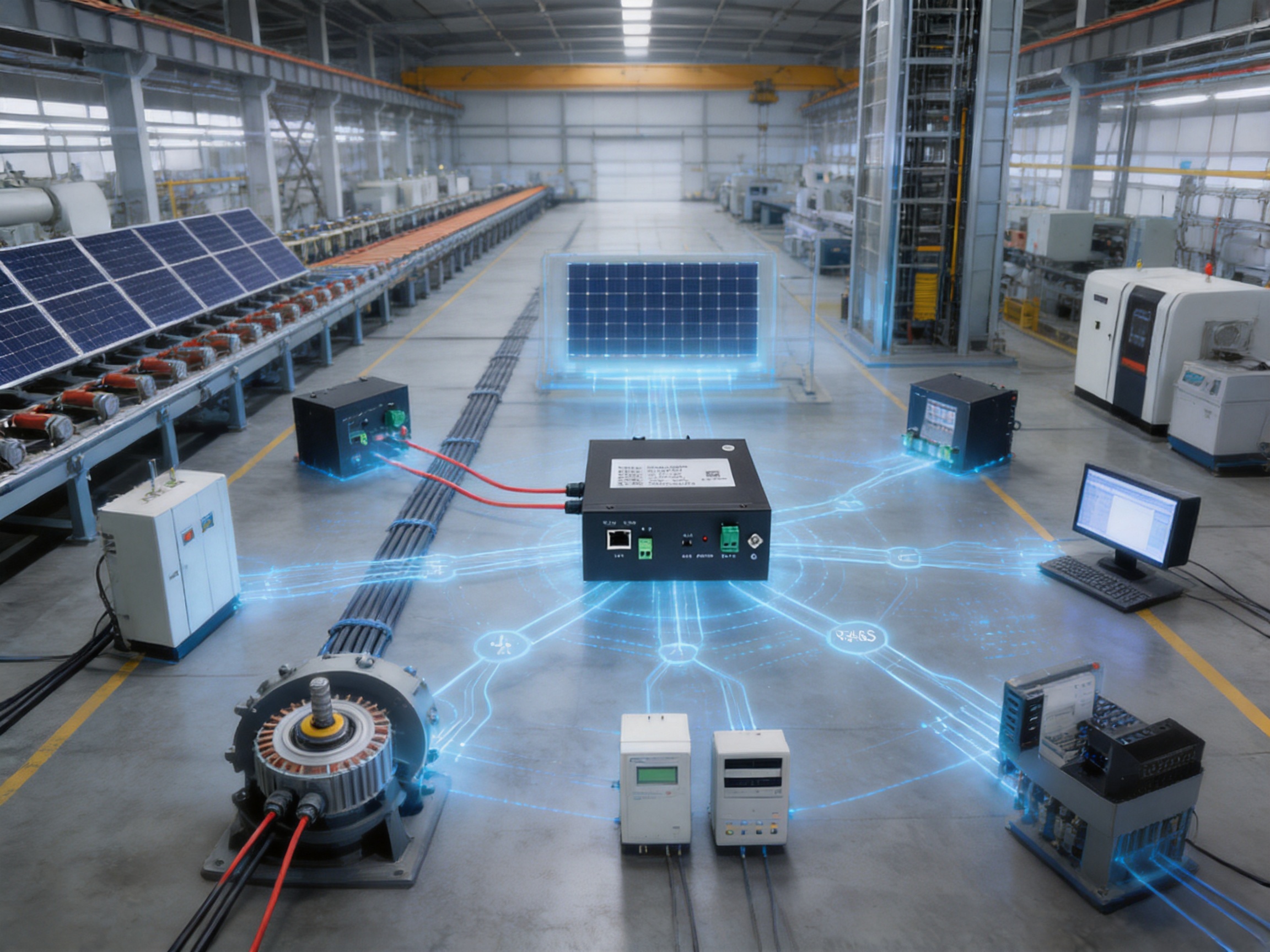
In a factory, production equipment may be arranged across several workshops or production cells. Some machines may have Ethernet ports, while older instruments may rely on RS485. The KS700M4P can help connect these different generations of equipment through existing power or control conductors.
Typical data may include motor status, operating hours, energy consumption, temperature, pressure, flow, alarm conditions, production counts, and maintenance information. By transferring this information to an edge gateway or industrial server, manufacturers can build equipment condition monitoring and energy-management systems without replacing every machine at once.
Manufacturing Strengths and Quality-Oriented Production
For industrial communication products, performance depends not only on the circuit design but also on manufacturing consistency. A high-voltage PLC device contains communication electronics, coupling components, isolation structures, surge protection elements, connectors, mechanical housing, and firmware. Each part must work reliably as a complete system.
ASY Electronics is a high-tech enterprise focused on smart-factory development, data sensing, and intelligent connectivity. Its product portfolio includes broadband powerline carriers, wireless temperature monitoring systems, industrial transmitters, thermal gas mass flow meters, and automatic door controllers. This product range reflects experience across sensing, measurement, communication, and industrial control rather than a focus on only one isolated component.
The company's manufacturing strengths can be understood through the integrated nature of its products. A communication device for high-voltage use must combine hardware design, coupled-circuit development, embedded communication functions, protocol support, protection engineering, mechanical design, and application adaptation. The KS700M4P embodies this integration by bringing routing, transparent transmission, Ethernet, RS485, Modbus support, encryption, and industrial protection into one device.
A quality-oriented manufacturing process for this type of product should include controlled component selection, printed circuit board assembly, soldering inspection, functional testing, communication testing, interface verification, enclosure inspection, and final aging or reliability evaluation. High-voltage products also require careful review of creepage, clearance, insulation, coupling components, protection paths, and connector construction. These process areas are directly related to stable operation in industrial environments.
The company's smart-factory mission emphasizes efficient, reliable, and sustainable industrial productivity. This orientation is relevant to the KS700M4P because the product is intended to improve connectivity while reducing the need for additional cabling and equipment replacement. By using existing conductors where technically appropriate, customers may reduce installation materials, construction effort, and interruption to production.
Customization is another important manufacturing strength. The product family is described as having multiple hardware versions, including standard, high-bandwidth, long-distance, and broadcast versions. Software options include high-performance, relay, and slip touch cord dedicated versions. This modular approach allows the manufacturer to adapt communication behavior to different line conditions and application needs rather than forcing every customer to use an identical configuration.
For buyers, customization should be handled through a documented technical process. The customer should provide line voltage, cable type, expected distance, topology, number of nodes, Ethernet traffic, RS485 devices, temperature range, installation location, and required protocols. The manufacturer can then help identify the appropriate hardware and software configuration, define test conditions, and clarify performance expectations.
Advantages Compared with Conventional Alternatives
Reduced Need for New Communication Cabling
The strongest competitive advantage is the ability to communicate through existing two-core conductors. Conventional Ethernet deployments may require new twisted-pair cable, fiber, conduits, cabinets, and termination points. In difficult industrial locations, the installation labor can exceed the cost of the network electronics. PLC can reduce this burden when the existing line is suitable.
Broader Industrial Compatibility
Many ordinary networking devices are limited to low-voltage indoor environments. The KS700M4P is designed for industrial temperatures, high-voltage powerline communication, surge interference, DIN-rail installation, and continuous operation. These capabilities expand the range of possible deployment environments.
Combination of Ethernet and Serial Connectivity
A product supporting both Ethernet and RS485 can reduce the number of protocol converters and communication boxes in a mixed-generation plant. It allows modern network systems to communicate with established Modbus RTU equipment while preserving existing field devices.
Flexible Distance and Topology Options
Point-to-point operation, relay networking, bus structures, star arrangements, tree networks, and hybrid layouts give system designers more choices. The relay version's support for up to 10 levels can be valuable where a facility is too large for a single direct connection.
Integrated Protection and Industrial Reliability
The integrated coupled circuit, high-voltage application orientation, ±4 kV surge interference specification, wide temperature range, and industrial-grade continuous operation distinguish the product from basic consumer PLC adapters. These features support a more complete industrial communication solution.
Security and Protocol Support
AES-128-bit encryption, IGMP multicast support, TCP/IP and UDP networking, Modbus TCP, Modbus RTU, Profinet support, and IEEE-related compatibility provide a useful foundation for modern industrial data systems. The exact supported feature set should be confirmed for the selected product version.
Installation and Commissioning Guidance
Successful deployment begins with a line survey. Engineers should identify the conductor type, line voltage, length, branches, connected loads, switching devices, grounding arrangements, and expected operating temperature. The survey should also determine whether the communication line is shared with equipment that may introduce excessive noise or dangerous transients.
The transceiver is powered by DC 12–36 V and is installed on a TS35 DIN rail. A suitable cabinet should provide physical protection, thermal management, separation from high-energy switching equipment, and access for maintenance. Signal and power wiring should be arranged according to applicable electrical standards and the manufacturer's installation instructions.
The host and slave relationship is configured using the master-slave DIP switches. A typical point-to-point installation places an M-side unit at the main control cabinet and an S-side unit at the remote equipment. For a multidrop or relay arrangement, the network should be planned so that each segment has a clear communication purpose and suitable signal conditions.
After installation, commissioning should include power verification, interface testing, link-status confirmation, Ethernet throughput testing, RS485 communication testing, Modbus register verification, and packet-loss observation. Tests should be performed both when major equipment is idle and when motors, drives, or switching loads are operating.
For a new project, it is advisable to begin with a pilot link. The pilot should use the actual cable type and approximate line length expected in the final installation. It should test the intended protocol traffic, network topology, environmental conditions, and transient behavior. Results from the pilot can guide the selection of standard, high-bandwidth, long-distance, relay, broadcast, or slip touch cord configurations.
Maintenance and Lifecycle Management
Industrial communication equipment should be included in the site's preventive-maintenance program. Maintenance personnel can inspect cabinet temperature, connector condition, DC supply stability, grounding, cable insulation, alarm logs, and communication statistics. A gradual increase in packet loss or retransmissions may indicate cable deterioration, a new noise source, loose connections, or a failing connected device.
Because the device supports automatic networking and transparent transmission, documentation is important. Each unit should be labeled with its network position, host or slave role, connected line, IP-related information where applicable, RS485 settings, and associated equipment. A network diagram should show relay levels, branch points, and control-room connections.
Environmental conditions should be monitored. The specified operating humidity is 20%–95% without condensation, so cabinets exposed to rapid temperature changes may require heaters, ventilation, or other environmental controls. Dust, corrosive gases, water, vibration, and electromagnetic exposure should be controlled according to the installation environment.
Lifecycle management should also include spare units, configuration records, firmware control, and replacement procedures. The manufacturer can support long-term projects more effectively when customers provide model versions, application conditions, and historical test information. For large installations, a standard commissioning and maintenance template can reduce troubleshooting time.
How to Select the Appropriate Version
The KS700M4P product family offers multiple versions for different application conditions. The standard version may be appropriate for ordinary point-to-point communication where the cable length and traffic requirements are moderate. A high-bandwidth version may be considered when the application requires greater data capacity, subject to the interface and line limitations.
A long-distance version can be evaluated for extended cable routes, while a relay version is useful where communication must pass through several stages. A broadcast version may be considered when one source needs to distribute information to multiple endpoints. The dedicated slip touch cord version is intended for moving or slip-related conductor systems and should be selected after a mechanical and electrical assessment.
Selection should consider more than distance. Important factors include line voltage, conductor impedance, cable branches, expected traffic, multicast requirements, node count, environmental conditions, surge exposure, Ethernet protocols, RS485 baud rate, and required security. The application should also distinguish between monitoring data, control data, video, firmware transfer, and safety-related functions.
Customers should request confirmation of the exact performance parameters for the ordered hardware and software combination. In particular, the published descriptions refer to different maximum distances and communication-speed conditions. Confirming these details before production deployment helps prevent design misunderstandings and supports accurate project budgeting.
Benefits for Industrial Digital Transformation
Industrial digital transformation is not limited to installing new software. It requires practical access to equipment data. If machines cannot communicate reliably, energy management, predictive maintenance, production analysis, and remote service systems cannot reach their full potential.
The KS700M4P supports a gradual approach to connectivity. Existing equipment can remain in service while its data becomes accessible through Ethernet or RS485. This can help manufacturers avoid a disruptive complete replacement program. Data can be collected first, analyzed next, and integrated with higher-level systems as the project develops.
For equipment condition monitoring, the transceiver can carry data from sensors, meters, and controllers to an industrial gateway. For energy management, it can connect distributed measurement points over existing electrical routes. For production optimization, it can help move status and performance information from remote machinery to a central platform.
The device also supports the broader concept of a smart factory by connecting the edge layer with industrial data systems. ASY Electronics' focus on data sensing and intelligent connectivity complements this role. Communication is the foundation that allows sensing devices, transmitters, flow meters, temperature monitoring systems, and control equipment to participate in a unified operational view.
Q&A
What is the KS700M4P used for?
The KS700M4P is used to transmit Ethernet and RS485 data over suitable two-core conductors, including AC lines, DC lines, twisted pairs, coaxial cables, elevator cables, slip touch cords, and slip-ring cables. It is intended for industrial communication, monitoring, automation, and smart-grid applications.
Can it communicate over a 1200 V power line?
The product is designed for PLC signal lines with voltages up to 1200 V and is described as suitable for high-voltage power carrier communication. Installation must follow applicable high-voltage safety practices, and the exact application should be checked against the product version, line conditions, and local regulations.
What power supply does the transceiver require?
The device requires a separate DC 12–36 V supply for its electronics.
Does it support Modbus?
Yes. The RS485 interface supports Modbus RTU, with an adjustable baud rate from 1200 to 115200 bps. The Ethernet-related specifications also list Modbus TCP among the supported protocols.
What is the maximum communication distance?
Distance depends on cable type, line conditions, product version, topology, and environmental interference. The technical information lists a point-to-point distance of up to 500 meters and a relay configuration of approximately 3–5 kilometers through up to 10 relay levels. Other product information refers to point-to-point distances reaching approximately 1000 meters under suitable conditions. The exact requirement should be confirmed and tested for the selected version.
Can several slave units connect to one host?
Yes. The product supports master-slave networking in which one M-side host can communicate with one slave or multiple S-side slave units, subject to the selected topology and network conditions.
What network topologies are supported?
The product supports bus, star, tree, and hybrid network structures. Its automatic networking and routing functions can help organize the connected units.
Is the product suitable for outdoor installations?
It can be considered for outdoor industrial applications when installed in a suitable protective cabinet. The specified operating temperature is -40°C to 85°C, and the humidity specification is 20%–95% without condensation. Protection from water, dust, corrosion, condensation, and lightning must be provided as required by the site.
Does it provide data security?
The product specifications identify AES-128-bit encryption. Customers should also implement network segmentation, access control, secure credentials, physical protection, and appropriate industrial cybersecurity procedures.
Can it be used with an elevator or slip ring?
Yes. Elevator cables, slip touch cords, and slip-ring cable systems are among the supported application types. The cable's mechanical movement, electrical characteristics, insulation, and contact quality should be assessed before installation.
How should customers select a product version?
Selection should be based on voltage, cable type, distance, number of nodes, traffic volume, topology, temperature, surge exposure, protocol requirements, and whether the application uses a standard line, long-distance route, relay network, broadcast structure, or slip touch cord. Technical information should be exchanged with the manufacturer before final ordering.
Conclusion
The KS700M4P high-voltage broadband powerline transceiver addresses a practical challenge in industrial networking: how to connect distributed equipment when installing new communication cables is difficult, expensive, or disruptive. By using suitable existing two-core conductors, it can extend Ethernet and RS485 communication across power lines, elevator cables, slip touch cords, coaxial cables, and other industrial wiring systems.
Its industrial-oriented design combines support for up to 1200 V communication lines, OFDM broadband modulation, automatic networking, flexible topology, relay expansion, AES-128-bit encryption, Modbus RTU, Ethernet connectivity, wide-temperature operation, and surge interference protection. These functions make it more suitable for demanding industrial environments than basic consumer-oriented powerline adapters.
The product also benefits from the manufacturer's broader capabilities in industrial data sensing, intelligent connectivity, smart-factory solutions, and industrial instrumentation. By combining product development with application-focused manufacturing and customization, ASY Electronics can support communication projects that involve legacy equipment, high-voltage conductors, moving machinery, distributed sensors, and mixed Ethernet-serial networks.
As with any high-voltage communication system, successful results depend on correct engineering. Cable conditions, line voltage, topology, interference, safety requirements, environmental protection, and actual data traffic must all be evaluated. When these factors are properly considered, the KS700M4P can provide a flexible and efficient foundation for industrial IoT, smart-grid communication, equipment monitoring, energy management, and factory digital transformation.
References
1. Product technical information for the KS700M4P high-voltage broadband powerline transceiver, including electrical, communication, environmental, and mechanical specifications.
2. Industrial Ethernet and data communication principles related to IEEE 802.3, IEEE 802.3u, IEEE 802.3ab, and industrial network design.
3. Modbus Application Protocol and Modbus over Serial Line implementation principles for industrial instrumentation.
4. General engineering practices for OFDM-based broadband communication over electrically noisy cable channels.
5. Industrial electrical installation principles for surge protection, insulation coordination, grounding, cabinet design, and high-voltage equipment safety.
6. Smart-factory and industrial IoT practices for equipment condition monitoring, energy management, data sensing, and production-process optimization.